
Berlin is not a city you simply visit. It’s a city you experience, layer by layer. History here isn’t confined to museums—it’s written into streets, buildings, and everyday life. One moment you’re standing in front of a Prussian palace, the next you’re sipping coffee in a former Cold War factory turned design studio.
This guide to Berlin travel attractions is written from real travel experience, not surface-level sightseeing. It’s designed to help you plan smarter, avoid common mistakes, and discover both the must-see landmarks and the places that locals quietly love. Whether you’re visiting Berlin for history, culture, nightlife, or food, this article gives you a complete, practical roadmap.
Why Berlin Is One of Europe’s Most Compelling Cities
Berlin stands apart from other European capitals.
It doesn’t rely on postcard beauty.
It relies on substance.
Here’s what makes Berlin different:
- A complex history spanning empires, wars, and reunification
- World-class museums and memorials
- Affordable compared to other major capitals
- Strong creative, food, and music scenes
- Excellent public transport and walkability
Berlin rewards curiosity. The more time you give it, the more it gives back.
Understanding Berlin’s Layout Before You Explore
Berlin is large. Bigger than most first-time visitors expect.
Knowing the city’s structure saves time and energy.
Key Districts to Know
Mitte
Historic center. Most major Berlin travel attractions are here.
Kreuzberg
Multicultural, edgy, food-focused, creative.
Friedrichshain
Youthful, nightlife-heavy, close to the East Side Gallery.
Prenzlauer Berg
Family-friendly, cafés, markets, leafy streets.
Charlottenburg
Elegant, West Berlin charm, shopping, palaces.
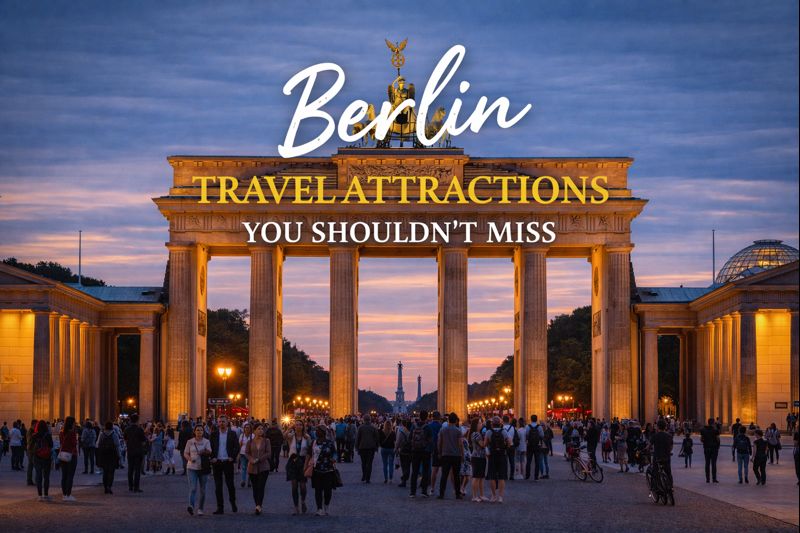
Brandenburg Gate
No list of Berlin travel attractions starts anywhere else.
The Brandenburg Gate is Berlin’s most iconic symbol. Built in the 18th century, it has witnessed Prussian power, Nazi parades, Cold War division, and reunification celebrations.
Stand here early in the morning or late at night for the best experience. During the day, it’s crowded. At night, it feels monumental and reflective.
Nearby landmarks:
- Pariser Platz
- Unter den Linden boulevard
- Reichstag Building
Reichstag Building and Glass Dome
The Reichstag is both a political center and a visitor highlight.
The modern glass dome offers panoramic views over Berlin while symbolizing transparency in government. Entry is free, but advance registration is required.
Why it’s worth your time:
- Stunning city views
- Insight into Germany’s political system
- Unique architecture blending old and new
Tip: Visit near sunset for the best light.
Berlin Wall Memorial (Bernauer Straße)
If you want to understand Berlin, start here.
This memorial preserves an original stretch of the Berlin Wall, complete with watchtowers and documentation. Unlike the more artistic East Side Gallery, this site focuses on education and remembrance.
What makes it powerful:
- Original wall sections
- Outdoor and indoor exhibits
- Personal stories of escape and loss
It’s quiet, respectful, and deeply moving.
East Side Gallery
The East Side Gallery is the longest remaining open-air section of the Berlin Wall.
After reunification, artists from around the world painted murals here. Today, it’s one of the most photographed Berlin travel attractions.
Key murals to look for:
- “The Kiss” by Dmitri Vrubel
- Political and freedom-themed artwork
Tip: Visit early morning to avoid crowds and get clear photos.
Museum Island (Museumsinsel)
Museum Island is a UNESCO World Heritage Site and the cultural heart of Berlin.
Located on the Spree River, it houses five world-class museums:
- Pergamon Museum
- Neues Museum
- Altes Museum
- Alte Nationalgalerie
- Bode Museum
Highlights include the Pergamon Altar and the bust of Nefertiti.
Planning advice:
Buy a Museum Pass Berlin if you plan multiple visits.
Checkpoint Charlie (With Context)
Checkpoint Charlie is one of Berlin’s most famous Cold War locations.
While the site itself is now commercialized, it’s still historically important. Pair your visit with nearby museums like the Wall Museum to gain context.
Best approach:
- Short stop for photos
- Learn the history elsewhere
- Don’t linger too long
Holocaust Memorial (Memorial to the Murdered Jews of Europe)
This memorial sits near Brandenburg Gate and stops nearly every visitor in their tracks.
2,711 concrete slabs create a disorienting, emotional experience. There are no signs telling you how to feel—and that’s intentional.
Underground, a documentation center explains the history behind the memorial.
Respect is essential here.
Alexanderplatz and TV Tower (Fernsehturm)
Alexanderplatz represents modern Berlin.
The TV Tower is the tallest structure in Germany and visible across the city. The observation deck offers 360-degree views.
Around Alexanderplatz you’ll find:
- Shopping centers
- Street performers
- Easy transport connections
Tip: Skip peak hours if you want shorter lines.
Charlottenburg Palace
Charlottenburg Palace offers a glimpse into royal Prussian life.
It’s Berlin’s largest palace and feels surprisingly peaceful compared to inner-city attractions.
Why visit:
- Lavish interiors
- Expansive gardens
- Insight into royal history
Combine this with a walk through Charlottenburg neighborhood for a quieter Berlin experience.
Tiergarten Park
Berlin’s green heart.
Tiergarten is larger than Central Park and perfect for a break between sightseeing stops.
What to do here:
- Walk or cycle
- Visit Victory Column (Siegessäule)
- Relax near small lakes
Locals use this park daily. It’s a real slice of Berlin life.
Potsdamer Platz
Once a no-man’s-land during the Cold War, Potsdamer Platz now symbolizes modern Berlin.
It’s home to:
- Sony Center
- Cinemas and shopping
- Restaurants and hotels
This area shows how dramatically Berlin has reinvented itself.
Hidden Gems Most Tourists Miss
Teufelsberg
An abandoned Cold War listening station with panoramic views.
Hackesche Höfe
Art courtyards filled with cafés and boutiques.
Viktoriapark
A hilltop waterfall and city views in Kreuzberg.
Nikolaiviertel
Berlin’s reconstructed medieval quarter.
These places add depth beyond standard Berlin travel attractions.
Berlin for Different Travelers
Families
- Berlin Zoo
- Museum of Technology
- Tierpark Berlin
Couples
- Evening Spree River cruises
- Charlottenburg Palace gardens
- Café hopping in Prenzlauer Berg
Solo Travelers
- Free walking tours
- Hostel culture
- Safe public transport
Budget Travelers
- Free museums on first Sunday
- Street food markets
- Walking-focused itineraries
Luxury Travelers
- Boutique hotels in Mitte
- Private guides
- Michelin-star dining
Food & Local Markets You Should Visit
Berlin’s food scene reflects its diversity.
Must-Try Foods
- Currywurst
- Döner kebab
- Pretzels
- Berliner Pfannkuchen
Local Markets
- Markthalle Neun (street food)
- Mauerpark Flea Market (Sunday)
- Winterfeldtplatz Market
Berlin eats well—and affordably.
Getting Around Berlin
Berlin’s public transport is excellent.
Options include:
- U-Bahn (subway)
- S-Bahn (regional trains)
- Trams
- Buses
Buy a day pass or Berlin WelcomeCard for savings.
Best Time to Visit Berlin
Spring (April–May)
- Mild weather
- Fewer crowds
Summer (June–August)
- Festivals
- Long days
- Peak season
Autumn (September–October)
- Cultural events
- Comfortable temperatures
Winter (November–February)
- Christmas markets
- Lower prices
- Cold weather
Costs and Budget Planning
Berlin remains one of Europe’s best-value capitals.
Average daily costs:
- Budget: €60–90
- Mid-range: €120–200
- Luxury: €300+
Money-saving tips:
- Walk whenever possible
- Eat street food
- Use transport passes
Safety and Travel Tips
Berlin is very safe.
Things to watch:
- Pickpocketing in busy areas
- Bike lanes
- Late-night party districts
General tips:
- Cash is still widely used
- English is commonly spoken
- Tipping is modest
Planning Mistakes to Avoid
- Trying to see everything in two days
- Staying too far from transit lines
- Skipping neighborhoods outside Mitte
- Not booking popular attractions in advance
FAQs About Berlin Travel Attractions
What are the top Berlin travel attractions for first-time visitors?
Brandenburg Gate, Museum Island, Berlin Wall Memorial, Reichstag, and East Side Gallery.
How many days do you need in Berlin?
At least three full days. Five is ideal.
Is Berlin expensive for tourists?
Compared to other capitals, Berlin is affordable with good budget options.
Is Berlin safe for solo travelers?
Yes. It’s one of Europe’s safest major cities.
Do I need to book attractions in advance?
Yes, especially the Reichstag and major museums.
What’s the best area to stay in Berlin?
Mitte for sightseeing, Prenzlauer Berg for families, Kreuzberg for nightlife.
Can I explore Berlin without a car?
Absolutely. Public transport is excellent.
Final Thoughts
Berlin doesn’t try to impress you. It educates you, challenges you, and invites you to understand its story. The city’s travel attractions go far beyond monuments—they’re experiences shaped by history, resilience, and reinvention.
With thoughtful planning and an open mind, Berlin becomes more than a destination. It becomes a lesson, a conversation, and a place you’ll want to return to.
