
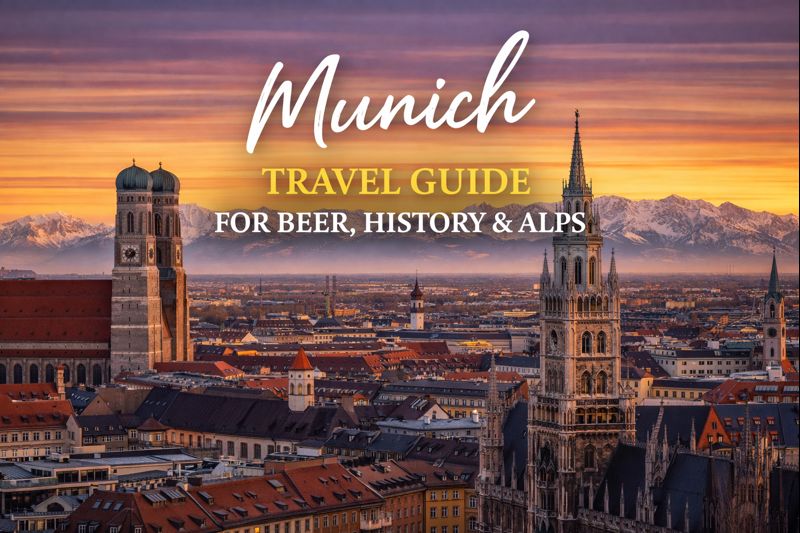
Munich is a city where tradition and modern life coexist naturally. One moment you’re walking past centuries-old churches and royal palaces, the next you’re sitting in a lively beer garden under chestnut trees, surrounded by locals in lederhosen. Add world-class museums, easy access to the Bavarian Alps, and one of Europe’s highest qualities of life, and Munich becomes far more than a stopover—it becomes a destination worth slowing down for.
This Munich travel guide is written for travelers who want more than surface-level sightseeing. It’s designed to help you plan confidently, avoid common mistakes, manage your budget, and experience Munich the way it’s meant to be experienced—through its history, food, beer culture, neighborhoods, and natural surroundings.
Why Visit Munich?
Munich offers a rare balance that few European cities manage.
- Deep-rooted Bavarian traditions
- Excellent public transport and walkability
- Clean, safe, and well-organized streets
- Lively beer culture without chaos
- Quick access to lakes, castles, and the Alps
Whether you’re visiting for culture, food, festivals, or outdoor adventures, Munich delivers without overwhelming first-time visitors.
Understanding Munich’s Layout
Munich feels manageable, but knowing the layout helps you plan smarter.
Altstadt-Lehel (Old Town)
The historic heart of Munich. Most major landmarks sit within walking distance.
Maxvorstadt
Museum district and student hub. Home to world-class galleries and relaxed cafés.
Schwabing
Trendy, leafy, and youthful. Great nightlife and parks.
Glockenbachviertel
Creative, LGBTQ+-friendly, packed with independent restaurants and bars.
Nymphenburg
Residential and elegant. Famous for its palace and gardens.
Best Time to Visit Munich
Timing matters more than many travelers expect.
Spring (April–May)
- Mild weather
- Fewer crowds
- Beer gardens reopen
Summer (June–August)
- Peak season
- Outdoor festivals
- Lakes and Alps are ideal
Autumn (September–October)
- Oktoberfest season
- Highest prices
- Electric atmosphere
Winter (November–February)
- Christmas markets
- Fewer tourists
- Cold but magical
Insider Tip: Late May and early June offer the best balance of weather, prices, and crowd levels.
Marienplatz and the Old Town
Marienplatz is the beating heart of Munich.
This central square has anchored the city since the 12th century and remains the best starting point for any Munich travel guide.
Highlights include:
- New Town Hall (Neues Rathaus)
- Glockenspiel show (daily)
- Old Town Hall
Arrive early in the morning or after sunset to enjoy it without crowds.
Frauenkirche (Cathedral of Our Dear Lady)
Munich’s most recognizable landmark.
The twin-domed Frauenkirche dominates the skyline and represents Munich’s spiritual center. Inside, the space feels simple and solemn.
Don’t miss:
- The Devil’s Footstep legend
- Views from the tower on clear days
It’s a short visit but an essential one.
Munich’s Beer Culture (Beyond Oktoberfest)
Beer isn’t just a drink here. It’s part of daily life.
Famous Beer Halls
- Hofbräuhaus (historic and lively)
- Augustiner Bräustuben (local favorite)
- Paulaner am Nockherberg
Traditional Beer Gardens
- Englischer Garten
- Hirschgarten
- Viktualienmarkt beer garden
Rules to know:
- Cash is preferred
- Share tables politely
- Bring your own food in beer gardens
Englischer Garten
One of the largest urban parks in the world.
Locals come here to relax, surf, picnic, or drink beer. The Eisbach surfers near the southern entrance are a unique sight.
Why it matters:
- Central location
- Free activities
- True local atmosphere
It’s where Munich slows down.
Residenz Munich
Once home to Bavarian royalty, the Munich Residenz is Germany’s largest city palace.
Expect:
- Lavish rooms
- Treasury filled with royal artifacts
- Elegant courtyards
Plan at least two hours here. History lovers could easily spend half a day.
Nymphenburg Palace
Located outside the city center, Nymphenburg Palace offers a quieter, grander experience.
Highlights:
- Vast baroque palace
- Formal gardens and canals
- Museums within the grounds
Combine this with a walk through the surrounding neighborhood for a relaxed afternoon.
Viktualienmarkt
Munich’s most famous food market.
You’ll find:
- Fresh produce
- Bavarian sausages
- Cheeses and pastries
- Local beer
This is the perfect place for lunch or a casual snack between sightseeing stops.
World-Class Museums in Munich
Munich rivals Berlin when it comes to museums.
Museum Quarter (Maxvorstadt)
- Alte Pinakothek (Old Masters)
- Neue Pinakothek (19th-century art)
- Pinakothek der Moderne
Deutsches Museum
One of the world’s largest science and technology museums.
Tip: Museum Sundays (first Sunday of each month) offer reduced admission.
Dachau Concentration Camp Memorial Site
A short trip from Munich, Dachau is an essential but emotionally heavy visit.
It was the first Nazi concentration camp and now serves as a memorial and educational center.
Practical advice:
- Allow half a day
- Visit respectfully
- Audio guides add important context
Day Trips from Munich
Munich’s location makes it ideal for exploring Bavaria.
Neuschwanstein Castle
Fairytale castle near Füssen. Book tickets early.
Zugspitze
Germany’s highest mountain. Cable car access year-round.
Garmisch-Partenkirchen
Alpine town for hiking and skiing.
Lake Starnberg
Easy escape for swimming and lakeside dining.
Munich for Different Travelers
Families
- Deutsches Museum
- Hellabrunn Zoo
- Parks and playgrounds
Couples
- Sunset walks along the Isar River
- Wine bars in Glockenbachviertel
- Day trips to lakes
Solo Travelers
- Safe public transport
- Hostel culture
- Walking tours
Budget Travelers
- Free parks and markets
- Museum Sundays
- Affordable bakeries
Luxury Travelers
- Five-star hotels near Maximilianstraße
- Fine dining
- Private Alpine tours
Where to Stay in Munich
Best Areas
- Altstadt-Lehel: Sightseeing
- Maxvorstadt: Culture
- Schwabing: Nightlife
- Sendling: Budget-friendly
Accommodation ranges from luxury hotels to serviced apartments and hostels.
Getting Around Munich
Munich’s public transport is excellent.
Options include:
- U-Bahn
- S-Bahn
- Trams
- Buses
Buy a day or group ticket for savings.
Costs and Budget Planning
Munich is not cheap, but it’s predictable.
Average daily costs:
- Budget: €70–100
- Mid-range: €150–220
- Luxury: €350+
Money-saving tips:
- Eat lunch out, dinner light
- Use transport passes
- Avoid Oktoberfest if on a budget
Safety and Practical Travel Tips
Munich is one of Europe’s safest cities.
Things to watch:
- Pickpocketing in crowded areas
- Bike lanes
- Oktoberfest overindulgence
General tips:
- Cash is still common
- English widely spoken
- Tipping is modest
Local Events Worth Planning Around
- Oktoberfest (September–October)
- Starkbierfest (March)
- Christmas Markets (December)
- Tollwood Festival (Summer & Winter)
Common Planning Mistakes to Avoid
- Visiting only for Oktoberfest
- Underestimating museum time
- Ignoring day trips
- Booking late during peak season
FAQs About Munich Travel
How many days do you need in Munich?
Three full days cover highlights. Five days allow for day trips.
Is Munich expensive for tourists?
Yes, but costs are manageable with planning.
Is Munich good for first-time Europe travelers?
Absolutely. It’s safe, organized, and easy to navigate.
Can I visit Munich without a car?
Yes. Public transport covers everything.
Is Oktoberfest family-friendly?
Daytime visits are suitable. Evenings are not ideal for families.
What’s the best area to stay in Munich?
Altstadt for convenience, Schwabing for atmosphere.
Do I need to book attractions in advance?
Yes, especially castles and Oktoberfest tents.
Final Thoughts
Munich is a city that rewards curiosity and patience. It doesn’t shout for attention like some capitals. Instead, it invites you in—through shared tables in beer gardens, quiet museum halls, and Alpine views just beyond the city limits.
With thoughtful planning, Munich becomes more than a checklist of sights. It becomes an experience rooted in culture, nature, and tradition. This Munich travel guide is your starting point for a trip that feels balanced, authentic, and memorable—long after you’ve left Bavaria behind.
