
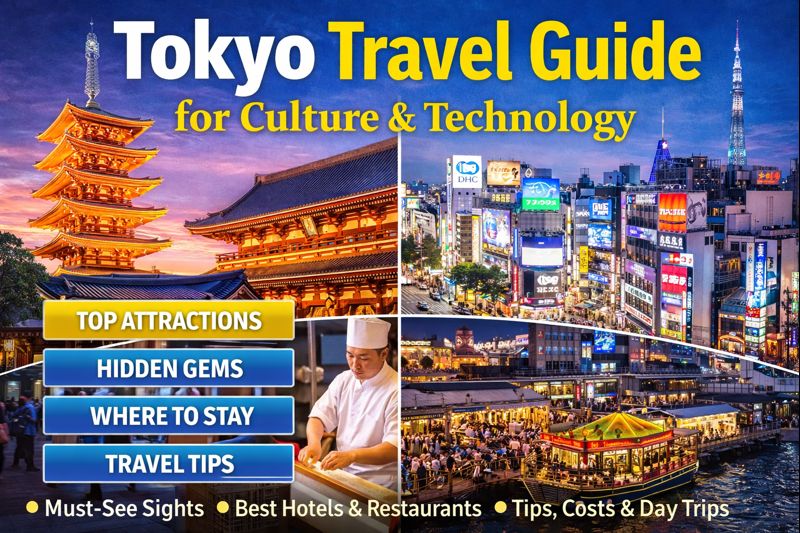
Few cities on Earth balance tradition and innovation as seamlessly as Tokyo. One minute you’re walking through a quiet shrine shaded by centuries-old trees. Ten minutes later you’re surrounded by neon lights, anime billboards, and robot cafés.
That contrast is Tokyo’s magic.
This isn’t just Japan’s capital. It’s a living laboratory of the future wrapped around deep cultural roots. You’ll see kimono-clad locals praying at temples, then watch commuters glide past on driverless trains. Ancient rituals coexist with vending machines that sell everything from hot coffee to umbrellas.
But Tokyo can also feel overwhelming.
First-time visitors often struggle with:
- Language barriers
- Complex train systems
- Neighborhood confusion
- Budget planning
- Time management
- Seasonal weather surprises
This Tokyo travel guide solves those problems step by step. It’s based on real, on-the-ground experience and practical local insight. Whether you’re a family, solo traveler, couple, luxury guest, or budget explorer, this guide helps you plan smarter and experience Tokyo like a local.
Why Visit Tokyo?
Tokyo isn’t just a destination. It’s an immersion.
You don’t simply “sightsee” here. You participate.
You slurp ramen in a six-seat counter shop.
You bow at a shrine.
You cross the world’s busiest intersection.
You take a train so punctual it arrives to the second.
What makes Tokyo unforgettable
- 2,000+ temples and shrines
- World-class sushi and street food
- Hyper-modern tech districts
- Safe, clean, organized streets
- Incredible public transport
- Easy day trips to mountains, hot springs, and coastal towns
Few cities cater this well to both cultural travelers and tech lovers.
Top Attractions You Shouldn’t Miss
Senso-ji – Tokyo’s Oldest Temple
Start here.
Located in Asakusa, Senso-ji offers a perfect introduction to traditional Tokyo. Incense smoke fills the air. Locals toss coins and pray. The red lantern gate is iconic.
Walk along Nakamise Street for snacks and souvenirs like:
- Rice crackers
- Matcha sweets
- Handmade fans
- Yukata robes
Tip: Arrive early morning or after sunset to avoid tour groups.
Meiji Shrine – Forest in the City
Steps from busy Harajuku, this shrine feels like another world.
Tall cedar trees block city noise. Gravel paths crunch underfoot. Weddings sometimes happen on weekends.
It’s peaceful. Grounding. Authentic.
Best time: early morning walks.
Shibuya Crossing – Neon Tokyo at Its Best
This is Tokyo’s modern energy in one snapshot.
When lights change, thousands cross from every direction. It’s chaotic yet perfectly organized.
Grab a window seat at a café and watch from above. It’s oddly mesmerizing.
At night, it becomes pure cyberpunk Tokyo.
Tokyo Skytree – Skyline Views
For panoramic views, Skytree is unmatched.
On clear days, you might even see Mount Fuji.
Go before sunset to see both daylight and night city lights.
Akihabara – Tech & Anime Paradise
Gamers and tech fans love this area.
Expect:
- Retro game shops
- Anime stores
- Electronics megastores
- Themed cafés
Even if you’re not into anime, it’s fun people-watching.
Hidden Gems Most Tourists Miss
Yanaka Ginza
A surviving slice of old Tokyo.
Small shops. Cats everywhere. Street snacks. Local life.
It feels personal and charming compared to major districts.
Shimokitazawa
If you like thrift stores, indie music, and cafés, come here.
Great for:
- Vintage shopping
- Second-hand fashion
- Coffee hopping
- Underground theater
Perfect for slow afternoons.
TeamLab Planets
Interactive digital art installations where you walk barefoot through light, mirrors, and water.
It’s futuristic. Surreal. Very Instagram-worthy.
Book tickets early.
Where to Stay in Tokyo
Tokyo is huge. Choosing the right base saves hours daily.
Best Neighborhoods
Shinjuku
- Major transport hub
- Skyscrapers + nightlife
- Great for first-timers
Ginza
- High-end hotels
- Fine dining
- Upscale experience
Ueno
- Budget-friendly
- Close to museums and zoo
- Good for families
Asakusa
- Cultural atmosphere
- Affordable stays
- Walkable streets
Food Guide: What to Eat in Tokyo
Tokyo has more Michelin-star restaurants than any city in the world.
But you don’t need luxury to eat well.
Must-try foods
- Sushi (especially at Tsukiji Outer Market)
- Ramen
- Tempura
- Yakitori
- Takoyaki
- Okonomiyaki
- Matcha desserts
Budget tip
Convenience stores (7-Eleven, Lawson, FamilyMart) have surprisingly great meals.
Practical Travel Tips
Transportation
Tokyo’s trains are excellent but confusing at first.
Solution:
- Buy a Suica or Pasmo card
- Use Google Maps
- Avoid rush hour (7–9 AM, 5–7 PM)
Budget Planning
Daily average costs:
- Budget: $60–80
- Mid-range: $120–200
- Luxury: $300+
Food and transport are affordable. Hotels cost more.
Best Time to Visit
Spring (March–April)
Cherry blossoms. Beautiful. Busy.
Autumn (October–November)
Cool weather. Fewer crowds. Ideal.
Summer
Hot and humid. Festivals everywhere.
Winter
Clear skies. Cheapest prices.
Safety
Tokyo is one of the safest cities globally.
Still:
- Watch last train times
- Follow local etiquette
- Keep noise low in public
Day Trips From Tokyo
Kamakura
Great Buddha statue + beach vibe.
Nikko
UNESCO shrines + forests.
Hakone
Hot springs + Mt Fuji views.
Common Traveler Problems & Quick Solutions
Problem: Getting lost in stations
Solution: Follow color-coded lines and signage
Problem: Language barrier
Solution: Translation apps + station numbers
Problem: Too many places, too little time
Solution: Focus on 2–3 neighborhoods daily
Problem: Expensive hotels
Solution: Stay near metro lines outside Ginza
Sample 4-Day Tokyo Itinerary
Day 1
Asakusa → Senso-ji → Skytree → Sumida River cruise
Day 2
Meiji Shrine → Harajuku → Shibuya → Shinjuku night views
Day 3
Akihabara → Ueno Park → teamLab Planets → Ginza dinner
Day 4
Day trip to Hakone or Nikko
Final Thoughts
Tokyo doesn’t reveal itself instantly.
You discover it layer by layer.
The quiet shrine.
The perfect sushi counter.
The neon skyline.
The polite bow from a shopkeeper.
Stay curious. Walk more than planned. Take trains randomly. Eat what locals eat.
That’s how Tokyo truly comes alive.
