
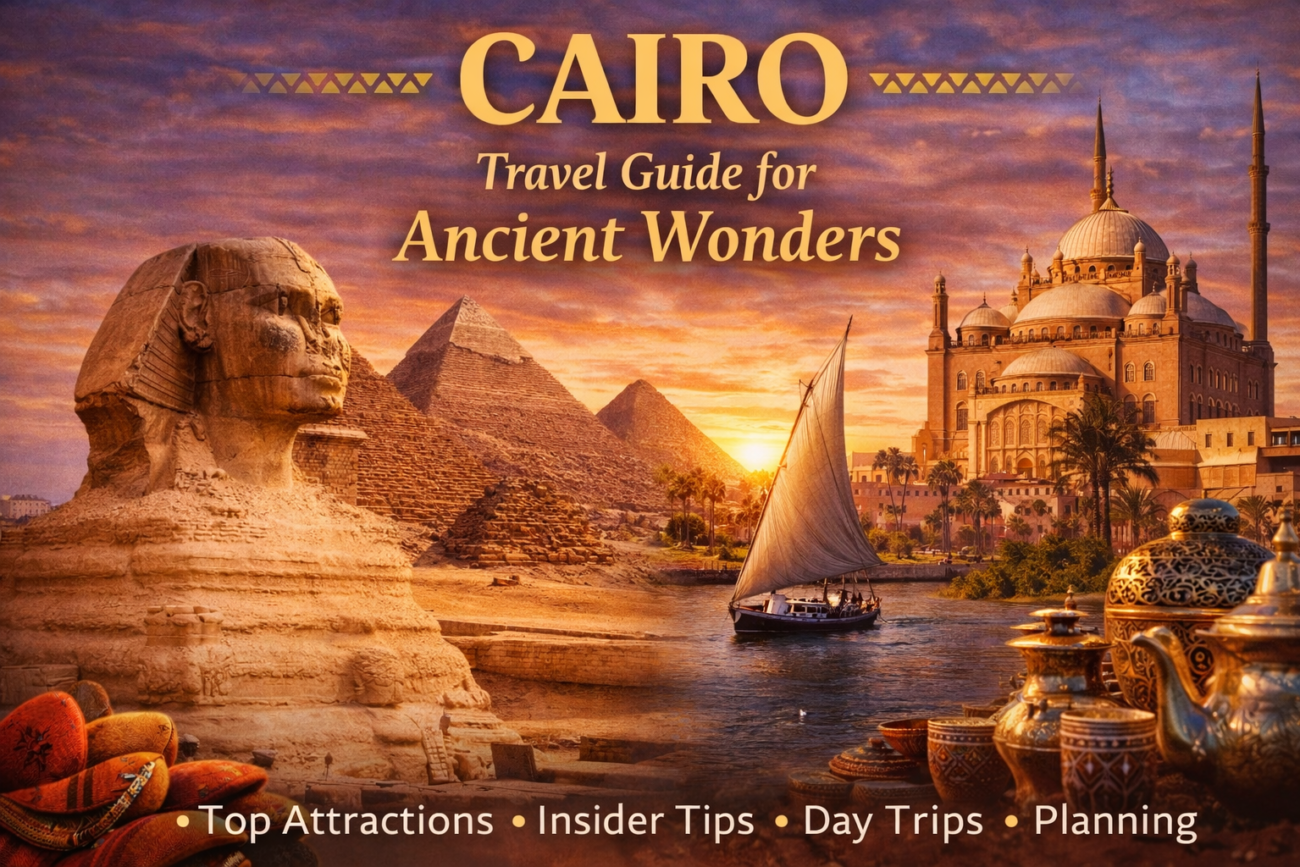
Cairo does not whisper its history. It announces it.
The call to prayer rolls across the skyline. Traffic surges past medieval gates. And just beyond the city’s edge, colossal pyramids rise from the desert.
This Cairo travel guide is designed for travelers who want clarity, confidence, and depth. It covers iconic landmarks, hidden corners, local neighborhoods, day trips, cultural etiquette, safety advice, seasonal planning, and insider strategies that make the difference between a rushed visit and a transformative journey.
Whether you are a family exploring ancient history, a couple planning a Nile-view escape, a solo traveler navigating Islamic Cairo, or a luxury guest booking private guides, this guide will help you plan wisely and experience Cairo fully.
Why Visit Cairo?
Cairo is one of the world’s oldest continuously inhabited cities. It is home to:
- The last surviving Wonder of the Ancient World
- Extraordinary Islamic architecture
- Coptic Christian heritage
- World-class museums
- Nile River culture
- Bustling markets
Cairo is intense. It is loud. It is layered.
But it rewards patience and preparation.
The Pyramids: Cairo’s Eternal Icons
Giza Pyramids
No Cairo travel guide can begin anywhere else.
Located about 30–45 minutes from central Cairo, the Giza Plateau holds:
- The Great Pyramid of Khufu
- The Pyramid of Khafre
- The Pyramid of Menkaure
- The Great Sphinx
These monuments are over 4,500 years old. Standing before them feels surreal.
Practical Advice
- Arrive when the gates open (around 8 AM).
- Hire a licensed Egyptologist guide at the entrance.
- Avoid aggressive unofficial “helpers.”
- Bring water and sun protection.
- Budget 2–3 hours minimum.
For panoramic photos, head to the desert viewpoint beyond the main pyramids.
Great Sphinx of Giza
Carved from a single limestone ridge, the Sphinx guards the plateau.
Visit after exploring the pyramids. The viewing platform offers close perspectives.
Museums That Define Egyptian Civilization
Grand Egyptian Museum
Located near the pyramids, this is Egypt’s most ambitious museum project.
It houses:
- Thousands of ancient artifacts
- The complete Tutankhamun collection
- Massive statues in grand halls
Plan at least half a day.
Book tickets in advance during peak seasons.
Egyptian Museum
Located in Tahrir Square, this historic museum remains significant despite the newer complex.
Expect:
- Golden funerary masks
- Royal mummies
- Everyday artifacts
It feels crowded and slightly chaotic. That’s part of the experience.
Islamic Cairo: A Living Open-Air Museum
Al-Muizz Street
One of the oldest streets in Cairo.
It is lined with:
- Mamluk-era mosques
- Medieval gates
- Caravanserais
- Ornate minarets
Visit late afternoon when the light softens the stone.
Mosque of Muhammad Ali
Located inside the Citadel, this Ottoman-style mosque offers sweeping city views.
Dress modestly. Remove shoes before entering.
Khan el-Khalili
Cairo’s most famous market.
Expect:
- Brass lanterns
- Spices
- Perfume oils
- Silver jewelry
- Papyrus art
Bargain respectfully. Start at 50% of the asking price.
Take a break at a historic café nearby.
Coptic Cairo: Egypt’s Christian Heritage
Hanging Church
Built above a Roman gate, this church is one of Egypt’s oldest.
Nearby sites include:
- Coptic Museum
- Church of St. Sergius
Allow 1–2 hours for the area.
The Nile: Cairo’s Lifeline
The Nile defines Cairo.
Evening options include:
- Dinner cruises
- Felucca sailboat rides
- Riverside cafés
For couples, sunset sailing offers romantic views. For families, short cruises are relaxed and entertaining.
Book through reputable operators recommended by your hotel.
Hidden Gems Most Tourists Miss
Zamalek
Located on Gezira Island, Zamalek feels calmer.
You’ll find:
- Art galleries
- Boutique cafés
- Tree-lined streets
- Nile views
Perfect for relaxed afternoons.
Garbage City (Manshiyat Naser)
Home to the Cave Church, one of the largest churches in the Middle East.
Visit only with a knowledgeable local guide.
Nilometer on Rhoda Island
A fascinating ancient structure used to measure Nile flood levels.
Short visit. Big historical value.
Best Neighborhoods to Stay
Downtown Cairo
Close to Tahrir Square and museums. Budget-friendly.
Zamalek
Safe. Walkable. Ideal for families and couples.
Giza
Best for pyramid views and early access.
New Cairo
Modern hotels. Quieter. Longer commute.
Where to Eat in Cairo
Cairo’s food scene mixes street flavors with refined dining.
Must-try dishes:
- Koshari
- Ful medames
- Taameya (Egyptian falafel)
- Grilled kofta
- Molokhia
For local flavor, try small family-run eateries. For upscale dining, explore Nile-view restaurants in Zamalek.
Avoid tap water. Drink bottled water.
Day Trips from Cairo
Alexandria (2.5–3 hours)
Explore:
- Bibliotheca Alexandrina
- Mediterranean corniche
- Citadel of Qaitbay
A refreshing coastal escape.
Saqqara
Home to the Step Pyramid of Djoser — older than Giza.
Less crowded. Highly recommended.
Dahshur
Visit the Bent Pyramid and Red Pyramid.
Often nearly empty. Extraordinary.
When Is the Best Time to Visit Cairo?
October to April (Best Season)
- Mild temperatures
- Ideal for outdoor exploration
- Peak tourist season
May to September
- Very hot (40°C+ in summer)
- Plan early morning activities
- Choose hotels with strong air conditioning
Budget Planning
Average daily costs:
Budget traveler: $40–70
Mid-range: $100–180
Luxury: $300+
Entry tickets are affordable. Private guides cost extra but add significant value.
Cash is widely used. ATMs are available.
Safety Tips for Cairo
Cairo is generally safe but requires awareness.
Follow these rules:
- Use licensed guides
- Avoid political demonstrations
- Keep valuables secure
- Dress modestly
- Use Uber or hotel-arranged transport
Solo female travelers: Cairo is manageable but expect attention. Confidence and modest dress help.
Families: Plan downtime between major sites. The city can feel overwhelming.
Common Traveler Pain Points (And Solutions)
“Cairo feels chaotic.”
Solution: Pre-book airport transfers and guided tours. Structure your days.
“I’m worried about scams.”
Solution: Hire licensed guides. Agree on prices before services.
“How many days do I need?”
Minimum: 3 days
Ideal: 4–5 days with Saqqara and museum visits
Suggested 4-Day Cairo Itinerary
Day 1:
- Giza Pyramids
- Great Sphinx
- Sunset Nile cruise
Day 2:
- Grand Egyptian Museum
- Saqqara
- Dinner in Zamalek
Day 3:
- Islamic Cairo
- Khan el-Khalili
- Citadel
Day 4:
- Coptic Cairo
- Nilometer
- Relaxed evening walk along the Nile
Booking Advice
For a smooth experience:
- Pre-book pyramid tours
- Arrange airport pickup
- Reserve museum tickets online
- Use certified Egyptologists
Local travel consultants can create customized packages that combine accommodation, guides, and transport.
Cultural Etiquette
- Dress conservatively
- Ask before photographing people
- Remove shoes before entering mosques
- Tip modestly (baksheesh culture exists)
Respect enhances your experience.
Final Thoughts
Cairo is not a quiet city. It is alive.
Its ancient monuments dwarf modern expectations. Its streets pulse with history and humanity.
If you plan carefully and travel respectfully, Cairo offers one of the most powerful cultural journeys on Earth.
Use this Cairo travel guide as your foundation. Then stand before the pyramids and let 4,500 years of history speak for itself.
