
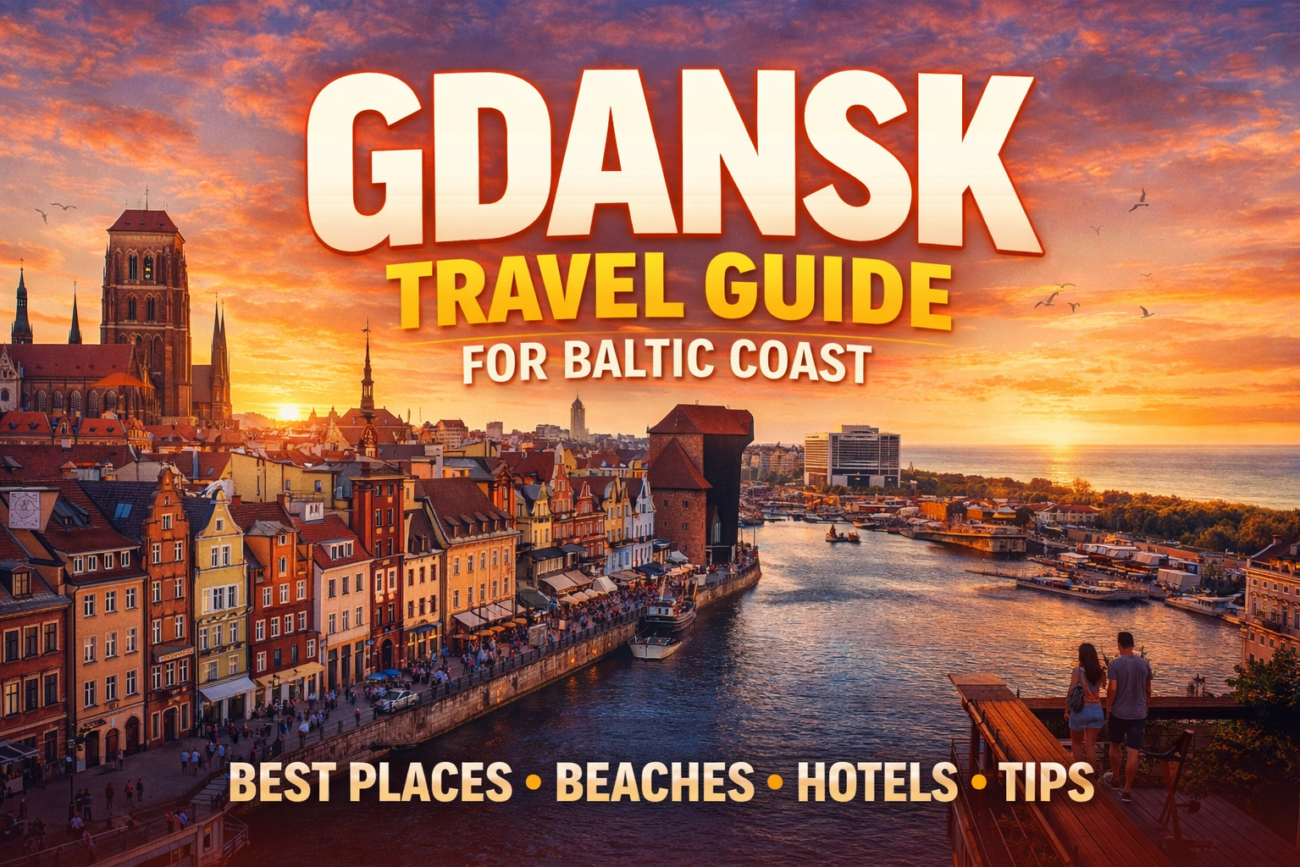
Gdansk is one of Poland’s most captivating coastal cities. It blends maritime history, colorful architecture, and Baltic charm into a destination that feels both relaxed and culturally rich. Unlike busier European capitals, Gdansk offers space to explore at your own pace while still delivering world-class attractions.
This Gdansk travel guide is built from real on-ground experience. It covers everything you need—where to go, what to eat, how to plan your trip, and how to avoid common travel mistakes. Whether you’re visiting for a weekend or a longer Baltic journey, this guide will help you travel smarter and experience more.
Why Visit Gdansk?
Gdansk stands out for its unique identity. It’s not just another European city—it’s a historic port that shaped trade, politics, and culture across centuries.
What Makes Gdansk Special:
- A stunning Old Town rebuilt after WWII with incredible detail
- Access to the Baltic Sea and nearby beaches
- Rich maritime and World War II history
- Gateway to the Tricity region (Gdansk, Sopot, Gdynia)
- Less crowded and more affordable than Western European coastal cities
Travelers often arrive with low expectations and leave impressed. That’s the charm of Gdansk.
Best Time to Visit Gdansk
Your experience in Gdansk changes significantly depending on the season.
Summer (June–August)
- Best weather for beaches and outdoor dining
- Long daylight hours
- Festivals and lively atmosphere
- Higher hotel prices
Spring (April–May)
- Mild weather, fewer tourists
- Ideal for sightseeing and walking tours
Autumn (September–October)
- Cool temperatures, fewer crowds
- Lower prices
Winter (November–March)
- Cold and windy
- Christmas markets in Old Town
- Budget-friendly travel
Best overall time: Late spring or early autumn for comfort and value.
Top Tourist Attractions in Gdansk
Gdansk offers a mix of history, culture, and scenic beauty.
1. Long Market (Długi Targ)
The heart of the city and one of the most photographed places in Poland.
Highlights:
- Colorful merchant houses
- Neptune Fountain
- Lively cafés and restaurants
2. St. Mary’s Church
One of the largest brick churches in the world.
Climb the tower for panoramic views of the city. The effort is worth it.
3. European Solidarity Centre
A powerful museum dedicated to the Solidarity movement.
This is where modern Polish democracy began. It’s interactive and deeply informative.
4. Gdansk Crane (Żuraw)
A symbol of the city’s maritime past. Located on the Motława River.
5. Museum of the Second World War
One of Europe’s most important historical museums. Expect to spend at least 2–3 hours here.
Hidden Gems in Gdansk
Beyond the main attractions, Gdansk rewards curious travelers.
Oliwa District
- Peaceful area away from tourist crowds
- Visit Oliwa Cathedral and its famous organ concerts
Westerplatte
- Historic site where WWII began
- Quiet, reflective atmosphere
Mariacka Street
- Beautiful cobblestone street lined with amber shops
- Less crowded in the morning
Exploring the Tricity: Gdansk, Sopot, and Gdynia
One of the biggest advantages of visiting Gdansk is access to the Tricity region.
Sopot (15 minutes by train)
- Famous for its wooden pier (longest in Europe)
- Beach resorts and nightlife
Gdynia
- Modern coastal city
- Maritime museums and clean beaches
A day trip to Sopot is highly recommended for beach lovers.
Where to Stay in Gdansk
Choosing the right accommodation affects your overall experience.
Best Areas:
- Old Town: Close to attractions, ideal for first-time visitors
- Wrzeszcz: Budget-friendly and well-connected
- Sopot: Best for beach access and nightlife
Hotel Options:
- Luxury: Hotel Gdańsk Boutique
- Mid-range: PURO Gdansk
- Budget: Hostel4u
Book early during summer and holiday seasons.
Getting Around Gdansk
Transportation is simple and efficient.
Options:
- Trams and buses (reliable and affordable)
- SKM train (connects Tricity)
- Uber and Bolt (widely available)
Tips:
- Buy daily or weekly transport passes
- Use apps like Jakdojade
- Walking is best for Old Town
Food and Local Restaurants
Gdansk offers a mix of traditional Polish cuisine and seafood.
Must-Try Dishes:
- Pierogi (dumplings)
- Fresh Baltic fish
- Żurek soup
Recommended Restaurants:
- Goldwasser (historic dining experience)
- Pierogarnia Mandu (local favorite)
- Prologue Restaurant & Bar (modern cuisine)
Local bakeries and cafés are also excellent for breakfast.
Local Markets and Shopping
Shopping in Gdansk is both modern and traditional.
Visit:
- Hala Targowa (local market)
- Amber shops on Mariacka Street
- Galeria Bałtycka (shopping mall)
Amber jewelry is a popular souvenir.
Travel Costs and Budget Planning
Gdansk is budget-friendly compared to Western Europe.
Average Costs:
- Budget hotel: $25–$60
- Mid-range hotel: $70–$140
- Meal: $6–$20
Save Money By:
- Using public transport
- Eating at local eateries
- Traveling in shoulder seasons
Safety and Travel Tips
Gdansk is considered very safe.
Practical Advice:
- Watch belongings in crowded areas
- Avoid unlicensed taxis
- Carry travel insurance
Emergency services are efficient and accessible.
Local Events and Festivals
Gdansk has a vibrant cultural scene.
Key Events:
- St. Dominic’s Fair (summer)
- Shakespeare Festival
- Christmas Market
Check local tourism boards for updated schedules.
Common Traveler Problems & Solutions
Problem: Confusing Transport System
Solution: Use mobile apps and stick to main routes.
Problem: Weather Uncertainty
Solution: Pack layers, especially near the coast.
Problem: Short Travel Time
Solution: Focus on Old Town and one museum per day.
Suggested 3-Day Gdansk Itinerary
Day 1:
- Long Market
- St. Mary’s Church
- Evening river walk
Day 2:
- WWII Museum
- European Solidarity Centre
- Dinner in Old Town
Day 3:
- Day trip to Sopot
- Beach and pier
- Return for evening in Gdansk
Practical Travel Tips for a Better Experience
- Start your day early to avoid crowds
- Book museum tickets in advance
- Try local food instead of tourist restaurants
- Walk as much as possible
Final Thoughts
Gdansk is a destination that quietly exceeds expectations. It offers a perfect blend of history, culture, and coastal relaxation without overwhelming crowds or high costs. Every street tells a story, and every landmark reflects a deeper past that shapes modern Poland.
What makes Gdansk truly special is its balance. You can explore historic sites in the morning, relax by the Baltic Sea in the afternoon, and enjoy a vibrant dining scene in the evening. Few cities offer this level of variety in such a compact area.
If you’re planning a trip to Poland or looking for a unique European destination, Gdansk deserves a top spot on your list. Plan smart, explore deeply, and give yourself time to experience both the famous landmarks and the hidden corners. That’s where Gdansk truly comes alive.
