
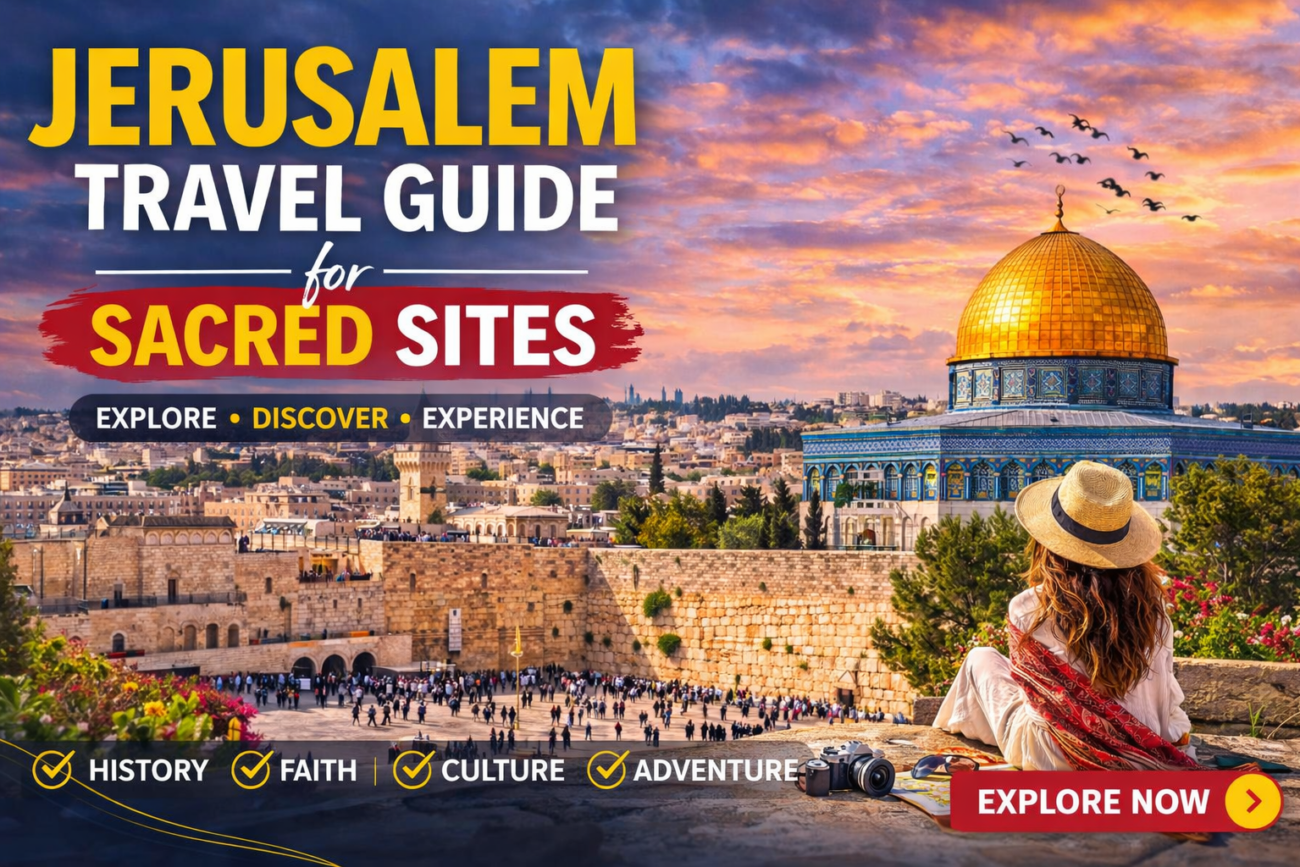
erusalem is unlike any other destination. Few cities in the world carry such profound spiritual, historical, and cultural significance. Sacred to Judaism, Christianity, and Islam, Jerusalem is layered with centuries of devotion, conflict, resilience, and heritage. Every street, stone, and skyline tells a story. Travelers do not simply visit Jerusalem — they encounter living history.
This Jerusalem travel guide provides a complete, experience-based roadmap to help you navigate sacred sites, cultural neighborhoods, hidden gems, accommodation choices, seasonal realities, and practical travel challenges. Whether you seek spiritual pilgrimage, historical exploration, family travel, or luxury cultural experiences, this guide ensures you plan efficiently and experience Jerusalem deeply.
Why Visit Jerusalem
Jerusalem offers a rare convergence of faith, archaeology, and modern urban life. Travelers come for spiritual connection but stay for cultural richness.
Key reasons to visit:
- Sacred religious landmarks central to three major faiths
- UNESCO-listed Old City heritage zones
- Unique archaeological discoveries
- Vibrant culinary and cultural scenes
- Museums preserving global religious history
- Access to nearby natural and historic destinations
The city offers a transformative journey rather than a conventional vacation.
Best Time to Visit Jerusalem
Jerusalem’s climate varies significantly by season. Planning travel dates carefully improves comfort and experience quality.
Ideal Travel Months
- March to May: Spring blooms and mild temperatures
- September to November: Pleasant weather with fewer crowds
- December to February: Cooler temperatures with occasional rain
- June to August: Hot and crowded peak tourist season
Religious holidays impact accommodation availability and site accessibility.
Seasonal Insider Advice
- Book hotels early during Easter, Passover, and Ramadan
- Plan early morning visits to sacred sites
- Carry water during summer months
- Expect heightened security during major festivals
Local tourism authorities provide updated travel advisories.
Sacred Sites in Jerusalem
Western Wall
The Western Wall is Judaism’s holiest accessible prayer site. Visitors experience an atmosphere of reverence, especially during Shabbat.
Visitor tips:
- Dress modestly
- Respect prayer customs
- Separate prayer areas for men and women
- Early morning visits offer quieter reflection
Guided historical tours explain the wall’s archaeological context.
Church of the Holy Sepulchre
This church marks the crucifixion and resurrection site of Jesus Christ. Pilgrims often spend hours in prayer and contemplation.
Highlights include:
- Golgotha altar
- Stone of Anointing
- Tomb of Christ
- Medieval architectural elements
Expect crowds during Christian holidays.
Al-Aqsa Mosque and Temple Mount
One of Islam’s most sacred sites, Al-Aqsa Mosque attracts pilgrims worldwide.
Important considerations:
- Entry regulations vary based on religious status
- Security screening is mandatory
- Modest attire required
- Guided tours offer historical and theological insights
Check visiting hours with official authorities.
Exploring the Old City Quarters
Jerusalem’s Old City divides into four quarters, each with distinct identity.
Jewish Quarter
Home to:
- Cardo Roman street remains
- Hurva Synagogue
- Western Wall tunnels
Archaeological sites reveal layers of ancient civilizations.
Christian Quarter
Key attractions:
- Via Dolorosa pilgrimage route
- Church of the Holy Sepulchre
- Christian monasteries and chapels
Spiritual tours provide contextual narratives.
Muslim Quarter
A vibrant marketplace atmosphere defines this quarter.
Experiences include:
- Traditional souks
- Local street food
- Ottoman-era architecture
- Cultural heritage sites
Local guides enhance navigation through narrow alleys.
Armenian Quarter
The quietest quarter offers:
- Armenian monastery complexes
- Cultural museums
- Historic ceramics workshops
It provides a peaceful retreat from busy pilgrimage routes.
Must-Visit Attractions Beyond Sacred Sites
Mount of Olives
Panoramic views of Jerusalem’s skyline make this site unforgettable.
Key landmarks:
- Garden of Gethsemane
- Ascension Chapel
- Ancient Jewish cemeteries
Sunrise visits create powerful visual experiences.
Yad Vashem Holocaust Memorial
A deeply moving museum preserving Holocaust remembrance.
Visitor insights:
- Allocate several hours
- Audio guides enhance understanding
- Emotional preparation recommended
It is essential for understanding modern Jewish history.
Israel Museum
Home to the Dead Sea Scrolls and extensive archaeological collections.
Highlights include:
- Shrine of the Book
- Second Temple model
- Art and cultural exhibitions
A must-visit for history enthusiasts.
Hidden Gems in Jerusalem
Ein Kerem Village
A picturesque hillside village associated with John the Baptist.
Visitors enjoy:
- Boutique cafes
- Artisan shops
- Scenic walking paths
- Quiet monasteries
It offers a charming escape from the city center.
Mahane Yehuda Market
By day, a bustling food market. By night, a vibrant nightlife hub.
Must-try foods:
- Fresh hummus
- Halva desserts
- Middle Eastern spices
- Local wine bars
Culinary tours provide immersive experiences.
Haas Promenade
Offers one of the best sunset viewpoints overlooking Old and New Jerusalem.
Perfect for:
- Photography
- Quiet reflection
- Romantic visits
Cultural Experiences & Local Lifestyle
Jerusalem’s diversity shapes its cultural rhythm.
Festivals & Events
Major events include:
- Jerusalem Film Festival
- Sacred Music Festival
- Religious holiday celebrations
Seasonal programming enriches visitor experiences.
Traditional Dining Experiences
Top local restaurants:
- Machneyuda Restaurant
- The Eucalyptus
- Azura Market Kitchen
- Modern rooftop dining venues
Local cuisine blends Middle Eastern and Mediterranean influences.
Where to Stay in Jerusalem
Accommodation varies from historic boutique hotels to luxury resorts.
Luxury Hotels
- King David Hotel
- Waldorf Astoria Jerusalem
- Mamilla Hotel
These properties offer proximity to sacred landmarks.
Mid-Range Options
- Boutique Old City guesthouses
- Modern city hotels
- Cultural heritage accommodations
Ideal for balanced comfort and cost.
Budget Stays
- Hostels near Jaffa Gate
- Affordable neighborhood hotels
- Shared pilgrim accommodations
Book early during peak seasons.
Getting Around Jerusalem
Transportation is relatively efficient.
Options include:
- Light rail system
- Taxis and ride-sharing
- Guided walking tours
- Intercity buses
Walking remains the best way to explore the Old City.
Travel Costs in Jerusalem
Jerusalem can be expensive compared to regional destinations.
Average Daily Budget
Budget traveler:
$70–120 per day
Mid-range traveler:
$180–300 per day
Luxury traveler:
$450+ per day
Costs increase during religious festivals.
Safety & Travel Tips
Jerusalem is generally safe but requires situational awareness.
Essential advice:
- Monitor local news updates
- Respect religious sensitivities
- Avoid political demonstrations
- Follow security instructions
- Use licensed tour operators
Travel insurance is strongly recommended.
Family Travel in Jerusalem
Educational and cultural experiences make Jerusalem suitable for families.
Family-friendly attractions:
- Biblical Zoo
- Science museums
- Cultural storytelling tours
- Scenic viewpoints
Many hotels offer family-oriented amenities.
Luxury Travel Experiences
Jerusalem offers curated cultural luxury experiences.
Premium activities include:
- Private archaeological tours
- Exclusive museum access
- Fine dining with Old City views
- Spa retreats in historic hotels
Luxury travel consultants design bespoke itineraries.
Solo Travel Insights
Solo travelers benefit from structured planning.
Helpful strategies:
- Join group heritage tours
- Stay near central districts
- Use public transport
- Attend cultural workshops
Jerusalem’s hospitality culture supports independent travelers.
Nearby Destinations from Jerusalem
Expand your itinerary with regional exploration.
Popular excursions:
- Bethlehem pilgrimage sites
- Dead Sea wellness resorts
- Masada fortress hikes
- Tel Aviv coastal city
These destinations create diverse travel experiences.
Travel Planning Challenges & Solutions
Common Traveler Pain Points
- Complex religious site access rules
- Accommodation price fluctuations
- Cultural etiquette confusion
- Seasonal crowd management
- Transportation logistics
Practical Solutions
- Hire certified local guides
- Visit sacred sites early
- Plan multi-day itineraries
- Book accommodations months ahead
- Use structured tour packages
Professional consultants simplify travel logistics.
Why Jerusalem Remains a Global Pilgrimage Destination
Jerusalem continues to draw millions annually due to its spiritual significance, archaeological discoveries, and cultural resilience.
Ongoing developments include:
- Heritage conservation initiatives
- Interfaith cultural programs
- Urban tourism infrastructure upgrades
- Museum expansion projects
Jerusalem represents the intersection of ancient faith and contemporary travel.
Final Thoughts
Jerusalem is not a destination you simply explore — it is a place you feel, reflect upon, and carry with you long after your journey ends. Its sacred landmarks, ancient streets, and deeply rooted traditions create a travel experience that is both spiritually profound and culturally enriching. From sunrise over the Mount of Olives to quiet moments within historic sanctuaries, every encounter in Jerusalem offers perspective and meaning.
Careful planning, respect for local customs, and guidance from knowledgeable local experts can transform a complex itinerary into a seamless and rewarding journey. Whether you arrive for pilgrimage, historical discovery, or cultural immersion, Jerusalem stands as one of the world’s most powerful and unforgettable travel destinations.
