
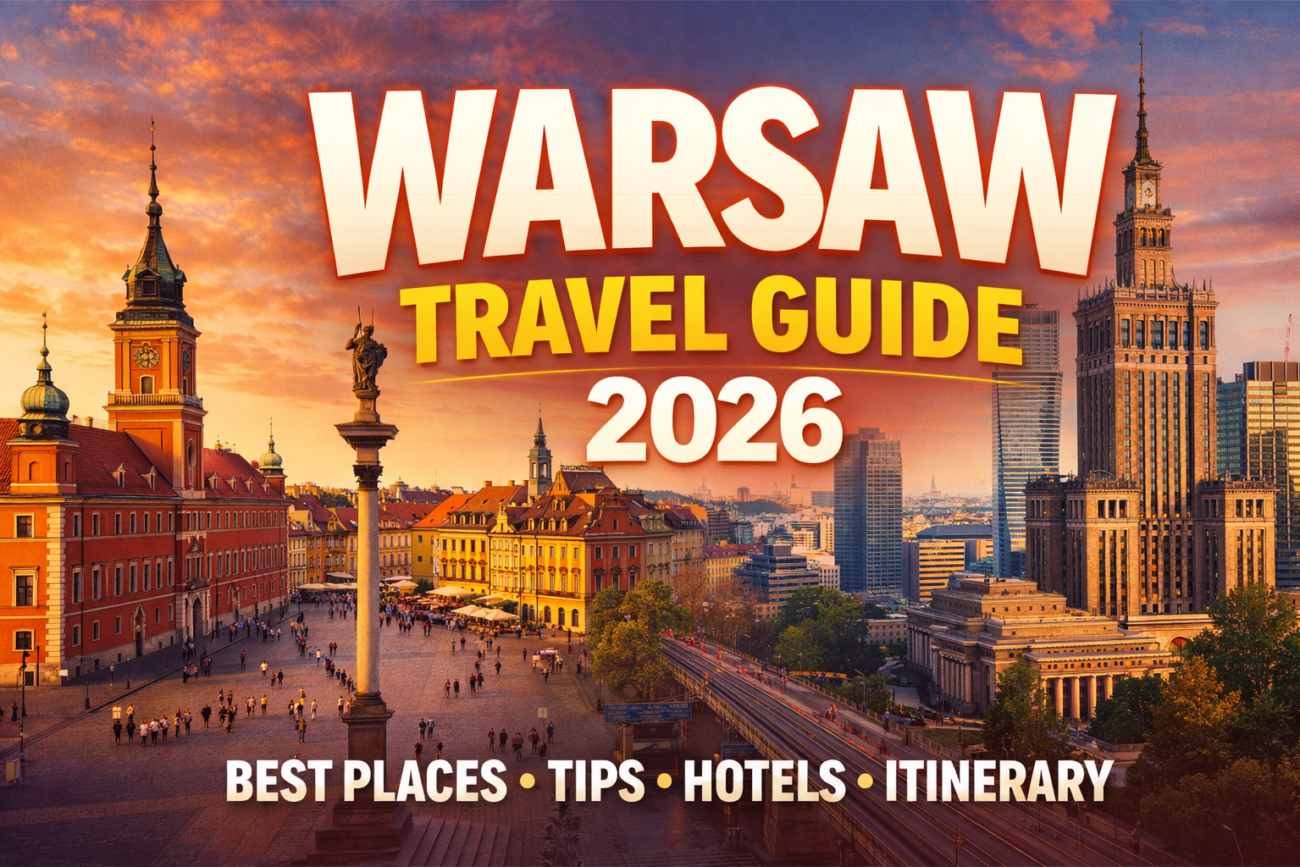
Warsaw is a city that constantly reinvents itself. Rising from the ruins of World War II, Poland’s capital today blends historic charm with bold modernity. Walk through its streets and you’ll move from reconstructed medieval squares to sleek skyscrapers within minutes. It’s dynamic, resilient, and deeply cultural.
This Warsaw travel guide is designed to help you explore the city with confidence. Whether you’re a first-time visitor, a couple seeking culture, or a budget traveler looking for value, you’ll find practical insights, local tips, and real-world advice to plan your trip efficiently and enjoy every moment.
Why Visit Warsaw?
Warsaw often surprises travelers. Many expect a quiet historical city, but instead discover a vibrant European capital full of energy.
What Makes Warsaw Unique:
- A near-total reconstruction of the Old Town after WWII
- A mix of Soviet-era architecture and modern skyline
- Rich museums, including world-class historical exhibits
- Affordable compared to Western Europe
- Strong café culture and evolving food scene
Warsaw is ideal for travelers who want depth, culture, and authenticity without the crowds of cities like Paris or Rome.
Best Time to Visit Warsaw
Timing your visit can significantly improve your experience.
Spring (April–June)
- Mild weather and blooming parks
- Ideal for walking tours and outdoor cafés
- Fewer tourists
Summer (July–August)
- Warm, lively atmosphere
- Outdoor festivals like Chopin concerts in Łazienki Park
- Peak tourist season
Autumn (September–October)
- Beautiful fall colors
- Lower hotel prices
- Comfortable weather
Winter (November–March)
- Christmas markets and festive decorations
- Cold temperatures, often below freezing
- Fewer crowds, lower costs
Best overall time: Late spring or early autumn for balance between weather and crowds.
Top Tourist Attractions in Warsaw
Warsaw offers a mix of historical landmarks and modern attractions.
1. Old Town (Stare Miasto)
The heart of Warsaw and a UNESCO World Heritage Site. Completely rebuilt after WWII, yet remarkably authentic.
Don’t miss:
- Royal Castle
- Market Square
- Sigismund’s Column
2. Royal Castle
Once home to Polish monarchs, now a museum showcasing royal interiors and art collections.
3. Łazienki Park
A peaceful green escape in the city.
Highlights include:
- Palace on the Isle
- Chopin Statue (free concerts in summer)
4. Palace of Culture and Science
A Soviet-era skyscraper offering panoramic views from its observation deck.
5. Warsaw Uprising Museum
One of Europe’s most powerful museums. It tells the story of the 1944 uprising with immersive exhibits.
Hidden Gems in Warsaw
Beyond the main attractions, Warsaw has lesser-known spots worth exploring.
Praga District
Located across the Vistula River, this area offers:
- Street art
- Local bars
- Authentic Polish atmosphere
Neon Museum
A quirky collection of restored neon signs from the communist era.
Vistula Boulevards
Perfect for evening walks, cycling, or riverside dining.
Where to Stay in Warsaw
Choosing the right area can improve your trip significantly.
Best Areas to Stay:
- Old Town: Historic charm, close to landmarks
- Śródmieście (City Center): Best for first-time visitors
- Praga: Budget-friendly, trendy vibe
Hotel Recommendations:
- Luxury: Raffles Europejski Warsaw
- Mid-range: Hotel Bristol
- Budget: Oki Doki Hostel
Booking early is recommended during summer and holiday seasons.
Getting Around Warsaw
Warsaw has one of the best public transport systems in Central Europe.
Options:
- Metro (fast and efficient)
- Trams and buses (extensive coverage)
- Uber and Bolt (affordable)
Travel Tips:
- Buy a 24-hour or 72-hour transport pass
- Validate tickets before use
- Use apps like Jakdojade for navigation
Walking is also a great way to explore central areas.
Food and Local Restaurants
Polish cuisine is hearty and flavorful.
Must-Try Dishes:
- Pierogi (dumplings)
- Żurek (sour rye soup)
- Bigos (hunter’s stew)
Popular Restaurants:
- Zapiecek (traditional Polish food)
- U Fukiera (fine dining in Old Town)
- Hala Koszyki (modern food hall)
Street food and cafés are also widely available and affordable.
Local Markets and Shopping
Warsaw offers both modern shopping centers and traditional markets.
Visit:
- Hala Mirowska (local produce)
- Złote Tarasy (shopping mall)
- Plac Zbawiciela area (boutique stores)
These places give insight into local life and culture.
Day Trips from Warsaw
If you have extra time, explore nearby destinations.
Top Day Trips:
- Kraków: Historic city (3-hour train)
- Auschwitz-Birkenau: Important historical site
- Kazimierz Dolny: Charming riverside town
These trips add depth to your Poland itinerary.
Travel Costs and Budget Tips
Warsaw is relatively affordable compared to Western Europe.
Average Costs:
- Budget hotel: $30–$70 per night
- Mid-range hotel: $80–$150
- Meal: $5–$20
Save Money By:
- Using public transport
- Eating at local eateries
- Booking tickets in advance
Safety and Travel Tips
Warsaw is considered safe for travelers.
Important Tips:
- Watch for pickpockets in crowded areas
- Use licensed taxis or ride apps
- Keep copies of important documents
Emergency services are reliable, and locals are generally helpful.
Local Events and Culture
Warsaw has a rich cultural calendar.
Key Events:
- Chopin Concerts (summer)
- Warsaw Film Festival
- Christmas Market in Old Town
Check local tourism boards for updated schedules.
Common Traveler Problems & Solutions
Problem: Language Barrier
Solution: Most young people speak English. Use translation apps when needed.
Problem: Planning Itinerary
Solution: Focus on 3–4 key attractions per day to avoid fatigue.
Problem: Budget Concerns
Solution: Use public transport and local dining options.
Suggested 3-Day Warsaw Itinerary
Day 1:
- Old Town
- Royal Castle
- Evening walk along Vistula
Day 2:
- Łazienki Park
- Palace of Culture
- Shopping and dining
Day 3:
- Warsaw Uprising Museum
- Praga District
- Local café experience
Final Thoughts
Warsaw is a city that rewards curious travelers. It’s not just about ticking off landmarks — it’s about understanding its story, resilience, and transformation. Every street, museum, and park reflects a deeper narrative that makes your visit meaningful.
What sets Warsaw apart is its balance. You get history without stagnation, modernity without losing identity, and affordability without compromising experience. Whether you’re traveling solo, with family, or as a couple, Warsaw offers something valuable for every type of traveler.
Plan wisely, explore deeply, and allow yourself time to experience both the obvious highlights and the hidden corners. Warsaw is not a city you rush — it’s one you absorb.
