
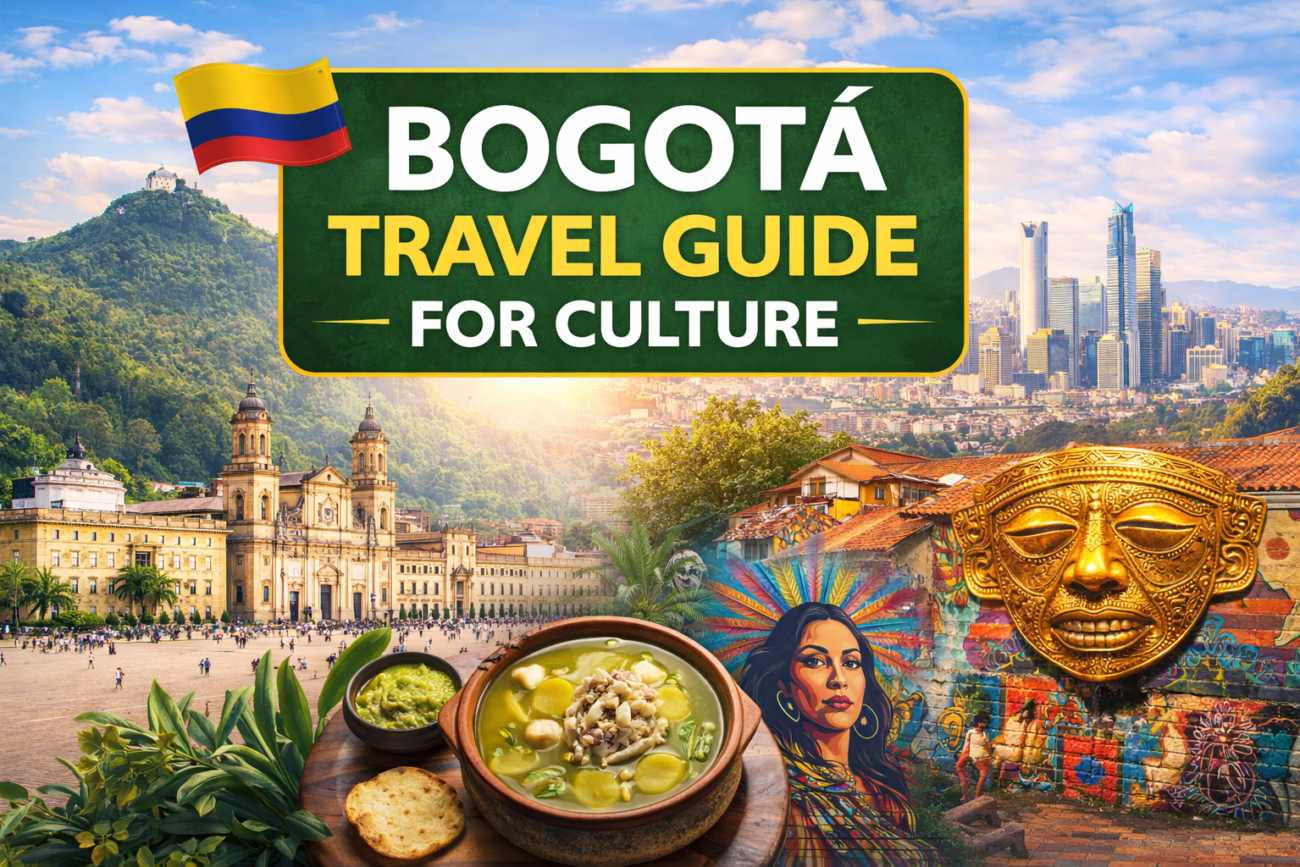
Bogotá is a city that moves to the rhythm of art, history, and everyday life. Perched high in the Andes at over 2,600 meters above sea level, Colombia’s capital offers a cultural depth few cities in Latin America can match. Travelers come for colonial streets, world-class museums, buzzing markets, and a creative food scene. They stay for the energy.
This Bogotá travel guide dives deep into culture, heritage, and authentic experiences. Whether you are a solo explorer, a family planning a cultural vacation, or a couple seeking romantic urban charm, Bogotá delivers with surprising diversity.
Why Bogotá is Colombia’s Cultural Heart
Bogotá blends indigenous roots, Spanish colonial heritage, and modern creative movements. Every neighborhood tells a different story. From colorful street art in La Candelaria to avant-garde galleries in Chapinero, culture here feels alive, evolving, and personal.
Travelers often struggle with planning Bogotá trips due to altitude, weather unpredictability, and safety concerns. Understanding the city’s rhythm helps avoid common pitfalls.
Key cultural highlights include:
- Historic architecture and colonial plazas
- Renowned museums and artistic spaces
- Traditional markets and culinary heritage
- Vibrant festivals and street performances
- Coffee culture rooted in Colombia’s global reputation
Best Time to Visit Bogotá for Cultural Experiences
Bogotá’s climate remains mild year-round, but rainfall patterns shape travel comfort. Cultural travelers benefit from visiting during festival seasons or dry months.
Ideal Months for Cultural Tourism
- December to March: Drier weather and festive celebrations
- July to August: Cultural events and international festivals
- September to November: Fewer crowds and good hotel deals
Rain showers are frequent. Pack layers, waterproof jackets, and comfortable walking shoes. Bogotá’s altitude may also require a day or two for acclimatization.
La Candelaria: Bogotá’s Historic Cultural Core
La Candelaria serves as the beating cultural heart of Bogotá. Cobblestone streets lead to vibrant colonial houses painted in bold colors. Musicians perform near historic churches. Artists transform walls into living galleries.
Cultural Landmarks in La Candelaria
- Plaza Bolívar: The city’s historic political and cultural center
- Gold Museum (Museo del Oro): Showcases pre-Columbian artifacts
- Botero Museum: Features Fernando Botero’s iconic artwork
- Primatial Cathedral of Bogotá: A masterpiece of colonial architecture
Visitors often underestimate the area’s scale. Dedicate at least one full day to fully explore its hidden courtyards, artisan shops, and literary cafés.
Bogotá’s Museum Scene: A Cultural Deep Dive
Bogotá houses some of South America’s finest museums. Cultural travelers can spend days exploring its collections.
Must-Visit Museums
- Gold Museum: Displays over 50,000 gold artifacts, revealing indigenous history
- National Museum of Colombia: Chronicles the country’s social evolution
- Modern Art Museum (MAMBO): Highlights contemporary Colombian creativity
- Quinta de Bolívar: Former residence of Simón Bolívar
For families and students, museum visits provide interactive cultural education. Most museums offer bilingual guides and affordable entry fees.
Street Art and Creative Culture
Bogotá’s street art scene ranks among the world’s most dynamic. Murals reflect political narratives, indigenous heritage, and modern social issues.
Best Areas for Street Art Tours
- La Candelaria
- Chapinero
- Teusaquillo
Guided walking tours provide deeper context and support local artists. Cultural travelers often find this experience more meaningful than traditional sightseeing.
Culinary Culture: Bogotá’s Food Heritage
Food in Bogotá represents centuries of cultural fusion. Traditional dishes showcase indigenous ingredients, Spanish influence, and regional diversity.
Traditional Foods to Try
- Ajiaco: A hearty chicken and potato soup unique to Bogotá
- Arepas: Corn-based cakes served in various styles
- Tamales: Wrapped and steamed local delicacies
- Hot Chocolate with Cheese: A surprising but beloved local ritual
Best Culinary Districts
- Zona G for gourmet dining
- Usaquén for traditional Colombian cuisine
- La Macarena for artistic cafés
Food tours offer authentic cultural immersion and help travelers navigate the city’s culinary diversity.
Markets and Local Shopping Experiences
Bogotá’s markets provide insight into everyday life and cultural traditions.
Popular Cultural Markets
- Paloquemao Market: Fresh produce, flowers, and local flavors
- Usaquén Flea Market: Handcrafted goods and artisanal souvenirs
- San Alejo Market: Traditional crafts and antiques
Shopping here supports local artisans and offers unique cultural keepsakes.
Monserrate: Spiritual and Scenic Cultural Landmark
Rising above Bogotá, Monserrate combines religious significance with breathtaking views. Pilgrims and tourists alike climb or take the cable car to the summit.
Highlights include:
- Colonial-era church
- Panoramic city views
- Traditional mountain restaurants
Visit early morning or sunset for fewer crowds and dramatic photography opportunities.
Cultural Festivals and Events
Bogotá’s calendar bursts with cultural celebrations. Timing your visit around festivals enhances the travel experience.
Major Cultural Events
- Bogotá International Book Fair
- Ibero-American Theater Festival
- Rock al Parque Music Festival
- Bogotá Film Festival
These events attract global audiences and showcase Colombia’s creative talent.
Where to Stay: Cultural Neighborhood Guide
Choosing the right neighborhood enhances cultural immersion.
Best Areas for Travelers
- La Candelaria: Ideal for history lovers and budget travelers
- Chapinero: Trendy and artistic atmosphere
- Zona Rosa: Upscale shopping and nightlife
- Usaquén: Family-friendly and charming colonial vibe
Luxury travelers can find boutique hotels with colonial architecture and personalized services. Budget travelers benefit from hostels and guesthouses in central districts.
Safety Tips for Cultural Travelers
Safety remains a top concern for many visitors. Bogotá has improved significantly, but smart planning ensures a smoother experience.
Practical Safety Advice
- Use registered taxis or ride-sharing apps
- Avoid displaying valuables in crowded areas
- Stay in well-lit neighborhoods at night
- Follow guidance from local tourism authorities
Travel insurance and emergency contact awareness provide additional peace of mind.
Transportation and Getting Around
Bogotá’s traffic can challenge travelers. Understanding transport options helps optimize time.
Best Ways to Explore the City
- TransMilenio bus system for budget travel
- Ride-sharing services for convenience
- Guided tours for cultural routes
- Walking tours in historic districts
Cycling enthusiasts can enjoy Bogotá’s Sunday Ciclovía, when major streets close to vehicles.
Day Trips and Cultural Excursions
Bogotá’s surroundings offer rich cultural experiences.
Recommended Cultural Day Trips
- Zipaquirá Salt Cathedral: A unique underground religious site
- Villa de Leyva: A preserved colonial town
- Guatavita Lagoon: Linked to the legend of El Dorado
These excursions add depth to a Bogotá cultural itinerary.
Budget Considerations for Cultural Travel
Bogotá suits various travel budgets.
Average Daily Costs
- Budget: $40–$60 per day
- Mid-range: $80–$150 per day
- Luxury: $200+ per day
Museum entry fees, food tours, and guided cultural experiences should be factored into travel planning.
Cultural Etiquette and Local Customs
Understanding local customs enhances interactions.
Cultural Etiquette Tips
- Greet people politely with eye contact
- Learn basic Spanish phrases
- Respect religious sites and traditions
- Tip service staff moderately
Colombians value warmth and hospitality. Showing respect builds meaningful connections.
Final Thoughts
Bogotá offers a cultural journey layered with history, creativity, and modern urban life. From colonial plazas to cutting-edge art districts, the city rewards curious travelers. Planning thoughtfully helps overcome challenges such as altitude and urban complexity.
This Bogotá travel guide reveals that culture here is not confined to museums or monuments. It lives in markets, music, food, and daily conversations. Visitors who embrace Bogotá’s rhythm often discover one of South America’s most compelling capitals.
For travelers seeking depth, authenticity, and unforgettable experiences, Bogotá stands ready to inspire.
