
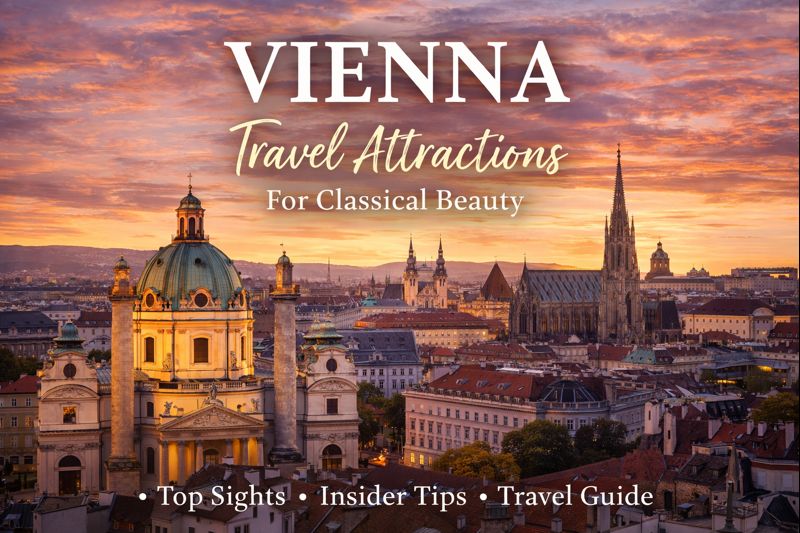
Vienna doesn’t rush you. It invites you to slow down, listen closely, and notice details. The rhythm of the city lives in classical music echoing through historic halls, the clink of coffee cups in century-old cafés, and the quiet grandeur of imperial architecture. This is a city shaped by art, intellect, and refinement—and it shows in every corner.
This guide to Vienna travel attractions is written from real travel experience, not surface-level summaries. It’s designed to help you understand what to see, how to plan, where to spend your time and money wisely, and how to experience Vienna beyond the obvious stops. Whether you’re a first-time visitor or returning with deeper curiosity, Vienna rewards thoughtful travelers.
Why Vienna Is One of Europe’s Most Rewarding Cities
Vienna consistently ranks among the world’s most livable cities. For travelers, that translates into safety, efficiency, and cultural depth.
Vienna offers:
- World-class museums and palaces
- A compact, walkable historic center
- Reliable public transport
- Strong safety standards
- A balance of grandeur and everyday local life
Unlike cities that overwhelm with crowds or chaos, Vienna feels composed. Even its busiest attractions retain a sense of order and elegance.
Where Vienna Is Located and Why It Matters
Vienna sits in northeastern Austria along the Danube River. Its location places it at the crossroads of Central Europe.
Nearby destinations include:
- Bratislava, Slovakia (1 hour by train)
- Budapest, Hungary
- Salzburg
- Wachau Valley
- Lower Austria wine regions
This makes Vienna an ideal base for regional exploration.
Best Time to Visit Vienna
Spring (April–May)
- Mild temperatures
- Blooming gardens
- Fewer tourists than summer
- Excellent for walking and museums
Summer (June–August)
- Festivals and outdoor concerts
- Long daylight hours
- Higher hotel rates
- Busy attractions
Autumn (September–October)
- Cultural season begins
- Comfortable weather
- Wine harvest events nearby
- Ideal for couples and solo travelers
Winter (November–February)
- Christmas markets
- Opera season
- Elegant winter atmosphere
- Cold but magical
Local tip: Late May and late September offer the best mix of weather, events, and crowd levels.
Getting to Vienna
By Air
Vienna International Airport (VIE) connects to major global cities.
Airport to city center:
- City Airport Train (CAT)
- S-Bahn
- Taxi or rideshare
By Train
Vienna’s Hauptbahnhof and Westbahnhof connect seamlessly across Europe.
Getting Around Vienna
Vienna’s public transport is among Europe’s best.
Options
- U-Bahn (metro)
- Trams
- Buses
- Walking
Travel passes are affordable and reliable.
Top Vienna Travel Attractions
Schönbrunn Palace
A UNESCO World Heritage Site and former summer residence of the Habsburgs.
Highlights:
- Imperial apartments
- Hall of Mirrors
- Palace gardens
- Gloriette viewpoint
Arrive early to avoid tour groups.
Hofburg Palace
Once the center of imperial power, now a complex of museums and institutions.
Must-see areas:
- Imperial Apartments
- Sisi Museum
- Spanish Riding School
This is essential for understanding Vienna’s history.
St. Stephen’s Cathedral (Stephansdom)
Vienna’s most recognizable landmark.
Don’t miss:
- South Tower climb
- Catacombs tour
- Colorful tiled roof
The cathedral anchors the historic center.
Belvedere Palace
A masterpiece of Baroque architecture.
Why visit:
- Klimt’s The Kiss
- Manicured gardens
- City views
Both Upper and Lower Belvedere are worth time.
Vienna’s Museum Quarter (MuseumsQuartier)
One of Europe’s largest cultural complexes.
Key museums:
- Leopold Museum
- Mumok
- Kunsthalle Wien
It’s also a social space with cafés and events.
Hidden Gems in Vienna
Hundertwasserhaus
A colorful, unconventional residential building.
Nearby:
- Kunst Haus Wien
- Local cafés
Spittelberg Quarter
Cobblestone streets, artisan shops, wine taverns.
Best in the evening.
Zentralfriedhof
Surprisingly peaceful and historically rich.
Graves of:
- Beethoven
- Schubert
- Strauss
Vienna Coffee House Culture
Vienna’s cafés are cultural institutions.
Must-visit cafés:
- Café Central
- Café Sperl
- Café Demel
Order:
- Wiener Melange
- Apfelstrudel
- Sachertorte
Stay longer than you think you should.
Vienna Food Guide
Traditional Dishes
- Wiener Schnitzel
- Tafelspitz
- Gulasch
- Kaiserschmarrn
Local Restaurants
- Plachutta
- Figlmüller
- Steirereck (fine dining)
Markets
- Naschmarkt
- Karmelitermarkt
Music and Classical Heritage
Vienna is the city of Mozart, Beethoven, and Strauss.
Top experiences:
- Vienna State Opera
- Musikverein
- Volksoper
Book performances in advance.
Day Trips from Vienna
Wachau Valley
- Vineyards
- Danube views
- Melk Abbey
Bratislava
- Easy half-day trip
- Compact old town
Salzburg
- Mozart’s birthplace
- Alpine scenery
Costs and Budget Planning
Daily Budget Estimates
- Budget: €50–70
- Mid-range: €90–140
- Luxury: €220+
Money Tips
- Euro is used
- Cards widely accepted
- Vienna City Card offers discounts
Safety and Travel Tips
Vienna is very safe.
Still:
- Watch for pickpockets in crowded areas
- Validate transport tickets
- Respect quiet zones
Local Events and Festivals
- Vienna Opera Ball
- Vienna Film Festival
- Christmas Markets
- Summer Night Concert at Schönbrunn
Traveler Pain Points—and Solutions
Too many attractions, limited time
→ Focus on one palace + one museum per day.
High costs
→ Eat lunch at markets, use transport passes.
Overcrowded sights
→ Visit early mornings or weekdays.
Who Vienna Is Perfect For
- Culture lovers
- Couples
- Families
- Solo travelers
- Luxury travelers
- Classical music fans
FAQs – Vienna Travel Attractions
What are the must-see attractions in Vienna?
Schönbrunn Palace, Hofburg Palace, St. Stephen’s Cathedral, Belvedere Palace, and the Museum Quarter.
How many days do you need in Vienna?
Three to four days cover major highlights. Five days allow deeper exploration and day trips.
Is Vienna expensive for tourists?
It can be, but smart planning keeps costs manageable.
Is Vienna safe for families and solo travelers?
Yes. It’s one of Europe’s safest cities.
Do I need to book attractions in advance?
For palaces and opera performances, yes—especially in peak season.
Is Vienna walkable?
Very. The historic center is compact and pedestrian-friendly.
Final Thoughts
Vienna is a city that reveals itself through patience and presence. Its beauty isn’t loud—it’s layered. From imperial halls to quiet courtyards, from classical concerts to simple café rituals, Vienna offers depth that lingers long after you leave.
This guide to Vienna travel attractions is meant to help you experience the city with clarity and confidence. Plan thoughtfully, stay curious, and let Vienna unfold at its own elegant pace.
