12 Tips for Training Two Dogs in the Same Home
Having two dogs at home can double the happiness, companionship, and fun your family enjoys every day. Watching your dogs play together, explore their surroundings, and relax beside each other can be incredibly rewarding. However, teaching two dogs good manners is not always easy. One dog may learn commands quickly while the other becomes distracted, excited, or eager to join in.
The good news is that Training Two Dogs in Same Home can become much easier with a consistent routine, patient guidance, and the right techniques. Whether you have two puppies, an older dog and a new puppy, or two adult dogs learning new habits, the key is to balance individual training with carefully managed practice together. These 12 practical tips will help you teach essential commands, reduce competition, encourage calm behavior, and create a more peaceful home for both dogs.
1. Train Each Dog Separately Before Training Them Together
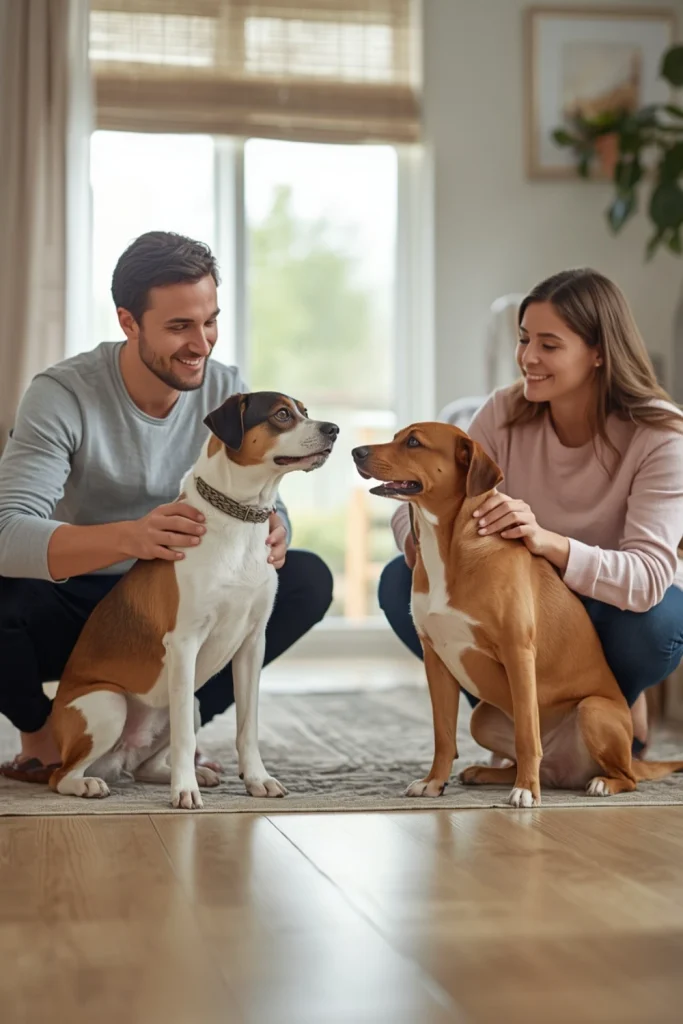
One of the most effective ways to begin training two dogs is to work with each dog individually. Even if both dogs already know basic commands, they may behave differently when their companion is nearby. Choose a quiet room or a separate area where one dog can focus without distractions. Practice simple commands such as “sit,” “stay,” “come,” and “leave it,” rewarding the dog immediately when it responds correctly. Keep the session short and positive. Individual practice helps you understand each dog’s learning speed, motivation, and specific challenges before introducing the added excitement of joint training.
Once both dogs respond more reliably on their own, gradually practice the same skills while they are within sight of each other. Begin at a comfortable distance, with one dog working while the other relaxes behind a gate or with another adult. Switch roles so both dogs receive attention and practice. Do not rush this stage if one dog struggles to concentrate. Separate training is not unfair treatment; it gives each dog an equal opportunity to learn. With regular individual sessions, you can build a stronger foundation for teaching both dogs together.
2. Establish a Consistent Daily Training Routine
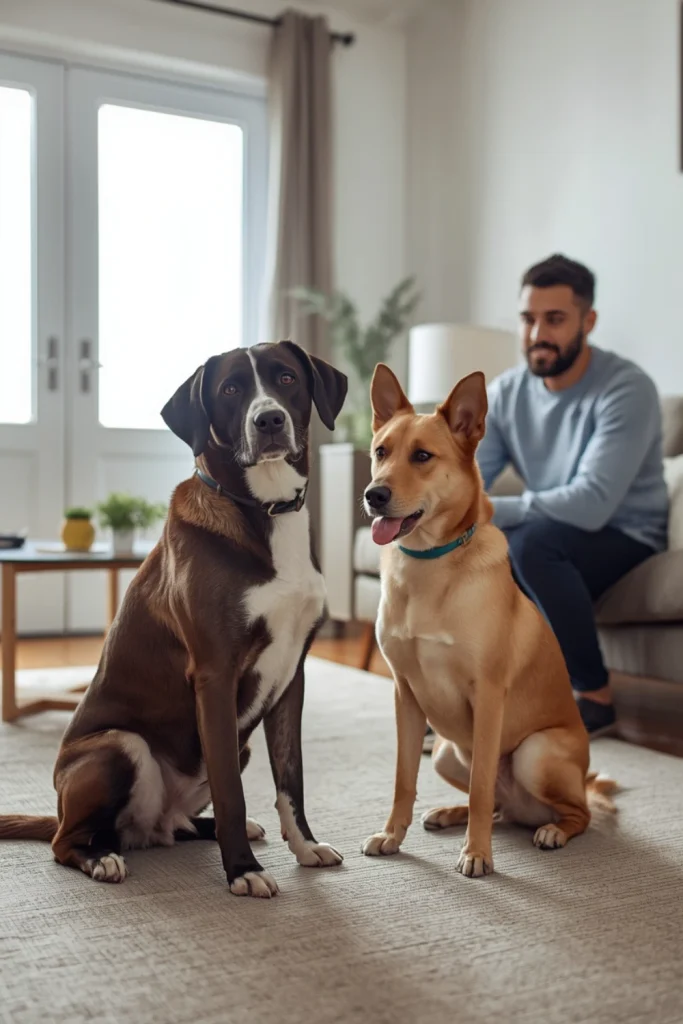
A predictable daily routine helps both dogs understand when to expect training, meals, walks, playtime, and rest. Without a routine, one dog may become overly excited whenever the other receives attention, making it difficult to maintain focus. Choose convenient times for short training sessions, such as before breakfast or after a quiet rest period. Include individual practice for each dog and a little supervised joint training when they are ready. You do not need to spend hours teaching commands. A few brief, consistent sessions can be more effective than occasional, lengthy lessons.
Try to keep household rules consistent for both dogs. If one dog is allowed to jump on people while the other is discouraged from doing so, both may become confused about what is expected. Establish clear rules for furniture, doorways, greetings, and mealtimes. Individual needs can differ, but the cues and boundaries should be understandable and predictable. Use a simple schedule that fits your family’s lifestyle, and adjust it when necessary for puppies, senior dogs, or dogs with health concerns. Consistency builds good habits and makes daily life more manageable.
3. Teach Both Dogs Their Names and Basic Commands
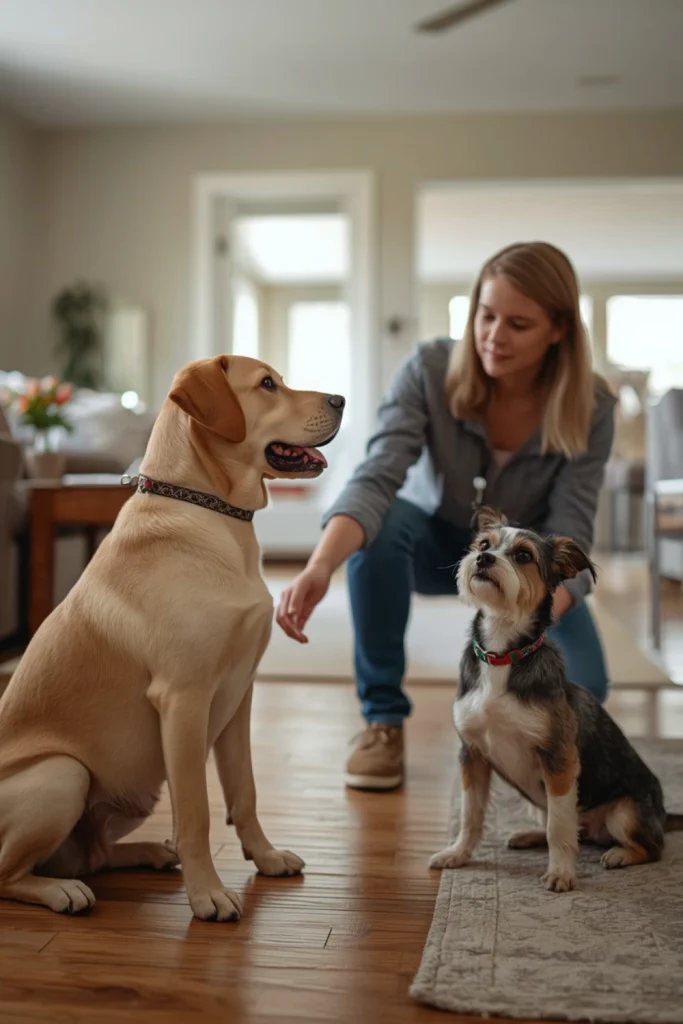
When training two dogs in the same home, make sure each dog understands its own name and basic commands. Name recognition helps you direct attention to one dog without accidentally exciting the other. Start by saying one dog’s name in a friendly voice and rewarding it when it looks toward you. Practice separately before trying this with both dogs present. Then teach each dog simple cues such as “sit,” “down,” “stay,” and “come.” Use clear, consistent words and reward the correct response immediately so the dogs can distinguish what you are asking.
After individual practice, work with both dogs at a comfortable distance. Say one dog’s name before giving its cue, then reward that dog for responding while the other remains calm. Switch turns frequently so neither dog is left waiting too long. If both dogs respond at once, calmly reward the dog that performed the requested behavior and make the next repetition easier. Avoid repeatedly shouting commands or expecting the dogs to understand complicated instructions immediately. Reliable basic skills make it easier to manage walks, visitors, meals, and other everyday situations with two dogs.
4. Use Separate Rewards to Prevent Competition
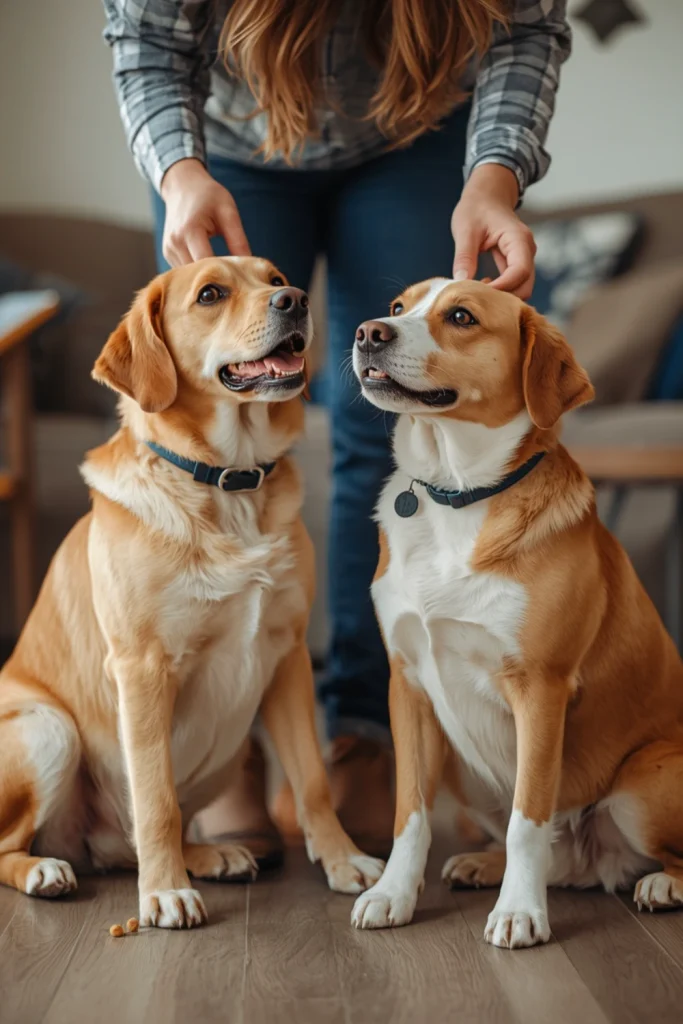
Rewards are an important part of positive reinforcement training, but giving treats to two dogs at the same time can sometimes create competition. One dog may rush toward the other dog’s reward, bark for attention, or attempt to take food from its companion. To avoid these problems, keep the dogs far enough apart that both can relax and focus. Use small treats suitable for each dog’s dietary needs, and deliver each reward directly to the dog that performed the requested behavior. If food causes tension, use separate barriers or work with each dog individually.
Teach both dogs that they do not need to compete to receive attention. Reward calm waiting, maintain a comfortable distance, and avoid tossing treats into a shared space where the dogs might scramble for them. Never ask a child or inexperienced handler to manage a situation involving food-related tension. If either dog stiffens, freezes, growls, or guards food, stop the joint session and separate them calmly. Do not punish warning signals. Individual feeding arrangements and professional guidance may be necessary when competition around resources becomes a recurring problem.
5. Practice Walking Two Dogs Without Pulling
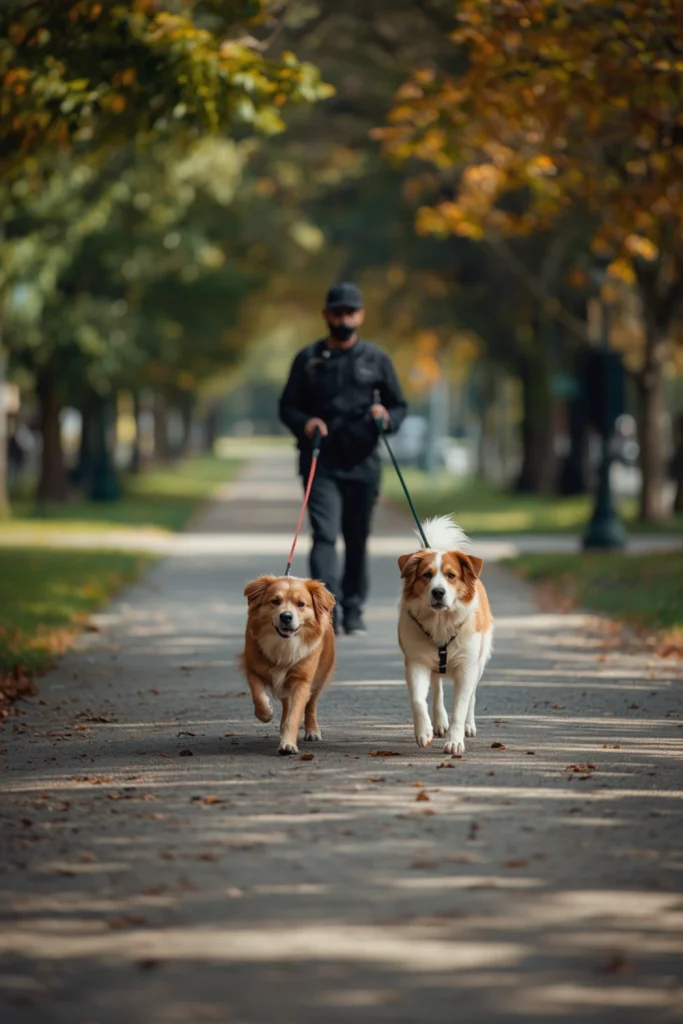
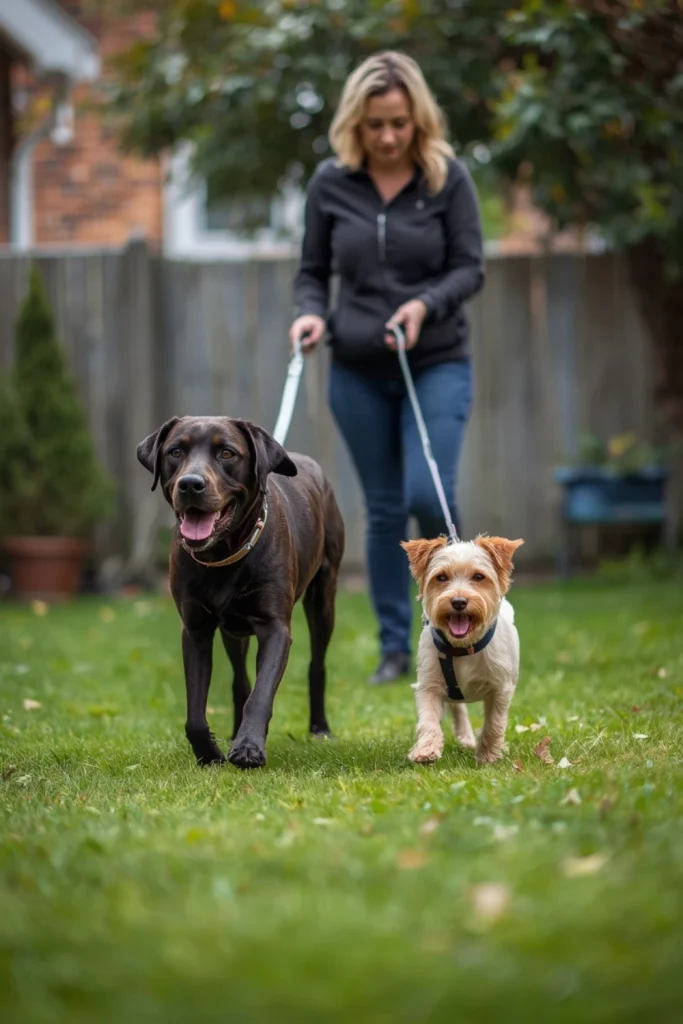
Walking two dogs together can be challenging because they may move at different speeds, respond to different distractions, or encourage each other to pull. Begin by teaching loose-leash walking to each dog separately. Use a well-fitted harness or appropriate collar and a regular leash suited to the dog’s size and needs. Reward the dog for walking near you with a loose leash, and pause when pulling begins. Practice in a quiet area before attempting busy streets or crowded parks. Individual walks also help you identify which environments make each dog excited or uncomfortable.
Once both dogs can walk reasonably well alone, introduce short joint walks with plenty of space. Use separate leashes rather than attaching both dogs to one leash, and avoid wrapping leashes around your hands. An additional adult can help during early practice if managing both dogs safely is difficult. Keep the route quiet, reward calm walking, and increase the duration gradually. If one dog becomes reactive or highly excited, separate walks may remain the better option. Successful joint walks depend on the comfort and safety of both dogs, not on forcing them to walk side by side.
6. Teach Each Dog to Wait Patiently for Attention
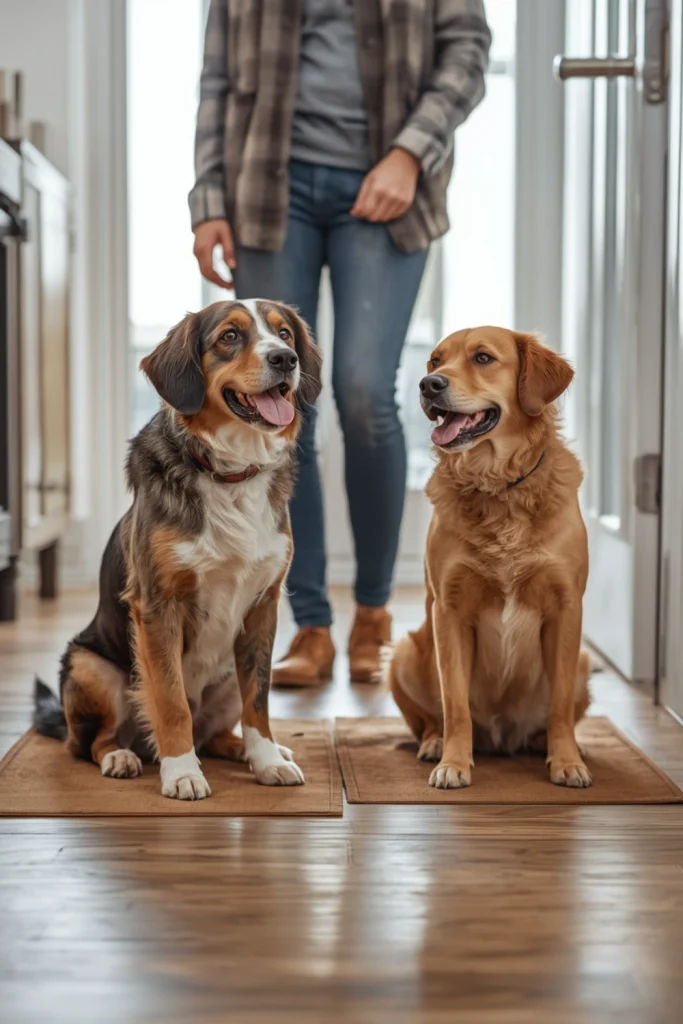
Dogs often become excited when their owner arrives home, picks up a leash, or prepares a training session. When two dogs live together, that excitement can increase because each dog reacts to the other. Teach them that calm behavior earns attention. Begin with one dog at a time, rewarding it for keeping its paws on the floor, sitting comfortably, or waiting briefly while you move. If jumping occurs, avoid rewarding the jumping with excited attention. Wait for a calmer moment and reinforce the behavior you want to see.
When each dog can wait briefly on its own, practice with both dogs in the room. You might reward one dog for sitting while the other waits behind a baby gate or on a separate mat. Switch attention frequently and keep the waiting periods short. Do not expect a young puppy to remain still for long periods, and never use a mat or barrier as punishment. If either dog becomes frustrated, increase the distance or return to individual practice. Teaching patient waiting helps reduce crowding, improves greetings, and makes everyday interactions easier for the entire household.
7. Use Separate Feeding Areas and Teach Meal-Time Manners
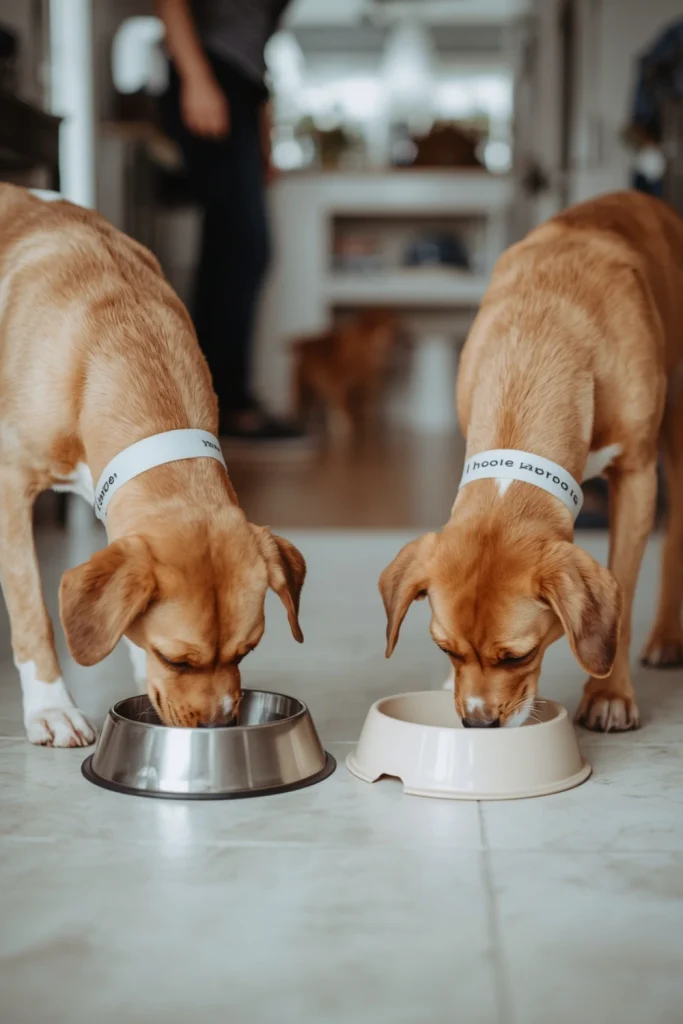
Mealtimes can become stressful when two dogs compete for food or attempt to investigate each other’s bowls. The safest approach is to feed them in separate designated areas, using different rooms, secure gates, or sufficient distance when appropriate. Establish a predictable routine so each dog knows where its meal will be served. Place the bowls down separately, and supervise to ensure that neither dog approaches the other’s food. This is particularly important when one dog eats quickly, has special dietary requirements, or shows signs of resource guarding.
Training can help make mealtimes more orderly, but it should not replace safe separation. Teach each dog to go to its own feeding location and wait while an adult prepares the meal. Reward calm behavior and use consistent cues. Once both dogs are eating, give them space rather than encouraging them to share bowls or finish near each other. Pick up the bowls after the meal if appropriate, especially if either dog guards food. Never punish growling around a bowl or allow children to intervene. If food-related tension persists, seek help from a qualified behavior professional.
8. Train Both Dogs to Settle in Their Own Spaces
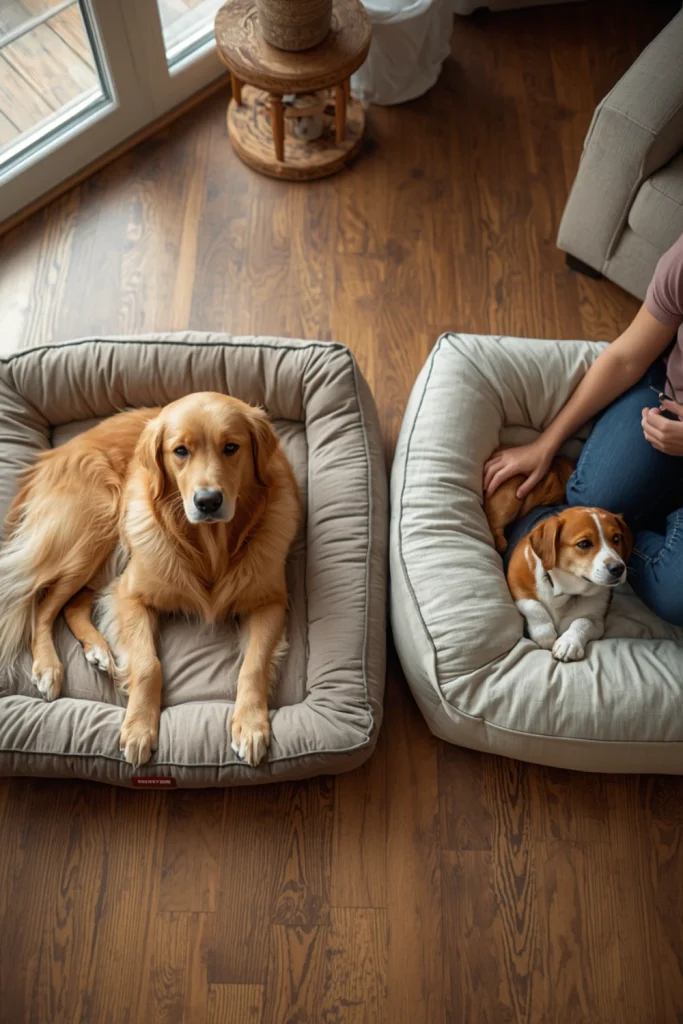
Providing each dog with its own comfortable resting space can reduce tension and make training more successful. Choose beds or mats in quiet areas where each dog can relax without being crowded. Introduce each resting place separately by rewarding the dog for approaching it, stepping onto it, or lying down voluntarily. Use a simple cue such as “bed” or “place” once the dog begins to understand the routine. Keep the area pleasant and never send a dog to its bed as punishment. Resting spaces should be places where dogs feel safe and undisturbed.
When both dogs are comfortable with their own spaces, practice settling in the same room while keeping enough distance between them. Reward relaxed behavior and allow each dog to leave when appropriate unless you are practicing a short, well-established stay. Puppies may need more frequent breaks, while senior dogs may benefit from easy access and supportive bedding. Never force dogs to share a bed or remain close if either appears uncomfortable. Teaching each dog to relax independently can help during family meals, visitors, remote work, and other situations when you need both dogs to remain calm.
9. Prevent Barking and Excitement From Spreading Between Dogs
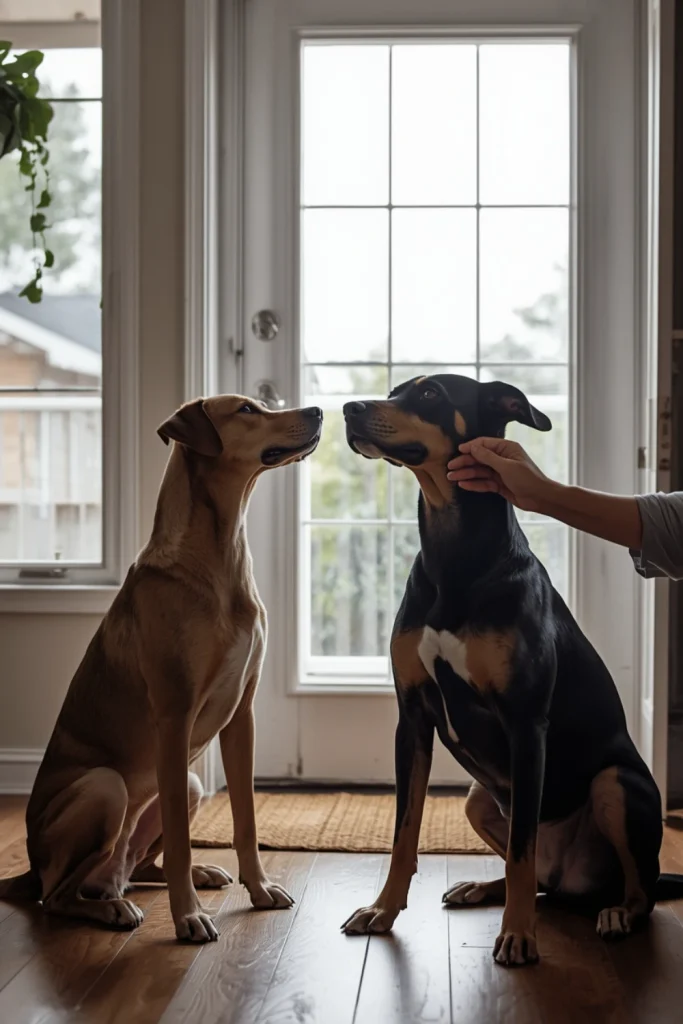
One dog barking can quickly trigger the other to bark, especially when they hear noises outside, see visitors, or notice activity through a window. This behavior can become a habit if both dogs repeatedly practice barking together. Start by identifying the triggers. You may need to close curtains, move beds away from windows, use background noise, or create more distance from the front door. Train each dog individually to respond to a familiar cue, orient toward you, or settle on a mat. Reward quiet attention before barking becomes intense whenever possible.
After individual practice, work with both dogs at a distance from the trigger. Reward them for noticing a sound without immediately reacting, or for turning their attention back toward you. If barking escalates, calmly increase distance or separate the dogs until they settle. Avoid yelling over the barking, as your raised voice may increase excitement. Never punish a dog for communicating fear or discomfort. If the barking is persistent, linked to separation distress, or accompanied by aggressive behavior, seek professional advice. The aim is to manage triggers and teach alternative responses rather than expecting the dogs to remain silent in every situation.
10. Encourage Positive Play Without Overexcitement
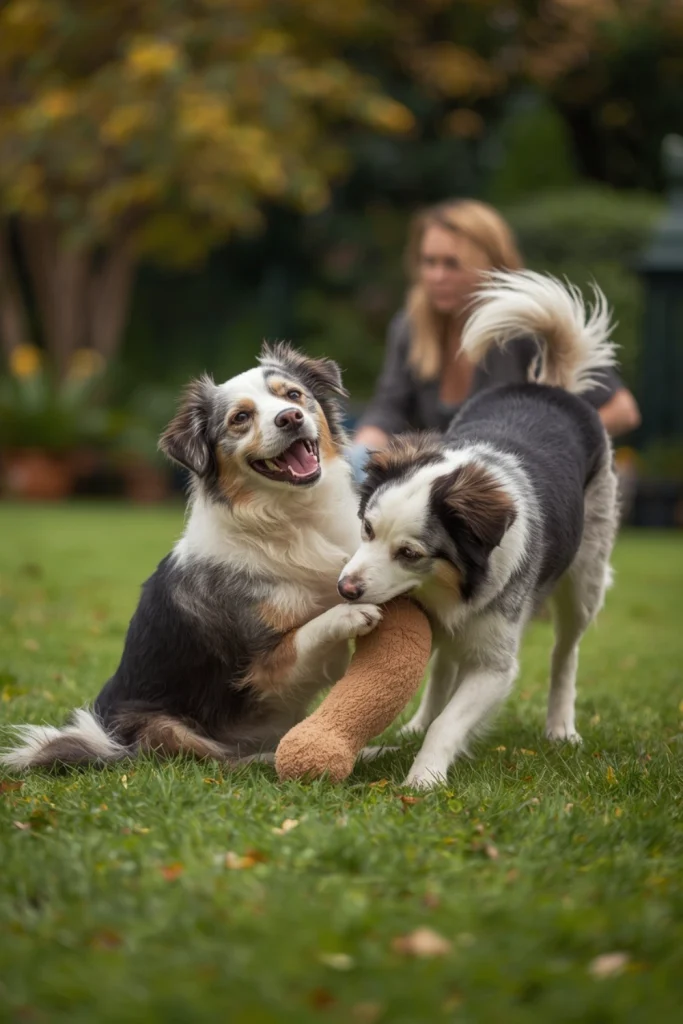
Play can strengthen the relationship between two dogs, but it needs supervision and occasional breaks. Watch for loose, relaxed body movements, pauses, and both dogs willingly returning to the interaction. These are more reassuring signs than constant chasing or one dog repeatedly pursuing another that wants to stop. Choose a safe, spacious area without sharp objects or slippery surfaces. Avoid introducing toys that either dog strongly guards, and do not assume that two dogs who live together will automatically enjoy every type of play. Their preferences and energy levels may differ.
Teach a simple pause routine by calling the dogs away individually, rewarding them, and allowing a short break before deciding whether play should resume. Do not grab collars or place your hands between dogs during a tense interaction. If one dog repeatedly tries to escape, hides, freezes, or shows stiff body language, end the session and give both dogs space. Healthy play should be voluntary and balanced. By monitoring the dogs instead of focusing only on whether they appear to be having fun, you can help prevent overexcitement and make shared play safer and more enjoyable.
11. Introduce New Skills Gradually and Avoid Comparing Dogs
Even dogs living in the same household can have very different learning styles. One might respond quickly to food rewards, while another prefers praise, toys, or more time to understand a new cue. Age, previous experiences, health, temperament, and the training environment all influence progress. Rather than expecting both dogs to learn at the same speed, set individual goals. One dog may be ready to practice a longer stay, while the other still needs help responding to its name around distractions. Celebrate progress according to each dog’s starting point.
Introduce new skills in small steps and practice them in easy environments before adding distractions. If one dog struggles, simplify the exercise rather than allowing the other dog to demonstrate repeatedly while it becomes frustrated. Avoid comparisons, punishment, or withholding basic care because one dog learns more slowly. Keep training rewarding for both animals and adjust sessions when either dog becomes tired or overwhelmed. If a dog suddenly loses a previously learned skill, consider whether pain, illness, stress, or a change in the environment could be involved. A veterinarian can help investigate sudden behavioral changes.
12. Practice Joint Training Sessions With Clear Turns
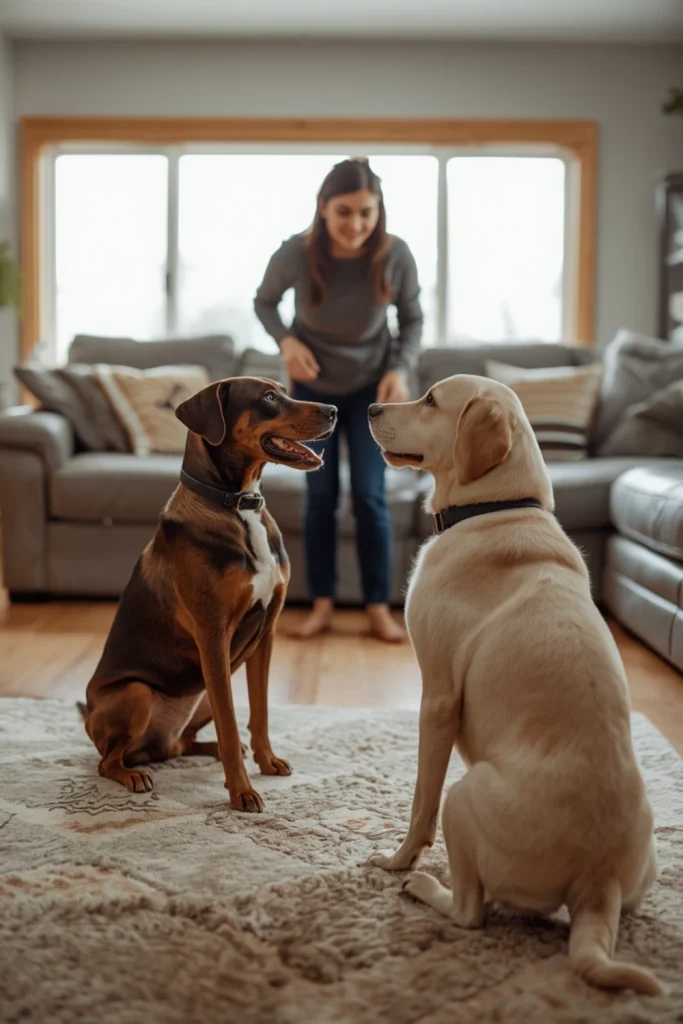
Once both dogs have learned basic skills separately, short joint training sessions can help them practice around one another. Start with a familiar command in a quiet room, keeping enough distance that both dogs can concentrate. Ask one dog to sit, reward it, and then give the second dog a turn. You can use their names to make it clear whose turn it is. Begin with only a few repetitions and end while both dogs are still comfortable. If either dog becomes distracted, return to easier individual practice instead of increasing the pressure.
As the dogs improve, gradually practice in different rooms or slightly more distracting environments. Maintain clear turns, use suitable rewards, and make sure each dog has enough space to respond comfortably. Avoid asking both dogs to perform complicated commands at the same time before they are ready. Joint sessions should reinforce skills they already understand, not replace individual training. Over time, this approach can improve attention, patience, and household manners. Remember that success means both dogs can learn safely and confidently, even if they ultimately need different amounts of practice or different training methods.
Conclusion
Training two dogs in the same home can be a rewarding experience when you combine patience, consistency, and an understanding of each dog’s individual needs. By practicing commands separately, establishing a daily routine, rewarding good behavior, and introducing joint sessions gradually, you can help both dogs develop better manners without unnecessary competition.
Remember that successful training is not about making two dogs behave exactly alike. It is about helping each dog become confident, responsive, and comfortable sharing its home. Give both dogs individual attention, provide safe resting and feeding spaces, and supervise their interactions. With time and positive reinforcement, your dogs can learn to coexist peacefully, enjoy appropriate activities together, and become well-adjusted members of your family.