
10 Safe Puppy Training Games Kids Can Play With Adults
Puppies make wonderful family companions, bringing happiness, energy, and plenty of memorable moments into a home. Training can become even more enjoyable when children participate in simple games that teach puppies basic manners while helping kids develop patience, kindness, and responsibility. With the right activities, ordinary playtime can become an opportunity for the whole family to learn together.
However, puppy training must always put safety first. Young dogs have sharp teeth, developing bodies, short attention spans, and individual comfort levels. Choosing Safe Puppy Training Games that children can enjoy with adults helps create positive experiences without encouraging rough handling or overwhelming the puppy. From learning to respond to a name to practicing calm greetings, these ten games offer practical ways to make training fun, gentle, and rewarding.
1. Name Recognition Game: Teach Your Puppy to Respond
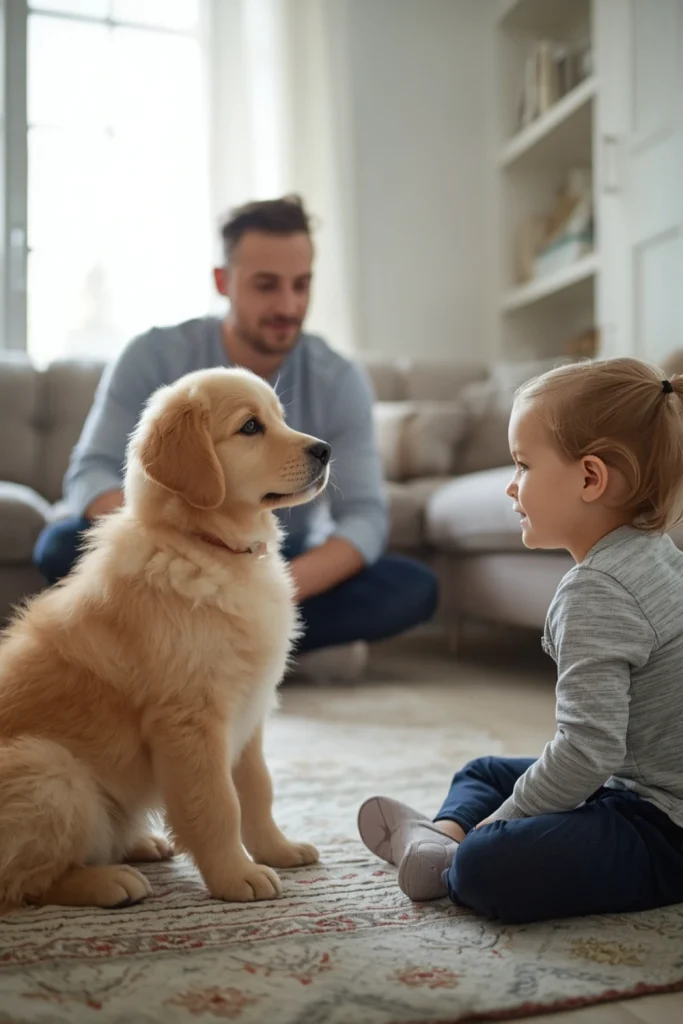
Teaching a puppy to recognize its name is one of the easiest ways to begin training at home. This simple activity helps the puppy learn to pay attention to family members and creates a foundation for future commands. To start, an adult should bring the puppy into a quiet room with minimal distractions. The child can sit comfortably a short distance away and say the puppy’s name once in a cheerful, gentle voice. When the puppy looks toward the child, the adult can immediately reward the puppy with praise or a small treat. Keep the first few attempts easy so the puppy can succeed.
As the puppy becomes familiar with the game, allow different family members to take turns saying its name. Children should use the same name consistently and avoid shouting or repeating it continuously. Keep each session short, stopping while the puppy remains interested. If the puppy does not respond, the adult can make a gentle sound to regain its attention and try again later. Never punish the puppy for failing to respond. The purpose is to create a positive association with its name and encourage attention without fear or pressure.
2. Treat Toss Game: Encourage Positive Exploration
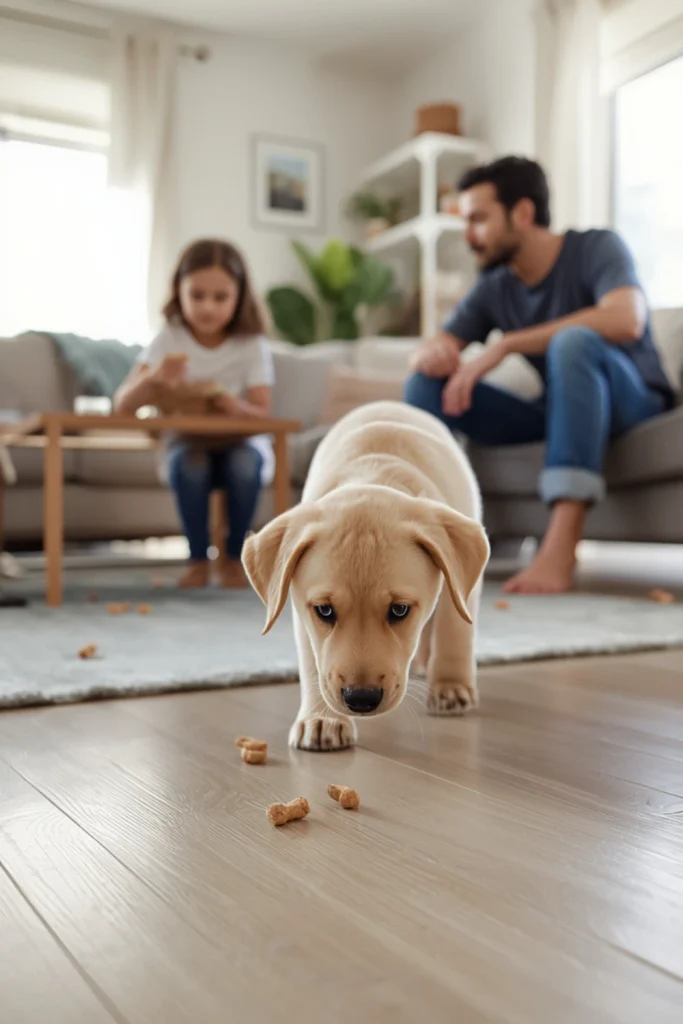
The treat toss game introduces puppies to simple reward-based learning while encouraging gentle movement. An adult should first select small, puppy-safe treats suitable for the dog’s age and dietary needs. Ask the child to remain in a comfortable position while the adult demonstrates how to toss a treat a short distance across a clear, nonslip floor. When the puppy discovers the treat, the adult can offer calm praise. This activity encourages the puppy to explore its surroundings and teaches it that spending time with family members can lead to enjoyable experiences. Keep the space free from obstacles, slippery rugs, and objects the puppy might chew.
To make the activity more educational, the adult can say “find it” immediately before the treat is tossed. The child can repeat the familiar cue while the adult manages the food and watches the puppy’s behavior. Begin with very short distances and avoid throwing treats toward the puppy’s face or encouraging frantic running. Children should never compete with the puppy for food or attempt to remove a treat once the puppy has found it. Stop the game if the puppy becomes overly excited or begins jumping on people. This simple activity can also introduce early scent-searching skills and provide mental stimulation on days when outdoor play is limited.
3. Puppy Hide-and-Seek: Practice Coming When Called
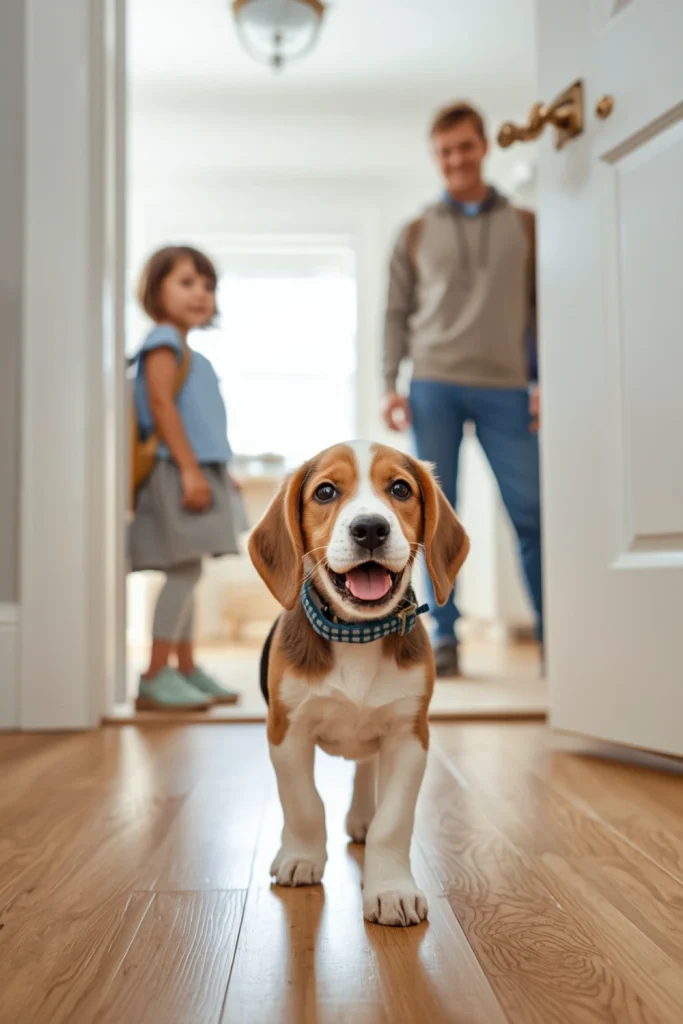
Hide-and-seek is an enjoyable way to introduce recall training, which teaches a puppy to come toward a person when called. Start in a small, puppy-proofed room where the puppy feels comfortable. An adult should remain with the puppy while the child waits in an obvious location, such as beside an open doorway. The child can call the puppy by name using a friendly voice, and the adult can help direct the puppy toward the child if necessary. When the puppy arrives, reward it with praise or a small treat. Early rounds should be easy, allowing the puppy to understand the game without becoming confused or anxious.
As the puppy gains confidence, family members can take turns hiding in slightly different locations around the same safe room. Keep hiding places accessible and avoid cupboards, enclosed spaces, stairs, or furniture that children might climb. Never encourage the puppy to chase children who run away, as this can create unsafe habits. Use the same recall cue each time and make arriving at the person a rewarding experience. If the puppy seems worried or cannot find the child, make the game easier or end it. Short, positive rounds can help improve attention and encourage the puppy to respond more reliably to family members.
4. Follow the Leader: Practice Calm Walking
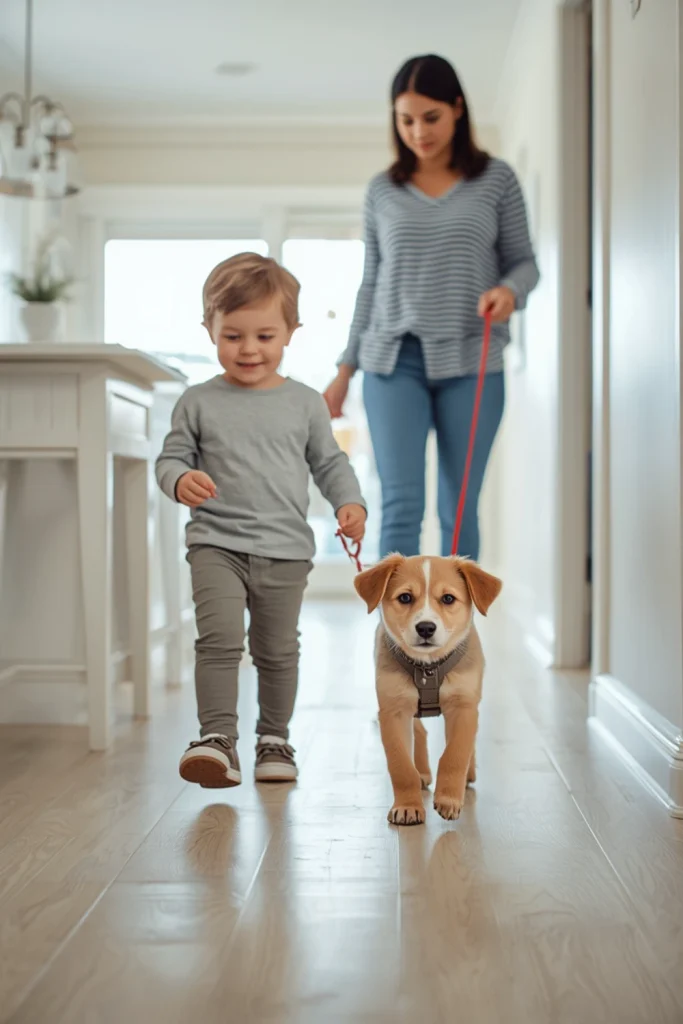
Follow the leader is a gentle training game that teaches puppies to notice people and move calmly alongside them. Choose a spacious hallway or living room with a nonslip surface. An adult should manage the puppy’s leash if one is needed, using a properly fitted harness and lightweight leash suitable for the puppy. The child can walk slowly along a short, clear route while the adult encourages the puppy to follow. When the puppy moves comfortably without pulling, reward it with praise. The activity should remain relaxed and predictable, helping the puppy learn that walking beside a person can be enjoyable.
Once the puppy understands the basic activity, the adult can guide it around a chair or toward a familiar spot in the room. Children should never pull the leash, drag the puppy, or wrap the leash around their hands. The adult must prevent tangling and intervene if the puppy suddenly changes direction. If the puppy stops walking, allow time to investigate rather than forcing it forward. Keep the route short and avoid fast turns, slippery floors, and crowded spaces. This game introduces early leash manners while teaching children that puppies need patient guidance. It can also prepare the puppy for more structured walks as its confidence and training skills develop.
5. Puppy Puzzle Game: Find the Hidden Treat
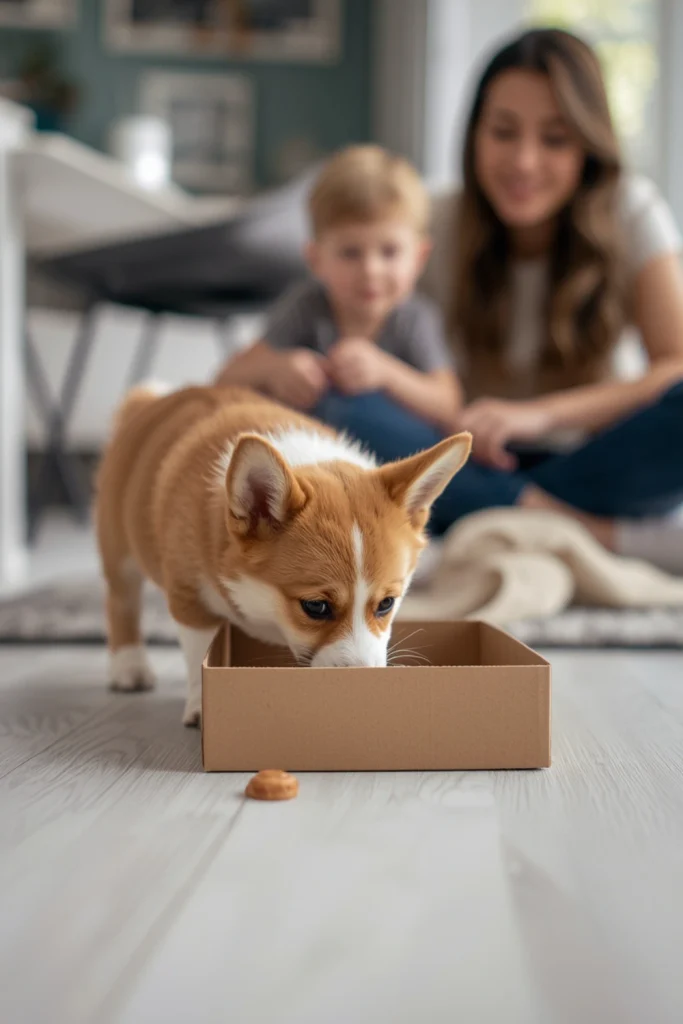
Puppy puzzle games encourage natural curiosity and give young dogs an opportunity to use their noses. For a simple beginner activity, an adult can place a small treat inside an open, sturdy cardboard box or beneath a lightweight cloth. The puppy should be able to discover the treat without squeezing into a confined space or pulling apart a complicated object. The child can encourage the puppy to investigate by saying “find it” in a cheerful voice. When the puppy locates the reward, the adult can offer praise. This game provides mental enrichment and can be particularly useful when the weather makes outdoor activities difficult.
Safety checks are essential before introducing any homemade puzzle. Adults should remove staples, sharp edges, loose strings, plastic pieces, and anything that might be swallowed. The puppy must remain supervised because cardboard and fabric can become dangerous if chewed or eaten. Children should never put their hands inside the puppy’s mouth or compete for the hidden treat. If the puppy starts destroying the puzzle, remove it calmly and offer an appropriate toy instead. Begin with an easy hiding place, then gradually increase the challenge only if the puppy remains relaxed. The goal is to encourage exploration and problem-solving without creating frustration or unsafe chewing habits.
6. Sit and Reward: Learn a Basic Puppy Command
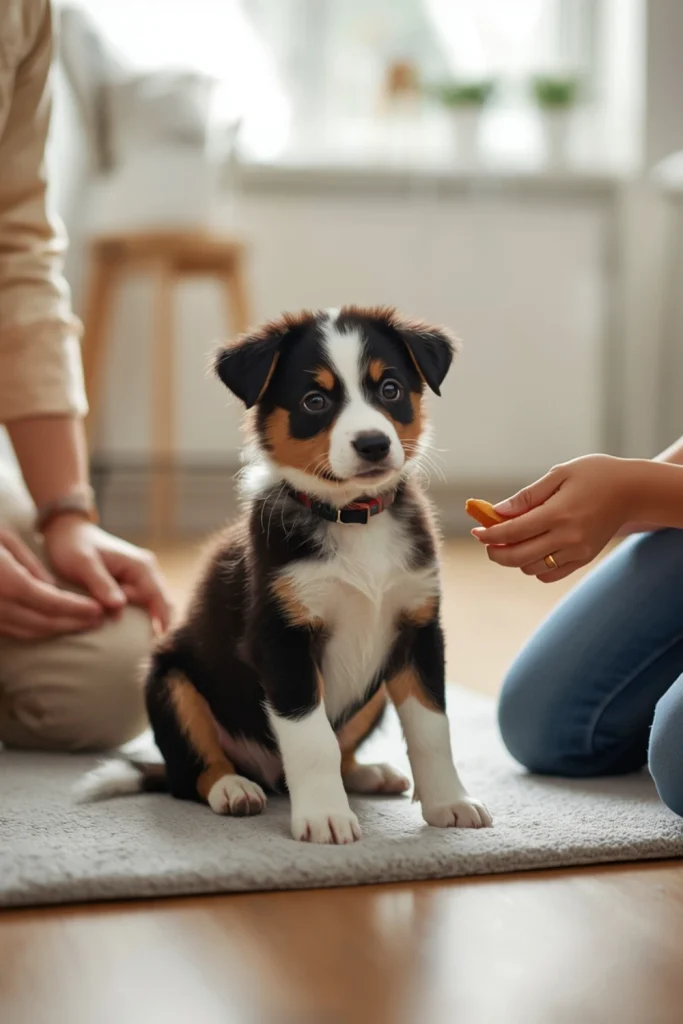
Teaching the “sit” command gives children an opportunity to participate in a useful foundation skill. An adult should begin by demonstrating the exercise in a quiet room. Hold a small treat where the puppy can notice it, then reward the puppy when it naturally sits. Once the puppy begins to understand the pattern, introduce the word “sit” just before the expected action. The child can then take a turn saying the familiar cue while the adult supervises and handles the reward. Praise the puppy immediately when it succeeds. Several short, successful repetitions are more helpful than a long session that causes the puppy to lose interest.
Children should never push the puppy’s body into a sitting position, pull its collar, or repeatedly wave food above its head to make it jump. If the puppy does not respond, the adult can pause and try again with less distraction. Use the same cue consistently so the puppy does not become confused by different instructions. Once the puppy understands the behavior, the family can practice before calm greetings or other everyday activities. However, avoid expecting a young puppy to remain seated for long periods. The goal is to make learning comfortable, reward progress, and build a foundation for polite behavior through patient, positive reinforcement.
7. Toy Pick-Up Game: Encourage Good Play Habits
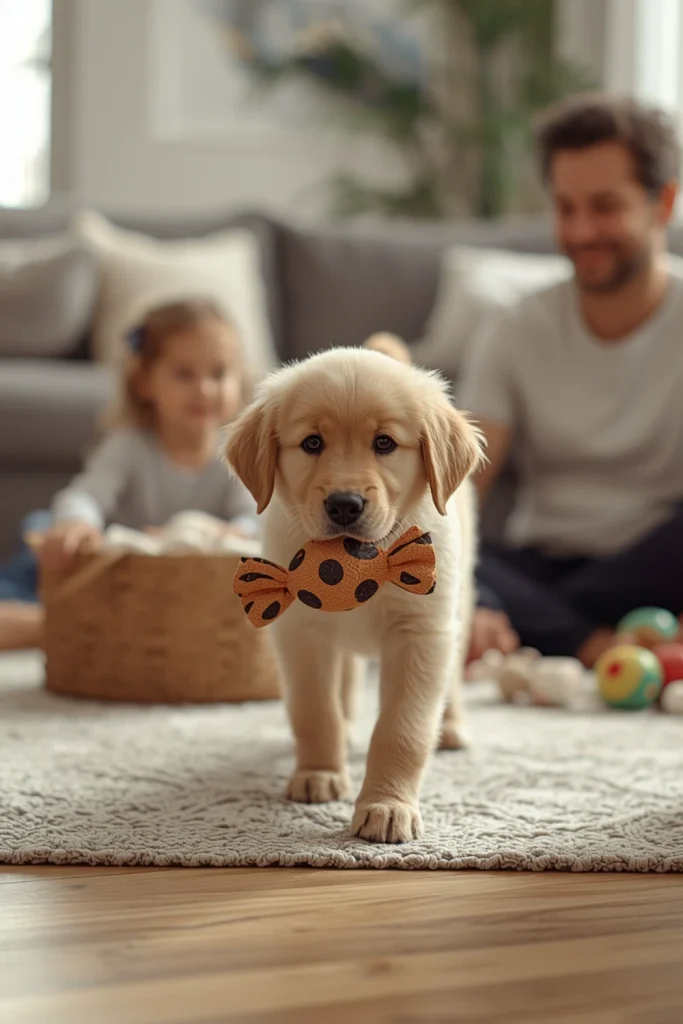
The toy pick-up game helps puppies learn to interact with their own toys while giving children a simple way to participate in training. Start with a soft, durable puppy toy that is appropriately sized and has no detachable parts. An adult can place the toy on the floor and encourage the puppy to investigate it. When the puppy picks it up or carries it a short distance, offer praise. The child can point toward the toy or help place a toy basket in a familiar location. Keep the first sessions simple, rewarding curiosity and gentle interaction rather than expecting the puppy to tidy up perfectly.
As the puppy becomes comfortable, the adult can encourage it to carry the toy toward the basket. Reward small steps, such as approaching the basket or dropping the toy nearby. Children should not chase the puppy to retrieve the toy or pull objects from its mouth. If the puppy becomes possessive, freezes, growls, or shows other signs of discomfort, stop the activity and consult a qualified, reward-based trainer if needed. The adult should manage any exchange using safe methods rather than asking a child to take the toy. With patience, this game can encourage appropriate toy use and introduce a simple household routine without creating conflict around possessions.
8. The Calmness Game: Reward Relaxed Behavior
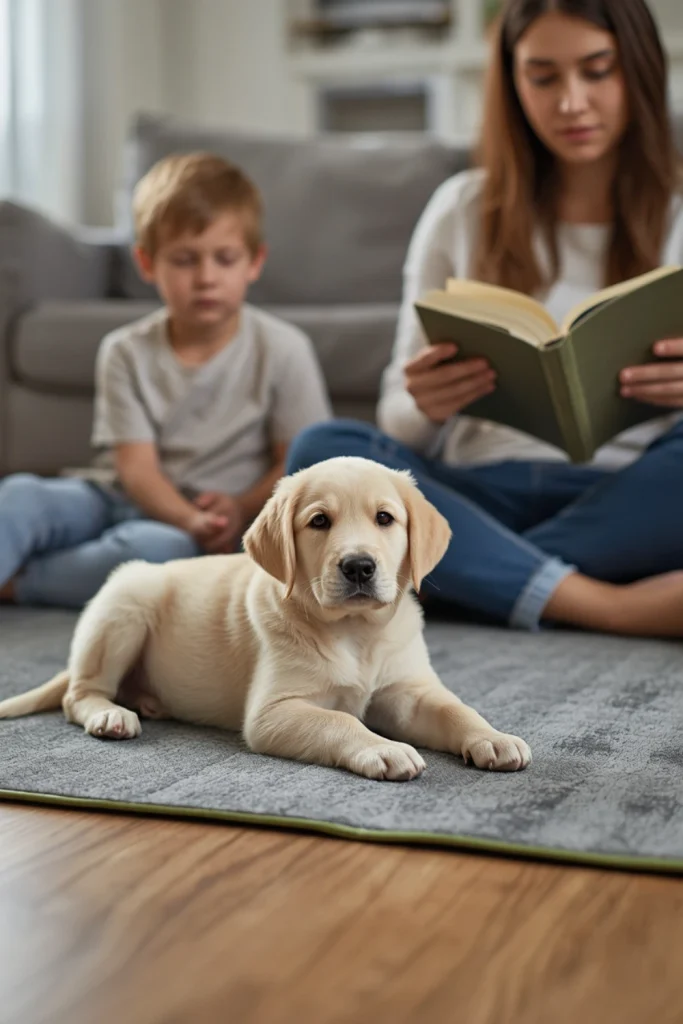
Training does not always need to involve movement or excitement. The calmness game teaches puppies that relaxing around people can be rewarding. An adult can place a comfortable mat in a quiet corner of the room and reward the puppy whenever it voluntarily approaches the mat, sits, or lies down. The child can participate by sitting nearby and quietly reading a book. The adult should deliver small treats calmly, placing them where the puppy can reach them without jumping toward the child. This activity introduces the idea that peaceful behavior is valuable and that puppies do not need constant stimulation to enjoy family time.
With regular practice, the puppy may begin choosing the mat when it needs to settle. Families can use the activity after a short walk, during quiet reading time, or when the household is less busy. Never force the puppy to stay on the mat, hold it in place, or prevent it from moving away. Children should learn that a resting puppy deserves space and should not be disturbed for play. If the puppy gets up, allow it to move freely and try another short session later. This game encourages relaxation and helps children recognize that respectful companionship includes quiet moments, not just active play.
9. Puppy Obstacle Course: Build Confidence Through Exploration
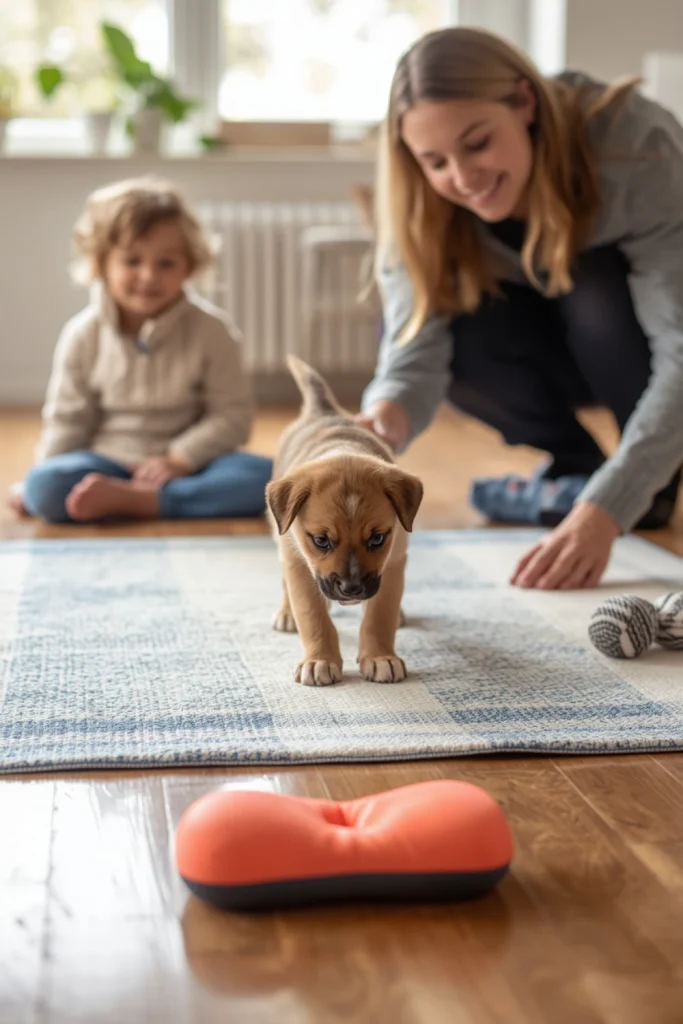
A beginner obstacle course can help puppies become familiar with different surfaces and everyday objects. Create a simple route using a flat towel, a soft cushion, or a wide opening between two stable objects. An adult should inspect the setup to ensure that nothing can slide, fall, or trap the puppy. Allow the puppy to explore the route voluntarily while the child encourages it with a friendly voice. Reward the puppy for investigating a new texture or walking calmly through the course. Keep the obstacles low and easy so the puppy can succeed without jumping or performing physically demanding movements.
As the puppy becomes comfortable, the family can change one element at a time, such as introducing a different mat or moving a familiar object slightly. Never force the puppy to cross a surface that frightens it. Avoid elevated platforms, slippery floors, unstable tunnels, high jumps, and obstacles that place unnecessary stress on developing joints. Children should not lift the puppy over objects or push it forward when it hesitates. If the puppy backs away, simplify the activity or remove the obstacle. This game teaches children to support confidence through patience and helps puppies experience new surroundings at a manageable pace.
10. Gentle Greeting Game: Teach Polite Puppy Manners
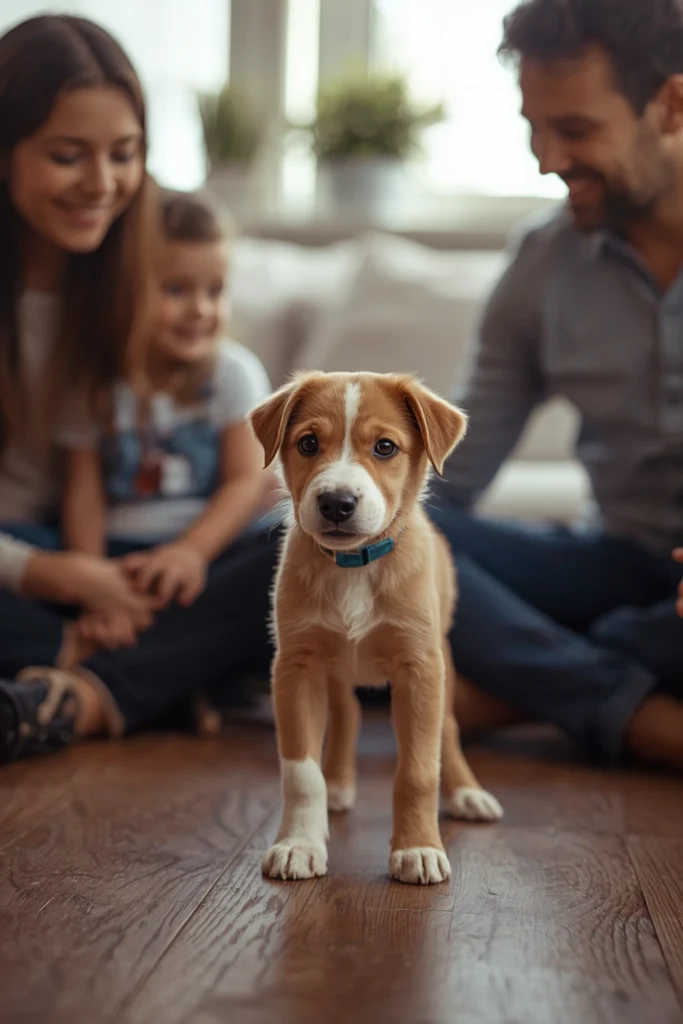
The gentle greeting game helps puppies learn to approach people calmly. Begin when the puppy is relaxed rather than already jumping, barking, or running around excitedly. An adult should supervise closely and ask the child to sit or stand comfortably with their hands near their body. When the puppy approaches with all four paws on the floor, the adult can reward it with praise or a small treat. If the puppy jumps up, the child should avoid pushing it away or waving their hands. The adult can calmly create space and reward the puppy when it returns to a more settled behavior.
Repeat the activity in short sessions, keeping greetings predictable and positive. Children should never hug a puppy tightly, grab its face, pull its ears, or lean over it. Even a friendly dog can feel overwhelmed by close contact, especially when tired or excited. Teach children to ask the adult before approaching and to stop interacting if the puppy moves away. The purpose is not to make a puppy accept every touch but to teach respectful, comfortable greetings. With consistent practice, the puppy can learn that calm approaches are rewarding, while children learn to recognize that animals have boundaries that must always be respected.
Conclusion
The best Safe Puppy Training Games help children and puppies learn together without pressure, rough handling, or unnecessary risks. From name recognition and treat searching to calm greetings and simple obstacle courses, these activities provide practical opportunities to teach basic skills and develop mutual trust.
Remember that every puppy learns at its own pace. Keep sessions short, use positive reinforcement, respect the puppy’s boundaries, and ensure that an adult actively supervises every interaction. When families make safety and kindness their priorities, training becomes more than a way to teach commands. It becomes an opportunity to help children develop empathy, responsibility, and a lasting appreciation for their canine companions.