

15 Crate Training Tips Every Puppy Owner Should Know
Crate training can transform puppy life from chaotic nights and constant supervision into a calmer, more predictable routine. When introduced correctly, a crate becomes more than a place to keep your puppy—it becomes a comfortable space where your puppy can rest, relax, and feel secure.
Whether you are bringing home your first puppy or looking for better training methods, these Tips Every Puppy Owner Should Know can help you build positive crate habits from the beginning. With patience, consistency, and gentle training, your puppy can learn to enjoy crate time without fear or unnecessary stress.
1. Choose the Right Size Crate
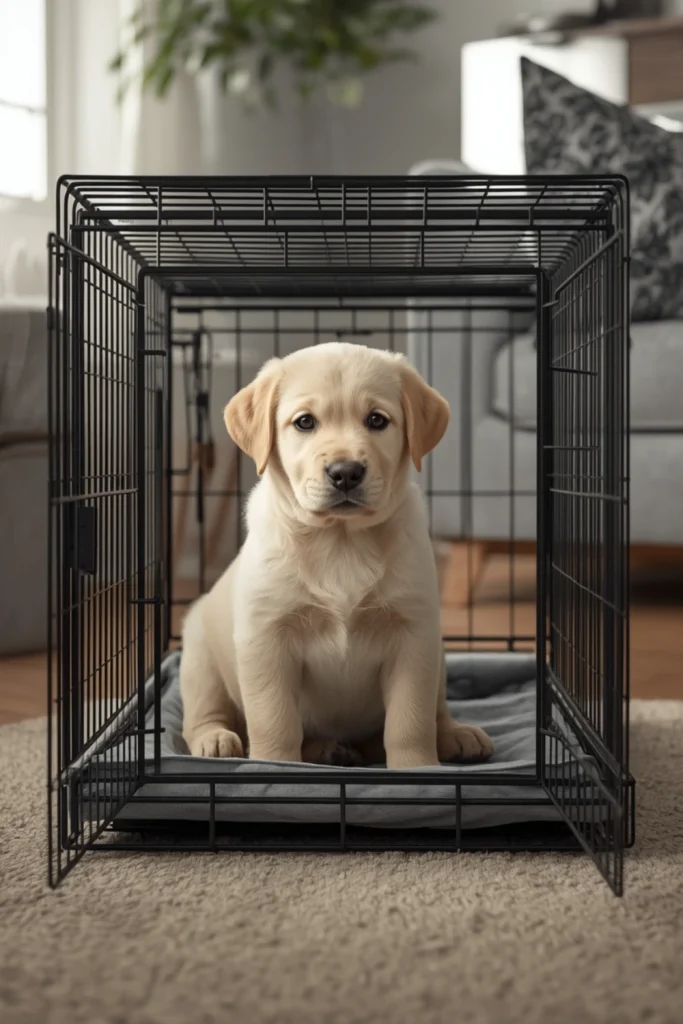
Choosing the correct crate is one of the most important steps in successful crate training. Your puppy should have enough room to stand up comfortably, turn around, sit, and lie down naturally. However, the crate should not be so large that your puppy can comfortably use one end as a sleeping area and the other as a bathroom. A properly sized crate encourages good habits while providing enough space for comfortable movement. If your puppy will grow considerably, an adjustable crate with a divider can be a practical choice.
The crate should also be sturdy, well ventilated, and free from sharp edges or loose parts. Consider your puppy’s temperament when choosing between different crate styles. Some puppies prefer the openness of a wire crate, while others may feel more comfortable in a partially enclosed design. Whichever style you select, safety should always come first. A well-chosen crate creates a positive foundation for the rest of the training process.
2. Introduce the Crate Gradually
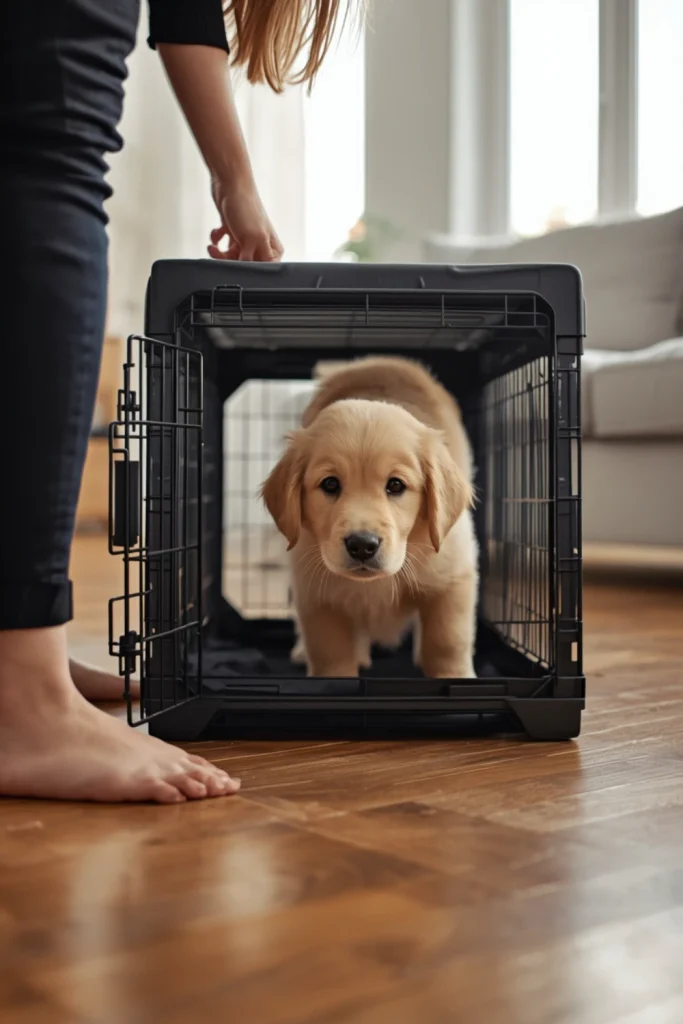
One of the most important Tips Every Puppy Owner Should Know is to avoid rushing the crate-training process. A new puppy may not immediately understand that the crate is a safe place. Leave the crate door open and allow your puppy to investigate it naturally. Place a few treats near the entrance and gradually move them farther inside. Praise your puppy whenever it enters voluntarily. The goal is to make the crate feel familiar rather than forcing your puppy to accept it.
Keep the first sessions short and positive. Your puppy might enter for only a few seconds at first, and that is perfectly fine. Repeat the process throughout the day and gradually increase the amount of time your puppy spends inside. Never drag or push a frightened puppy into the crate. A slow introduction helps build trust and teaches your puppy that entering the crate leads to positive experiences.
3. Make the Crate a Positive Place
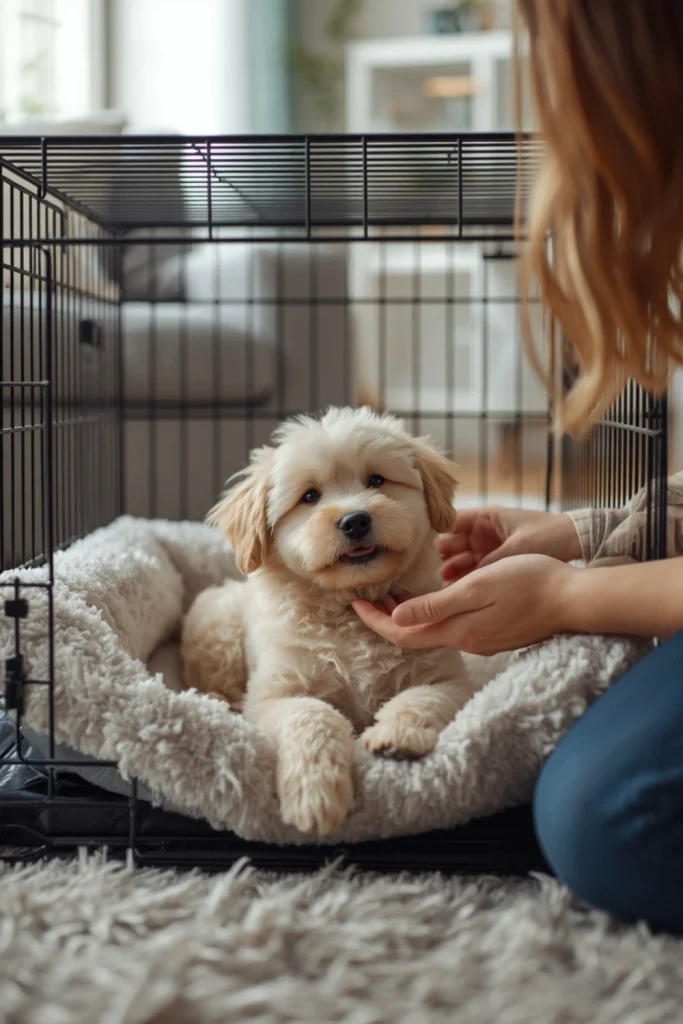
Your puppy should associate the crate with comfort, safety, and good experiences. Place appropriate bedding or a comfortable washable surface inside if your puppy does not chew or destroy it. You can also offer safe puppy-appropriate rewards when your puppy enters voluntarily. Keep your voice calm and encouraging. The more positive experiences your puppy has inside the crate, the more likely it is to view the space as its own comfortable resting area.
Avoid using the crate as a punishment area. Sending a puppy into the crate whenever it misbehaves can create negative associations and make future training much harder. Instead, reward desirable behavior such as entering calmly, lying down, and relaxing. Over time, your puppy can learn that the crate is a peaceful place where it can sleep and take breaks from the excitement of the household.
4. Practice Crate Training During the Day
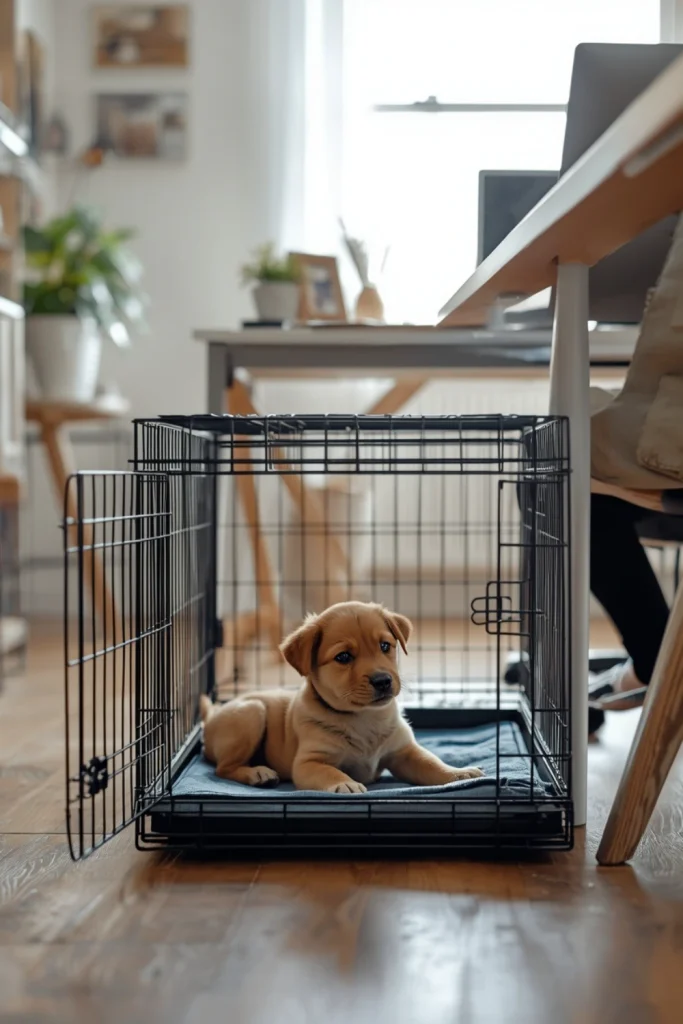
Many puppy owners make the mistake of introducing the crate only at bedtime. Daytime practice can make nighttime training much easier because your puppy becomes familiar with the crate before being expected to spend several hours inside. Start with short sessions while you are nearby. Give your puppy something appropriate to do and allow it to settle naturally. Gradually increase the duration as your puppy becomes comfortable.
Daytime practice also allows you to observe your puppy’s behavior closely. You can learn whether it becomes restless after a certain amount of time or whether it prefers more interaction before settling down. Practice leaving the room for short periods and returning calmly. These small exercises teach your puppy that being alone briefly is normal and that you will return. This can reduce anxiety when nighttime arrives.
5. Create a Consistent Crate Training Routine
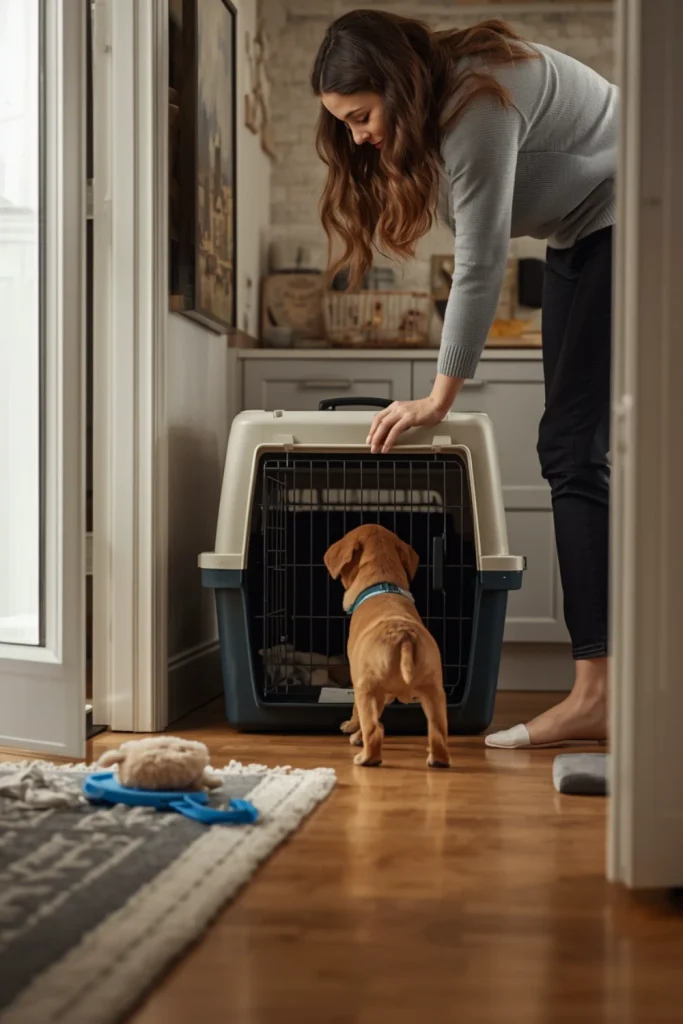
Puppies learn more easily when their daily routine is predictable. Try to use the crate at similar times for naps, quiet periods, and bedtime. A consistent routine helps your puppy understand what to expect. For example, a puppy may learn that a bathroom break, quiet interaction, and a calm transition are followed by crate time. Repetition helps turn individual training sessions into familiar habits.
Consistency does not mean every day must be exactly identical. Puppies and families naturally have changes in schedules. Instead, focus on maintaining the basic pattern. Reward calm behavior and avoid making crate entry a dramatic event. When your puppy learns that crate time is simply part of normal daily life, it is less likely to view the crate as something unusual or frightening.
6. Use Positive Reinforcement
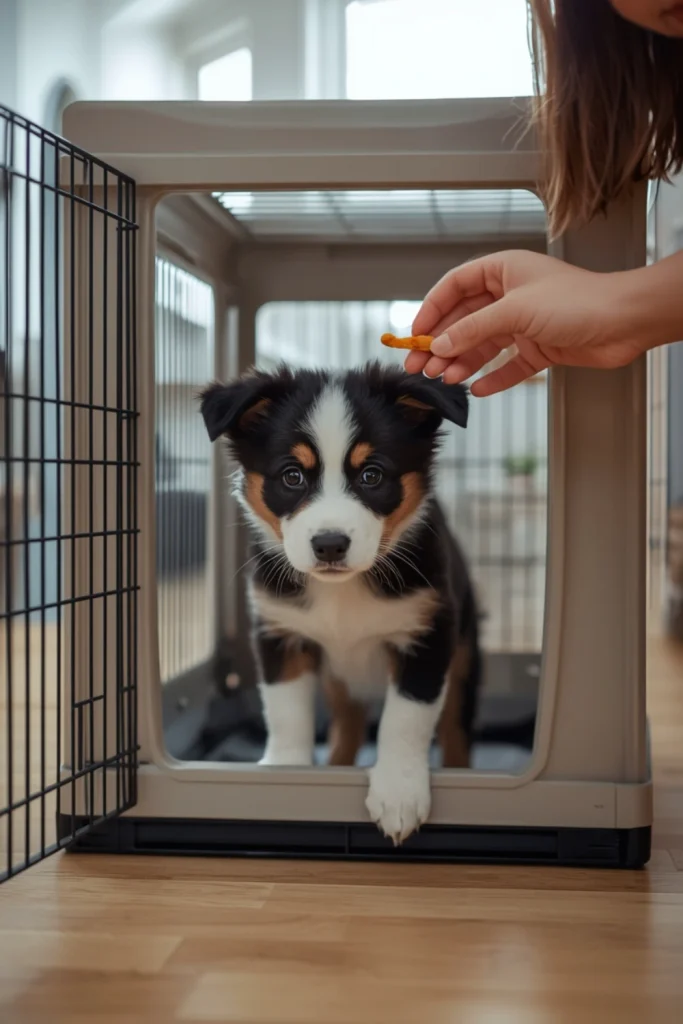
Positive reinforcement is one of the most effective approaches to puppy crate training. Whenever your puppy voluntarily enters the crate, remains calm, or settles quietly, provide an appropriate reward. This can include praise, a small training treat, or another reward your puppy enjoys. The reward helps your puppy understand which behaviors you want to see repeated.
Timing matters. Try to reward the behavior while it is happening or immediately afterward. For example, if your puppy walks into the crate and lies down calmly, reward that behavior rather than waiting several minutes. Over time, you can reduce the frequency of treats and rely more on praise and the puppy’s natural comfort with the crate. The objective is to build a strong positive association rather than create permanent dependence on food rewards.
7. Establish a Calm Bedtime Routine
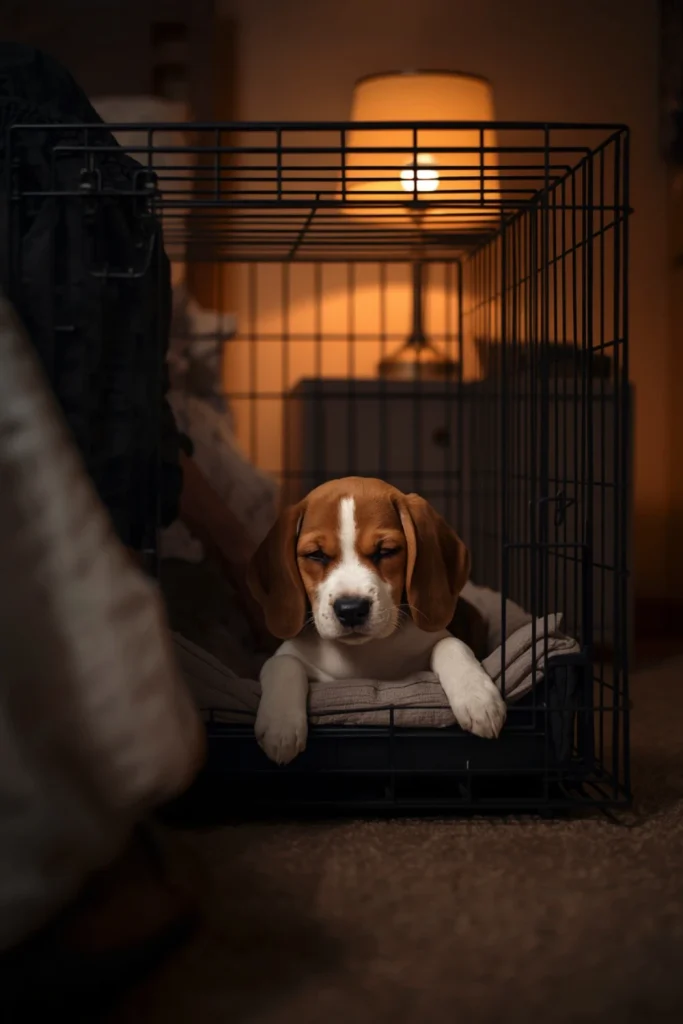
A predictable bedtime routine can help your puppy understand that the day is coming to an end. About bedtime, reduce exciting activities and move toward calmer interactions. A suitable routine might include quiet play, a final bathroom opportunity, a few minutes of gentle interaction, and then crate time. Keep the environment peaceful and avoid highly stimulating games immediately before putting your puppy to bed.
The exact routine will depend on your household and your puppy’s needs, but consistency is valuable. Use the same simple cue, such as “bedtime,” whenever you guide your puppy into the crate. With repetition, your puppy can learn to associate that cue with resting. A calm transition is especially useful for puppies that become excited easily or have difficulty settling after a busy evening.
8. Take Your Puppy Outside Before Crate Time
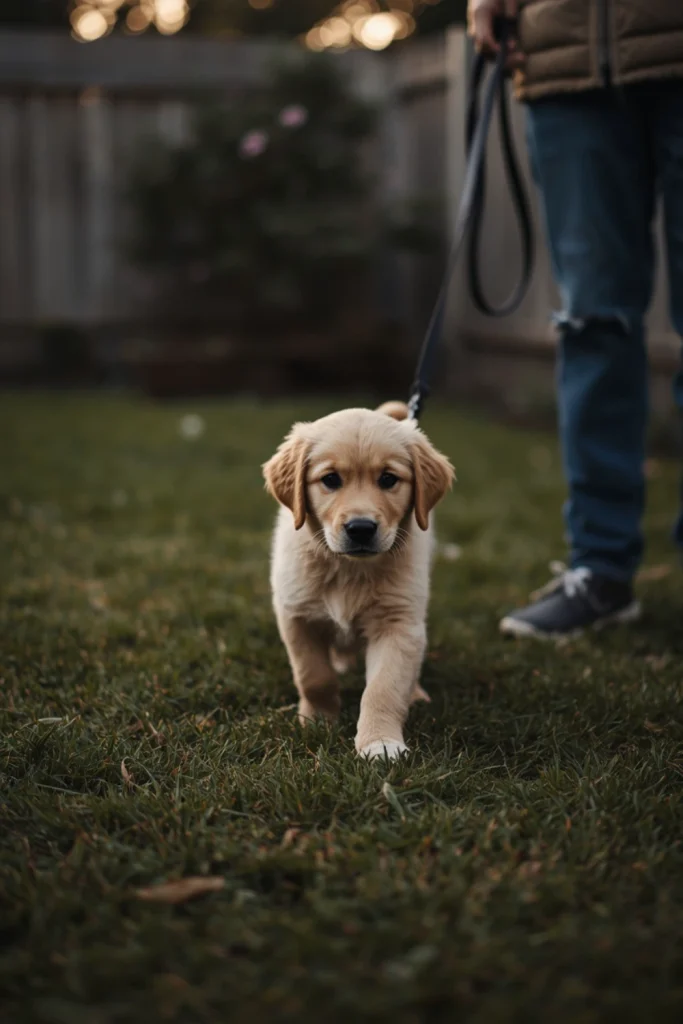
A bathroom break before a longer crate session is an essential part of puppy training. Young puppies have developing bladder control and may need to urinate frequently. Taking your puppy outside shortly before bedtime or a longer crate period can reduce the chance of an accident. Give your puppy enough time to relieve itself without turning the bathroom trip into an exciting play session.
Pay attention to your puppy’s individual pattern. Some puppies may need to go shortly after eating, drinking, playing, or waking from a nap. If accidents continue, consider whether your puppy is being asked to remain in the crate for too long. Never punish a puppy for an accident. Clean the area thoroughly and adjust the routine to provide more appropriate bathroom opportunities.
9. Keep the Crate Near You at First
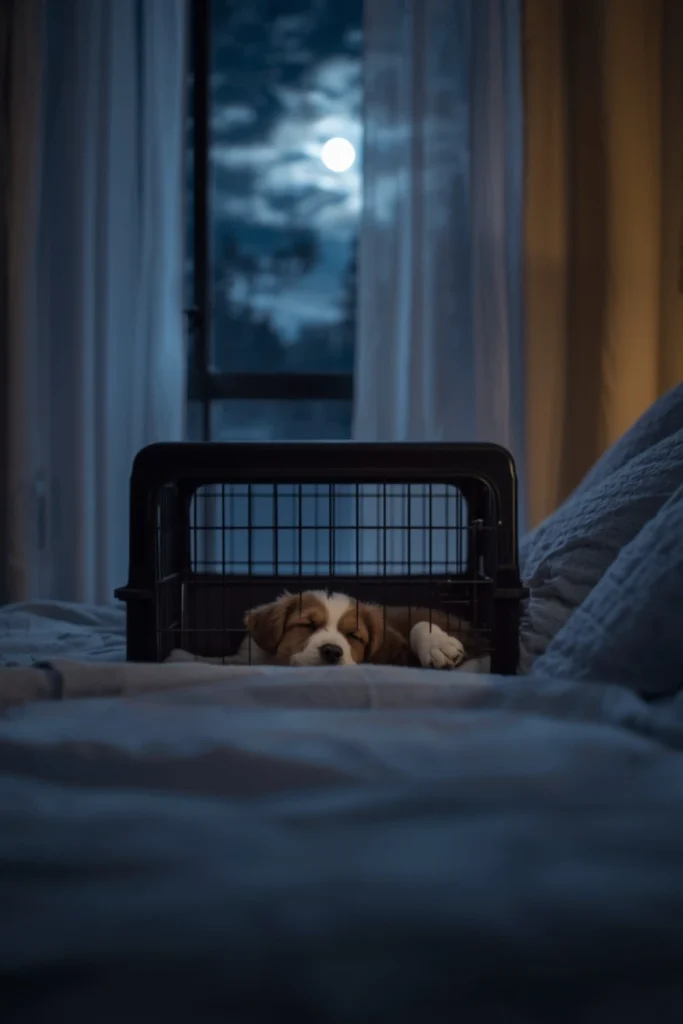
For a young puppy, sleeping alone in a completely unfamiliar room can be stressful. Placing the crate near your bed during the first nights can provide reassurance while also allowing you to notice when your puppy needs a bathroom break. Your presence can make the transition from sleeping with littermates to sleeping independently easier.
Once your puppy becomes comfortable sleeping in the crate, you can gradually move it toward its long-term location if necessary. Move the crate a small distance at a time rather than making a sudden change. Every puppy adjusts differently, so allow your puppy’s behavior to guide the pace. The goal is to build confidence while avoiding unnecessary nighttime stress.
10. Teach Your Puppy to Enter on Cue
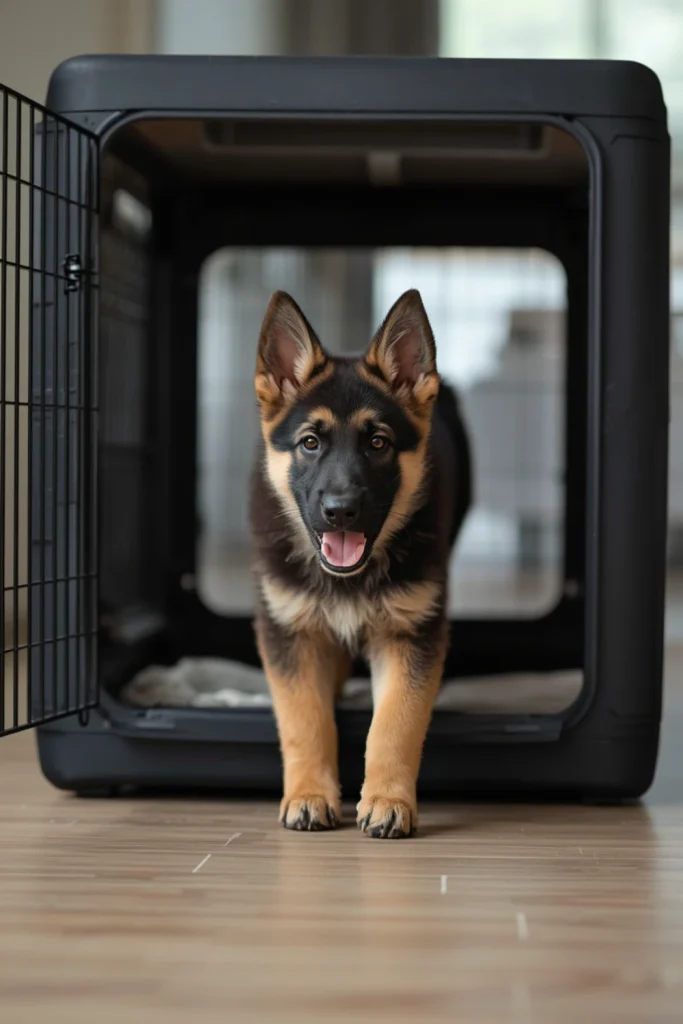
Teaching a simple crate-entry cue can make everyday training easier. Choose a short word such as “crate,” “bed,” or another consistent command. Say the cue in a calm voice and encourage your puppy to walk toward the crate. Reward your puppy when it enters. At first, you may need to guide the puppy with a treat, but gradually reduce the assistance as your puppy understands the cue.
Do not repeatedly shout the command or force your puppy inside. The cue should remain associated with a positive action. Practice when your puppy is relaxed and receptive rather than only when you need to leave the house. Eventually, your puppy can learn to respond to the cue by entering the crate willingly. This skill can be useful during bedtime, travel, visitors, cleaning, and other situations requiring a safe resting area.
11. Manage Nighttime Whining Carefully
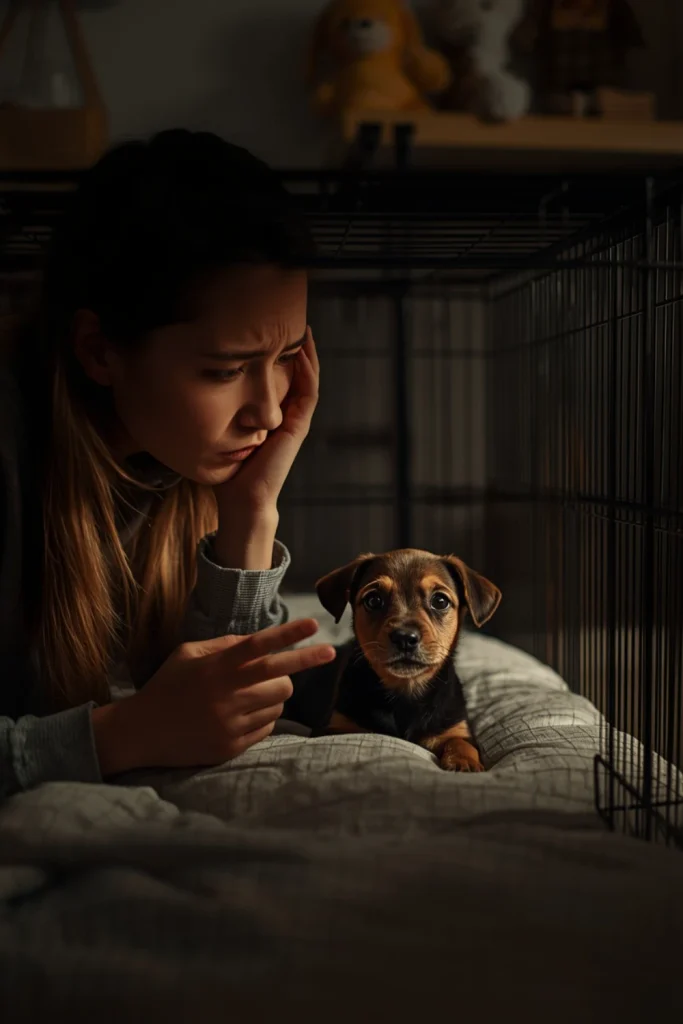
Nighttime whining is common when puppies are first learning to sleep in a crate. However, whining can have different causes. Your puppy may need to use the bathroom, feel lonely, be uncomfortable, or simply be adjusting to the new environment. Before deciding how to respond, consider whether there is a genuine need. Young puppies cannot always control their bladder for long periods, especially overnight.
When your puppy has recently gone to the bathroom and appears comfortable, keep nighttime interactions quiet and boring. Avoid turning a bathroom break into playtime. If your puppy shows intense or escalating distress, reassess the training rather than simply increasing the amount of time it spends confined. Never yell at or physically punish a puppy for whining. Calm, gradual training is more likely to build confidence and trust.
12. Provide Safe Crate Accessories
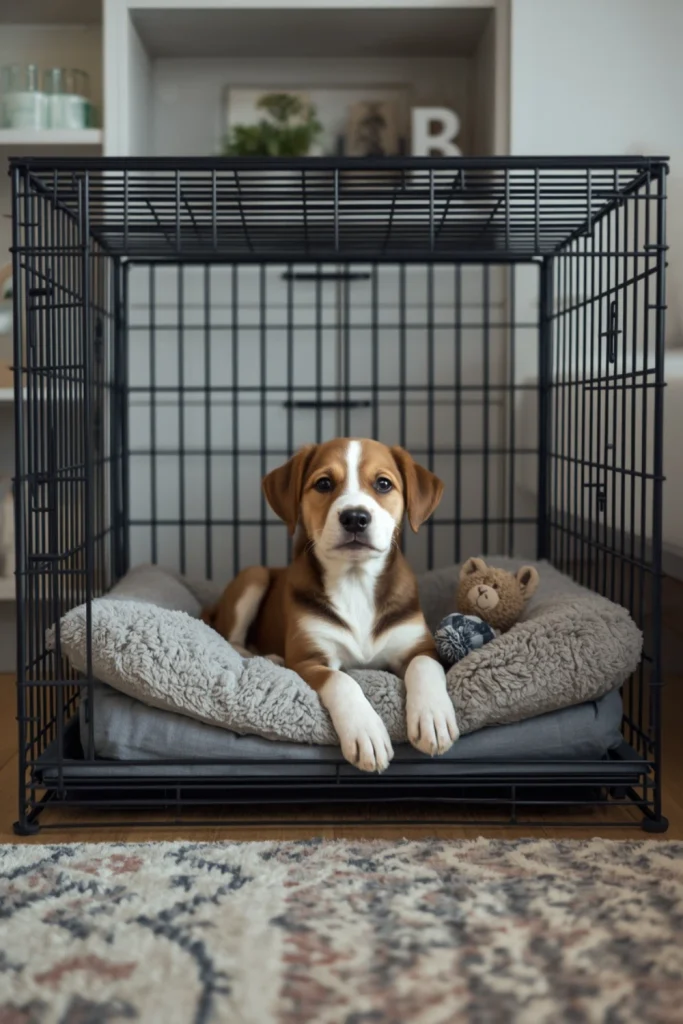
A comfortable crate may benefit from appropriate bedding and safe accessories, but every puppy has different habits. Some puppies love sleeping on soft bedding, while others immediately chew, shred, or swallow pieces. If your puppy destroys bedding, remove unsafe materials and provide a simpler sleeping environment until it can be trusted with them.
Any toy or chew offered during crate time should be appropriate for the puppy and suitable for the level of supervision available. Avoid objects with small pieces that could break off or become choking hazards. Regularly inspect the crate, bedding, and accessories for damage. Safety should always take priority over decoration. A simple, secure crate is better than an attractive crate filled with items that could hurt your puppy.
13. Gradually Increase Crate Time
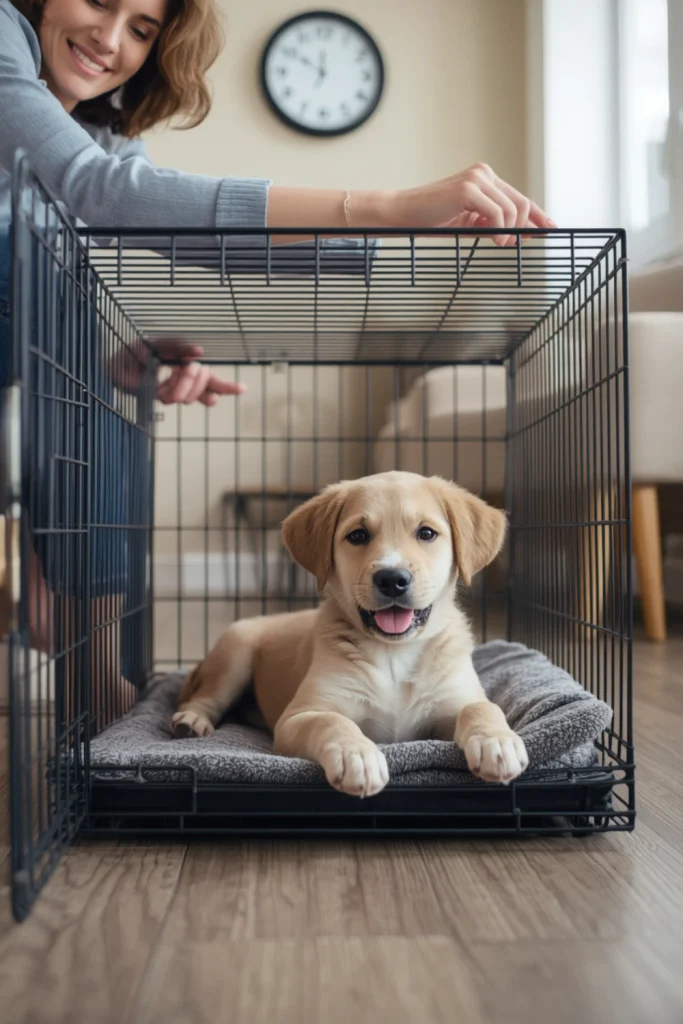
Puppies need time to develop the ability to relax in a crate for longer periods. Begin with very short sessions and increase the duration gradually. If your puppy remains calm, you can extend the next session slightly. If your puppy becomes increasingly distressed, the session may have progressed too quickly. Returning to a shorter duration can help rebuild confidence.
Remember that crate training is not a competition. The goal is not to see how long your puppy can remain confined. The goal is to teach your puppy that the crate is a comfortable place for appropriate periods of rest. Puppies also need exercise, social interaction, training, exploration, and regular bathroom opportunities outside the crate. Balanced daily activity supports better crate behavior.
14. Never Use the Crate as Punishment
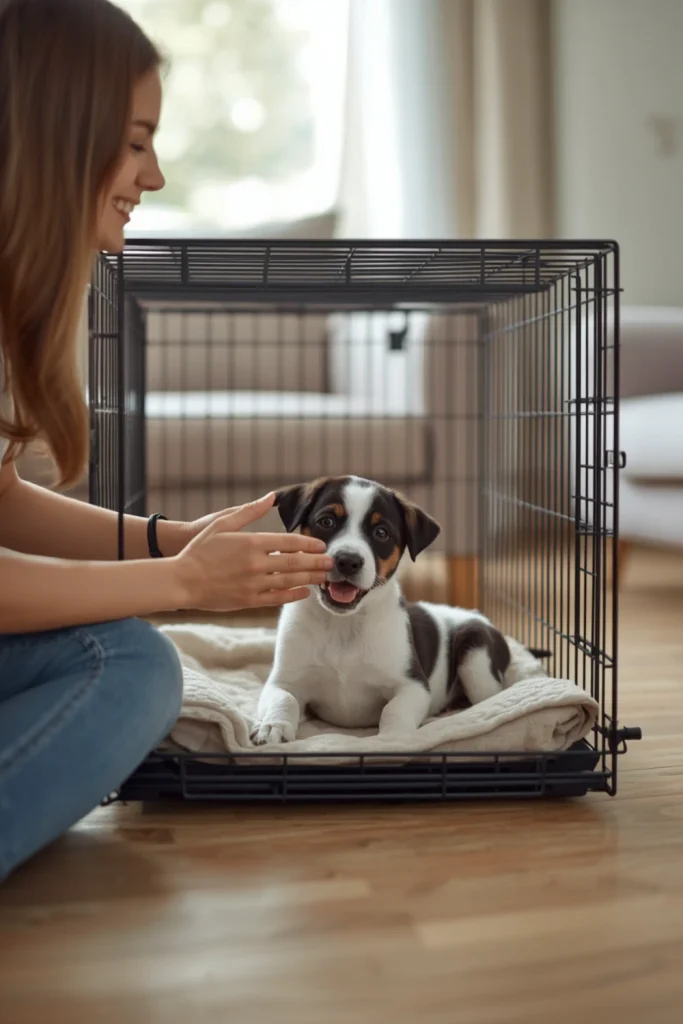
One of the most important Tips Every Puppy Owner Should Know is that the crate should never become a punishment zone. If a puppy learns that bad behavior always results in being locked away, it may begin to dislike the crate. This can create resistance at bedtime and make routine crate training significantly more difficult.
Instead, manage unwanted behavior using appropriate training and environmental management. If your puppy makes a mistake, calmly redirect it toward a suitable behavior. Continue rewarding calm crate behavior independently from discipline. When the crate consistently predicts rest, safety, and positive experiences, your puppy is more likely to enter willingly and settle comfortably.
15. Be Patient and Consistent
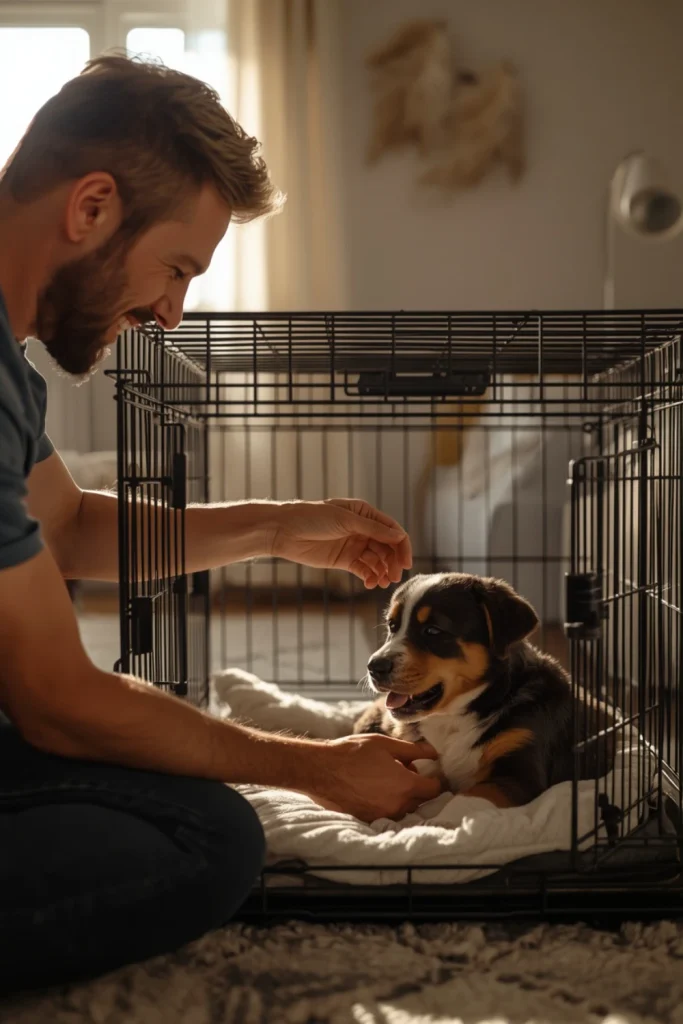
The final tip is perhaps the most important: be patient. Every puppy learns at a different pace. Some puppies quickly become comfortable with their crates, while others need more time to adjust. Your puppy may have a successful night followed by a difficult one, and that does not necessarily mean training has failed. Focus on gradual improvement rather than expecting perfection.
Consistency helps your puppy understand what is expected. Use similar cues, routines, and rewards, while remaining flexible enough to respond to your puppy’s actual needs. Celebrate small successes such as entering willingly, settling faster, or sleeping longer. If your puppy shows persistent panic, unusual distress, or sudden changes in bathroom behavior, speak with a veterinarian or qualified reward-based trainer. Good crate training should prioritize both learning and your puppy’s well-being.
Final Thoughts
Learning the right Tips Every Puppy Owner Should Know can make crate training easier, calmer, and more successful. The key is to create positive associations instead of relying on force or punishment. Choose the right crate, introduce it gradually, establish predictable routines, provide appropriate bathroom breaks, and reward calm behavior.
Remember that your puppy is learning an entirely new way of living. Patience matters. With consistent training and a safe environment, the crate can become a trusted place where your puppy rests comfortably. Give your puppy time to adjust, pay attention to its individual needs, and celebrate small improvements along the way.