12 Exercises to Help Your Dog Focus Around Distractions
Training your dog to focus around distractions can make everyday life much easier. Whether you are walking through a busy park, meeting other dogs, welcoming guests, or spending time outdoors, your dog needs to learn how to pay attention even when exciting things are happening nearby. A dog that can focus on you is often easier to guide, safer in public, and more confident in unfamiliar environments.
The good news is that you do not need expensive equipment or complicated training methods to build your dog’s attention. With short practice sessions, positive reinforcement, and consistent rewards, you can gradually teach your dog to respond to you around different distractions. These 12 exercises will help you strengthen your dog’s focus, improve impulse control, and build a stronger relationship through practical, enjoyable training.
1. Practice the Name Response Exercise
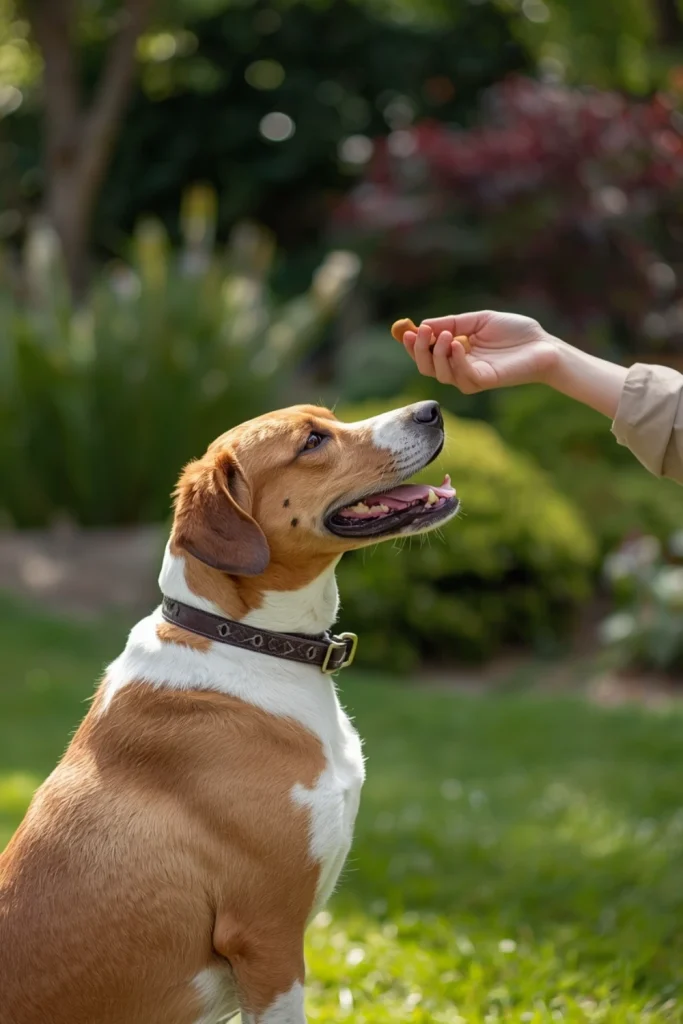
One of the simplest ways to help your dog focus around distractions is to teach a reliable response to their name. Begin in a quiet room where your dog feels comfortable and there are few competing sights or sounds. Say your dog’s name once in a friendly voice. When they turn their head toward you, immediately mark the behavior with a word such as “Yes” and offer a small treat. Repeat several times, allowing your dog to return to whatever they were doing between repetitions.
Once your dog responds consistently indoors, practice in slightly more challenging locations. Try the garden, a quiet driveway, or a peaceful outdoor path. Introduce distractions gradually and reward your dog whenever they turn toward you after hearing their name. If your dog does not respond, move farther away from the distraction or choose an easier environment. Avoid repeatedly calling their name when they are unable to respond, because this can weaken the association over time.
2. Teach the Look at Me Cue
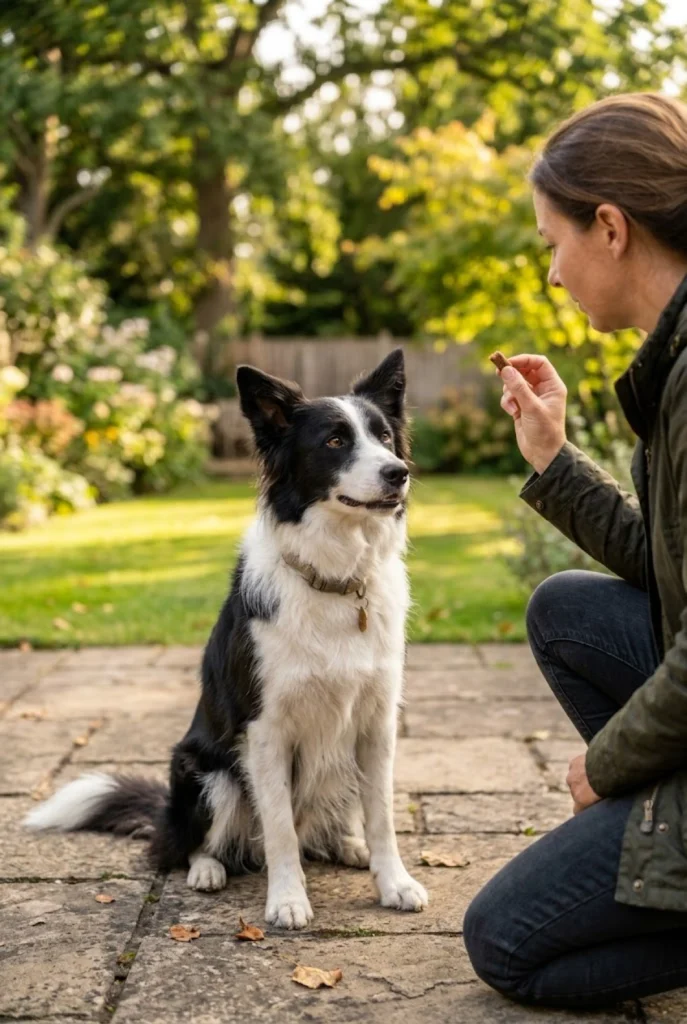
The “Look at Me” exercise teaches your dog to make eye contact when you ask. Start indoors with your dog standing or sitting comfortably in front of you. Hold a small treat near your face and wait for your dog to look toward your eyes. As soon as they do, say “Yes” and reward them. After several successful repetitions, introduce a verbal cue such as “Look” or “Focus” just before your dog looks at you. Keep the sessions short and rewarding so your dog remains interested.
When your dog understands the cue, begin practicing with mild distractions. You might stand near a window, work in the garden, or train in a quiet outdoor space. Ask for one brief glance, reward it, and then allow your dog to look around again. Gradually increase the time your dog maintains attention, but do not demand long eye contact. The goal is a willing check-in, not forcing your dog to stare at you while ignoring everything else.
3. Reward Voluntary Check-Ins During Walks
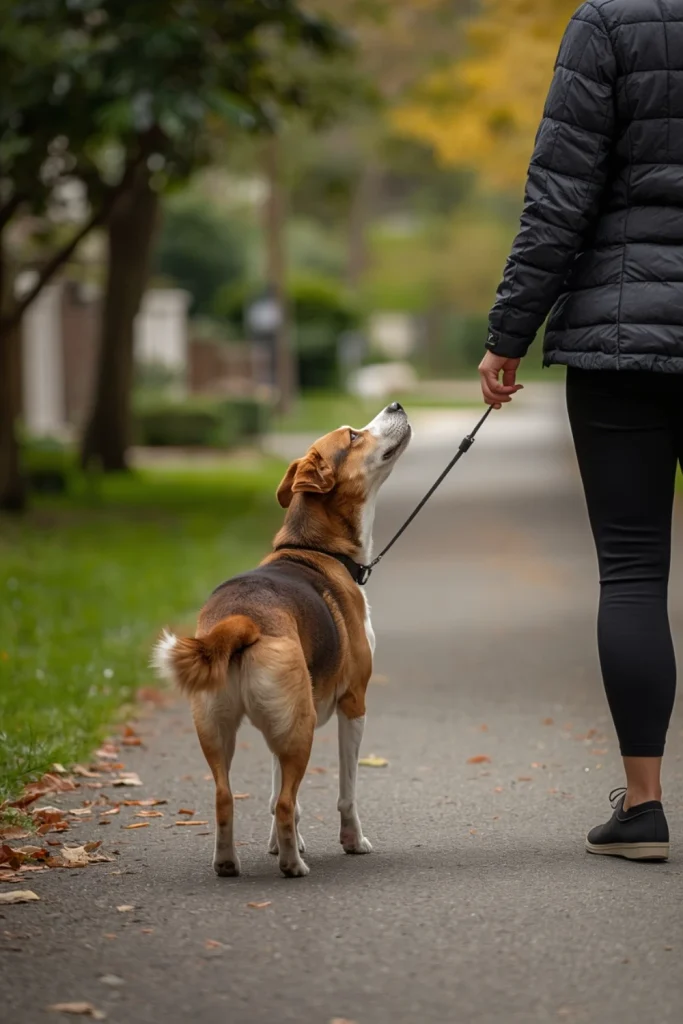
Voluntary check-ins happen when your dog looks toward you without being asked. This behavior is especially useful on walks because it teaches your dog that staying connected to you is rewarding. Begin in a quiet area with your dog on a comfortable, secure leash. Walk naturally and watch for moments when your dog glances at you. Mark the moment with “Yes” and offer a treat beside your leg. You can also reward your dog when they briefly pause exploring and choose to reconnect with you.
As your dog begins checking in more often, practice on different routes with gradually increasing distractions. Reward attention near trees, benches, parked cars, and quiet pedestrian areas. Do not expect your dog to maintain constant eye contact throughout the walk. Sniffing and exploring are important parts of a dog’s daily experience. Instead, reward occasional attention and use it to create a balanced walk in which your dog can investigate the environment while remaining responsive to you.
4. Practice the Hand Target Exercise
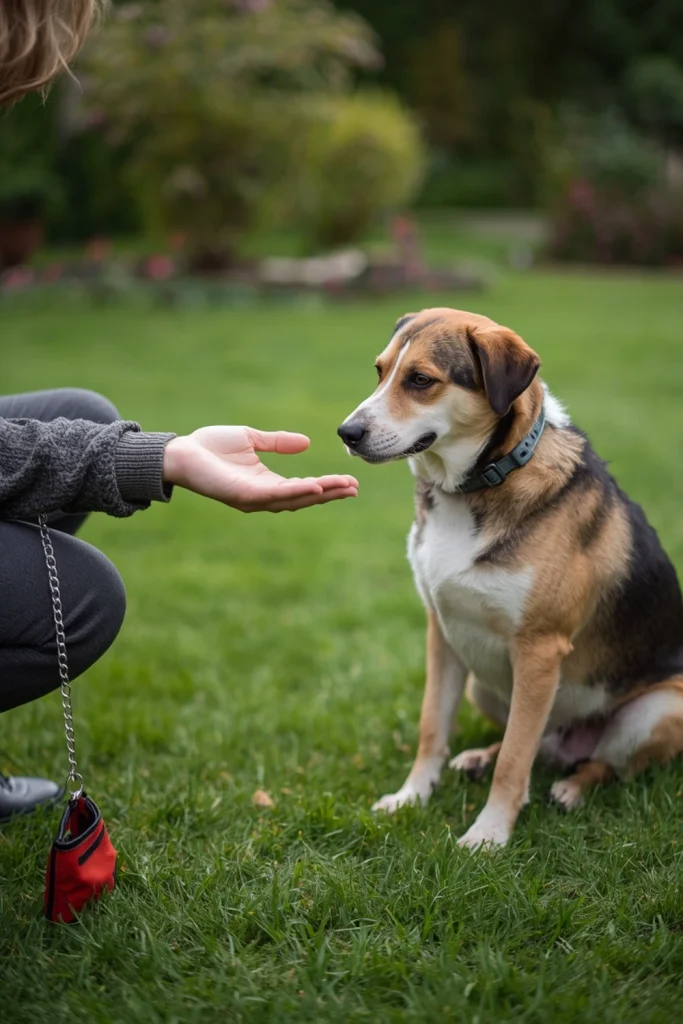
A hand target teaches your dog to touch your open palm with their nose. It is a useful way to redirect attention without pulling on the leash or repeatedly calling your dog’s name. Begin in a quiet room by holding your open hand a few inches from your dog’s nose. Most dogs will naturally investigate it. The moment your dog’s nose touches your palm, mark the behavior and reward them with a treat from your other hand. Repeat until your dog begins moving toward your hand intentionally.
Introduce a verbal cue such as “Touch” once your dog understands the action. Gradually practice while standing, walking a few steps, and changing positions. Later, use the exercise in quiet outdoor locations where mild distractions are present. A hand target can help your dog turn away from something interesting and reconnect with you. Keep enough distance from distractions that your dog can respond comfortably. If your dog is frightened or highly excited, create more space instead of trying to guide them closer.
5. Build Focus With the Find-It Game
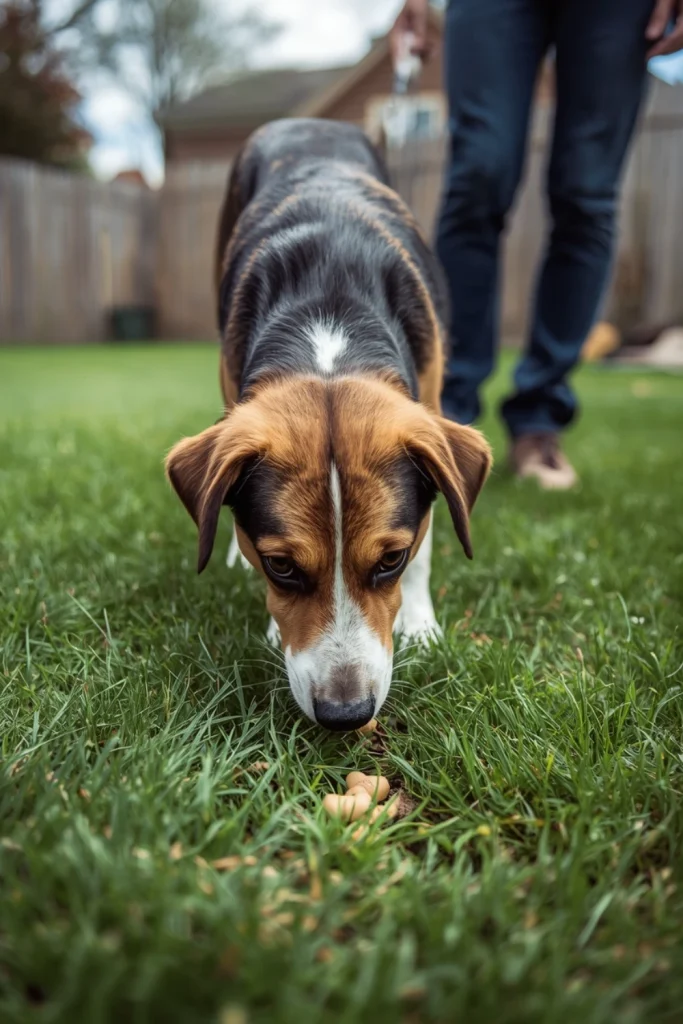
The Find-It game helps your dog redirect attention toward a simple activity. It can be particularly useful when your dog becomes distracted by movement, unfamiliar sounds, or interesting smells. Start indoors by saying “Find it” and tossing a small treat onto the floor a short distance away. Allow your dog to sniff and locate the treat. Repeat several times until your dog recognizes the cue and enjoys searching. Use a clear, friendly voice and choose an area where the treats are easy to find.
Once your dog understands the game, practice in a quiet garden or another familiar outdoor location. Scatter a few treats in grass or on a safe surface and encourage your dog to search. You can use the game to create a brief break during a walk when your dog is becoming overly interested in the surroundings. However, avoid scattering food near traffic, unknown dogs, or areas where your dog might eat something unsafe. Keep the game controlled and make sure the environment is suitable for searching.
6. Teach Your Dog to Wait Before Getting a Reward
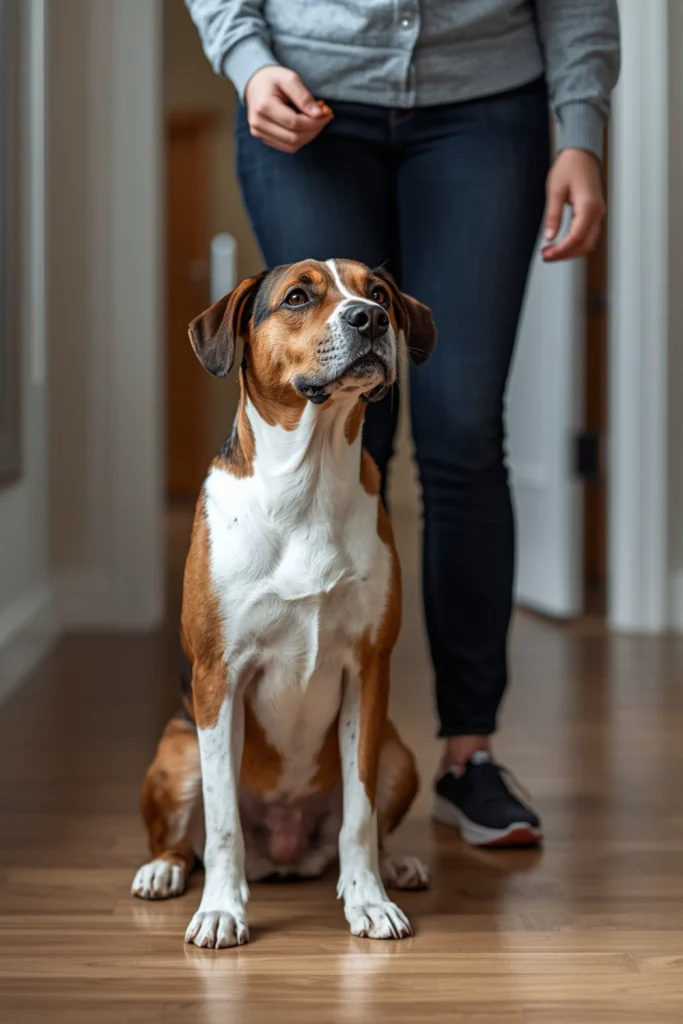
The Wait exercise develops patience and impulse control. Start with your dog in a quiet room and hold a treat in a closed hand. Allow your dog to investigate without scolding or pushing them away. When your dog briefly pauses or stops trying to reach the treat, mark that moment and reward them with a different treat from your other hand. Repeat until your dog starts waiting calmly. You can then introduce the word “Wait” before briefly pausing the delivery of a reward.
Gradually apply the skill to everyday situations, such as waiting before a food bowl is placed on the floor or pausing before going through an open doorway. Keep the waiting period short at first and release your dog with a consistent word such as “Okay.” Later, practice in mildly distracting environments. If your dog becomes frustrated or repeatedly breaks the wait, reduce the duration or difficulty. The purpose is to teach calm decision-making, not to make your dog struggle for access to food or other rewards.
7. Practice the Leave It Exercise
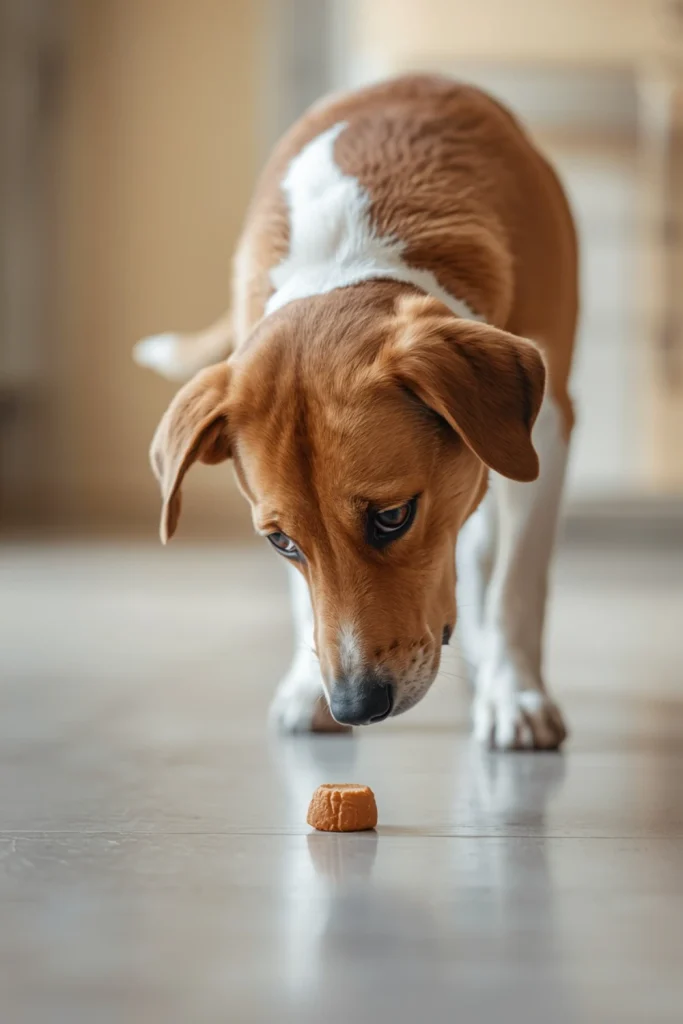
The Leave It cue teaches your dog to turn away from something they should not approach. It can improve attention around dropped food, toys, leaves, and other everyday distractions. Begin indoors with a treat enclosed in your closed hand. Let your dog sniff or investigate without opening your hand. The moment your dog stops trying to reach the treat or turns away, mark the behavior and reward them with a different treat from your other hand. Repeat until your dog understands that disengaging from the item earns a reward.
When your dog is successful, introduce the cue “Leave it” before presenting the closed hand. Next, practice with a safe object placed on the floor while keeping your dog on a leash if needed. Reward your dog for looking away and turning toward you. Increase difficulty slowly, and never use the exercise as a substitute for preventing access to dangerous objects. If your dog is guarding an item or may bite when approached, consult a qualified, reward-based trainer instead of attempting to take the object directly.
8. Use the Engage-Disengage Game
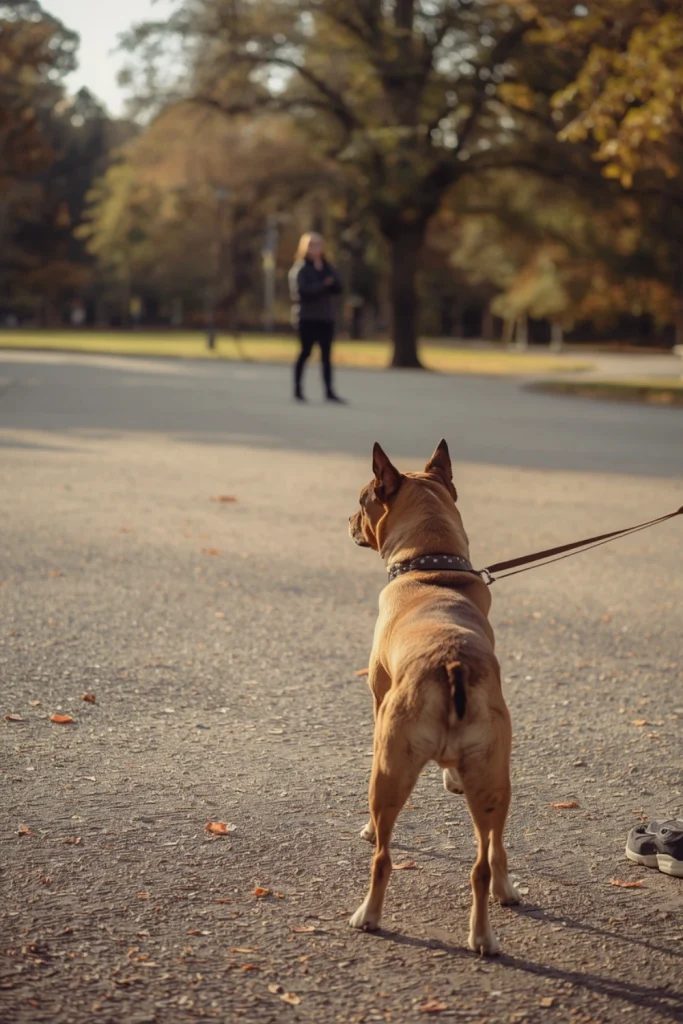
The engage-disengage game teaches your dog that noticing a distraction and then turning away can be rewarding. Begin with a mild distraction at a distance where your dog can observe it without barking, lunging, freezing, or becoming overwhelmed. When your dog notices the distraction, calmly mark the moment and offer a treat. Over time, many dogs begin looking back toward their owner after noticing the object, person, or dog. Reward that voluntary turn toward you.
Practice this exercise with manageable distractions, such as a person walking far away or a bicycle passing at a comfortable distance. Do not start close to a dog that triggers intense excitement or fear. Your dog should be able to eat treats, move comfortably, and respond to familiar cues. If they cannot, increase the distance or leave the area. The goal is to build a positive pattern of noticing and disengaging, rather than forcing your dog to remain close to something they find stressful.
9. Practice Sit and Focus Around Mild Distractions
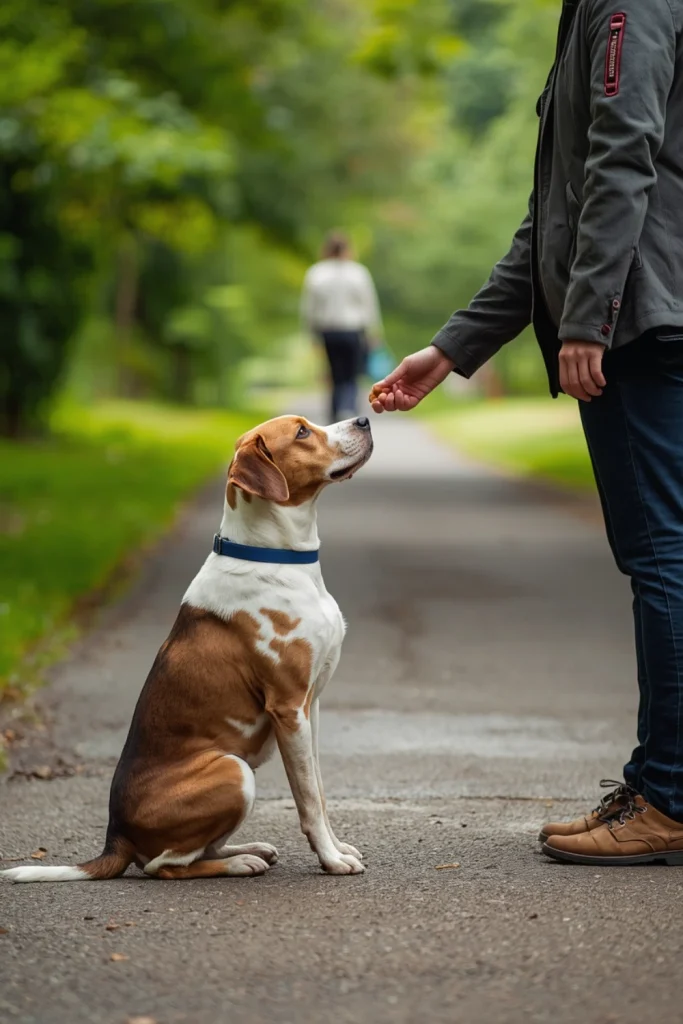
The Sit cue can give your dog a familiar behavior to perform when the environment becomes interesting. Begin in a quiet area and ask your dog to sit. Reward them immediately when their bottom touches the ground. Once the cue is reliable, ask for a brief sit in a different room or near a quiet window. Reward calm behavior and release your dog after a few seconds. Keep the exercise easy enough that your dog can succeed without repeated commands or physical pressure.
Gradually practice in calm outdoor locations where mild distractions occur at a distance. You might ask your dog to sit while a person walks by or while a bicycle passes far away. Reward your dog for sitting comfortably and responding to your cue. If your dog is uncomfortable sitting while something approaches, allow them to stand or move away instead. Focus training should support emotional comfort and safety. A sit is useful when appropriate, but it should not be used to hold a frightened or highly reactive dog in a difficult situation.
10. Play the One-Step Recall Game
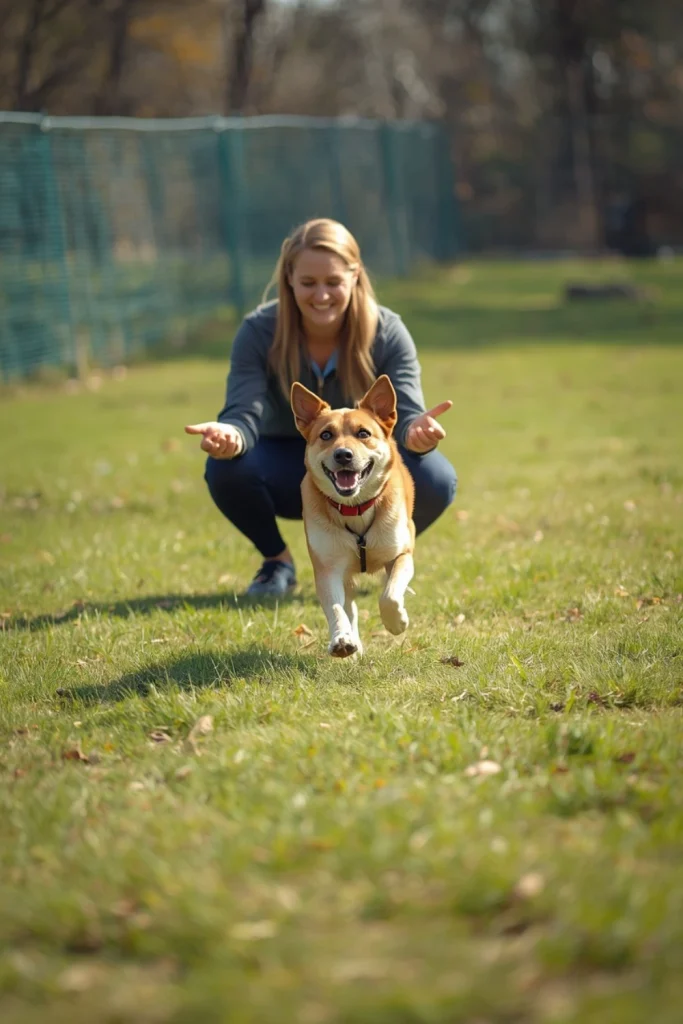
Recall training teaches your dog to return when called. It is an important foundation for focus because it helps your dog respond to you even when something else has caught their attention. Begin indoors or in a securely enclosed area. Take one or two steps away from your dog, say their name followed by “Come,” and use a cheerful voice. When your dog moves toward you, reward them generously. Keep early repetitions easy, and avoid calling your dog only when something enjoyable is about to end.
As your dog’s recall improves, gradually increase the distance and introduce mild distractions. Practice in a fenced area or use a long line attached to a well-fitted harness in an appropriate open space. Never rely on recall alone near roads or other serious hazards. If your dog does not respond, avoid repeating the cue many times. Instead, make the exercise easier and reward successful returns. You can also reward your dog for returning and then releasing them to explore again, helping them learn that coming to you does not always end their fun.
11. Train Around Sounds and Everyday Noises
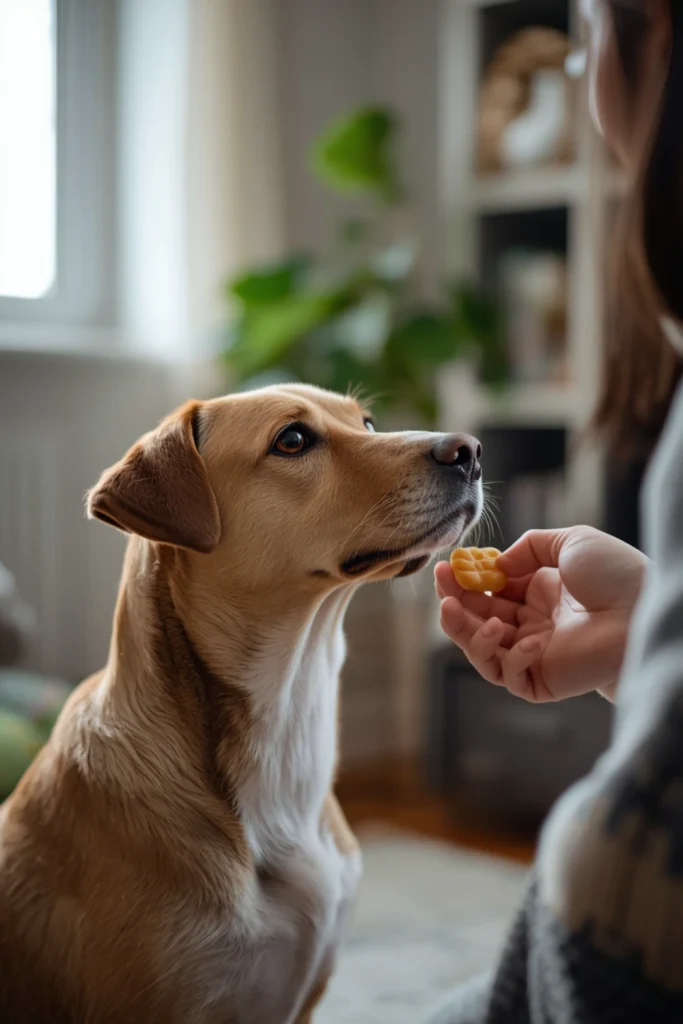
Sounds can distract dogs just as much as movement. Doorbells, traffic, children playing, household appliances, and unfamiliar voices may cause a dog to stop listening or become excited. To build sound-related focus, start with ordinary noises at a comfortable intensity. When your dog hears a sound and remains relaxed, calmly mark the moment and offer a treat. You can also ask for an easy cue, such as looking at you, if your dog is comfortable enough to respond.
If you use recorded sounds, begin at a low volume and increase it gradually only when your dog remains relaxed. Pair the sound with treats, play, or another pleasant experience. Watch your dog’s body language for signs of discomfort, such as a tucked tail, flattened ears, trembling, persistent panting, or attempts to hide. If these signs appear, reduce the intensity or stop the session. Never deliberately expose a frightened dog to loud sounds in the hope that they will simply get used to them. Gradual, positive exposure is safer and more effective.
12. Create a Distraction Training Course
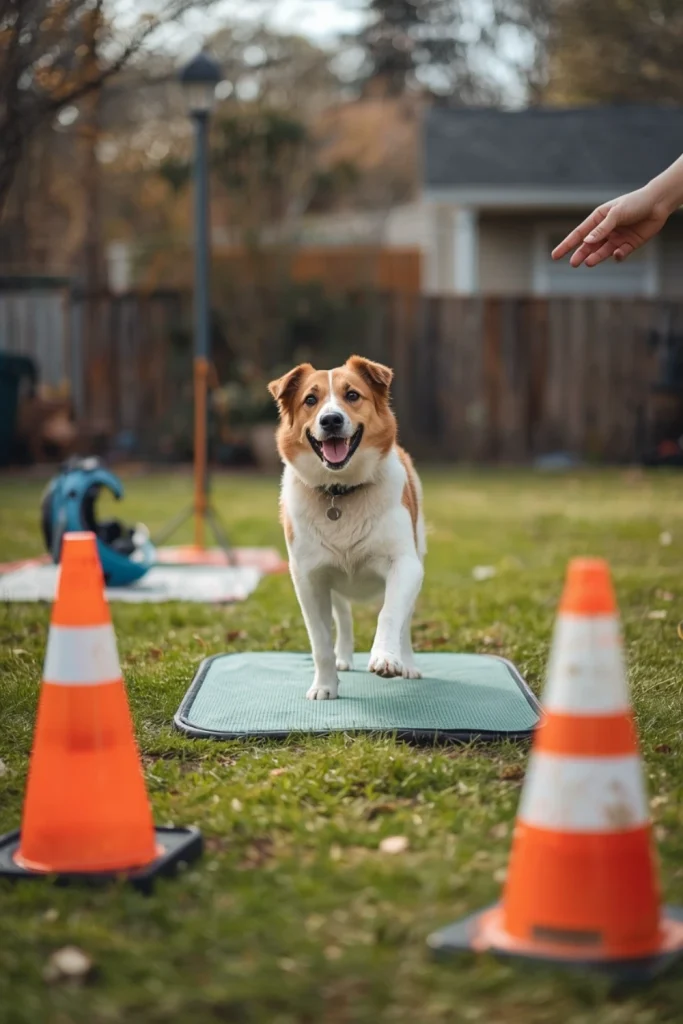
A simple distraction course combines several focus exercises in one controlled session. Set up a safe area with a few objects, such as a chair, a cone, a toy, and a mat. Begin by asking your dog to respond to their name, touch your hand, walk beside you for a few steps, or settle briefly on the mat. Reward each successful behavior. Keep the course simple so your dog can learn to respond to your cues while moving between different objects and activities.
As your dog becomes more comfortable, introduce one mild distraction at a time. You might move a toy gently, ask a family member to walk past at a distance, or practice near a quiet outdoor area. Avoid adding too many challenges at once. If your dog becomes distracted, return to an easier exercise and reward a successful response. End the session while your dog is still interested and comfortable. A short, positive course can strengthen several skills without making training feel repetitive or overwhelming.
Final Thoughts
Learning to help your dog focus around distractions takes time, patience, and consistent practice. Exercises such as name response, hand targeting, voluntary check-ins, recall, and the engage-disengage game can teach your dog to stay connected with you while noticing the world around them. These skills can make walks more enjoyable, improve everyday communication, and help your dog respond more confidently in different environments.
Start with the easiest exercises, reward small improvements, and gradually introduce new distractions. Remember that your dog does not need to ignore every sight or sound to be successful. The goal is to develop a reliable connection that allows your dog to explore safely while responding to your guidance. With regular, positive training, you can build stronger focus and a happier relationship with your dog.