12 Training Games That Challenge Your Dog’s Mind
Does your dog get bored easily, ignore familiar commands, or constantly look for something to do? Physical exercise is important, but dogs also need mental stimulation to stay engaged, confident, and happy. The right activities can encourage problem-solving, improve focus, and turn everyday learning into an enjoyable experience for both you and your furry companion.
The best part is that you do not need expensive equipment or hours of free time to get started. With simple training games, everyday household items, and a few tasty rewards, you can challenge your dog’s mind while strengthening your bond. From exciting scent searches to interactive impulse-control activities, these 12 games offer fun ways to encourage better listening, build useful skills, and keep your dog mentally active at home.
1. Play the “Find It” Treat Search Game
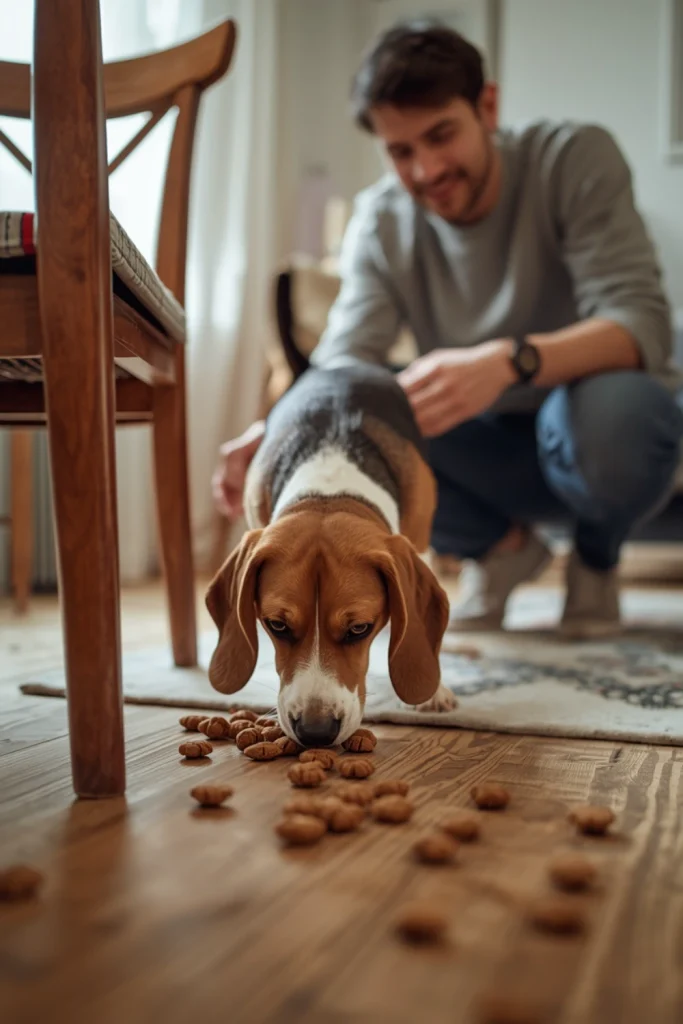
The “Find It” game is an excellent way to challenge your dog’s mind by encouraging them to use their powerful sense of smell. Begin in a quiet room with a few small pieces of your dog’s regular food or suitable training treats. Let your dog see you place one treat in an easy-to-find location, then say “find it” and encourage them to search. Praise them warmly when they discover the reward. This simple activity introduces the idea of searching for a hidden object while building enthusiasm for training.
As your dog becomes more confident, hide treats in slightly more challenging places, such as beside a chair leg or behind an open box. Keep the hiding spots safe and accessible, and never place food where your dog must climb or squeeze into dangerous spaces. Gradually increase the difficulty instead of making the game frustrating. A few minutes of sniffing can provide valuable mental enrichment and help your dog practise persistence and independent problem-solving.
2. Teach Your Dog to Recognize Their Toys
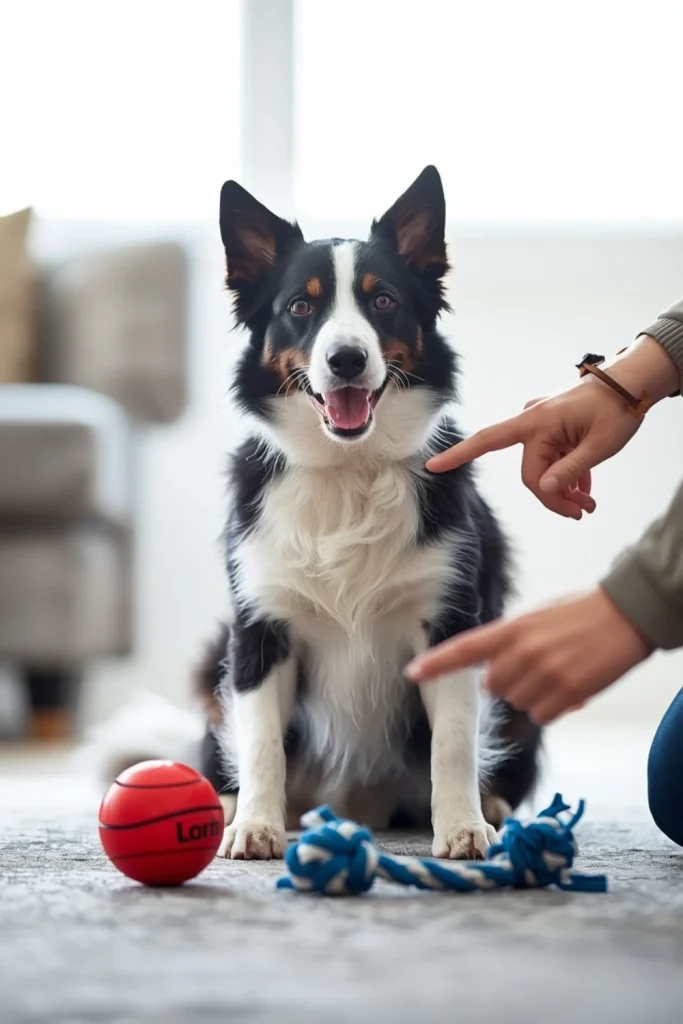
Teaching your dog the names of individual toys combines memory, listening, and problem-solving. Start with one favorite toy and say its name clearly, such as “ball,” before encouraging your dog to pick it up. Reward them when they touch or retrieve the correct item. Repeat the exercise several times during short sessions, keeping the experience playful rather than demanding. Once your dog understands the association, introduce a second toy with a different name.
Place both toys on the floor and ask your dog to find one by name. Reward any correct choice and make the exercise easier if your dog becomes confused. Gradually introduce additional toys only when your dog can distinguish the first few reliably. Some dogs learn object names quickly, while others need many repetitions, so avoid rushing. This game encourages attention to human cues and can develop into a fun indoor activity that gives your dog a purposeful task.
3. Try the Muffin Tin Puzzle Game
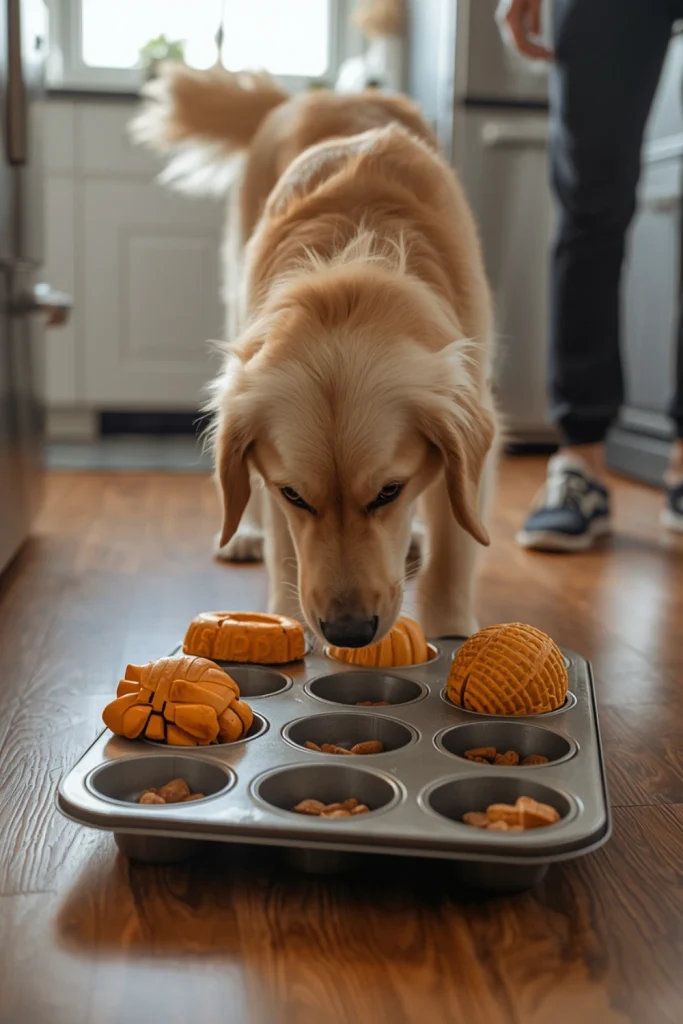
A muffin tin puzzle is a simple way to introduce problem-solving using everyday household equipment. Place a few pieces of your dog’s regular food in selected cups of a clean muffin tin, then cover some cups with lightweight dog-safe toys or large objects that cannot be swallowed. Let your dog investigate and discover how to reach the food. Start with only one or two covered cups so your dog can understand the activity without becoming frustrated.
As your dog learns the game, change which cups contain food and increase the challenge gradually. Always supervise the activity to prevent chewing on the tin, swallowing objects, or damaging household items. Choose a sturdy tin without sharp edges and remove any pieces that your dog tries to chew. If your dog becomes frustrated, make the puzzle easier and reward their effort. This game encourages curiosity, persistence, and independent thinking while providing a useful alternative to passive indoor entertainment.
4. Practise the “Which Hand?” Guessing Game
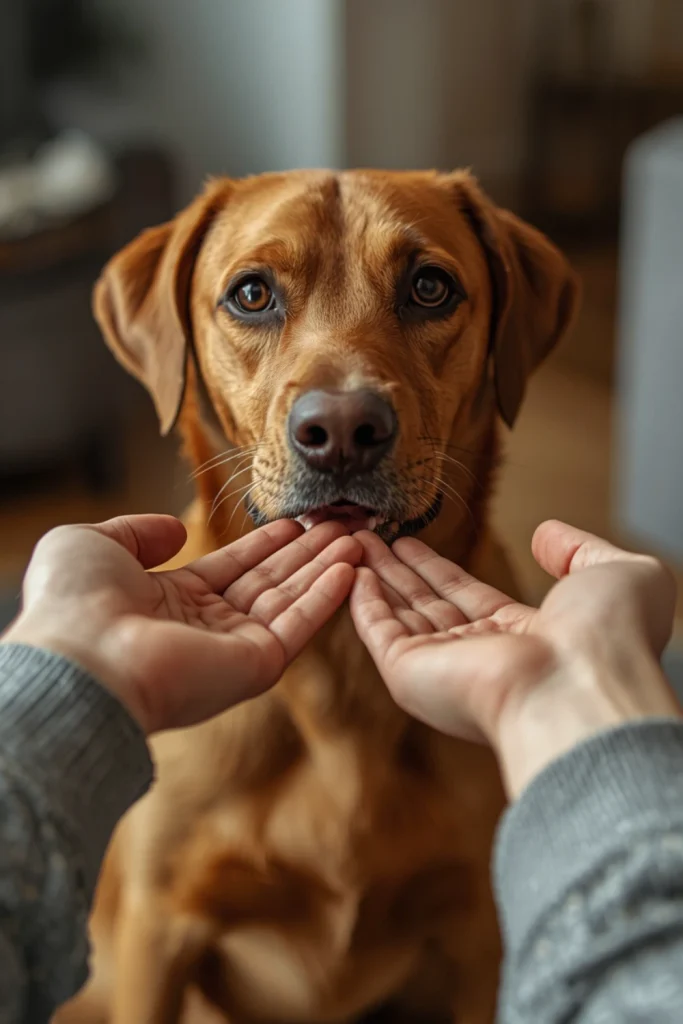
The “Which Hand?” game helps your dog practise observation and decision-making while learning to focus on your hands. Place a small treat in one closed hand and leave the other hand empty. Present both hands at a comfortable distance and encourage your dog to investigate. When your dog indicates the hand containing the treat, open it and reward them. If your dog guesses incorrectly, simply reset the game without scolding or making the experience unpleasant.
After several successful repetitions, switch hands unpredictably so your dog cannot rely on a fixed pattern. You can gradually ask for a gentle nose touch instead of allowing pawing or scratching. Keep the sessions short and use small treats to avoid giving too much food. This activity encourages your dog to observe your movements and make a choice. It also creates an easy opportunity to practise patience, gentle behavior, and positive interaction in a quiet indoor environment.
5. Create a DIY Obstacle Course at Home
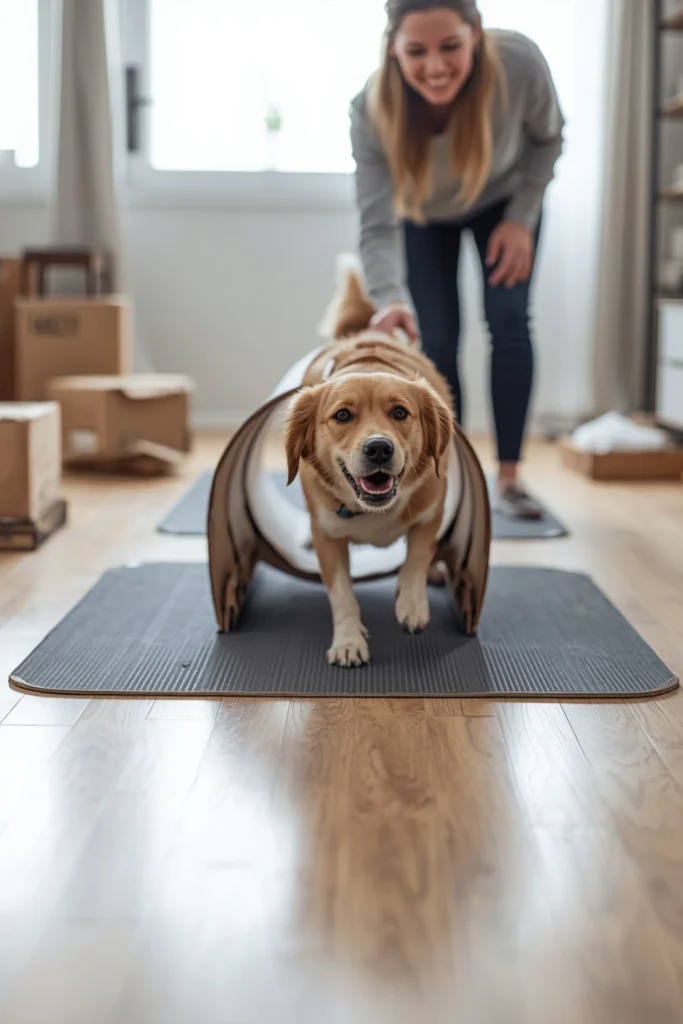
An indoor obstacle course can challenge your dog’s mind and body by asking them to navigate simple, safe objects. Use cushions, open cardboard boxes, sturdy chairs, or floor mats to create an easy route through a spacious room. Guide your dog around an object, through a wide opening, or onto a mat, rewarding them for each successful step. Introduce one obstacle at a time so your dog understands what to do before attempting the full course.
Keep the course low-impact and appropriate for your dog’s size, age, and physical condition. Avoid unstable furniture, slippery surfaces, high jumps, or narrow spaces that could cause injury. Puppies and dogs with joint problems may need especially gentle activities, and your veterinarian can advise you about suitable exercise. As your dog becomes comfortable, change the order of the obstacles or add simple cues such as “around” and “through.” The game promotes focus, confidence, and cooperation while making indoor training more engaging.
6. Teach the “Go to Your Mat” Game
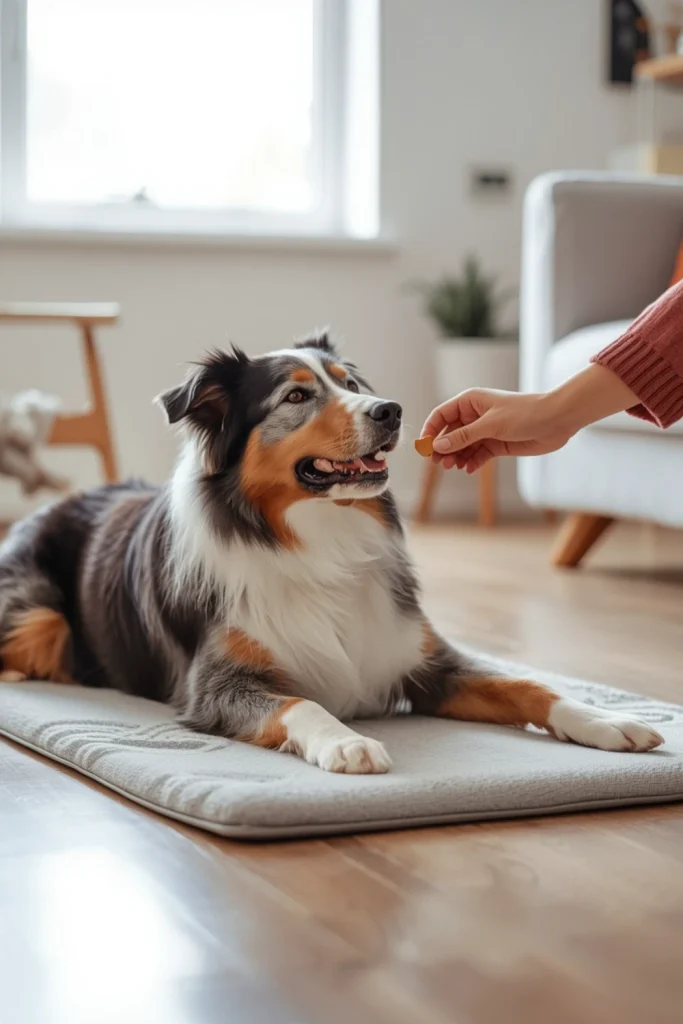
Teaching your dog to go to a designated mat is a useful mental exercise that can also encourage calm behavior at home. Begin by placing a comfortable mat on the floor and rewarding your dog for looking at it or stepping onto it. Once your dog willingly approaches the mat, add a cue such as “place” or “mat.” Reward your dog for standing, sitting, or lying down on the mat, depending on the stage of training.
Gradually encourage your dog to remain on the mat for a few seconds before receiving the reward. Increase the duration slowly, and occasionally reward your dog for staying relaxed while you move a short distance away. If your dog leaves the mat repeatedly, shorten the exercise or reduce distractions. Avoid forcing your dog to remain in place. This game develops listening skills, patience, and the ability to settle, making it particularly useful when visitors arrive or when you need your dog to relax while you work.
7. Play Hide-and-Seek With Your Dog
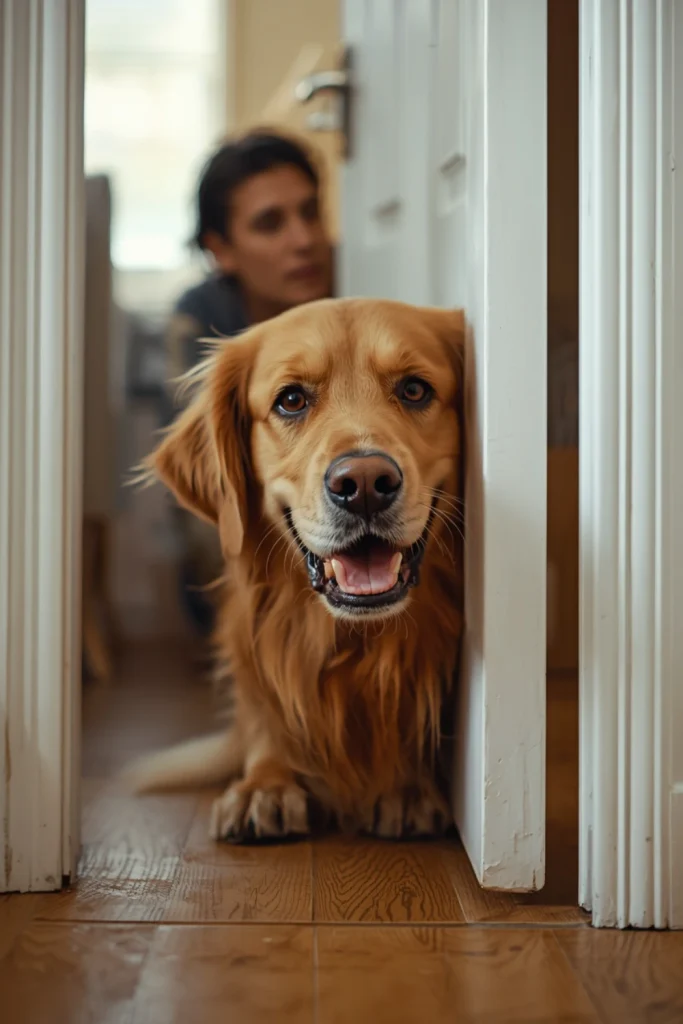
Hide-and-seek is an engaging training game that encourages your dog to use their nose, memory, and listening skills. Begin by asking your dog to stay with another family member or wait behind a secure barrier while you hide somewhere easy to find, such as behind an open doorway. Call your dog’s name in a cheerful voice and reward them when they discover you. Start with obvious hiding places so your dog learns the rules and enjoys the search.
As your dog becomes familiar with the game, choose slightly more challenging hiding places within a safe area of your home. You can also hide a favorite toy and encourage your dog to search for it. Avoid hiding in cupboards or places where your dog might become trapped or damage furniture while searching. Keep sessions short and enthusiastic, especially for dogs that are easily distracted. Hide-and-seek strengthens your relationship, encourages attention to your voice, and gives your dog a rewarding opportunity to solve a simple problem.
8. Practise Impulse Control With “Wait”
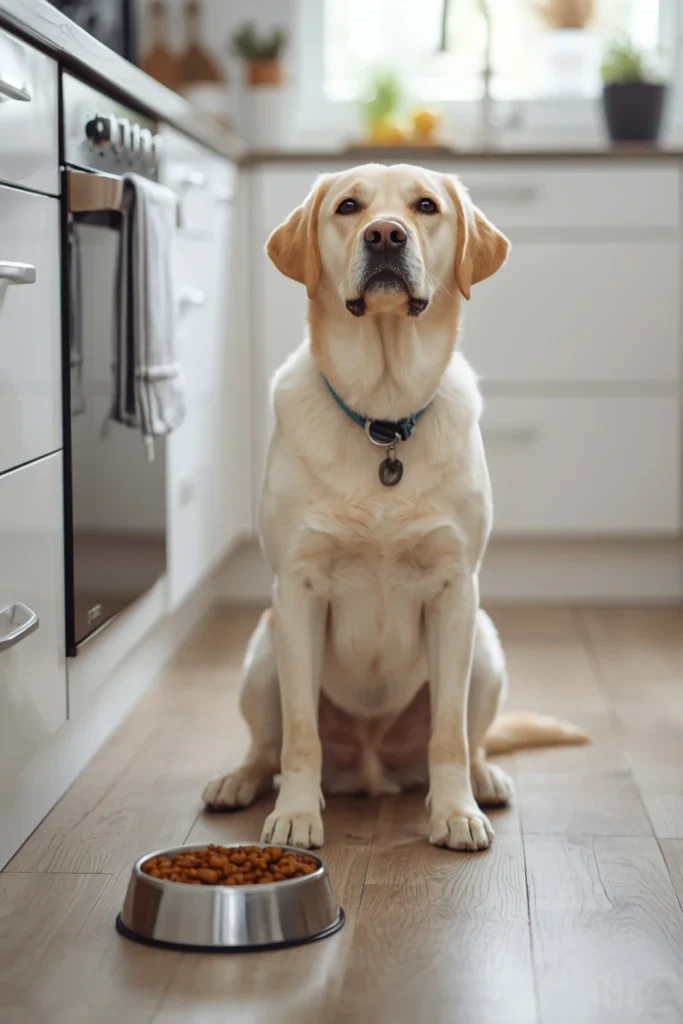
The “wait” game helps your dog practise patience before receiving something they want. Begin with a simple situation, such as pausing before placing a food bowl on the floor or opening a door to a safe area. Ask your dog to wait for a brief moment, then give a release cue such as “okay” so they understand when they can move forward. Reward calm waiting and keep the first attempts very short.
Gradually practise with different everyday situations, such as waiting before a toy is thrown or pausing before stepping outside on a leash. Make sure your dog is in a safe position and never use the exercise to delay access to essential needs. If your dog moves before the release cue, reset calmly and make the challenge easier. This activity teaches self-control and attention while creating useful habits for daily life. It is particularly valuable for excitable dogs that struggle to pause when something interesting happens.
9. Introduce a Simple Scent Trail
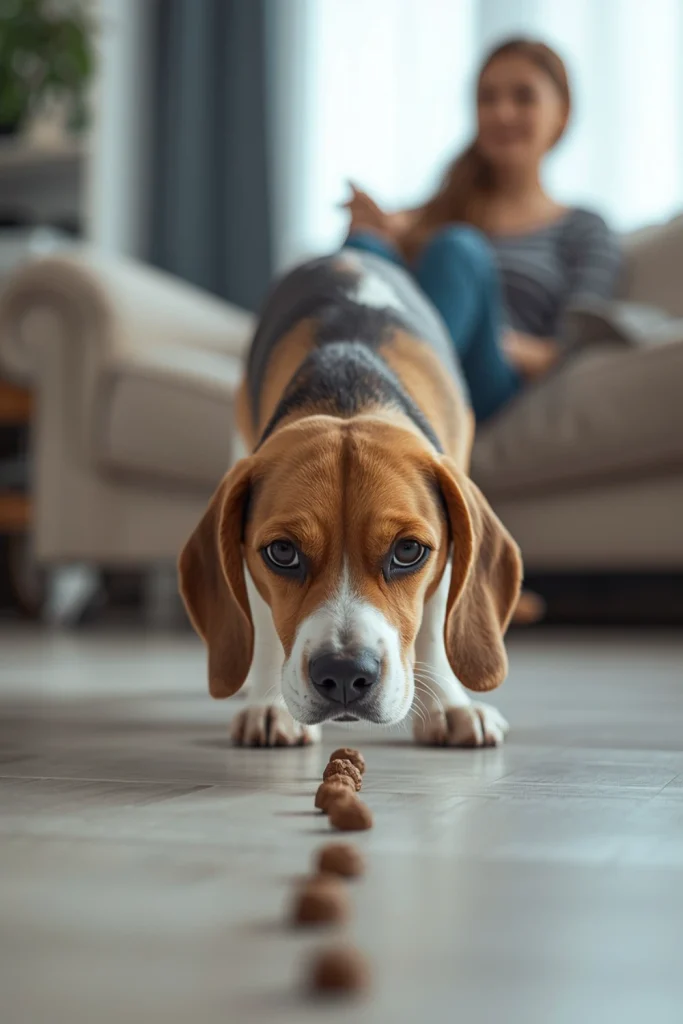
A scent trail game gives your dog a chance to follow a series of smells toward a reward. Begin by placing a few small pieces of food along a short, easy route on a clean floor. Let your dog discover the first piece and encourage them to follow the trail toward the next. You can finish with a slightly larger reward or a favorite toy. Keep the trail simple at first so your dog understands that following the scent leads to something enjoyable.
As your dog becomes more confident, create slightly longer trails around safe furniture or through different areas of the home. Avoid placing food near cleaning products, sharp objects, or places where your dog might slip. If your dog loses the trail, make the route easier rather than repeatedly directing them. Scent work encourages natural sniffing behavior, persistence, and independent exploration. It can be especially useful on days when outdoor activities are limited, although it should complement rather than replace walks and other forms of exercise.
10. Teach Your Dog to Put Toys Away
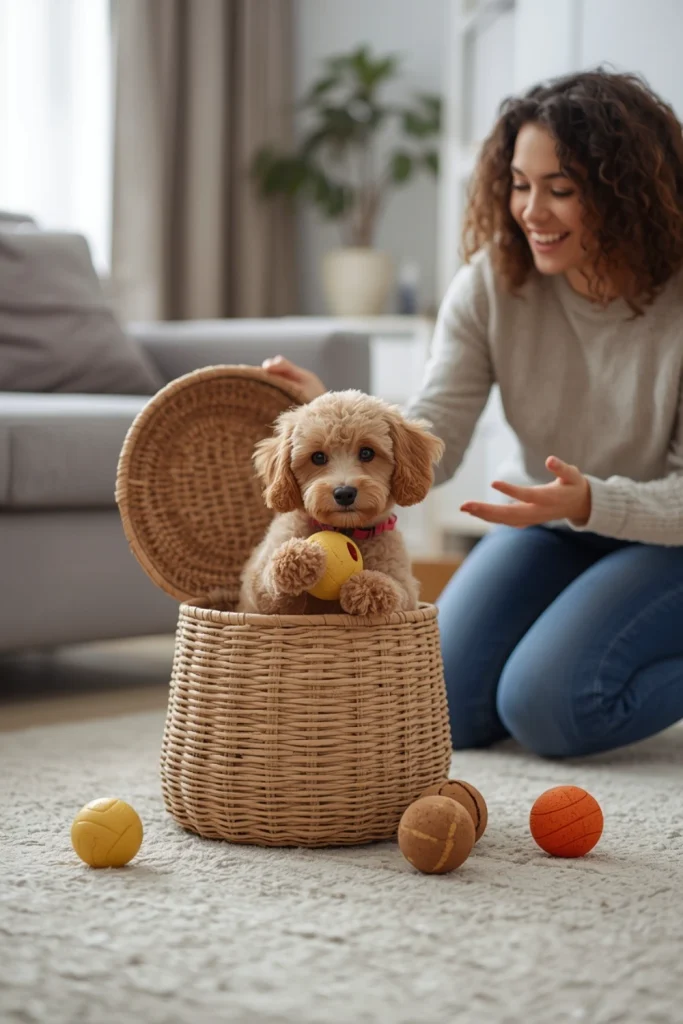
Teaching your dog to put toys into a basket combines object retrieval, listening, and simple problem-solving. Start by placing a favorite toy close to a sturdy, open basket. Encourage your dog to pick up the toy and guide them toward the basket using a familiar cue such as “bring it.” Reward any attempt to place the toy inside, even if you need to begin by rewarding your dog for dropping it near the basket.
Once your dog understands the basic idea, gradually shape the behavior until they drop the toy into the basket itself. Use a consistent cue, offer praise, and keep the sessions playful. Begin with one toy before introducing several objects. Make sure the basket is stable and does not have sharp edges or handles that could catch your dog’s head or paws. This game provides mental stimulation and can become a practical household skill. Remember that learning speed varies, so celebrate progress rather than expecting perfect results immediately.
11. Play a Gentle Name-and-Recall Game
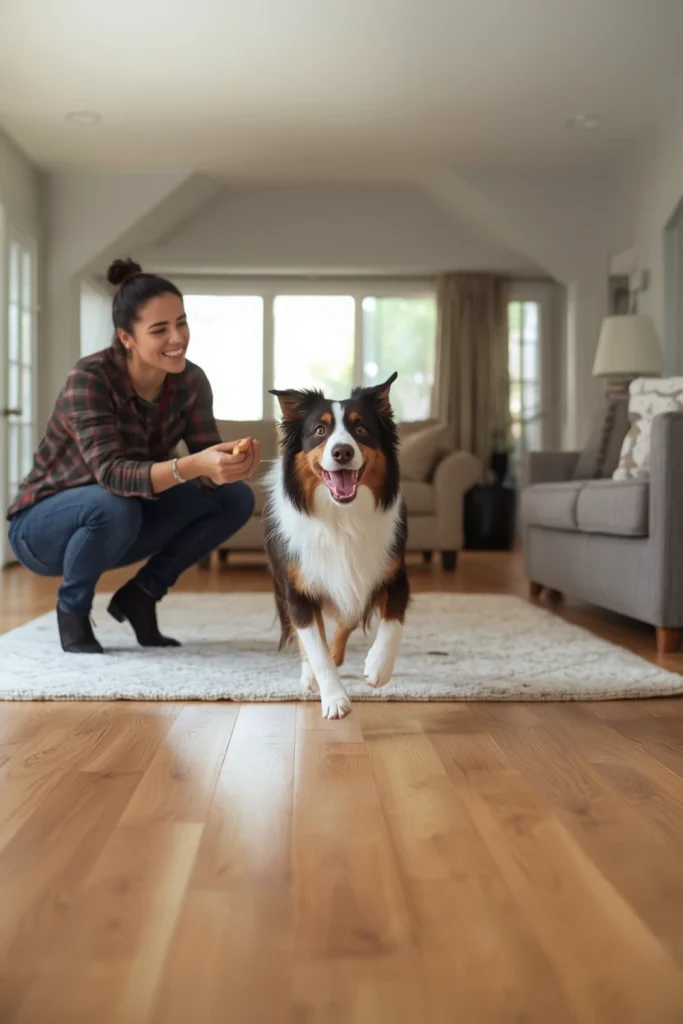
A name-and-recall game encourages your dog to respond to their name and come toward you when called. Begin in a quiet room with minimal distractions. Say your dog’s name once in a friendly voice, then reward them when they look at you. After several repetitions, take a few steps away and call them using a familiar cue such as “come.” Reward your dog generously when they reach you, making the experience positive and worthwhile.
Practise with different family members so your dog learns that responding to a cue works with more than one person. Gradually introduce mild distractions, but keep the environment secure. Never call your dog to punish them or end every enjoyable activity, as this can weaken their willingness to respond. If your dog struggles, move closer and make the exercise easier. This game builds attention and recall skills that are useful in daily life, while helping your dog learn that checking in with you leads to good things.
12. Try a Choose-the-Cup Puzzle Game
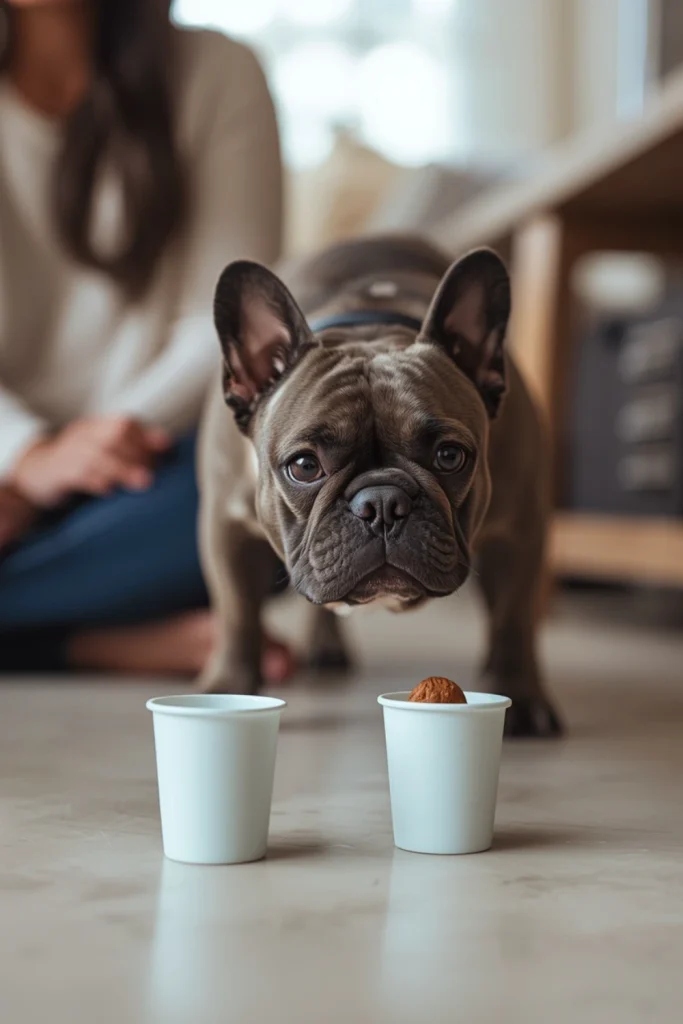
A choose-the-cup game encourages your dog to observe, remember, and make a choice. Start with two lightweight, sturdy cups that cannot easily break. Let your dog see you place a small treat beneath one cup, then encourage them to indicate the correct cup using their nose. Lift the cup and let them enjoy the reward. Keep the cups spaced apart and the first rounds simple so your dog can quickly understand how the game works.
When your dog succeeds consistently, gradually switch the position of the cups or add a third cup if they remain comfortable. Avoid moving the cups so quickly that your dog becomes confused, and never use cups that could trap your dog’s nose or be chewed into sharp pieces. Supervise the activity throughout and stop if your dog tries to swallow the equipment. This simple puzzle can improve focus and persistence while providing an enjoyable indoor challenge. Always make success achievable so your dog remains interested in learning.
Final Thoughts
Keeping your dog mentally active does not have to be complicated or expensive. Simple training games can turn ordinary moments at home into opportunities for learning, exploration, and connection. From scent searches and toy recognition to recall practice and easy puzzles, each activity encourages your dog to think, respond, and engage with you in a positive way.
Start with two or three games that match your dog’s interests and abilities, then introduce new challenges as confidence grows. Keep sessions short, reward effort, and prioritize safety over difficulty. With consistency and patience, these activities can become a rewarding part of your daily routine while helping your dog stay curious, confident, and mentally engaged.