
12 Steps to Teach Your Dog the Place Command
Teaching your dog the place command can transform everyday life at home. Instead of following you around the kitchen, jumping on guests, or getting under your feet, your dog can learn to calmly go to a specific bed, mat, or designated spot when asked.
The best part is that the place command is not difficult to teach when you break it into small steps. With positive reinforcement, short training sessions, patience, and plenty of practice, you can teach your dog that their special place is a comfortable and rewarding area.
1. Choose the Right Place for Your Dog
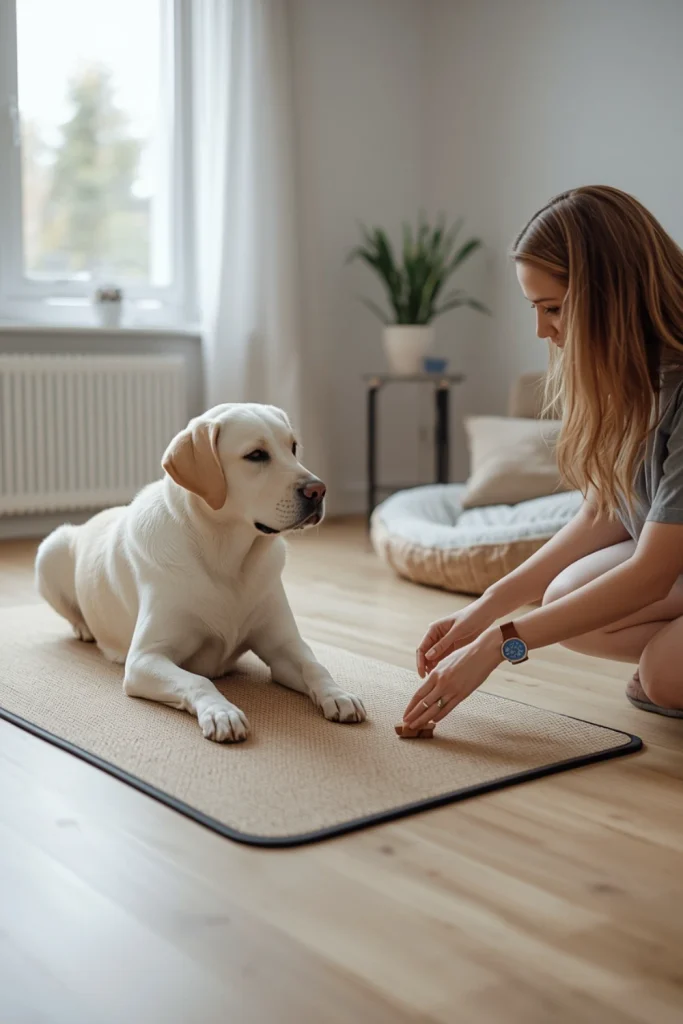
The first step to teach your dog the place command is choosing an appropriate location. You can use a comfortable dog bed, training mat, folded blanket, or another safe surface that clearly defines the dog’s area. Ideally, choose something large enough for your dog to comfortably stand, sit, and lie down without falling off the edges.
For beginners, a portable mat can be especially useful because you can eventually take it to different rooms or locations. Start somewhere quiet with limited distractions. Your dog should see the place as comfortable and rewarding rather than as punishment. Building a positive association from the beginning can make the rest of the training much easier.
2. Introduce Your Dog to the Mat
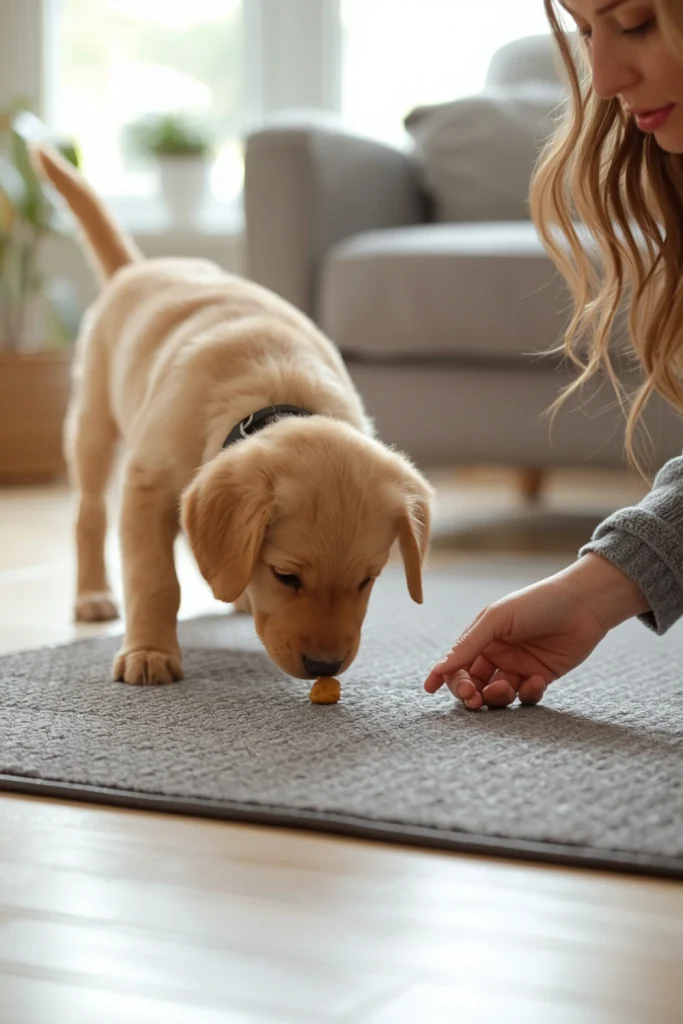
Once you have selected the place, allow your dog to investigate it naturally. Put the mat on the floor and let your dog sniff it. Do not immediately demand that your dog lie down. Instead, reward small interactions with the mat, such as looking at it, approaching it, sniffing it, or placing one paw on it.
As your dog becomes more comfortable, reward them for putting more paws on the mat. Place the reward directly on or near the mat so your dog begins to understand that good things happen there. This approach helps create a positive association between your dog and their designated place. Reward-based shaping is one practical way to build the behavior gradually.
3. Reward All Four Paws on the Place
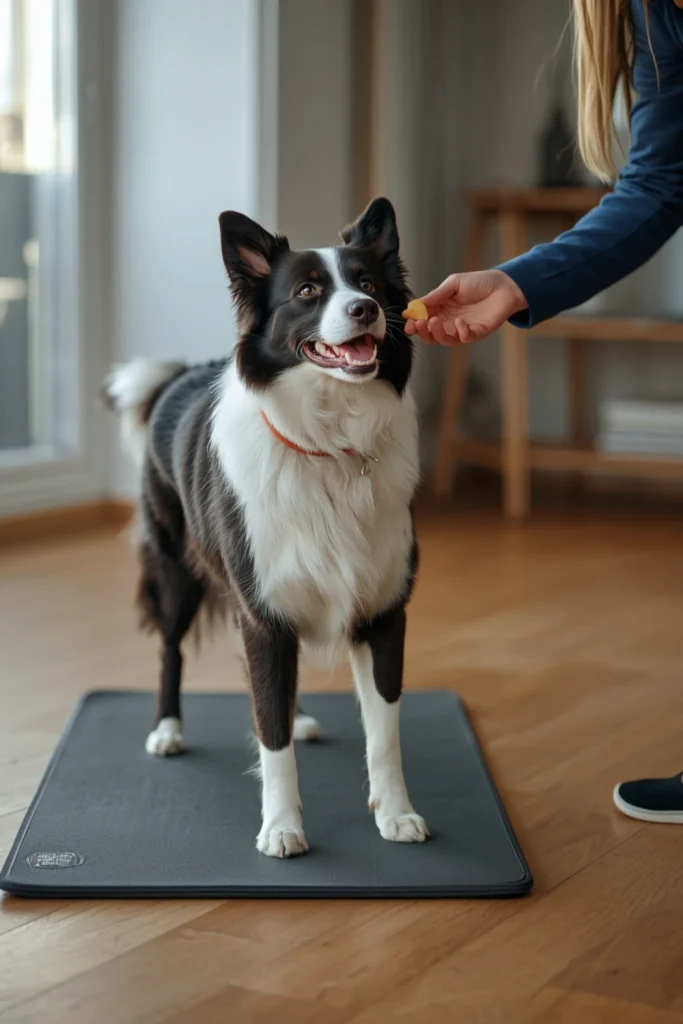
After your dog is comfortable approaching the mat, start looking for the moment when all four paws are on it. The instant your dog gets completely onto the mat, use a marker word such as “Yes” and give a reward. If you use a clicker, you can click at the correct moment before delivering the treat.
Repeat this exercise several times. Your dog does not need to remain there for a long time yet. The initial goal is simply to teach them that being completely on the mat is valuable. Avoid rushing into duration training before your dog understands where you want them to go. Building a strong foundation makes later steps much easier.
4. Teach Your Dog to Return to the Place
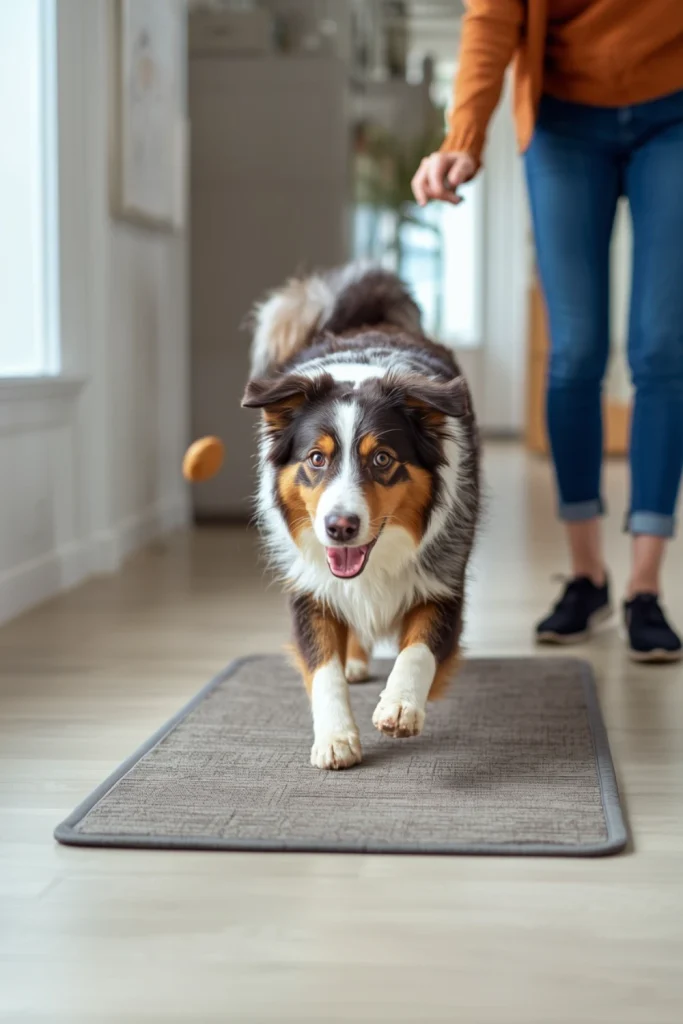
Once your dog understands that the mat is rewarding, encourage them to leave it and then return. You can use a release word such as “Free” or “Okay” and gently toss a treat away from the mat. When your dog moves off, pause and allow them an opportunity to return.
When your dog steps back onto the mat, immediately mark and reward. This creates a useful game: leave the place, return to the place, earn a reward. Repetition helps your dog discover that the mat is not simply an object on the floor but a specific location where desirable behavior is rewarded.
5. Encourage a Sit or Down on the Place
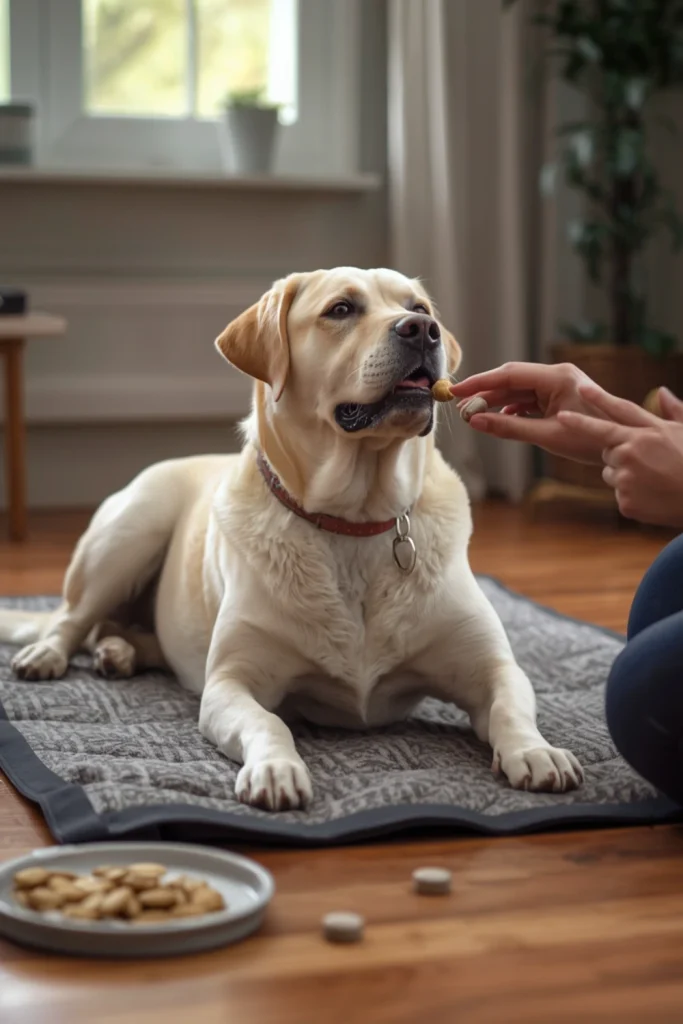
Once your dog willingly goes onto the mat, you can begin teaching them to settle there. Many owners choose a down position because lying down naturally encourages a calmer behavior. If your dog already understands “down,” you can use that cue after the dog reaches the mat.
You can also allow your dog to offer the behavior naturally and reward the moment they sit or lie down. The goal is to make the place comfortable rather than forcing the dog into position. Reward your dog generously when they settle. Over time, they can learn that going to their place means relaxing there until you give another instruction.
6. Add the “Place” Verbal Cue
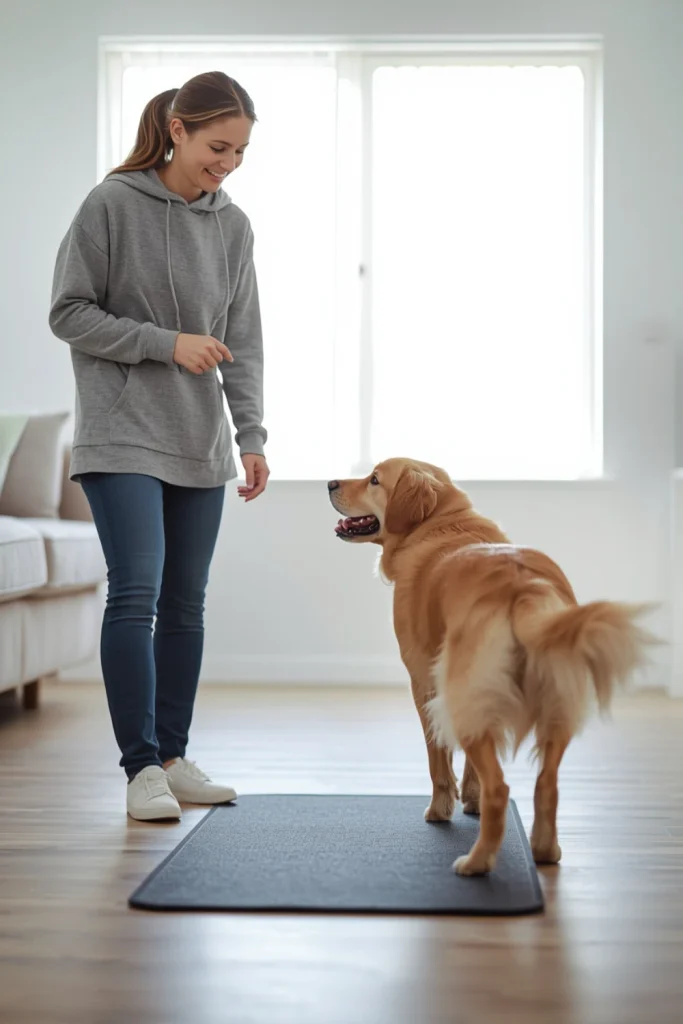
After your dog understands the physical behavior, it is time to add the verbal cue. Say “Place” immediately before directing your dog toward the mat. When your dog gets onto the mat and settles, mark and reward the behavior.
Do not rely on repeating the word several times. Give the cue once and allow your dog an opportunity to respond. If your dog does not understand yet, return to guiding them onto the mat and rewarding successful repetitions. Once the association becomes strong, gradually reduce your reliance on luring. The goal is for your dog to hear “Place” and understand where they should go.
7. Build Duration Gradually
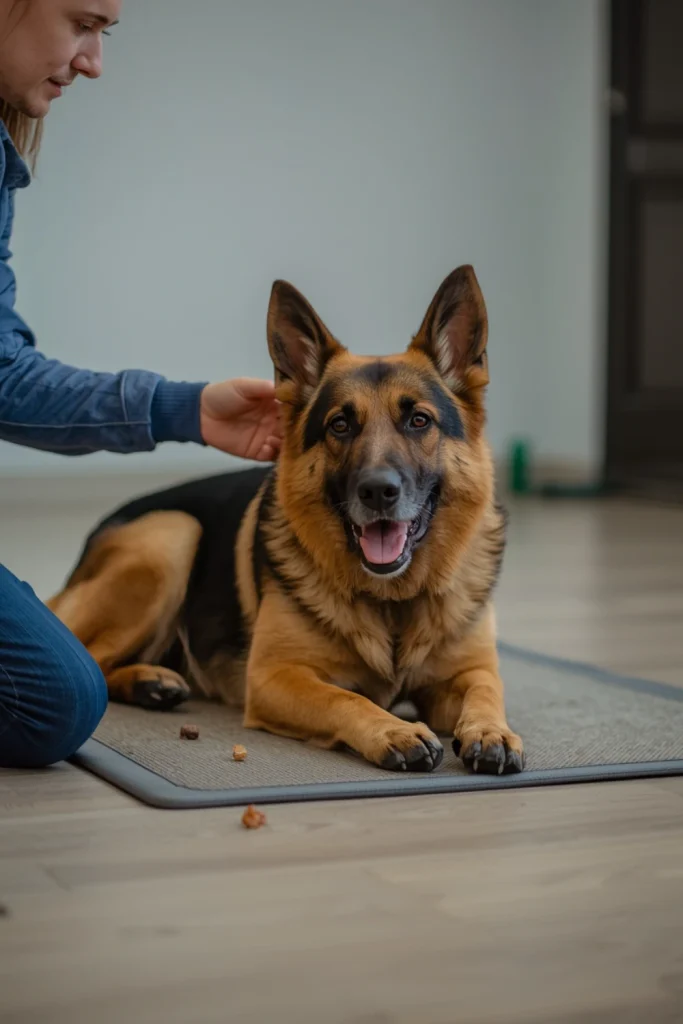
Getting onto the mat is only part of the place command. Your dog also needs to learn to remain there calmly. Begin with very short periods. After your dog lies down, wait for a second or two before rewarding. Gradually increase the time between rewards as your dog becomes more comfortable.
Avoid suddenly expecting your dog to remain on the mat for ten or twenty minutes. If your dog gets up repeatedly, the duration may be increasing too quickly. Return to a shorter interval and reward successful behavior. Training duration gradually is more effective than constantly correcting a dog for leaving. A useful approach is to work on duration before adding major distractions or distance.
8. Introduce a Release Word
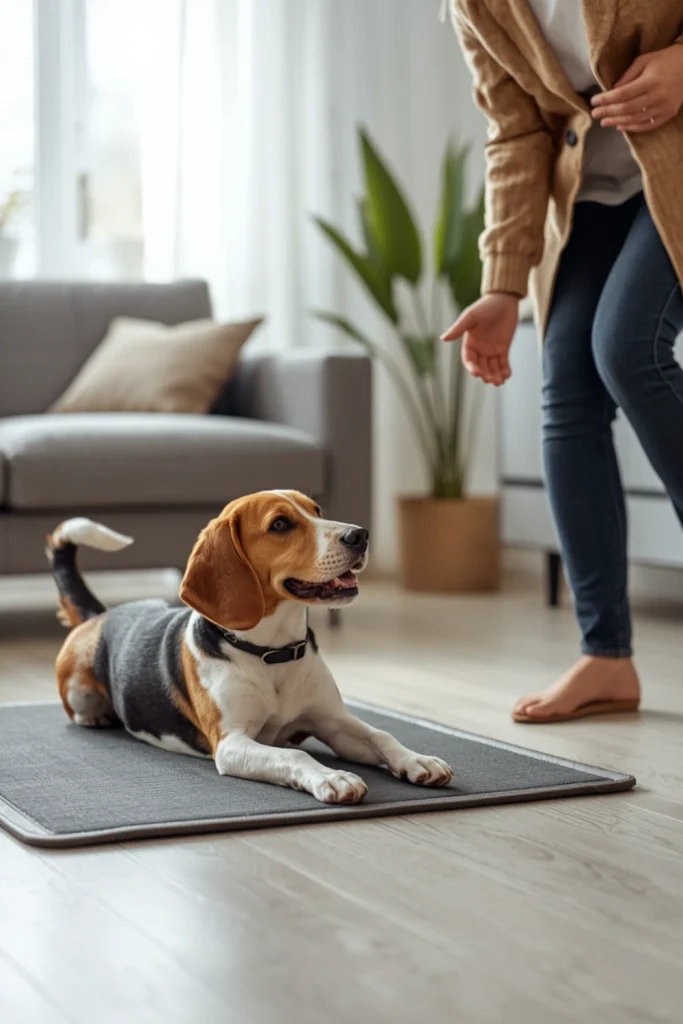
A release word tells your dog when the place exercise is finished. Common release cues include “Free,” “Release,” “Okay,” or “All done.” Choose one word that your entire household can use consistently.
Once your dog has remained on the mat for the desired amount of time, give the release cue and encourage them to leave. You can toss a treat away from the mat to make the release clear. The dog should learn that remaining on the mat continues until the release cue is given. This makes the behavior easier to understand because the dog does not have to guess when they are allowed to leave.
9. Increase Your Distance Slowly
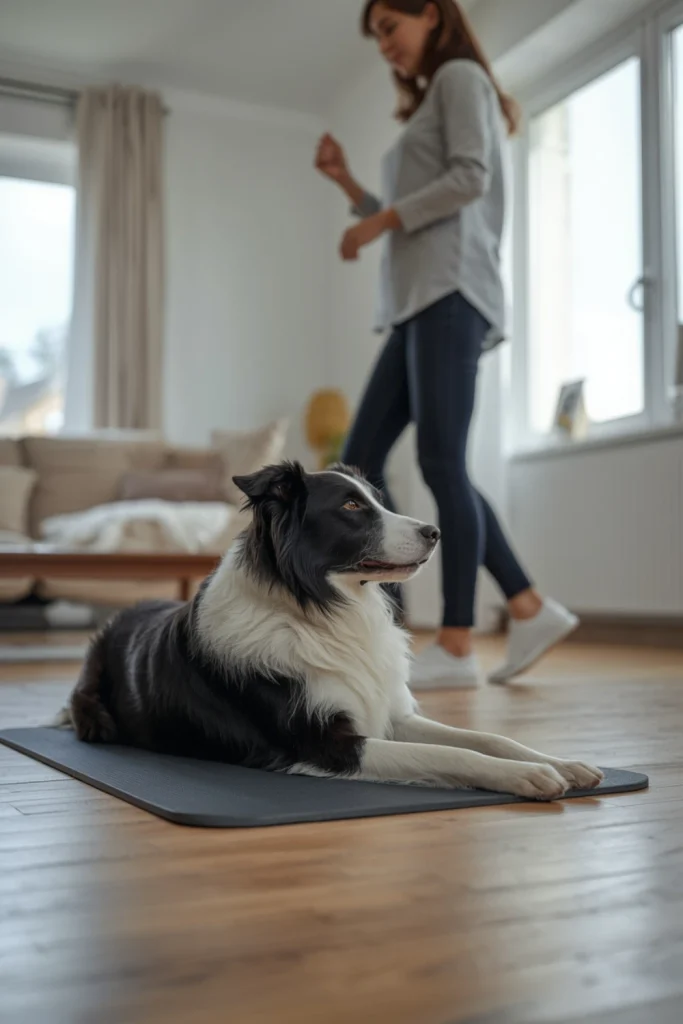
When your dog can remain on the mat for a reasonable period, begin adding distance. Start by taking just one small step away. Return quickly and reward your dog if they remain in place. Then gradually increase the distance over multiple training sessions.
Do not immediately walk across the house or disappear into another room. Your dog needs to understand that your movement does not automatically mean they should leave their place. If they get up when you take a step away, simply reduce the distance and try again. Training distance separately from duration and distractions can help prevent the exercise from becoming overwhelming.
10. Add Everyday Distractions
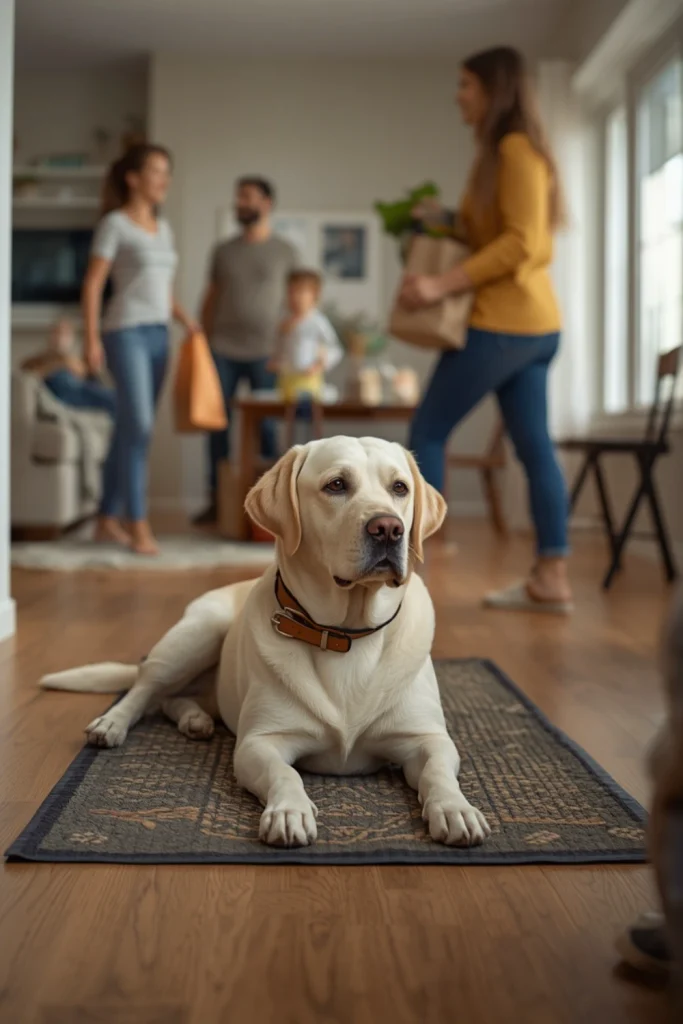
A dog may perform the place command perfectly in a quiet room but struggle when something exciting happens. That is normal. Once the basic behavior is strong, introduce distractions gradually. You could walk around the room, move a chair, pick up a toy, or have another family member enter the room.
Later, practice while preparing food, answering the door, watching television, or doing other normal activities. Work on only one major difficulty at a time whenever possible. If your dog gets up repeatedly, make the exercise easier. The goal is to help your dog learn that their place remains rewarding even when interesting things are happening nearby.
11. Practice the Place Command in Different Locations
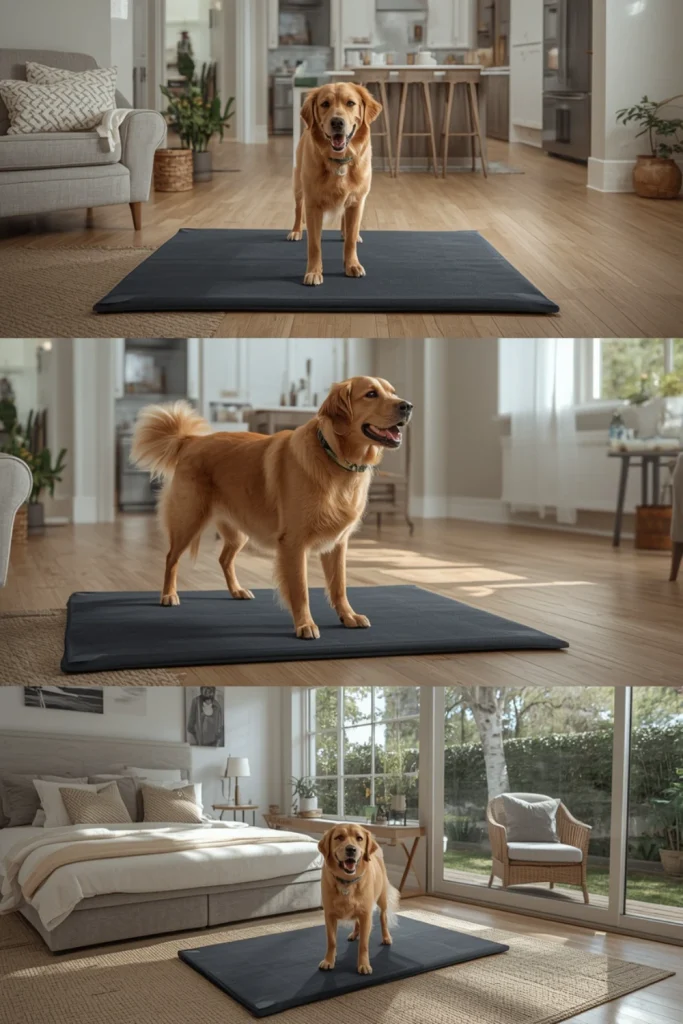
Once your dog understands the place command at home, practice in other rooms. Move the mat from the living room to the kitchen, bedroom, hallway, or another quiet area. This helps your dog understand that the cue refers to the mat or designated location rather than only one particular room.
If you have a portable mat, you can eventually practice in other safe environments. Start with easy locations and gradually introduce more distractions. Your dog may need additional rewards when learning in a new environment because the surroundings can change how difficult the behavior feels. Practicing in different places helps generalize the skill.
12. Use the Place Command in Real-Life Situations
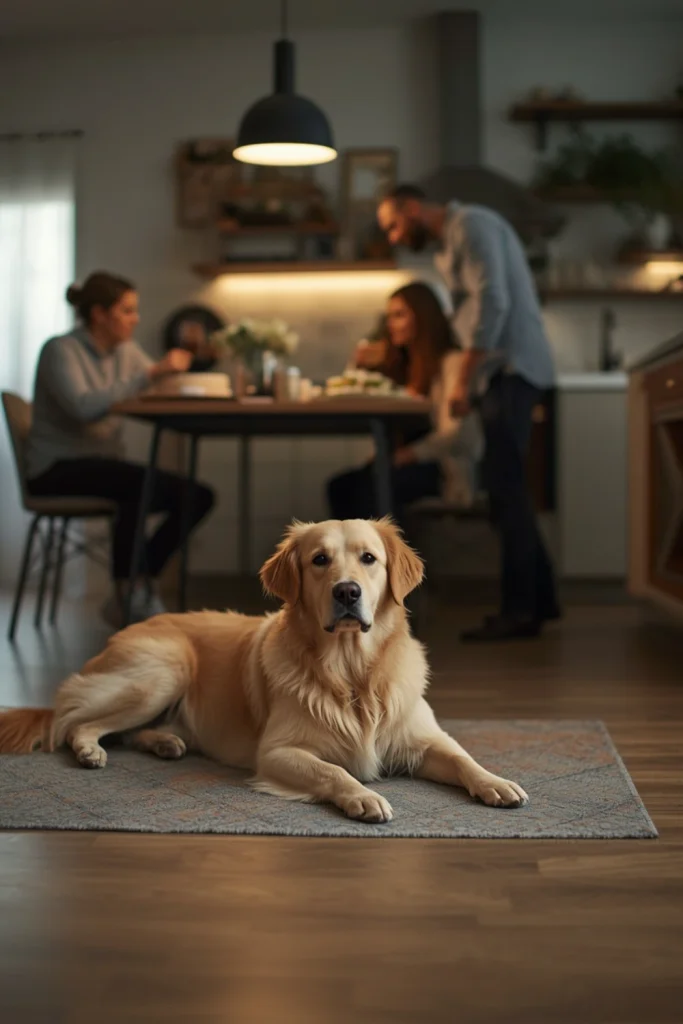
The final step is to make the place command useful in everyday life. Ask your dog to go to their place when guests arrive, while you prepare dinner, when you eat a meal, when a delivery arrives, or when you simply need your dog to settle nearby. These situations provide natural opportunities to reinforce the behavior.
Continue rewarding good behavior, especially when the environment is more exciting. You do not always need to use food. Depending on your dog’s preferences, calm praise, a favorite chew, a toy, or access to something enjoyable can become part of the reward system. The goal is for your dog to view their place as a safe, comfortable, and rewarding area rather than a punishment zone.
Final Thoughts
Learning how to teach your dog the place command can make everyday life easier for both you and your dog. Instead of constantly managing where your dog goes, you can give them a clear destination and teach them how to relax there. The behavior is especially useful around visitors, meals, cooking, deliveries, and other busy household moments.
Start by choosing a comfortable mat or bed and rewarding your dog for interacting with it. Gradually build four paws on the mat, settling, duration, distance, and distractions. Introduce the verbal “Place” cue once your dog understands the behavior, and always use a consistent release word.
Remember that successful dog training is about progression rather than perfection. If your dog struggles, simply make the exercise easier and build up again. With consistent positive reinforcement and short practice sessions, your dog can learn that going to their place is a rewarding and relaxing part of everyday life.