

10 Gentle Ways to Help a Puppy Settle in the Crate
A puppy that struggles to settle in a crate can make bedtime and quiet periods difficult for the entire household. Whining, moving around, scratching, and barking are common when a puppy is still learning that the crate is a safe place. The good news is that gentle, consistent training can make a big difference.
If you want to Help a Puppy Settle in the Crate, focus on comfort, positive associations, predictable routines, and gradual progress. Your puppy does not need to love the crate immediately. With patience and the right approach, the crate can become a peaceful space where your puppy feels secure enough to relax and sleep.
1. Make the Crate Comfortable and Safe
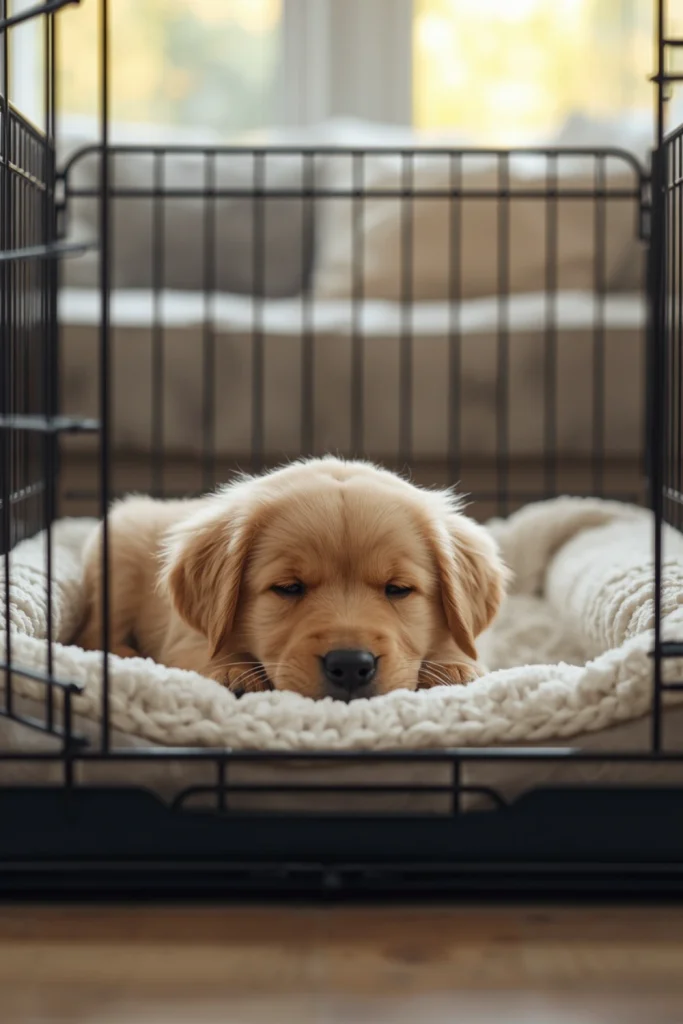
The first step to Help a Puppy Settle in the Crate is creating an environment where your puppy feels physically comfortable. Choose a crate that allows your puppy to stand, turn around, sit, and lie down naturally without providing excessive unused space. Good ventilation and secure construction are essential. Place the crate somewhere calm but not completely isolated from the family. Puppies often feel more comfortable when they can hear and see familiar people nearby.
Add appropriate bedding if your puppy does not chew or destroy it. Some puppies prefer a soft sleeping surface, while others are perfectly comfortable with a simple washable mat. Avoid filling the crate with unnecessary items, particularly if your puppy likes to chew. Regularly inspect bedding, toys, and crate components for damage. A safe, clean, appropriately sized crate gives your puppy a much better opportunity to relax.
2. Introduce the Crate Slowly
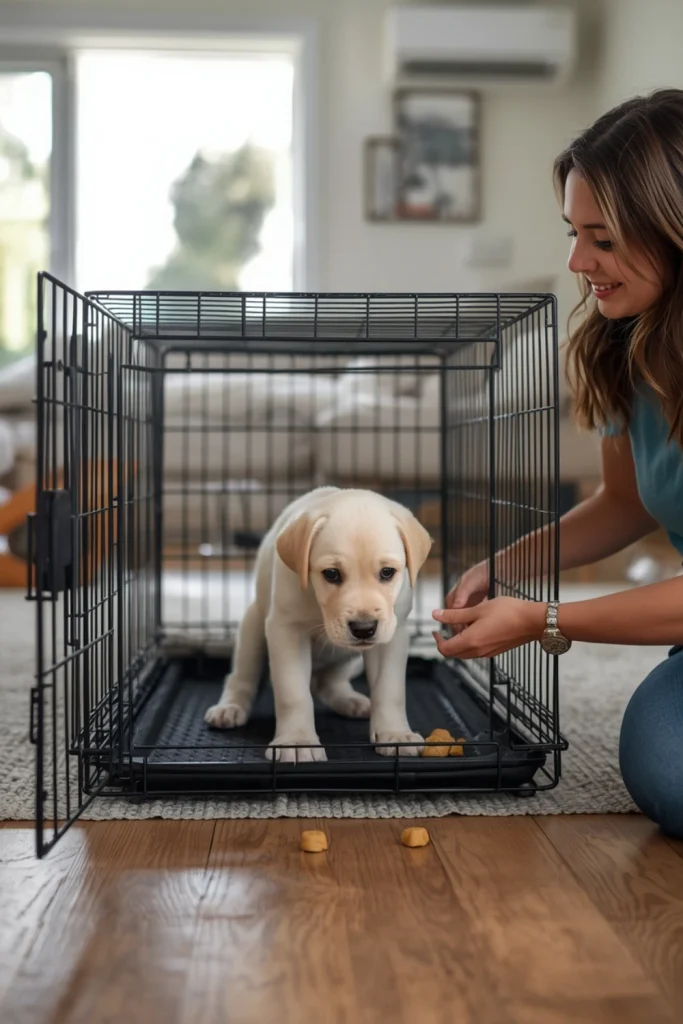
Puppies should not be expected to immediately understand that a crate is a comfortable place. Start by leaving the crate door open and allowing your puppy to investigate it independently. Place a few small treats around the entrance and gradually move them farther inside. Let your puppy decide how quickly to approach. If your puppy steps inside, offer calm praise rather than immediately closing the door.
Repeat these short exercises throughout the day. As your puppy becomes more comfortable, encourage it to remain inside for a few seconds before allowing it to leave. Eventually, you can briefly close the door while staying nearby. Increase the duration gradually and always pay attention to your puppy’s body language. Slow progress is often more successful than forcing longer sessions before the puppy is ready.
3. Use Positive Reinforcement
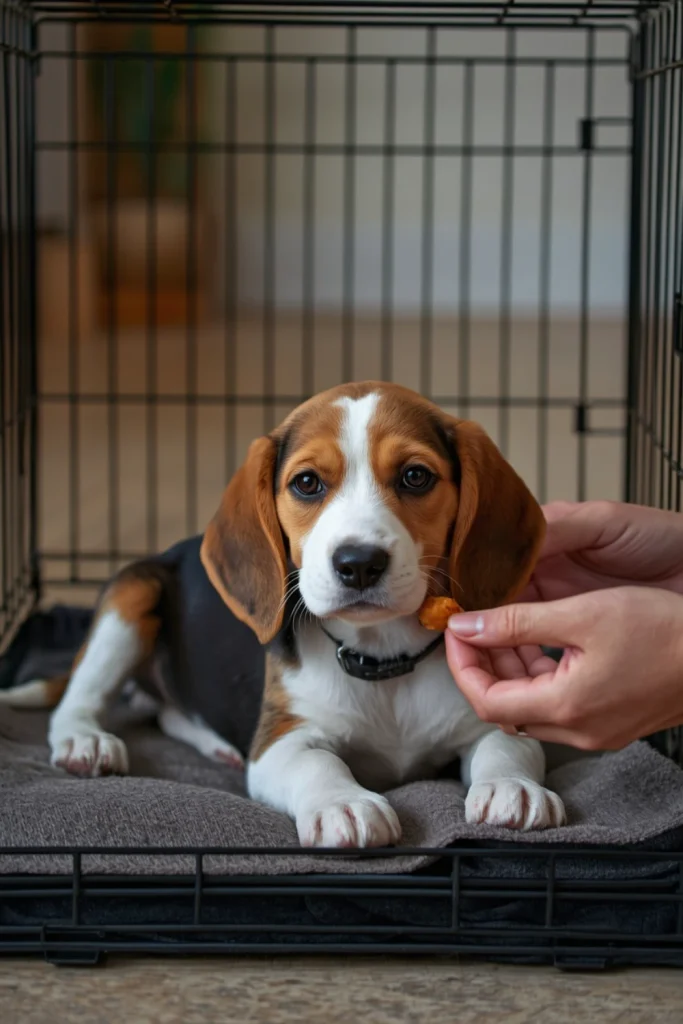
Positive reinforcement can help your puppy develop a strong connection between the crate and pleasant experiences. Reward your puppy whenever it voluntarily enters the crate, lies down calmly, or remains relaxed inside. Depending on your puppy’s preferences, rewards can include small training treats, verbal praise, or another safe reward. The important thing is to reinforce the behavior you want your puppy to repeat.
Try to reward calmness rather than only rewarding active behavior. If your puppy enters the crate and settles quietly, wait for that relaxed moment and provide gentle praise. Over time, your puppy learns that remaining calm inside the crate is worthwhile. Avoid excessive excitement when rewarding your puppy because the goal is relaxation. With consistent repetition, positive reinforcement can make crate entry and settling feel natural rather than stressful.
4. Practice During Calm Times of Day
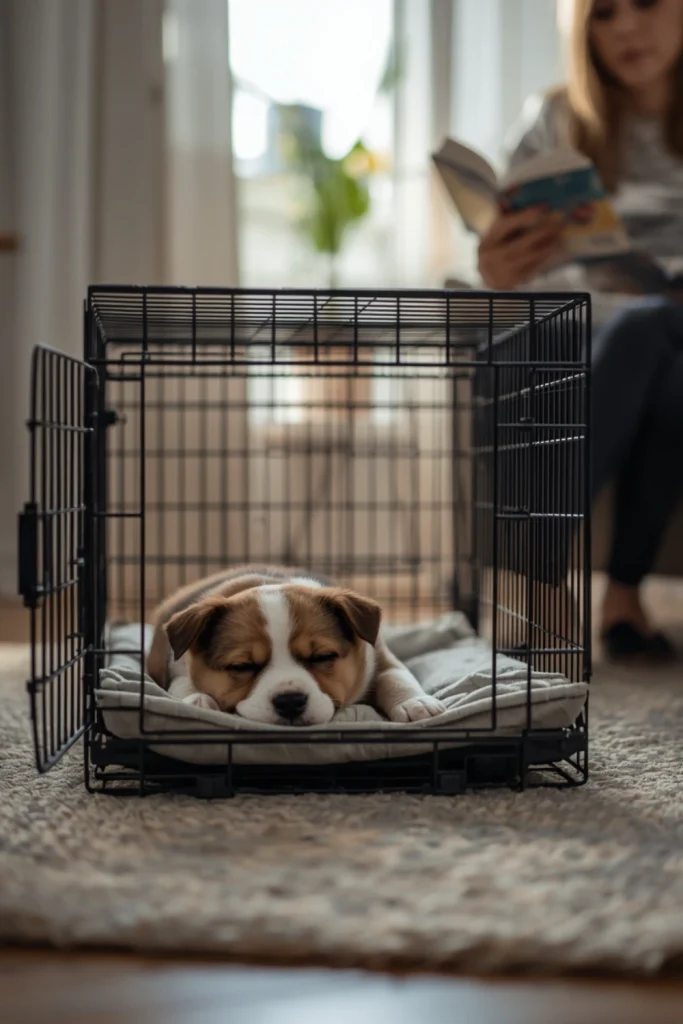
Choosing the right time for crate practice can make settling much easier. If your puppy is extremely excited, hungry, overtired, or desperate to use the bathroom, it may struggle to relax. Instead, practice when your puppy has already had appropriate exercise and is naturally becoming sleepy. Short sessions after a calm activity can teach your puppy that the crate is a comfortable place to rest.
Daytime practice is especially valuable because it prevents the crate from becoming associated only with bedtime or separation. Allow your puppy to take supervised naps in or near the crate. Sit nearby while your puppy rests, then gradually increase your distance. These relaxed sessions help your puppy develop the habit of settling without requiring constant interaction. A puppy that learns to relax during the day is often better prepared for nighttime crate training.
5. Create a Predictable Bedtime Routine
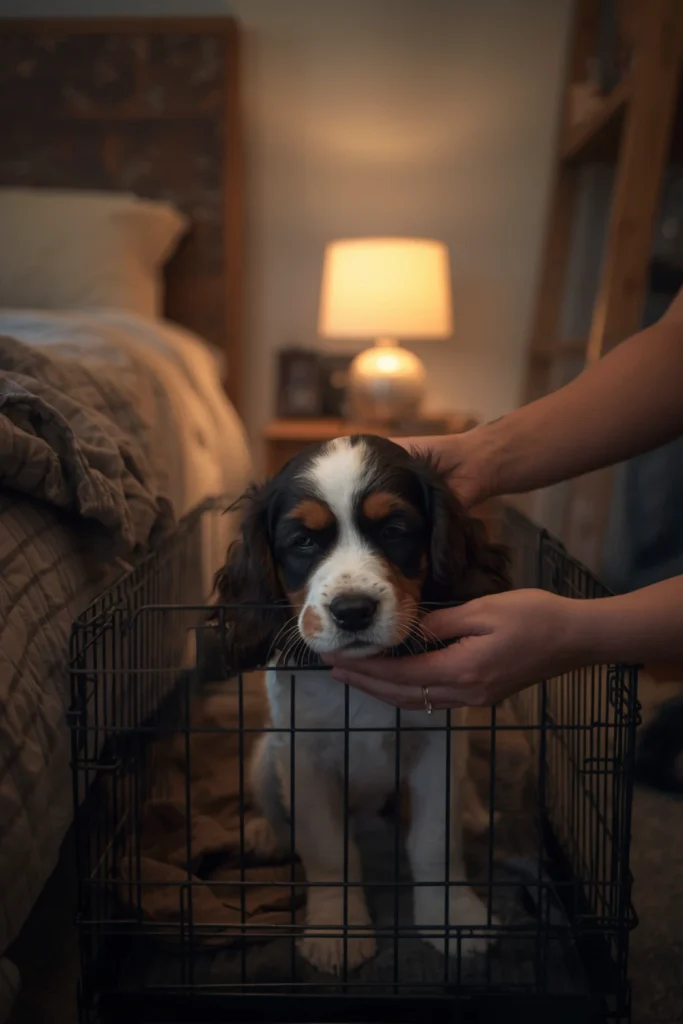
A consistent bedtime routine can help your puppy understand when it is time to relax. Begin winding down before placing your puppy in the crate. Reduce energetic play, provide a bathroom opportunity, and spend a few quiet minutes together. You might use the same simple phrase each night, such as “bedtime” or “settle.” Repeating the same sequence allows your puppy to recognize familiar signals that sleep time is approaching.
Try to keep nighttime crate entry calm and predictable. Avoid turning the final moments before bed into an exciting game. Once your puppy enters the crate, use a quiet voice and allow it to settle. A predictable routine reduces uncertainty and gives your puppy a clearer understanding of what happens next. Over time, the repeated pattern can become a reassuring part of your puppy’s daily schedule.
6. Keep the Crate Near You at First
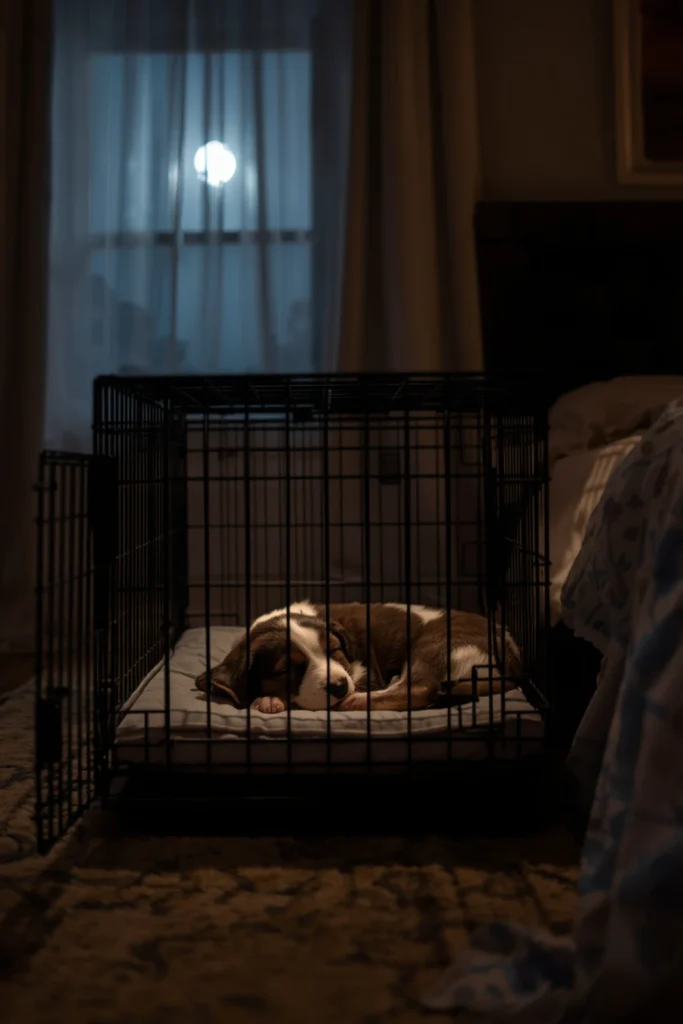
A puppy may find it difficult to settle when suddenly separated from its mother, littermates, and familiar surroundings. Keeping the crate near your bed or in another area where the puppy can hear you may provide additional reassurance during the early days. Being nearby also allows you to notice whether your puppy is whining because it needs a bathroom break or because it is having difficulty adjusting.
Once your puppy becomes comfortable with nighttime crate sleeping, you can gradually move the crate toward its permanent location if necessary. Move it a short distance at a time and give your puppy time to adjust. Avoid making major environmental changes while your puppy is already struggling. Gradual transitions can help build confidence and reduce unnecessary stress.
7. Offer a Safe and Appropriate Activity
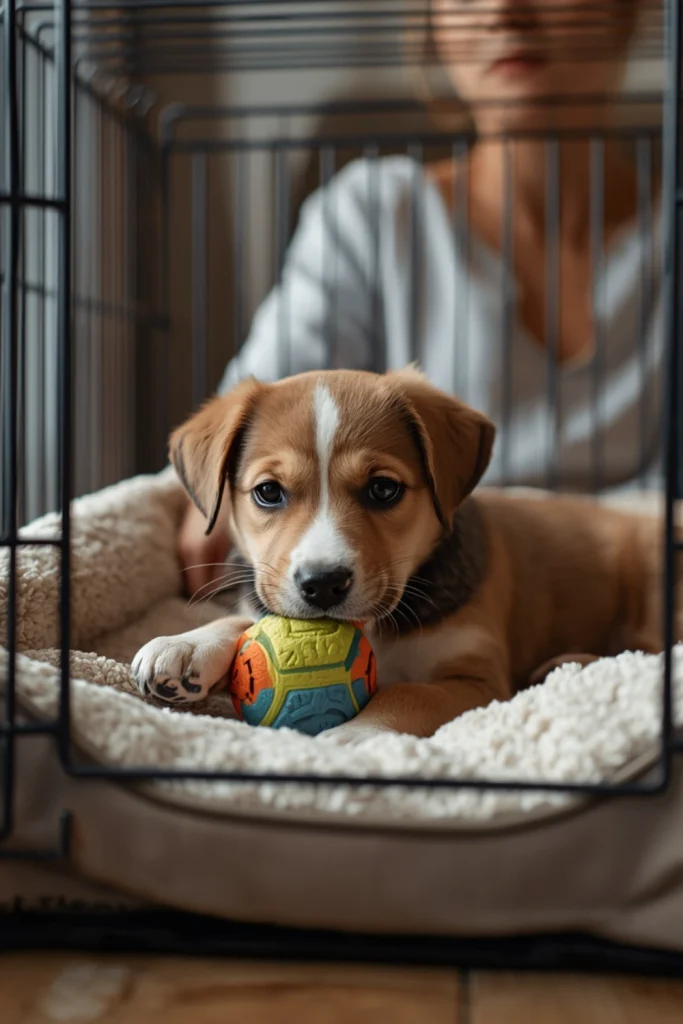
Some puppies have difficulty settling because they are looking for something to do. A suitable puppy-safe activity can help redirect their attention toward calm behavior. Depending on your puppy’s age and chewing habits, this might include an appropriate durable toy or another item recommended for safe crate use. Always consider whether the item is genuinely safe for your puppy to have without direct supervision.
The purpose is not to keep your puppy entertained for hours but to create an opportunity for calm engagement before resting. Observe how your puppy interacts with any item you provide. If it tears, breaks, or swallows pieces, remove it immediately. A simple crate setup is often preferable to one containing multiple accessories. Safety should always be the priority when choosing anything that stays with a puppy in a crate.
8. Give Your Puppy Enough Exercise and Mental Stimulation
A puppy that has not received enough appropriate activity may struggle to settle. Puppies need age-appropriate physical exercise as well as mental stimulation through exploration, training, sniffing, and play. Provide these activities throughout the day rather than relying on one intense session immediately before bedtime. Excessive exercise or highly exciting activity right before crate time can actually make some puppies more stimulated.
A balanced routine helps your puppy arrive at crate time feeling ready to rest. Short training sessions, gentle play, supervised exploration, and appropriate walks can provide useful stimulation. Afterward, allow your puppy time to calm down before entering the crate. The goal is a gradual transition from activity to relaxation. Avoid deliberately exhausting a puppy simply to make it sleep, especially because young puppies require substantial rest for healthy development.
9. Respond Calmly to Whining
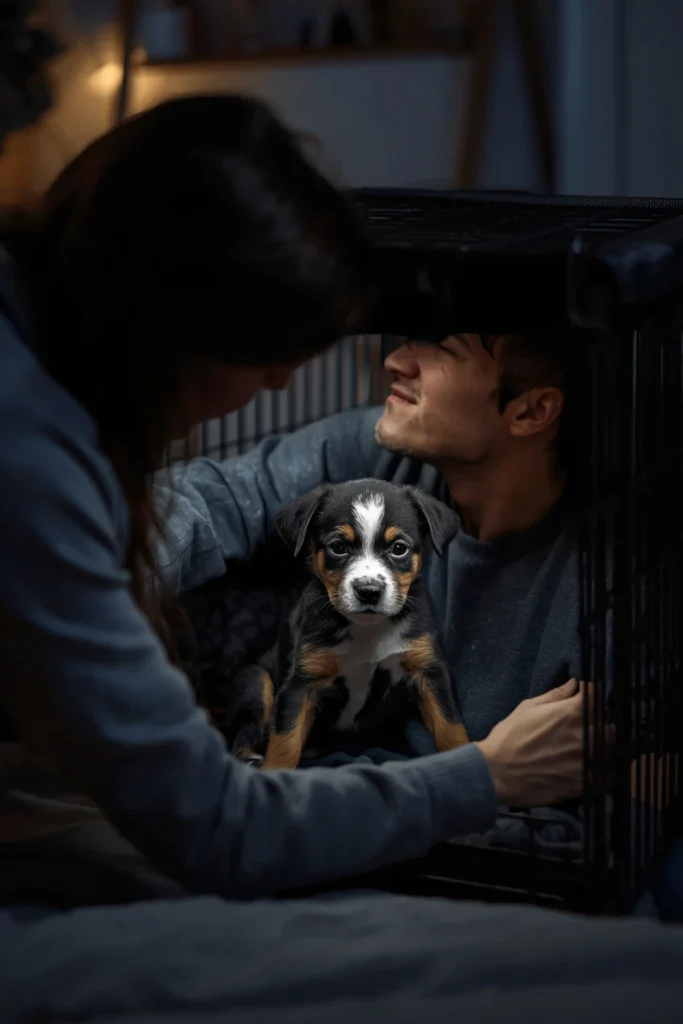
Whining is one of the most common challenges when trying to Help a Puppy Settle in the Crate. Before deciding how to respond, consider why your puppy is whining. It may need to urinate, be uncomfortable, feel frightened, or simply be adjusting to the new environment. Very young puppies often need overnight bathroom breaks, so assuming that every sound is attention-seeking can lead to unnecessary stress or accidents.
When your puppy has recently used the bathroom and appears comfortable, keep your response quiet and boring. Avoid turning nighttime whining into a long play session. If your puppy shows severe or escalating distress, reassess the training plan rather than forcing it to remain in the crate for an extended period. Never hit, shout at, or frighten your puppy for vocalizing. Calm training builds trust much more effectively than punishment.
10. Increase Crate Time Gradually
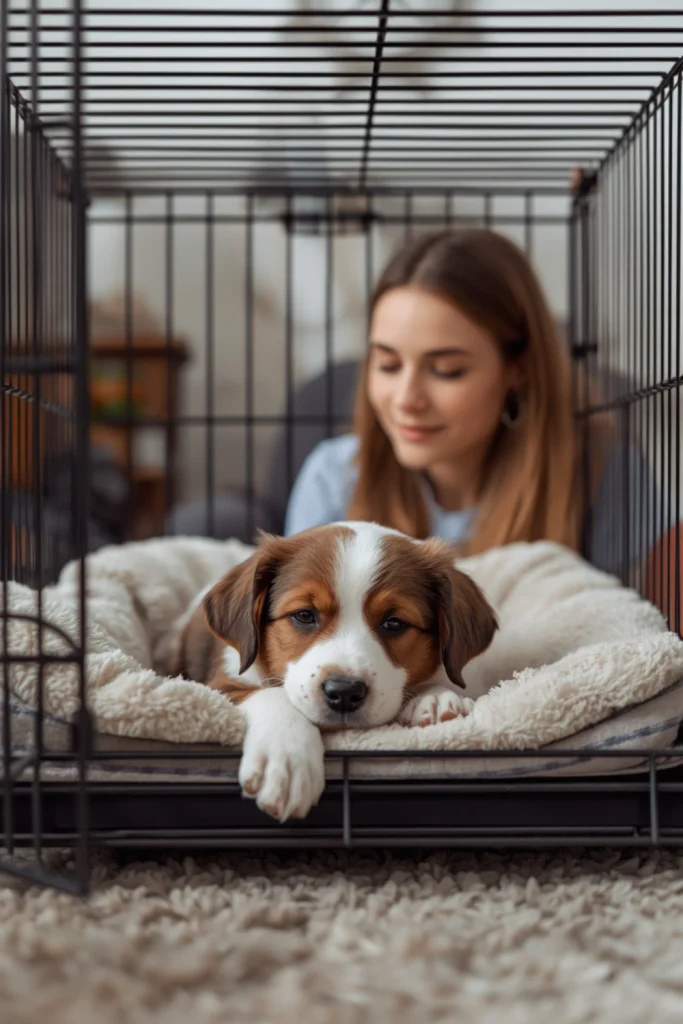
The final and most important approach is to increase crate time at a pace your puppy can handle. Start with short periods and gradually extend them as your puppy demonstrates comfort. If your puppy settles successfully for five minutes, there is no need to suddenly expect an hour. Small increases allow your puppy to develop confidence without becoming overwhelmed.
Watch your puppy’s body language throughout the process. Relaxed posture, quiet resting, and voluntary crate entry are positive signs. Repeated attempts to escape, frantic scratching, heavy distress, or escalating vocalization may indicate that the training has progressed too quickly. Take a step back and make the next session easier. Successful crate training is about building confidence, not testing endurance.
Final Thoughts
The best way to Help a Puppy Settle in the Crate is to make the experience safe, predictable, comfortable, and positive. Start slowly and give your puppy plenty of opportunities to build confidence. A comfortable crate, positive reinforcement, daytime practice, appropriate exercise, and a consistent bedtime routine can all support successful training.
Most importantly, remember that your puppy is learning. Whining or restlessness does not necessarily mean your puppy is being difficult. Look for the reason behind the behavior and respond appropriately. With gentle guidance and consistent routines, the crate can become a peaceful place where your puppy feels comfortable resting, sleeping, and taking a break.