
12 Puppy Obedience Exercises to Practice at Home
Bringing a puppy home is an exciting experience, but teaching good manners from the beginning can make everyday life much easier. From learning to sit before meals to coming when called and settling calmly on a bed, simple obedience exercises help your puppy understand what you expect. The best part is that you do not need a professional training facility or expensive equipment to get started. Your living room, hallway, and secure garden can become excellent learning spaces.
The secret to raising a well-mannered dog is consistency, patience, and positive reinforcement. Puppies learn through repeated experiences, and short, enjoyable sessions can help them develop confidence without becoming overwhelmed. These Puppy Obedience Exercises to practice at home will introduce essential skills, encourage good behavior, and strengthen your bond with your growing companion. Whether your puppy is just beginning to learn basic commands or needs more practice with everyday manners, these exercises offer a practical starting point.
1. Teach Your Puppy to Respond to Its Name
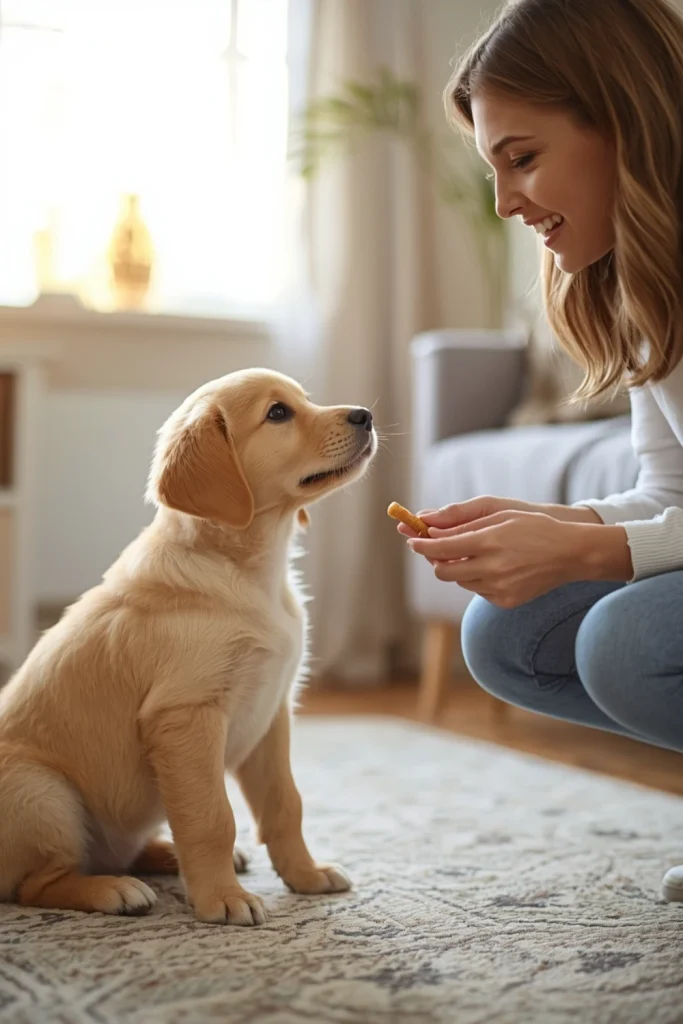
Teaching your puppy to recognize its name is one of the most useful obedience exercises to practice at home. Begin in a quiet room with a few small, puppy-safe treats. When your puppy is not already looking at you, say its name once in a cheerful, friendly voice. The moment it turns its head or looks in your direction, praise it and offer a reward. Repeat this several times, leaving a little space between attempts. Keep the activity playful and avoid saying the name repeatedly if your puppy does not respond immediately.
As your puppy begins turning toward you more consistently, practice in different rooms and from slightly greater distances. You can also use the name before inviting your puppy to play or rewarding a voluntary check-in. Make sure the name predicts pleasant experiences rather than scolding. If you use it primarily when your puppy is in trouble, the puppy may begin to ignore it or become hesitant. The goal is to help your puppy learn that hearing its name is an invitation to pay attention, not a warning that something unpleasant is about to happen.
2. Practice the Sit Command
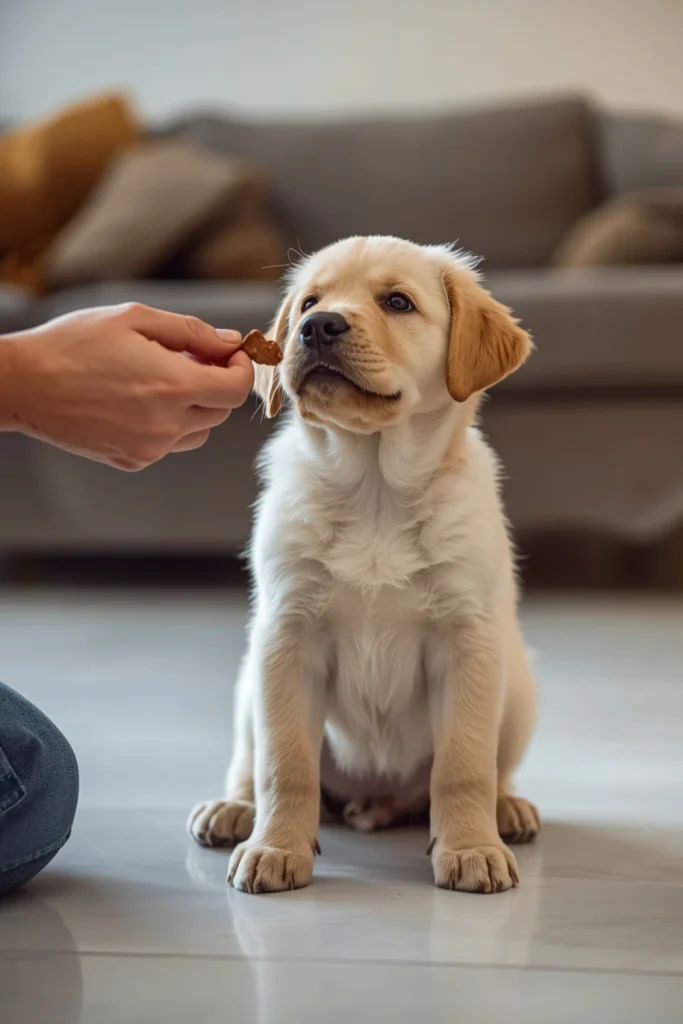
Sit is a helpful first obedience skill because it encourages your puppy to pause before doing something exciting. Begin by standing or kneeling in front of your puppy with a small treat near its nose. Move the treat slowly upward and slightly backward over its head. As the puppy follows the treat, its bottom may naturally move toward the floor. The moment it sits, say “yes” or use another consistent marker, then reward it. Once the puppy starts performing the action predictably, introduce the word “sit” just before the movement.
Practice sit during everyday routines so your puppy learns when the behavior is useful. For example, ask for a sit before putting down a food bowl, attaching a leash, or beginning a gentle game. Reward the puppy for responding rather than expecting it to remain seated for a long time. Avoid pushing its bottom down or repeatedly moving the treat over its head if it seems confused. If the puppy struggles, make the movement smaller or reward a natural sit when it happens. Short, successful repetitions help build understanding and confidence.
3. Teach Come When Called Indoors
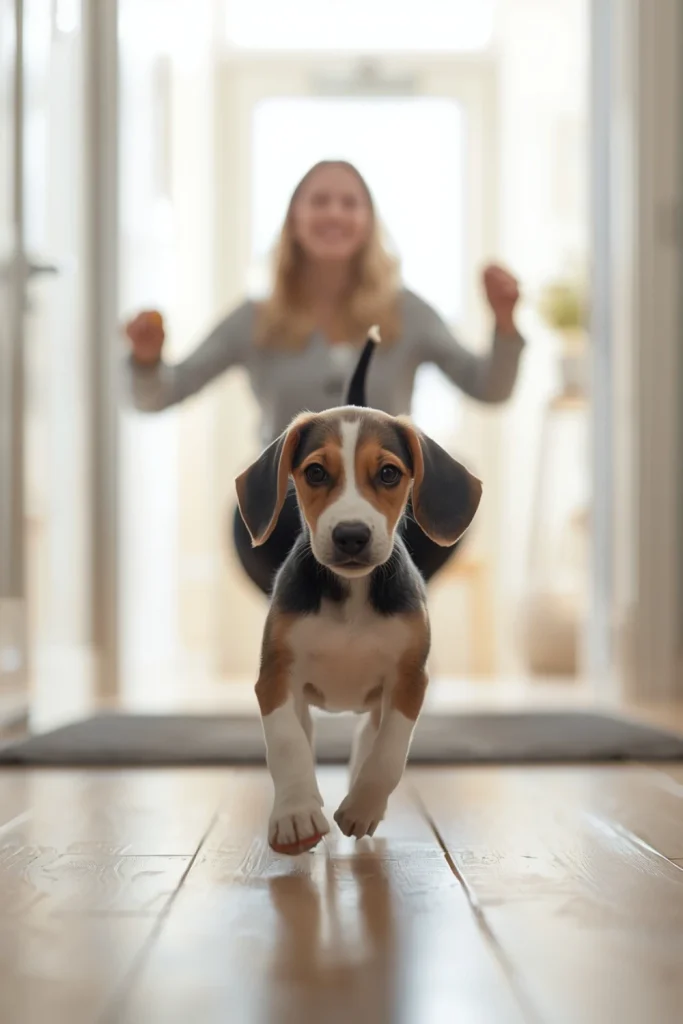
The come command helps your puppy learn to return to you when invited. Begin at a short distance in a quiet hallway or living room. Say your puppy’s name followed by “come” in an encouraging voice, then take a small step backward or crouch down to make yourself inviting. When the puppy approaches, praise it and provide a reward. If your puppy already moves toward you naturally, use that moment to introduce the cue. Avoid calling repeatedly while the puppy is distracted; instead, begin when it has a reasonable chance of noticing you.
As the puppy becomes more reliable, gradually increase the distance and practice in other safe areas of your home. Reward your puppy generously for coming, and sometimes follow the reward with a short game or another enjoyable activity. Never call your puppy to you only when something unpleasant is about to happen, such as ending playtime or taking away a favorite toy. For outdoor practice, use a secure enclosure or an appropriate long training line attached to a well-fitted harness. A young puppy should not be trusted off-leash in an unsecured area simply because it responds well indoors.
4. Practice the Down Command
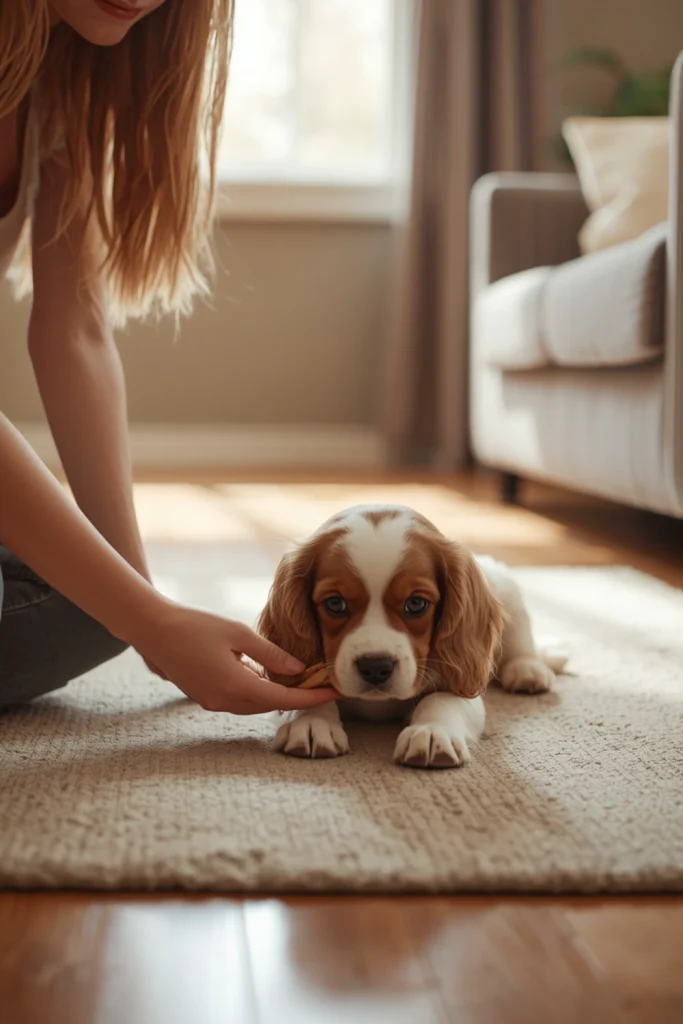
The down command teaches your puppy to lie down comfortably when asked. It can be useful during quiet family time, before grooming, or when you want your puppy to rest briefly beside you. Start with your puppy sitting on a nonslip surface. Hold a treat close to its nose and move your hand slowly toward the floor, then slightly forward between its front paws. Allow the puppy to follow the treat and reward it when its elbows and body lower into the down position. Introduce the word “down” as the puppy begins to understand the movement.
Practice on a comfortable mat or carpet so your puppy does not slide while learning. If the puppy stands up instead of lying down, reset calmly and try guiding the treat more slowly. Some puppies need more time to understand the movement, so reward small steps toward the desired position. Never force your puppy’s shoulders or legs down. If lying down seems uncomfortable or your puppy repeatedly avoids the movement, stop and consider whether the surface or the puppy’s physical comfort may be an issue. The aim is a relaxed, voluntary behavior, not forced stillness.
5. Teach Wait Before Meals
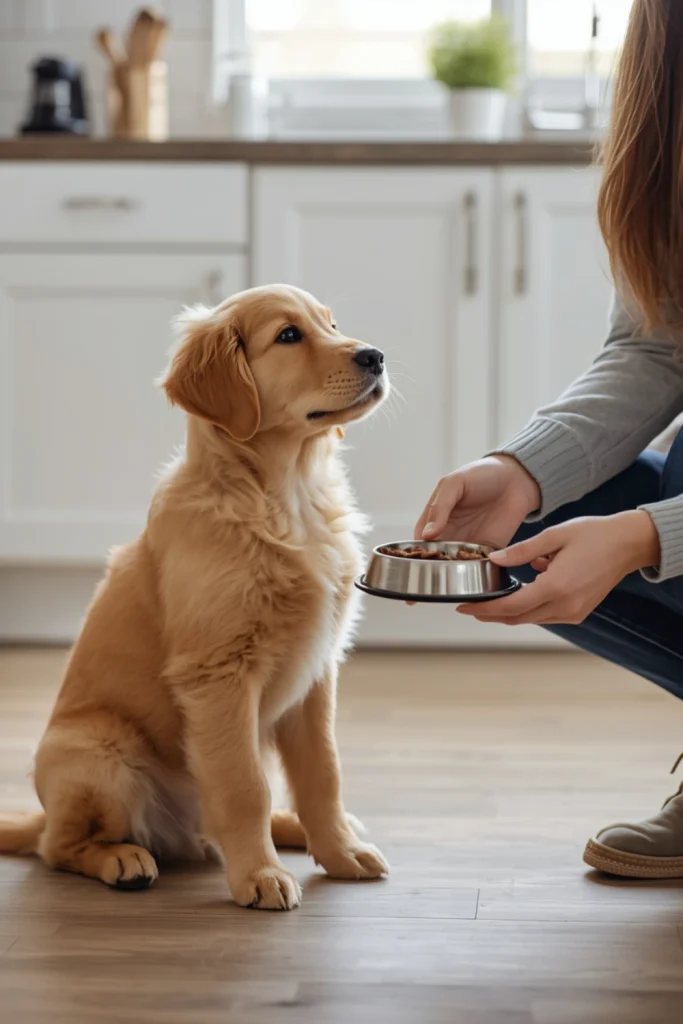
Wait teaches your puppy to pause briefly before moving toward something it wants. Mealtimes offer a convenient opportunity to practice because the routine is predictable and rewarding. Prepare the food bowl and ask your puppy to pause for just a second while you hold the bowl securely. Say “wait” once, then reward the brief pause by placing the bowl down or giving a release cue. Keep the first attempts very easy. You are teaching a small moment of patience, not expecting a young puppy to remain still for a long period while feeling hungry.
As your puppy becomes more comfortable, gradually increase the pause by a second or two. If the puppy rushes toward the bowl, lift it calmly out of reach and try again with a shorter pause. Avoid teasing your puppy with food or withholding meals for extended training. A puppy should still receive appropriate meals on schedule. You can also practice wait before opening an interior door or putting on a harness, using the same principle of a brief pause followed by permission to continue. For exterior doors and roads, always rely on secure handling and barriers as well as training.
6. Introduce the Stay Command
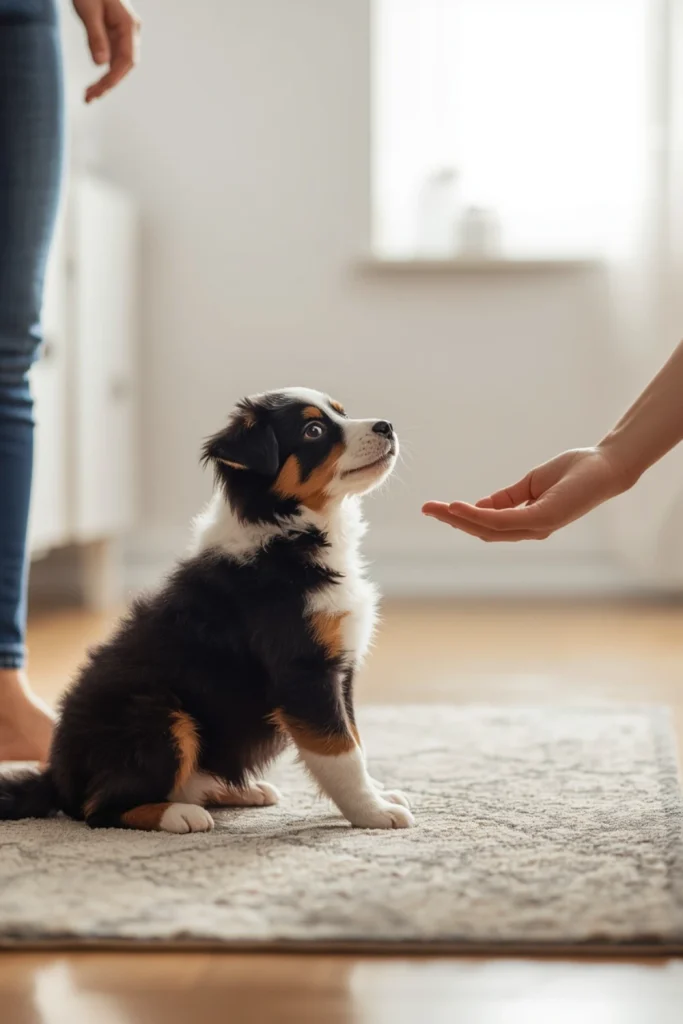
Stay teaches your puppy to remain in one position until released. Start with a behavior your puppy already knows, such as sit. Stand close, hold an open palm facing the puppy, and say “stay.” Wait for only one second, then praise and reward the puppy while it is still sitting. Finish with a release word such as “free” and encourage the puppy to move. This short sequence helps the puppy understand that staying in position is a separate skill and that it can move again when you give permission.
Build the exercise slowly. Increase the duration by a second or two before adding distance, and practice in a quiet environment before introducing distractions. If your puppy gets up, avoid scolding; simply reset and try a shorter stay. Puppies naturally move frequently, so realistic expectations are important. Do not expect a young puppy to remain still for long periods, especially when tired, excited, or uncomfortable. Never depend on stay alone to keep your puppy safe near roads, stairs, open gates, or other hazards. Physical supervision and safe barriers remain essential.
7. Practice Leave It With Safe Objects
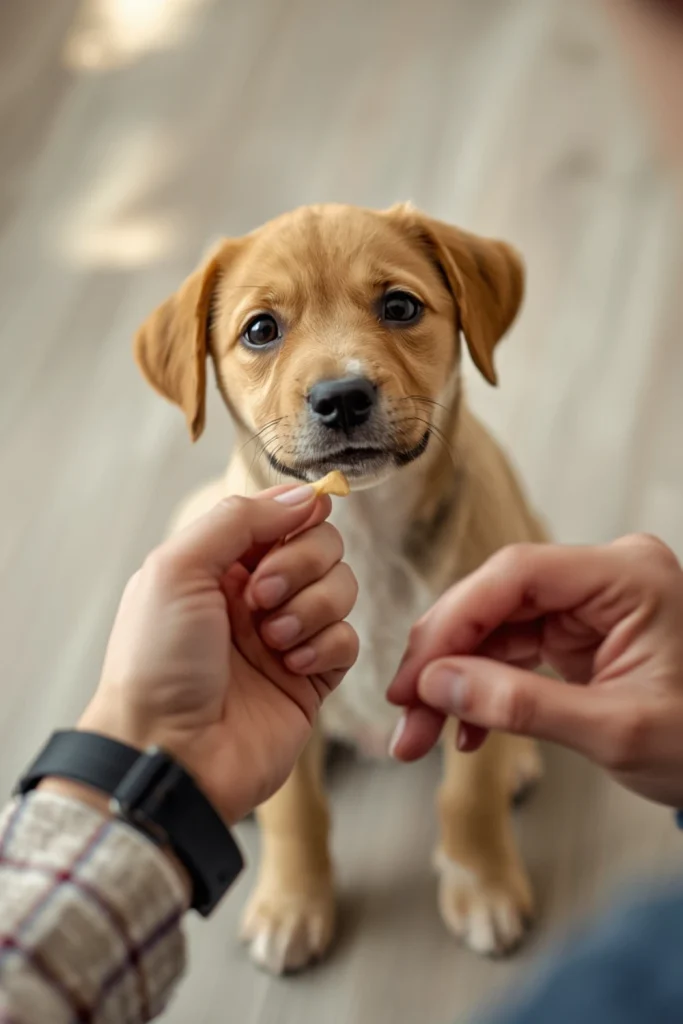
Leave it helps your puppy learn to turn away from something it should not approach or pick up. Start with a low-value treat hidden inside your closed hand. Let your puppy sniff your hand without opening it or pushing the puppy away. Wait for the puppy to stop investigating or turn its head slightly away. Immediately praise and reward it with a different treat from your other hand. This teaches the puppy that disengaging from the unavailable item can lead to a reward. Keep the exercise calm and easy, especially if your puppy is very food-motivated.
When the puppy understands the basic game, practice with a harmless object on the floor that you can safely cover or keep out of reach. Say “leave it” once and reward your puppy for looking away or returning its attention to you. Do not use dangerous foods, medicines, electrical cords, sharp objects, or small items that could be swallowed as training props. Puppy-proof your home so unsafe objects are not available in the first place. Leave it is a helpful skill, but it cannot guarantee that a puppy will ignore every tempting object in every environment.
8. Teach Drop It During Play
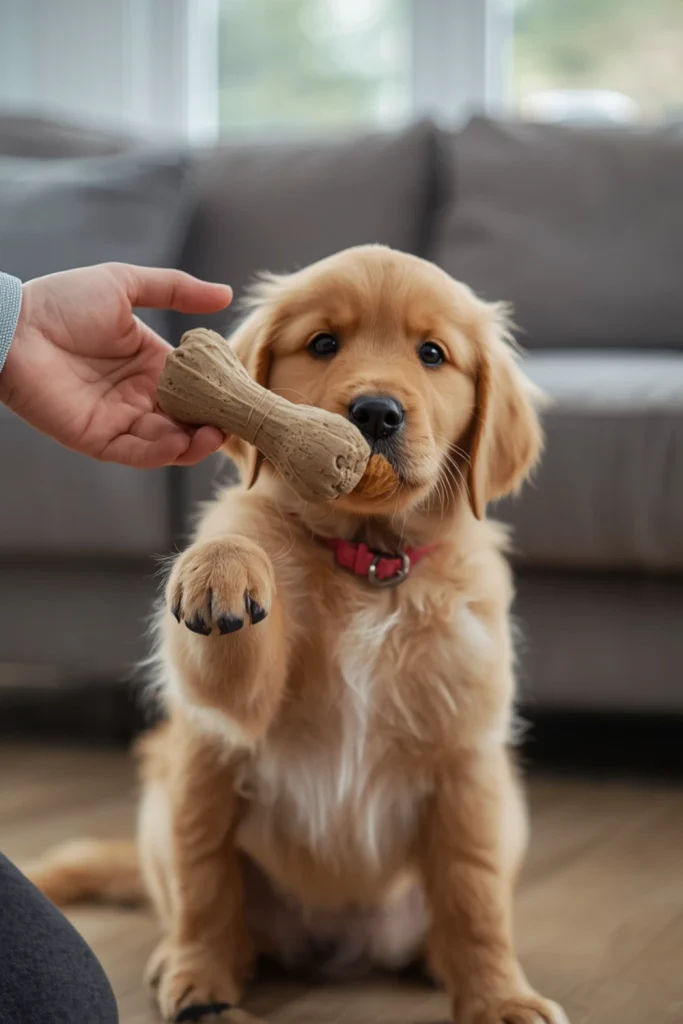
Drop it teaches your puppy to release a toy or another safe object from its mouth. Begin with a soft toy that your puppy enjoys. Allow the puppy to hold the toy during a gentle game, then offer a small treat near its nose while saying “drop it.” When the puppy releases the toy, praise it and give the treat. If appropriate, return the toy so the puppy learns that releasing something does not always mean losing it forever. This approach helps make giving up an object a positive, cooperative experience.
Repeat the exercise in short sessions, gradually reducing the need to show the treat before the puppy releases the toy. Avoid chasing the puppy or forcibly taking the object, because these actions can turn stealing into a game or make the puppy defensive. If your puppy grabs something unsafe, stay calm and use a safe exchange when possible. If it guards objects, freezes, growls, or snaps when approached, do not try to overpower it. Seek help from a qualified, reward-based trainer if guarding persists. Prevent access to hazardous items while your puppy is learning.
9. Practice Touch With an Open Palm
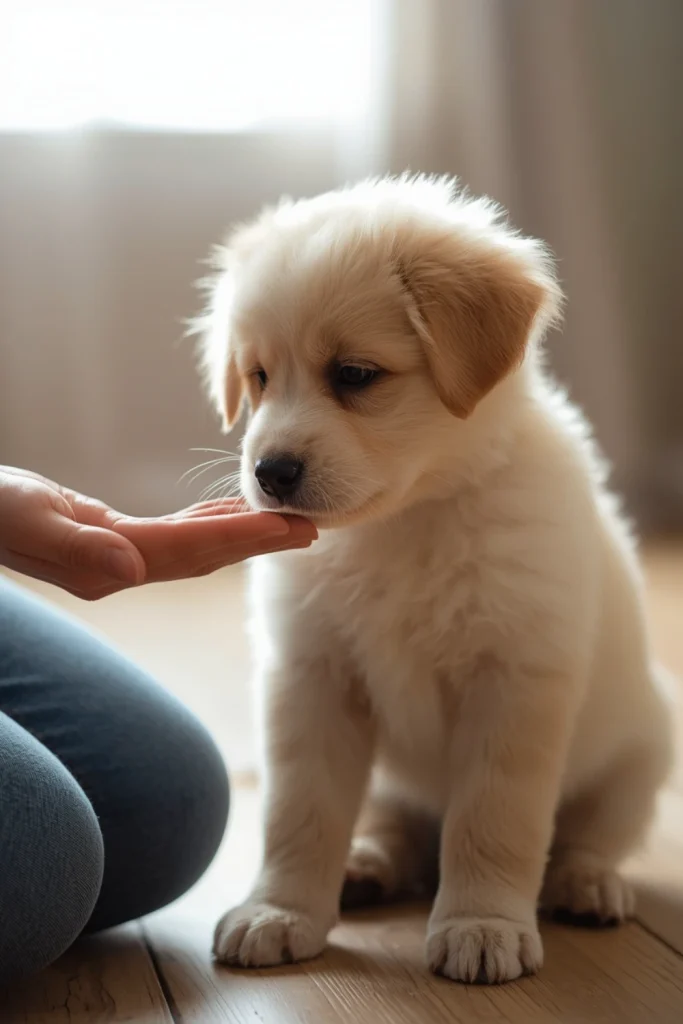
Touch is a simple exercise that teaches your puppy to gently touch your open palm with its nose. It helps build attention, confidence, and cooperation. Start by holding your hand a short distance from the puppy’s face, with your palm open and fingers relaxed. Let the puppy investigate voluntarily. The moment its nose touches your hand, mark the behavior with “yes” and reward it. If the puppy seems unsure, keep your hand still and give it time. Avoid pushing your hand toward the puppy, especially if it is nervous about people reaching toward its face.
Once your puppy understands the game, say “touch” just before presenting your palm. Gradually move your hand a little to the left, right, or slightly farther away so your puppy takes a step to reach it. Keep movements small and make sure the puppy can succeed easily. Touch can later help guide your puppy toward a mat, encourage a voluntary approach, or redirect attention during training. It should never be used to lure a frightened puppy into an unsafe situation. Allow the puppy to move away when it needs a break.
10. Teach Loose Leash Walking Indoors
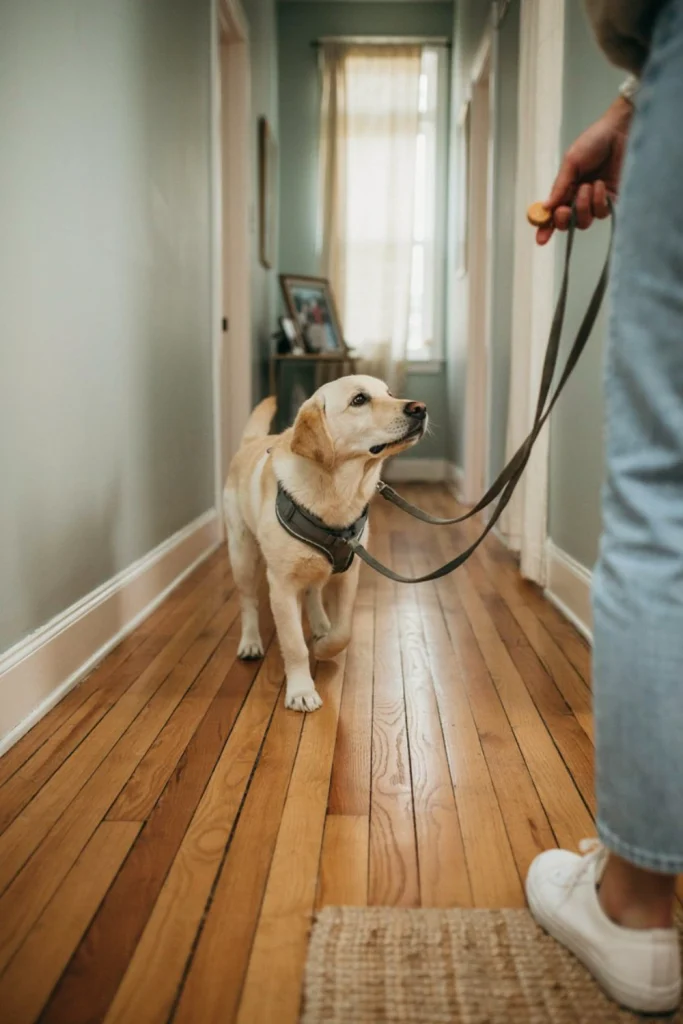
Loose leash walking helps your puppy learn that walking beside you with a relaxed leash is rewarding. Before heading outside, begin in a quiet hallway or living room. Attach a comfortable, well-fitted harness and a lightweight leash suitable for the puppy. Hold a treat near your side and take one or two slow steps. Reward your puppy for following you without pulling or letting the leash become tight. Use a consistent cue such as “let’s go” if you wish, but focus first on making it rewarding for the puppy to stay near you.
As your puppy gains confidence, practice gentle turns and slightly longer stretches of walking. Keep the leash loose and avoid dragging or jerking the puppy when it stops to investigate. Allow suitable sniffing breaks because exploring is an important part of a puppy’s experience. If the puppy pulls toward something, pause or change direction gently when safe, then reward it for reconnecting with you. Move outdoors only when the environment and your puppy’s vaccination and health guidance make it appropriate. Follow your veterinarian’s advice about safe places for young puppies before exposing them to public ground.
11. Practice Settle on a Mat
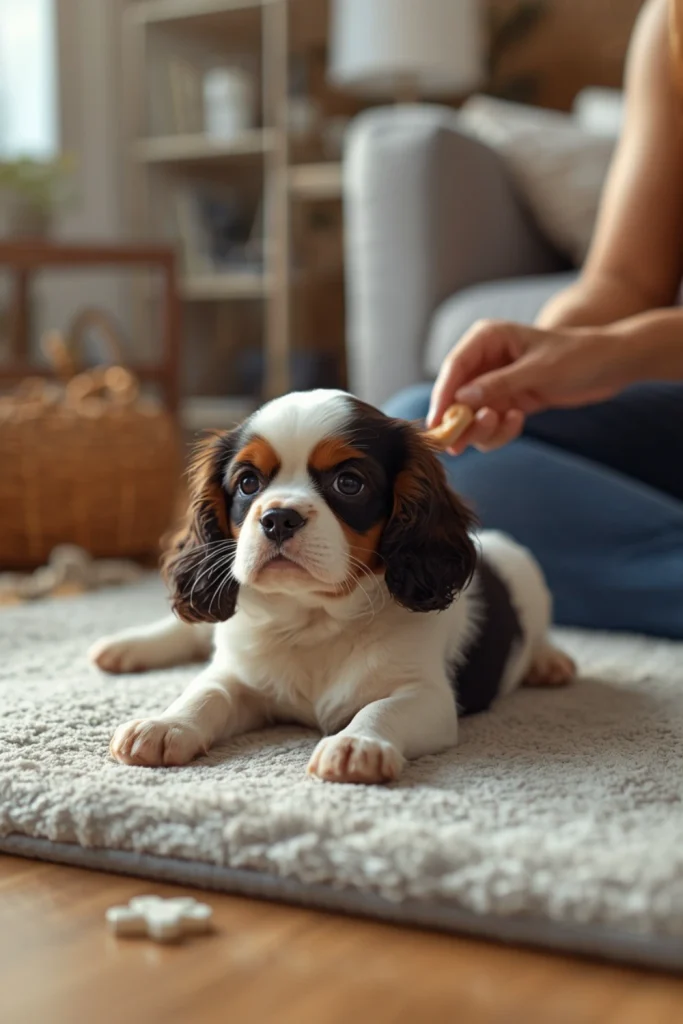
Settle teaches your puppy that a mat or bed can be a comfortable place to relax. Choose a nonslip mat and place it in a quiet part of your home. Begin by rewarding your puppy for looking at the mat, approaching it, or placing one paw on it. Gradually reward the puppy for standing fully on the mat, then sitting or lying down if it does so naturally. Introduce a cue such as “settle” when the puppy begins relaxing there. Keep your rewards gentle and spaced out so the puppy can learn to remain comfortable without becoming overly excited.
Over time, reward slightly longer periods of calm behavior on the mat. Practice during quiet moments, such as when you are reading or sitting nearby, rather than beginning when visitors arrive or the puppy is highly excited. If the puppy leaves the mat, calmly reset without scolding. Ensure that the puppy has had opportunities to play, explore, toilet, and rest before asking for calm behavior. Settle is not intended to force a puppy to remain still when it needs something. The goal is to create a positive resting routine that supports emotional regulation and helps the puppy learn how to relax.
12. Teach Polite Greetings With Four Paws on the Floor
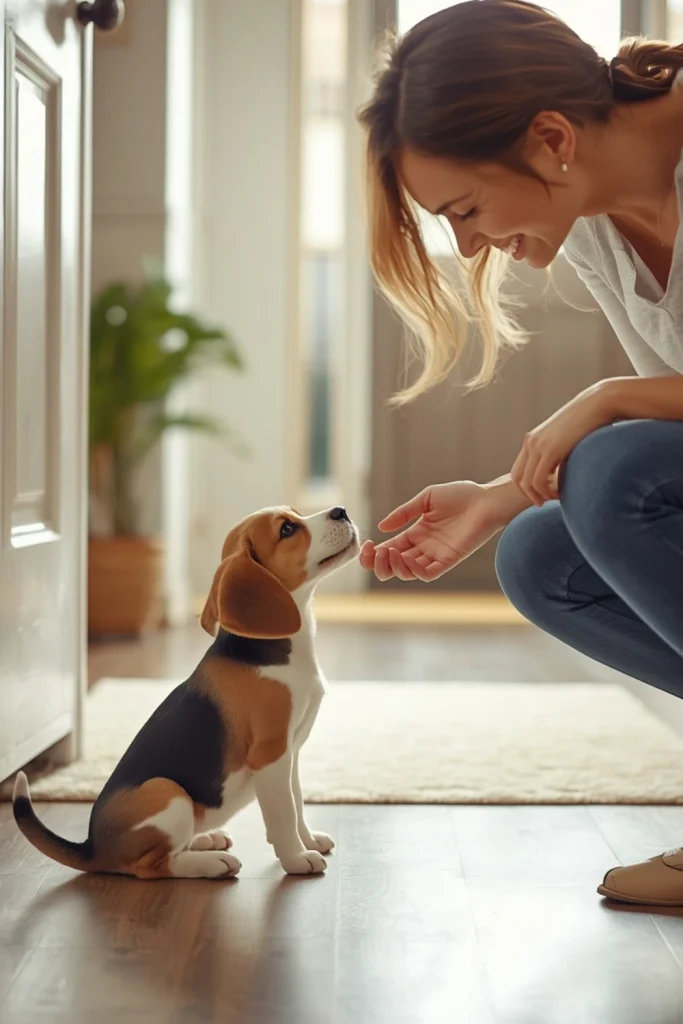
Puppies often jump up because they are excited to greet people and want attention. Teaching polite greetings helps your puppy learn that keeping all four paws on the floor is a rewarding way to interact. Begin with a familiar person approaching calmly while your puppy is on the floor. Reward the puppy for remaining grounded, even if it is wiggly or excited. If it jumps, the person can briefly turn away or pause attention without shouting or pushing the puppy down. As soon as the puppy returns to the floor, reward the calmer behavior.
Practice with different household members, but keep greetings short and manageable. Ask visitors to follow the same rules and avoid encouraging jumping sometimes while discouraging it at other times. You can also ask for a sit before greeting if your puppy can perform that skill comfortably. If the puppy becomes too excited, increase the distance, offer a brief break, and try again when it is calmer. Do not expect perfect manners immediately, particularly from a young puppy. Consistent practice and rewarding the behavior you want will help polite greetings become a familiar routine.
Conclusion
Puppy obedience training does not have to be complicated or time-consuming. With these 12 exercises, you can begin teaching your puppy important everyday skills, including name recognition, sit, come, down, wait, leave it, and polite greetings. Short, positive sessions help your puppy learn at a manageable pace while strengthening trust and communication between you.
Remember that every puppy develops differently. Focus on consistency rather than perfection, reward small improvements, and introduce distractions gradually. Give your puppy plenty of rest, play, safe exploration, and opportunities to feel comfortable in its environment. By practicing these Puppy Obedience Exercises to practice at home, you can build a strong foundation for good manners and a rewarding relationship with your dog as it grows.