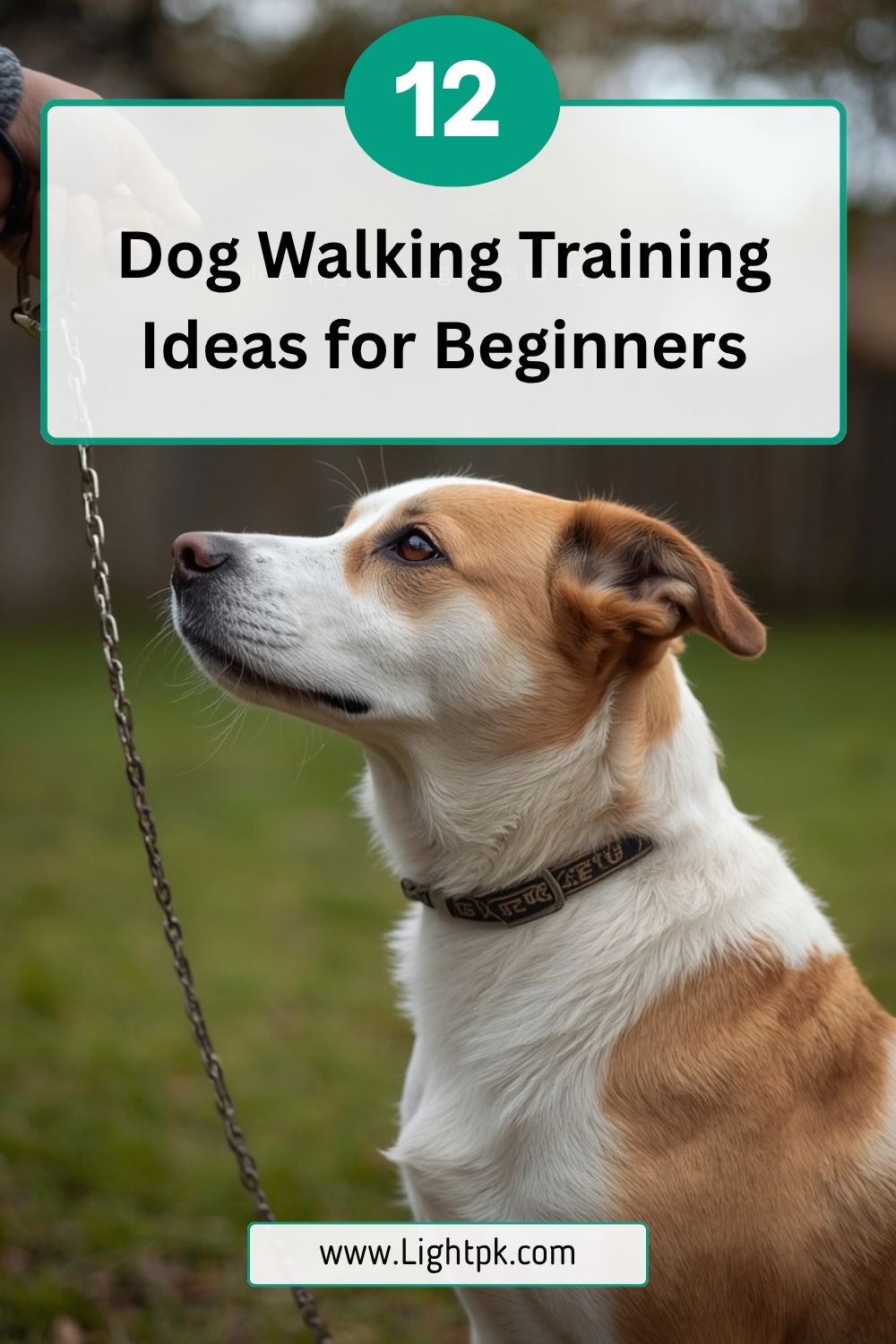
12 Dog Walking Training Ideas for Beginners
A good dog walk should feel relaxing, enjoyable, and rewarding for both you and your pet. But if your dog pulls constantly, ignores you, jumps at distractions, or refuses to walk calmly, even a short outing can become stressful.
The good news is that you do not need advanced training experience to improve your dog’s walking behavior. These Dog Walking Training Ideas are simple enough for beginners and can help you build better leash manners, attention, confidence, and communication through short, consistent training sessions.
1. Start Training in a Quiet Area
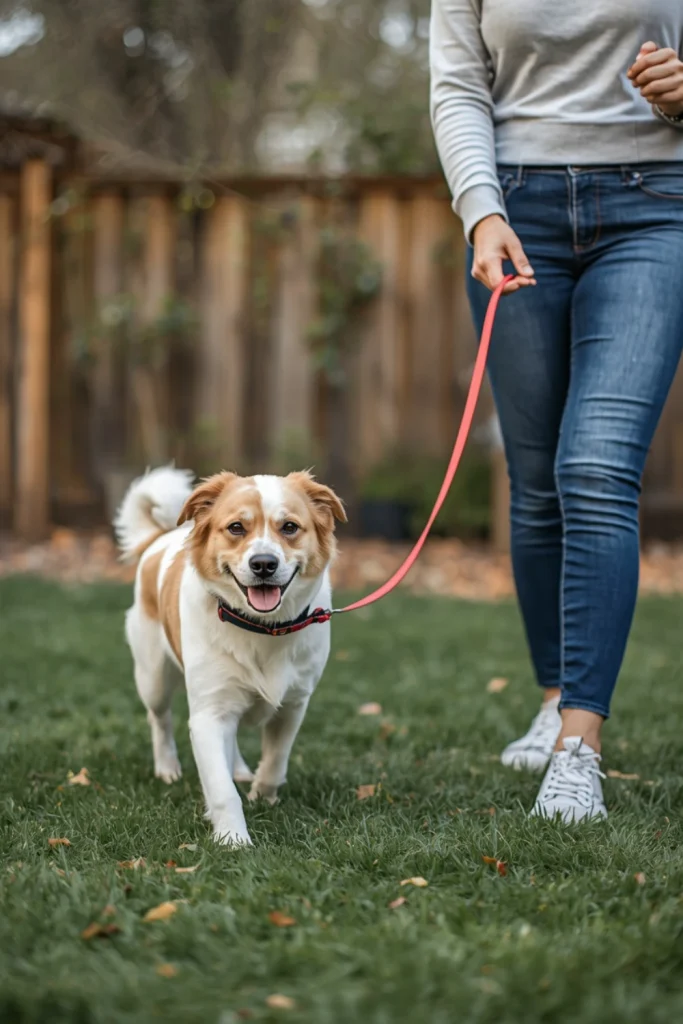
One of the best Dog Walking Training Ideas for beginners is to start somewhere with very few distractions. A busy sidewalk can be overwhelming for a dog that is just learning how to walk calmly. Instead, begin inside your home, in a secure backyard, or on a quiet private path where your dog can focus on you.
Attach the leash and take a few slow steps. Whenever your dog walks near you without pulling, reward the behavior with praise or a small treat. Keep these early sessions short and positive. Starting in an easy environment gives your dog a chance to understand what you expect before you introduce more exciting outdoor distractions.
2. Help Your Dog Get Comfortable With the Leash
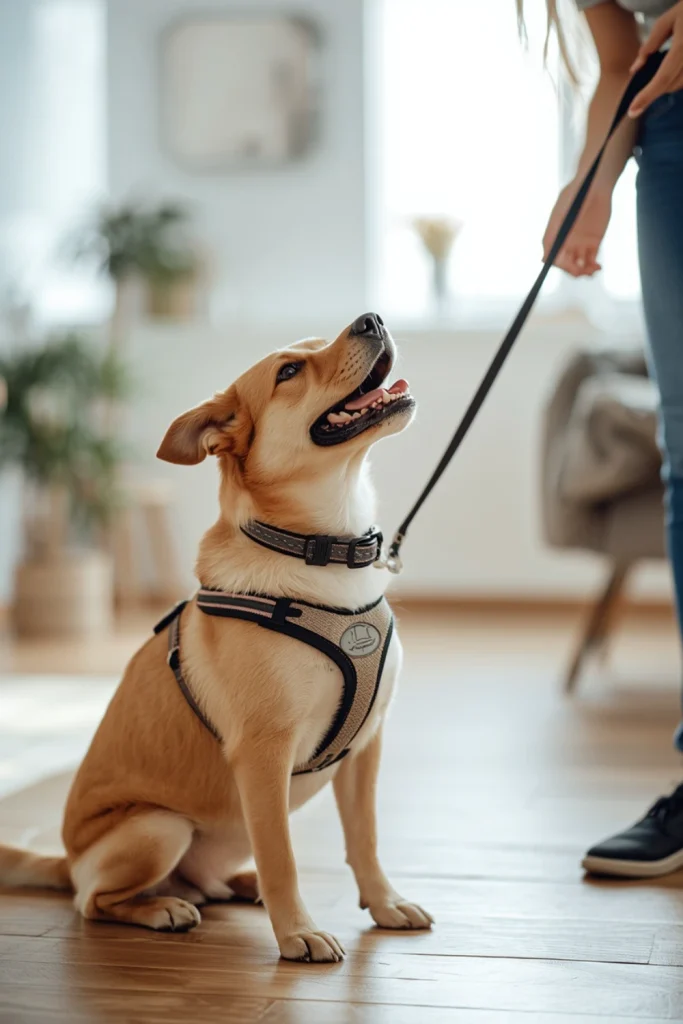
Some dogs become uncomfortable when a leash is first attached. They may bite the leash, scratch at their collar, freeze, or move backward. Before expecting your dog to complete a proper walk, spend time helping your pet associate the leash with positive experiences.
Put the leash on for short periods while your dog is indoors. Reward calm behavior and allow your dog to move naturally. Gradually walk around the house while keeping the leash loose. Never use the leash to force your dog forward. The purpose of this exercise is to make the equipment feel normal and safe. Once your dog is comfortable indoors, you can begin practicing in a secure outdoor environment.
3. Teach Loose-Leash Walking
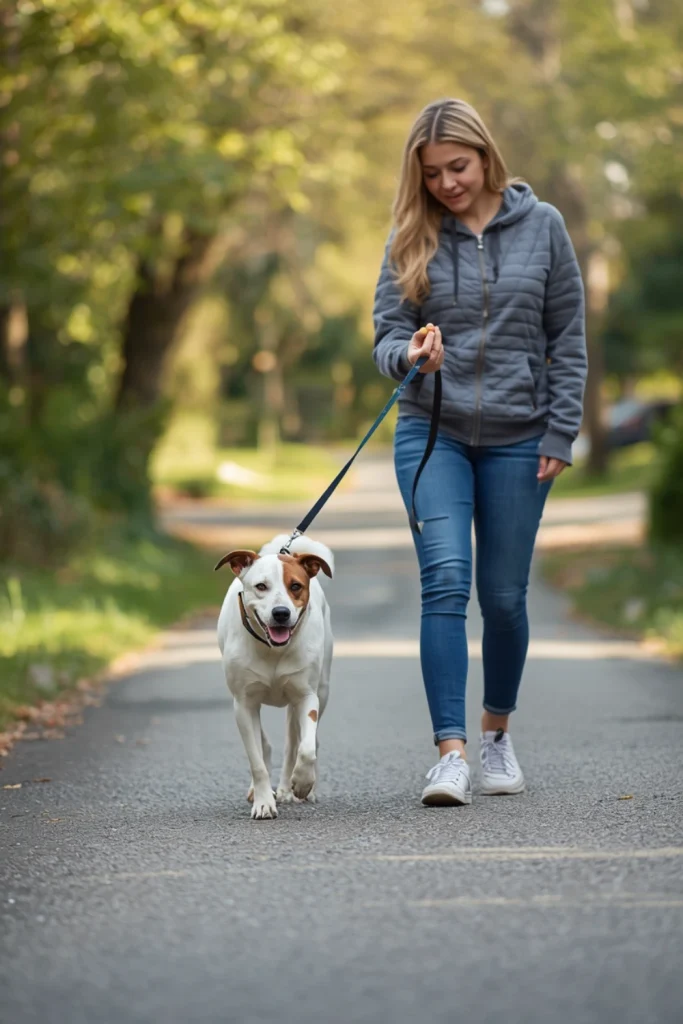
Loose-leash walking is one of the most important skills for any dog owner. Instead of allowing your dog to walk at the end of a tight leash, teach your dog that staying close to you is rewarding. This should be practiced gradually rather than expected immediately.
Take several steps and reward your dog while the leash remains loose. If your dog pulls forward, calmly stop moving. Wait for the leash to relax before continuing. Avoid pulling back hard because this can turn the walk into a tug-of-war. With regular practice, your dog can learn that pulling does not make the walk move faster, while calm walking allows the journey to continue.
4. Teach Your Dog to Respond to Its Name
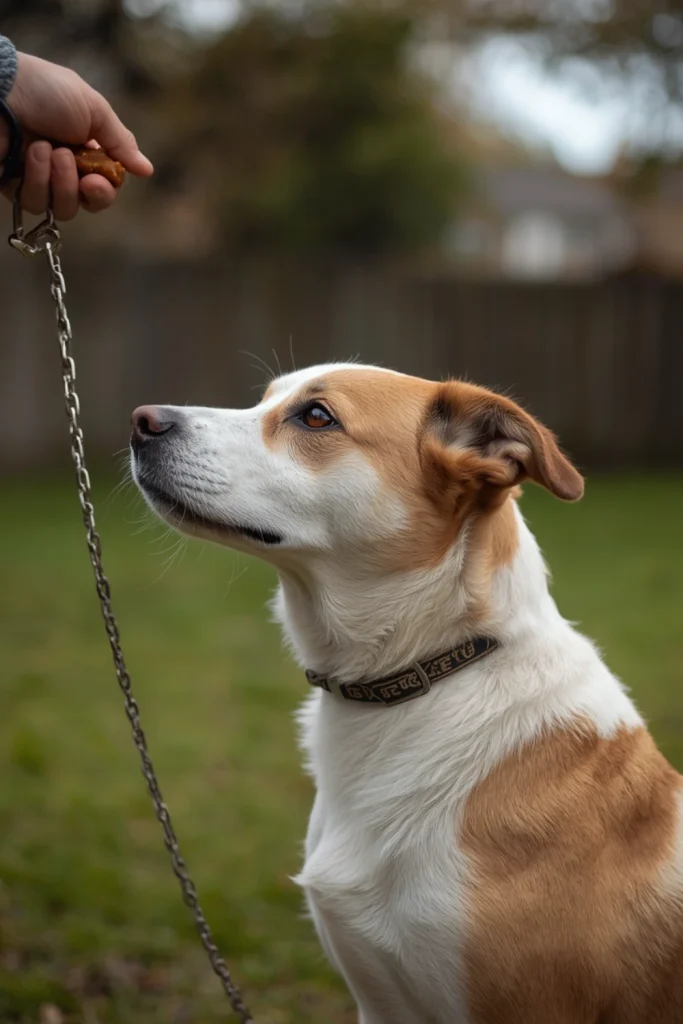
A dog that responds reliably to its name is easier to manage during walks. Outdoor environments contain many distractions, and your dog may become interested in a person, another animal, a smell, or a moving object. Getting your dog’s attention can help you redirect its focus before unwanted behavior develops.
Begin indoors by saying your dog’s name once. When your dog looks toward you, immediately provide a reward. Repeat the exercise in different rooms and gradually practice outdoors. Once your dog understands the game, introduce mild distractions. Avoid repeatedly calling your dog’s name when you know it will not respond. You want the name to become a positive signal that encourages your dog to pay attention.
5. Practice the “Come” Command
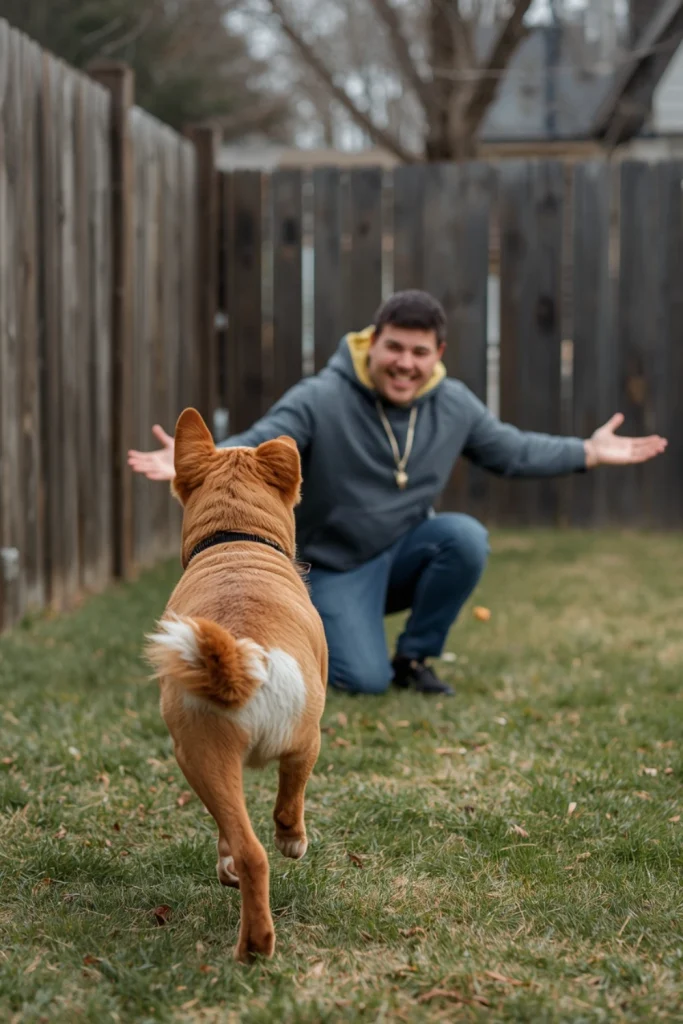
Recall is another valuable skill to include in your Dog Walking Training Ideas. Teaching your dog to come when called can improve communication and provide an important safety skill. Begin practicing in a secure location where your dog cannot run into danger.
Use a cheerful voice and encourage your dog to come toward you. When the dog reaches you, reward it generously with praise, treats, or a favorite toy. Avoid calling your dog only when something unpleasant is about to happen. You want your dog to associate coming to you with positive experiences. Regular recall practice can make your dog more responsive both during training and everyday activities.
6. Reward Good Walking Behavior
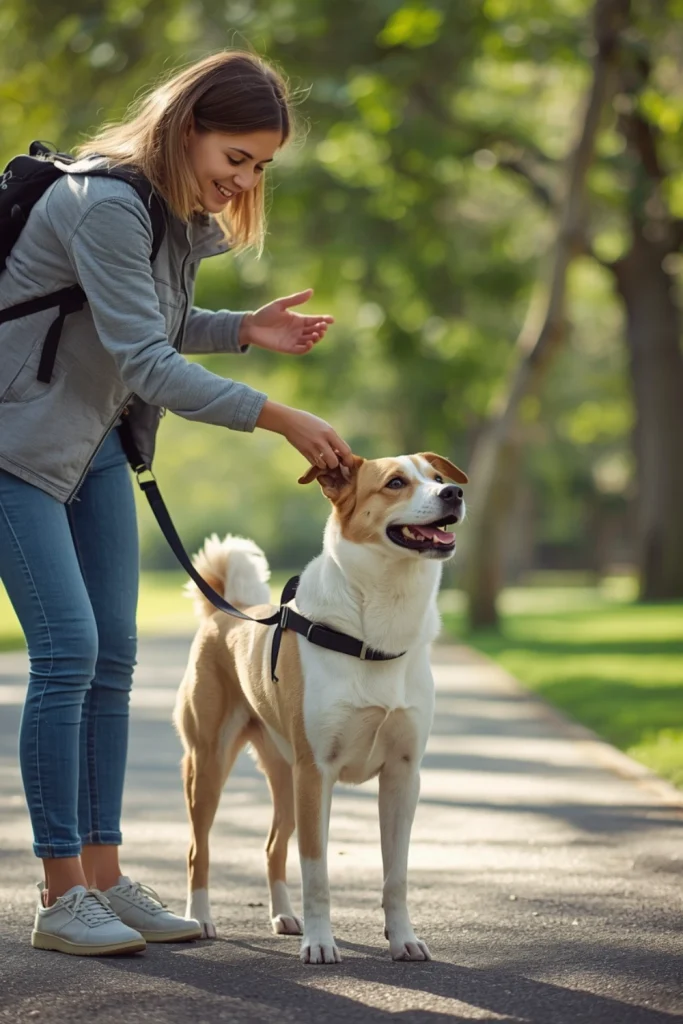
Dogs are more likely to repeat behaviors that produce positive results. Instead of focusing entirely on correcting unwanted walking behavior, look for moments when your dog is doing exactly what you want. Reward calm walking, attention, loose leash behavior, and appropriate responses to your cues.
At first, you may need to reward your dog frequently. As your dog improves, gradually increase the time between rewards. You can use small treats, praise, toys, or access to a safe sniffing area. This teaches your dog that good walking behavior has benefits. Positive reinforcement also helps make training more enjoyable and can strengthen the bond between you and your pet.
7. Practice Direction Changes
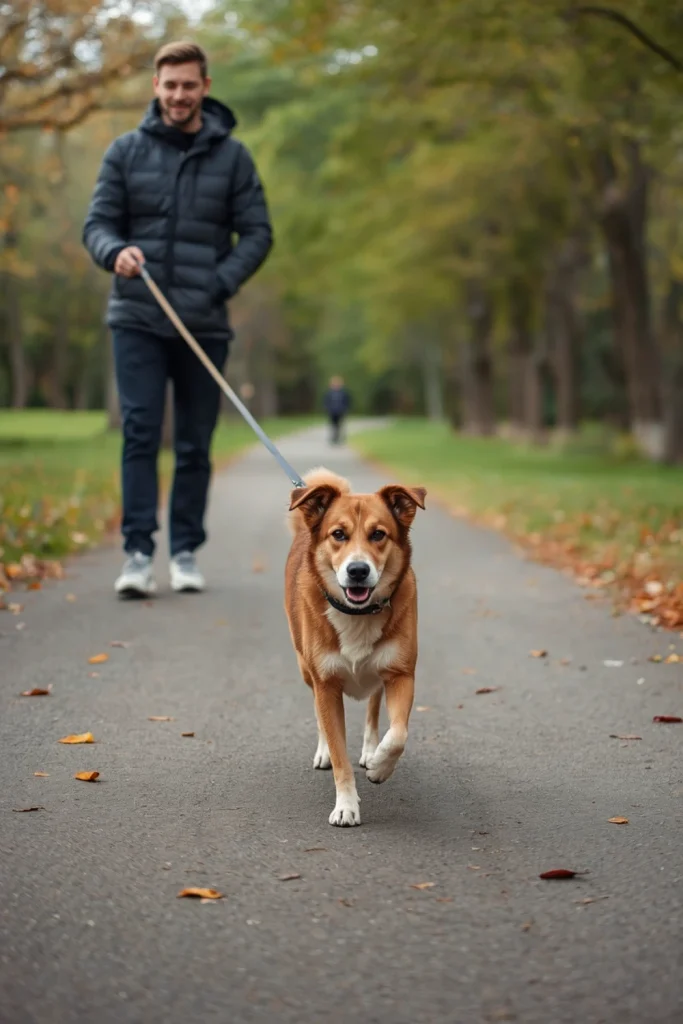
Direction changes are a simple exercise that can encourage your dog to pay attention to where you are going. If your dog constantly walks ahead and chooses the direction, gently changing direction can teach it to monitor your movement.
Start in a quiet area and walk forward for several steps. Then make a calm turn and walk in another direction. Reward your dog when it follows without pulling. Keep your movements predictable and avoid jerking the leash. The exercise should feel like a communication game rather than a correction. With practice, your dog can become more aware of your movements and learn to stay connected with you during walks.
8. Teach Your Dog to Ignore Mild Distractions
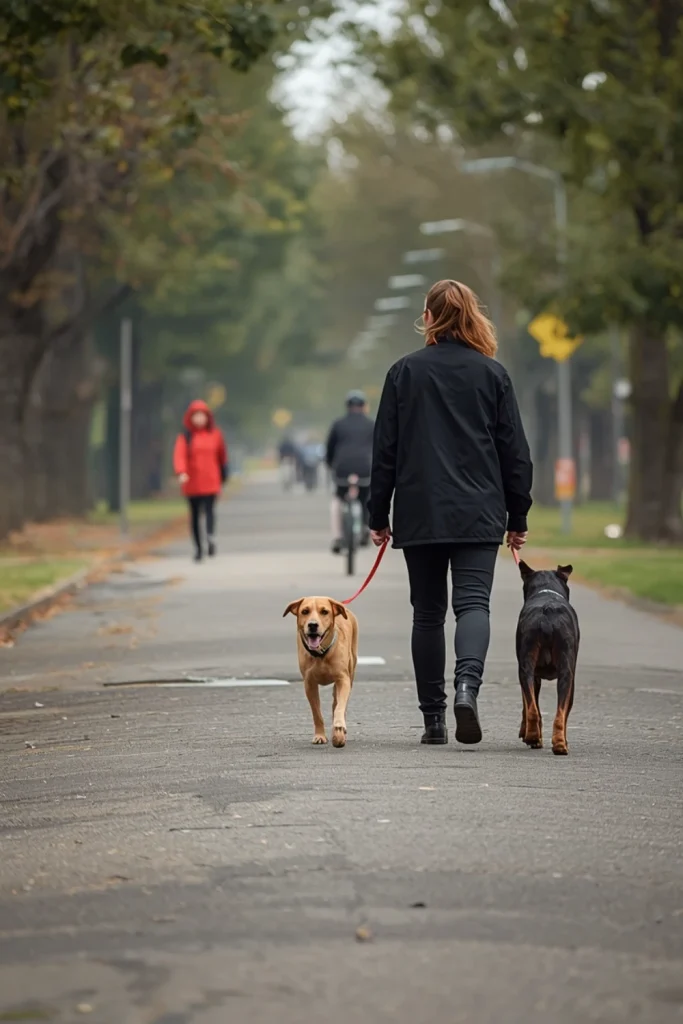
Dogs naturally notice their surroundings. Birds, people, bicycles, cars, other dogs, and interesting smells can all compete for your dog’s attention. Beginners should not expect their dog to ignore every distraction immediately. Instead, gradually teach the dog that remaining calm and paying attention to the owner is rewarding.
Begin with distractions that are far enough away for your dog to remain relaxed. Reward your dog for looking at the distraction and then returning attention to you. If your dog becomes too excited, increase the distance. Gradually work toward more challenging situations as your dog’s skills improve. This approach helps prevent your dog from becoming overwhelmed while building better walking habits.
9. Give Your Dog Time to Sniff
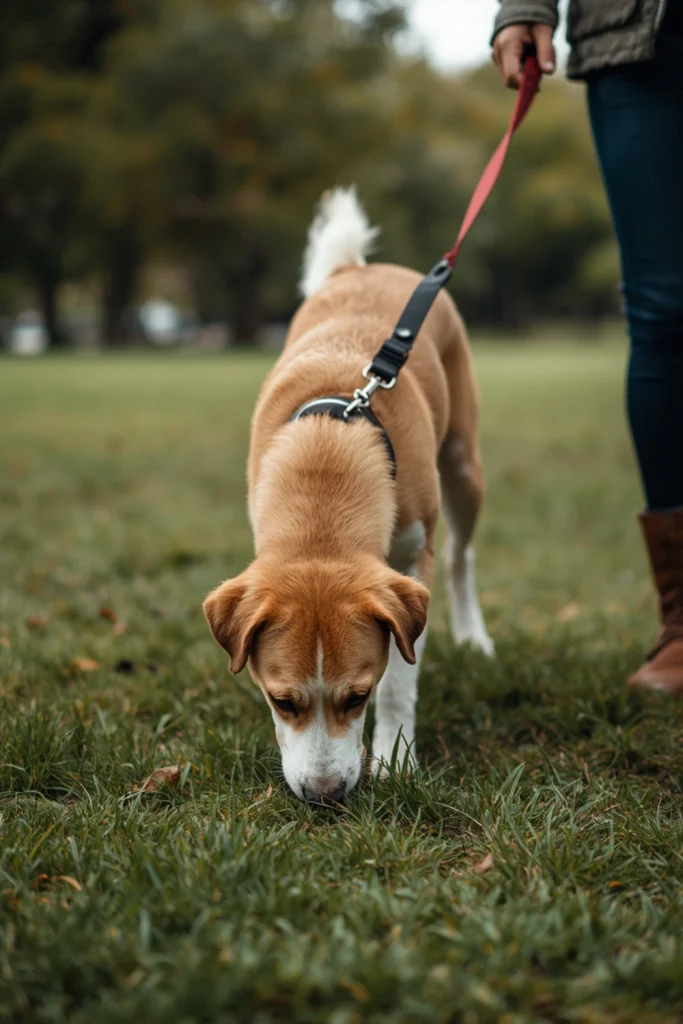
A walk should provide more than physical exercise. Sniffing gives dogs an opportunity to investigate their surroundings and receive mental stimulation. Allowing appropriate sniffing can make walks more enjoyable while still maintaining control.
Teach your dog that sniffing happens when you give permission rather than whenever it pulls toward something. After a period of calm walking, use a consistent cue such as “go sniff” and allow your dog to explore a safe area. Afterward, call your dog back and continue walking. This creates a healthy balance between structure and freedom. Your dog learns that calm behavior can lead to opportunities to explore.
10. Keep Walking Sessions Short
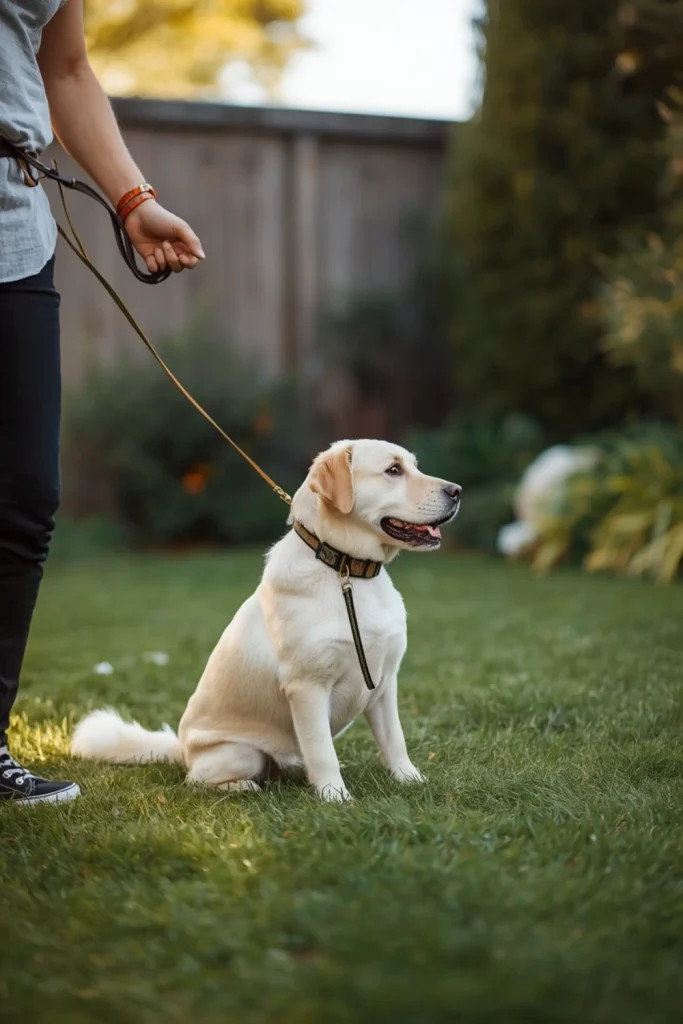
Beginners sometimes assume that the best way to train a dog to walk is to take a long walk every day. However, long sessions can be difficult for dogs that are still learning. Your dog may become tired, distracted, or frustrated, which can make good behavior harder to maintain.
Start with short, successful training sessions. Practice for a few minutes, reward good behavior, and finish before your dog becomes overwhelmed. As your dog develops better skills, gradually increase the duration. Several short sessions throughout the week can be more useful than occasional long sessions. Keeping training manageable helps both you and your dog stay motivated.
11. Practice Around Other Dogs Gradually
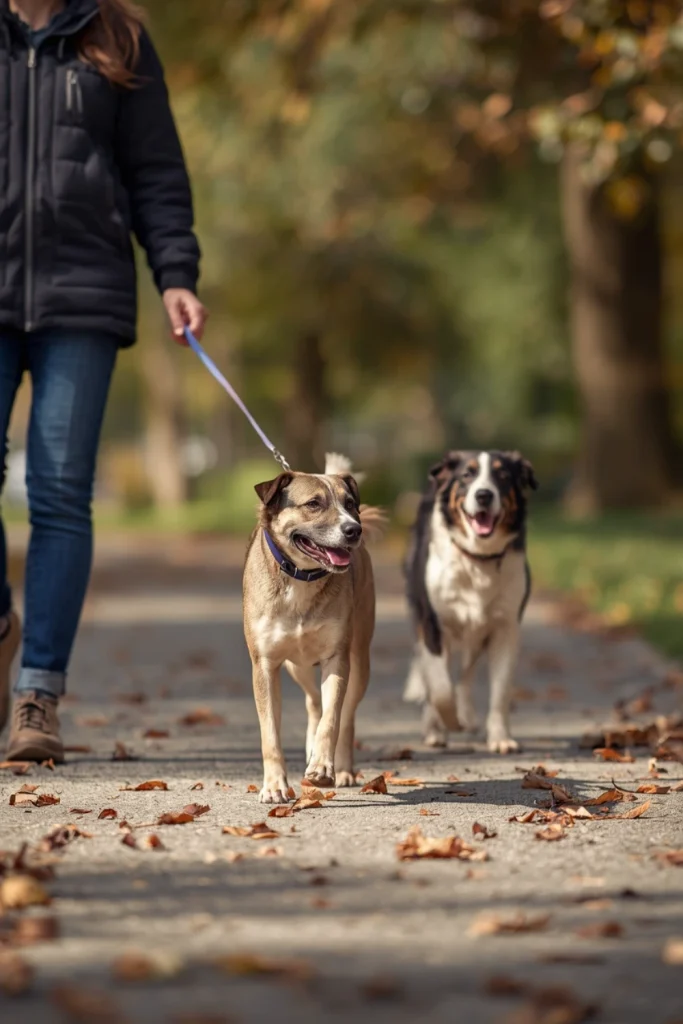
Other dogs can be one of the biggest distractions during a walk. Some dogs become excited and pull toward every dog they see, while others may become nervous. Learning to remain calm around other dogs should therefore be introduced gradually.
Begin at a comfortable distance where your dog can see another dog without becoming overly excited or frightened. Reward calm behavior and attention toward you. As your dog becomes more comfortable, you can gradually decrease the distance if appropriate. Do not force greetings. Your dog does not need to meet every dog it encounters. Learning to calmly pass other dogs is an important real-world walking skill.
12. Stay Consistent and Patient
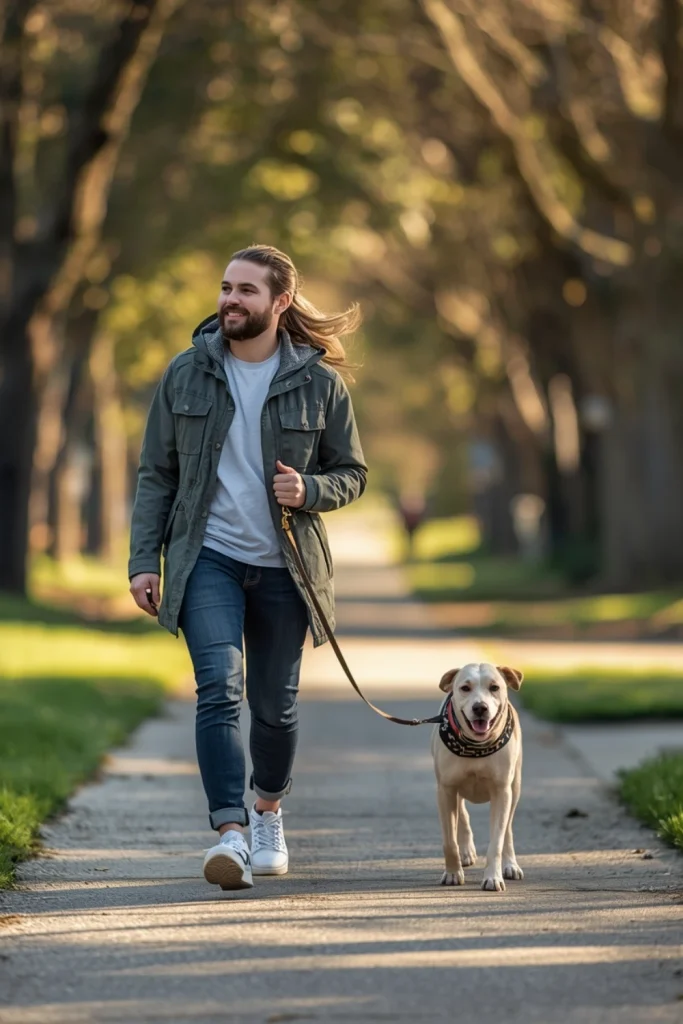
The final tip in this list of Dog Walking Training Ideas is simple but extremely important: remain consistent. Dogs learn through repetition, and walking habits can take time to change. If pulling is allowed sometimes but discouraged at other times, your dog may struggle to understand what you expect.
Set simple rules that everyone who walks the dog can follow. Reward desirable behavior and calmly manage unwanted behavior. Do not expect perfection after a few training sessions. Some dogs improve quickly, while others need weeks or months of regular practice. Celebrate small improvements and keep training positive. Patience and consistency can turn difficult walks into much more enjoyable experiences.
Final Thoughts
These Dog Walking Training Ideas can give beginners a simple foundation for creating calmer and more enjoyable walks. Start with basic leash comfort, loose-leash walking, attention, recall, and following skills. Once your dog understands the basics, gradually introduce people, dogs, traffic, smells, and other distractions.
Remember that every dog learns at its own pace. Keep sessions short, reward desirable behavior, and avoid overwhelming your pet. With patience, repetition, and consistency, your dog can develop reliable walking habits that make daily outings safer, calmer, and more enjoyable for both of you.