25 Dog Training Commands Every Owner Should Know
A well-trained dog is not just easier to live with; it is also safer, more confident, and better prepared for everyday life. From sitting politely before meals to coming when called in the park, the right commands help you communicate clearly with your dog and build a stronger bond. Whether you have a young puppy, an energetic adult dog, or a newly adopted companion, learning essential dog training commands is one of the most valuable investments you can make in your pet’s well-being.
The good news is that you do not need to be a professional trainer to teach your dog useful behaviors. With patience, short practice sessions, tasty rewards, and consistent cues, you can gradually help your dog understand what you expect. These 25 Dog Training Commands cover basic obedience, impulse control, walking manners, recall, and everyday safety. Start with the easiest skills, practice in a quiet environment, and build toward more challenging situations as your dog becomes more confident.
1. Sit
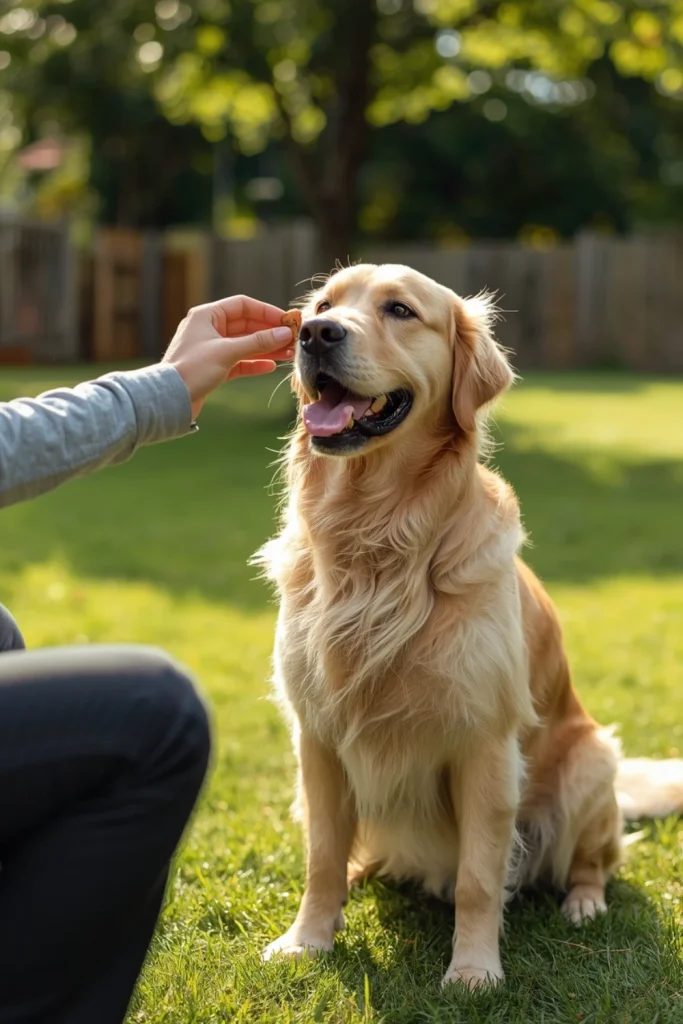
The sit command is one of the most useful starting points in dog training. It encourages your dog to pause and focus before meals, during leash preparation, or when greeting people. Begin by standing in front of your dog with a small treat near its nose. Move the treat slowly upward and slightly backward over the dog’s head. As your dog follows the treat, its bottom may naturally move toward the floor. The moment it sits, say “sit,” praise it, and give the reward. Repeat the exercise several times without rushing or physically pushing your dog into position.
Once your dog understands the movement, begin saying “sit” before making the hand gesture. Gradually stop using the treat as a lure and reward your dog from your other hand. Practice in different rooms and later in quiet outdoor areas. You can use sit before opening a door, attaching a leash, or placing a food bowl down. However, do not expect your dog to sit for long periods when it is uncomfortable or physically unable to do so. Keep sessions positive, and reward calm behavior consistently.
2. Stay
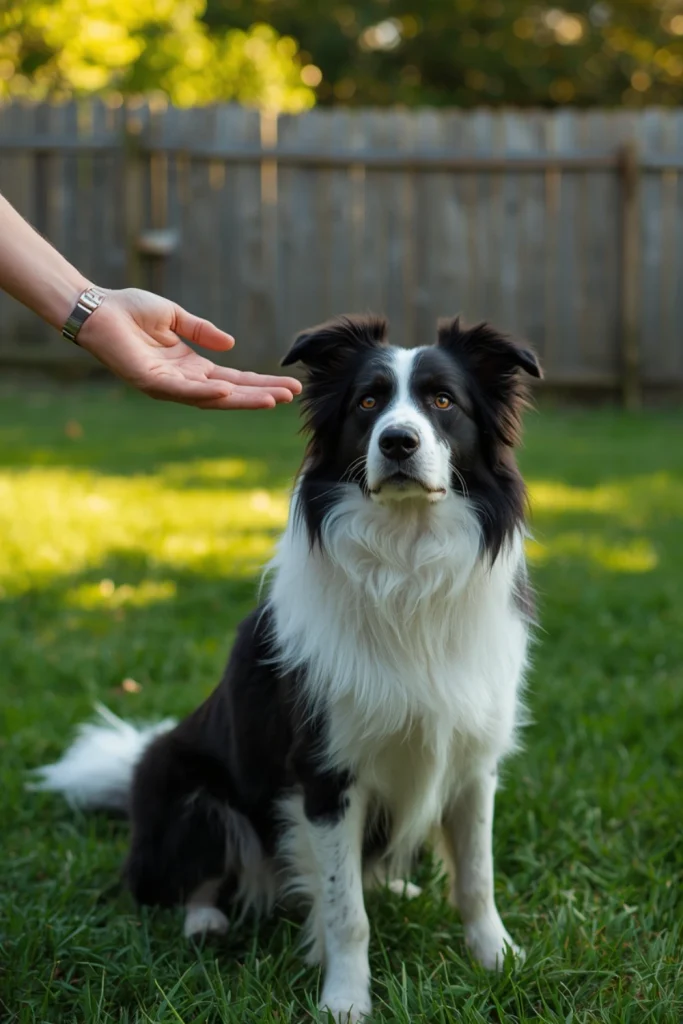
The stay command teaches your dog to remain in a position until you give another cue. It is helpful when you need to pause briefly while preparing a meal, opening a gate, or organizing your dog’s equipment. Begin by asking your dog to sit. Hold your open palm toward the dog, say “stay,” and wait just one second before rewarding it. Initially, remain close and avoid moving away. If your dog stays successfully, repeat the exercise and slowly increase the duration. Keeping the first attempts easy helps your dog understand the goal without becoming confused.
As your dog improves, gradually introduce distance and mild distractions. Change only one factor at a time: ask for a longer stay, take one step away, or practice in a slightly busier environment. Return to your dog to reward it, and use a separate release cue such as “free” to signal that the exercise has ended. If your dog gets up, calmly reset and try a shorter stay. Never rely on stay alone to protect your dog near traffic, open gates, or dangerous animals. Use physical safety measures alongside training.
3. Come
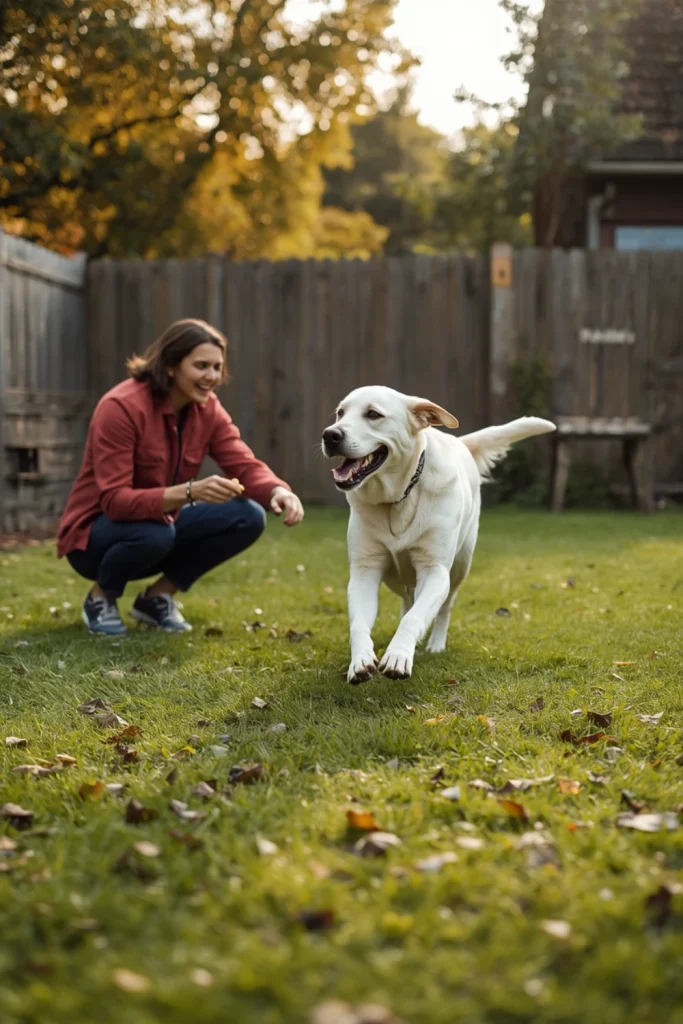
The come command, also called recall, teaches your dog to return to you when called. It is an important skill for everyday communication and can help you redirect your dog away from distractions in safe situations. Start indoors with your dog only a short distance away. Say your dog’s name followed by “come” in a cheerful voice, then take a small step backward or crouch slightly to encourage the dog to approach. When your dog reaches you, reward it generously with a treat, praise, or a short game. Make approaching you a pleasant experience every time you practice.
Once your dog responds reliably indoors, practice in a secure garden or enclosed training area. Gradually increase the distance and introduce mild distractions. Outdoors, use a suitable long training line attached to a harness where appropriate, so your dog cannot run into danger. Avoid calling your dog only when you intend to end playtime, give medicine, or do something unpleasant. Sometimes call your dog, reward it, and let it return to its activity. Recall requires repeated reinforcement, and dogs should remain leashed in unsafe or legally restricted areas even if they usually respond well.
4. Down
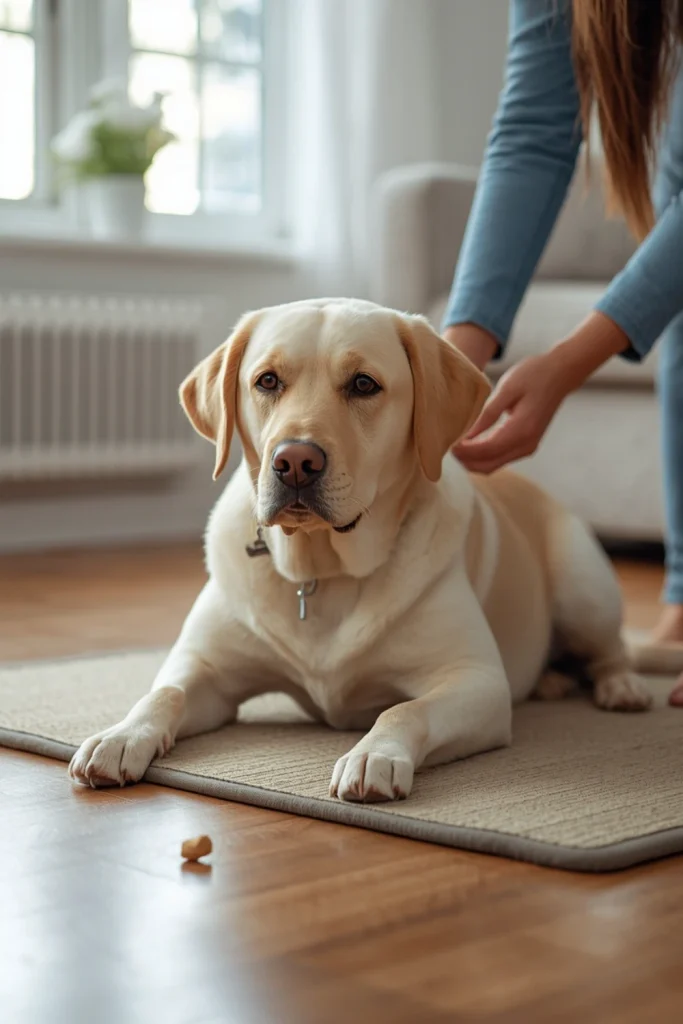
The down command teaches your dog to lie down on its belly with its legs comfortably positioned. This behavior can encourage calmness and provide a useful alternative to jumping or wandering around during quiet activities. Begin with your dog sitting on a comfortable, nonslip surface. Hold a treat near its nose and move your hand slowly toward the ground, slightly forward between its front paws. As your dog follows the treat, wait for its elbows and body to lower. Reward the moment it reaches the down position. Avoid pushing its shoulders or back, as this can cause discomfort or anxiety.
After your dog begins following the movement consistently, add the verbal cue “down” before using your hand signal. Gradually practice without placing a treat directly in front of its nose, rewarding afterward from your other hand. You can use this command when settling at home or waiting calmly in an appropriate place. Keep in mind that some dogs have difficulty lying down because of joint pain, injuries, or physical limitations. If your dog repeatedly resists or appears uncomfortable, consult a veterinarian rather than forcing the position. Comfort and voluntary cooperation should always come first.
5. Leave It
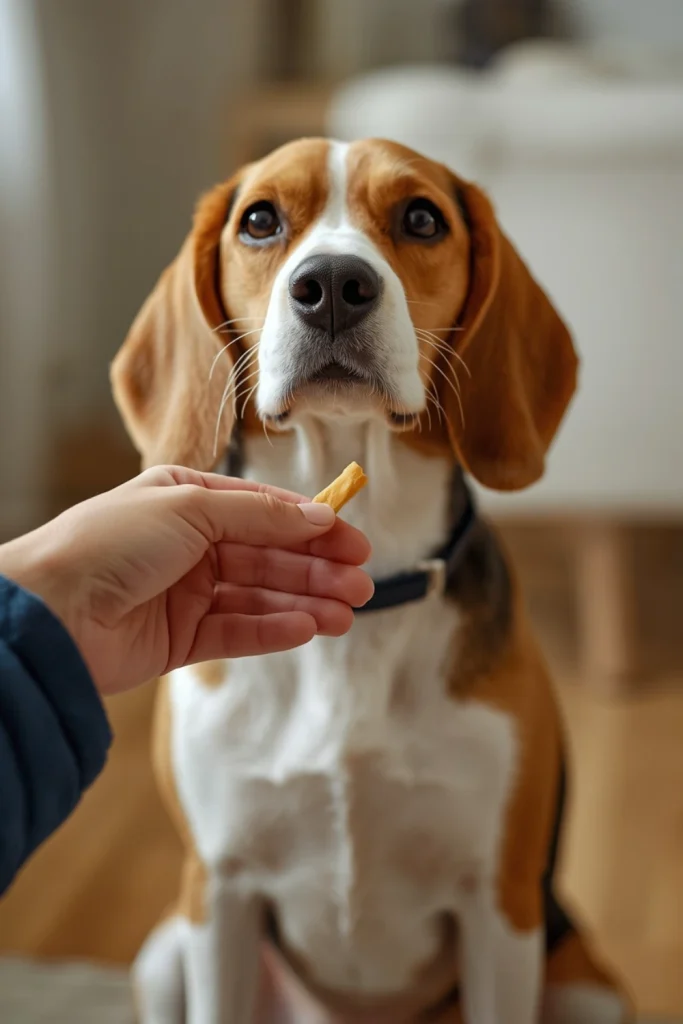
The leave it command teaches your dog to disengage from something it should not approach or pick up. It can be useful around dropped food, household objects, and other everyday distractions. Begin with a low-value treat hidden inside your closed fist. Allow your dog to sniff your hand without opening it. Wait for a moment when your dog moves its nose away or stops investigating, then praise and reward it with a different treat from your other hand. This teaches your dog that turning away from the unavailable item can lead to something rewarding.
When your dog understands the exercise, gradually practice with a treat visible on the floor but safely covered or kept out of reach. Introduce the words “leave it” consistently and reward your dog for turning away. Do not begin by testing the command with dangerous food, medication, sharp objects, or anything toxic. If your dog picks up a hazardous item, prioritize safety and contact a veterinarian when necessary. Training can improve impulse control, but it does not replace careful supervision, secure storage, or management of dangerous objects.
6. Drop It
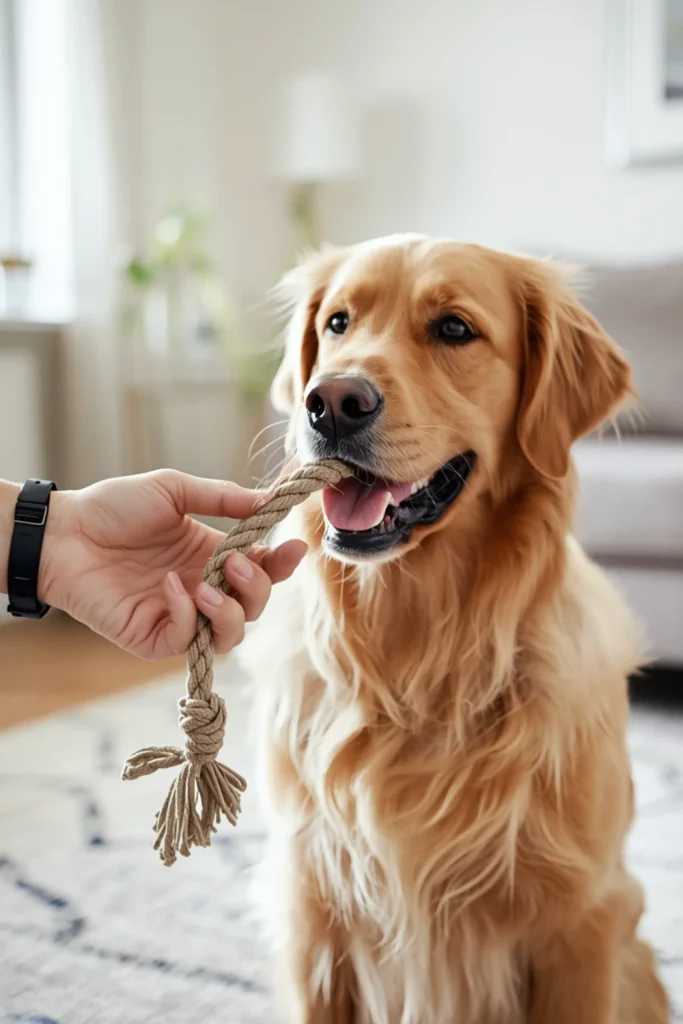
The drop it command teaches your dog to release an object from its mouth. It is useful during play, when your dog carries toys around the house, or when you need to exchange an item safely. Begin with a toy your dog enjoys but is willing to release. Play gently, then offer a tasty treat near your dog’s nose while saying “drop it” once. When the dog releases the toy, praise it and give the treat. Whenever appropriate, return the toy so your dog learns that releasing an object does not always mean losing it permanently.
As your dog becomes familiar with the command, gradually reduce the need to show the treat before it releases the toy. Practice with different safe toys, but avoid taking valuable objects by force or chasing your dog around the room. Chasing can turn object-stealing into a rewarding game. If your dog guards items, growls, freezes, or snaps when someone approaches, do not confront it or forcibly remove the object. Resource guarding may require help from a qualified, reward-based professional. For dangerous items, use safe management and seek veterinary guidance if your dog may have swallowed something harmful.
7. Wait
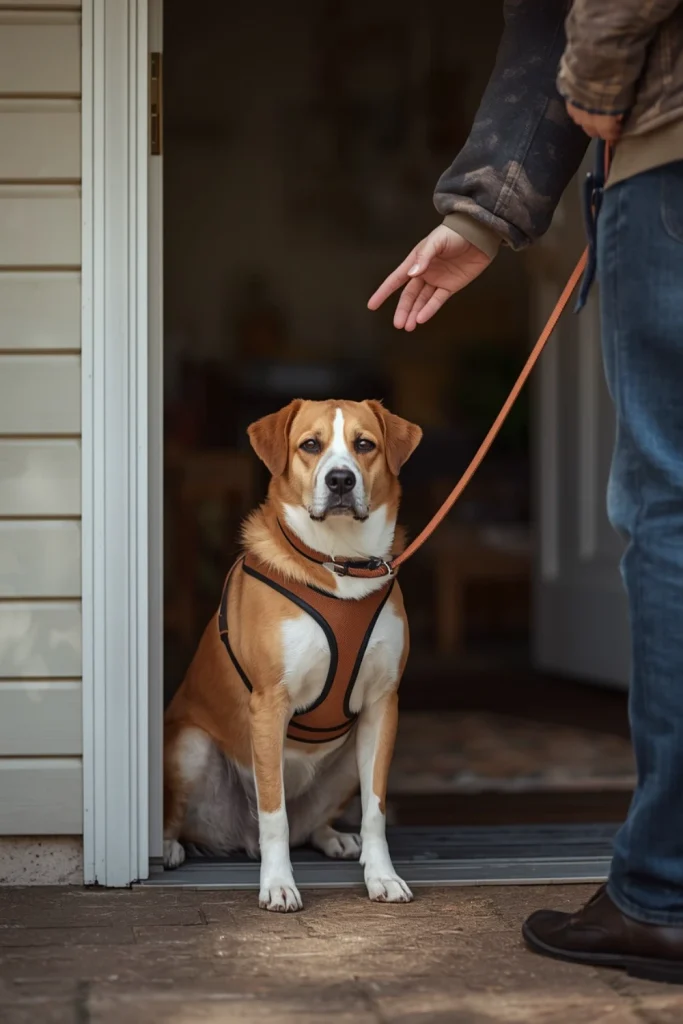
Wait teaches your dog to pause temporarily before moving forward. Unlike a longer stay exercise, wait can be used for brief everyday moments, such as pausing before entering a room or stepping out of a vehicle. Start with your dog on a leash near an interior doorway. Ask it to pause, say “wait,” and briefly stop moving. Reward the dog for remaining in place for a second or two. Then give a release cue and invite it to move forward. This creates a clear pattern: pause first, then continue when given permission.
As your dog learns, gradually extend the pause and practice at different doorways. Begin indoors before working near exterior doors, gates, or vehicles. Keep your dog securely leashed in potentially dangerous areas and use physical barriers whenever possible. Wait should not be used as the only protection against running into traffic or escaping through an open gate. If your dog moves forward too early, calmly reset the exercise and make the next attempt easier. Reward the pause rather than expecting your dog to remain still indefinitely.
8. Heel
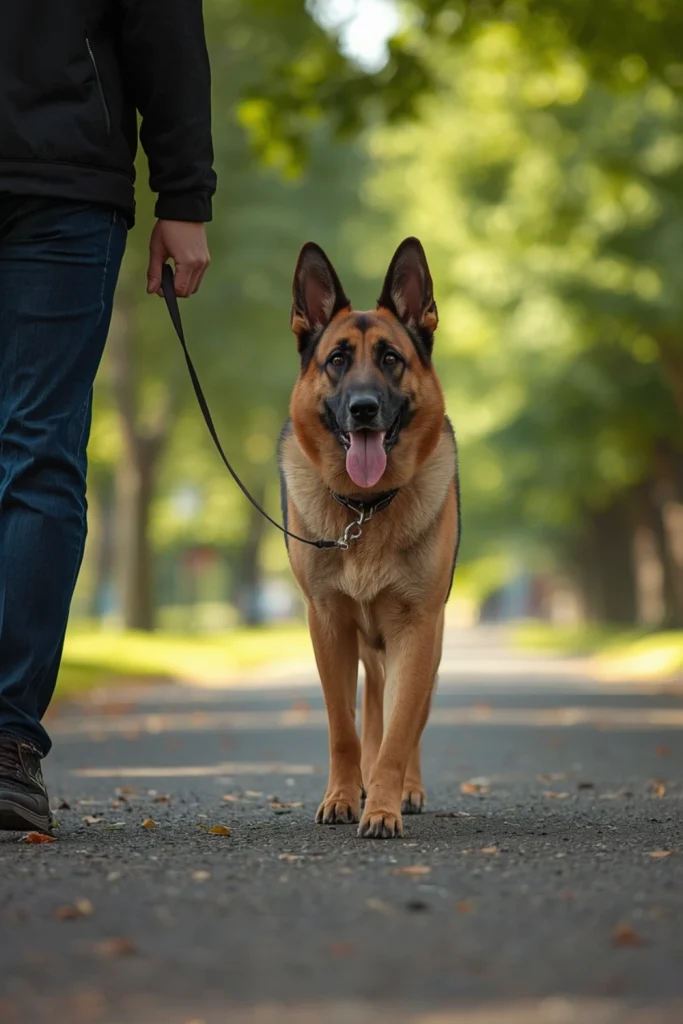
The heel command teaches your dog to walk close beside you in a controlled position. It can be especially useful for passing through narrow spaces, moving through crowded areas, or practicing focused walking for short distances. Start in a quiet room or garden with your dog on a comfortable leash and harness. Hold a treat near the side where you want your dog to walk. Take one or two steps and reward your dog for staying near your leg without pulling. Use a consistent cue such as “heel” as you begin moving, keeping your pace comfortable.
Build the exercise gradually by rewarding several steps at a time. Practice turns and changes of pace only after your dog understands the basic position. Heel is not necessarily required for every minute of every walk; many dogs benefit from opportunities to sniff and explore safely on a looser leash. If your dog becomes overexcited, increase distance from distractions and return to an easier setting. Avoid leash jerks or painful equipment. Reward-based practice helps your dog learn where to walk while keeping the experience comfortable and cooperative.
9. Loose Leash Walking
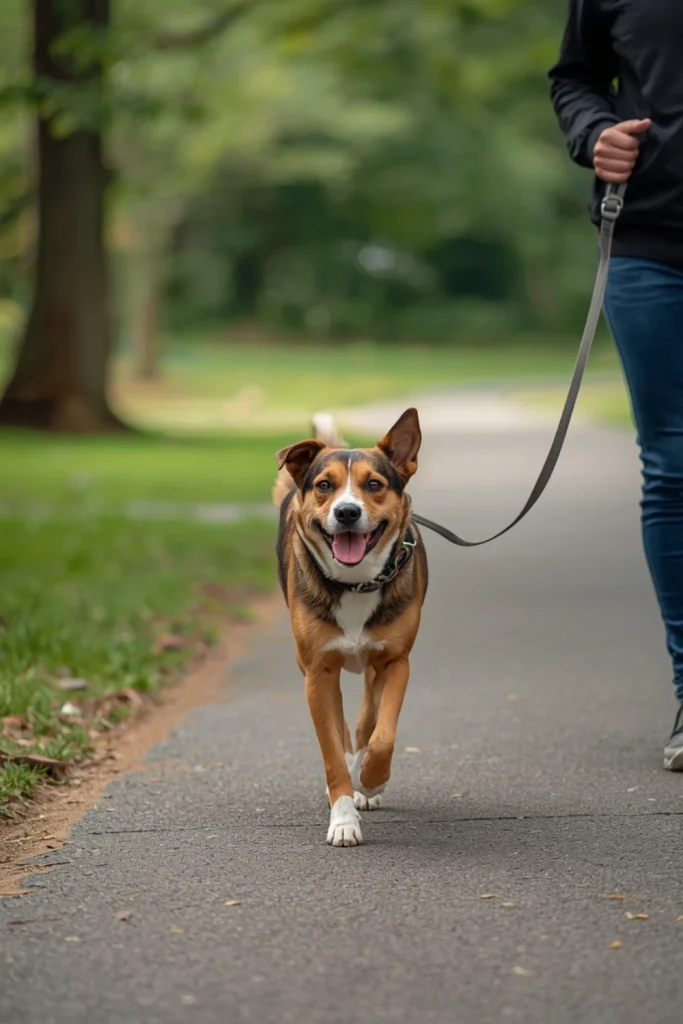
Loose leash walking teaches your dog to walk without pulling constantly on the lead. It is different from heel because your dog can usually explore within a comfortable range while keeping the leash slack. Begin in a low-distraction location. Hold the leash securely but comfortably, and reward your dog whenever it walks near you with a relaxed lead. If the leash becomes tight, pause or change direction gently rather than pulling your dog forward. Resume walking when the dog returns closer or the leash loosens, helping it discover that calm walking makes forward movement possible.
Practice for short periods before expecting your dog to maintain the behavior throughout a long walk. Some dogs pull because they are excited, need more exercise, or have learned that pulling gets them to interesting smells. Reward frequent check-ins and allow appropriate sniffing as part of the walk. A well-fitted harness may help you manage the leash comfortably, although equipment alone does not teach walking manners. Avoid painful corrections and consider professional guidance if your dog lunges strongly or becomes difficult to control around other animals or people.
10. Watch Me
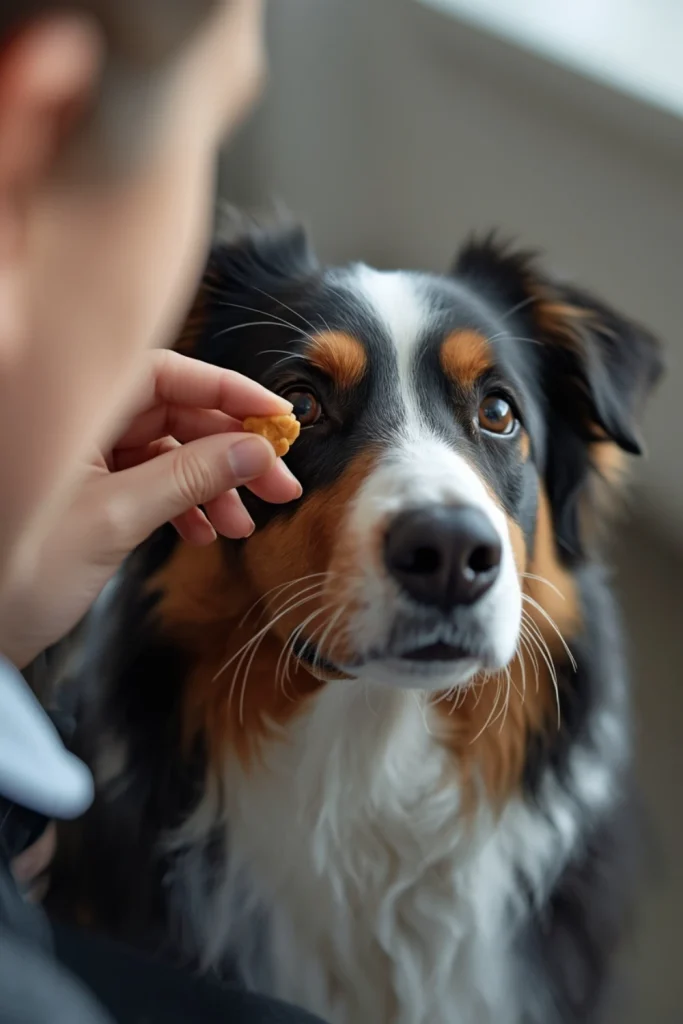
Watch me teaches your dog to look toward you when asked. This can help you regain attention during training and prepare your dog for another command. Begin in a quiet room with a few treats. Hold a treat near your face and wait for your dog to glance toward your eyes. Immediately praise and reward that brief look. Once your dog understands the exercise, add the cue “watch me” just before the moment you expect eye contact. Gradually move the treat away from your face so your dog learns to respond to the word rather than simply following food.
When your dog can look at you indoors, practice in other safe locations with mild distractions. Reward quick check-ins and keep the exercise brief. Some dogs may find prolonged direct eye contact uncomfortable, so aim for a voluntary glance rather than an intense stare. This command can help you redirect your dog’s attention before crossing a quiet path, passing a distraction at a comfortable distance, or beginning a training exercise. It should not be used to force a frightened dog to confront something stressful. Give your dog enough space to feel safe and relaxed.
11. Off
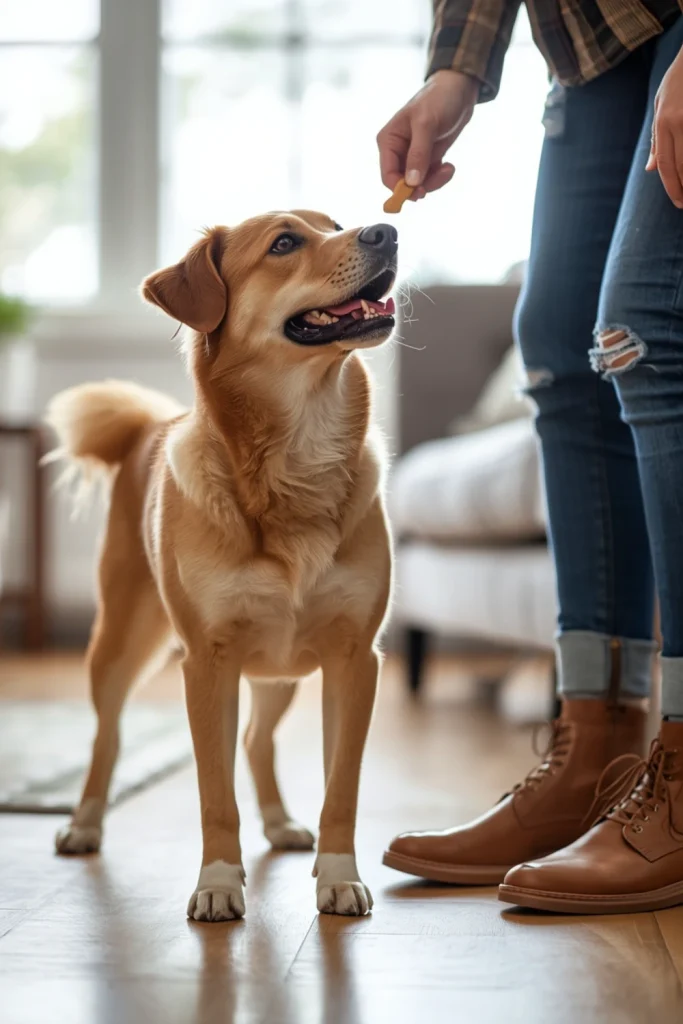
The off command can teach your dog to stop an unwanted behavior, such as jumping onto a person or getting its paws onto a counter. First, decide exactly what you want the cue to mean and use it consistently. If your dog jumps up to greet you, turn slightly sideways and avoid rewarding the jumping with attention. When all four paws return to the floor, praise and reward your dog. You can then introduce the word “off” during a calm, low-pressure practice session so it becomes associated with moving away from the person or surface.
For jumping, it is also helpful to teach an alternative behavior such as sit. Reward your dog for sitting to greet people instead of jumping. If the dog is on furniture, avoid dragging or pushing it down; guide it toward an appropriate alternative and reward the choice to move. Make sure everyone in the household follows the same rules. If some people encourage jumping while others discourage it, the behavior may persist. Never use “off” to frighten a dog or force it from a location where it feels trapped.
12. Settle
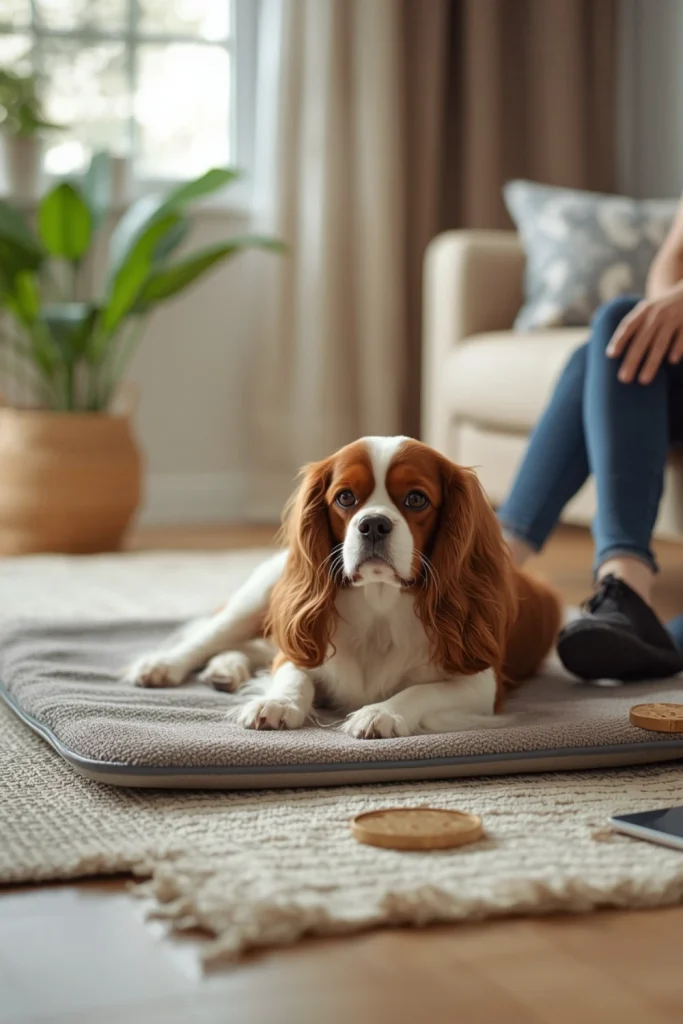
Settle teaches your dog to relax on a mat or in a designated resting area. This can be helpful when you are working from home, preparing dinner, or welcoming visitors. Begin by placing a comfortable mat in a quiet room. Reward your dog for looking at the mat, stepping onto it, or standing calmly on it. As the dog becomes comfortable, reward sitting or lying down. Deliver treats slowly while the dog remains relaxed, and use a calm verbal cue such as “settle” when the behavior begins to emerge. Avoid expecting immediate stillness from an energetic dog.
Gradually build duration by rewarding calm behavior at slightly longer intervals. You can introduce the mat during predictable quiet routines, helping your dog understand that it is a comfortable place to rest. If your dog gets up, simply reset the exercise without scolding. Ensure the dog has had appropriate opportunities for exercise, sniffing, toileting, and social interaction before expecting a longer rest period. Settle should support relaxation, not prevent a dog from expressing fear or discomfort. If your dog appears distressed, identify and address the cause instead of insisting it remain on the mat.
13. Place
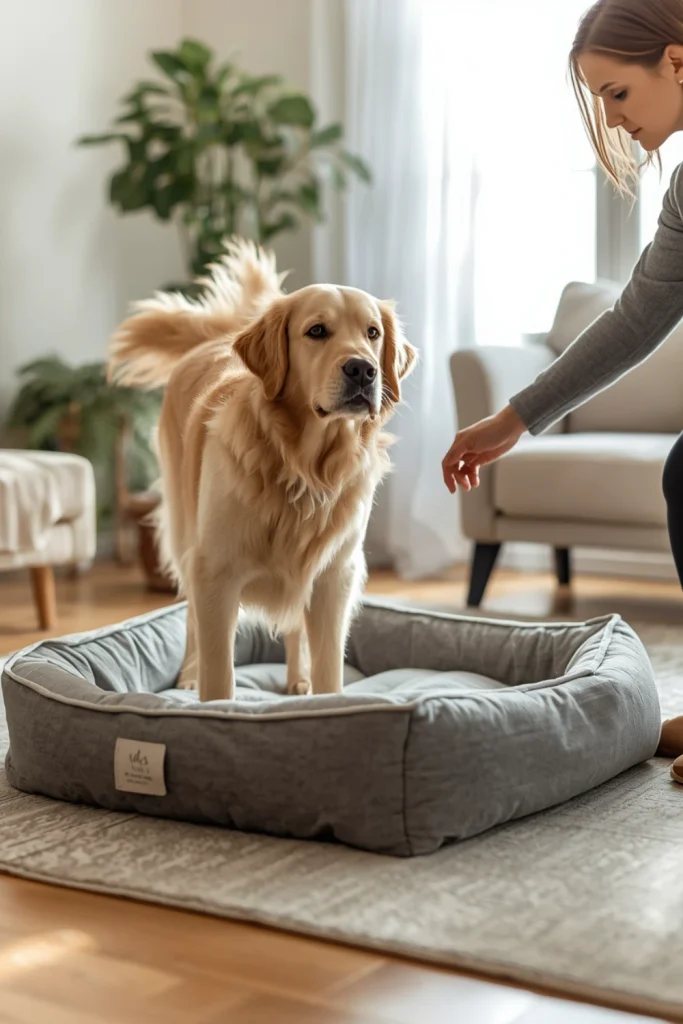
Place teaches your dog to go to a specific location, such as a bed, mat, or raised platform, and remain there until released. It can be useful during family meals, when guests arrive, or when you need your dog to stay out of a busy work area. Start close to the chosen spot and reward your dog for approaching it. Gradually encourage the dog to step fully onto the mat, then reward sitting or lying down there. Introduce the cue “place” as the dog begins moving toward the location, keeping the signal consistent each time.
Once your dog understands the behavior, gradually increase the distance from which you send it to the mat. Practice from different areas of the room and add short periods of staying in place. Use a separate release cue such as “free” to show that the exercise is over. The place command should always lead to a comfortable, positive area rather than punishment. If the mat is slippery, too small, or positioned near a noisy appliance, your dog may struggle to settle. Choose a safe, comfortable location and reward your dog for returning to it voluntarily.
14. Touch
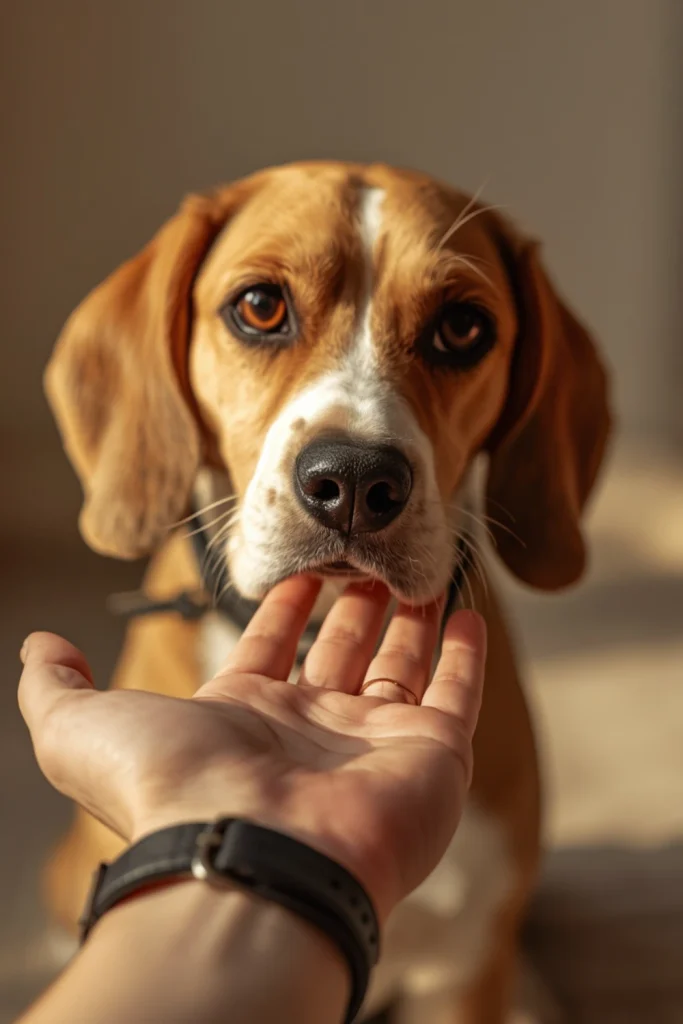
The touch command teaches your dog to gently touch your open palm with its nose. It is a simple, engaging exercise that can help build confidence and direct your dog’s movement without pulling on its collar. Hold your open hand a short distance from your dog’s nose. When the dog investigates or touches your palm, mark the behavior with a word such as “yes” and reward it. If your dog is hesitant, keep your hand still and give it time to approach voluntarily. Avoid moving your hand toward the dog’s face in a way that might feel threatening.
Once your dog understands the game, introduce the cue “touch” immediately before presenting your hand. Gradually vary the position of your palm, asking your dog to take one step or move slightly to reach it. Keep the exercise easy and rewarding, particularly for shy dogs. Touch can be useful for guiding a dog toward a scale, encouraging a voluntary approach, or practicing attention in a controlled setting. Do not use it to lure your dog into an unsafe area or force interaction with strangers. The dog should always have the freedom to disengage when uncomfortable.
15. Back Up
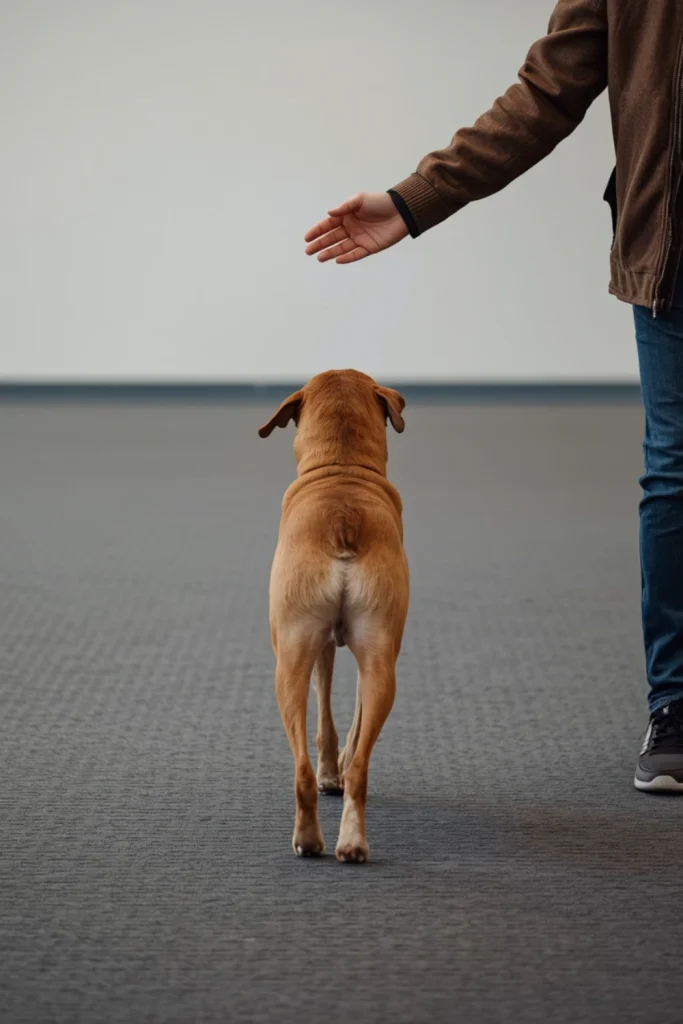
The back up command teaches your dog to take one or more steps backward on cue. This can be useful when creating space in a doorway, helping your dog move away from a cupboard, or practicing body awareness. Start in a quiet area with a nonslip floor. Stand facing your dog and use a small hand gesture or a gentle movement of your body to encourage a backward step. Say “back up” as your dog begins moving in the desired direction, then reward immediately. Keep enough space behind the dog so it can move without bumping into furniture or obstacles.
As your dog improves, gradually reward two or three backward steps instead of only one. Practice on level ground and avoid using this command to push a nervous dog into a corner. Never physically force your dog backward, because moving toward it may feel threatening. Dogs with mobility problems, joint pain, or balance difficulties may need an adapted exercise or veterinary advice before practicing. Back up should be taught slowly and safely, with emphasis on voluntary movement and clear communication rather than speed or precision.
16. Gentle
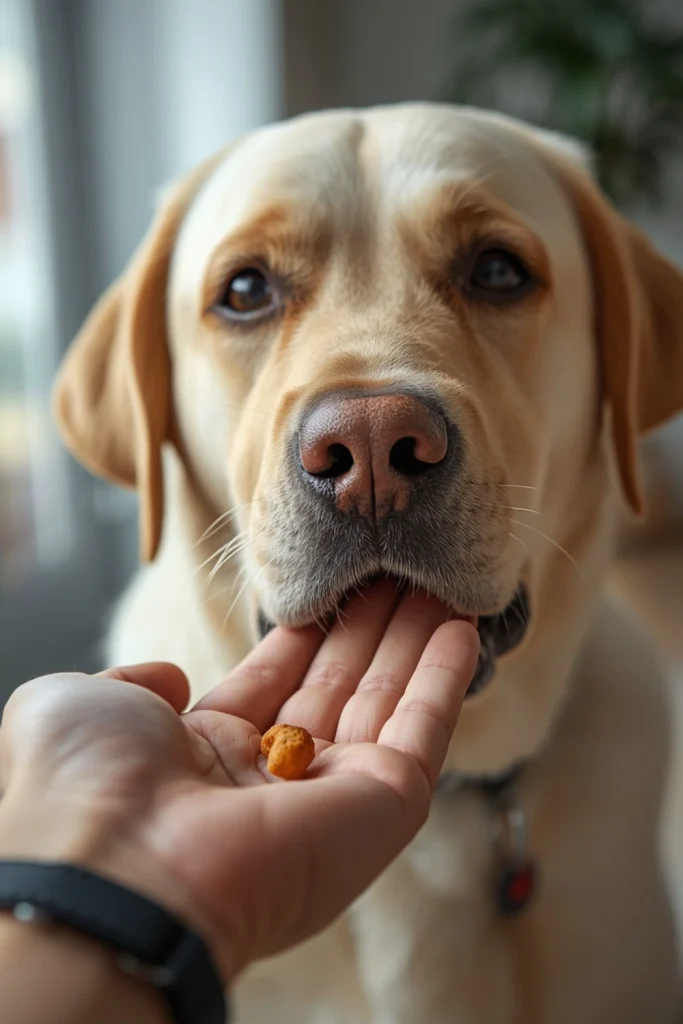
The gentle command can help teach your dog to take treats carefully rather than grabbing at fingers. It is especially useful for energetic puppies and dogs that become excited during reward-based training. Begin with a small treat held securely in a flat palm. Offer it at a comfortable height and reward your dog when it approaches calmly and takes the treat without biting your hand. You can say “gentle” as the dog begins taking the food softly. If your dog becomes too excited, calmly close your hand and wait for a more controlled approach before trying again.
Practice with several small treats and stop before your dog becomes frustrated or overly excited. Avoid deliberately provoking grabbing behavior or putting fingers into the dog’s mouth. Children should only participate under close adult supervision, and very young children should not hand-feed dogs that grab food roughly. If your dog bites hard, guards food, or becomes aggressive around treats, seek advice from a qualified professional. Gentle is a useful manners cue, but it does not replace safe handling or careful supervision around food and children.
17. Quiet
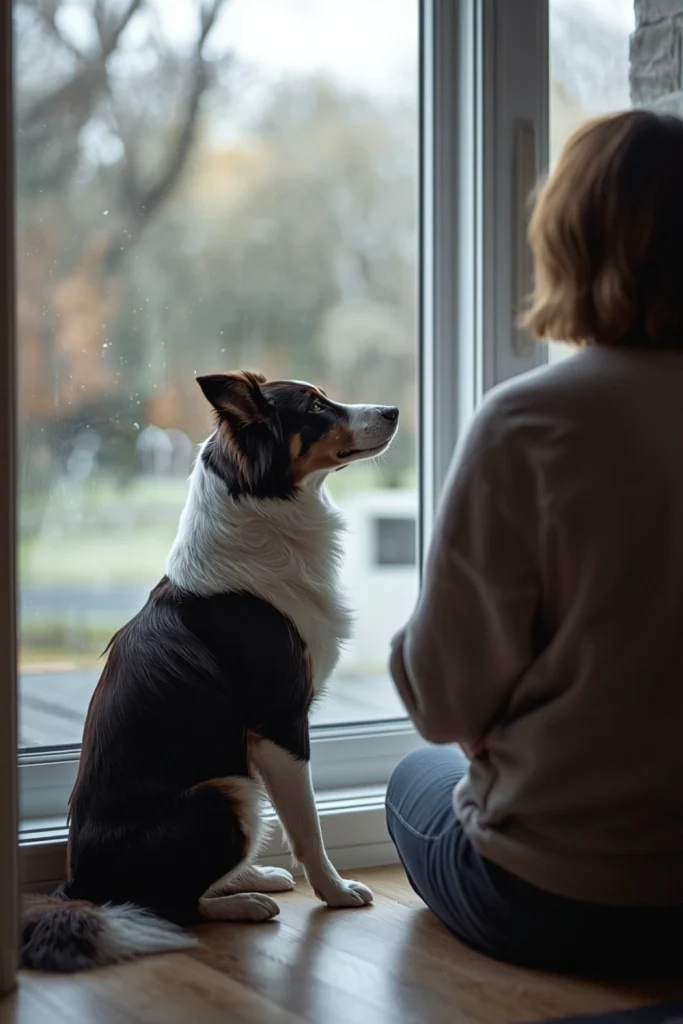
The quiet command is intended to help a dog pause barking when it is safe and appropriate to do so. First, identify what is causing the barking. Dogs may bark because they are excited, frightened, frustrated, alerting to something, or seeking attention. Begin training in a manageable situation where the dog can still respond to you. Wait for a brief natural pause in the barking, then calmly say “quiet” and reward the silence. Keep your voice relaxed, because shouting can increase excitement and may sound like you are joining in.
Over time, practice the cue during mild triggers, such as a distant sound or a person passing outside at a comfortable distance. Reward the dog for turning toward you, settling, or remaining quiet briefly. If your dog barks because it is frightened, create more distance from the trigger and help it feel safe instead of forcing it to remain nearby. Avoid punishment-based devices or yelling. Persistent or sudden changes in barking may indicate distress, discomfort, or another problem that deserves attention. Quiet training works best when combined with meeting the dog’s exercise, enrichment, and emotional needs.
18. Off the Counter
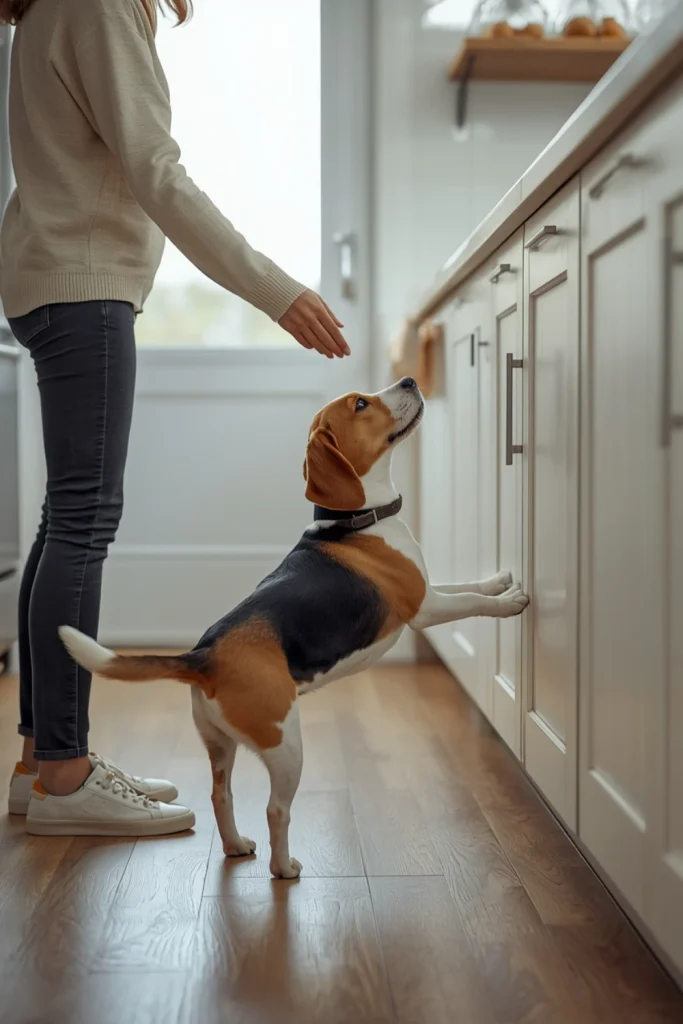
Teaching your dog to keep its paws off kitchen counters helps prevent food stealing and reduces exposure to dangerous items. Begin by managing the environment: keep food out of reach, secure rubbish bins, and avoid leaving tempting objects unattended. If your dog approaches the counter, calmly redirect it toward an appropriate activity, such as a mat or a simple sit exercise. Reward the dog for keeping all four paws on the floor and choosing to move away. Consistent prevention is important because counter-surfing can become rewarding when dogs occasionally find food.
Practice during quiet periods when the counter is clear and there are no dangerous objects within reach. Reward your dog for remaining on the floor while you move around the kitchen. You can pair the behavior with a cue such as “off” or “leave it,” but make sure each cue has a consistent meaning in your training routine. Avoid deliberately placing tempting or unsafe food on the counter to test your dog. If your dog has already eaten a toxic substance or a dangerous object, contact a veterinarian or appropriate animal poison service promptly.
19. Find It
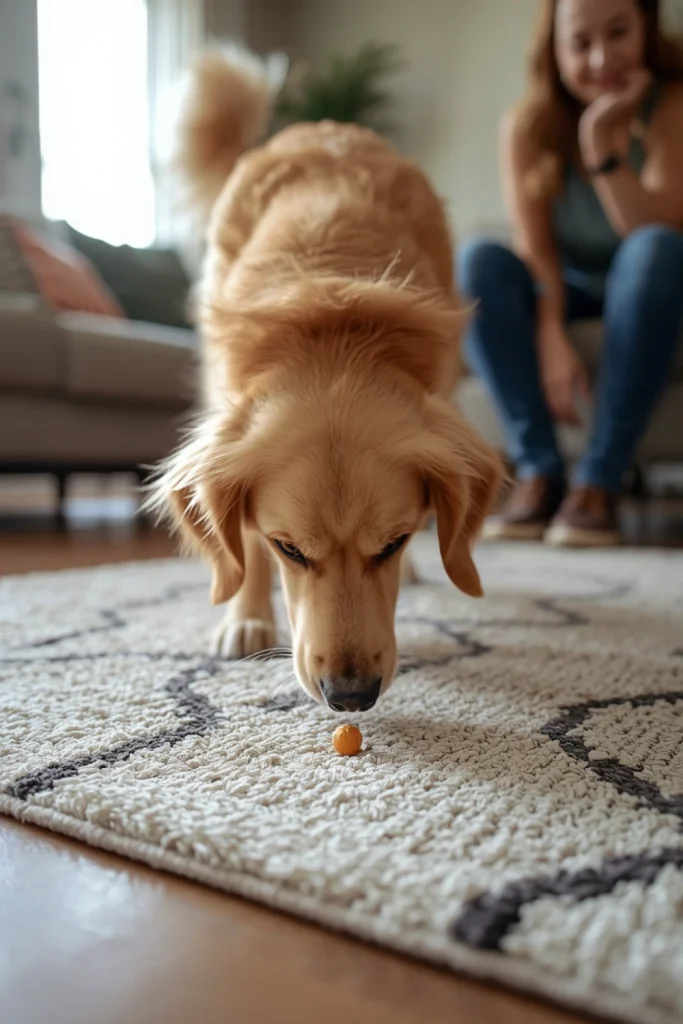
Find it turns searching for a treat or toy into a fun training game. It encourages your dog to use its nose and can provide mental enrichment indoors or in a safe outdoor space. Start by showing your dog a small treat, then place it on the floor a short distance away and say “find it.” Allow the dog to locate and eat the treat. Repeat several times so your dog begins associating the cue with searching. Use safe, accessible hiding places at first, keeping the activity easy enough that your dog can succeed.
As your dog improves, hide treats behind furniture legs, under a loosely placed towel, or in other safe, easy-to-reach locations. Always supervise the game and avoid hiding food where your dog might swallow unsuitable materials, damage property, or get stuck. You can eventually use a favorite toy instead of food if your dog enjoys searching for it. Find it is a useful enrichment activity on rainy days or when you want to provide mental exercise. It should remain a positive game rather than a stressful test, so offer hints or simplify the hiding places if your dog struggles.
20. Go Potty
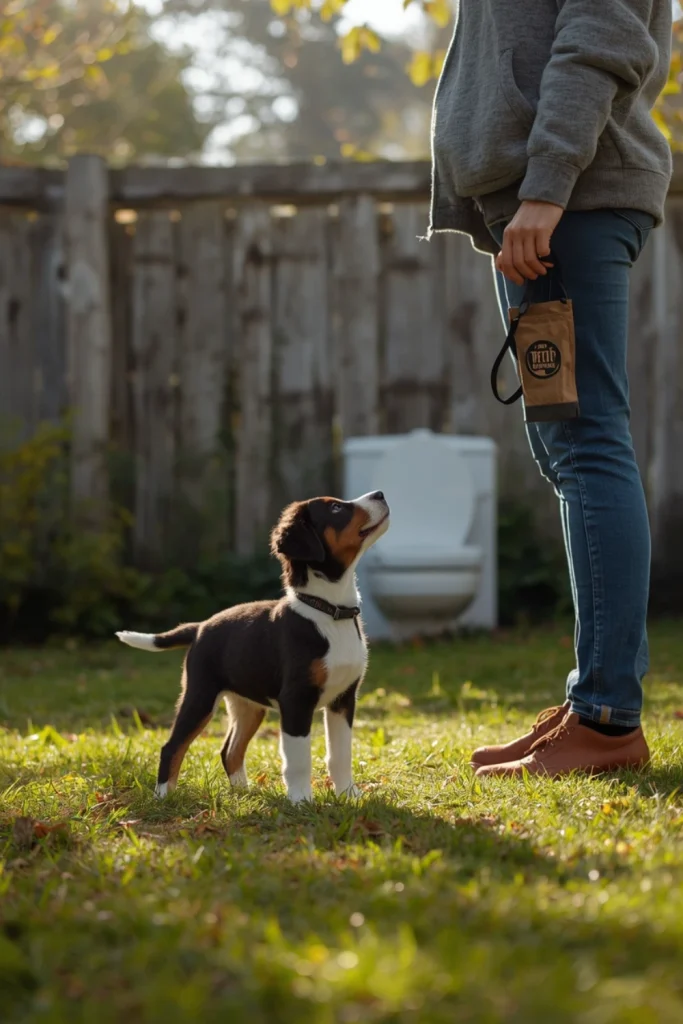
A go potty cue can help establish a predictable toilet routine, particularly for puppies and newly adopted dogs. Choose a consistent outdoor toilet area and take your dog there after waking, after meals, after naps, and after play. Give your dog time to sniff and move around. When it begins eliminating, quietly say your chosen cue, such as “go potty,” and reward immediately after it finishes. The cue becomes associated with the action over repeated successful experiences, rather than being a command your dog must understand instantly.
Keep a regular schedule and supervise your dog carefully indoors while house training. Young puppies often need frequent toilet opportunities, and the exact timing depends on their age, health, and individual needs. If your dog does not eliminate outside, return indoors under supervision and try again soon instead of leaving it unsupervised. Clean accidents with an appropriate enzymatic cleaner and avoid punishment, which may make a dog afraid to eliminate in front of you. Sudden changes in toilet habits, straining, blood, or frequent attempts with little urine require veterinary advice.
21. Easy
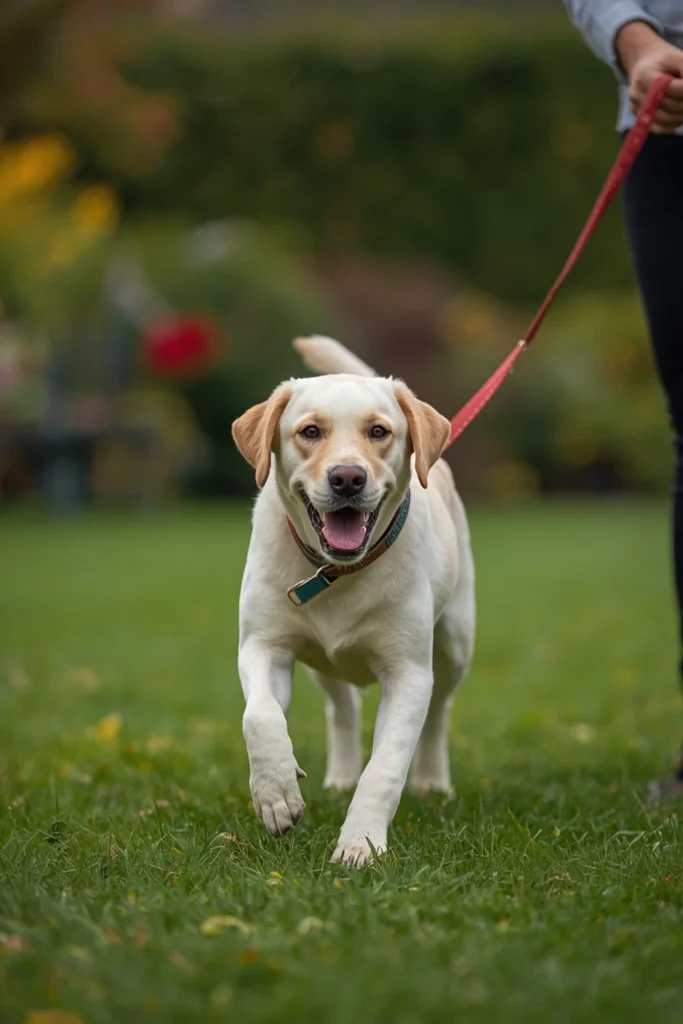
An easy cue can encourage your dog to slow down and use less force during a specific activity. For example, you might use it when the dog approaches a toy too energetically, moves toward a treat too quickly, or becomes overly excited during a familiar game. Choose one clear meaning for the word and reward the behavior you want, such as slower movement or a softer approach. Begin in a low-distraction environment and introduce the cue just before an activity your dog understands. When your dog responds with more controlled behavior, offer praise or another suitable reward.
Because “easy” can mean different things in different households, consistency is essential. If you use it for slowing down during walks, avoid also using it unpredictably to mean stop, sit, or release an object. Teach each behavior separately and make the cue clear through repetition. If your dog is pulling strongly on the leash, combine the cue with loose-leash training rather than expecting a single word to solve the problem. Reward calm movement and adjust the environment if excitement becomes too intense. Do not use “easy” as a substitute for addressing fear, pain, or frustration.
22. Around
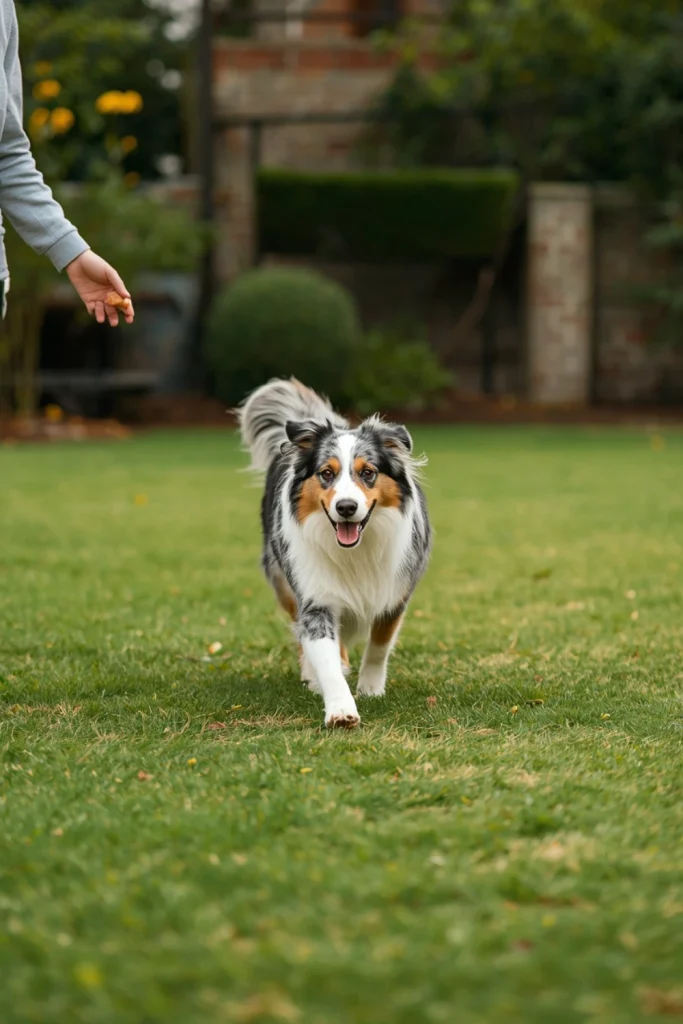
The around command teaches your dog to move in a gentle circle around you or navigate around an object. It can provide mental enrichment, improve body awareness, and add variety to training sessions. Begin in a spacious area with your dog standing comfortably. Use a treat to guide the dog in a wide, easy curve around your body or a safe marker. Say “around” as the dog starts following the path, then reward it when it completes the movement. Keep the circle wide enough to avoid twisting or sudden turns, especially for puppies and dogs with mobility limitations.
As your dog becomes familiar with the movement, gradually reduce the lure and use a hand gesture to indicate the direction. You can also teach the dog to move around a cone or chair placed securely in an open area. Practice both directions only if your dog is comfortable, and keep sessions brief. Avoid slippery floors, tight turns, or obstacles that might frighten your dog. This command is mainly an enrichment skill rather than an essential safety cue, so focus on enjoyment and confidence instead of demanding perfect circles.
23. Bring It
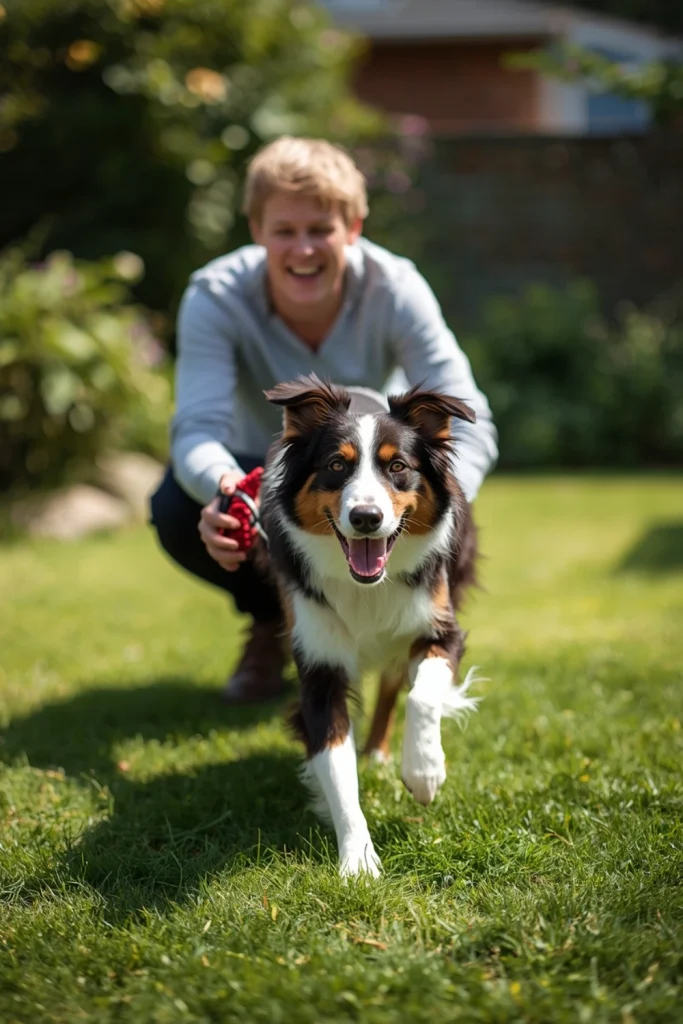
Bring it teaches your dog to carry a toy or other suitable object toward you. It can form the foundation of a simple retrieve game and encourage cooperative play. Start with a favorite soft toy in a quiet room. Toss it a short distance, and when your dog picks it up, encourage it to move toward you with a cheerful voice or a familiar recall cue. Reward the dog for coming closer while holding the toy. At first, accept small steps toward you instead of expecting a complete retrieve immediately.
As the dog becomes more comfortable, reward it for bringing the toy all the way to you. You can then combine the behavior with drop it so the dog learns to release the object when asked. Use toys that are appropriate for your dog’s size and chewing style, and supervise play to prevent accidental swallowing. Some dogs enjoy carrying a toy but are reluctant to give it up, so avoid chasing or grabbing. Keep the activity cooperative by offering praise, treats, or another toy. If the dog guards the object, pause the game and seek qualified help if necessary.
24. Cross
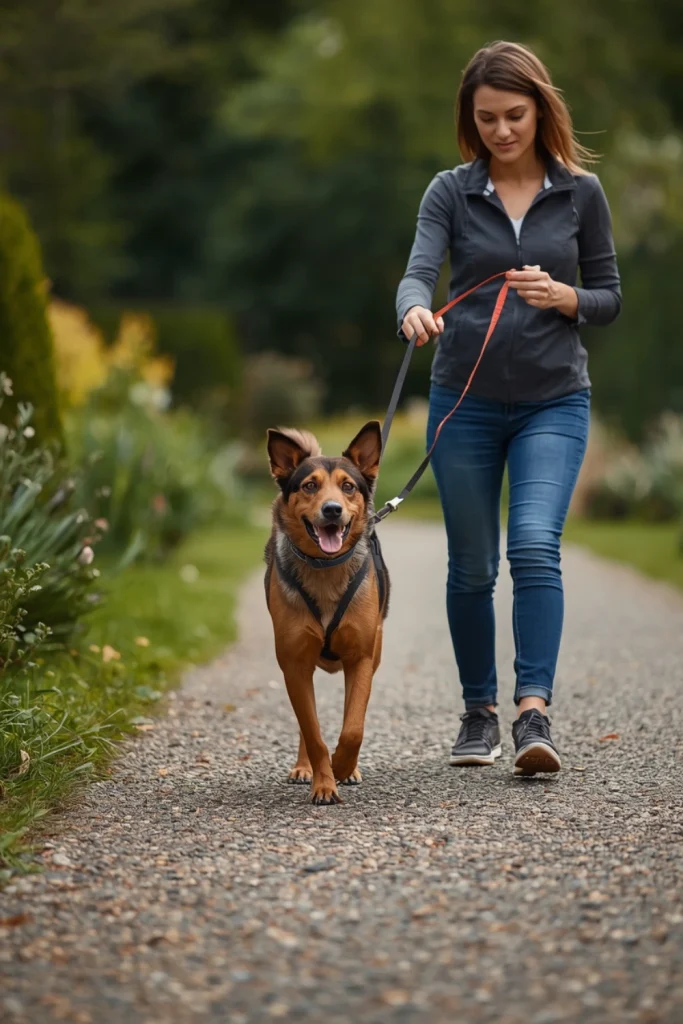
The cross command can be used to teach your dog to move from one side of you to the other in a controlled way. It can be helpful when changing walking positions on a quiet path or practicing coordination during training. Start indoors or in a secure garden with your dog standing close to you. Use a treat to guide the dog across the front of your body toward the opposite side, saying “cross” as it begins moving. Reward the dog when it reaches the new position. Keep the movement slow, giving your dog enough room to move comfortably without tangling the leash.
Once the dog understands the exercise, practice with a clear hand signal and gradually reduce the food lure. Introduce the skill during short, calm sessions before trying it while walking outdoors. Make sure your leash is managed safely and does not wrap around your legs or the dog’s body. Cross is an optional coordination cue rather than a substitute for safe street-crossing procedures. When crossing roads, use a secure leash, observe traffic, and choose a safe crossing point. Never rely on a trained movement command to protect your dog from moving vehicles.
25. Release
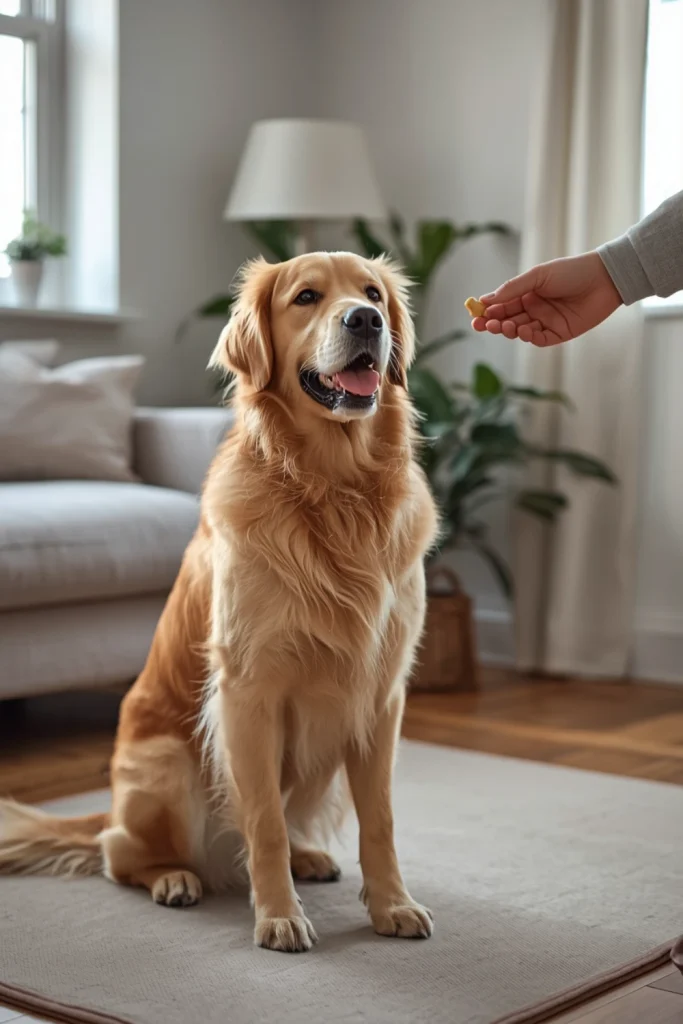
The release command tells your dog that a particular exercise has ended and it is free to move. It is especially useful during stay, place, wait, and other exercises where the dog is expected to remain in position until given permission. Choose a simple word such as “free” or “release” and use it consistently. Begin with a very short sit or stay. After one or two seconds of success, say your release word and encourage your dog to move. Reward the dog for waiting until the cue rather than getting up early.
As your dog improves, gradually increase the length of easy stays before releasing it. Keep the release word distinct from your other commands so your dog can clearly recognize when the exercise has ended. If the dog moves before the cue, calmly reset and shorten the duration. Avoid using the release cue in unsafe places where movement could put your dog at risk. A release command makes training clearer, but you must still use leashes, gates, and supervision wherever needed. Consistency helps your dog understand both when to remain in position and when it can move again.
Conclusion
Learning essential dog training commands can make everyday life easier, safer, and more enjoyable for both you and your dog. From sit and stay to come, leave it, settle, and loose leash walking, each skill helps build clearer communication and encourages desirable behavior. You do not need to teach all 25 commands at once. Start with a few practical basics, reward progress, and add new skills when your dog is ready.
The most successful training routines are built on patience, consistency, and positive experiences. Practice in short sessions, use the same cues throughout your household, and gradually introduce distractions as your dog improves. Remember that every dog learns at its own pace. With realistic expectations and regular practice, these Dog Training Commands can help you develop a stronger bond with your companion while supporting good manners, confidence, and responsible dog ownership.