12 Ways to Stop Puppies From Chewing Furniture
Is your puppy turning your sofa legs, wooden chairs, and table corners into chew toys? Furniture chewing is a common challenge for puppy owners, especially during teething and the early stages of exploring the world. While this behavior can damage your home, it is usually manageable with the right training, appropriate chew toys, and a consistent daily routine.
Learning how to stop puppies from chewing furniture is not about punishing your puppy or expecting them to understand household rules immediately. It is about discovering why they chew, providing acceptable alternatives, and teaching them which items are appropriate to bite. With patience and positive reinforcement, you can protect your furniture, encourage healthier chewing habits, and help your puppy grow into a well-mannered adult dog.
1. Provide Appropriate Chew Toys
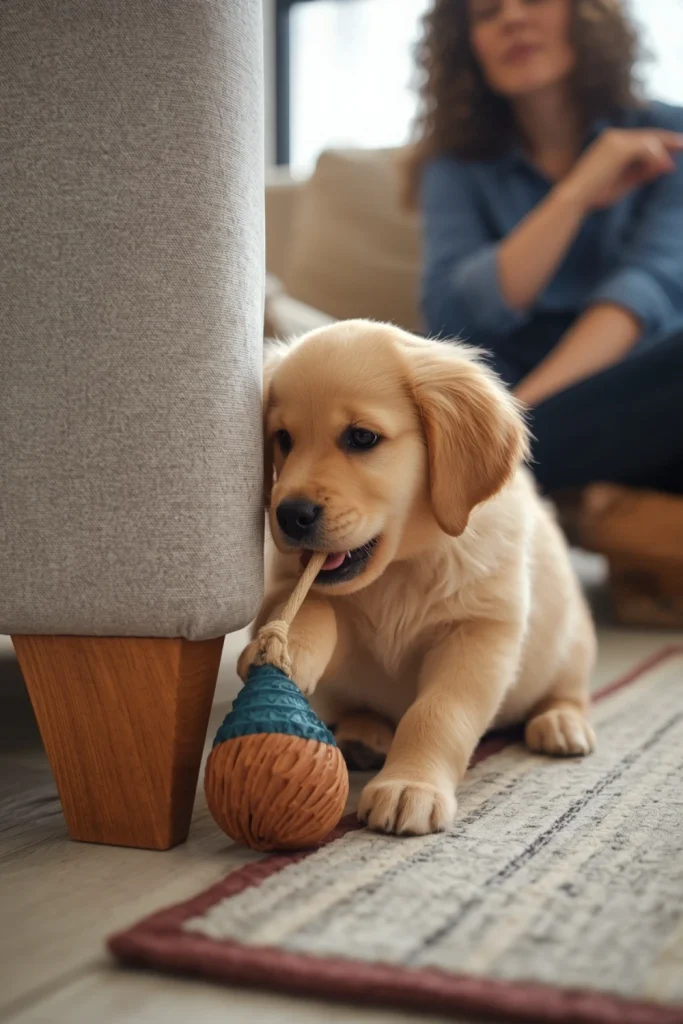
One of the most effective ways to stop puppies from chewing furniture is to give them suitable chew toys. Puppies naturally need opportunities to chew, so removing every available object without providing alternatives can leave them frustrated. Choose puppy-safe rubber toys, age-appropriate teething toys, or other products designed for your puppy’s size and chewing strength. Place several options in the rooms where your puppy spends the most time, especially near furniture they frequently target. Having an appropriate toy within reach makes it easier to redirect your puppy before chewing becomes a habit.
Whenever your puppy begins chewing a chair leg or sofa corner, calmly interrupt the behavior and offer a suitable toy. Praise your puppy when they switch to the toy and continue chewing it. Avoid chasing them around the room or pulling objects away aggressively, as this may turn the situation into an exciting game. Rotate toys occasionally to maintain interest, and inspect them regularly for damage. Remove toys that break apart or become small enough to swallow. Consistent redirection teaches your puppy that chewing is acceptable when directed toward the right objects.
2. Understand and Manage Teething
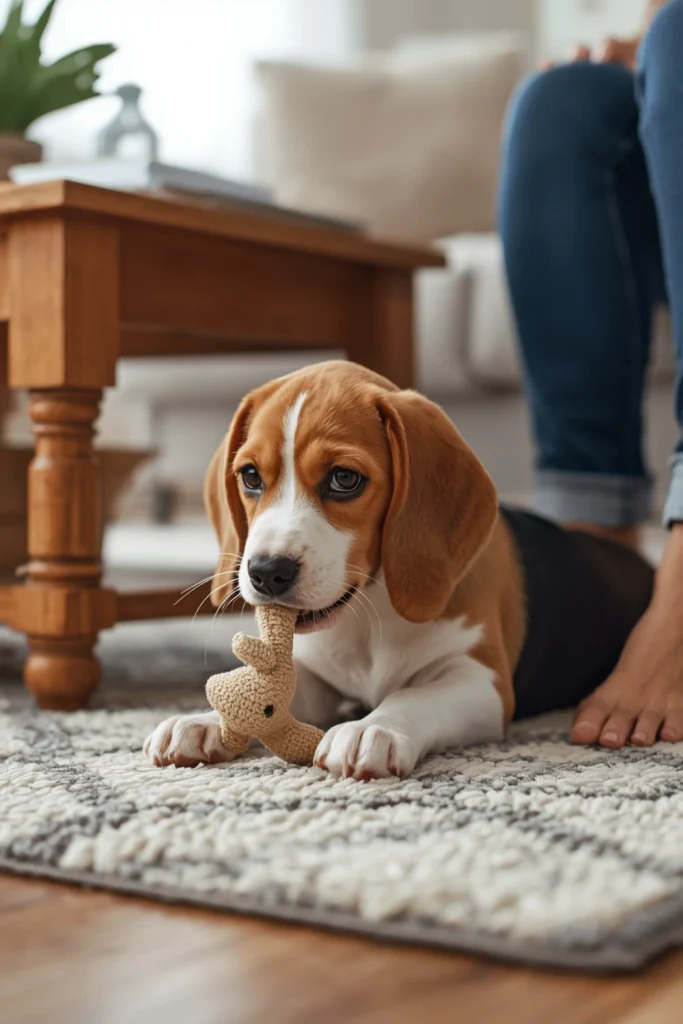
Teething is a common reason puppies chew furniture. As their baby teeth develop and adult teeth begin to emerge, puppies may seek objects that provide satisfying chewing sensations. Wooden furniture, table corners, and upholstery can become attractive targets because they offer different textures. Although chewing is a normal developmental behavior, it is important to guide your puppy toward safer options. Look for age-appropriate teething toys that are designed to be gentle on developing teeth and provide a comfortable chewing experience.
Offer teething toys before your puppy becomes focused on furniture. You can keep a few options in the areas where your puppy usually rests or plays. Always follow the manufacturer’s instructions and supervise your puppy when introducing a new toy. Avoid extremely hard objects, including bones or materials that could damage developing teeth, and ask your veterinarian for recommendations if you are unsure which products are appropriate. Teething discomfort should gradually change as your puppy matures, but the habit of chewing furniture can continue unless you actively teach alternatives.
3. Supervise Your Puppy Around Furniture
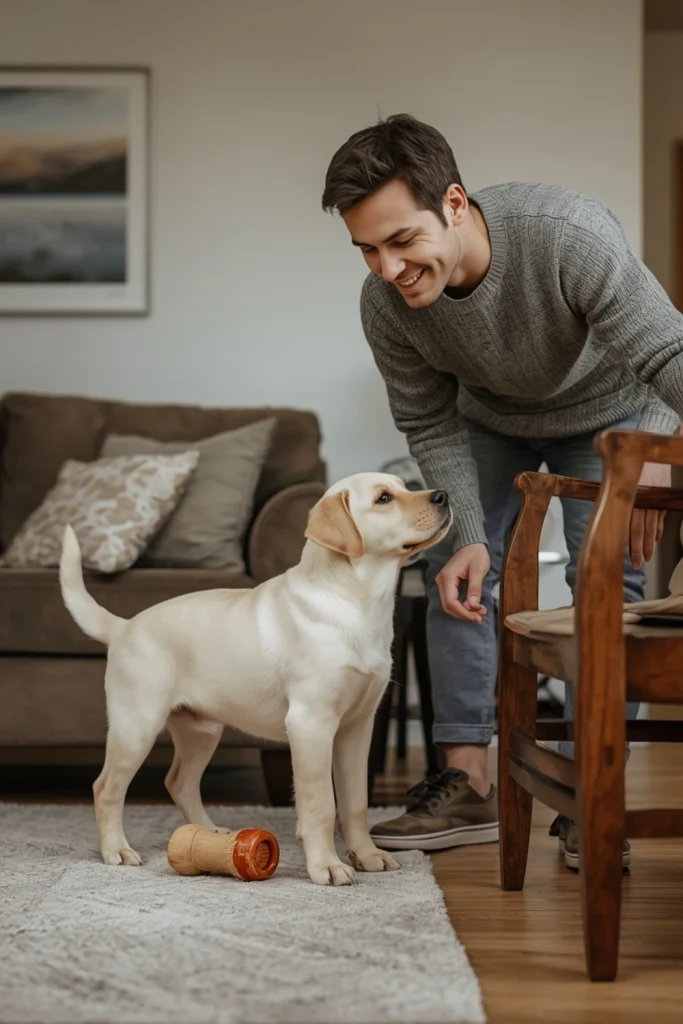
Supervision is essential when teaching a puppy which household objects are off-limits. Young puppies cannot be expected to make the right choice every time, especially when they are excited or exploring a new environment. Keep your puppy within sight when they have access to furniture, and watch for early signs of chewing, such as sniffing a table leg repeatedly, licking upholstery, or opening their mouth around a wooden corner. Interrupting these behaviors early gives you a better opportunity to redirect your puppy before damage occurs.
If you cannot supervise your puppy closely, use a safe puppy-proofed room, playpen, or appropriately introduced crate when suitable. Provide fresh water, a comfortable resting area, and safe toys according to your puppy’s needs. A crate should never be used as punishment or as a substitute for adequate exercise, interaction, and toilet breaks. As your puppy learns household rules, gradually increase freedom while continuing to supervise. This approach reduces opportunities to practice unwanted chewing and allows you to reward appropriate choices consistently.
4. Redirect Furniture Chewing Immediately
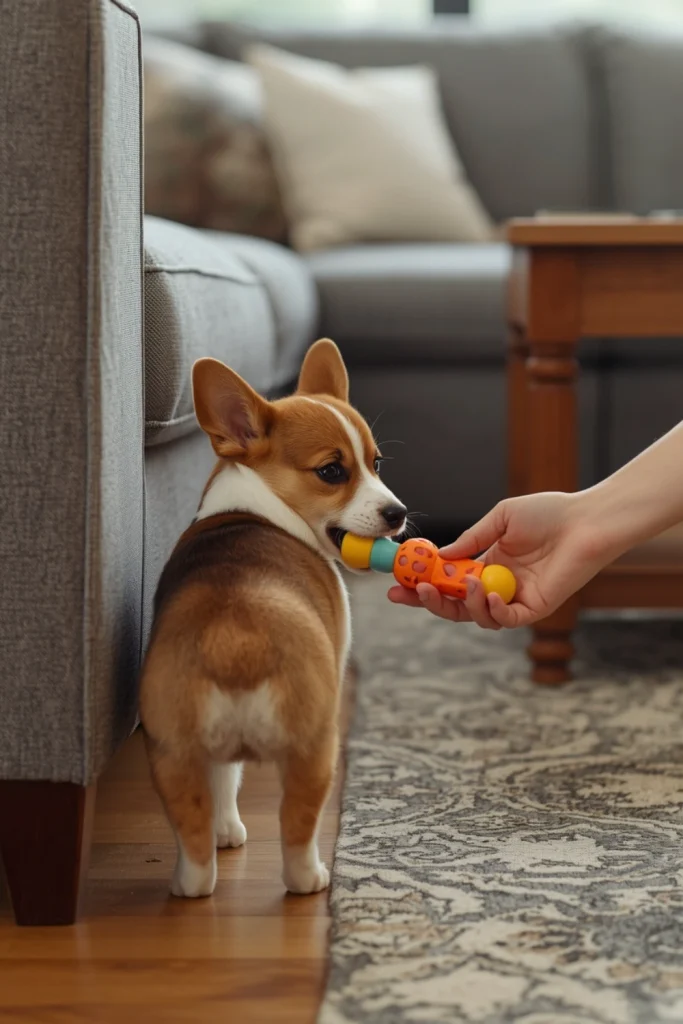
Redirection teaches your puppy what to chew instead of simply telling them what not to do. When you notice your puppy biting a sofa cushion, table leg, or chair, calmly interrupt without shouting. Offer an appealing chew toy and encourage your puppy to engage with it. Choose a toy that matches the puppy’s chewing preferences, whether that means a soft rubber texture, a flexible teething toy, or a suitable interactive toy. The quicker you provide an alternative, the easier it may be for your puppy to understand the new behavior.
As soon as your puppy begins chewing the appropriate toy, praise them gently. You can offer a small training treat if it suits your puppy’s diet and training plan. If the puppy repeatedly returns to the same furniture, consider blocking access to that area temporarily or offering a different toy. Avoid repeatedly shouting “no” without showing your puppy what they should do instead. Successful redirection combines an immediate alternative with positive reinforcement, helping your puppy develop a lasting preference for acceptable chewing objects.
5. Puppy-Proof Your Home
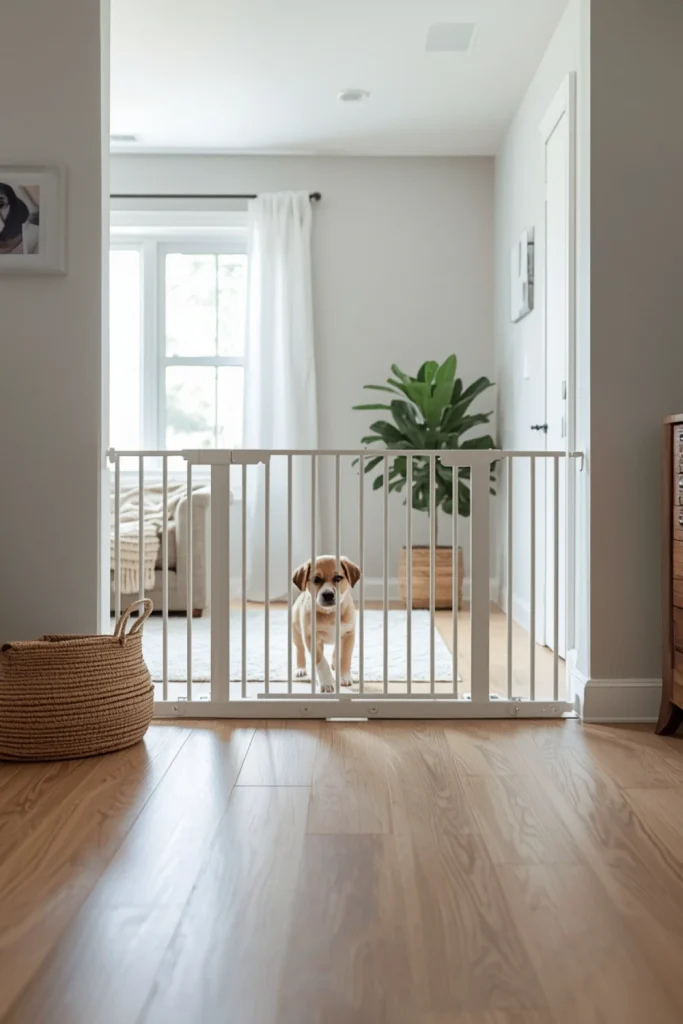
Puppy-proofing your home can prevent furniture chewing before it becomes a regular habit. Begin by identifying the items your puppy can easily reach, including exposed wooden legs, loose upholstery, dangling fabric, electrical cords, and objects stored near the floor. Move tempting items out of reach where possible, cover vulnerable areas with suitable barriers, and rearrange the room to limit access to furniture your puppy frequently targets. A puppy-safe environment makes training easier because it reduces the number of opportunities for unwanted chewing.
Consider using baby gates or a puppy pen to create a designated area with suitable toys and a comfortable resting space. Furniture covers may help protect upholstery, but they should be secure and should not contain loose pieces your puppy could swallow. Keep cleaning products, small objects, and other hazards safely stored away. Remember that puppy-proofing does not replace supervision or training. Instead, it supports both by preventing damage while your puppy learns which objects are appropriate to chew. Review your setup regularly as your puppy grows and becomes more adventurous.
6. Provide Enough Exercise and Mental Stimulation
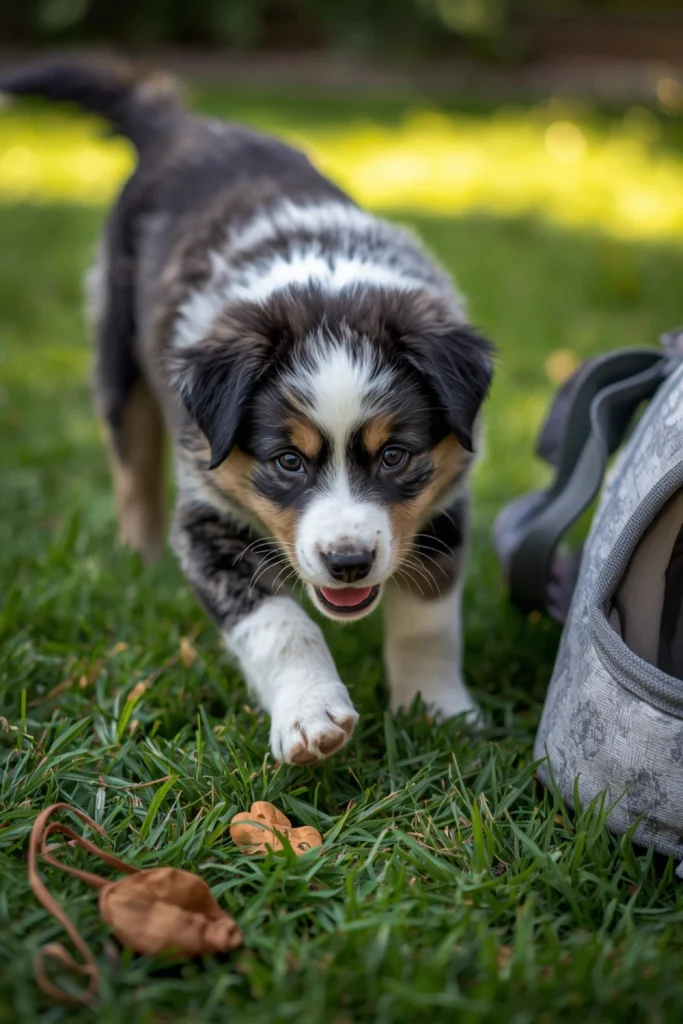
A puppy that lacks appropriate activities may turn to furniture chewing for entertainment. Daily opportunities to explore, play, and learn can help reduce boredom and provide healthier outlets for natural behavior. Depending on your puppy’s age and health, activities may include short walks when safe, gentle play, supervised sniffing, and brief reward-based training sessions. Avoid excessive exercise, particularly for very young puppies, and follow veterinary guidance about safe activity levels. The goal is to provide balanced enrichment rather than exhaust your puppy.
Mental stimulation can be equally important. Food puzzles designed for puppies, simple scent games, and short training exercises give your puppy opportunities to use their brain. For example, hide a few pieces of kibble in easy-to-find places and encourage your puppy to sniff them out under supervision. Alternate these activities with quiet rest periods, since an overtired puppy may chew more rather than less. A balanced daily routine that includes exercise, enrichment, social interaction, and sleep can make furniture less appealing as a source of entertainment.
7. Reward Your Puppy for Chewing the Right Things
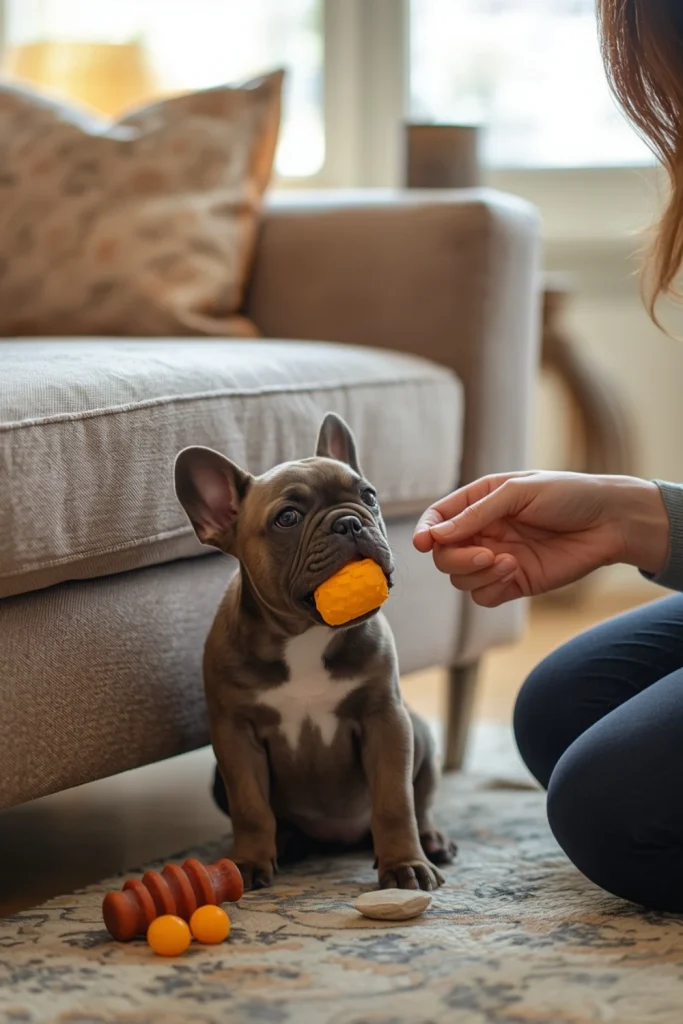
Positive reinforcement helps puppies understand which behaviors you want them to repeat. Whenever your puppy independently chooses a chew toy instead of furniture, reward the decision with calm praise, a small treat, or a brief play session. You do not need to wait for a problem to occur before training. If you notice your puppy relaxing on a mat and chewing an appropriate toy, acknowledge that good choice. These rewards make acceptable chewing more valuable and help build habits that can last into adulthood.
Consistency is important because puppies learn through repeated experiences. Keep appropriate toys available in different rooms and encourage everyone in the household to reward the same behaviors. If your puppy chooses furniture again, calmly redirect them without becoming frustrated. Avoid punishing the puppy after discovering damage that happened earlier, because they may not understand what the punishment is for. Focus instead on rewarding the behavior you want to see in the moment. With repetition, your puppy can learn that their toys are rewarding and household furniture is not intended for chewing.
8. Teach Simple Commands Such as “Leave It”
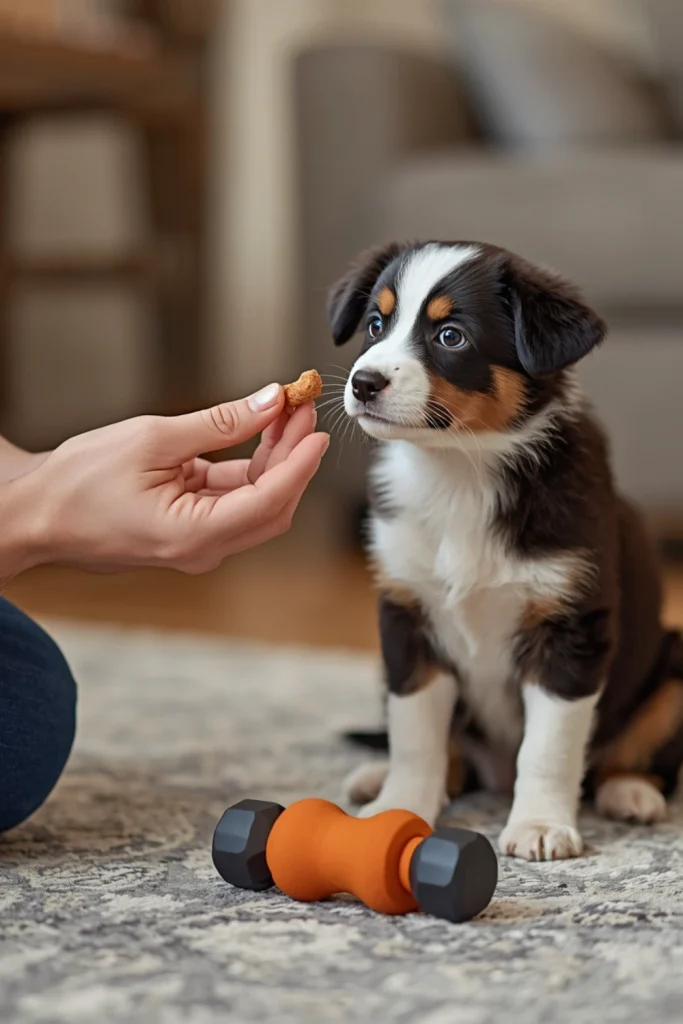
The “leave it” command can help you redirect your puppy when they become interested in furniture. Start training in a quiet area with a treat enclosed in your hand. Allow your puppy to investigate, then wait until they stop trying to reach the treat. Mark the moment they move away or look toward you, and reward them with a different treat from your other hand. Practice short sessions until your puppy begins to understand that leaving an item alone can lead to something rewarding.
Once your puppy understands the basic exercise, gradually practice with safe objects at an appropriate distance. When you see your puppy approaching a furniture leg, use the cue calmly if they are able to respond. Reward them for turning away, then guide them toward an acceptable chew toy. Do not use the command repeatedly when your puppy is too excited to listen, and never force their mouth open to remove an object. Training should build cooperation and self-control rather than fear. For dangerous objects, prioritize safe management and contact a veterinarian if your puppy swallows something harmful.
9. Use Safe Furniture Protection When Necessary
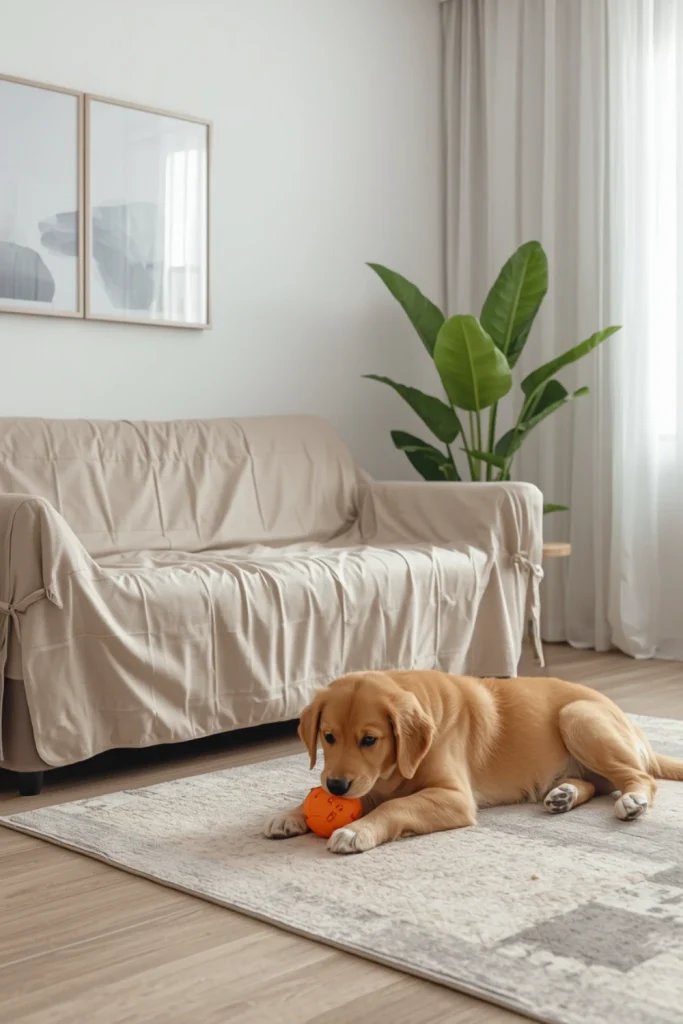
Temporary furniture protection can help prevent damage while your puppy learns better habits. Consider durable furniture covers, secure barriers, or rearranging chairs so vulnerable wooden legs are less accessible. Choose materials that cannot easily be pulled loose or swallowed, and inspect them regularly. Protection is especially useful when your puppy repeatedly targets a particular sofa corner or table leg. However, covering furniture alone will not teach your puppy what to chew, so always combine protective measures with suitable toys and consistent supervision.
Be cautious with commercial taste-deterrent sprays. Only consider products specifically labeled as appropriate for the intended furniture material and safe for use around dogs when used as directed. Test any product on a hidden area first, and prevent your puppy from licking treated surfaces until the product instructions say it is safe. Never apply household chemicals, essential oils, or homemade mixtures that could irritate or poison your puppy. If protection makes furniture less accessible or less appealing, use that opportunity to reward appropriate chewing and build better habits.
10. Establish a Consistent Daily Routine
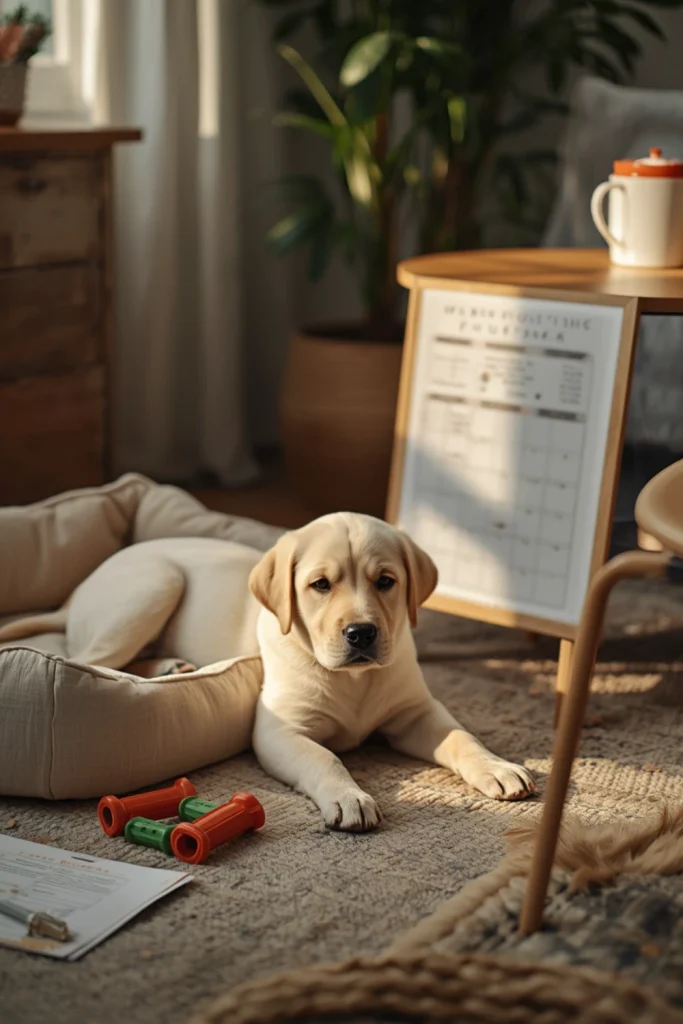
A predictable routine can reduce the boredom and restlessness that contribute to furniture chewing. Plan regular opportunities for meals, toilet breaks, gentle activity, training, play, and rest. Puppies often become more destructive when their needs are not met or when they have too much freedom without guidance. A structured day gives your puppy appropriate outlets for energy and helps them learn when to expect interaction. The routine should be flexible enough to accommodate your puppy’s age, health, and individual temperament.
Observe when your puppy usually begins chewing furniture. If it happens after a long period without activity, introduce a suitable game or short training session before the behavior starts. If chewing increases late in the day, your puppy may need rest rather than more stimulation. Provide toys and safe resting areas, and avoid leaving a young puppy unsupervised with access to vulnerable furniture for extended periods. A consistent routine will not eliminate every chewing incident immediately, but it can make the behavior easier to manage while your puppy develops better habits.
11. Prevent Chewing Caused by Boredom or Separation Distress

Some puppies chew furniture when they are left alone or do not have enough appropriate stimulation. If the behavior happens mainly when you leave the room or house, look for patterns before deciding how to respond. Boredom may lead a puppy to explore and chew accessible objects, while separation-related distress can involve additional signs such as persistent vocalization, pacing, drooling, or frantic attempts to escape. These situations need different approaches, so observe the puppy carefully and avoid assuming that every instance of destructive chewing is simply misbehavior.
For possible boredom, provide safe toys, appropriate enrichment, exercise, and adequate rest before a period of supervised independence. Introduce alone time gradually, beginning with short, comfortable separations and building up at a pace your puppy can handle. Do not leave a puppy alone with toys that can be destroyed or swallowed. If your puppy shows significant distress when separated from you, consult your veterinarian or a qualified behavior professional. Punishment after you return will not address the underlying cause and may increase anxiety. Understanding the reason for chewing is essential to choosing the right solution.
12. Be Patient and Consistent With Training

Changing chewing habits takes time, and puppies may continue making mistakes as they grow. Your puppy might chew a toy correctly for several days and then return to a chair leg when excited or bored. This does not mean training has failed. It means your puppy still needs practice and management. Keep suitable chew toys accessible, supervise interactions with furniture, and reward appropriate choices whenever they occur. Consistent responses help your puppy understand household rules more clearly than changing strategies every time a problem arises.
Track when chewing happens and which redirection techniques work best. You may notice that your puppy targets furniture after playtime, during quiet periods, or when visitors arrive. Use these patterns to adjust the environment and daily routine. Gradually give your puppy more freedom as they demonstrate reliable behavior, but continue supervising until they are ready for greater independence. If chewing is persistent, unusually intense, associated with distress, or involves swallowing non-food objects, seek veterinary advice. Patience, consistency, and appropriate professional support can help your puppy develop safer, more reliable habits.
Final Thoughts
Learning how to stop puppies from chewing furniture requires patience, prevention, and positive training. By providing appropriate chew toys, managing teething, supervising your puppy, puppy-proofing your home, and rewarding acceptable behavior, you can protect your furniture while teaching your puppy healthier habits.
Remember that chewing is a natural behavior, not a sign that your puppy is deliberately trying to damage your home. Your job is to guide that behavior toward safe and appropriate alternatives. Keep your routine consistent, make good choices easy, and celebrate progress along the way. With time and the right approach, your puppy can learn to enjoy chewing their toys while leaving your furniture alone.