
10 Ways to Train Your Dog Not to Jump on People
A dog jumping up to greet people may look cute when they are small, but the habit can quickly become frustrating as they grow. Muddy paws, scratched clothing, knocked-over children, and uncomfortable guests are just some of the problems caused by enthusiastic jumping.
The good news is that you can train your dog not to jump on people by teaching polite greeting behaviors and rewarding the choices you want to see. With patience, consistency, and regular practice, your dog can learn that keeping four paws on the floor is a better way to receive attention.
1. Teach the “Four Paws on the Floor” Rule
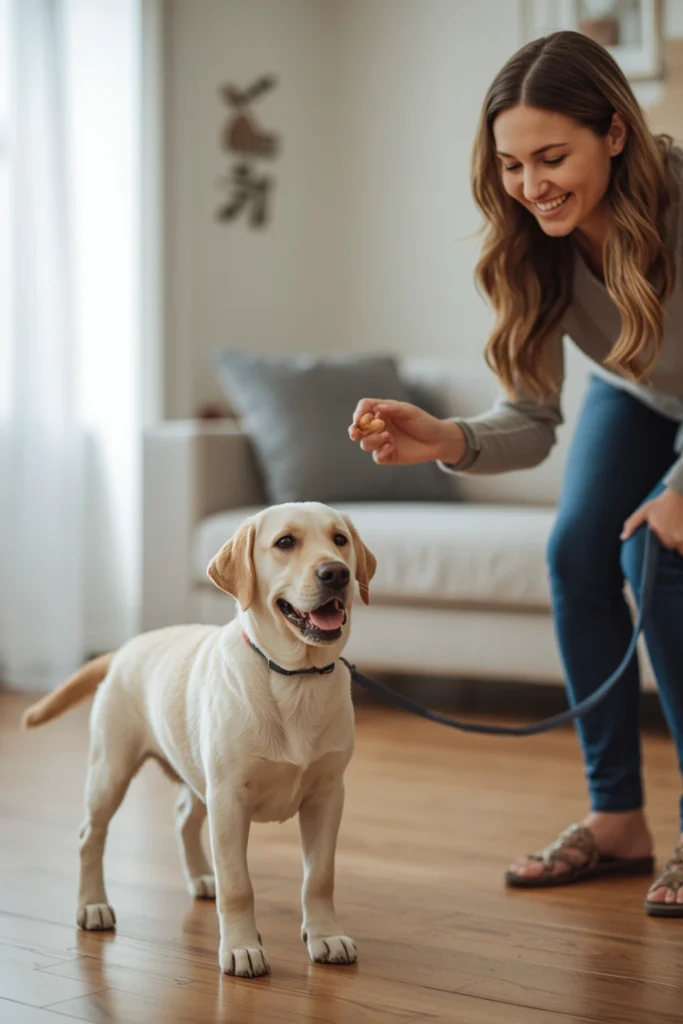
One of the easiest ways to train your dog not to jump on people is to reward them whenever all four paws remain on the ground. You do not necessarily need to require a sit immediately. Start by simply noticing the moment your dog is standing calmly and reward that behavior with a treat, praise, or gentle attention. This teaches your dog that staying grounded can make good things happen.
Practice this exercise when your dog is calm before adding exciting greetings. Have a family member approach slowly while your dog is on a leash. If your dog keeps their paws down, reward them immediately. If they jump, the person should calmly step away and wait for the dog to return to the floor. This creates a clear connection between polite behavior and attention.
2. Teach Your Dog to Sit for Greetings
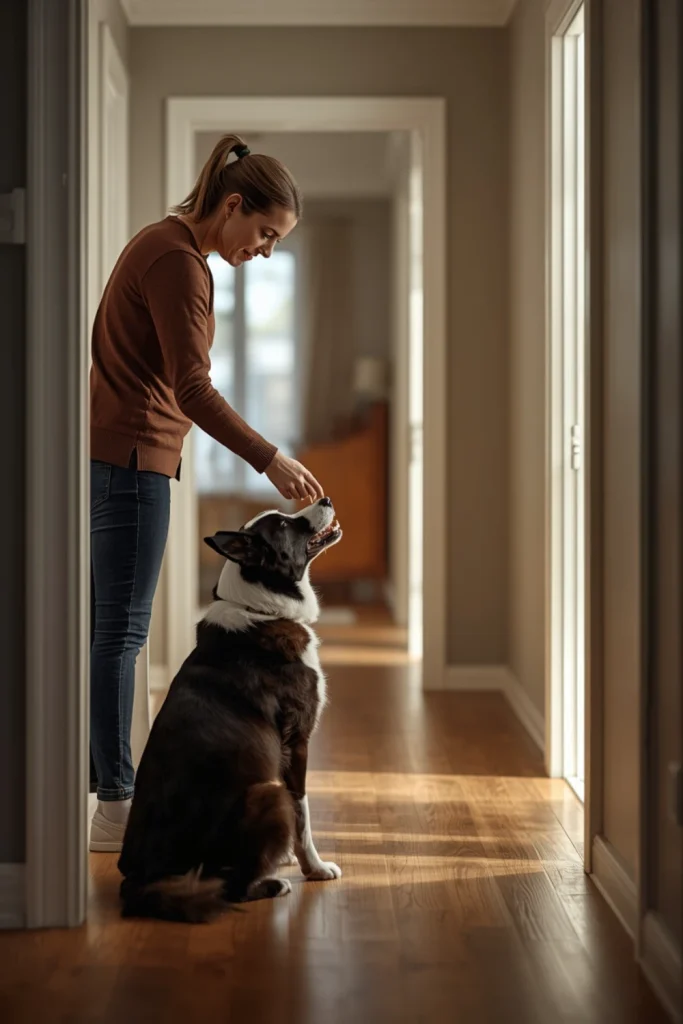
Teaching your dog to sit when meeting people gives them a specific alternative to jumping. A dog cannot jump and maintain a proper sit at the same time, making this a useful incompatible behavior. Start by practicing the sit command in a quiet room until your dog can respond reliably without much distraction. Then begin using the behavior during greetings.
Ask your dog to sit before someone approaches. If the dog stays seated, allow the person to calmly greet them and provide praise or a small reward. If the dog stands and begins jumping, the person should stop interacting and move away. Repeat the process until your dog learns that sitting keeps the greeting going while jumping makes the interaction temporarily disappear.
3. Stop Giving Attention When Your Dog Jumps
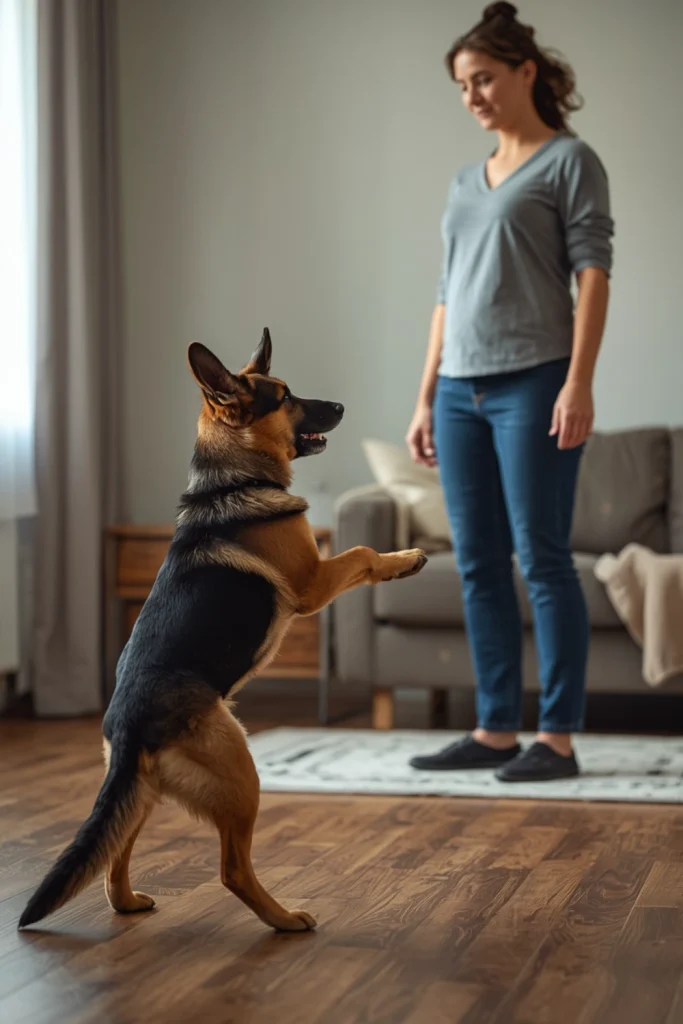
Attention can be a powerful reward for dogs. Talking, touching, looking at them, pushing them away, or even saying “No” may provide exactly the interaction they wanted. If your dog jumps, calmly remove your attention instead. Turn your body away, avoid eye contact, and wait for your dog to return to the floor.
The moment your dog stops jumping, immediately give them attention in a calm manner. This helps your dog understand that jumping makes attention disappear while calm behavior makes attention return. Everyone in the household should follow the same rule because inconsistent responses can make training much slower.
4. Use High-Value Treats During Greeting Practice
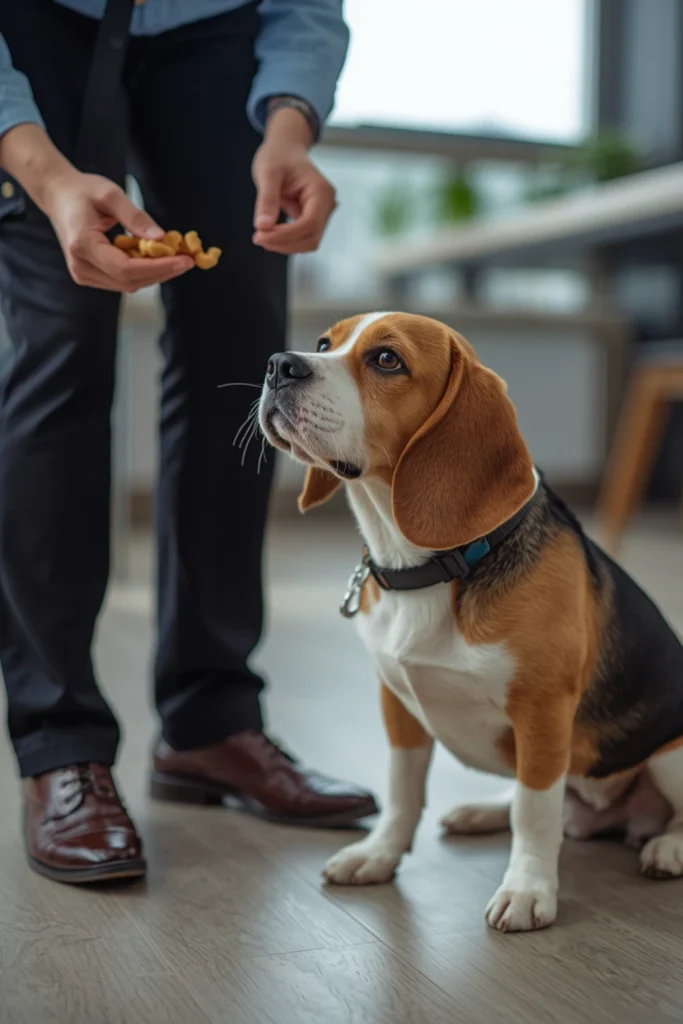
Food rewards can help your dog understand exactly which behavior you want during training. Choose small, tasty treats that your dog finds especially motivating. Keep them ready before a visitor approaches so you can reward good behavior quickly. Timing is important because the closer the reward is to the desired behavior, the easier it is for your dog to make the connection.
Start in a low-distraction environment and reward your dog frequently for staying calm. As your dog becomes more reliable, gradually reduce the number of treats while continuing to provide praise and attention. Eventually, the greeting itself can become part of the reward. Positive reinforcement training focuses on rewarding desired behavior rather than relying on punishment.
5. Practice With Family Members First
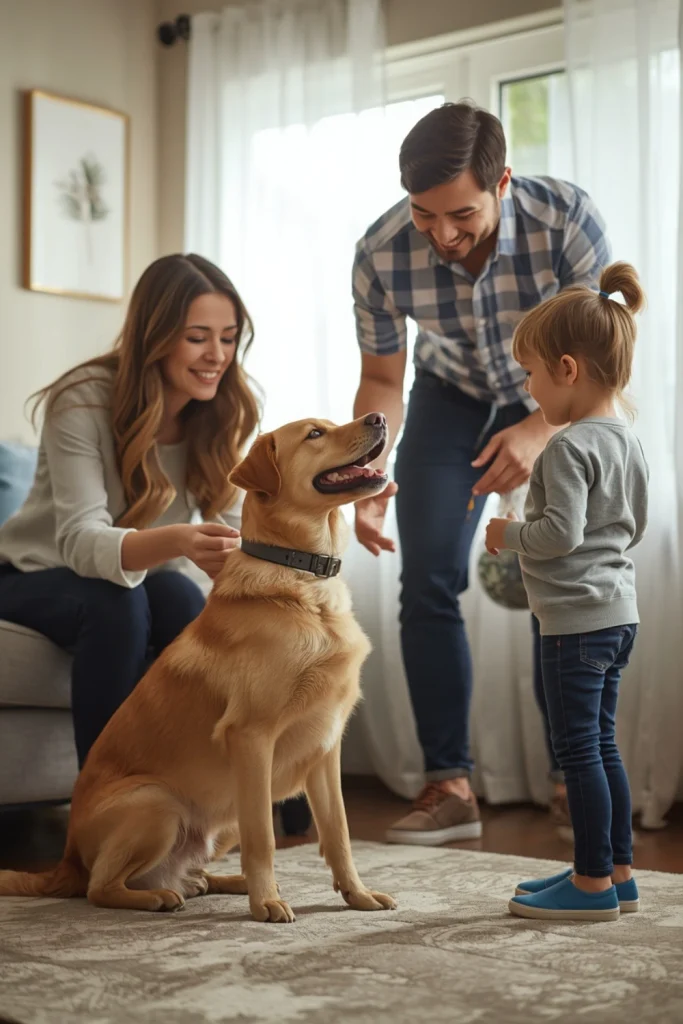
Your dog may understand the rule when greeting you but become overly excited when another person arrives. That is why controlled practice with family members is useful. Ask one person to approach while you manage the dog. Keep the greeting calm and reward your dog for remaining on the floor or sitting.
Repeat the exercise with different family members and gradually change the situation. One person can enter through the front door, another can walk toward the dog from across the room, and another can briefly step outside and return. These repetitions help your dog learn that the same greeting rules apply to different people and situations. Consistency is especially important because dogs can learn that different people have different rules.
6. Use a Leash When Guests Arrive
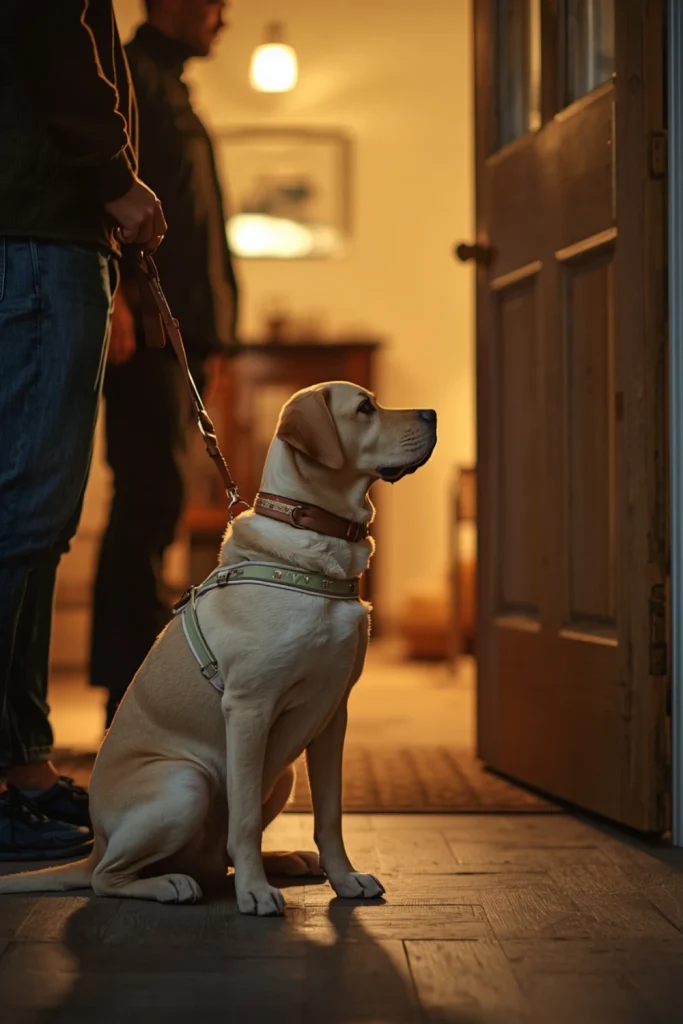
A leash can be a useful management tool while your dog is still learning polite greetings. Attach the leash before opening the door so you have control over the situation without grabbing or physically pushing your dog away. Keep enough distance for your dog to remain comfortable and give them an opportunity to make the correct choice.
Ask your dog to sit or remain with four paws on the floor as the guest enters. Reward calm behavior and allow the guest to approach gradually. If your dog becomes too excited, calmly create more distance and wait for them to settle. Management prevents repeated jumping while your dog develops better greeting habits.
7. Teach Your Dog to Go to a Place
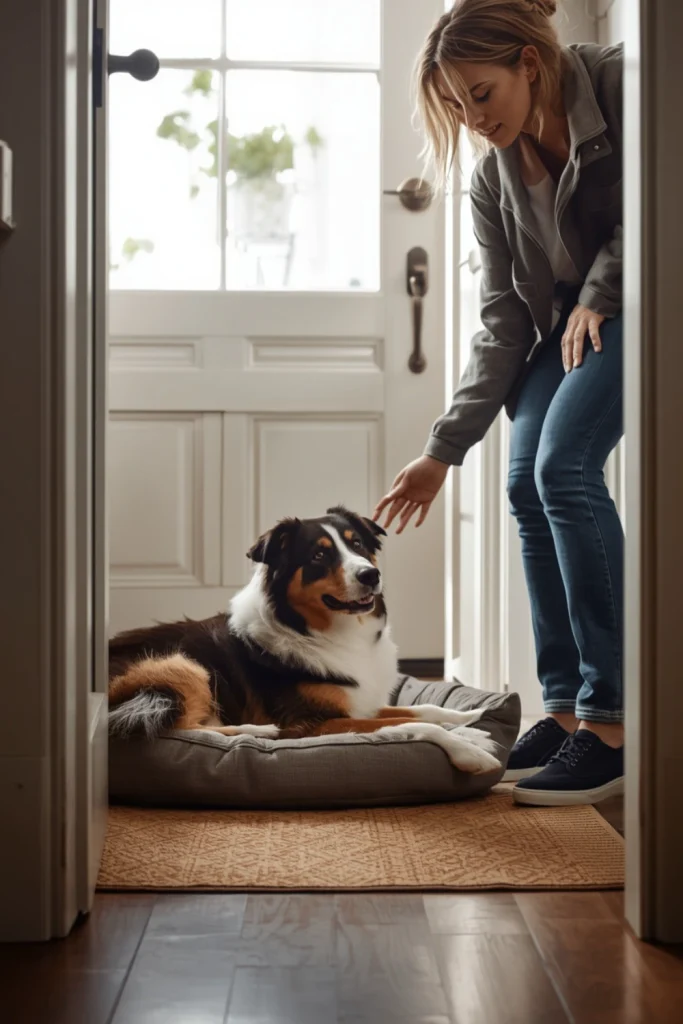
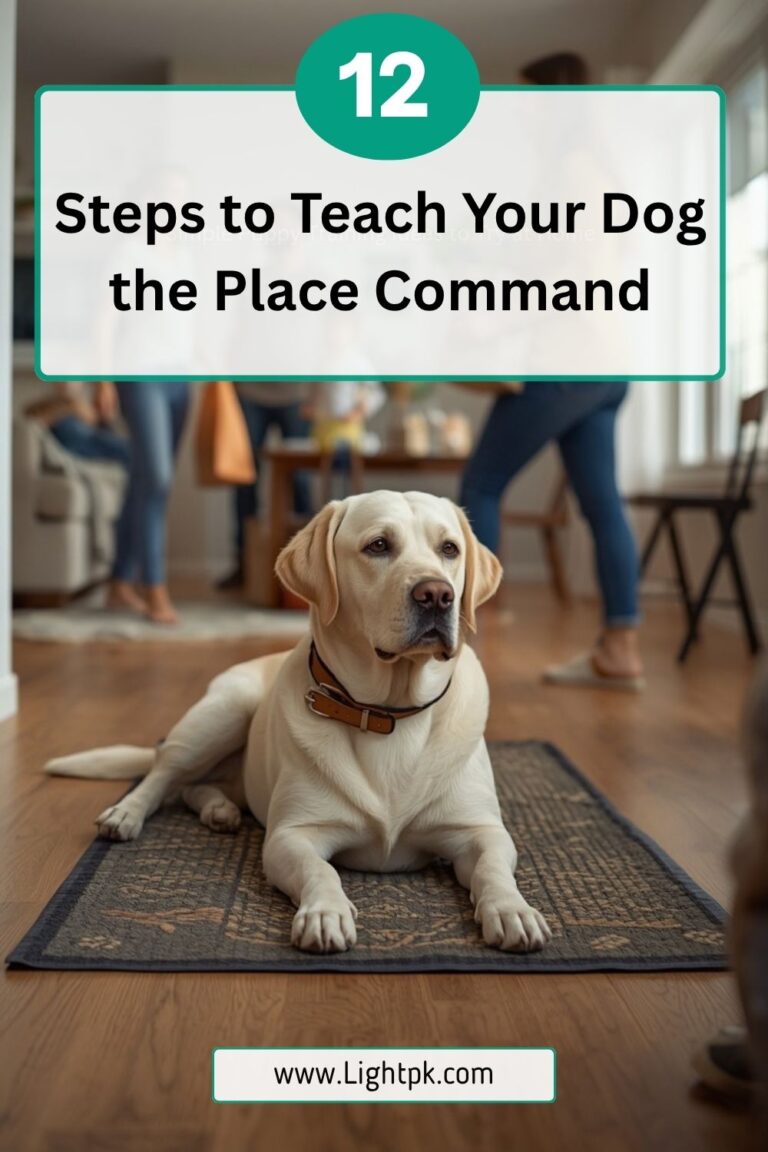
Another useful way to train your dog not to jump on people is to teach a “place” behavior. Choose a dog bed or mat near the entrance and teach your dog to go there when someone arrives. Reward your dog for moving to the mat and remaining there calmly. Begin without visitors so the behavior is easy to understand.
Once your dog knows the place cue, gradually introduce distractions such as knocking on the door, ringing the doorbell, and having a family member enter. Reward your dog for staying on the mat. With repeated practice, the arrival of a guest can become a signal for your dog to go to their designated place instead of rushing toward the person. Place or safe-zone training can be built gradually using rewards.
8. Practice With Calm and Cooperative Visitors
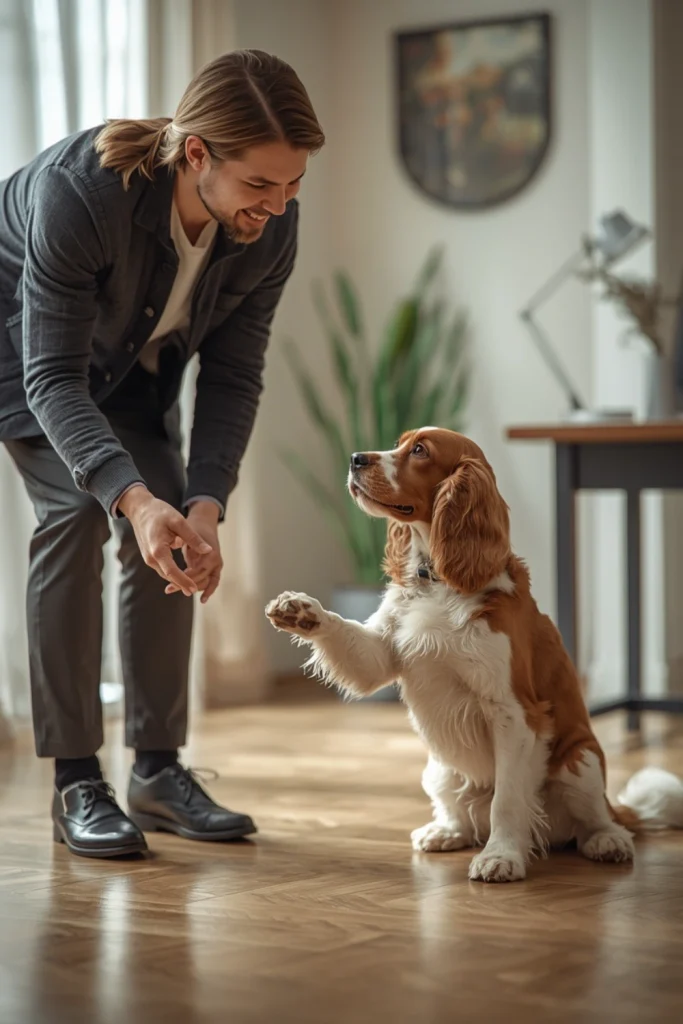
Once your dog is doing well with family members, invite a calm friend to help with training. Explain the rules before they enter. Ask the visitor not to pet, talk to, or make eye contact with your dog if the dog jumps. Instead, they should calmly turn away or step back until the dog returns to the desired greeting position.
Start with short greetings and reward your dog frequently for making good choices. Do not immediately invite a large group of people because too much excitement can make training difficult. As your dog improves, gradually introduce more challenging situations. Building difficulty slowly gives your dog more opportunities to succeed instead of repeatedly practicing the unwanted behavior.
9. Train With Doorbell and Arrival Practice
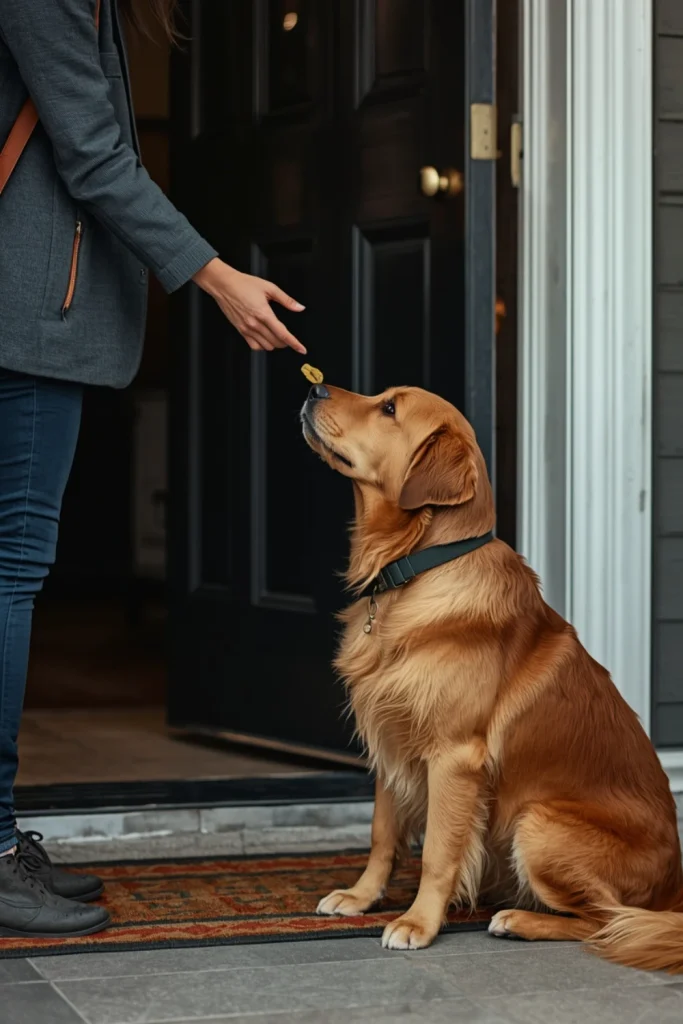
For many dogs, the doorbell is an instant excitement trigger. The sound can predict visitors, attention, movement, and activity. Instead of waiting for a real guest to arrive, practice the situation when you have plenty of time. Ask someone in your household to ring the doorbell while you reward your dog for staying calm.
Begin with a quiet version of the exercise and gradually make it more realistic. You might start by knocking softly, then progress to a normal knock, followed by the doorbell. Pairing these sounds with a calm behavior such as sitting or going to a mat can help your dog develop a predictable routine for arrivals.
10. Practice Everywhere and Stay Consistent
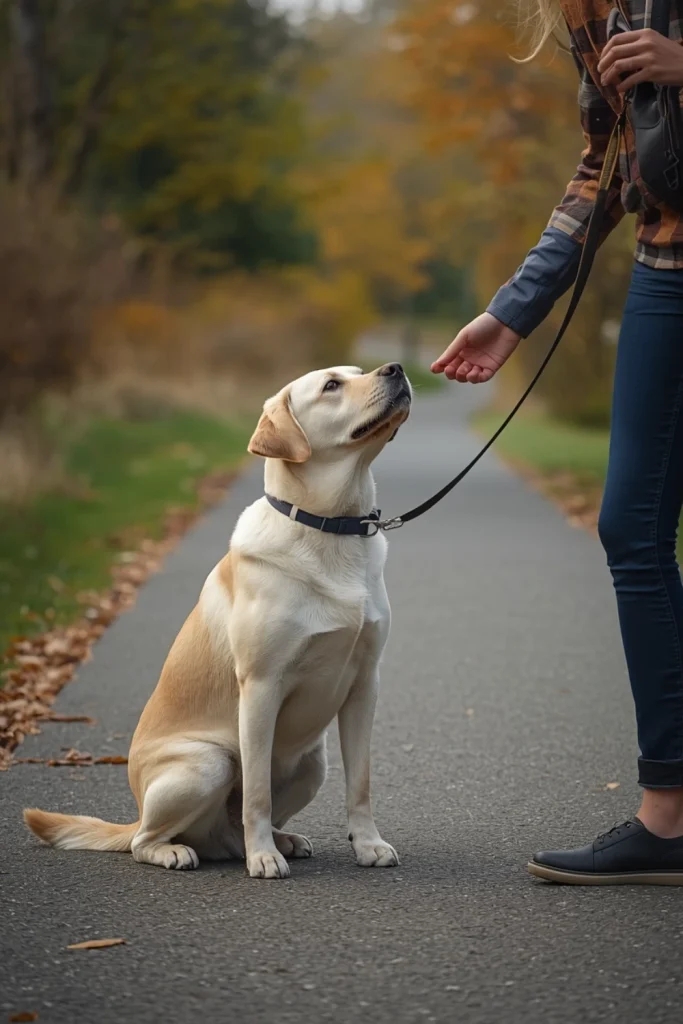
Dogs do not automatically understand that a behavior learned in one location applies everywhere. Your dog may behave beautifully inside the house but start jumping again at the park, on a sidewalk, or when meeting a friend outdoors. Practice the same greeting rules in different safe environments so your dog gradually learns that polite greetings are expected everywhere.
Consistency is one of the most important parts of training. If you allow jumping sometimes and discourage it at other times, your dog may continue trying because jumping occasionally produces a reward. Ask family members and regular visitors to follow the same rules. Reward calm greetings and remove attention when jumping occurs. Over time, your dog can learn that polite behavior is the reliable way to receive attention.
Final Thoughts
Learning to train your dog not to jump on people is mainly about teaching your dog a better way to greet. Instead of focusing only on stopping jumping, decide what you want your dog to do instead. Sitting, standing calmly with four paws on the floor, or going to a mat can all become useful greeting behaviors.
The most important part is consistency. Reward your dog when they make the right choice, calmly remove attention when they jump, and practice with different people and situations. With regular positive reinforcement and gradual training, your dog can develop polite greeting manners that make interactions safer and more enjoyable for everyone.