
10 Simple Steps to Teach Your Dog to Stay
Teaching your dog to stay is one of the most useful skills you can build together. A reliable stay can help your dog remain calm, safe, and under control in everyday situations, whether you are opening the front door, crossing a street, welcoming visitors, or visiting a busy park.
The good news is that you do not need complicated equipment or professional training experience. With patience, consistency, short practice sessions, and positive reinforcement, you can teach this important behavior at home. These 10 Simple Steps to Teach Your Dog will help you build a stronger stay command from the ground up.
1. Choose a Quiet Place for Training
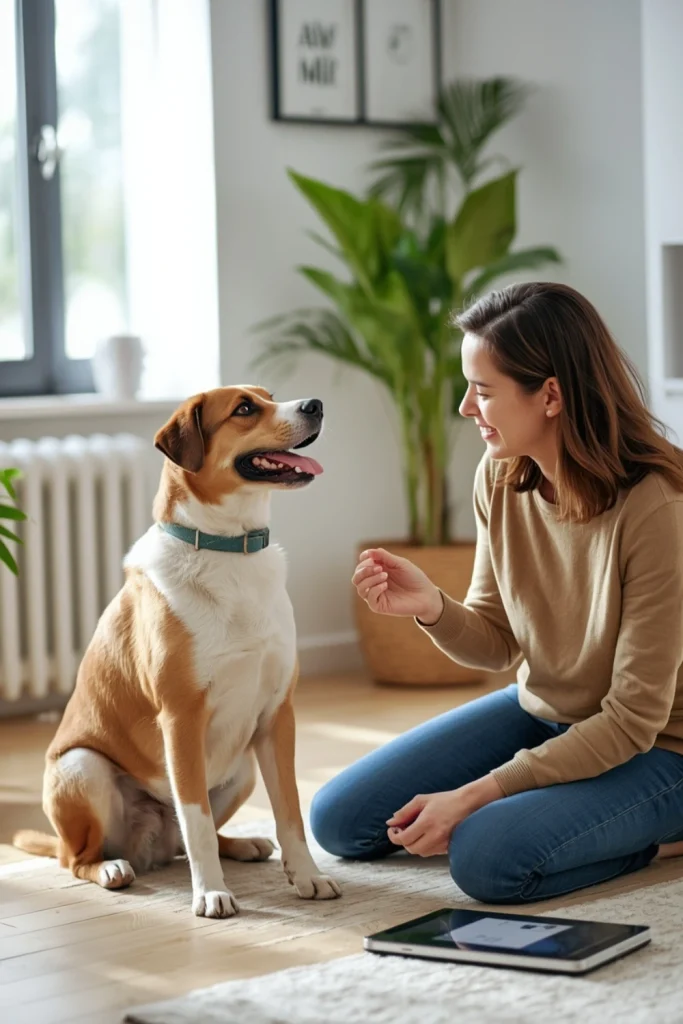
Start your dog’s stay training in a quiet, familiar area where there are very few distractions. A living room, hallway, fenced yard, or another safe space can work well. When your dog is surrounded by exciting noises, people, toys, or other animals, it may be difficult for them to understand what you are asking. Beginning in a calm environment allows your dog to focus on you and learn the basic idea of staying in one position.
Keep training sessions short and positive. You do not need to spend 30 minutes practicing the stay command. Five to ten minutes at a time is often enough for a beginner dog. If your dog becomes bored, frustrated, or overly excited, take a break and return to training later. Consistent short sessions can be more effective than occasional long sessions.
2. Make Sure Your Dog Understands Sit
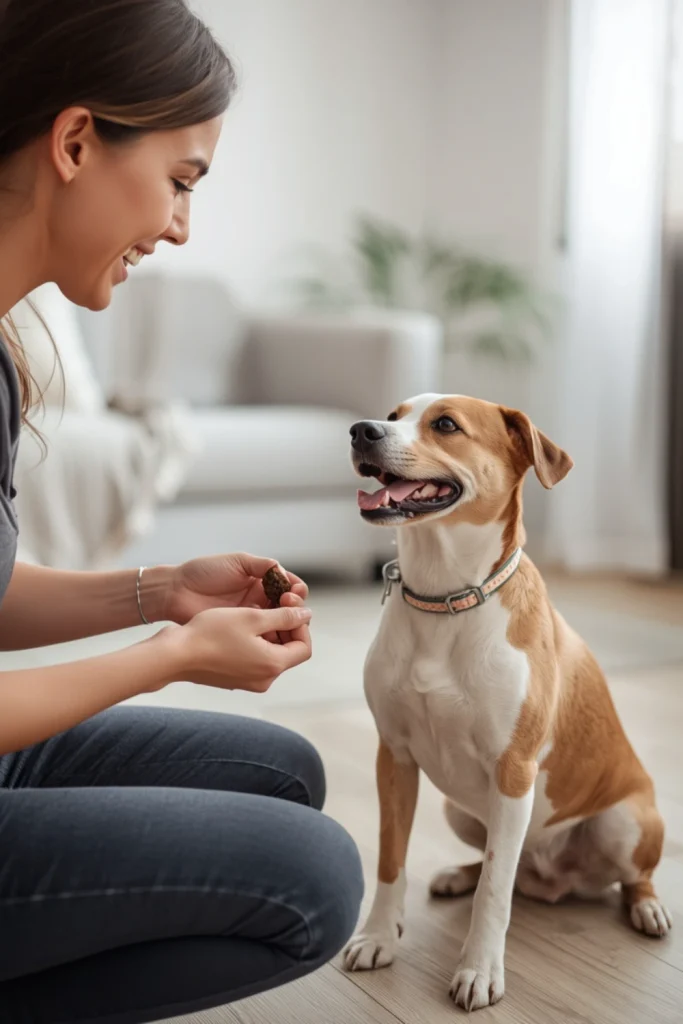
Before teaching stay, make sure your dog understands the basic sit command. Sit gives your dog a clear starting position and makes it easier to teach them not to move until you give another signal. Ask your dog to sit and reward them immediately when they respond correctly. Repeat this several times until sitting on command becomes familiar and reliable.
Once your dog sits comfortably, keep the training simple. Ask for a sit, wait for one or two seconds, and reward your dog while they remain seated. At this stage, you are not expecting a long stay. You are simply teaching your dog that remaining in position for a short period leads to something positive. This foundation will make the next steps much easier.
3. Introduce the Stay Command
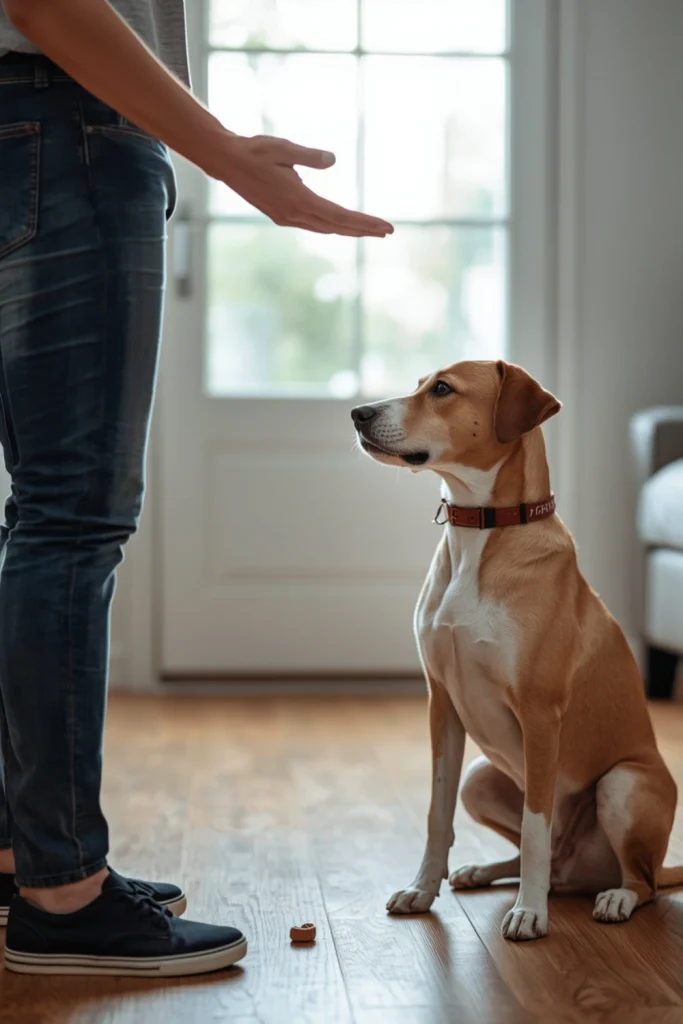
Once your dog can sit, introduce the word you want to use for staying. Common choices include “stay” or another short verbal cue that everyone in the household can use consistently. Ask your dog to sit, clearly say “stay,” and hold your hand up with your palm facing the dog. Wait for only a second or two before rewarding your dog.
Your timing matters. Reward your dog while they are still in the correct position rather than waiting until they get up. This helps them understand exactly which behavior earned the reward. If your dog moves immediately, do not become frustrated or repeat the command loudly. Simply reset, make the exercise easier, and try again with a shorter duration.
4. Gradually Increase the Time
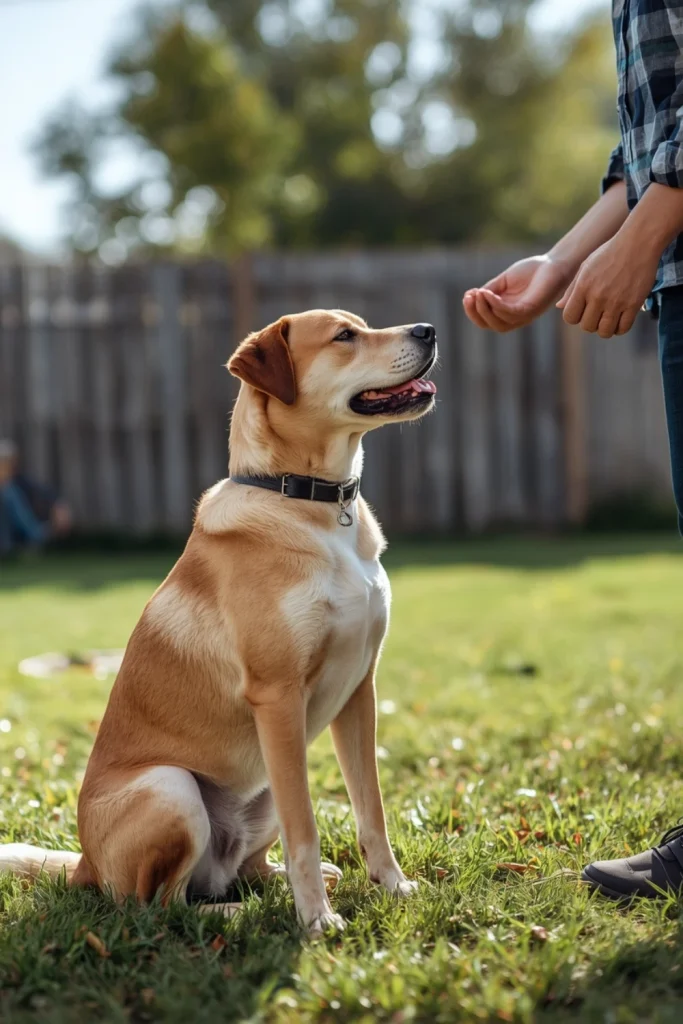
After your dog understands that “stay” means remaining in place, begin increasing the duration slowly. Start with just a few seconds and reward success. Then gradually work toward five seconds, ten seconds, and longer periods. There is no need to rush. If your dog repeatedly gets up after five seconds, return to a shorter duration and build from there.
The key is to increase difficulty gradually rather than testing your dog too soon. You want your dog to experience many successful repetitions. A simple progression might be two seconds, three seconds, five seconds, eight seconds, and ten seconds. Every dog learns at a different pace, so focus on your individual dog’s progress rather than comparing them with other dogs.
5. Add Distance One Step at a Time
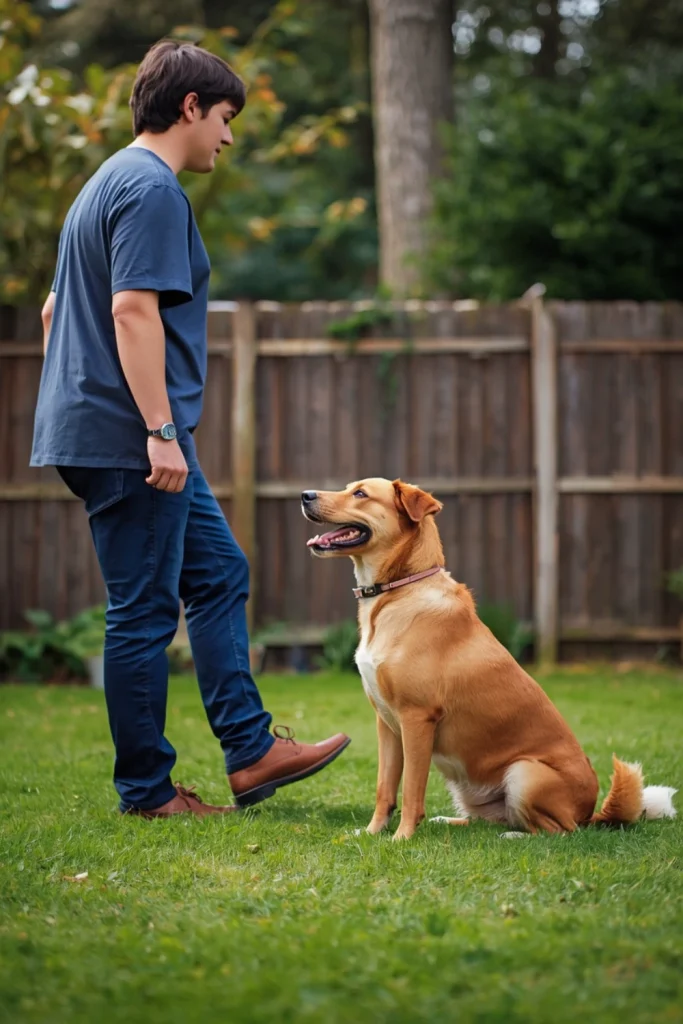
Once your dog can stay for several seconds while you are standing nearby, begin adding distance. Ask your dog to sit, give the stay cue, and take one small step backward. Immediately return and reward your dog if they remain in place. Repeat this until one step becomes easy before adding another step.
Distance can be more challenging than it looks because your dog may think that your movement means they should follow you. Keep the exercise controlled and return to your dog frequently. If your dog gets up, reduce the distance and try again. Over time, your dog will learn that the stay command remains active even when you move away.
6. Teach Your Dog a Release Word
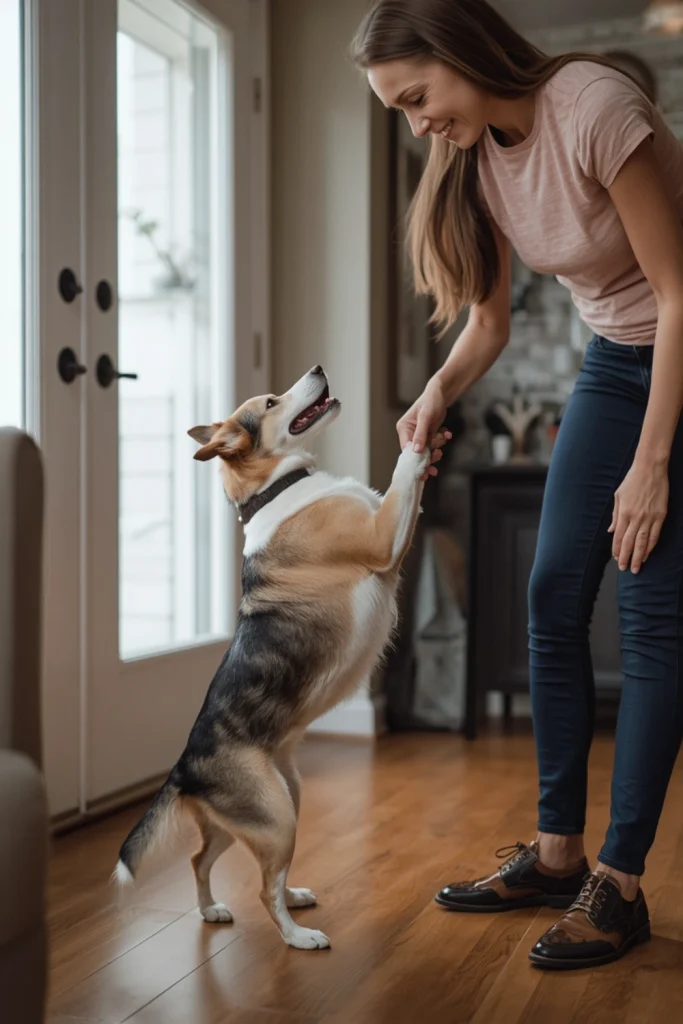
A release word is an important part of reliable stay training. Your dog needs to understand not only when to stay but also when the exercise is finished. Choose a simple word such as “okay,” “free,” or “release.” Use the same word consistently and avoid using it casually during training.
Ask your dog to sit and stay, wait for a few seconds, then return to them. Give the release word and encourage them to move. This teaches your dog that getting up is allowed only after receiving the release signal. Without a clear release cue, some dogs may learn to leave the position whenever they feel like it, making the stay less reliable in everyday situations.
7. Slowly Introduce Distractions
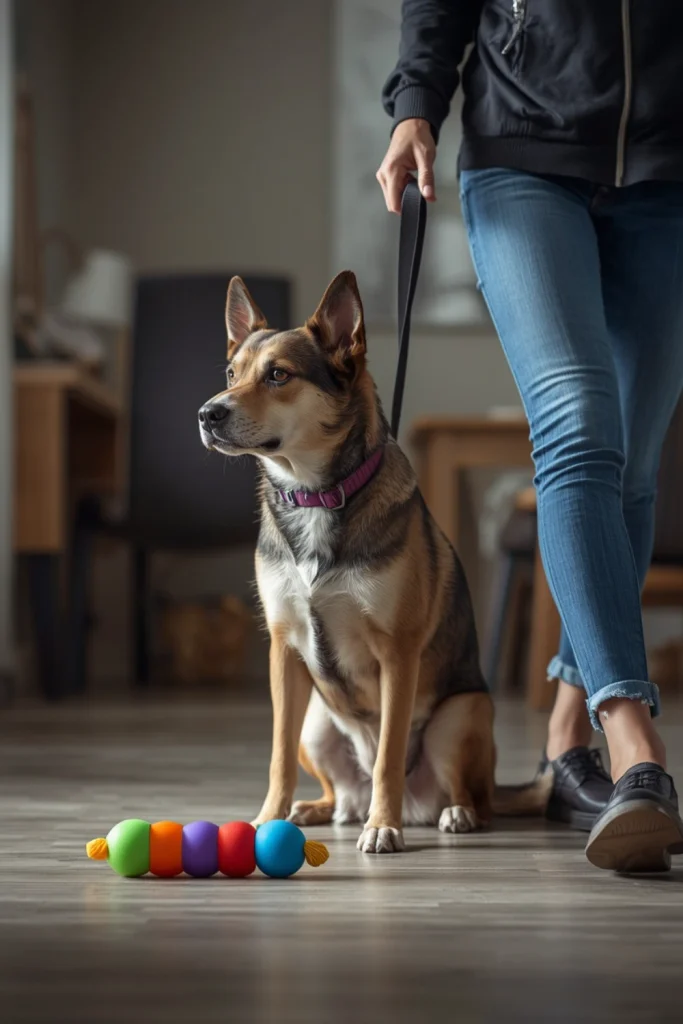
Real-life environments are full of distractions, so your dog eventually needs to learn how to stay while something interesting is happening nearby. Begin with mild distractions rather than jumping directly into a busy park. You might move a toy across the room, walk past your dog, make a small household noise, or have another family member move around.
Introduce only one distraction at a time and keep the difficulty low. If your dog breaks the stay, that is useful information rather than a failure. It means the distraction was probably too difficult at that stage. Return to an easier version and reward your dog for success. Gradual exposure helps your dog develop focus without becoming overwhelmed.
8. Practice in Different Locations
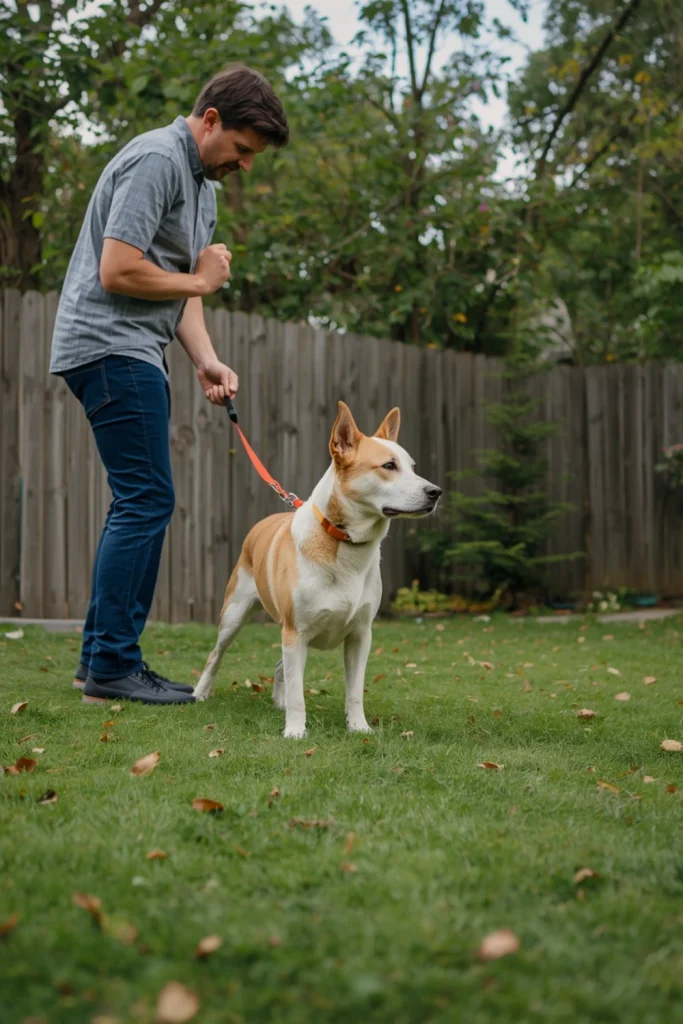
Dogs do not always automatically understand that a command learned in one location also applies somewhere else. A dog that stays perfectly in the living room may struggle in the backyard, on a quiet sidewalk, or at a park. This is why practicing in different safe environments is an important part of building a dependable stay.
Move gradually from easy locations to more distracting ones. Practice inside your home first, then try the backyard, driveway, quiet outdoor area, and other suitable places. Keep your expectations realistic whenever you change locations. Your dog may need several easy repetitions before performing the behavior reliably in a new environment.
9. Use Positive Reinforcement Consistently

Positive reinforcement is one of the simplest ways to encourage your dog to repeat desirable behavior. When your dog successfully stays, provide something they value, such as a small treat, praise, affection, or a favorite toy. The reward should come at the right moment so your dog can connect the reward with staying calmly in position.
You do not have to give food for every successful stay forever. As your dog’s understanding improves, you can gradually vary the rewards while continuing to praise good behavior. However, during the early learning stage, frequent reinforcement can help your dog understand what you want. Keep treats small so training remains enjoyable without turning every session into a large meal.
10. Practice Real-Life Stay Situations
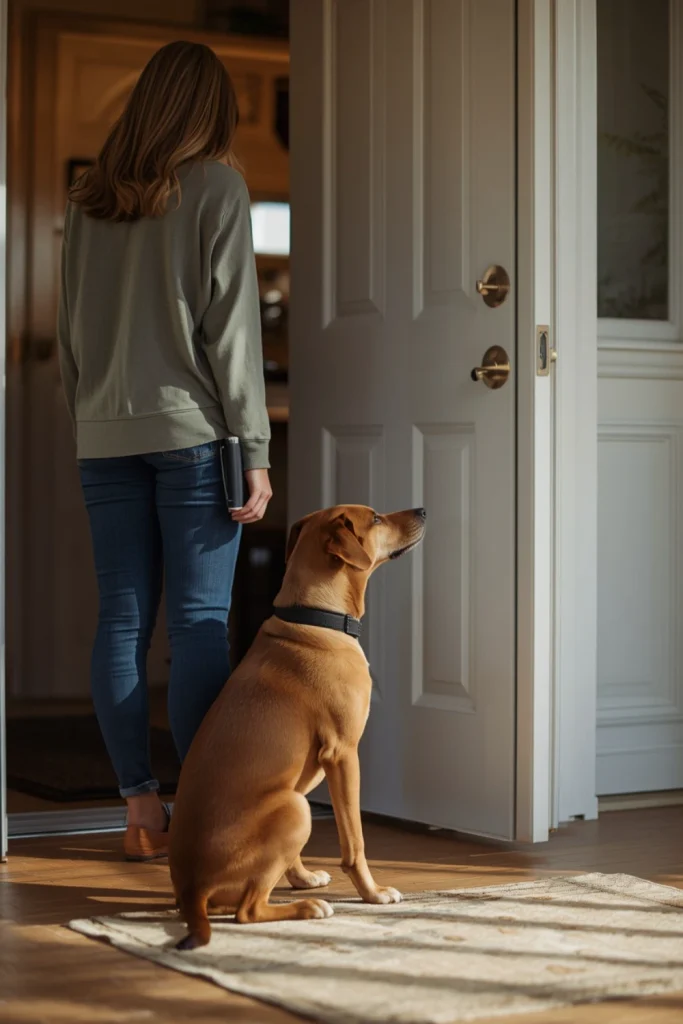
The final step is to make the stay command useful in everyday life. Practice asking your dog to stay while you open a door, put down their food bowl, walk to another room, answer the door, or prepare to leave the house. These practical exercises help your dog understand that stay is not simply a training game but an important behavior for daily life.
Continue practicing occasionally even after your dog becomes reliable. Short refresher sessions can help maintain the behavior. Always prioritize safety, especially around roads, unfamiliar animals, open doors, or other potentially dangerous situations. A trained stay can be extremely useful, but no dog should be expected to remain in place when the environment presents a serious safety risk.
Final Thoughts on Teaching Your Dog to Stay
Teaching your dog to stay does not require complicated methods. The most effective approach is to break the behavior into small steps and reward your dog for getting each stage right. Start in a quiet environment, build duration slowly, introduce distance, add distractions, and eventually practice in real-life situations.
These Simple Steps to Teach Your Dog can help you develop better communication and a stronger relationship with your pet. Remember that every dog learns at a different pace. Stay patient, keep sessions short, and focus on consistent progress rather than perfection. With regular practice, your dog can learn to stay calmly and respond more reliably when you need them to.