
12 Things to Start Teaching Your Puppy in Week One
Bringing a new puppy home is the beginning of a beautiful friendship. Those first few days are filled with playful moments, curious exploration, and plenty of adorable surprises. But while your puppy is busy discovering their new world, they are also learning important lessons about safety, trust, communication, and everyday life. The habits you begin building during the first week can make future training much easier.
If you are wondering what to teach first, you do not need to overwhelm your puppy with complicated commands. The best way to Start Teaching Your Puppy is to focus on simple skills that fit naturally into daily routines. From learning their name and developing potty habits to practicing gentle handling and coming when called, these 12 beginner-friendly lessons will help you create a positive foundation for a confident, well-mannered dog.
1. Teach Your Puppy to Recognize Their Name
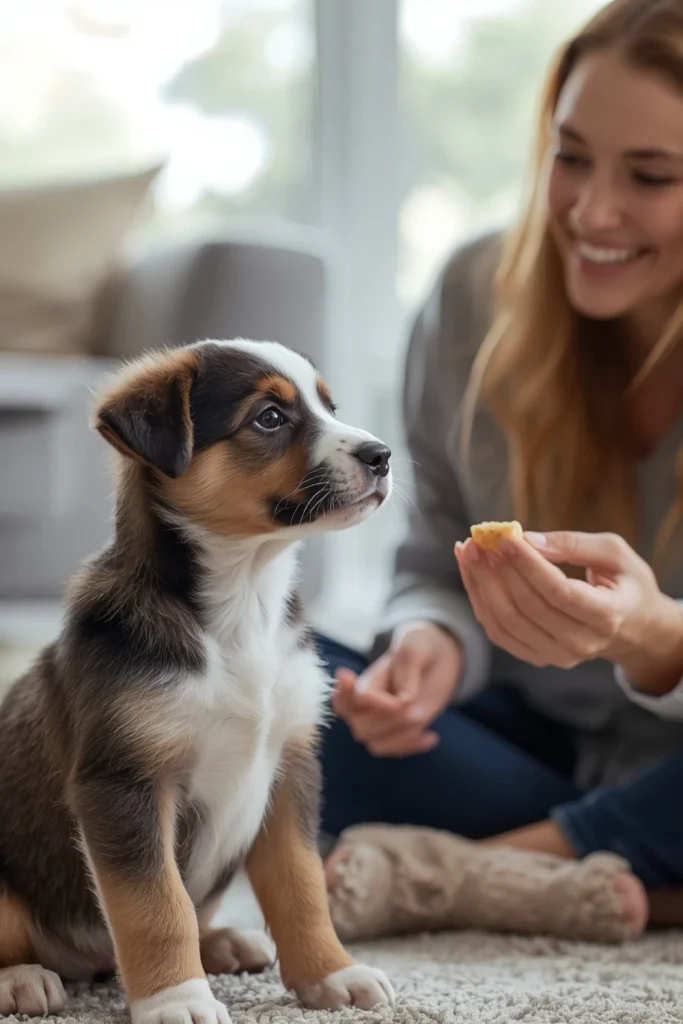
One of the first things to start teaching your puppy is their name. Name recognition helps your puppy learn when you are trying to get their attention and prepares them for other important skills. Begin in a quiet room when your puppy is relaxed. Say their name once in a friendly, cheerful voice, and reward them with a tiny treat when they look toward you. Keep the exercise simple and repeat it during several short sessions throughout the day.
Avoid using your puppy’s name mainly when correcting unwanted behavior. You want them to associate their name with good things, attention, and enjoyable interactions. If your puppy does not respond, reduce distractions or wait until they are more attentive. As they improve, practice in different rooms and familiar outdoor spaces. Remember that responding to a name is a developing skill, so continue reinforcing it throughout puppyhood.
2. Start Potty Training From the First Day
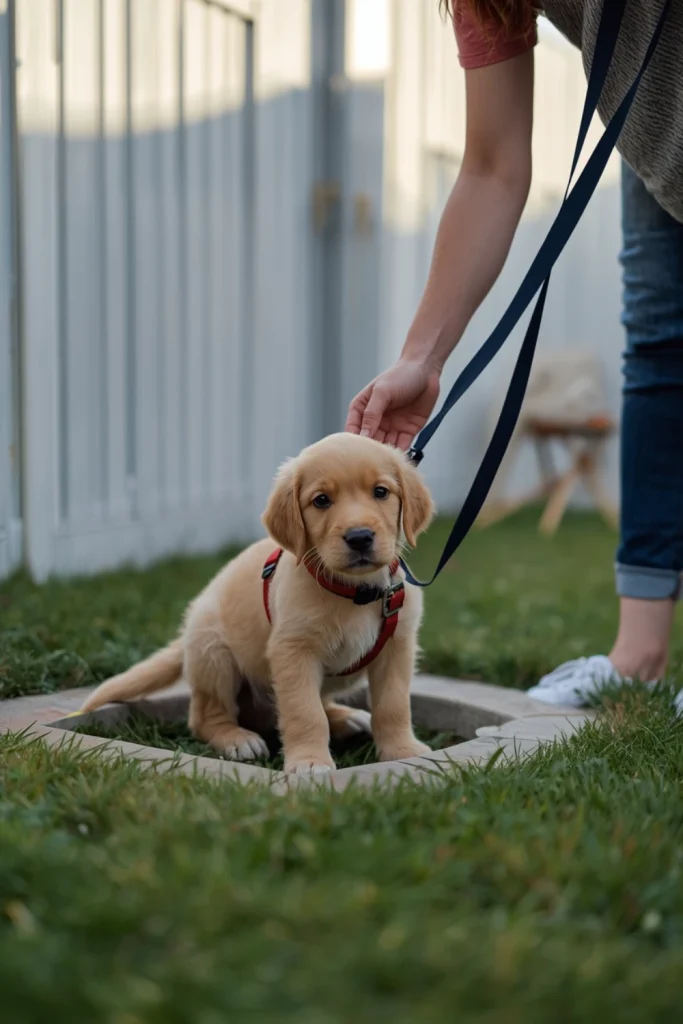
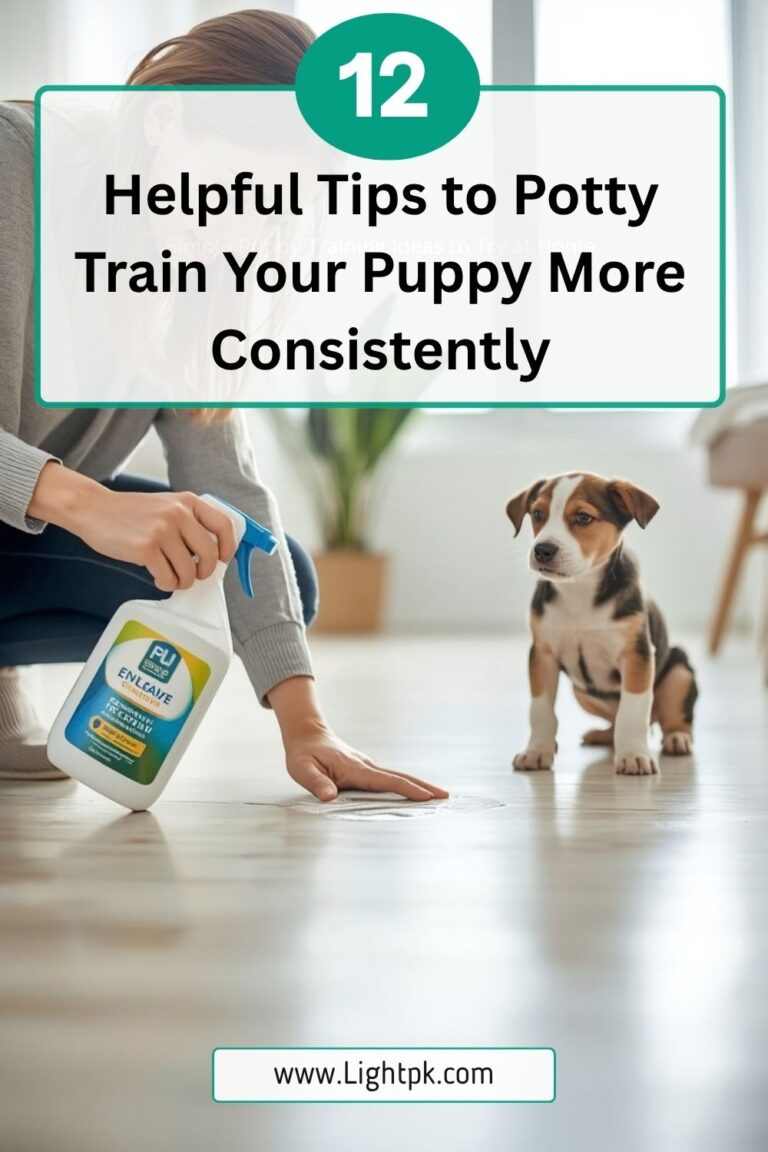
Potty training is one of the most useful habits to introduce during your puppy’s first week. Choose a designated outdoor toilet area and take your puppy there after waking, eating, drinking, playing, and before bedtime. Young puppies may need a toilet opportunity every 30–60 minutes while awake, depending on their age and individual needs. Supervise your puppy indoors and watch for signs such as sniffing the floor, circling, or suddenly wandering away.
When your puppy eliminates in the correct place, offer calm praise and a small treat immediately afterward. This helps them connect the action with the reward. Accidents are a normal part of learning, so clean them thoroughly with an enzymatic cleaner and adjust the timing of future breaks. Never punish your puppy for an accident. A predictable routine, close supervision, and consistent rewards are much more effective for developing reliable potty habits.
3. Help Your Puppy Feel Safe in Their New Home
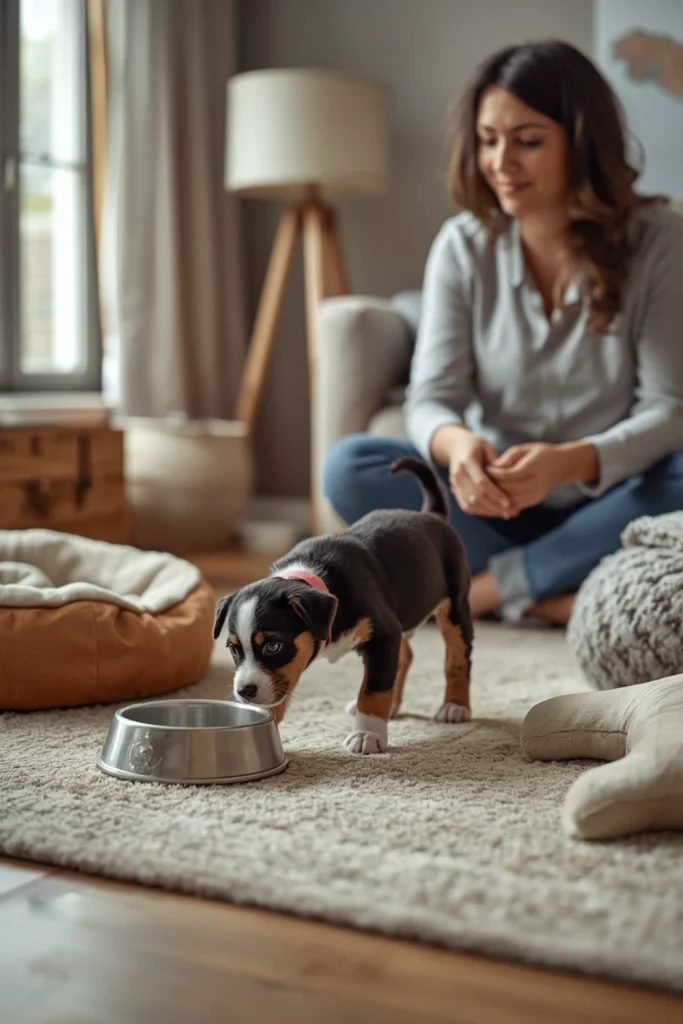
Before expecting your puppy to follow commands, help them feel comfortable in their new surroundings. Introduce one area of the home at a time and provide a quiet resting place with a comfortable bed, fresh water, and appropriate toys. Keep early interactions gentle and avoid overwhelming your puppy with visitors, loud noises, or too much handling. Let your puppy investigate new objects and rooms at their own pace.
Reward voluntary exploration and calm behavior with praise or treats. Make sure electrical cords, cleaning products, medications, small objects, and other hazards are safely out of reach. If your puppy chooses to rest rather than play, allow them to do so. Feeling secure is an important foundation for learning, and a puppy who trusts their environment will often find it easier to engage with future training activities.
4. Introduce a Consistent Daily Routine
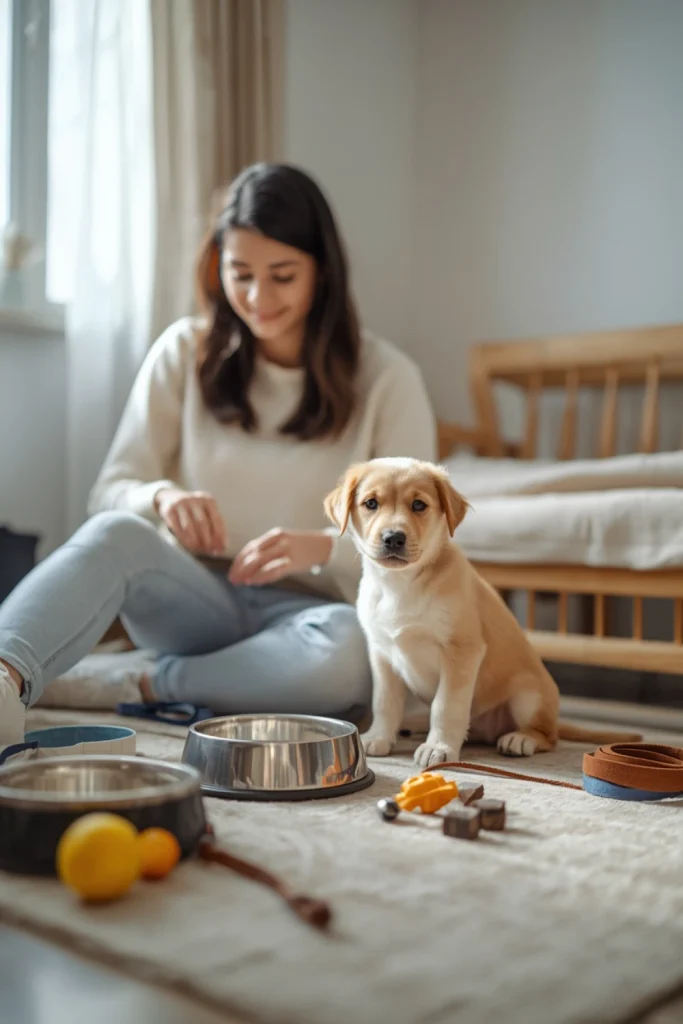
Puppies benefit from knowing what to expect throughout the day. During the first week, establish a flexible routine that includes meals, toilet breaks, short training sessions, supervised play, quiet time, and sleep. You do not need to follow an exact timetable every minute, but repeating activities in a similar order can help your puppy settle into family life and make their needs easier to anticipate.
Pay attention to your puppy’s natural patterns. If they regularly need a toilet break after playing or become mouthy when tired, use that information to adjust the routine. Very young puppies need frequent rest and opportunities to eliminate, so avoid planning long periods of activity. A balanced schedule makes training more manageable and helps prevent unnecessary frustration for both you and your puppy.
5. Introduce Positive Reinforcement
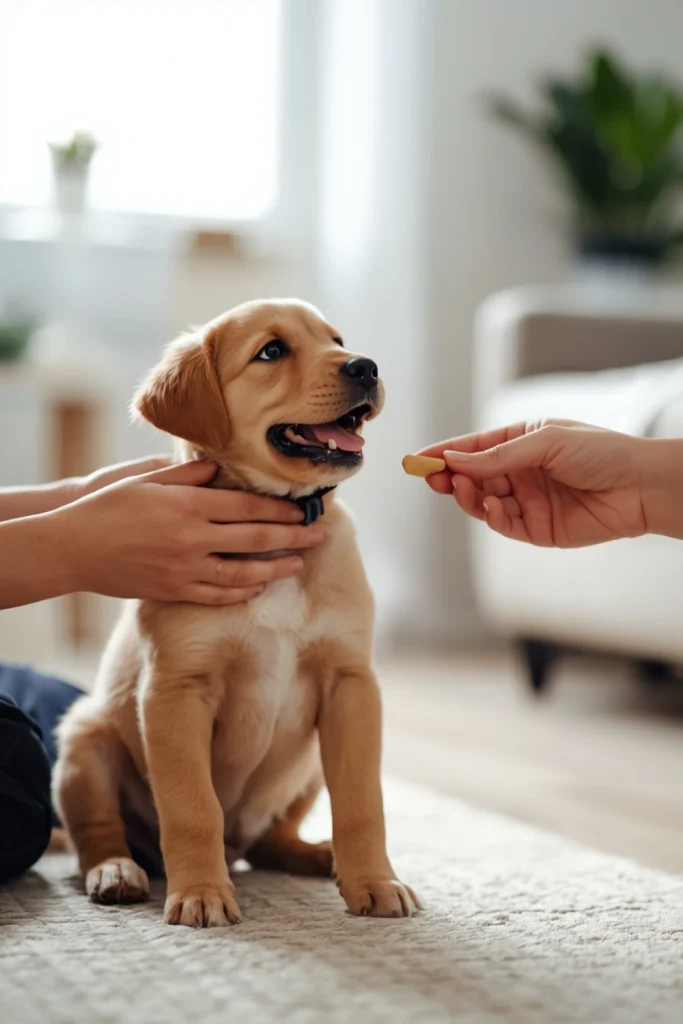
Positive reinforcement teaches your puppy that certain behaviors lead to enjoyable outcomes. When your puppy looks at you, sits naturally, approaches when called, or chooses an appropriate toy, reward that behavior with a small treat, praise, or play. This approach helps your puppy understand what you want them to do without relying on fear or intimidation. It also makes everyday interactions valuable training opportunities.
Deliver rewards promptly so your puppy can connect the behavior with the positive result. You can use a marker word such as “Yes” just before giving a treat. Keep treats small and include them in your puppy’s daily food allowance. Avoid shouting, hitting, or physically forcing your puppy into positions. If they struggle with an exercise, make it easier and reward small steps toward success rather than demanding immediate perfection.
6. Teach Your Puppy to Sit
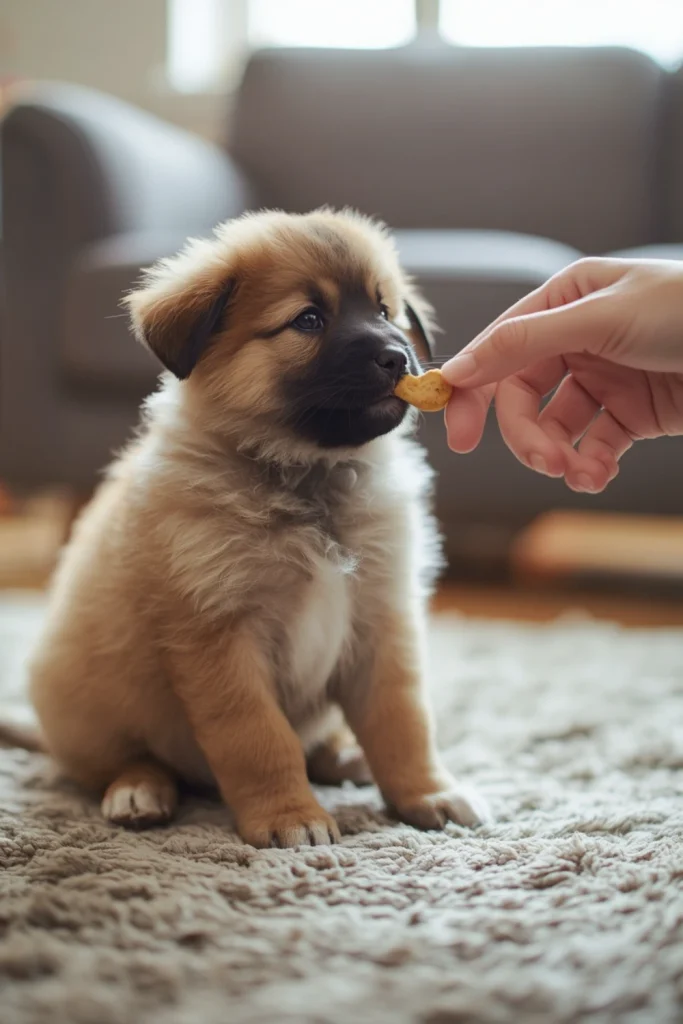
Sit is an excellent first obedience skill because it can encourage calm behavior in many everyday situations. Begin when your puppy is relaxed and standing on a comfortable, nonslip surface. Hold a small treat near their nose and move it gently upward and slightly backward. As your puppy follows the treat, their hindquarters may lower naturally. Mark the moment they sit and reward them immediately.
Once your puppy begins understanding the movement, introduce the word “Sit” just before they perform it. Practice a few repetitions at a time and allow breaks between attempts. If your puppy jumps toward the treat or moves away, adjust your hand position and make the exercise easier. Never push your puppy down physically. With regular practice, you can gradually use the command before meals, during play, and before putting on a leash.
7. Begin Teaching Your Puppy to Come When Called
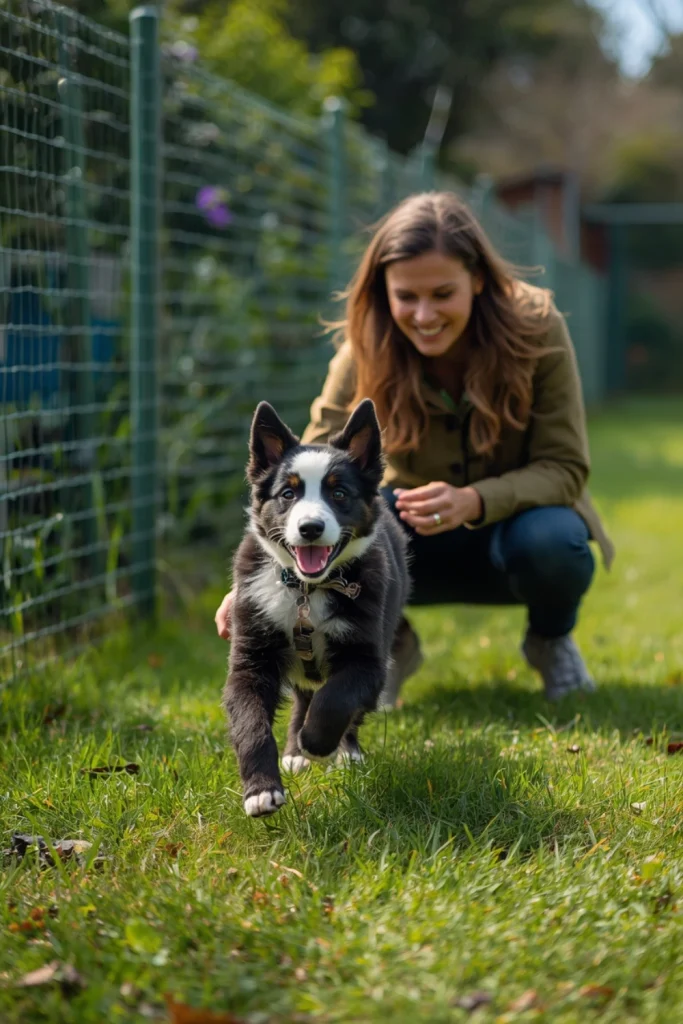
Coming when called, also known as recall, is an important skill that supports safety and communication. During the first week, start indoors with your puppy only a short distance away. Say their name followed by “Come” in a cheerful voice. Crouch down, open your arms, or take a few steps backward to encourage them to approach. When they reach you, reward them generously with a tiny treat and praise.
Keep early practice easy and enjoyable. Avoid calling your puppy to you for punishment or ending every fun activity immediately after they arrive. You want coming to you to feel rewarding. Once your puppy responds reliably indoors, practice in a secure, enclosed area with mild distractions. Use a suitable leash or long line in unenclosed outdoor spaces, and never rely on an untrained puppy’s recall near roads or other hazards.
8. Introduce Gentle Crate Training
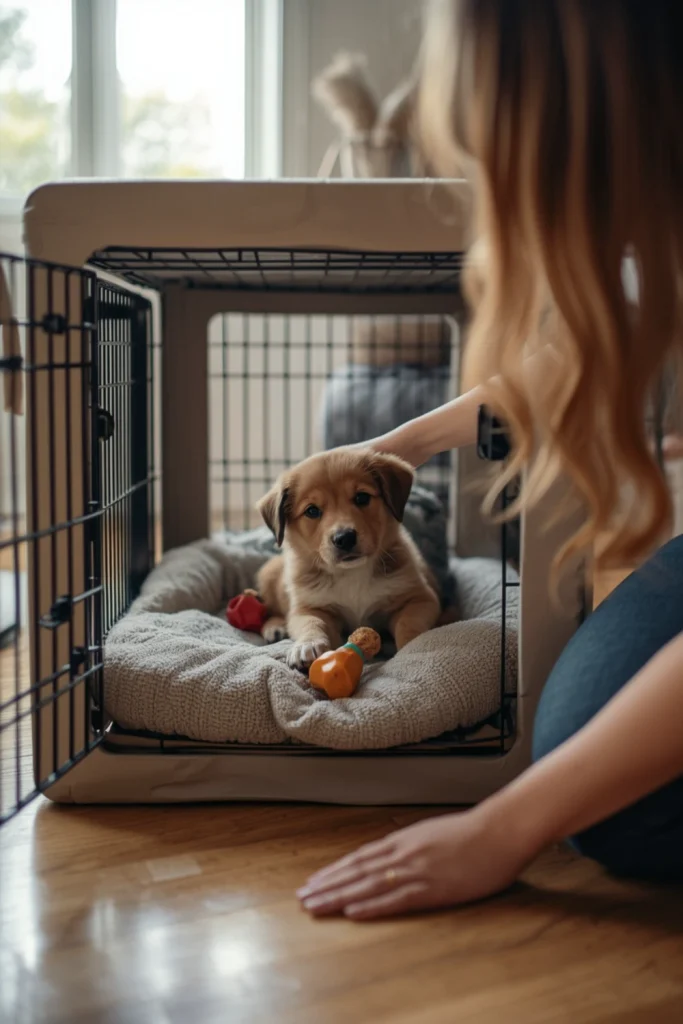
A crate can become a comfortable resting place when you introduce it gradually and use it appropriately. Choose a crate that allows your puppy to stand, turn around, and lie down comfortably. Place it in a suitable area of your home and make it inviting with comfortable bedding, if safe for your puppy, and an appropriate toy. Begin with the door open and let your puppy investigate voluntarily.
Reward your puppy for approaching the crate, stepping inside, or choosing to rest there. You can toss a treat inside or offer a suitable food toy during a short session. Once your puppy feels comfortable, practice briefly closing the door while staying nearby. Increase the duration gradually and stop if your puppy becomes distressed. Never use the crate as punishment or confine your puppy longer than they can comfortably manage without toileting and interaction.
9. Introduce a Collar, Harness, and Leash
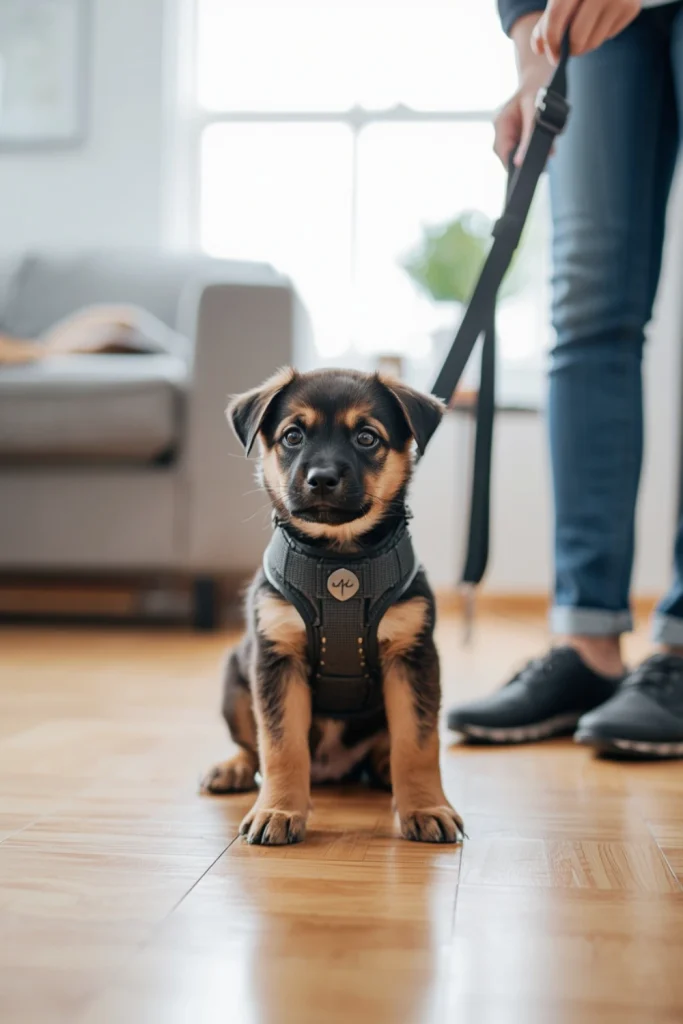
Getting your puppy comfortable with walking equipment early can make future outings easier. Begin by placing a lightweight, properly fitted collar or harness near your puppy and allowing them to sniff it. Reward calm curiosity, then briefly touch the equipment against their body. Gradually put it on for a short period while offering treats or gentle play. Check the fit regularly as your puppy grows.
Once your puppy is comfortable wearing the equipment, attach a lightweight leash under supervision and let them move around a safe indoor space while you hold it. Reward them for walking near you and following gentle changes in direction. Never drag your puppy forward or jerk the leash to force movement. When introducing outdoor walks, follow your veterinarian’s guidance on vaccination, local disease risks, and appropriate locations for safe early experiences.
10. Encourage Appropriate Chewing and Gentle Play
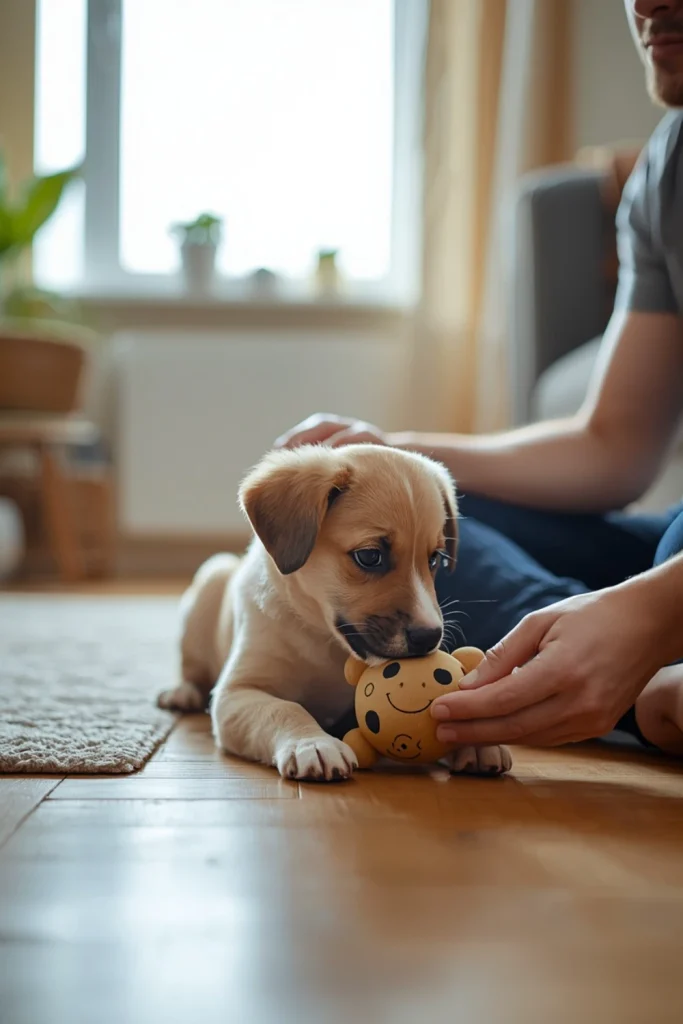
Puppies explore the world with their mouths, and chewing is a normal part of development. Instead of expecting your puppy to stop chewing altogether, provide safe, age-appropriate chew toys and keep shoes, electrical cords, and other unsuitable objects out of reach. When your puppy chooses an appropriate toy, reward the decision with praise or play. Rotate toys to maintain interest and supervise chewing to reduce choking or swallowing risks.
Puppies also use their mouths during play, so gently redirect biting hands or clothing toward a suitable toy. If your puppy becomes too excited, pause the interaction briefly and allow them to calm down before resuming. Avoid hitting their muzzle, shouting, or holding their mouth shut. Overtired puppies may become particularly mouthy, so offer rest as well as play. If biting appears fearful, aggressive, or unusually intense, seek advice from a veterinarian or qualified behavior professional.
11. Start Gentle Socialization and Confidence Building
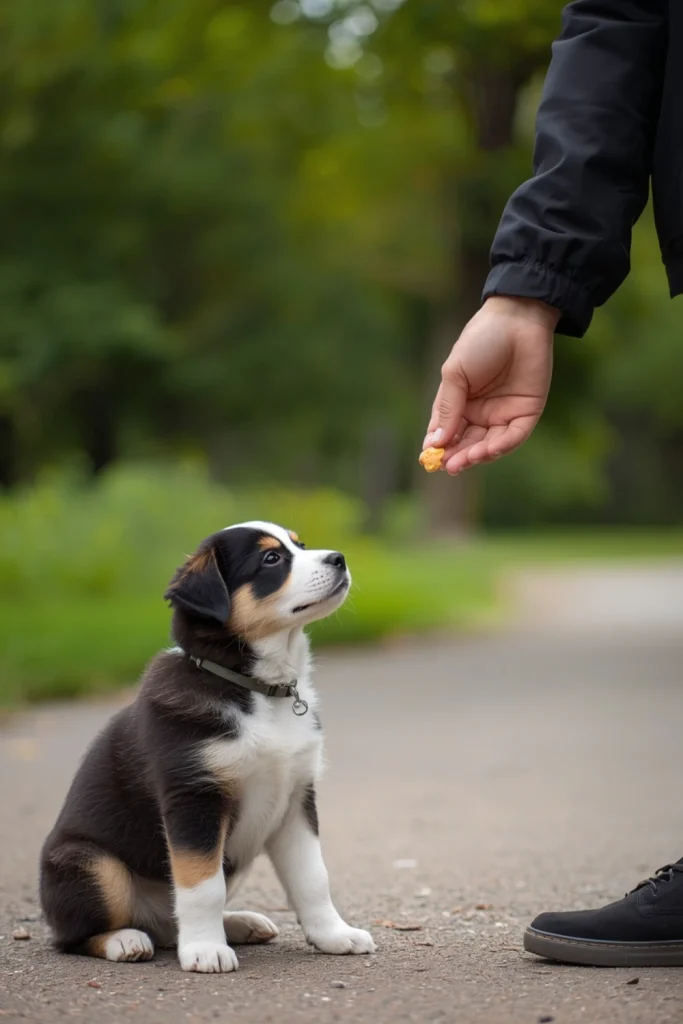
Socialization helps puppies learn that different people, sounds, surfaces, and environments can be safe. During week one, introduce a few manageable experiences rather than trying to expose your puppy to everything at once. Your puppy might hear a quiet household appliance, observe a visitor from a comfortable distance, or investigate a new surface in a safe area. Pair these experiences with treats and praise when your puppy remains comfortable.
Let your puppy approach new things voluntarily and move away whenever they need space. Avoid forcing interactions with strangers or unfamiliar dogs. Signs such as freezing, hiding, repeated attempts to escape, or refusing normally appealing treats may mean the experience is too difficult. Ask your veterinarian about safe socialization options before your puppy completes their vaccinations. Calm, positive experiences can build confidence without exposing your puppy to unnecessary health risks or overwhelming situations.
12. Teach Your Puppy to Settle and Rest Calmly
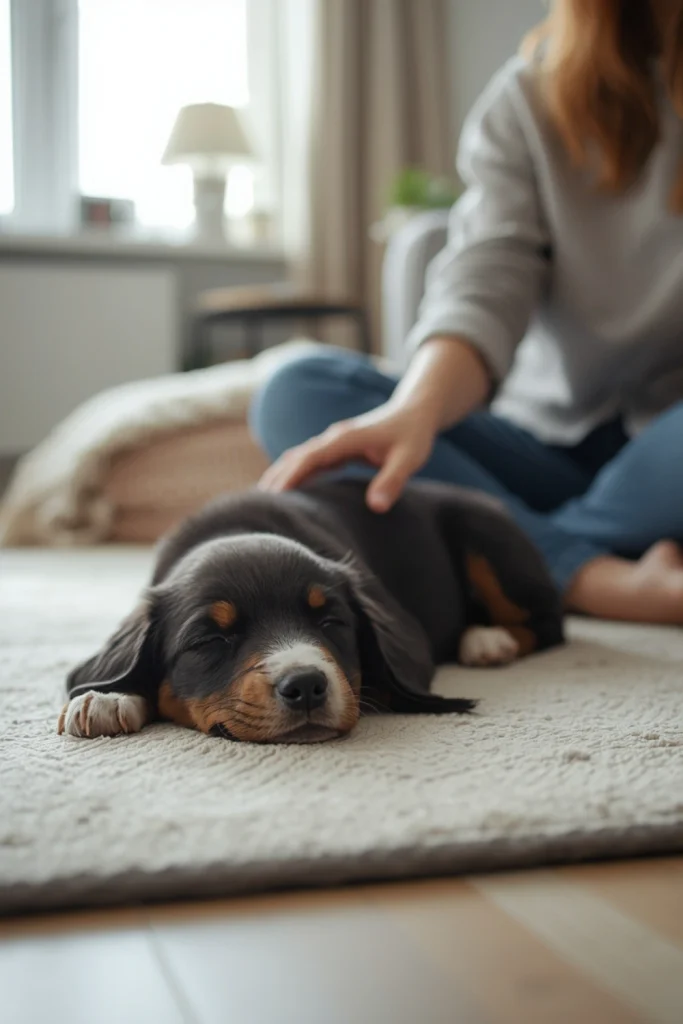
Learning to relax is just as important as learning commands. Puppies need plenty of sleep, and many young puppies require around 18–20 hours of sleep across a full day, although individual needs vary. Create a quiet resting area where your puppy can nap without constant interruptions. After a short play session or training exercise, guide them toward a comfortable bed or mat and reward calm behavior.
You can also introduce a simple settle exercise by rewarding your puppy for lying down or relaxing on a mat. Start with brief moments and gradually reward longer periods of calm behavior. If your puppy becomes restless, mouthy, or unusually excitable, consider whether they need a toilet break or rest rather than more stimulation. Teaching your puppy to relax early helps establish a balanced routine and supports better learning as they grow.
Final Thoughts
Knowing what to Start Teaching Your Puppy in week one can make the transition to your home easier and more enjoyable. By focusing on name recognition, potty training, basic commands, appropriate chewing, gentle socialization, and calm resting habits, you can establish a strong foundation for future learning.
Remember that the first week is about building trust rather than achieving perfect obedience. Keep training sessions short, reward desirable behavior, provide plenty of rest, and adjust the exercises to your puppy’s needs. Continue practicing these skills as your puppy grows, and celebrate every small improvement. With patience and consistency, you can help your puppy become a confident companion and make your training journey a rewarding experience for both of you.