
7 Easy Steps to Teach Your Dog to Sit
Teaching your dog to sit is one of the simplest and most useful training exercises you can practice at home. A reliable sit command can help your dog learn patience, improve communication, and create a foundation for many other obedience skills.
The best part is that you do not need to be an experienced trainer to get started. These Easy Steps to Teach Your Dog to sit use simple positive-reinforcement techniques that beginners can practice in short sessions. With consistency, patience, and rewards, many dogs can learn the basic sit behavior surprisingly quickly.
1. Choose a Quiet Training Location
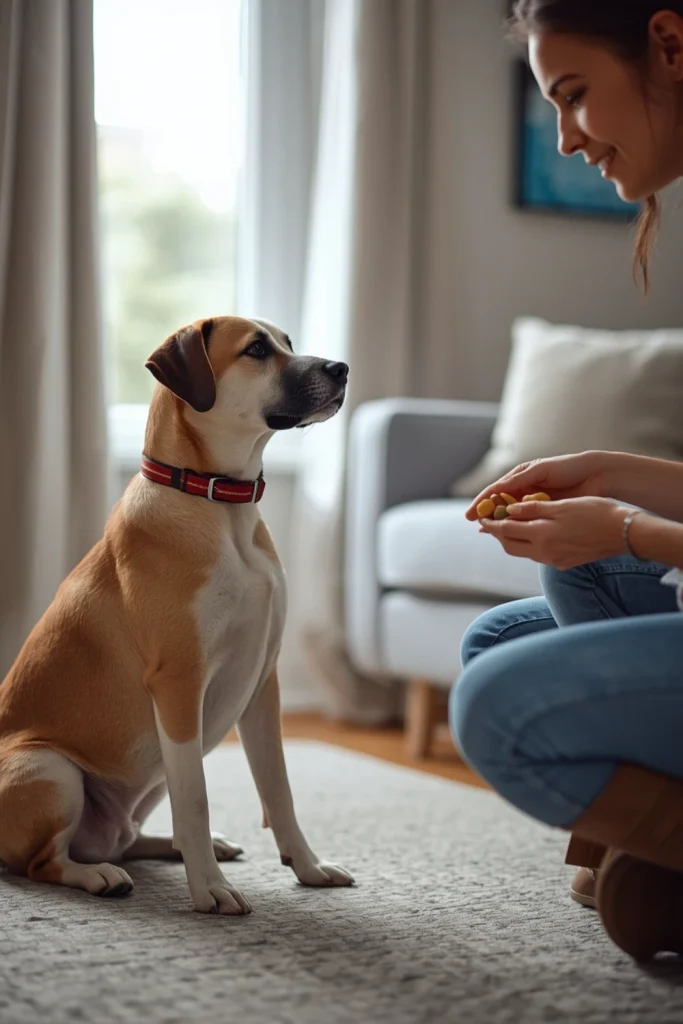
The first of the Easy Steps to Teach Your Dog to sit is choosing the right environment. Start in a quiet room where your dog feels comfortable and there are few distractions. Turn off anything that might compete for your dog’s attention, such as loud television, excessive noise, or active children. Having your dog’s full attention makes the first lessons much easier.
Have several small treats ready before beginning. The treats should be small enough that you can give multiple rewards without overfeeding your dog. Stand or kneel comfortably in front of your dog and allow it to settle. Keep your voice calm and friendly. Short, positive sessions are usually more productive than trying to train for a long time.
2. Get Your Dog’s Attention With a Treat
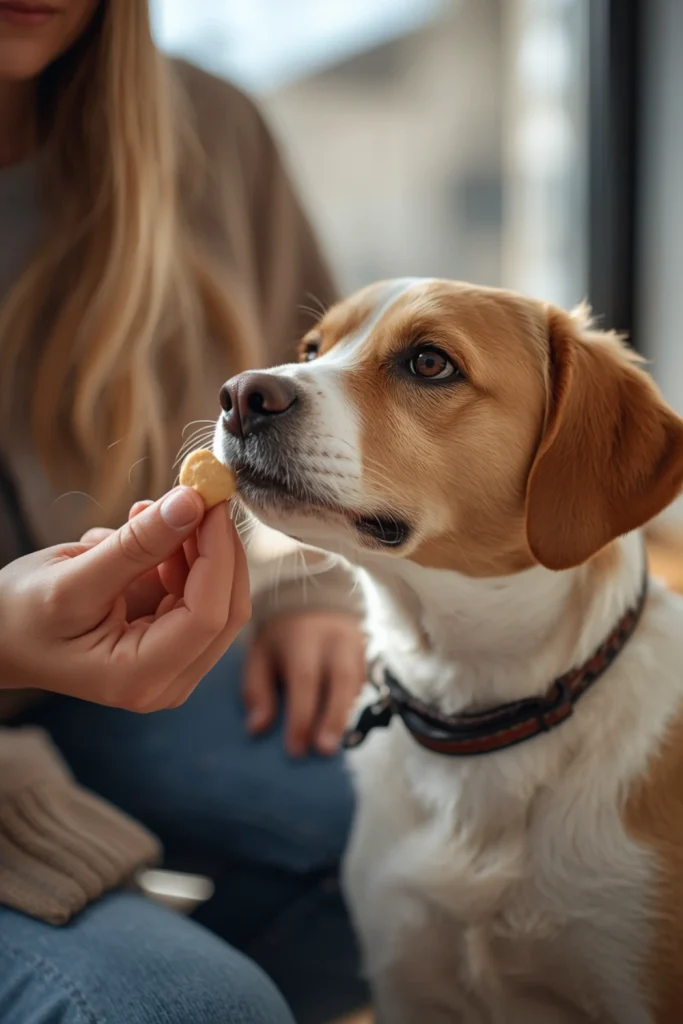
Once you have chosen a quiet location, use a treat to get your dog’s attention. Hold the treat close enough for your dog to notice it, but do not immediately give it away. Allow your dog to focus on your hand and follow its movement with its eyes.
Move the treat slowly toward your dog’s nose without letting the dog grab it. The goal is to make your dog interested in the reward and focused on you. Avoid waving the treat around quickly because this can make some dogs excited or distracted. When your dog is calmly watching the treat, you are ready for the next step in the exercise.
3. Move the Treat Over Your Dog’s Head
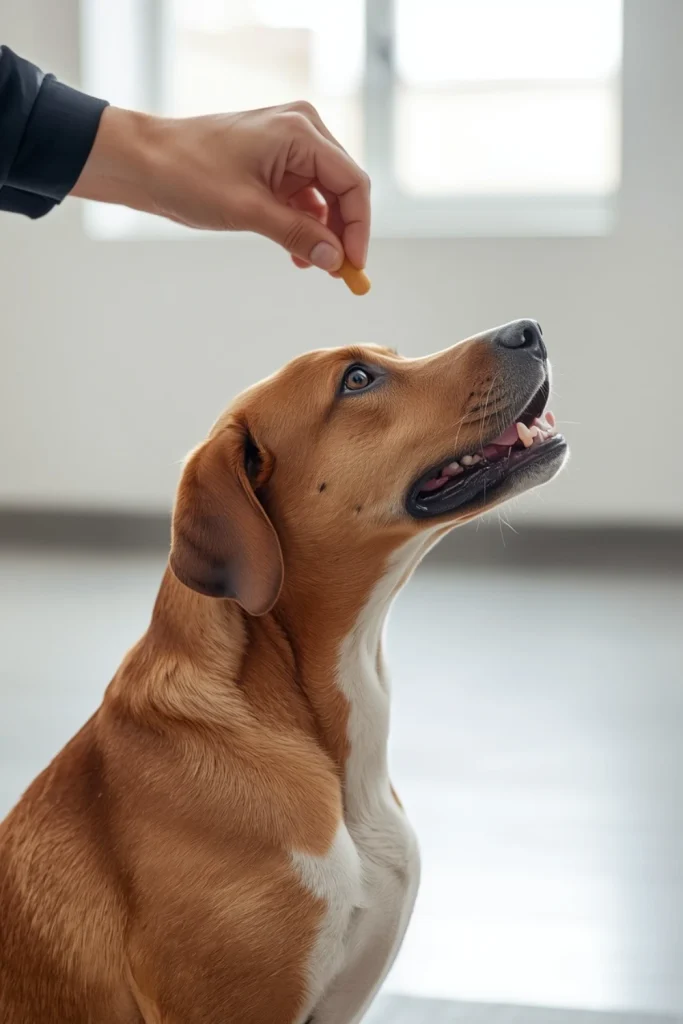
This is the movement that encourages your dog to naturally lower its body into a sitting position. Hold the treat close to your dog’s nose and slowly move your hand upward and slightly backward over the dog’s head. As your dog follows the treat with its eyes and nose, its body will often shift backward.
Many dogs will naturally place their bottom on the floor as they follow the treat. The moment your dog’s bottom touches the ground, prepare to reward it. Move slowly and avoid pushing the dog’s body down. You want your dog to discover the sitting position naturally rather than being physically forced into it.
4. Reward the Moment Your Dog Sits
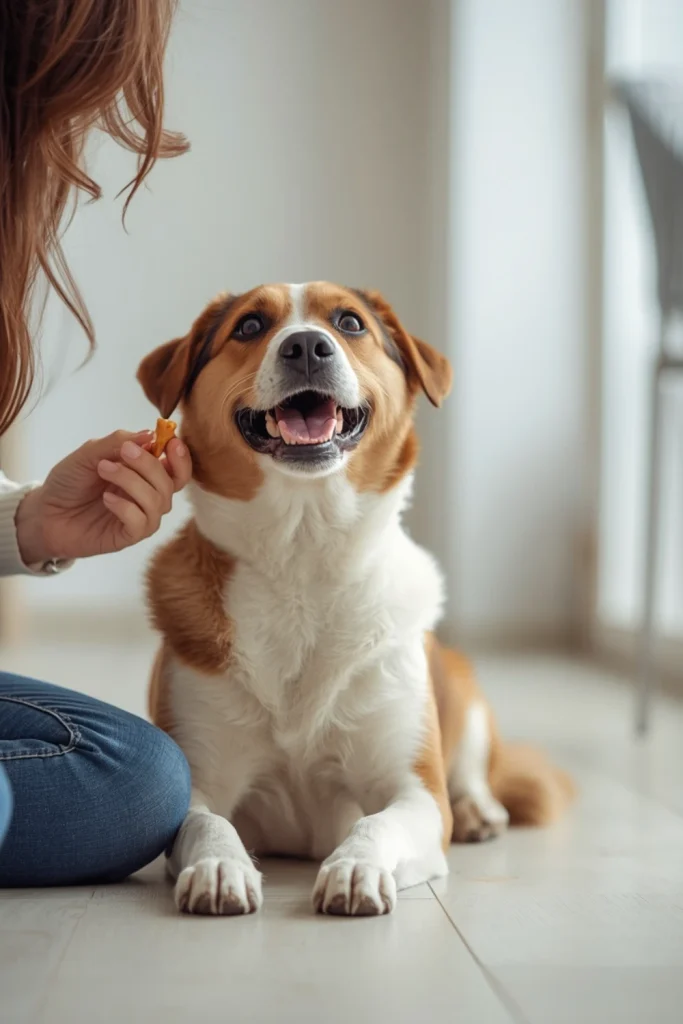
Timing is extremely important when teaching a new behavior. As soon as your dog’s bottom touches the floor, immediately give the treat and offer calm praise. This helps your dog understand that the sitting position is what produced the reward.
At first, you do not need to worry about how long your dog remains seated. Simply focus on creating a clear connection between sitting and receiving something positive. Repeat the exercise several times, allowing your dog to stand up naturally between repetitions. Frequent successful repetitions help your dog understand the pattern without making the session unnecessarily difficult.
5. Add the “Sit” Verbal Cue
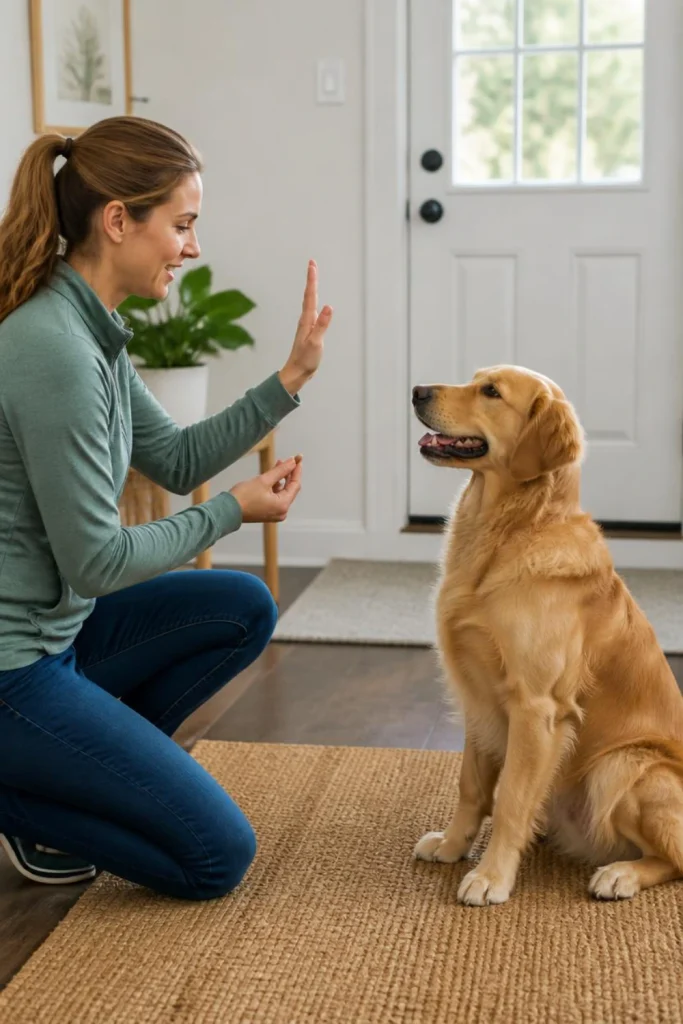
Once your dog begins sitting reliably when you move the treat, you can introduce the verbal command. Say “sit” clearly and calmly just before making the hand movement that encourages your dog into position. When your dog sits, reward immediately.
Repeat the same sequence consistently: say the cue, use the hand movement, wait for the sit, and reward. After several successful repetitions, your dog may begin responding to the word more quickly. Avoid repeating “sit” several times in a row. Saying the cue once gives your dog an opportunity to learn what the word means rather than simply responding to repeated instructions.
6. Gradually Reduce the Food Lure
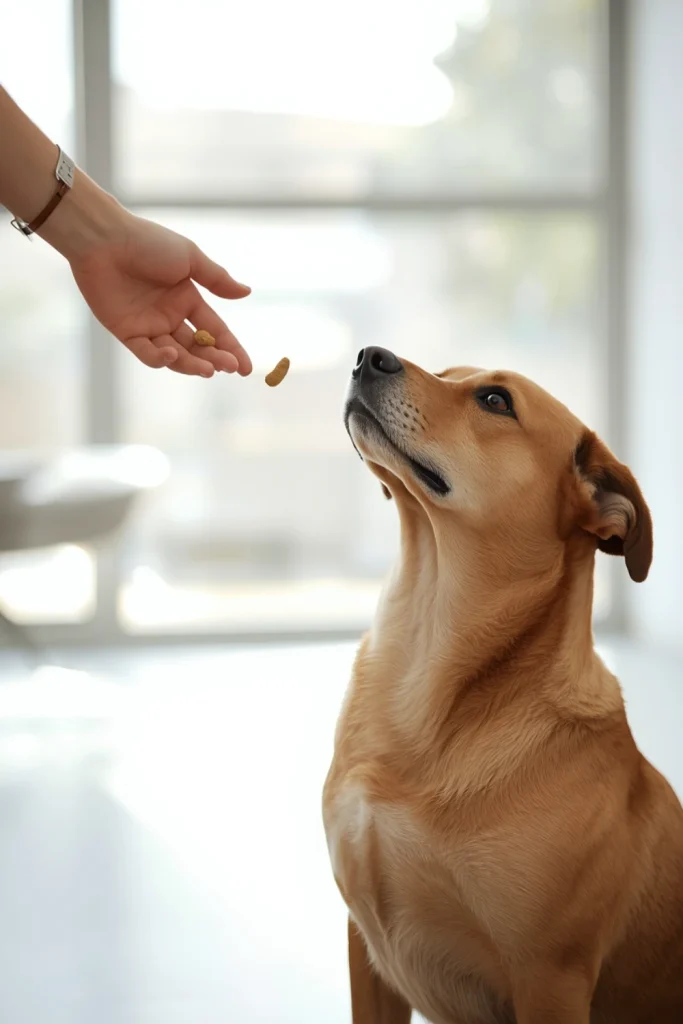
Treats are useful for teaching a new behavior, but eventually your dog should not need to see food before every command. Once your dog understands the sit cue, begin reducing your dependence on the visible treat. You can make the same hand movement with an empty hand and reward afterward.
Continue using treats during training, but keep them hidden until the desired behavior happens. You can also reward your dog with praise, affection, play, or another appropriate reward. The goal is for your dog to respond to your cue rather than simply following food. Gradually changing how you deliver rewards helps make the sit command more reliable in everyday situations.
7. Practice the Sit Command in Different Situations
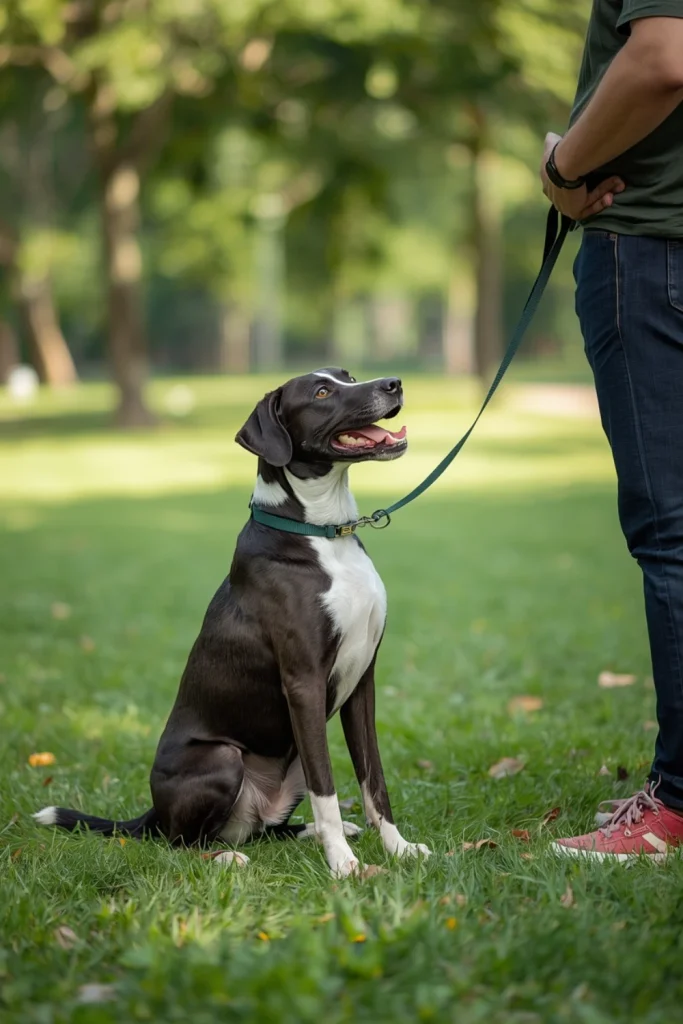
The final step is to help your dog understand that “sit” means the same thing in different places. Once your dog reliably sits in a quiet room, practice in another room, the backyard, a quiet sidewalk, or another safe location. Introduce new environments gradually.
As distractions increase, your dog may take longer to respond. This is normal. Make the exercise easier when necessary and reward successful responses. Practice around mild distractions before moving to busy environments. With repetition, your dog can learn that the sit cue applies regardless of where you are. This makes the behavior much more useful in everyday life.
Final Thoughts
These Easy Steps to Teach Your Dog to sit provide a simple foundation for successful obedience training. Start in a quiet environment, use a reward to guide the natural sitting motion, introduce the verbal cue, and reward your dog immediately when it performs the desired behavior.
Keep sessions short, positive, and consistent. Avoid physically forcing your dog into position or repeatedly shouting the command. As your dog becomes more confident, gradually reduce the visible food lure and practice the sit command in different environments. With patience and regular practice, sitting can become one of the most reliable and useful behaviors your dog knows.