
12 Easy Ways to Train Your Dog at Home
Training your dog at home can be simple, rewarding, and surprisingly enjoyable. You do not need a professional training center or complicated equipment to teach your dog better manners. With patience, consistency, and the right approach, everyday moments at home can become valuable learning opportunities.
If you are searching for Easy Ways to Train Your Dog, this guide is designed for you. From teaching basic commands and improving recall to stopping unwanted behaviors and building better routines, these practical methods can help you create a happier, more confident, and better-behaved dog.
1. Teach Your Dog to Respond to Its Name
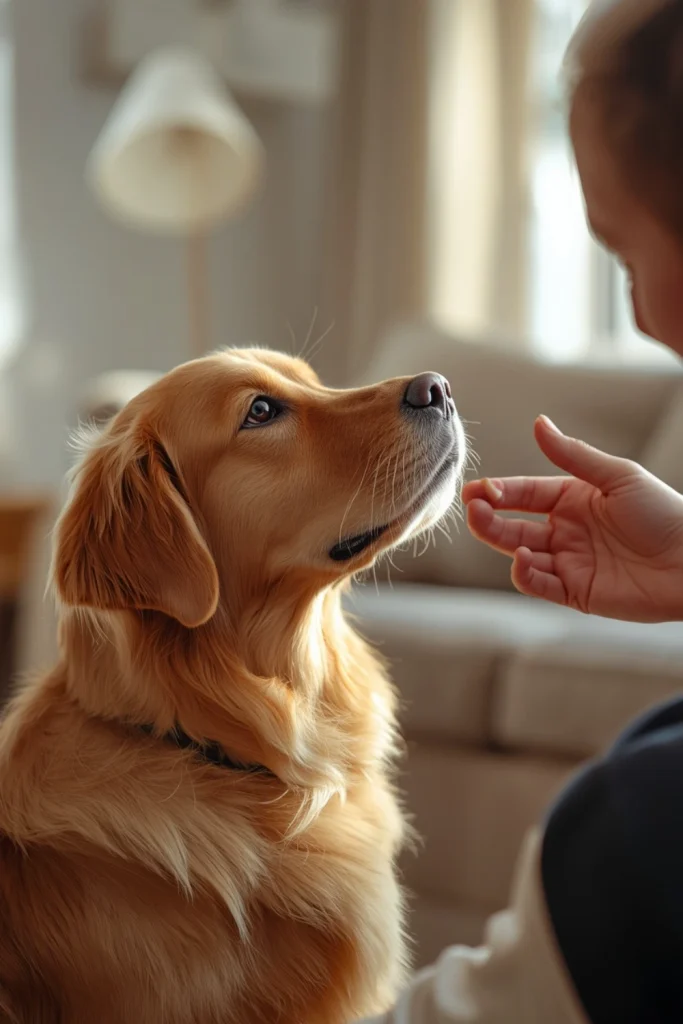
One of the easiest ways to begin training your dog at home is teaching them to respond to their name. Your dog’s name should become a positive signal that tells them to pay attention to you. This simple skill can later make other commands easier to teach because your dog learns to focus on you when you speak.
Start in a quiet room with few distractions. Say your dog’s name in a friendly voice and wait for them to look at you. As soon as they make eye contact or turn toward you, offer praise and a small reward. Repeat this several times during the day, keeping each practice session short.
Avoid using your dog’s name repeatedly when you are angry or correcting unwanted behavior. You want your dog to develop a positive association with their name. Once your dog reliably looks at you indoors, gradually practice in other areas of the house and eventually in safe outdoor environments with more distractions.
2. Use Positive Reinforcement
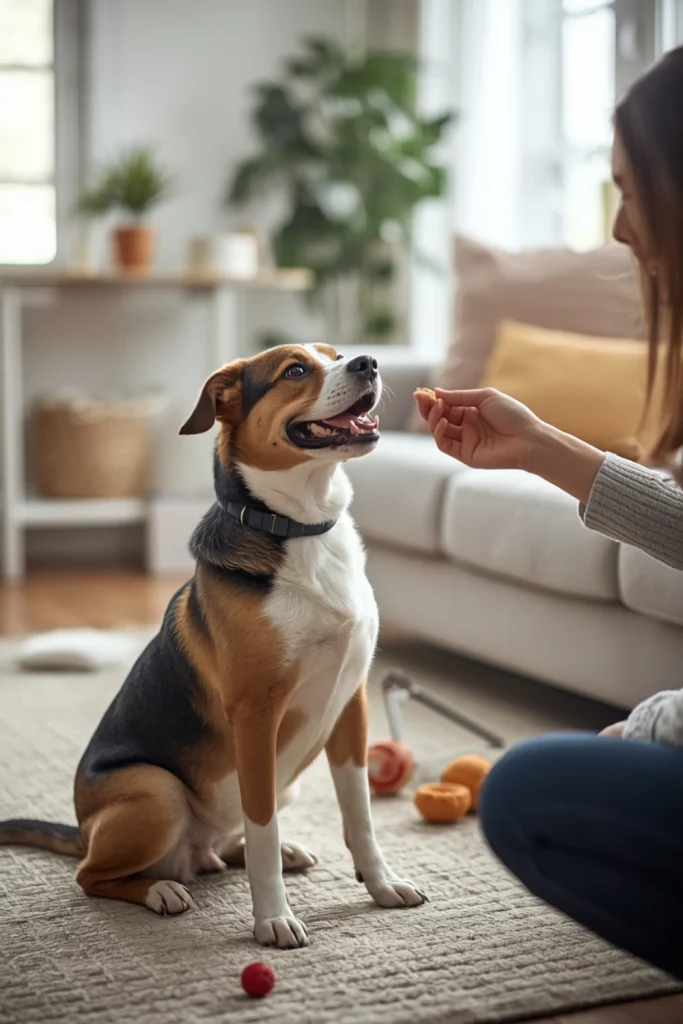
Positive reinforcement is one of the most useful methods when learning Easy Ways to Train Your Dog. Instead of focusing mainly on mistakes, reward your dog when they perform a behavior you want to encourage. Rewards can include small treats, praise, toys, playtime, or access to something your dog enjoys.
For example, if your dog sits calmly instead of jumping on you, reward the calm behavior. If your dog comes when called, praise them and provide something they value. The reward should happen soon after the desired behavior so your dog can understand what earned it.
Keep training rewards small, especially if you train several times throughout the day. You can also gradually vary rewards as your dog becomes more reliable. Sometimes use a treat, while other times use praise or a favorite toy. The purpose is to make appropriate behavior worth repeating.
3. Teach the Sit Command
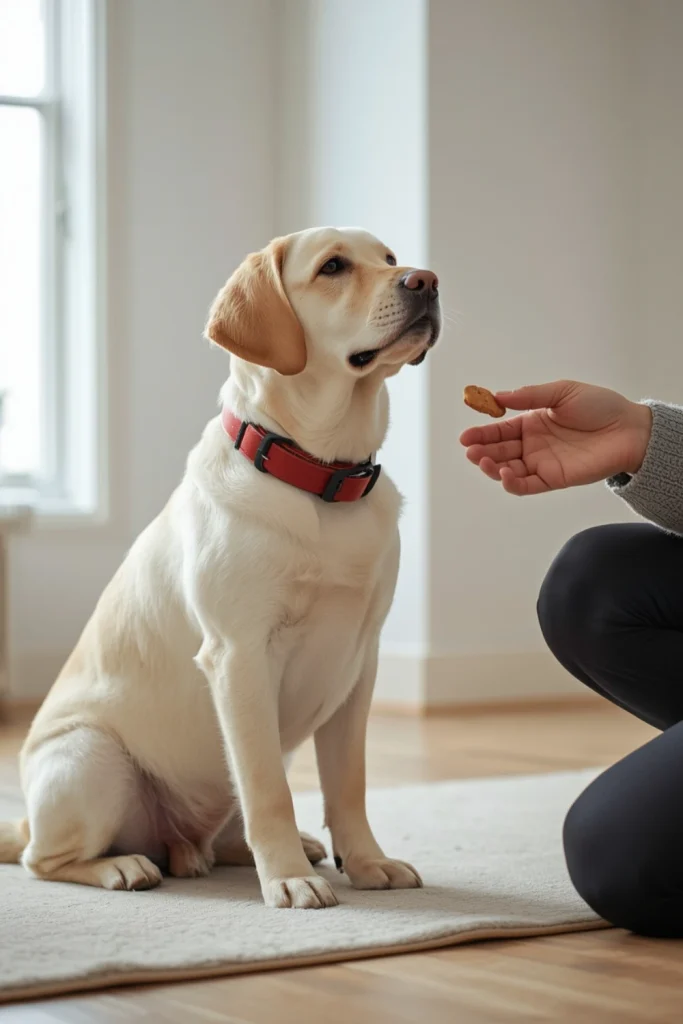
“Sit” is one of the simplest commands to teach and can become useful in many everyday situations. You can ask your dog to sit before meals, before opening a door, before putting on a leash, or before greeting visitors. This helps your dog learn that calm behavior can lead to something they want.
To begin, hold a small treat close to your dog’s nose. Slowly move your hand upward and slightly backward. As your dog follows the treat, their body will naturally move into a sitting position. The moment their bottom touches the floor, say “sit,” praise them, and give the reward.
Practice in a quiet room before adding distractions. Once your dog understands the command, gradually practice in other rooms and eventually outside. Keep sessions short and positive. If your dog becomes confused, return to an easier version of the exercise instead of repeatedly giving the command.
4. Practice Recall Inside the House
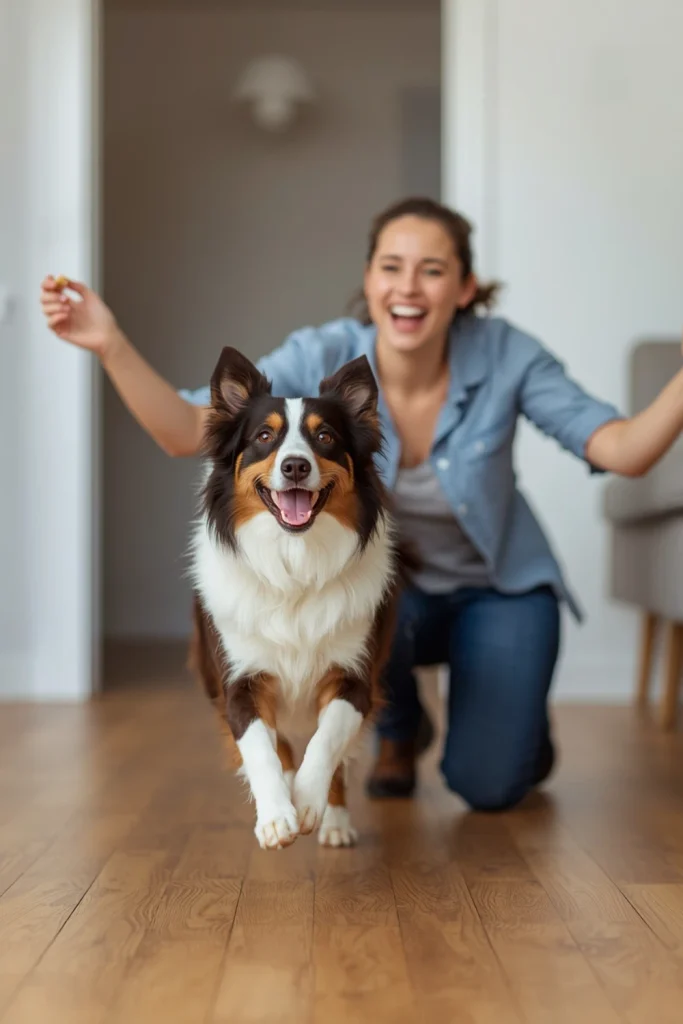
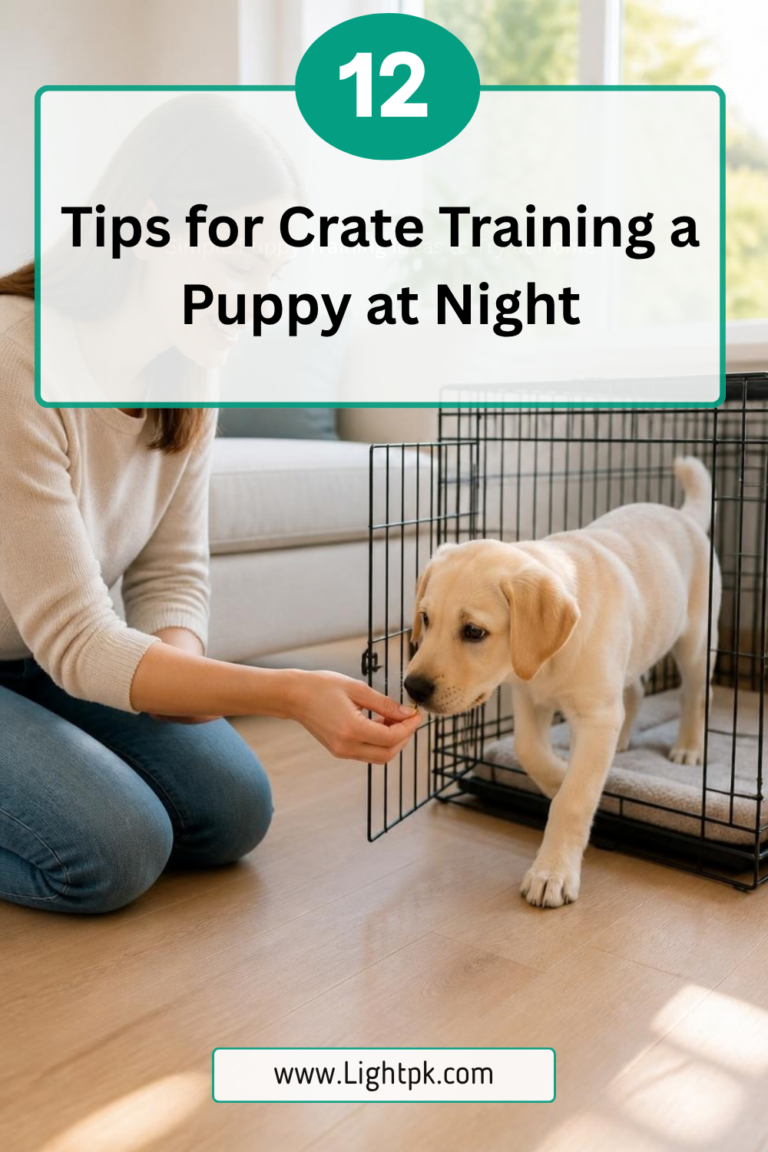
Teaching your dog to come when called is one of the most valuable skills you can develop at home. A reliable recall can help your dog respond to you when they are distracted or moving away from you. Starting indoors allows you to control the environment and make the first lessons easier.
Begin from a short distance. Say your dog’s name followed by a consistent word such as “come.” Use an enthusiastic voice and encourage your dog toward you. When they reach you, reward them generously with praise, a small treat, or a favorite toy.
Never punish your dog for eventually coming back to you. Even if they took longer than expected, returning to you should remain a positive experience. Once your dog reliably responds inside the house, gradually practice in a secure outdoor area while increasing distractions slowly.
5. Teach Your Dog to Wait
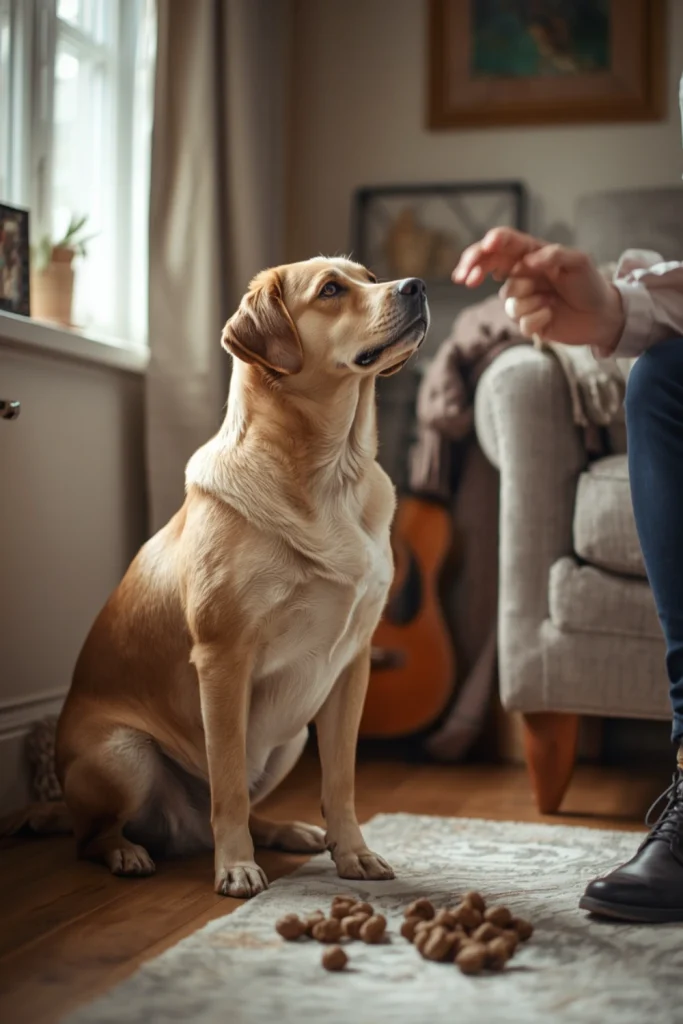
Teaching “wait” is an excellent way to improve impulse control. Dogs often become excited around food, doors, toys, and visitors. A simple waiting behavior can teach your dog to pause rather than immediately rushing toward something interesting.
Start with something your dog wants, such as a toy or food bowl. Ask your dog to sit, use a calm hand signal, and wait for one or two seconds. Then release your dog and allow them access to the reward. Gradually increase the waiting period as your dog becomes more successful.
Do not make the exercise unnecessarily difficult at first. A few successful seconds are better than repeatedly asking your dog to wait too long. With practice, you can use this behavior before meals, at doors, when getting into the car, and during other everyday activities.
6. Stop Jumping by Rewarding Calm Greetings
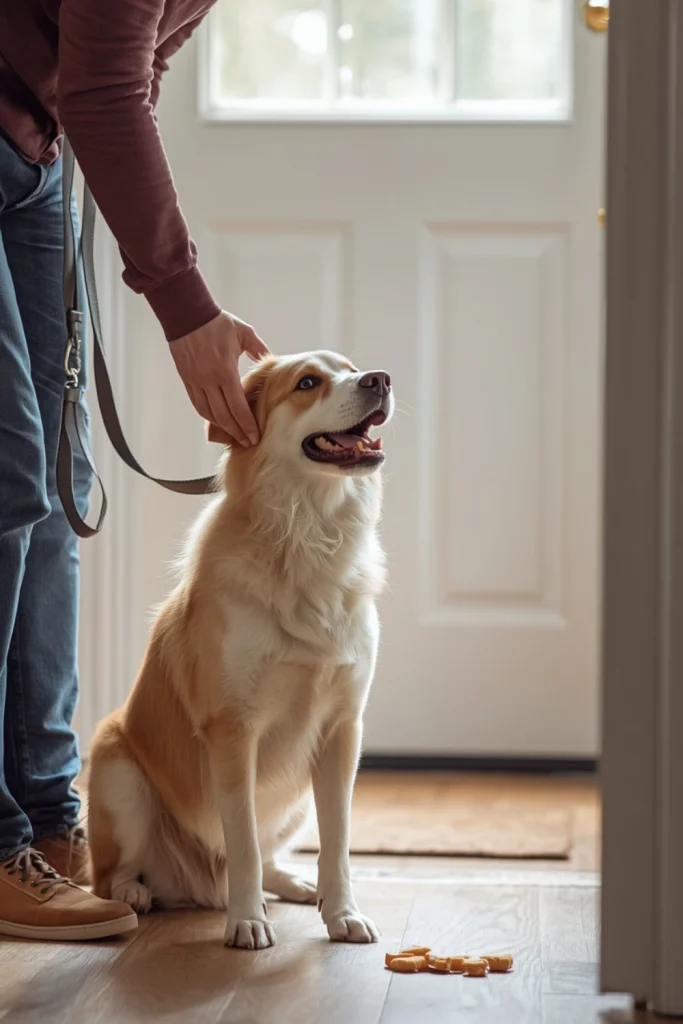
Many dogs jump on people because jumping gets them attention. Even when people push a dog away, the interaction can sometimes encourage the behavior because the dog still receives attention. One of the best Easy Ways to Train Your Dog is to reward calm greetings instead.
When your dog approaches without jumping, give attention and praise. If your dog jumps, calmly remove your attention and wait until all four paws are back on the floor. Then reward the calm behavior. Everyone in your household should follow the same approach.
Practice with family members first before asking your dog to greet unfamiliar visitors. You can also teach your dog to sit before receiving attention. Over time, your dog can learn that calm behavior produces the interaction they want.
7. Teach Your Dog to Leave It
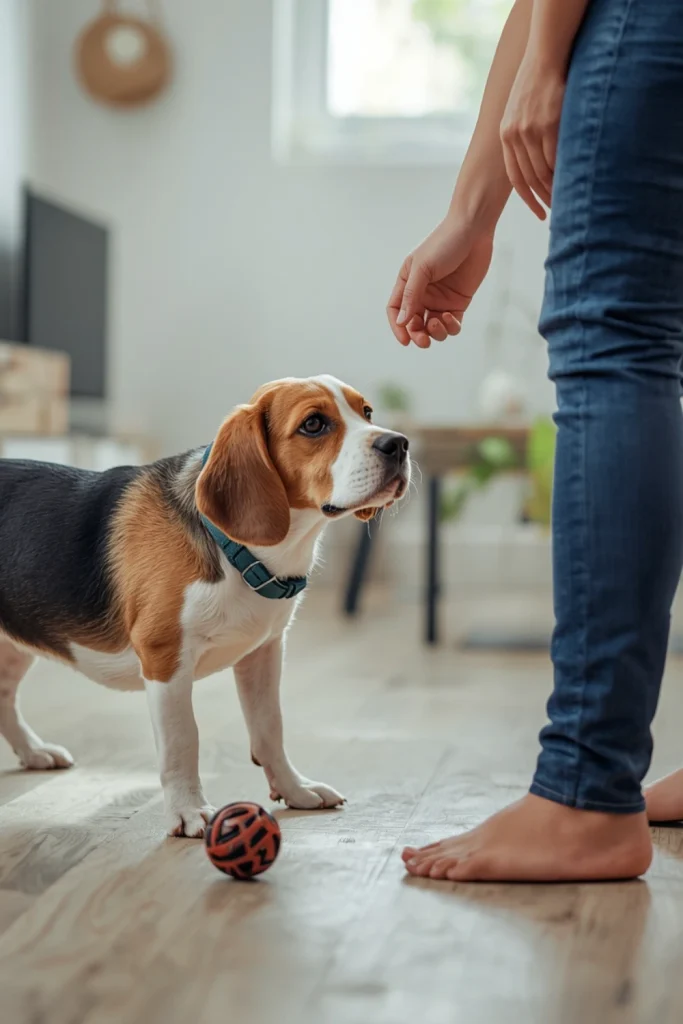
“Leave it” is a practical command that can help your dog ignore objects they should not touch. Dogs naturally investigate interesting things with their mouths, so teaching this skill can be useful around food, household objects, toys, and outdoor items.
Begin with a low-value object in your closed hand. Allow your dog to investigate without giving them access to the object. When they stop trying to get it or look away, reward them with something better from your other hand. Gradually introduce the verbal cue “leave it.”
As your dog improves, practice with different safe objects and in different rooms. Do not use the command to frighten or intimidate your dog. The goal is to teach them that ignoring something can lead to a better reward from you.
8. Train Your Dog During Everyday Activities
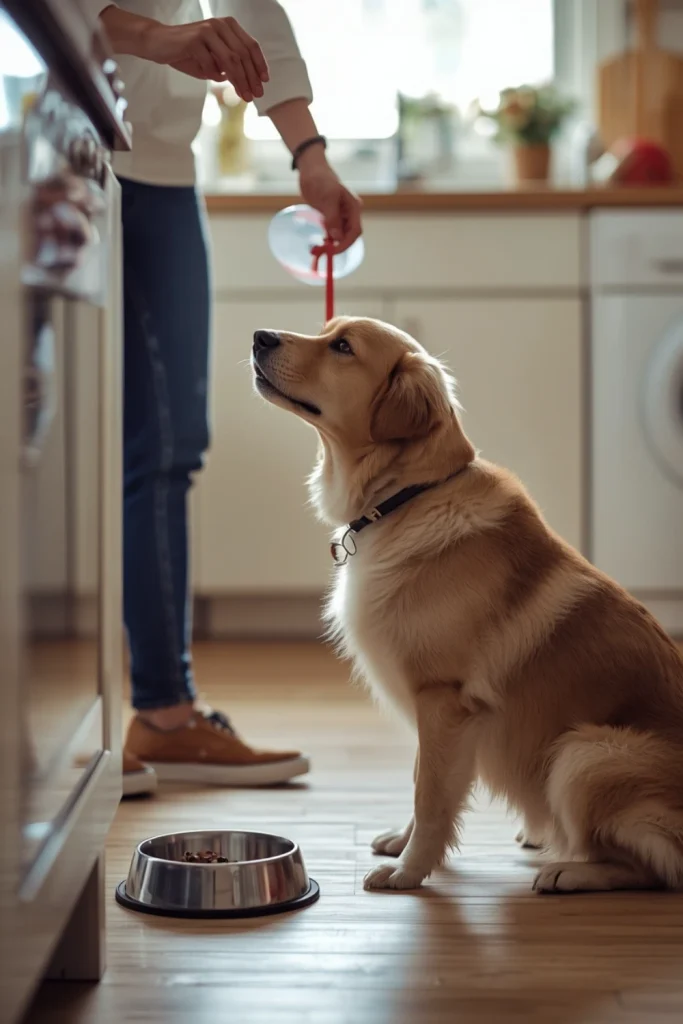
You do not need to schedule every training session separately. Some of the Easy Ways to Train Your Dog involve using ordinary daily activities as training opportunities. For example, ask your dog to sit before putting down the food bowl or wait briefly before opening the front door.
You can also practice name recognition while your dog is relaxing, reward calm behavior while you work, and reinforce loose-leash walking during short trips outside. These small lessons can become part of your normal routine.
Everyday training also helps your dog understand that good behavior matters in real situations, not just during formal sessions. The more consistently you reinforce appropriate behaviors, the more likely your dog is to repeat them.
9. Use Toys for Training and Mental Stimulation
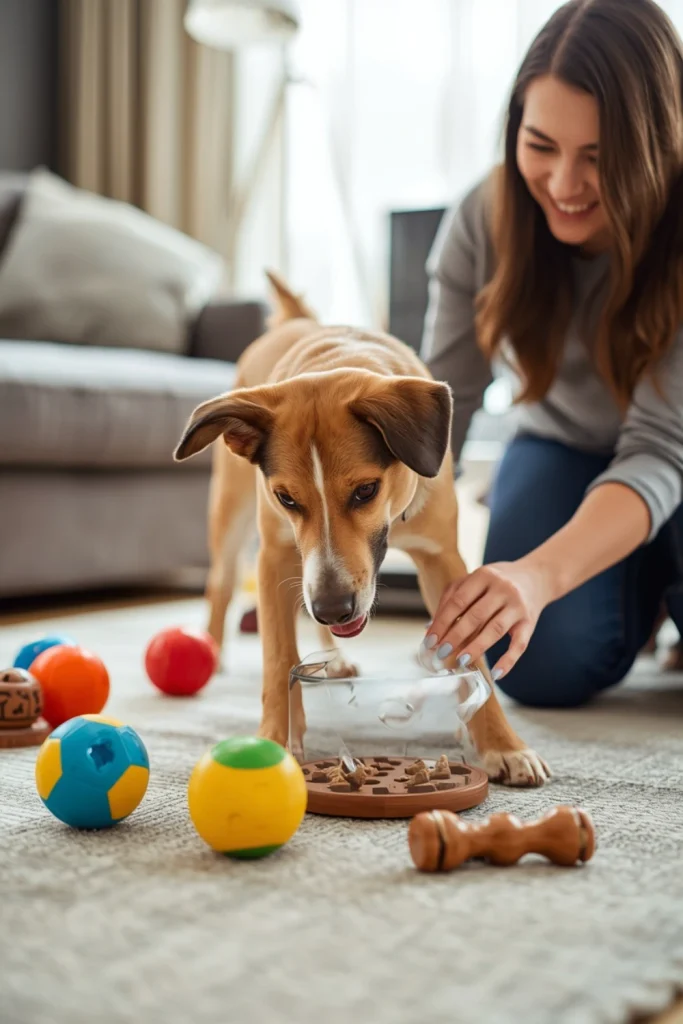
Toys can be valuable training tools as well as sources of entertainment. Interactive toys, food puzzles, fetch games, and simple search activities can encourage your dog to think and make appropriate choices.
For example, you can teach your dog to bring a toy back during fetch or wait until you give a release cue before taking the toy. You can also hide a favorite toy in an easy-to-find location and encourage your dog to search for it.
Mental stimulation can be especially useful for dogs that become bored easily. However, choose toys appropriate for your dog’s size, age, chewing style, and individual needs. Supervise your dog with unfamiliar toys and replace damaged items.
10. Teach Calm Leash Walking at Home First
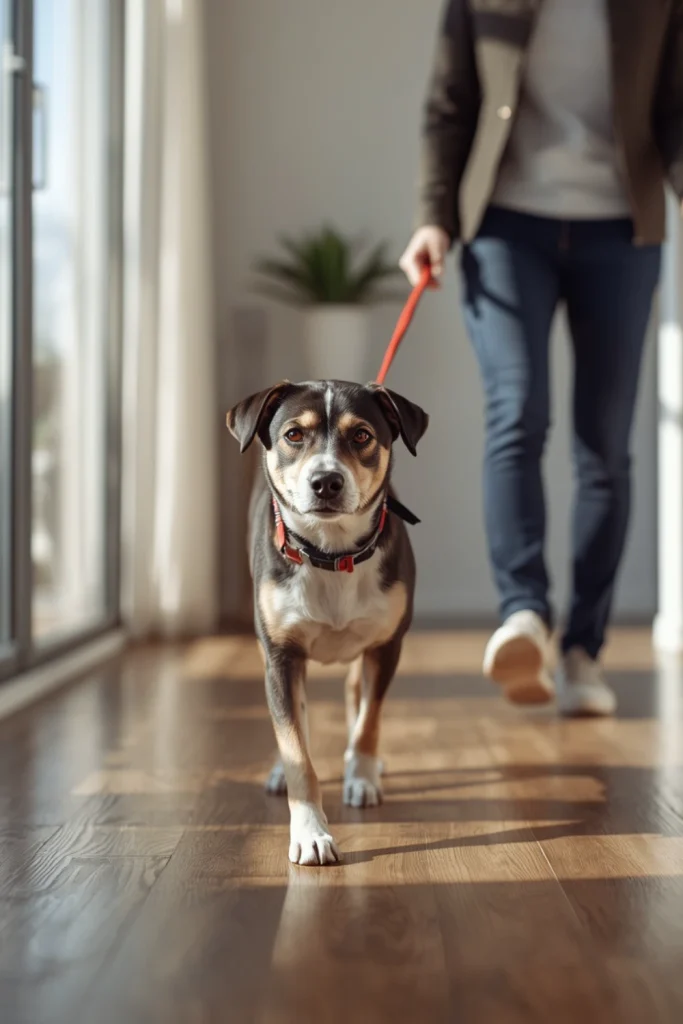
Leash training does not have to begin on a busy street. You can introduce your dog to walking politely inside the house or in a quiet enclosed area. This makes it easier to teach the basic behavior before adding outdoor distractions.
Attach a properly fitted collar or harness and allow your dog to become comfortable with the leash. Walk a few steps and reward your dog for staying near you. If your dog pulls strongly, stop and wait for the leash to become loose before continuing.
Once your dog understands that walking calmly keeps the walk moving, gradually practice in quieter outdoor locations. Later, introduce more distractions. Keep early walks short and focus on creating a positive experience.
11. Teach Your Dog to Settle on a Mat
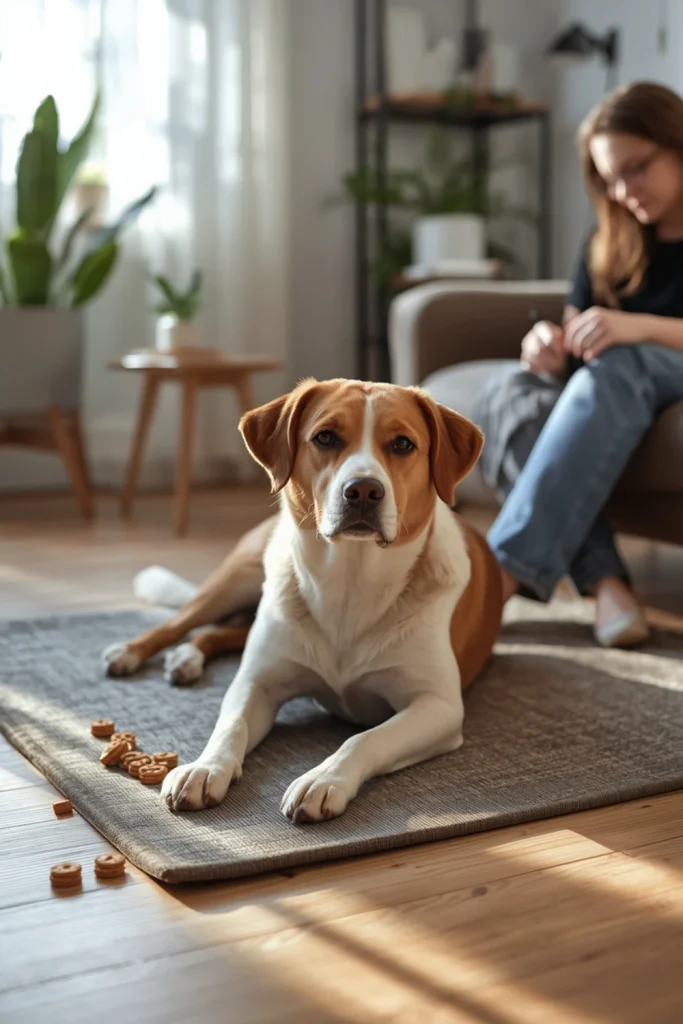
Teaching your dog to relax on a specific mat or bed can be extremely useful at home. It gives your dog a clear place to rest while you work, eat, watch television, or have visitors.
Place a comfortable mat in a quiet location. Whenever your dog chooses to lie down on it, calmly reward them. You can gradually introduce a cue such as “place” or “mat.” Begin with very short periods and reward your dog for remaining relaxed.
The purpose is not to force your dog to stay on the mat for long periods immediately. Instead, gradually teach them that the mat is a comfortable and rewarding place to relax. This can also help your dog learn that not every moment needs to involve play or attention.
12. Practice Training Consistently Every Day
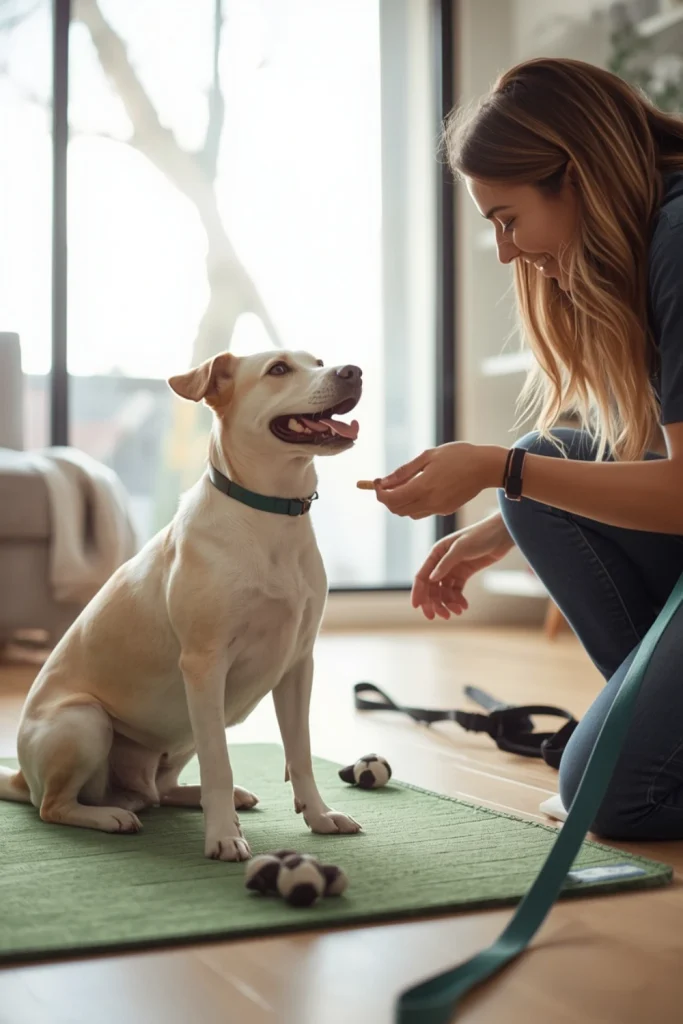
The final and perhaps most important of these Easy Ways to Train Your Dog is consistency. Dogs learn through repetition, so occasional training sessions may not be enough to create reliable habits. Regular practice helps your dog understand what behaviors are expected.
You do not need to train for hours. Several short sessions can be incorporated into your daily routine. Spend a few minutes practicing commands, reinforce calm behavior, play a training game, and use normal activities as opportunities to reward good choices.
Remember that progress is not always perfectly linear. Your dog may perform a behavior correctly one day and struggle the next. Stay patient, reduce distractions when necessary, and continue rewarding improvement. Consistency over weeks and months can make a significant difference.
Final Thoughts on Easy Ways to Train Your Dog
Learning the Easy Ways to Train Your Dog can make everyday life more enjoyable for both you and your companion. You do not need complicated equipment or long training sessions. Simple activities such as teaching your dog’s name, practicing sit, rewarding calm behavior, playing recall games, and teaching wait can make a meaningful difference.
The most important part of successful training is consistency. Use clear commands, reward desirable behavior, keep sessions short, and gradually increase distractions. Remember that every dog learns at a different pace, so focus on steady improvement rather than expecting perfection.
Home training should also be enjoyable. Use toys, praise, treats, games, and everyday activities to create positive learning opportunities. When your dog understands what you want and has a reason to repeat it, training can become a natural part of your daily routine.
With patience and regular practice, these Easy Ways to Train Your Dog can help you build better communication, encourage desirable behavior, provide mental stimulation, and strengthen the bond you share with your dog. Start with one or two simple skills today, practice them consistently, and gradually build your dog’s training foundation over time.