10 Gentle Training Ideas for Dogs With Separation Distress
Leaving your dog at home should feel like a normal part of daily life, not an experience filled with barking, worry, or scratched doors. For dogs that struggle when separated from their owners, even a few minutes alone can feel overwhelming. The good news is that gentle, patient training can help many dogs feel safer and more comfortable over time.
These gentle training ideas for dogs focus on building trust, encouraging independence, and making separation less frightening. Whether you have a young puppy, an adult rescue dog, or a companion that follows you from room to room, the key is to move at your dog’s pace. Small, positive experiences can create a foundation for more confident alone time without punishment or unnecessary pressure.
1. Begin With Very Short Separations
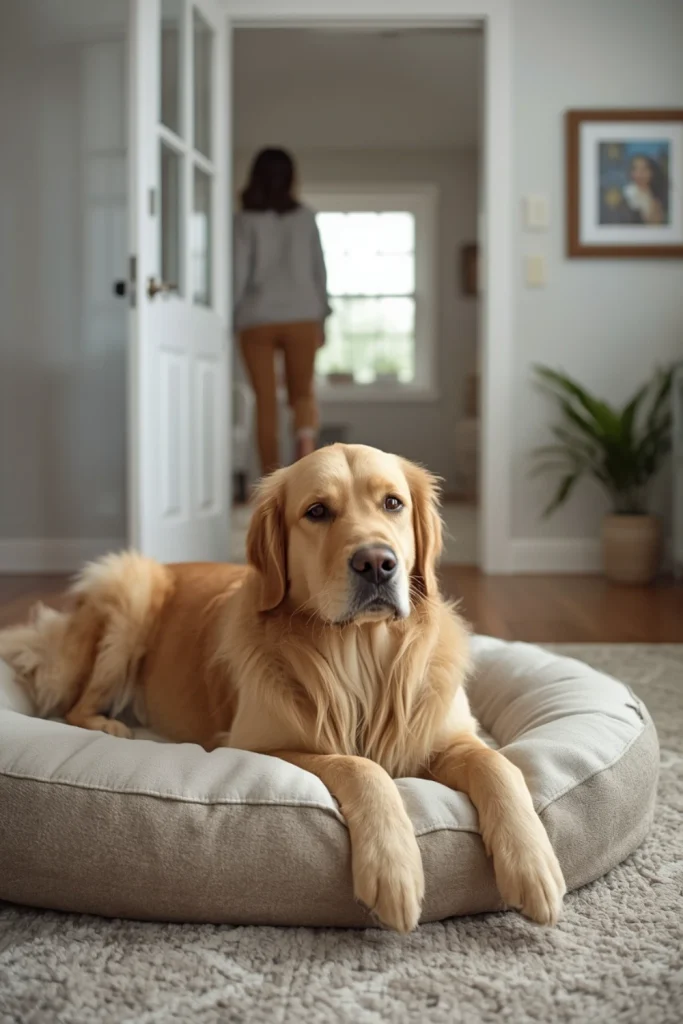
One of the most important gentle training ideas for dogs is to start with a separation so short that your dog can remain comfortable. For some dogs, this might mean stepping behind an open doorway for just one or two seconds. For others, simply moving a few steps away while the dog rests on a mat may be a useful beginning. Keep the exercise easy and return before your dog becomes worried. The aim is to create a positive experience, not to test how long your dog can tolerate being alone.
Repeat these short exercises at different times when your dog is relaxed. If your dog stays comfortable, gradually add a few seconds or a little more distance. Watch for early signs of concern, such as suddenly getting up, staring at the door, panting, or following you anxiously. If these appear, make the next repetition easier. Avoid increasing the duration just because a certain number of seconds has passed. Your dog’s behavior should guide the pace, and progress may be gradual.
2. Create a Safe and Comfortable Resting Space
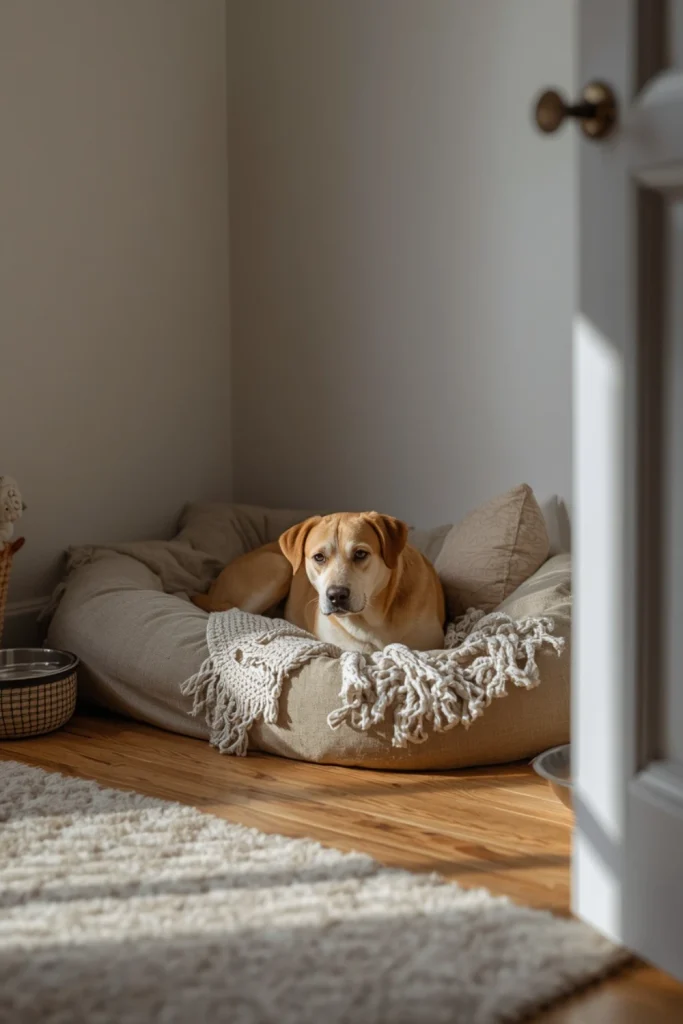
A comfortable resting space can help your dog settle during quiet periods. Choose an area where the dog can rest without being disturbed by busy household activity, sudden noises, or frequent foot traffic. Provide comfortable bedding, fresh water, and familiar items that are safe for your dog. Some dogs prefer a bed in the living room, while others settle better in a quiet room with a baby gate. Let your dog explore the space freely so it becomes a familiar, positive part of the home.
Build positive associations with the area while you are present. You might offer a few treats on the bed, praise your dog for relaxing, or encourage quiet play with a suitable toy. Gradually move a short distance away while your dog remains comfortable. A crate may work for a dog that already enjoys it, but it should not be used to force a frightened dog to endure separation. If confinement increases panic or escape attempts, stop and ask a professional to help you choose a safer arrangement.
3. Teach Your Dog to Relax Independently
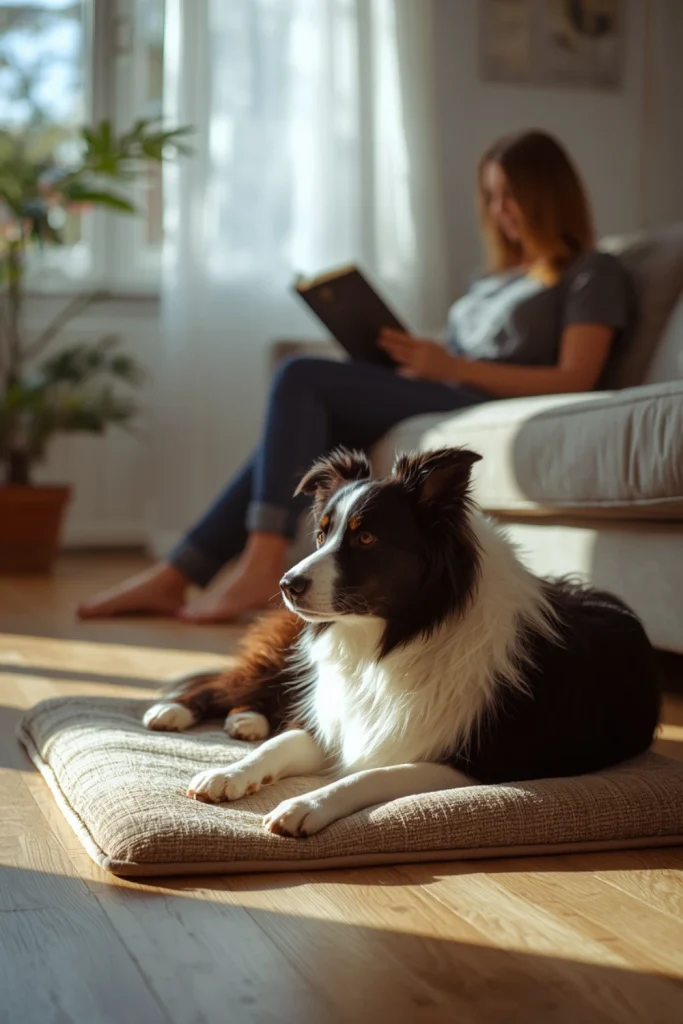
Dogs that constantly follow their owners may need help learning that they can feel safe without receiving attention every moment. Begin by noticing and rewarding natural moments of independence. If your dog chooses to lie down while you prepare a meal or relax on the sofa, calmly praise them or offer a small treat. Avoid repeatedly calling your dog over or encouraging them to follow you everywhere. The goal is to show that calm, independent behavior is safe and rewarding, even when you are nearby.
As your dog becomes more comfortable, introduce small periods of independent activity. Encourage them to rest on a mat while you work at your desk or complete simple household tasks. If your dog gets up to follow you, do not scold them. Simply make the exercise easier and reward the next successful moment of relaxation. Independent behavior should develop through choice and positive experiences rather than forced isolation. This foundation can make later separation exercises easier because your dog learns that personal space does not mean losing security.
4. Practice Departure Cues Without Leaving
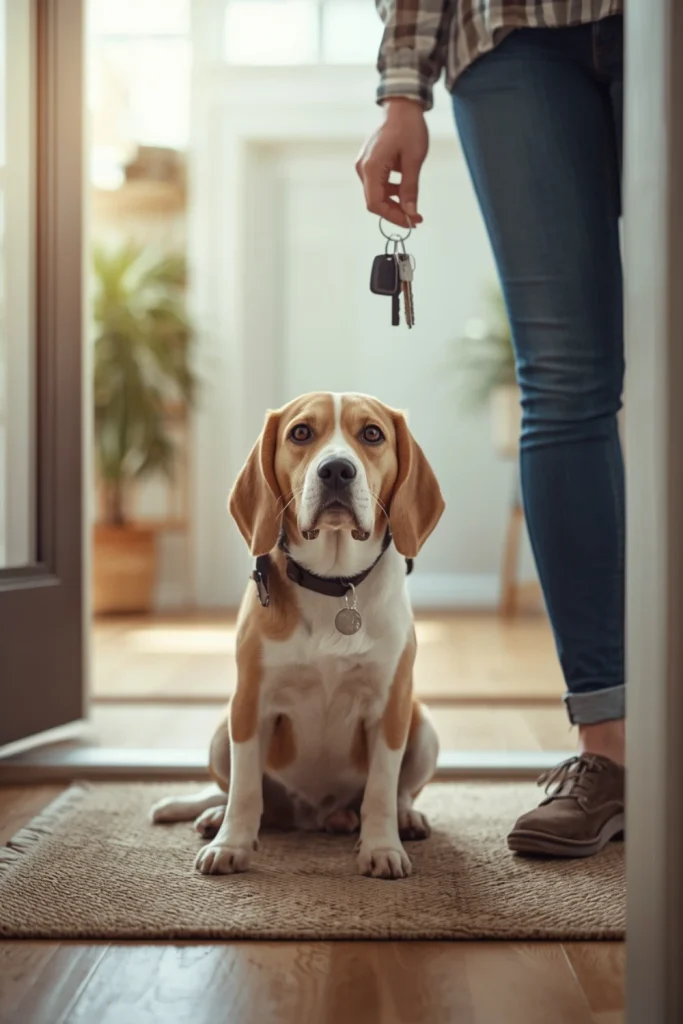
For some dogs, separation distress begins before the owner even leaves. The sound of keys, the sight of shoes, putting on a coat, or picking up a bag can trigger worry because the dog has learned that these actions predict separation. You can help reduce this anticipation by practicing departure cues when no departure follows. Pick up your keys, then sit down. Put on your shoes, then make a cup of tea. Walk toward the door, then return to an ordinary household activity.
Keep these practice sessions casual and brief. Observe your dog’s response instead of repeating the cues until the dog becomes upset. If your dog starts pacing, whining, or watching the door intensely, use a less noticeable cue or perform the exercise from farther away. Once the cues become less worrying, you can pair them with very brief absences that your dog can comfortably manage. The purpose is not to confuse your dog but to make everyday departure signals less threatening and help them feel more secure as your routine unfolds.
5. Use Positive Reinforcement for Calm Behavior
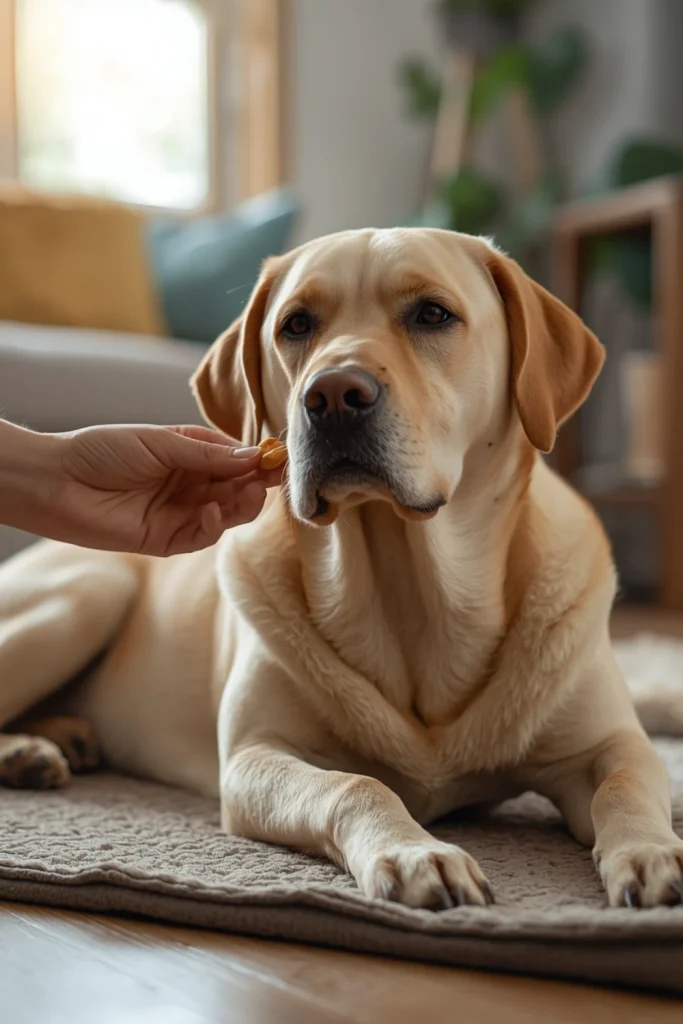
Positive reinforcement helps dogs learn which behaviors are worth repeating. Whenever your dog calmly settles on a bed, engages with a toy, or remains relaxed during a short separation, reward the behavior with a small treat, gentle praise, or another suitable reward. Use rewards your dog enjoys, and keep your approach quiet if excitement tends to make your dog more restless. Consistently reinforcing relaxed behavior can help your dog develop positive associations with situations that once seemed uncertain.
Avoid punishing barking, whining, chewing, or indoor accidents that happen during an absence. These behaviors may reflect fear, unmet needs, or another underlying problem rather than deliberate disobedience. Punishment can make separation even more frightening and may weaken your dog’s trust in you. Instead, identify the circumstances that triggered the behavior and adjust your plan so the next practice is easier. Rewarding small successes is more effective than expecting your dog to remain calm for an unrealistic length of time. Gentle training is about teaching new skills while protecting your dog’s emotional well-being.
6. Introduce Food Puzzles and Safe Enrichment
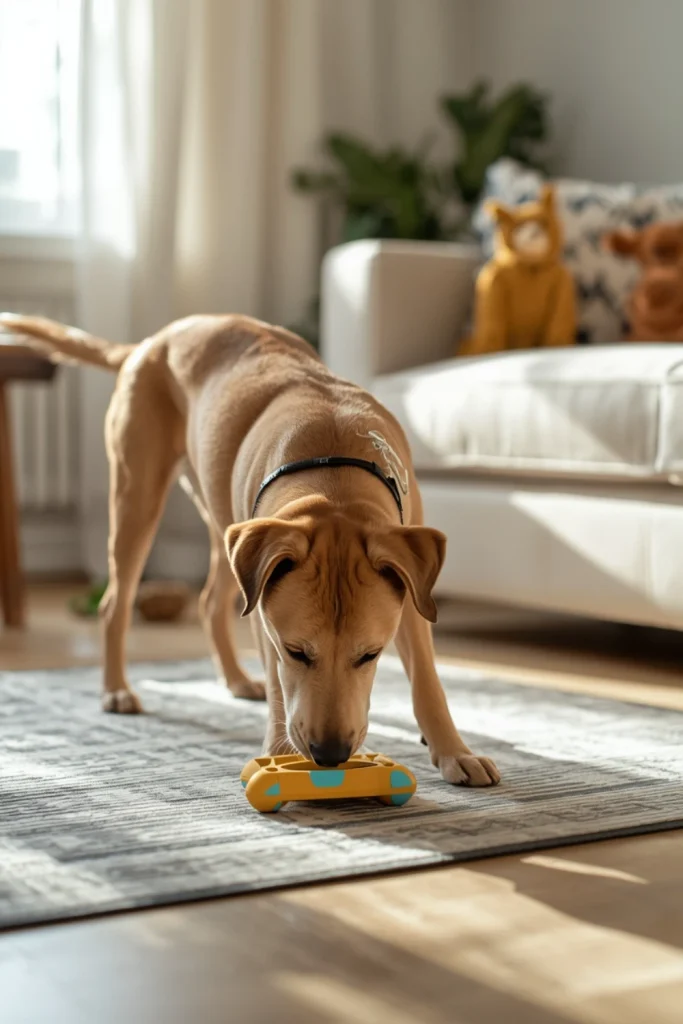
Food puzzles and enrichment activities can provide mental stimulation and give your dog something appropriate to explore during quiet periods. Depending on your dog’s preferences, try a durable treat-dispensing toy, a simple food puzzle, a snuffle mat used under supervision, or a safe chew suitable for their size and chewing style. Introduce the item while you are at home so you can check that your dog uses it safely and understands how it works. Begin with an easy activity to avoid frustration.
Use part of your dog’s normal food allowance when possible, and choose toys that do not break into pieces that could be swallowed. Some dogs enjoy working for food, while others prefer sniffing games or resting with a familiar toy. Observe your dog’s response rather than assuming enrichment will always help. A dog experiencing intense separation distress may be unable to eat once their owner leaves. In that case, do not rely on food toys as the sole solution. Reduce the difficulty of the separation and consider professional guidance if the distress continues.
7. Establish a Predictable and Reassuring Routine
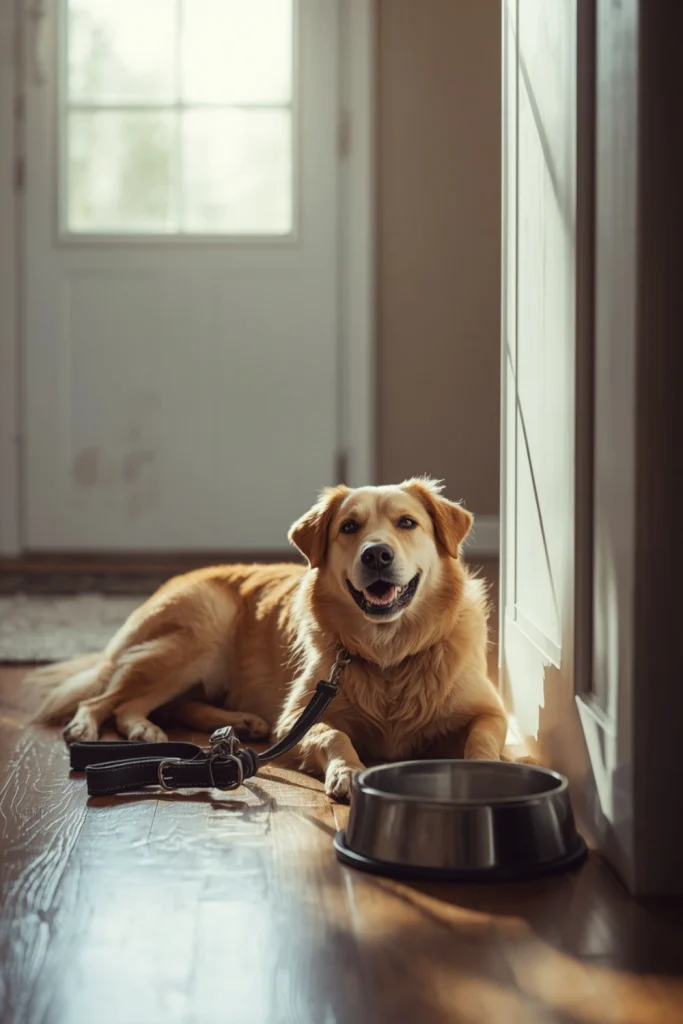
A predictable routine can help your dog understand what usually happens during the day. Try to keep meals, walks, toilet breaks, play, and rest reasonably consistent. When your dog knows that their basic needs are regularly met, it may become easier for them to settle during quieter periods. Before a planned absence, offer an appropriate toilet break and a suitable opportunity for physical and mental activity. Then allow a little time for your dog to wind down rather than rushing straight from an exciting game into separation.
Routine should provide reassurance without becoming so rigid that every change causes concern. Gradually help your dog cope with ordinary variations, such as doing a quiet activity before a walk on one day and afterward on another. Make changes small enough that your dog can stay comfortable. If your schedule changes unexpectedly, arrange appropriate care whenever possible rather than leaving a distressed dog alone far longer than they can manage. A consistent routine supports training, but it does not replace gradual separation practice or professional care when anxiety is severe.
8. Practice Calm Departures and Returns
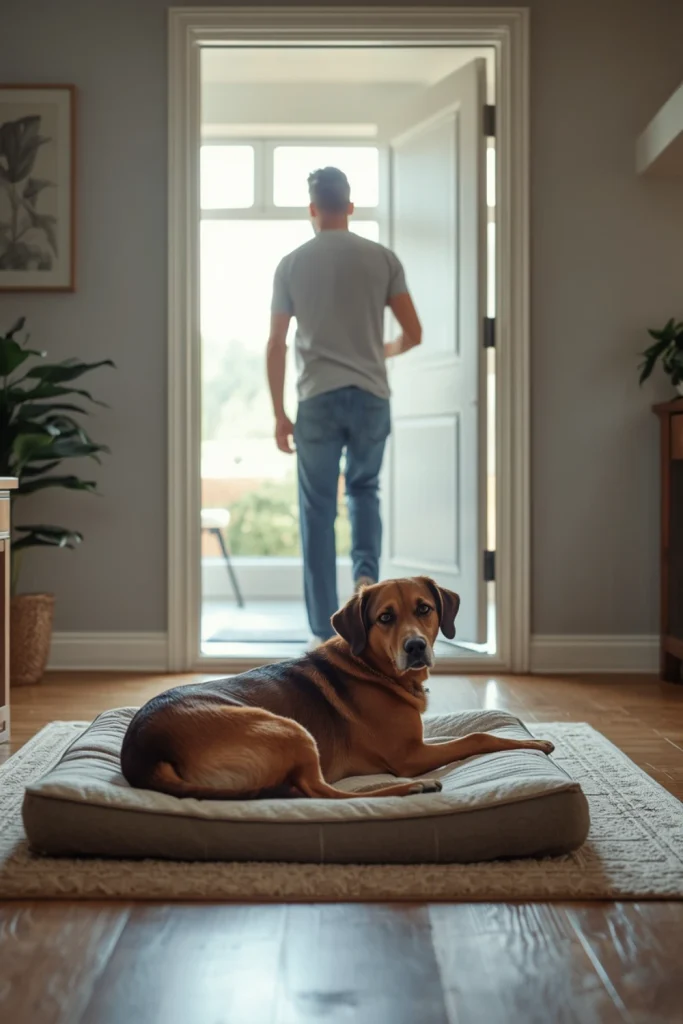
Try to make leaving the house a predictable, low-key part of the day. Complete your usual preparations, ensure your dog has water and a comfortable space, and avoid turning the goodbye into a long, emotional event. You can still be warm and affectionate with your dog. The aim is simply to avoid adding extra excitement or uncertainty to a situation that may already be difficult. During training, practice the same calm approach for very short departures that your dog can comfortably tolerate.
When you return, greet your dog in a friendly but relaxed way. If your dog is excited, give them a moment to settle before beginning an energetic activity. However, do not deliberately withhold comfort from a frightened dog or assume that ignoring distress will teach independence. If your dog panics as soon as you leave, the solution is to make the separation easier and build tolerance gradually. Calm departures and returns are supportive habits, not a complete treatment for serious separation-related anxiety. Watch your dog’s response and adjust your approach accordingly.
9. Build Confidence With Gradual Distance Training
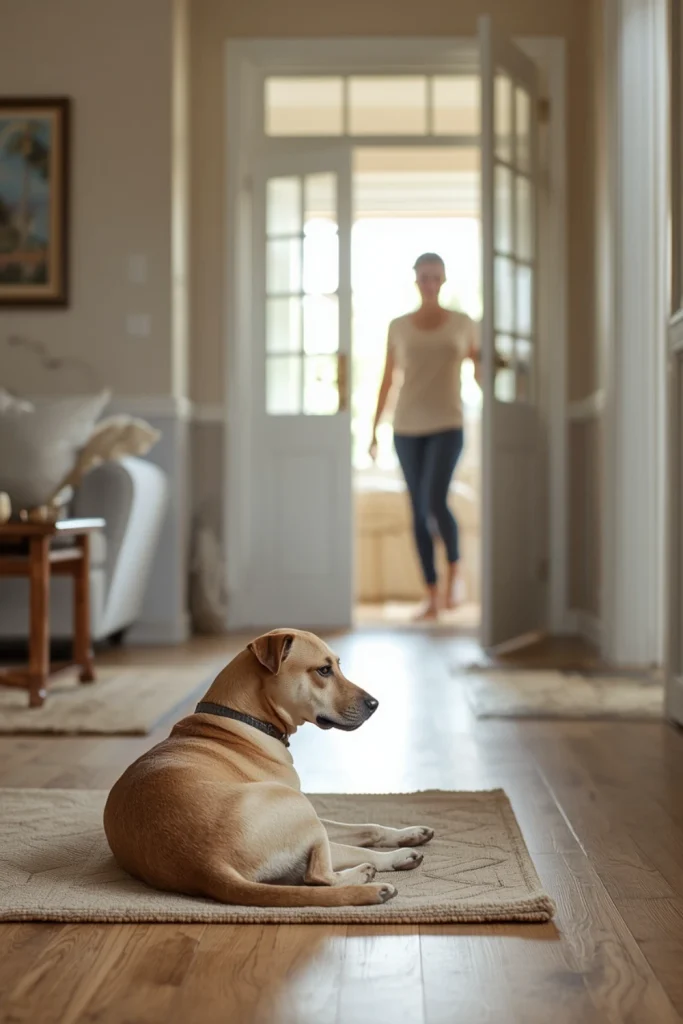
Gradual distance training teaches your dog that you can move away without anything frightening happening. Begin with an easy movement, such as standing up while your dog relaxes on a mat, then sitting down again. If your dog remains comfortable, take one or two steps away before returning. Later, you may move behind a doorway or briefly close an interior door. Change one element at a time so your dog can learn from each successful repetition instead of facing several new challenges together.
Pay attention to early signs of tension. A dog that stops chewing, suddenly stands, watches you intensely, or starts following may be telling you that the exercise is becoming difficult. Reduce the distance or return to an easier step rather than continuing until your dog cries or panics. You can keep a simple record of which distances and durations your dog manages comfortably. This makes progress easier to measure and helps you identify patterns. The objective is not to teach your dog to endure distress but to develop genuine confidence through manageable experiences.
10. Seek Professional Support When Your Dog Needs It
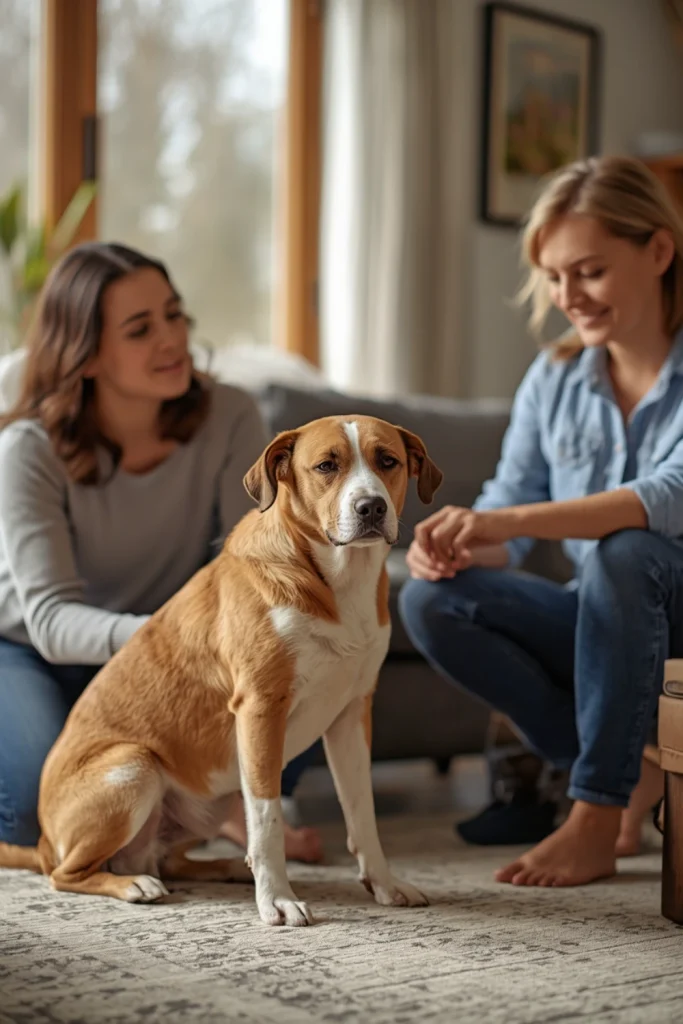
Some dogs experience distress that is too intense to address with basic home exercises alone. Persistent howling, frantic escape attempts, heavy drooling, trembling, repeated accidents, destructive behavior around exits, or an inability to settle after departure can indicate a significant problem. If your dog shows these signs, arrange a veterinary assessment to rule out medical causes and discuss the best next steps. A qualified, reward-based trainer or veterinary behavior professional can help you create a gradual plan that matches your dog’s needs.
Where possible, prevent repeated absences that trigger severe distress while you work on training. A trusted family member, pet sitter, or other suitable caregiver may help your dog avoid difficult periods alone. Your veterinarian may also discuss medication as part of a broader treatment plan when appropriate. Seeking help is not a failure, and it does not mean your dog cannot improve. It means you are responding to their needs with care. The most successful plan combines realistic management, appropriate professional guidance, and training that progresses only as quickly as your dog can comfortably handle.
Conclusion
Helping a dog cope with separation distress begins with understanding their feelings and creating experiences that build confidence rather than fear. These 10 gentle training ideas for dogs provide practical ways to encourage independence, reduce worry around departure cues, reward calm behavior, and gradually introduce short periods of separation.
Start with the easiest step your dog can manage, observe their body language, and increase the challenge only when they remain comfortable. Avoid punishment and do not force your dog to endure prolonged distress. If the problem is severe or does not improve, seek guidance from a veterinarian or qualified behavior professional. With patience, appropriate support, and a training plan tailored to your dog, you can help them feel safer and more secure when you are apart.