
10 Cardboard Box Enrichment Ideas for Dogs
Dogs love exploring new things, using their noses, and discovering hidden surprises. You do not always need expensive toys or complicated equipment to keep your dog entertained. Sometimes, one simple cardboard box can provide hours of interesting mental stimulation. With a little creativity, an ordinary delivery box can become a fun activity that encourages sniffing, searching, problem-solving, and natural curiosity.
Cardboard Box Enrichment Ideas are an affordable way to make your dog’s daily routine more interesting. You can turn clean cardboard boxes into treat-finding games, simple puzzles, sniffing activities, and interactive challenges. These activities are especially useful for indoor play, rainy days, and moments when your dog needs something enjoyable to do. In this guide, you will discover ten easy ideas, learn how to introduce them safely, and find practical ways to adjust each activity to your dog’s age, confidence, and experience.
1. Simple Treat-Finding Cardboard Box
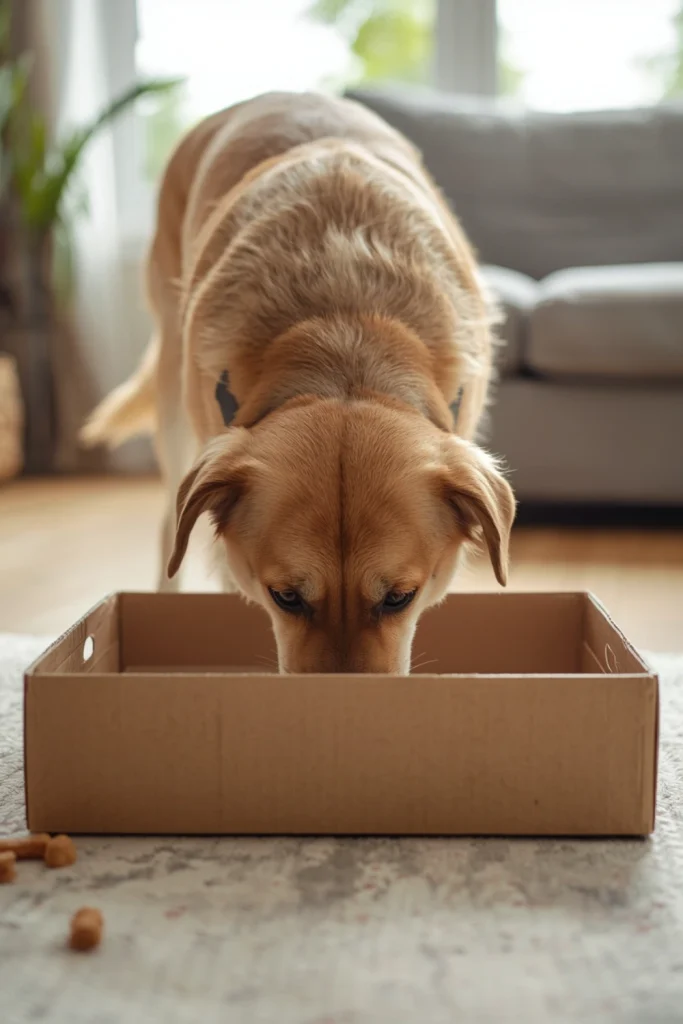
How to set it up: Choose a clean, shallow cardboard box with enough space for your dog to look inside comfortably. Remove tape, staples, plastic pieces, and loose labels. Place two or three small dog-safe treats on the bottom of the box, leaving them clearly visible at first. Put the box on a non-slip surface and invite your dog to investigate. Allow your dog to use their nose to locate the treats without rushing or directing every movement.
How to make it more interesting: Once your dog understands the activity, place a few treats in different corners or cover one treat loosely with a large piece of plain paper. Keep the reward accessible so your dog does not need to tear apart the cardboard to reach it. Praise calm investigation and allow your dog time to explore. This beginner-friendly game is ideal for introducing cardboard enrichment because it teaches the basic idea of searching for a reward.
2. Cardboard Box and Crumpled Paper Search
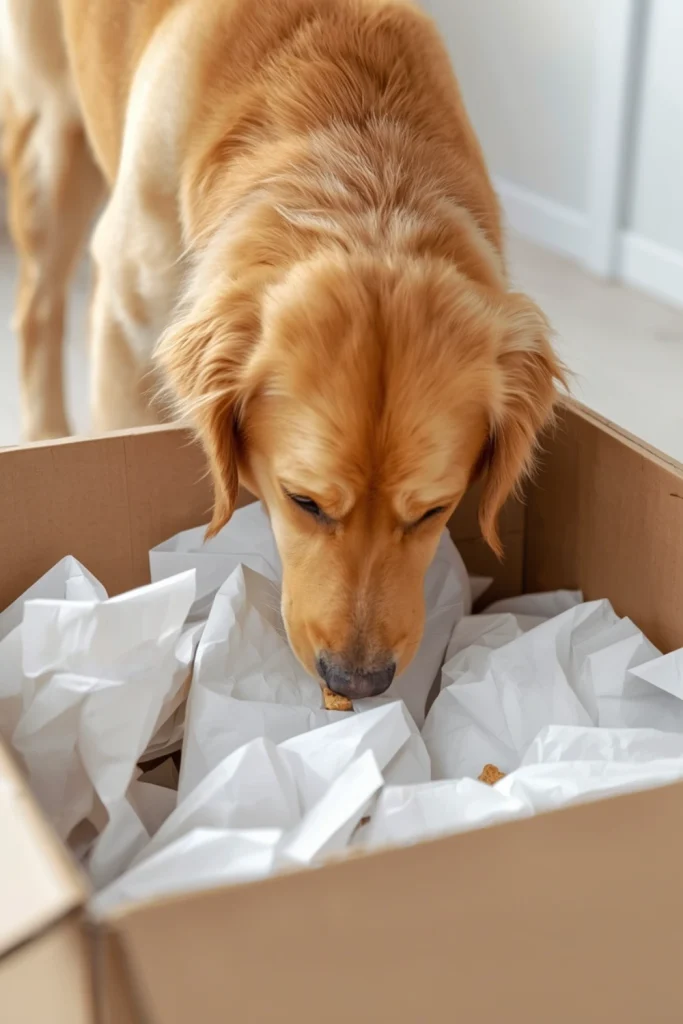
How to set it up: Take a medium-sized cardboard box and add several large pieces of clean, plain, uncoated paper. Crumple the paper loosely to create soft spaces where treats can be placed. Hide a few small treats between the paper pieces, making sure they remain easy to find. Introduce the box to your dog and let them sniff through the paper. This activity encourages your dog to investigate different areas rather than finding every treat immediately.
How to make it more interesting: Begin with only two or three paper pieces and gradually add more if your dog enjoys the game. You can spread the paper loosely rather than packing it tightly, making the activity easier for beginners. Watch carefully to ensure your dog searches rather than eats the paper. If your dog starts swallowing paper, stop the activity and choose a safer enrichment option. This game is best for dogs that can explore paper without consuming it.
3. Nested Cardboard Box Puzzle
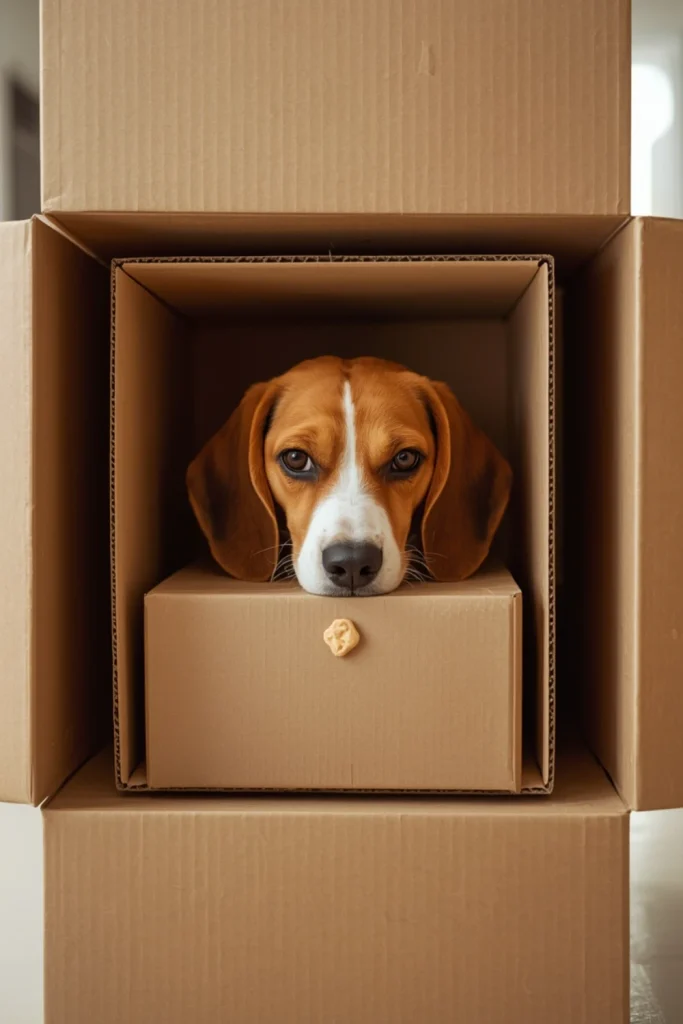
How to set it up: Collect two or three clean cardboard boxes in different sizes. Place the smallest box inside the medium one, then put both inside the largest box. Keep the boxes open and make sure they fit loosely without creating tight spaces. Place a treat inside the smallest box where your dog can see or smell it. Set the puzzle on the floor and encourage your dog to investigate. This arrangement introduces a simple problem-solving challenge without requiring complicated equipment.
How to make it more interesting: When your dog understands the activity, place a small number of treats in different boxes or change the arrangement slightly. Avoid making the boxes difficult to separate or creating spaces where your dog’s head or paws could become trapped. The purpose is to encourage exploration, not force your dog to pull apart packaging. If your dog becomes frustrated, remove one layer and make the reward easier to reach. Always supervise closely and stop if the dog begins eating cardboard.
4. Cardboard Box Snuffle Search
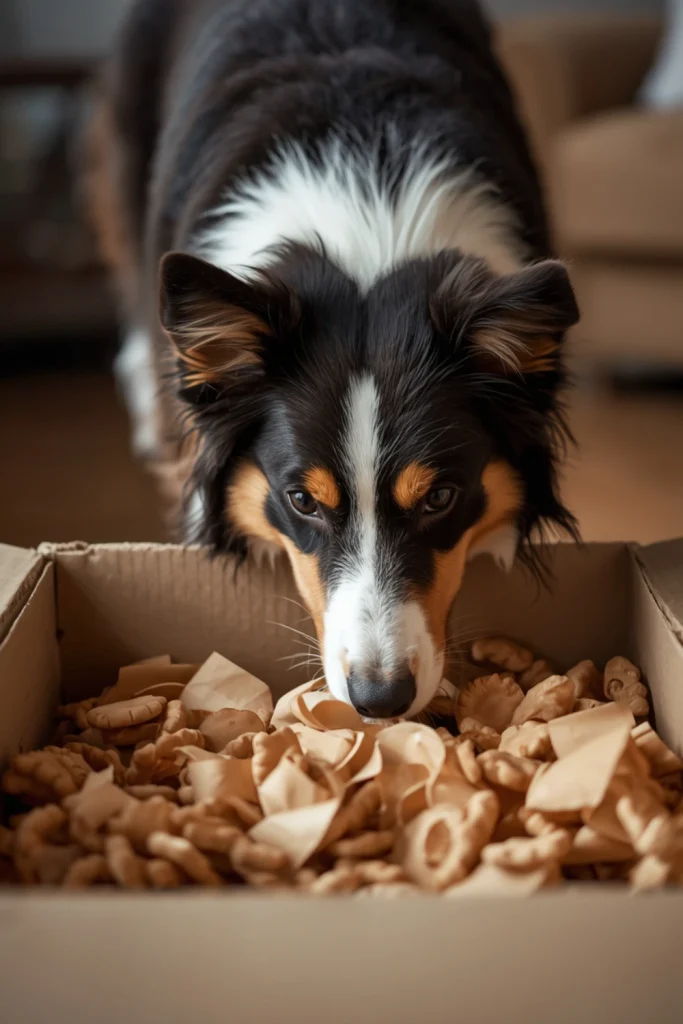
How to set it up: Use a wide, shallow cardboard box and place several large pieces of loose, clean paper inside. Sprinkle a few small treats across the surface and between the paper pieces. Let your dog sniff around to discover each reward. Unlike a simple treat-finding box, this activity encourages repeated searching in different locations. It can be a useful way to add variety to your dog’s indoor routine when outdoor conditions make a normal walk less convenient.
How to make it more interesting: You can change the number and position of the treats each time, making the search slightly different without increasing the difficulty too quickly. For a beginner, keep some treats visible. For a confident dog, hide a few more between the loose paper pieces while ensuring they remain accessible. Do not use small objects, sharp packaging, plastic fillers, or materials that could be swallowed. If your dog starts shredding or eating the paper, end the game and try a different activity.
5. Cardboard Box Treasure Hunt
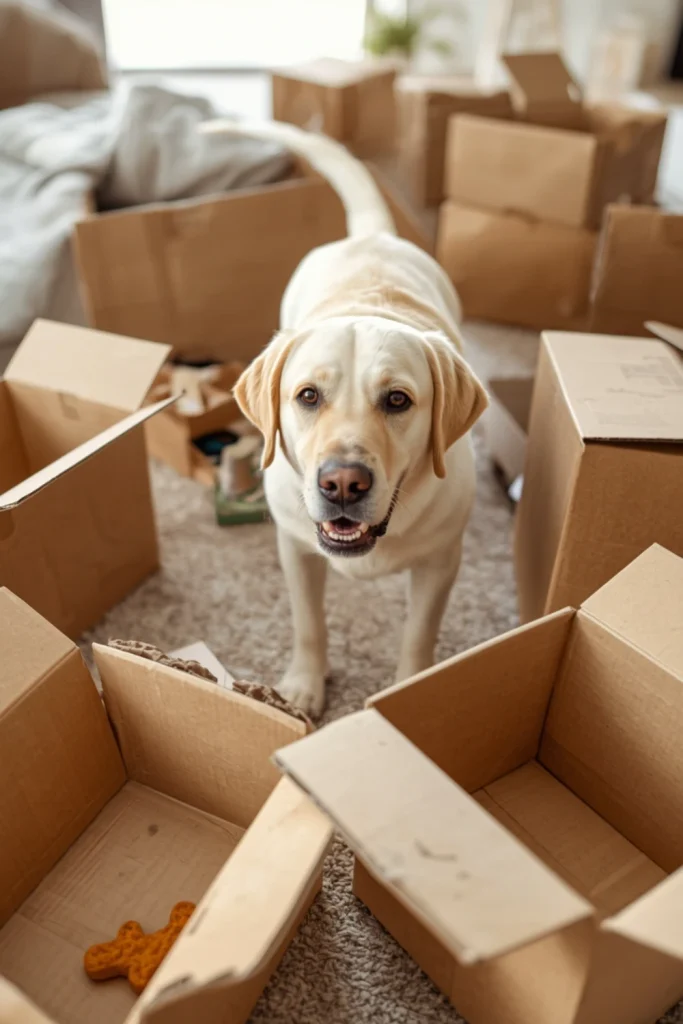
How to set it up: Place three or four clean, open cardboard boxes around one room, leaving plenty of space between them. Put a small treat in one box and allow your dog to explore the area. At first, make the treat easy to discover by leaving it visible. Once your dog understands the game, place treats in two different boxes while leaving the others empty. Encourage your dog to investigate each box using their nose rather than pointing out the hiding place immediately.
How to make it more interesting: Change the locations of the boxes during future sessions, but keep the room familiar and safe. You can also use different box sizes to make the search more varied. Do not place boxes on unstable furniture, stairs, or elevated surfaces. Avoid hiding treats in places where your dog must climb, jump, or squeeze into a tight space. This game works best when the dog can move freely between boxes and find each reward without physical difficulty.
6. Cardboard Box Peek-and-Find Game
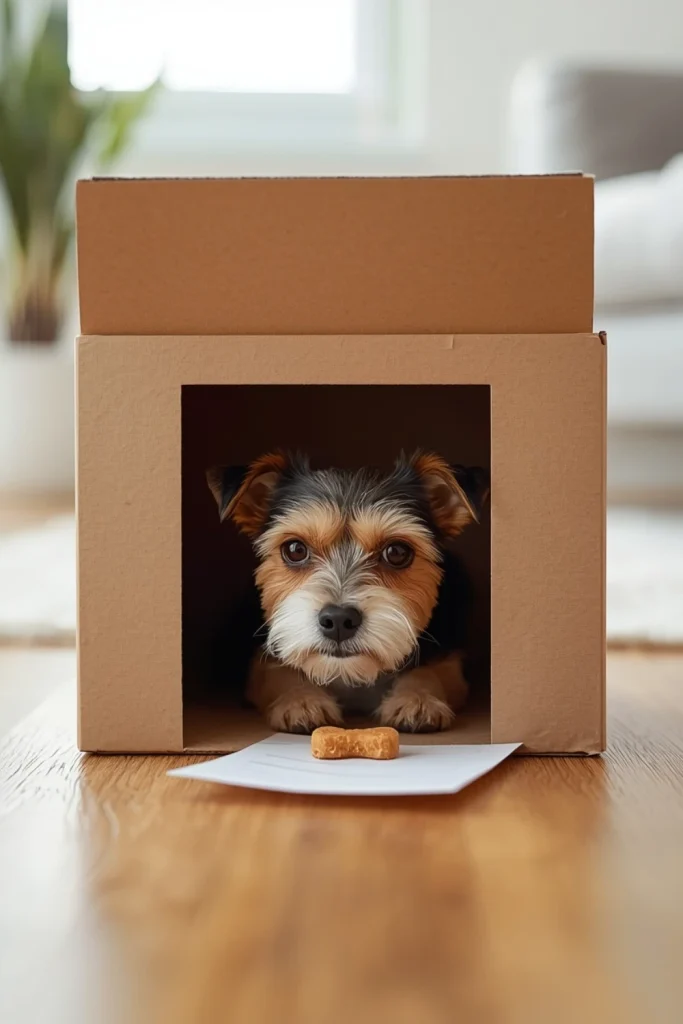
How to set it up: Choose a small or medium cardboard box with a wide opening. Place a treat near the front of the box so your dog can see and smell it. Then place a large, loose piece of plain paper partly inside the box, leaving enough room for your dog to reach the reward comfortably. Invite your dog to look inside and discover the treat. This simple activity encourages curiosity and introduces a small amount of problem-solving without making the reward difficult to access.
How to make it more interesting: As your dog becomes familiar with the activity, move the treat slightly farther inside or place a second loose piece of paper nearby. Do not close the box or block the opening. Your dog should always be able to reach the treat without forcing their head into a narrow space. If your dog appears uncertain, remove the paper and return to the easier version. Reward relaxed exploration and avoid pushing your dog toward the box if they are nervous about unfamiliar objects.
7. Cardboard Box Reward Discovery Game
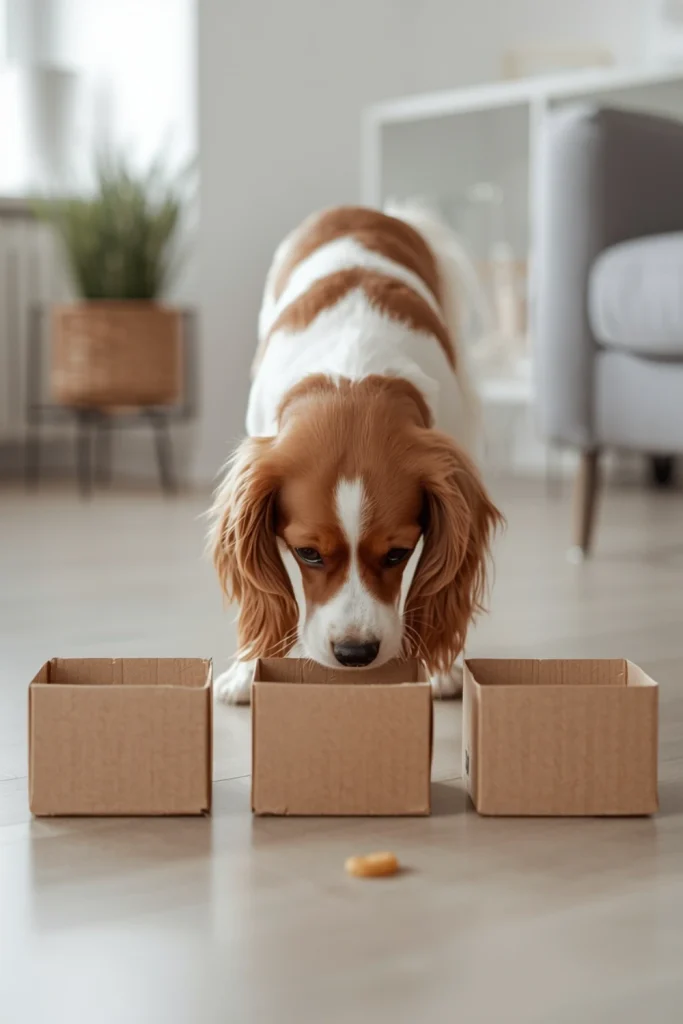
How to set it up: Take two or three small, clean cardboard boxes and place them next to one another on the floor. Put a treat in one box and leave the others empty. Keep all openings fully accessible. Allow your dog to sniff each box and discover where the reward is located. This activity encourages observation and scent-based searching while giving your dog an opportunity to make choices independently.
How to make it more interesting: Change which box contains the treat during each round. You can gradually add another box if your dog enjoys the game and can complete it comfortably. Avoid placing treats underneath heavy objects or inside containers that require force to open. Your dog should be able to investigate without becoming frustrated or damaging their teeth. If your dog begins grabbing and swallowing pieces of cardboard, remove the boxes and switch to a food puzzle designed for safe use.
8. Cardboard Box Exploration Tunnel
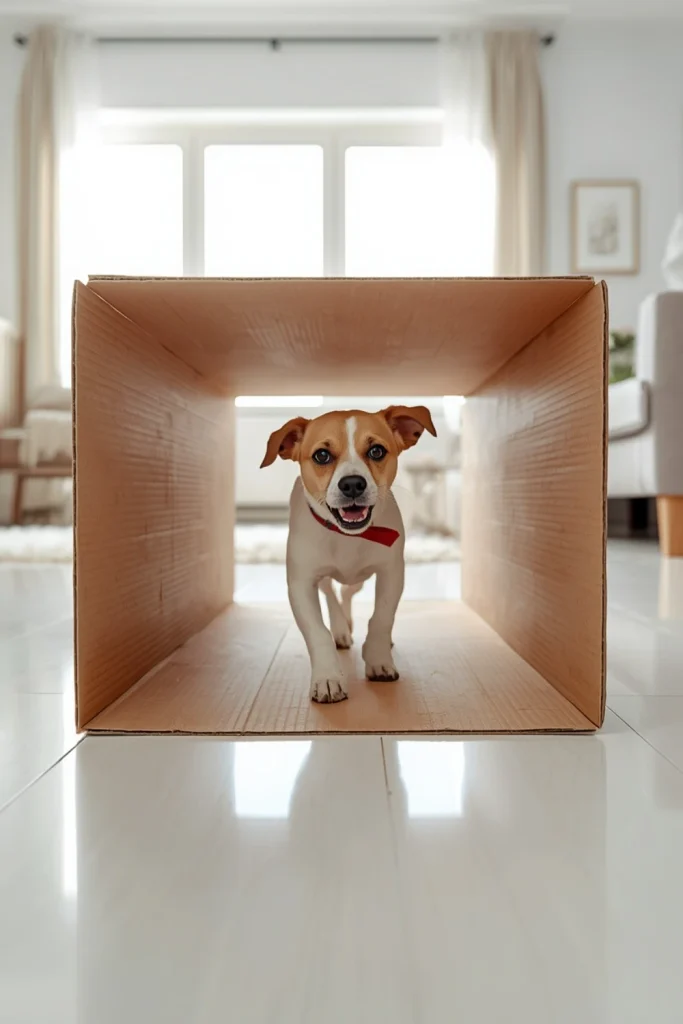
How to set it up: Use a large, sturdy cardboard box with both ends open to create a short exploration tunnel. Remove every staple, sharp edge, and piece of tape. Make sure the tunnel is wide and tall enough for your dog to walk through without touching the sides or lowering their head uncomfortably. Place it on a flat, non-slip floor and allow your dog to inspect it from the outside first. You can place a treat near the entrance to encourage a confident dog to walk through.
How to make it more interesting: Start with the tunnel positioned against an open area so your dog can see through to the other side. Reward your dog for approaching, sniffing, or calmly walking through. Never push, pull, or force your dog into the tunnel. Some dogs may dislike enclosed spaces, so let them choose whether to participate. Use only a stable box that cannot collapse, and do not use the tunnel if your dog is large enough to become stuck or if the cardboard bends under their weight.
9. Cardboard Box Food Bowl Alternative
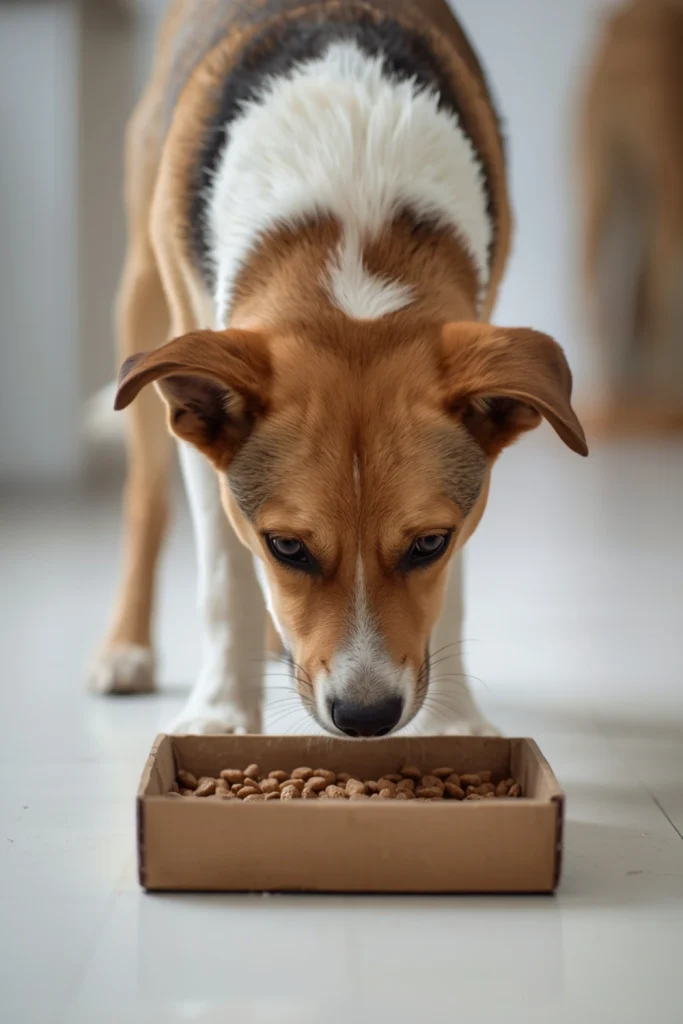
How to set it up: For dogs that eat too quickly, you can occasionally use a shallow cardboard tray as a supervised food-search activity. Choose a clean, low-sided tray and scatter a small portion of your dog’s usual dry food across the bottom. Spread the pieces out so your dog needs to sniff and move around to find them. This changes the way your dog receives food and can make a familiar meal more engaging. Use a tray that is stable and easy for your dog to reach.
How to make it more interesting: You can place a few large pieces of plain paper loosely in the tray to create separate searching areas, provided your dog does not eat paper or cardboard. Use only part of the dog’s normal meal rather than adding lots of extra treats. This activity is not a replacement for a suitable slow-feeder bowl, particularly for dogs that gulp food, swallow packaging, or have special feeding needs. Watch your dog throughout the session and remove the tray as soon as the food is finished.
10. Cardboard Box Mystery Search
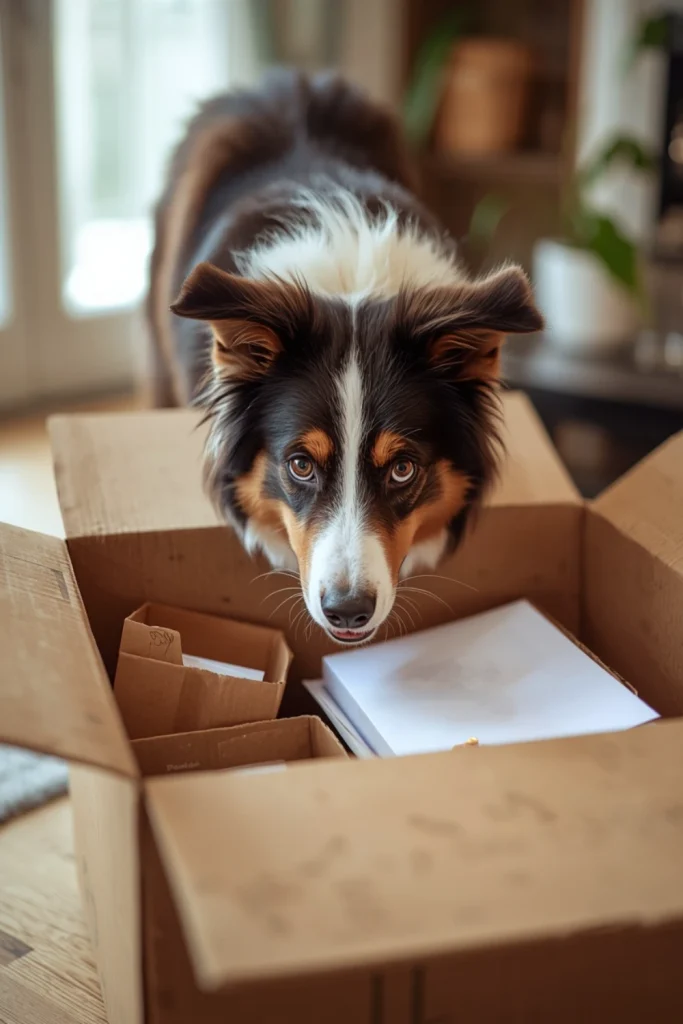
How to set it up: Choose two or three open cardboard boxes and place them in a small, familiar area. Add a few loose pieces of plain paper to one box and hide a small dog-safe treat among them. Leave another box empty so your dog has more than one place to investigate. Let your dog sniff each box and discover the reward. This game combines several simple enrichment elements: searching, exploring different textures, and making choices.
How to make it more interesting: Once your dog is comfortable, change the position of the boxes or vary which one contains the treat. You can also use a larger box with a few smaller open boxes placed inside, as long as everything remains stable and easy to access. Keep the challenge manageable and avoid creating a maze or tight arrangement. Your dog should never need to bite through cardboard to reach the reward. End the game while your dog is still relaxed and interested.
Final Thoughts
Cardboard box enrichment is a simple and affordable way to add variety to your dog’s daily routine. With a clean box, a few suitable treats, and some creativity, you can create enjoyable activities that encourage sniffing, searching, exploration, and problem-solving. From simple treat-finding games to nested box puzzles and treasure hunts, these ten ideas offer different ways to make indoor time more interesting.
Remember that every dog has different preferences and chewing habits. Start with easy activities, supervise your dog throughout each session, and use only safe materials. Never allow your dog to swallow cardboard or paper, and stop if the activity causes frustration or discomfort. With the right precautions, Cardboard Box Enrichment Ideas can become a fun addition to a balanced routine filled with exercise, training, play, and rest.