

15 Indoor Games Your Dog Will Absolutely Love
Rainy weather, extremely hot days, or a busy schedule can sometimes make outdoor activities difficult. But that doesn’t mean your dog has to spend the entire day feeling bored! With a little creativity, you can turn your living room, hallway, or even a small corner of your home into an exciting playground for your furry friend.
Indoor games are a wonderful way to keep dogs entertained, mentally stimulated, and physically active without leaving home. Whether you have a playful puppy, an energetic adult dog, or a senior companion, there are plenty of enjoyable activities to try. In this guide, you’ll discover 15 indoor games your dog will absolutely love, using simple household items, favorite toys, and positive training techniques.
1. Hide-and-Seek With Your Dog
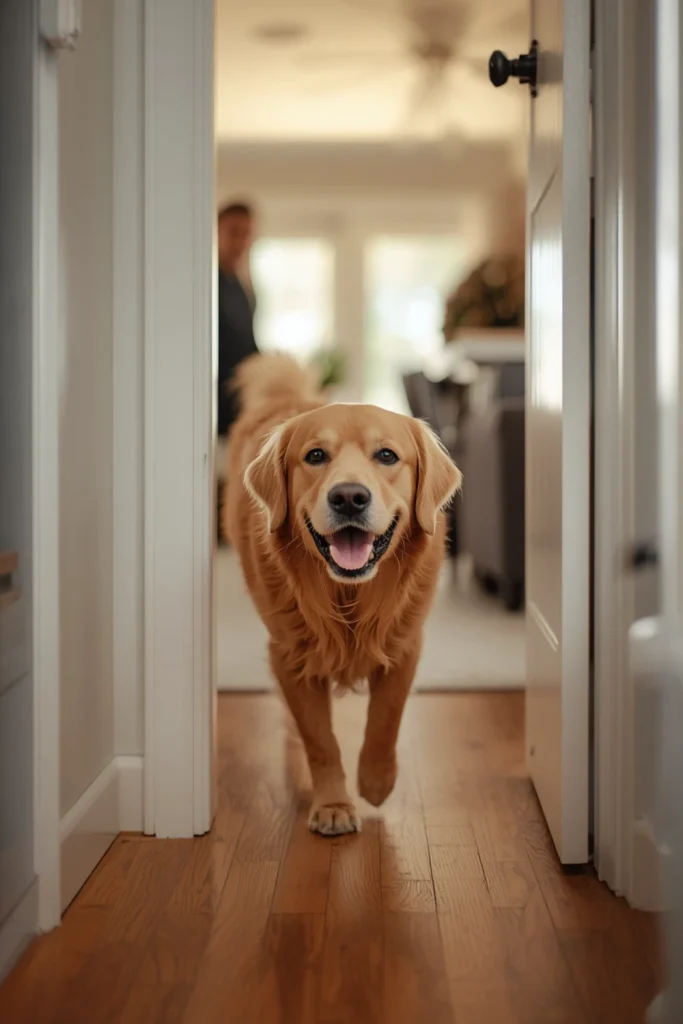
Hide-and-seek is one of the most entertaining indoor games for dogs. It allows your pet to use its natural senses while enjoying an exciting interaction with you. Start by asking your dog to stay in a familiar room while you hide behind a doorway, sofa, or another safe location. Once you’re ready, call your dog’s name and encourage it to find you. Reward your pet with praise, affection, or a small treat when it discovers your hiding place.
Begin with easy hiding spots so your dog understands the activity. As your pet becomes more confident, gradually choose slightly more challenging locations around your home. Avoid hiding in places where your dog could become trapped or frightened. This game provides mental stimulation, encourages recall, and strengthens your relationship through positive interaction.
2. The Hidden Treat Treasure Hunt
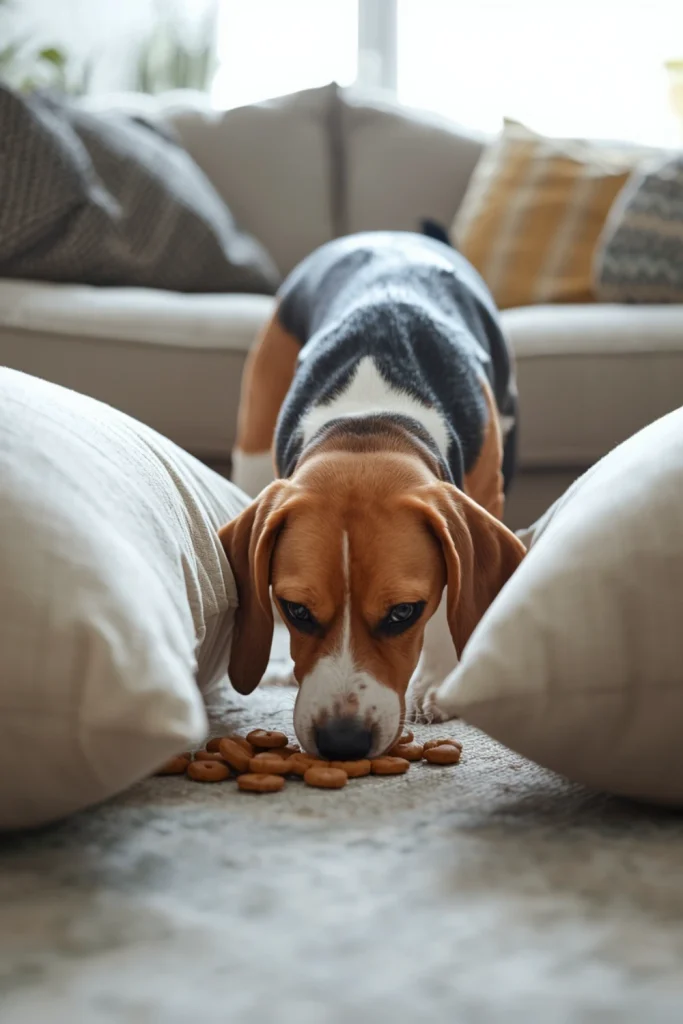
A hidden treat treasure hunt is a fantastic indoor activity for dogs that enjoy sniffing and searching. Begin by showing your dog a favorite treat and allowing it to watch while you hide the reward behind a cushion or beside a safe piece of furniture. Use a simple command such as “find it” to encourage your pet to start searching. When your dog discovers the treat, reward it with praise and allow it to enjoy the snack.
As your dog becomes familiar with the game, hide treats in several different locations throughout one room. You can gradually make the hiding places more challenging without making them frustrating. Always choose safe locations away from cleaning products, electrical equipment, and small objects that could be swallowed. This game encourages natural foraging behavior and gives your dog an enjoyable mental challenge without requiring expensive equipment.
3. The Towel Roll Treat Puzzle
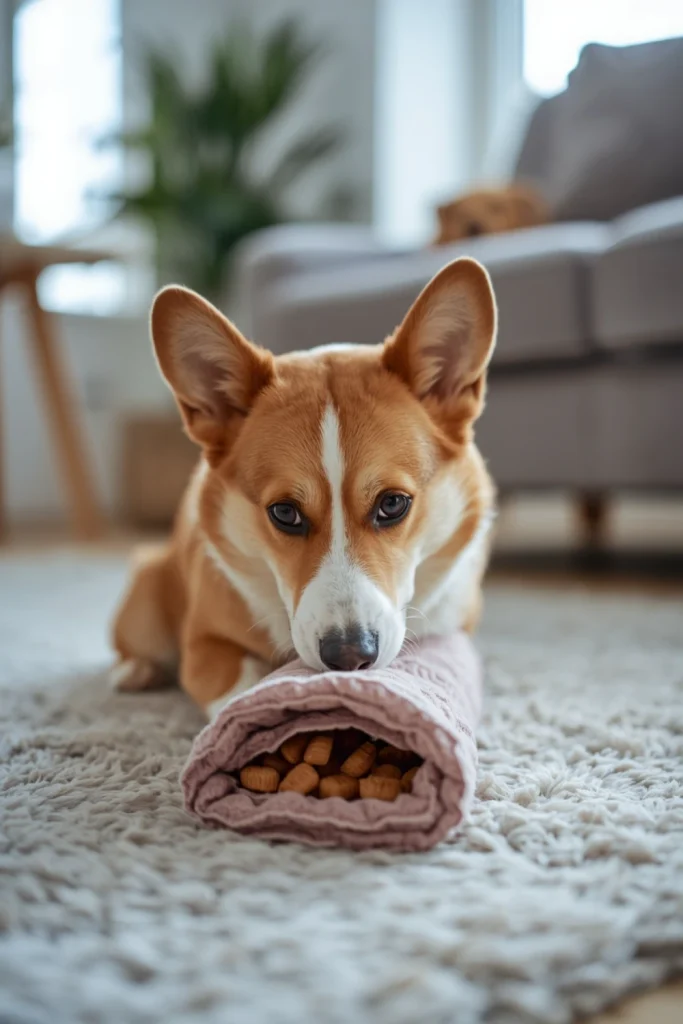
The towel roll puzzle is an inexpensive activity that can keep your dog busy while encouraging problem-solving. Take a clean towel and spread it across the floor. Place a few small dog treats along its surface, then loosely roll or fold the towel so that the rewards become hidden. Encourage your dog to use its nose and paws to investigate the towel and uncover the treats.
Start with loose folds so your pet can understand the activity without becoming frustrated. Once your dog learns how to find the rewards, you can introduce slightly more complicated folds. Always supervise the game and remove the towel if your dog starts chewing or swallowing pieces of fabric. This activity is especially useful for dogs that enjoy sniffing games and need additional mental enrichment indoors.
4. Indoor Fetch With a Soft Toy
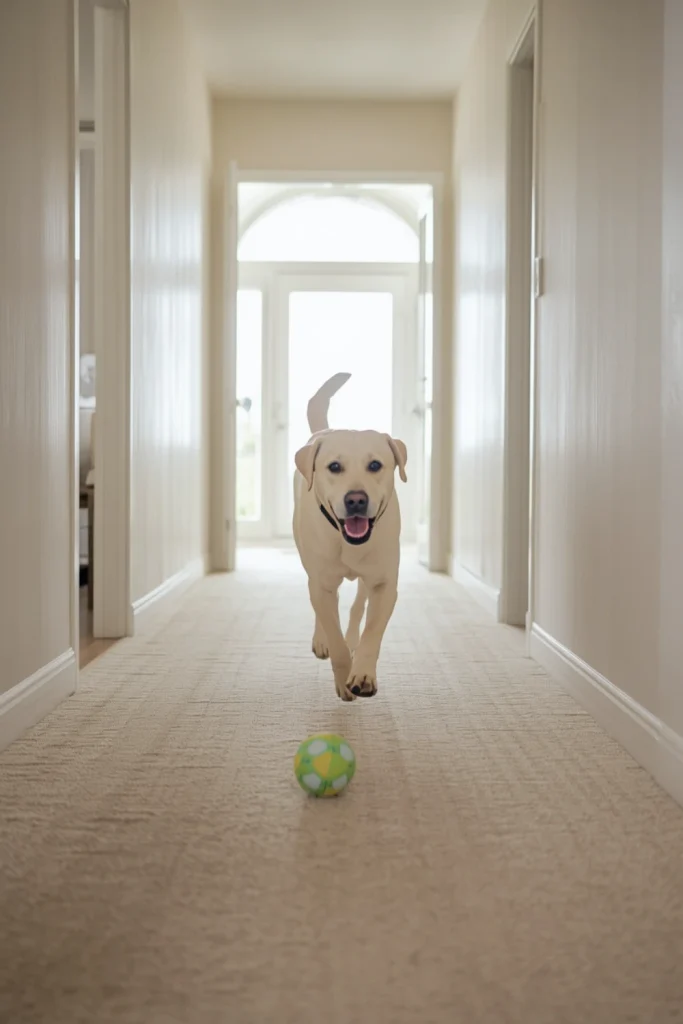
Fetch is a favorite activity for many dogs, and you can enjoy a gentle version inside your home. Choose a lightweight plush toy or soft ball that is appropriate for your dog’s size. Find a clear hallway or spacious room with a non-slip surface, then gently toss the toy a short distance. Encourage your dog to bring it back and reward successful returns with praise or another round of play.
Indoor fetch should be calmer than outdoor fetch. Remove fragile decorations, electrical cords, and other objects that could cause injuries. Avoid throwing toys near stairs or slippery floors where your dog could fall. Keep the distance short and provide breaks when needed. This game offers an opportunity for light physical exercise and interactive entertainment, especially when weather conditions make outdoor play difficult.
5. The Three-Cup Shell Game
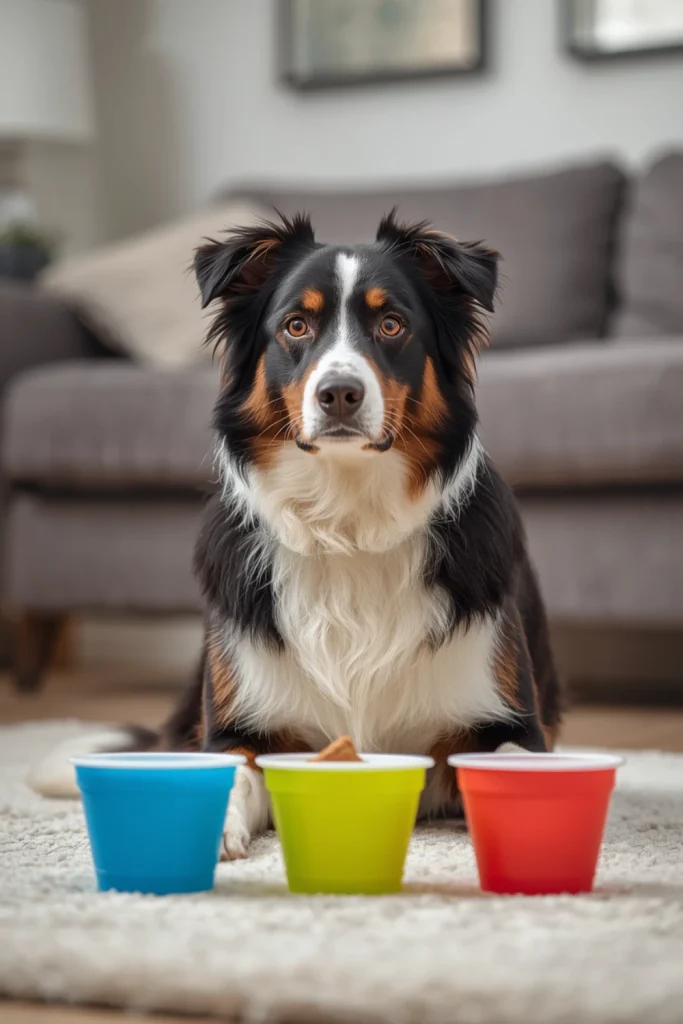
The three-cup shell game is an entertaining way to challenge your dog’s concentration and problem-solving abilities. Take three lightweight, non-breakable cups and place them upside down on a clean floor. Let your dog watch as you hide a small treat underneath one cup. Encourage your pet to sniff or investigate the cups to discover where the reward is hiding. Praise your dog when it finds the correct one.
Once your dog understands the game, gently move the cups around to make the challenge more interesting. Start slowly and avoid making the activity too difficult. Choose cups that cannot break into sharp pieces, and supervise your dog to prevent chewing or swallowing them. This simple game encourages observation, sniffing, and independent thinking while turning a few household objects into an enjoyable indoor puzzle.
6. Teach Your Dog a New Trick
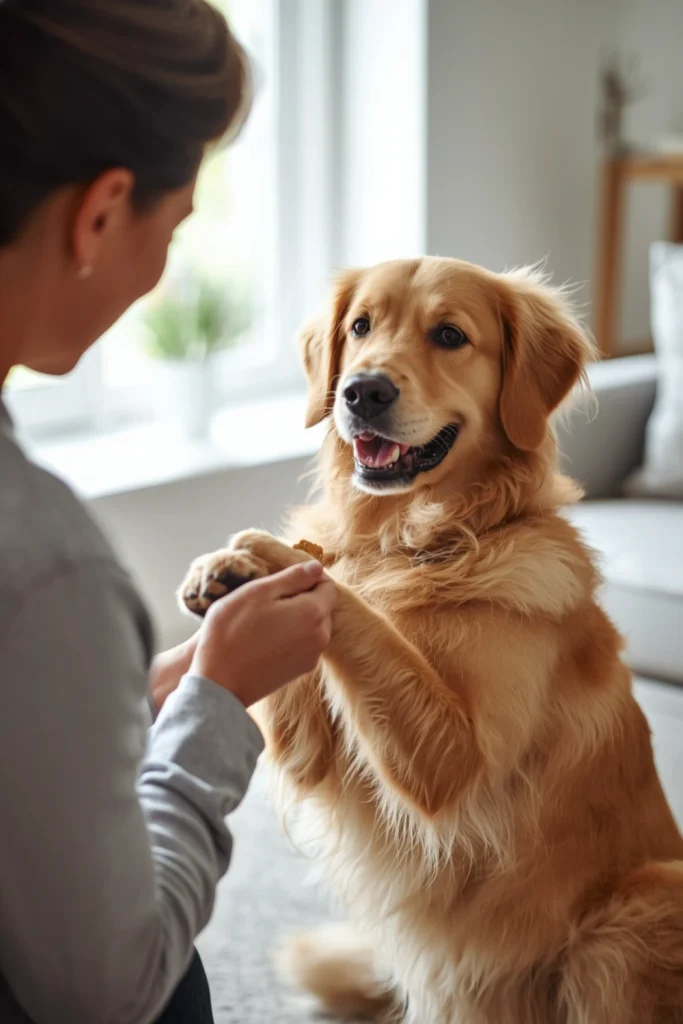
Training can become one of the most rewarding indoor games when you make learning enjoyable. Choose a simple trick your dog has not mastered, such as shaking paws, spinning, touching your hand, or lying down. Use a small treat to guide the desired movement and reward your dog whenever it makes progress. Keep your voice friendly and use consistent commands so your pet can understand what you expect.
Practice for short periods instead of expecting your dog to learn everything in one session. Around five to ten minutes may be enough for many dogs, depending on their attention and energy level. Repeat the activity over several days and celebrate small improvements. Avoid punishment or forcing uncomfortable movements. Trick training encourages mental stimulation, improves communication, and gives your dog a positive reason to spend quality time with you.
7. The Cardboard Box Exploration Game
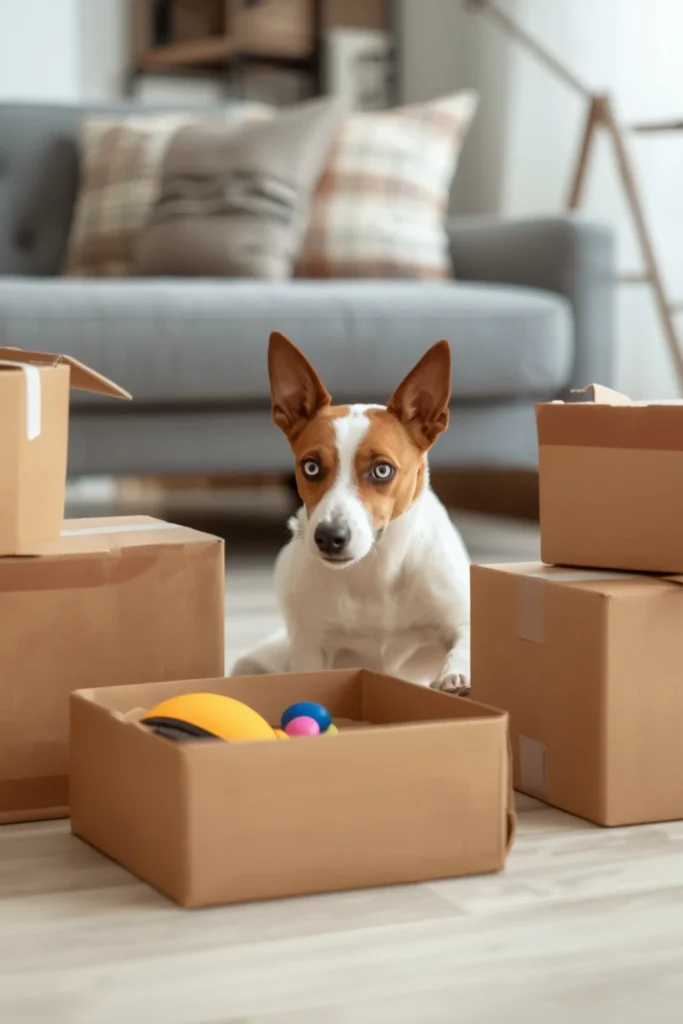
Cardboard boxes can provide simple entertainment for curious dogs. Collect a few clean, empty boxes and place them on the floor in a spacious room. Put a favorite toy or a few treats inside one of the boxes and encourage your dog to investigate. Allow your pet to sniff around and discover the interesting object naturally. You can also place several boxes together to create a small exploration area.
Before starting, remove staples, tape, sharp edges, and plastic pieces that could harm your dog. Choose boxes that are large enough to prevent your pet from becoming stuck. Supervise the entire activity, especially if your dog enjoys chewing cardboard. This game encourages exploration and problem-solving while giving your pet a new experience using inexpensive household materials.
8. Play a Gentle Game of Tug-of-War
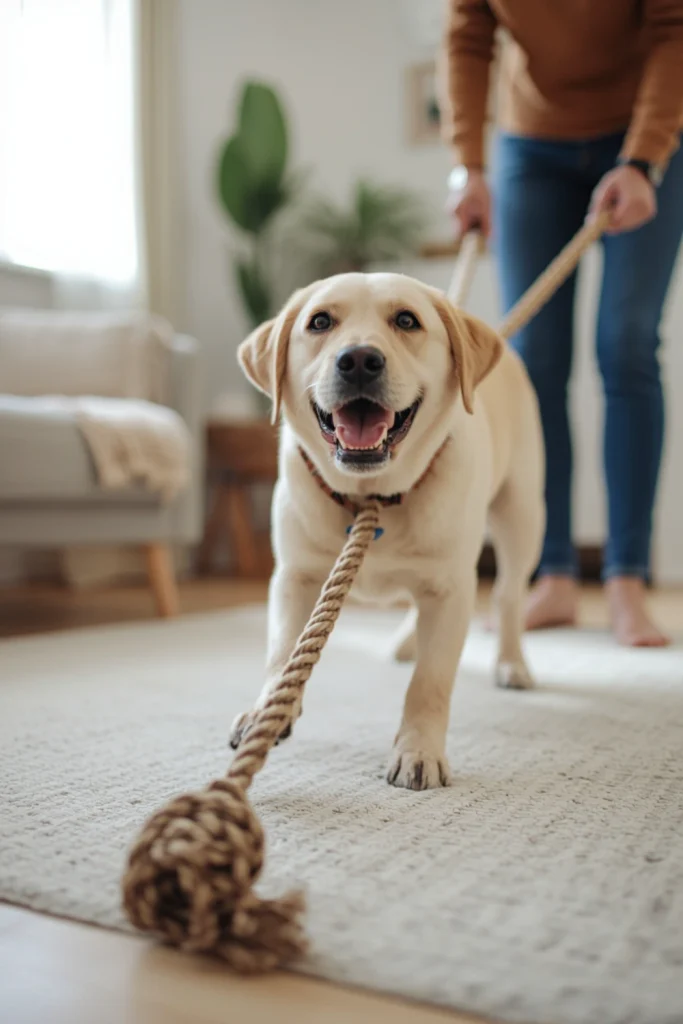
Tug-of-war is an interactive indoor game that many dogs enjoy because it allows them to use their natural pulling instincts. Choose a durable rope toy or a soft tug toy designed for dogs. Hold one end and encourage your pet to gently pull the other end. Keep the movements controlled and allow your dog to enjoy short rounds of play.
You can also use this activity to practice self-control. Teach a release command such as “drop it” and reward your dog when it lets go. Avoid sudden jerking, aggressive pulling, or twisting movements that could strain your dog’s neck or teeth. Dogs with dental or joint problems may need a gentler alternative. When played appropriately, tug-of-war provides physical activity and helps reinforce good manners.
9. The Which-Hand Treat Game
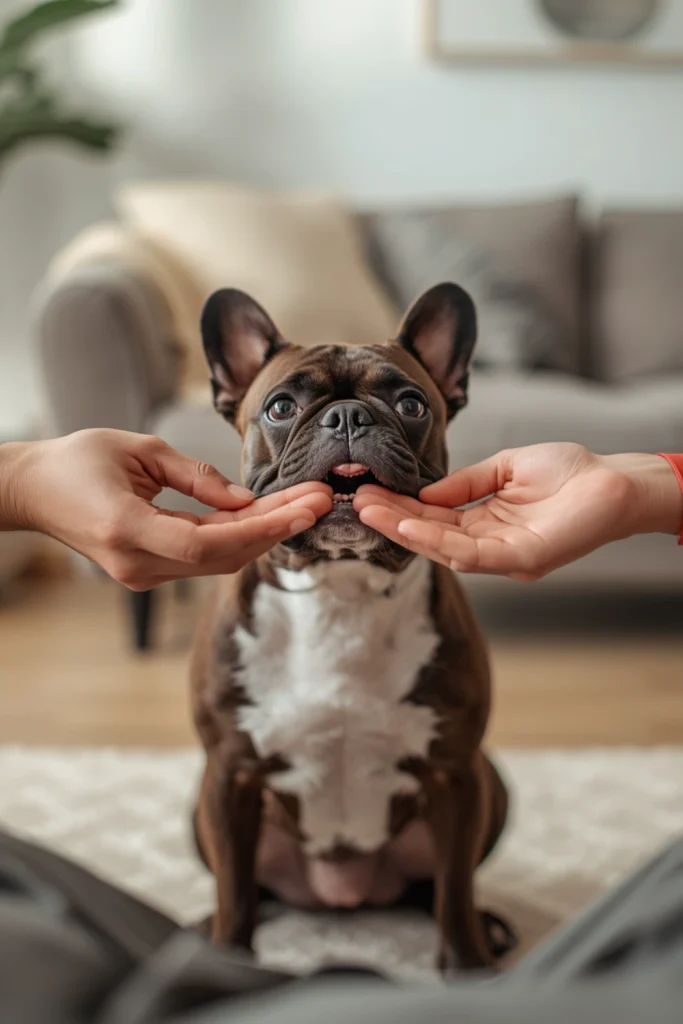
The which-hand game is a simple activity that requires almost no equipment. Place a small dog treat in one hand and close both hands into gentle fists. Hold your hands near your dog’s nose and encourage it to discover which hand contains the reward. Allow your pet to sniff each hand and investigate without rushing the decision. When your dog chooses correctly, open your hand and offer the treat with praise.
You can repeat the activity several times, changing which hand contains the reward. Keep the game friendly and avoid correcting your dog if it makes the wrong choice. Use small treats to prevent excessive snacking. This activity encourages scent-based problem-solving, concentration, and patience. It is also a great way to interact with your dog when you have limited space or only a few minutes available.
10. Create a Mini Indoor Obstacle Course
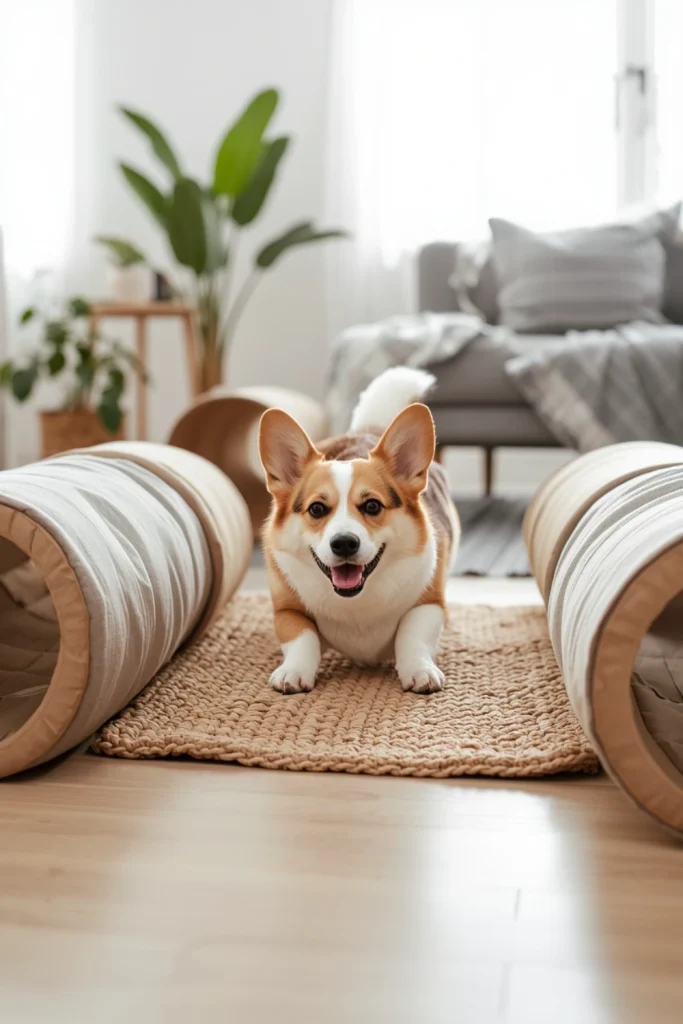
An indoor obstacle course can turn an ordinary room into an exciting play area. Use soft cushions, blankets, low cardboard tunnels, and stable household objects to create a simple course. Encourage your dog to walk around obstacles, step over low objects, or move through an open tunnel. Guide your pet using a favorite toy, treats, and positive encouragement.
Start with an easy arrangement and introduce new challenges only when your dog feels comfortable. Avoid high jumps, slippery surfaces, unstable furniture, and narrow spaces that could cause injuries. Adjust the course to your dog’s size, age, and physical abilities. This activity combines gentle movement with mental stimulation and helps build confidence. It is especially useful for dogs that enjoy exploring new environments.
11. Play the Toy Name Recognition Game
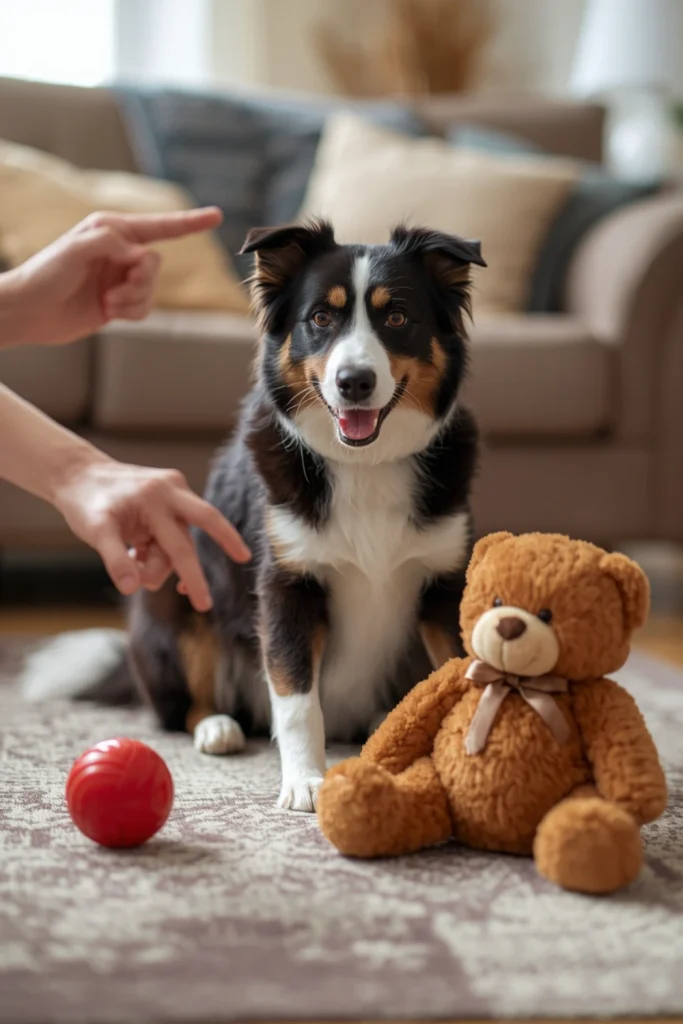
The toy name recognition game is an excellent way to challenge your dog’s learning abilities. Choose two familiar toys and give each one a simple name, such as Ball and Teddy. Hold up the first toy, say its name clearly, and reward your dog for touching or picking it up. Repeat the process until your pet starts recognizing the word and connecting it with the object.
Once your dog becomes familiar with both names, place the toys on the floor and ask it to find one by name. Reward correct choices with praise and a small treat. Start with only two toys rather than introducing too many objects at once. Some dogs may learn quickly, while others need more repetition. This game encourages concentration and can make everyday toy time more interactive.
12. The Follow-Me Game
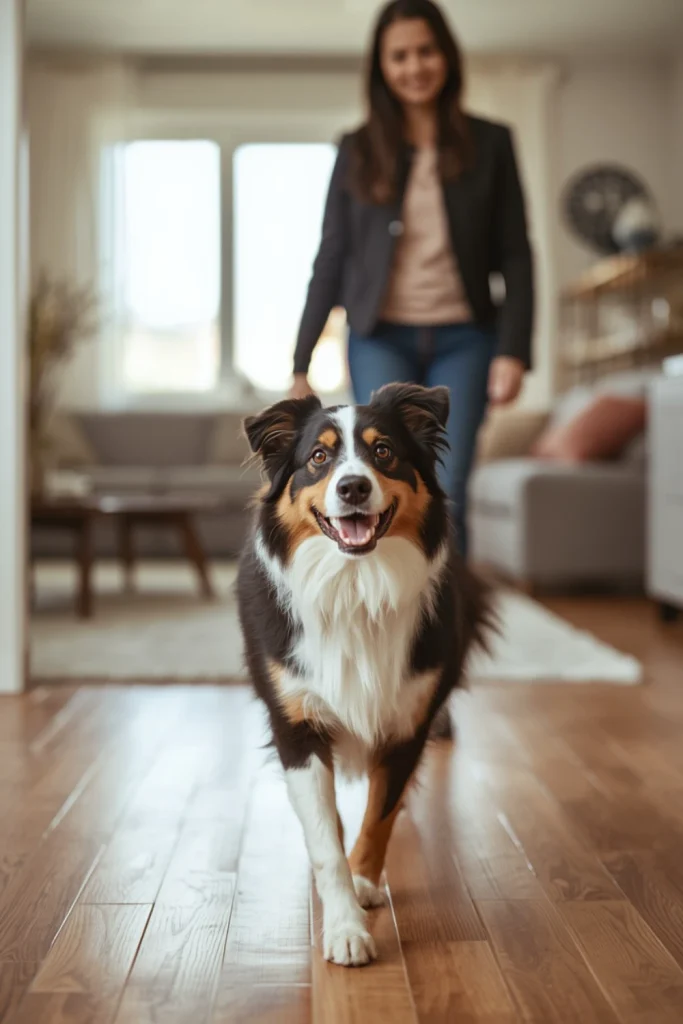
The follow-me game is a simple indoor activity that helps improve your dog’s attention and communication. Start in a familiar room where your pet feels relaxed. Walk a few steps in one direction and encourage your dog to follow you using a friendly voice. When your dog stays close or responds to your movement, reward it with praise or a small treat.
As your dog understands the game, gently change directions or introduce short pauses. You can also practice moving between different rooms. Avoid running around furniture or creating situations where your dog could slip. This game is particularly useful for dogs that enjoy following their owners and can help build a foundation for better attention during walks. Keep the movements relaxed and make every session enjoyable.
13. The Blanket Tunnel Adventure
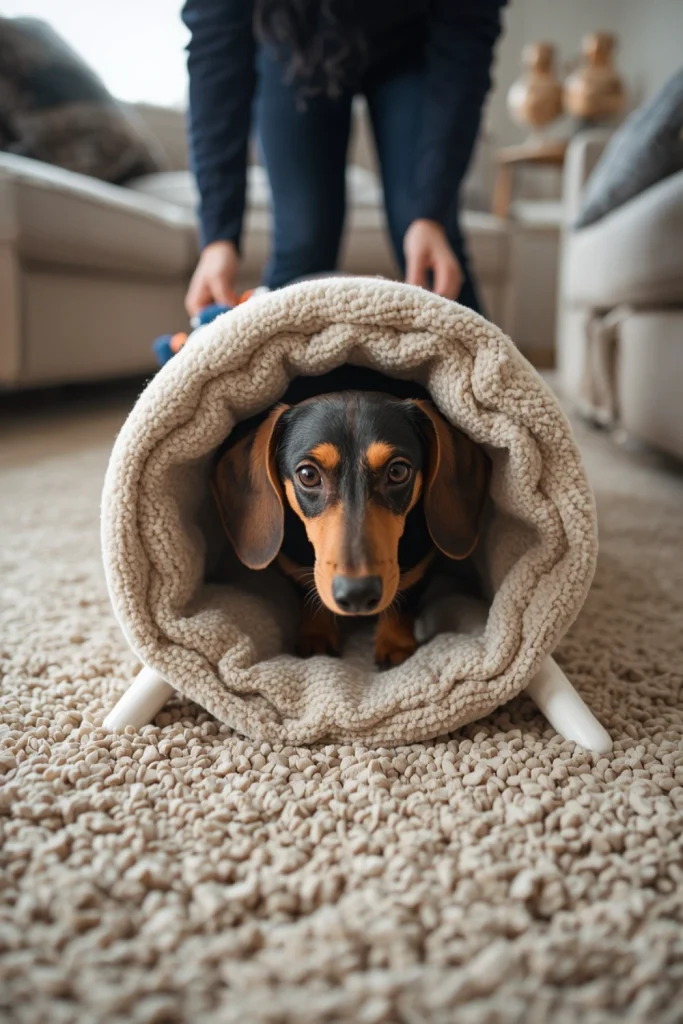
A blanket tunnel can become an exciting exploration activity for dogs that enjoy discovering new spaces. Create a short, open tunnel using a lightweight blanket supported by stable structures or use a pet-safe play tunnel. Encourage your dog to approach the entrance with a favorite toy or small treat. Allow your pet to sniff and investigate before deciding whether to walk through.
Begin with a wide, well-lit tunnel that cannot collapse. Avoid using heavy objects or unstable furniture as supports. Some dogs may feel nervous around enclosed spaces, so never force them to enter. Reward small steps toward the tunnel and allow your pet to explore at its own pace. This activity encourages curiosity and confidence while providing a simple change from ordinary indoor play.
14. Play the Clean-Up Your Toys Game
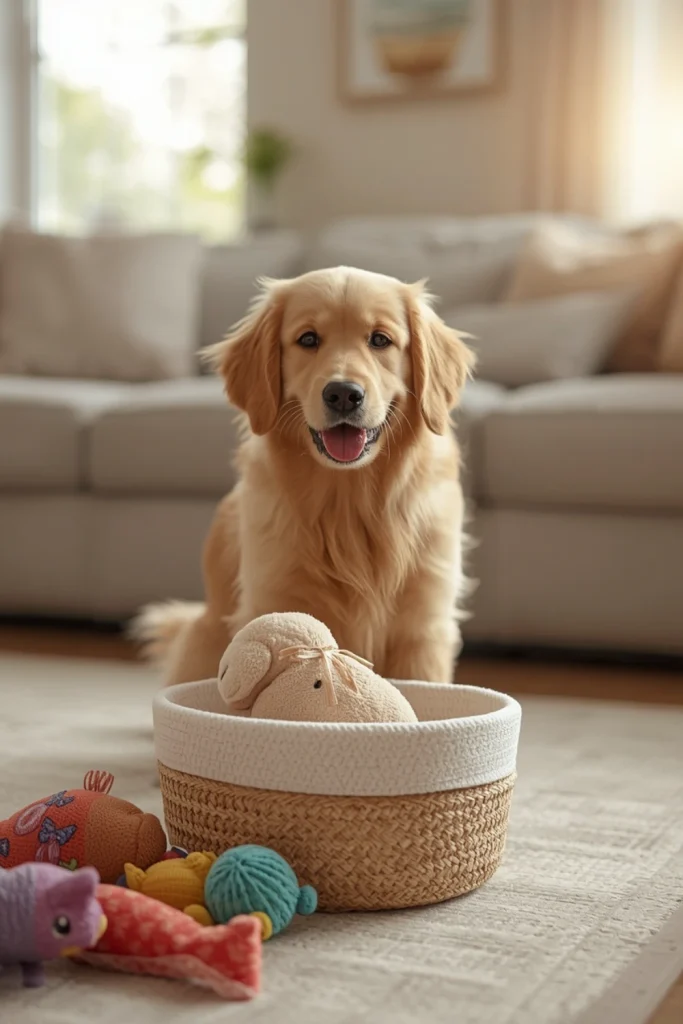
The clean-up game combines entertainment with useful training. Start by placing a small toy basket on the floor and teaching your dog to pick up one soft toy. Encourage your pet to carry the toy toward the basket and reward it when it drops the object inside. Use a simple verbal cue such as “clean up” to help your dog understand the activity.
Practice with one toy at a time before adding more objects. Some dogs may need extra encouragement to release the toy into the basket. Use small treats and positive reinforcement rather than forcing the behavior. Choose toys that are safe to carry and easy to release. This activity encourages learning, concentration, and interaction while helping your dog participate in a simple household routine.
15. Enjoy a Relaxing Massage and Bonding Session
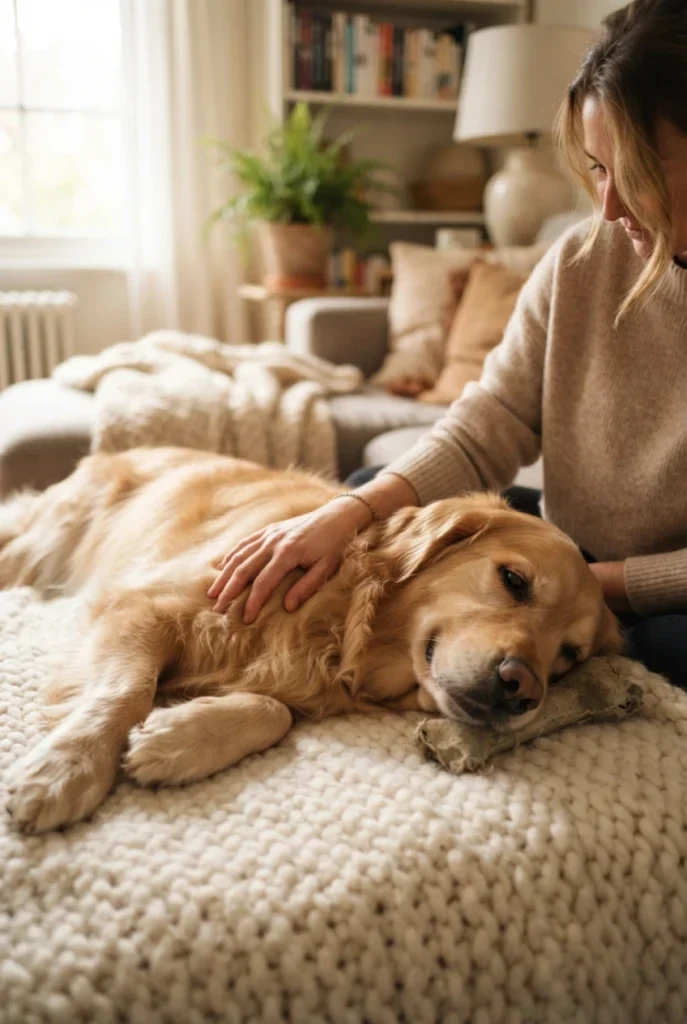
Not every indoor game needs to involve running, chasing, or searching. A gentle massage and bonding session can be a wonderful way to help your dog relax after more active activities. Choose a quiet place and allow your pet to settle on a comfortable blanket. Gently stroke areas your dog enjoys, such as the shoulders, chest, or back, while paying attention to its body language.
Keep your movements slow and avoid applying pressure to sensitive areas or joints. If your dog moves away, becomes tense, or shows signs of discomfort, stop and give it space. This activity is especially suitable for senior dogs and pets that enjoy calm attention. A peaceful bonding session can strengthen trust and make your dog feel comfortable and secure at home.
Final Thoughts
Indoor games are a wonderful way to keep your dog entertained, mentally stimulated, and connected to your family. You don’t need expensive toys, professional equipment, or a large playroom to create exciting experiences. Simple activities such as hide-and-seek, hidden treat hunts, indoor fetch, and trick training can make ordinary days much more interesting.
The 15 indoor games in this guide offer something for different personalities, ages, and energy levels. Try several activities and observe which ones your dog enjoys most. Some dogs may love searching for treats, while others prefer interactive toys or gentle training sessions.
Always remember to make safety a priority, keep playtime positive, and respect your dog’s individual needs. Provide enough rest between activities and combine indoor enrichment with suitable outdoor exercise. Most importantly, enjoy the special moments you share. Even a few minutes of focused attention can make your dog feel loved, happy, and appreciated.


