

20 Dog Boredom Busters You Can Try at Home
A happy dog needs more than food, water, and a comfortable place to sleep. Dogs also need mental stimulation, physical activity, and exciting experiences to keep their minds active. When dogs become bored, they may start chewing furniture, barking excessively, digging, or looking for attention throughout the day. Fortunately, you do not always need expensive toys or outdoor adventures to keep your furry friend entertained.
There are plenty of simple Dog Boredom Busters you can try at home using everyday household items, interactive games, and creative activities. Whether you have a playful puppy, an energetic adult dog, or a senior companion who prefers gentle activities, these ideas can make everyday life more interesting. Here are 20 enjoyable ways to keep your dog mentally stimulated, active, and happy indoors.
1. Create a Homemade Treat Puzzle
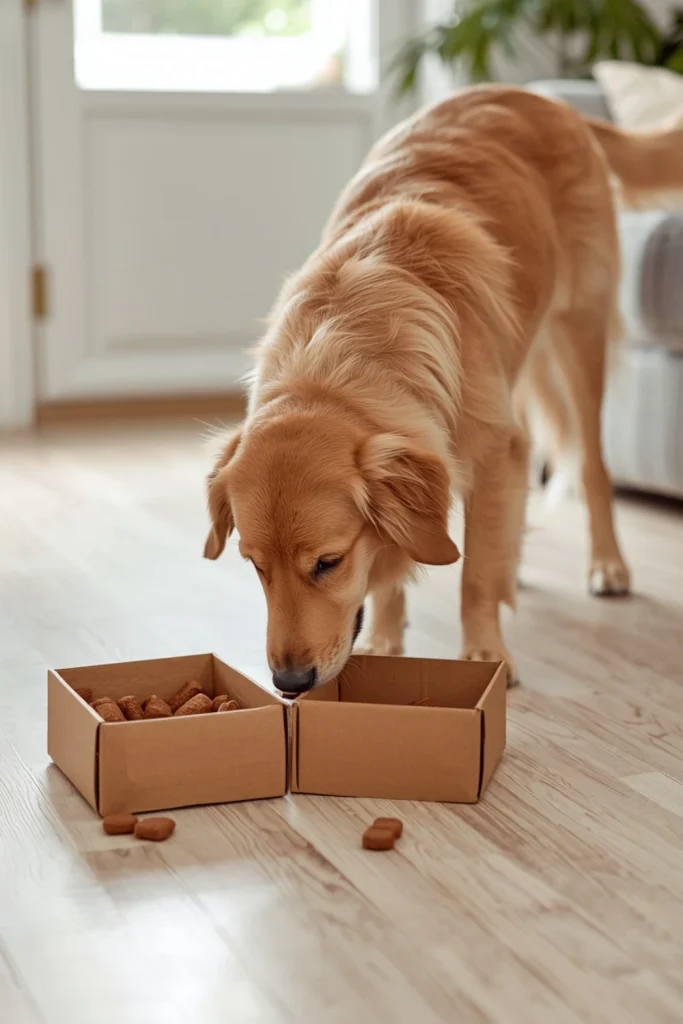
A homemade treat puzzle is one of the easiest Dog Boredom Busters for keeping your dog mentally active. Place a few small dog treats inside a sturdy cardboard box or paper cups and let your dog investigate how to reach them. Start with an easy arrangement so your pet can understand the game. As your dog becomes more confident, you can make the puzzle slightly more challenging by using several safe containers.
This activity encourages problem-solving and gives your dog an opportunity to use its natural curiosity. Always supervise your pet while playing with cardboard or paper materials. Remove staples, tape, plastic pieces, and anything your dog might swallow. If your dog starts chewing and eating the material instead of searching for treats, stop the activity and try a different puzzle.
2. Play a Fun Hide-and-Seek Game

Hide-and-seek is a fun indoor game that combines mental stimulation with light physical activity. Ask your dog to stay in one room while you hide behind a doorway, sofa, or another safe location. Call your dog’s name in a cheerful voice and encourage it to find you. When your dog discovers your hiding place, reward it with praise, affection, or a small treat.
If your dog does not understand the game at first, begin by hiding somewhere easy to find. Gradually choose more interesting hiding places as your pet learns what to do. This activity strengthens your relationship and encourages your dog to listen carefully. Keep hiding places accessible and avoid areas where your dog could become trapped or knock over household objects.
3. Teach Your Dog a New Trick

Teaching a new trick is an excellent way to challenge your dog’s brain and make everyday training more enjoyable. You can teach simple tricks such as spin, touch, wave, bow, or putting its paws on a small target. Choose one trick and divide it into small steps. Reward your dog whenever it makes progress, and use a cheerful voice to keep the experience positive.
Keep training sessions short, especially if your dog is a beginner or easily distracted. Five to ten minutes can be enough for one session. Avoid forcing your dog into uncomfortable positions or repeating commands when it becomes tired. Learning new tricks gives dogs something interesting to focus on and helps build communication between pets and their owners.
4. Set Up an Indoor Obstacle Course
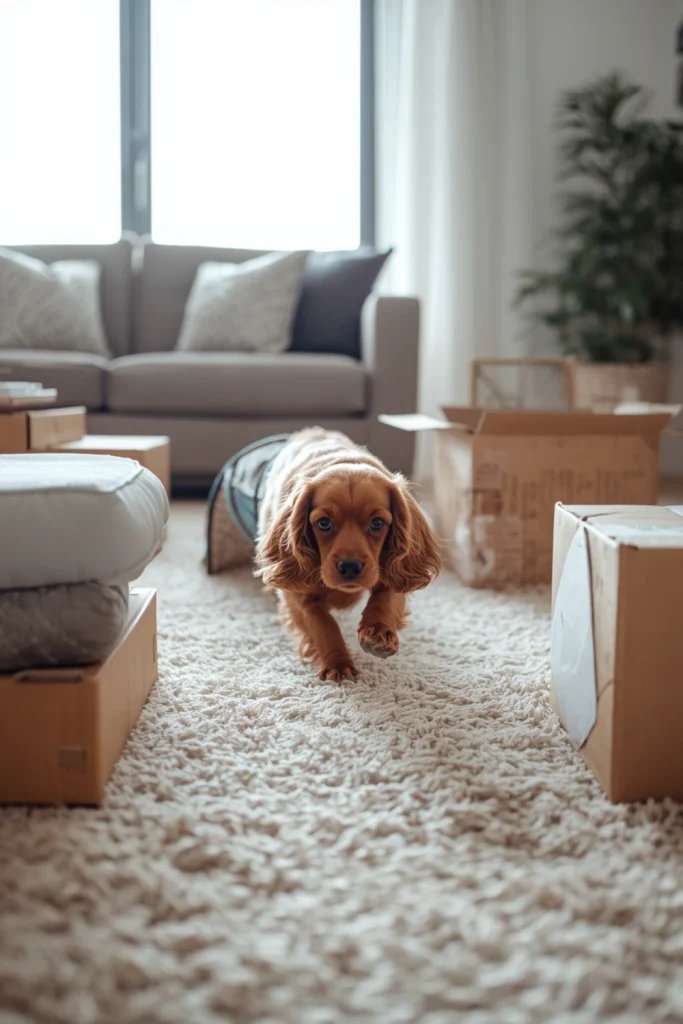
An indoor obstacle course can turn an ordinary room into an exciting play area. Use soft cushions, sturdy boxes, pet tunnels, and other safe household objects to create a simple course. Encourage your dog to walk around obstacles, move through a tunnel, or step over a low cushion. Guide your pet slowly and reward it for completing each section.
You do not need complicated equipment to make this activity enjoyable. The goal is to provide variety and encourage your dog to explore its surroundings. Make sure the floor is not slippery and avoid high jumps, unstable furniture, or obstacles that could cause injuries. Adjust the course to your dog’s size, confidence, and physical ability. Senior dogs and puppies should have especially gentle courses.
5. Give Your Dog a Snuffle Mat
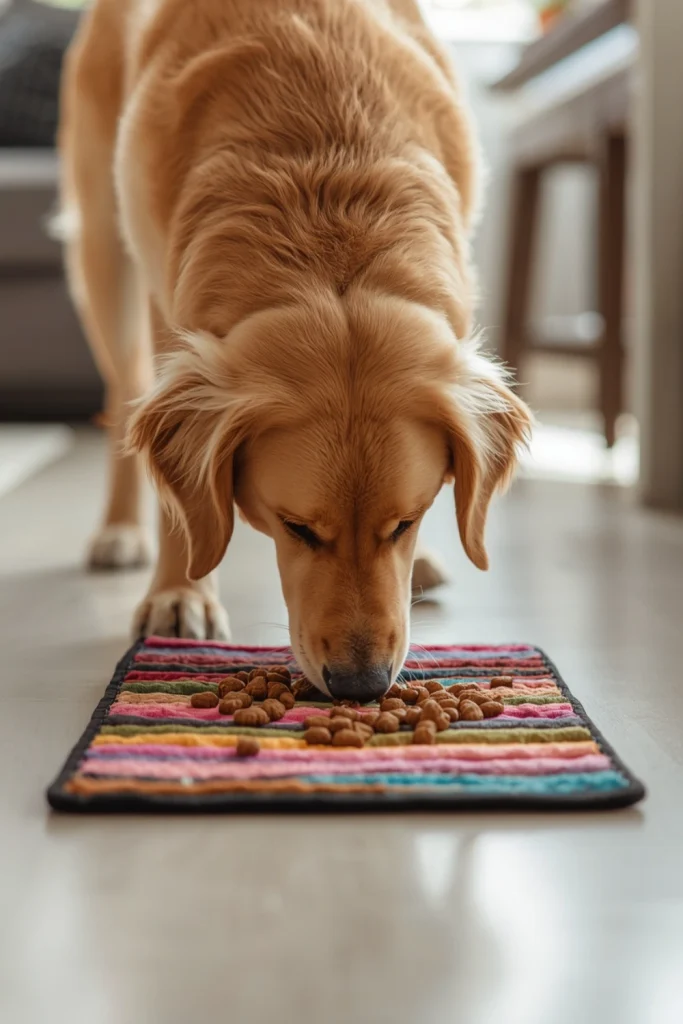
A snuffle mat is a simple enrichment tool that encourages dogs to use their powerful sense of smell. Hide a few pieces of your dog’s regular kibble between the fabric strips and allow your pet to search for them. Instead of eating from a bowl immediately, your dog gets to work for its food. This can make mealtime more interesting and provide a satisfying mental challenge.
Start by placing treats where they are easy to find. As your dog understands the activity, you can hide them slightly deeper within the fabric. Always supervise your pet and choose a mat made from safe, washable materials. Remove it if your dog starts pulling apart the fabric or swallowing pieces. A snuffle mat is particularly useful when outdoor activities are limited by weather.
6. Play the Shell Game With Treats
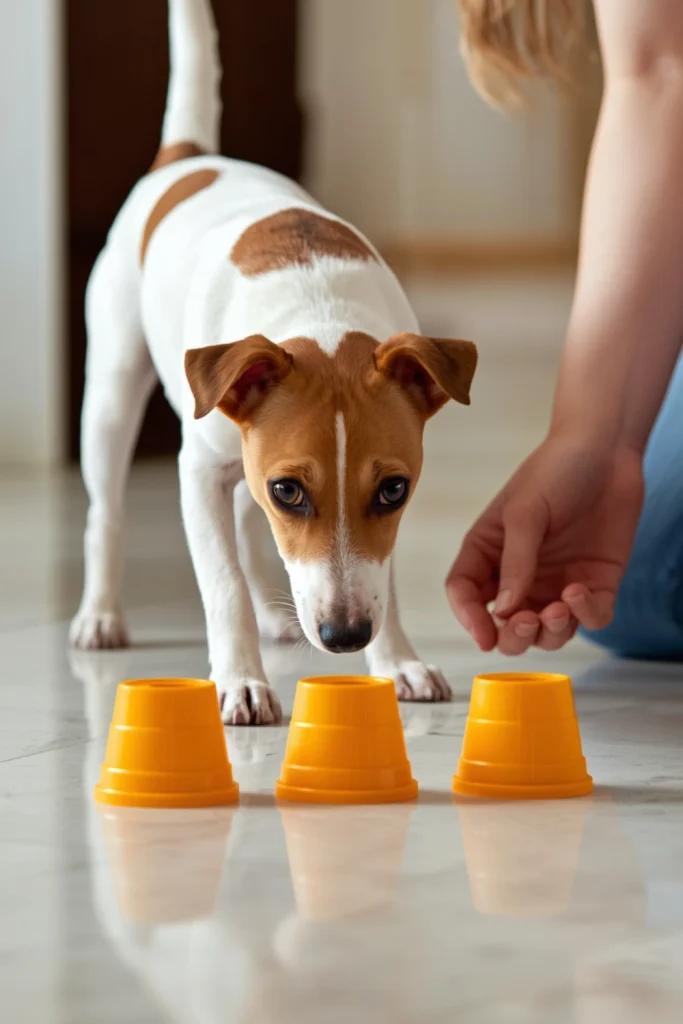
The shell game is a simple activity that challenges your dog’s observation and problem-solving skills. Place a treat under one of two or three lightweight cups that are safe for pets. Let your dog watch where you hide the treat, then encourage it to choose the correct cup. When your dog finds the reward, praise it and repeat the game.
Begin with just two cups and avoid moving them too quickly. Once your dog understands the rules, you can gently change the position of the cups. Use cups that cannot easily break or create sharp edges, and never allow your dog to chew or swallow them. This activity works well for dogs that enjoy food-based games and want a new challenge.
7. Arrange a Safe Indoor Scent Hunt
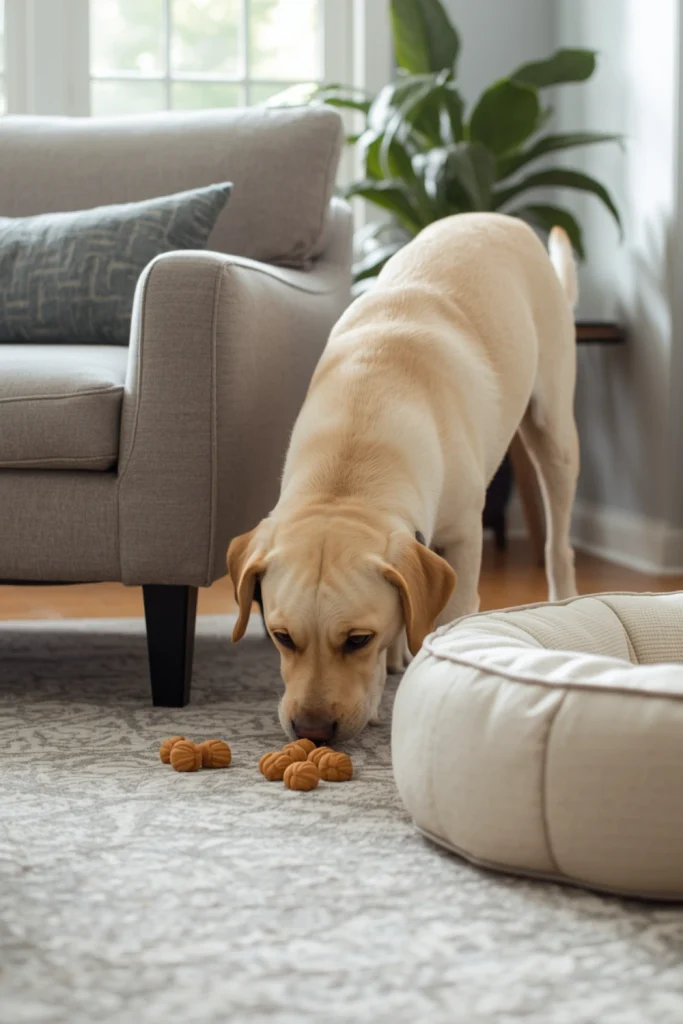
Dogs experience the world largely through their noses, making scent games a natural way to provide enrichment. Hide small pieces of your dog’s regular food around an accessible room and encourage your pet to find them. Begin with obvious hiding places, such as beside a chair or near a dog bed. As your dog improves, you can choose slightly more challenging locations.
This activity encourages natural sniffing behavior and gives your dog a purpose during quiet indoor hours. Use only dog-safe treats or regular kibble, and avoid hiding food near electrical cords, cleaning products, or places where your dog could get stuck. Make sure you remember every hiding place so no food is left behind. A short scent hunt can be a rewarding addition to your dog’s daily routine.
8. Rotate Your Dog’s Toys

Dogs can lose interest in toys when the same items remain available every day. Toy rotation is an easy way to make familiar playthings feel interesting again. Keep several safe toys in a storage box and offer only a few at a time. After a few days, replace some of the available toys with different ones. Your dog may become excited to explore something it has not seen recently.
Choose toys according to your dog’s chewing habits, size, and play style. Inspect them regularly for loose parts, damaged stitching, or pieces that could be swallowed. Avoid leaving unsafe toys unattended, particularly if your dog is an aggressive chewer. Toy rotation does not require buying something new every week. A thoughtful selection of existing toys can provide plenty of variety.
9. Practice Basic Obedience Commands
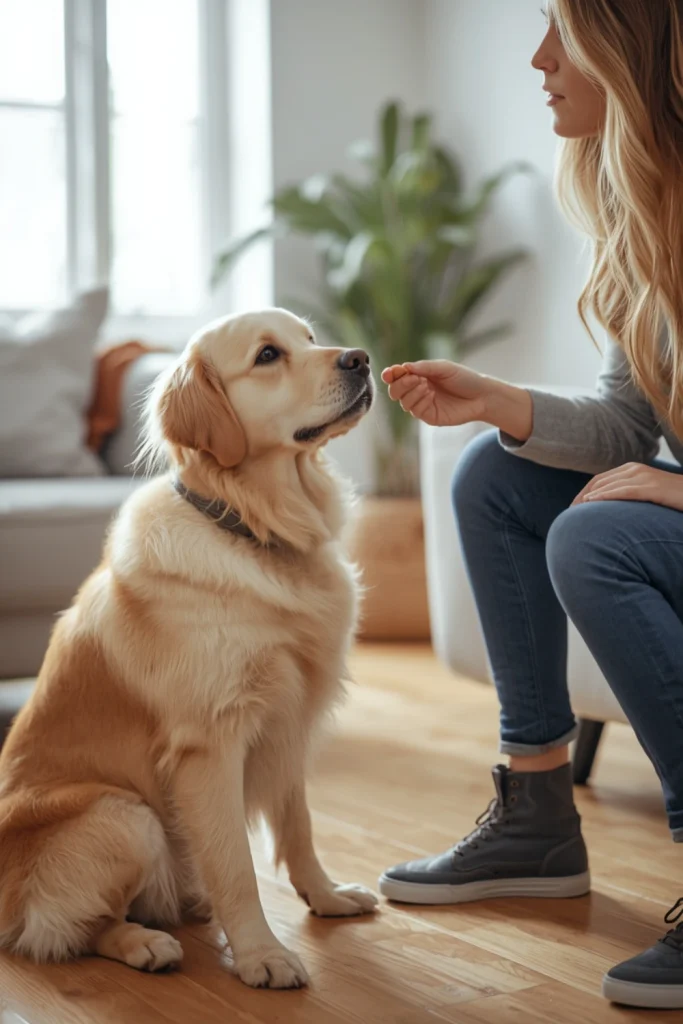
Basic obedience training is not only useful for good manners but also provides meaningful mental stimulation. Spend a few minutes practicing familiar commands such as sit, stay, down, come, and leave it. Use small rewards and positive encouragement when your dog responds correctly. You can also practice these commands in different rooms to help your pet learn to listen in new situations.
Keep sessions friendly and avoid turning training into a frustrating experience. If your dog struggles with a command, make the exercise easier and reward small improvements. Do not punish mistakes or expect perfect performance immediately. Regular practice helps your dog understand household expectations while giving its brain something productive to do. Even a short daily session can become a valuable part of your routine.
10. Let Your Dog Enjoy a Cardboard Box Exploration Game

A few clean cardboard boxes can become an inexpensive source of entertainment. Place two or three open boxes on the floor and hide a couple of treats inside them. Allow your dog to investigate, sniff, and discover the rewards. Some dogs enjoy exploring different box shapes, while others prefer searching for treats hidden beneath a loose piece of plain paper.
This activity is best for dogs that enjoy investigating new objects. Remove staples, packing tape, labels, and plastic before offering any box. Supervise the entire game and stop if your dog begins eating cardboard. Use only clean boxes that have not contained chemicals or unsuitable materials. A simple box exploration activity can add variety to an otherwise ordinary afternoon.
11. Play Gentle Tug-of-War

Tug-of-war can be an exciting indoor game when played with clear rules and an appropriate toy. Choose a sturdy dog tug toy and encourage your pet to grab one end while you gently hold the other. Allow your dog to pull naturally without jerking or lifting it off the floor. You can introduce a release command such as “drop it” and reward your dog for letting go.
Keep the game controlled and avoid rough movements that could strain your dog’s neck, teeth, or joints. Tug may not be suitable for every dog, especially those with certain dental or physical problems. If your dog becomes overly excited, pause the game and give it time to settle. When played appropriately, tug-of-war can provide enjoyable interaction and help strengthen your bond.
12. Introduce a Stuffed Food Toy
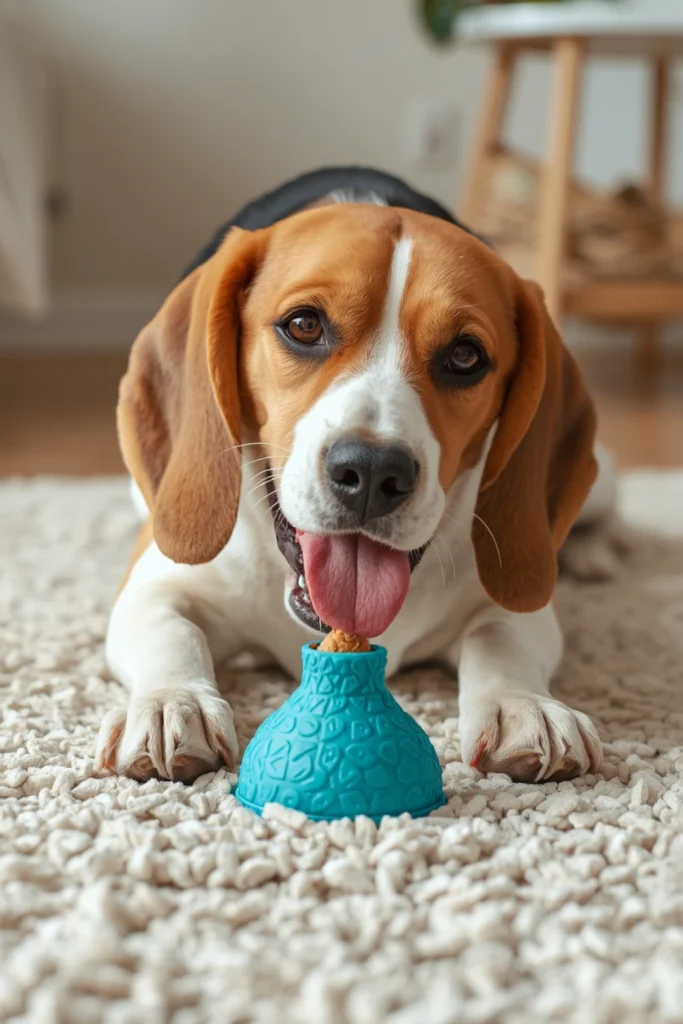
A food-dispensing rubber toy can keep your dog occupied while encouraging natural licking and problem-solving behaviors. Fill an appropriately sized toy with part of your dog’s regular meal or a small amount of dog-safe food. For an easier challenge, use loose kibble. If your dog is comfortable with the toy, you can try a slightly firmer filling that takes longer to remove.
Always select a toy designed for your dog’s size and chewing strength. Avoid ingredients that may be harmful to dogs, including chocolate, grapes, raisins, onions, and foods containing xylitol. Consider your dog’s daily calorie needs when adding treats to its routine. Supervise your pet during the first few sessions and clean the toy carefully after use to maintain good hygiene.
13. Make a DIY Treat-Searching Towel Game

A towel treat game is an easy way to make mealtime more interesting without purchasing special equipment. Spread a clean towel on the floor, sprinkle a few pieces of kibble over it, and loosely roll or fold the towel. Let your dog sniff and investigate until it finds the food. Start with a loose fold so your pet can understand the activity without becoming frustrated.
Use an old towel that is clean and free from loose threads or damaged edges. This game should always be supervised because some dogs may chew or swallow fabric. If your pet tries to eat the towel, remove it and use a safer alternative, such as a snuffle mat. For dogs that enjoy sniffing, this simple activity can become a favorite indoor enrichment game.
14. Teach Your Dog to Find a Favorite Toy

Turn your dog’s favorite toy into a fun searching challenge. Show your dog the toy, allow it to sniff it, and then hide it somewhere easy to find. Use a simple cue such as “find your toy” and encourage your pet to search. When your dog discovers the toy, reward it with praise and a short play session.
As your dog becomes more familiar with the activity, choose slightly harder hiding places. Keep the toy within safe reach and never hide it in cupboards, unstable furniture, or areas with electrical equipment. You can also teach your dog to bring the toy back to you after finding it. This activity combines scent work, memory, and play in a way many dogs find exciting.
15. Try a Gentle Indoor Fetch Game
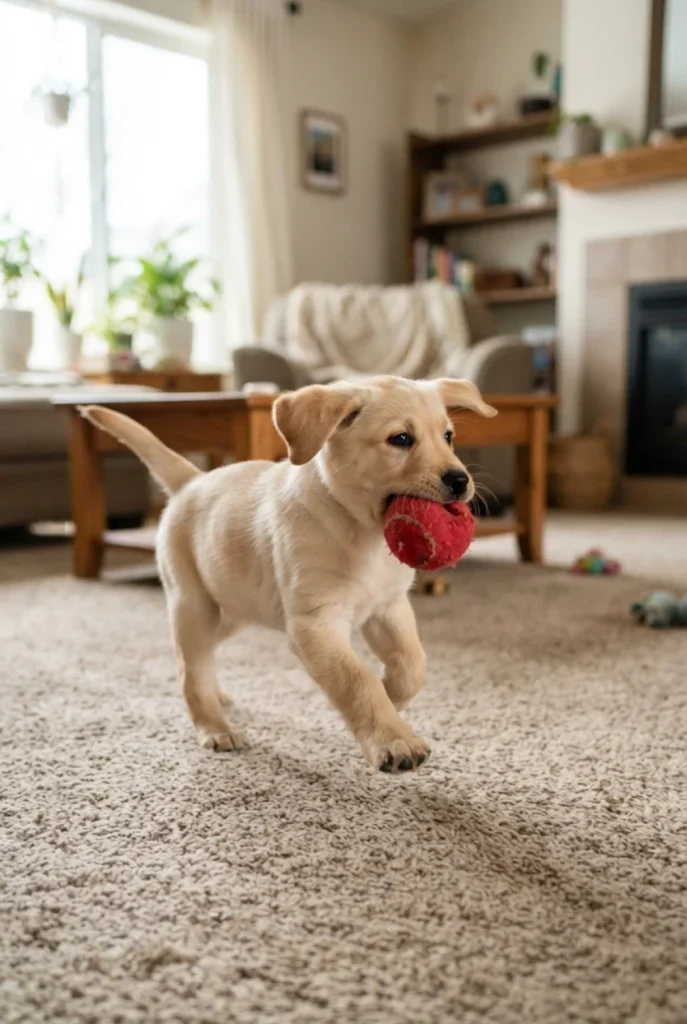
If your dog loves chasing toys, a gentle indoor fetch game can provide some physical activity when outdoor play is not possible. Choose a soft ball or lightweight toy and toss it a short distance across a clear, carpeted area. Encourage your dog to bring the toy back, then repeat a few times. Keep the game relaxed and avoid throwing objects toward furniture or slippery floors.
Indoor fetch should be adjusted to your dog’s physical ability and the size of your home. Avoid long, fast throws that encourage sudden turns or collisions. Puppies, senior dogs, and dogs with joint problems may need gentler alternatives. Stop if your pet seems tired, uncomfortable, or overly excited. A few controlled rounds can provide enjoyable movement without requiring a large outdoor space.
16. Give Your Dog a Window-Watching Spot

Many dogs enjoy watching the world outside a window. Set up a comfortable resting spot where your dog can safely observe birds, people, trees, or passing cars. A supportive dog bed or stable cushion near a secure window can provide visual stimulation during quiet periods. This is especially helpful when the weather makes outdoor walks difficult.
Make sure the window is secure and your dog cannot fall, escape, or damage the screen. Avoid placing furniture in a way that encourages unsafe climbing. Some dogs become anxious or bark excessively when watching outside activity. If your pet becomes stressed, close the curtains or move its resting spot to a quieter location. The goal is to offer enjoyable observation, not constant excitement.
17. Play a Name-the-Toy Game

Teaching your dog the names of different toys is a fun way to combine learning and play. Start with one familiar toy and repeat its name while encouraging your dog to pick it up. Reward your pet when it interacts with the correct object. Once your dog understands the first toy’s name, introduce another one and practice choosing between them.
Keep the game simple and use toys that look noticeably different from each other. Practice with only a few items at a time so your dog does not become confused. Some dogs learn toy names quickly, while others need more repetition. Be patient and celebrate small improvements. This activity encourages attention, memory, and communication while giving your dog a fun reason to interact with its toys.
18. Practice Calmness and Relaxation Training
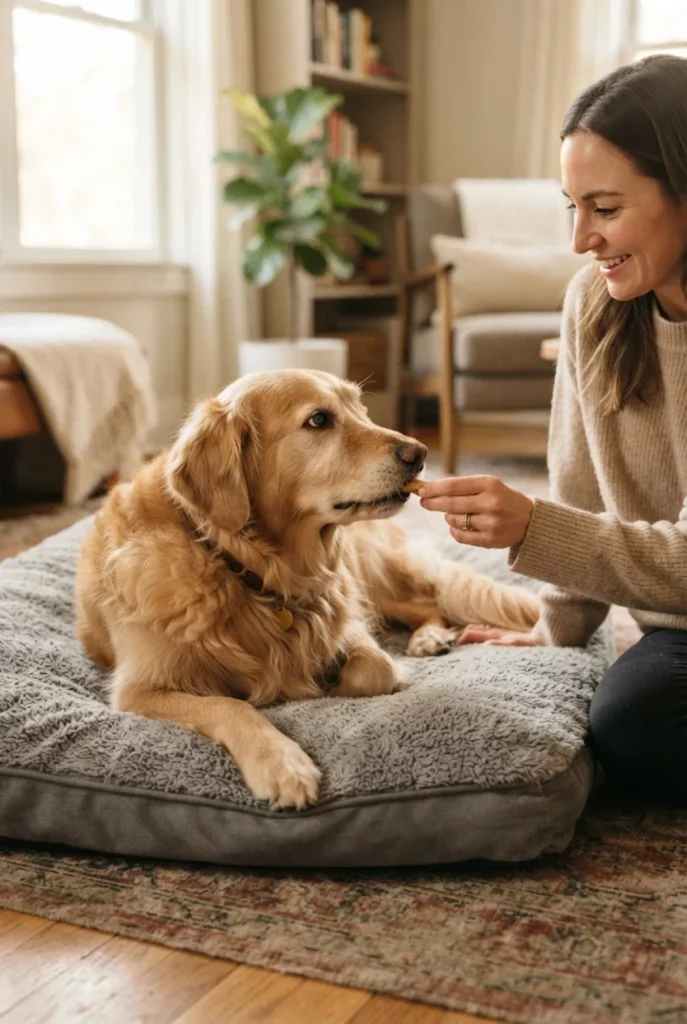
Not every boredom-busting activity needs to involve running or searching for treats. Teaching your dog to relax calmly is also a valuable skill. Encourage your pet to settle on a comfortable mat or dog bed. Reward quiet behavior, relaxed body language, and moments when your dog chooses to rest independently. Keep the environment peaceful and avoid creating unnecessary excitement.
Calmness training can be especially useful for dogs that become restless when family members are busy. Start with short periods and gradually reward longer moments of relaxation. Never force your dog to remain in one position if it is uncomfortable or frightened. Make sure your pet has access to water and a comfortable resting area. Learning when to relax helps dogs balance active play with healthy downtime.
19. Create a Safe Water Play Activity
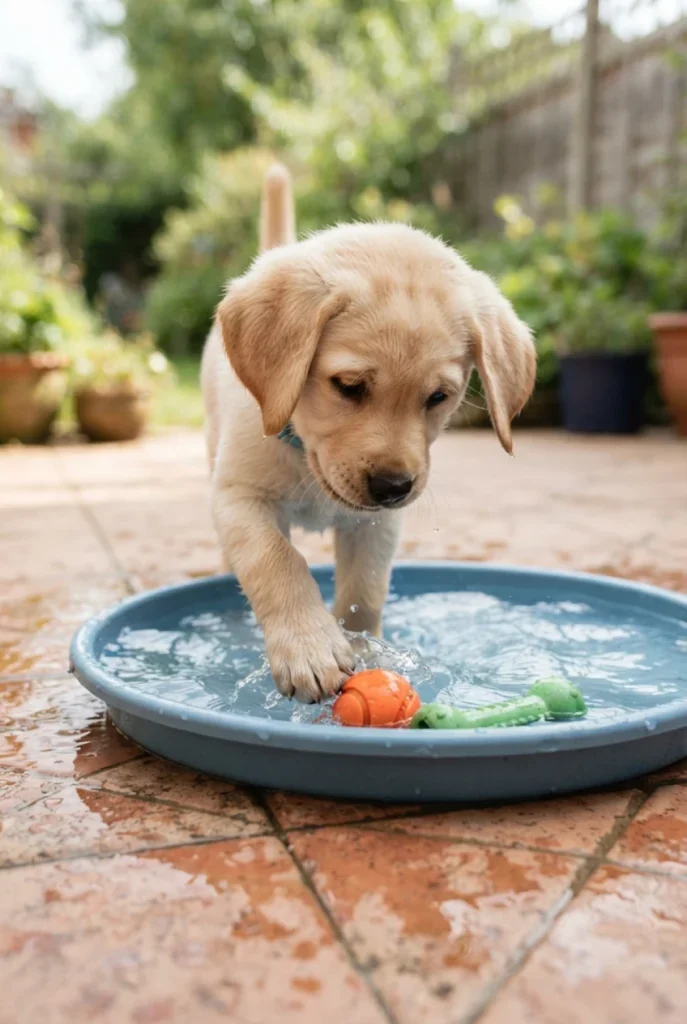
Some dogs enjoy exploring water, especially during warm weather. You can offer a shallow, stable tray with a small amount of clean water and a few floating dog-safe toys. Let your dog investigate at its own pace. Some pets may enjoy gently moving the water with their paws or picking up floating toys. Keep the activity simple and make sure the area is easy to clean.
Water play is not suitable for every dog, and you should never force a nervous pet to participate. Use a nonslip surface, keep the water shallow, and supervise constantly. Never leave a dog unattended around water, even in a small container. Dry your dog’s paws and coat afterward if needed. For dogs that enjoy water, this can be a refreshing indoor activity with plenty of sensory interest.
20. Spend Quality Time With Interactive Play
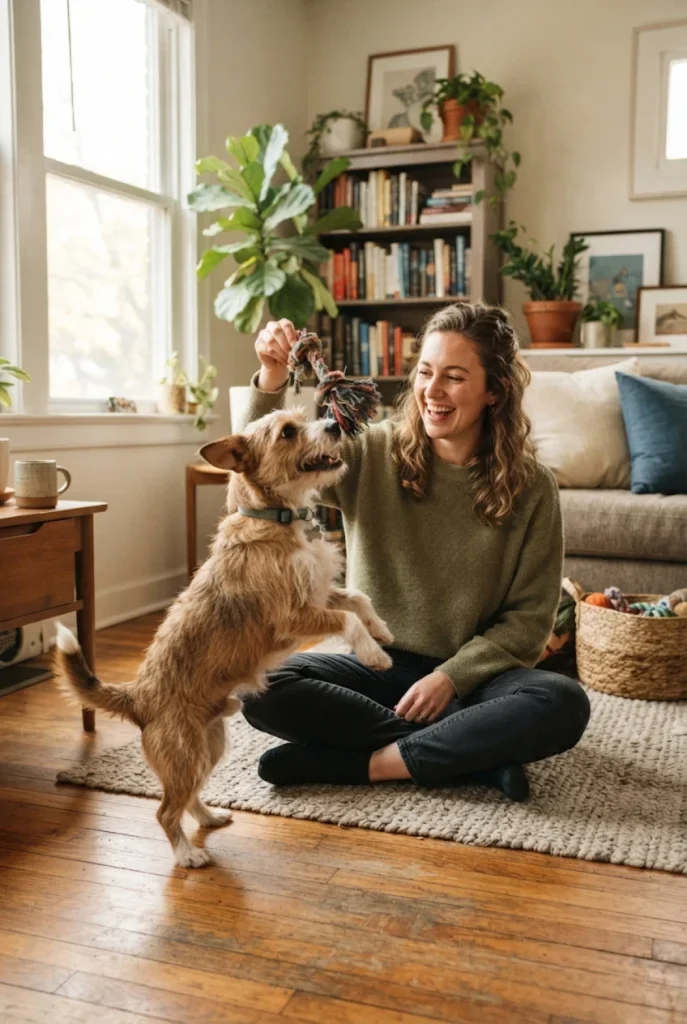
Sometimes the best boredom buster is simply spending focused time with your dog. Put away distractions and enjoy a short play session with your pet. You can combine gentle tug, toy searching, simple tricks, or a favorite interactive game. Talking to your dog, offering praise, and responding to its playful behavior can make ordinary moments more meaningful.
Dogs are social animals, and many enjoy being included in everyday family activities. Even ten or fifteen minutes of focused interaction can provide valuable mental and emotional stimulation. Pay attention to your dog’s body language and choose activities it genuinely enjoys. Some dogs prefer energetic games, while others love gentle interaction and quiet companionship. Consistent positive attention helps create a stronger bond and a happier home environment.
Final Thoughts
Keeping your dog happy at home does not require expensive equipment or complicated activities. Simple games such as hide-and-seek, treat puzzles, scent hunts, toy searching, and trick training can provide valuable mental stimulation while making everyday life more enjoyable. The best Dog Boredom Busters are activities that match your pet’s personality, interests, and physical abilities.
Start with a few ideas from this list and gradually introduce new activities as your dog becomes comfortable. Remember to supervise homemade games, provide enough exercise, and allow plenty of time for rest. Most importantly, make enrichment a positive experience. Spending a little quality time with your dog every day can help strengthen your bond and create a happier, more engaging home environment.


