

15 Easy Treat Puzzle Games for Dogs
Keeping your dog entertained does not always mean buying expensive toys or spending hours playing fetch. Sometimes, a few healthy treats and simple household items are enough to create an exciting activity. Treat puzzles encourage dogs to sniff, explore, think, and discover rewards using their natural problem-solving abilities.
Does your dog get bored easily or look for something interesting to do around the house? Treat puzzles can turn ordinary snack time into an enjoyable brain game. These Treat Puzzle Games are easy to prepare, beginner-friendly, and suitable for many dogs. From homemade towel puzzles to interactive food-dispensing toys, these activities can help make your dog’s daily routine more interesting.
1. Towel Roll Treat Puzzle
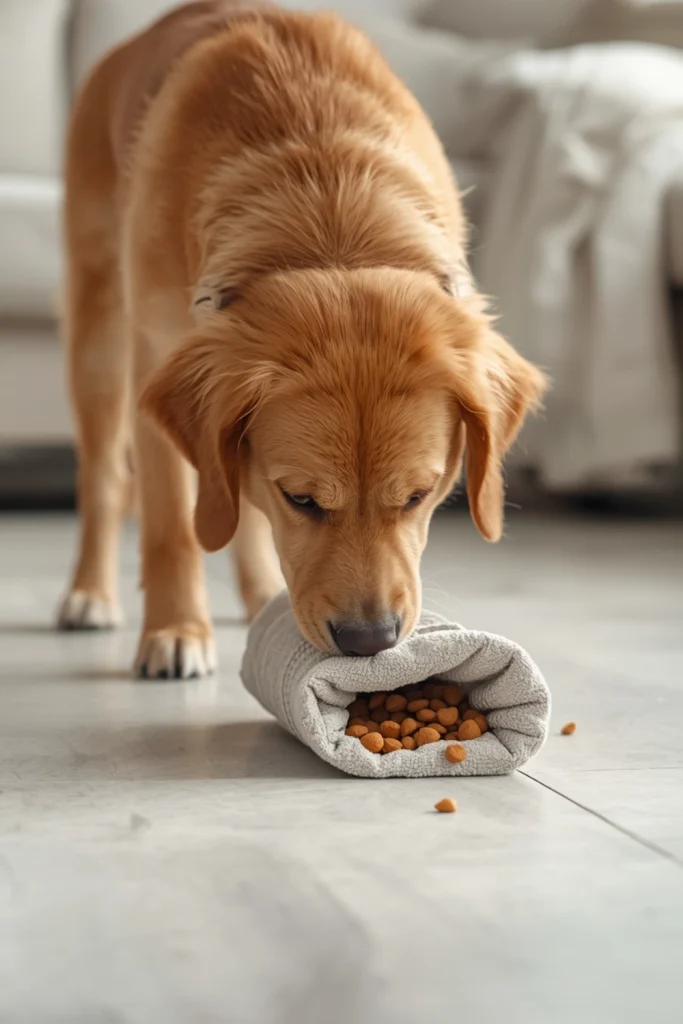
A towel roll is one of the easiest homemade treat puzzles for beginners. Take a clean, flat towel and spread a few pieces of your dog’s regular kibble across its surface. Roll the towel loosely so the food becomes hidden between the folds. Place it on a non-slip floor and allow your dog to investigate. Your pet can use its nose and paws to move the fabric and discover the rewards. This simple activity encourages natural searching behavior without requiring expensive equipment or complicated preparation.
Once your dog understands the game, introduce several loose folds or place treats in different sections of the towel. You can gradually make the search more interesting while keeping the food easy to reach. Avoid tying tight knots because they may frustrate your pet or encourage excessive chewing. Always supervise your dog to prevent it from swallowing fabric. If your pet tends to destroy towels, choose another enrichment activity. Remove the towel after each session and wash it regularly.
2. Muffin Tin Treat Puzzle
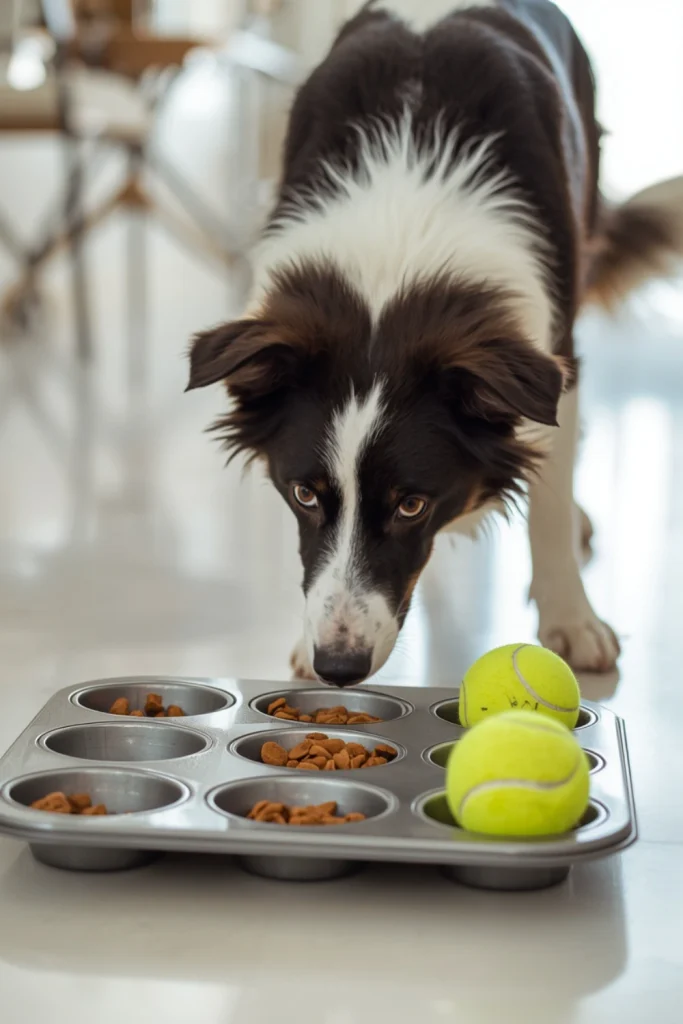
A muffin tin can become a simple homemade puzzle that encourages your dog to investigate different compartments. Place a few small pieces of kibble in selected cups of a clean muffin tin. Leave some compartments empty so your dog must search rather than finding food in every section. For the beginner version, leave the treats uncovered and allow your pet to sniff each cup. This activity introduces simple problem-solving and helps your dog understand that investigating different spaces can lead to a reward.
When your dog becomes familiar with the puzzle, you can cover selected compartments with large, lightweight balls that are too big to swallow. Your dog can use its nose to investigate and gently move the covers to reach the food. Supervise closely and remove the balls if your pet starts chewing them. Choose a stable tin that will not slide easily across the floor. If your dog becomes frustrated, return to the easier version with uncovered treats. The goal is to encourage exploration rather than create a difficult challenge.
3. Cardboard Box Treat Hunt
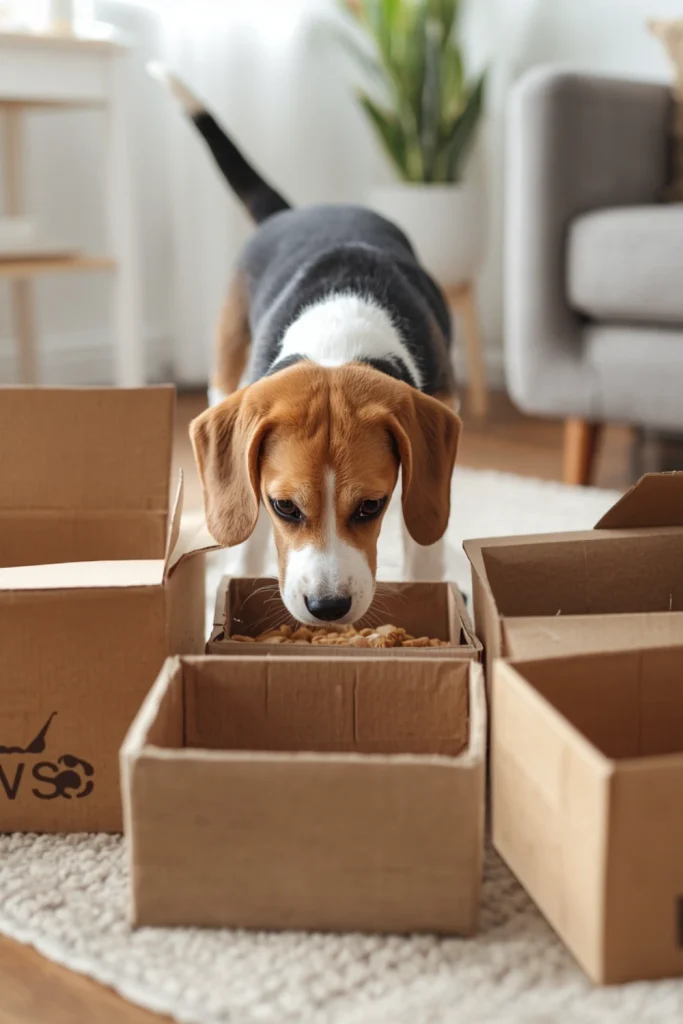
Cardboard boxes can provide an exciting treat puzzle without requiring expensive equipment. Choose a clean, sturdy box and remove staples, tape, plastic labels, and sharp edges. Place a few treats inside the open box and allow your dog to investigate. The food scent will encourage your pet to put its nose near the opening and search for the hidden rewards. Start with a single box and keep the treats easy to reach. This activity is particularly useful for curious dogs that enjoy exploring new objects.
Once your dog understands the game, introduce two or three clean boxes in a small search area. Hide treats in only one or two boxes and leave the others empty. Your dog will have to investigate different locations to discover the rewards. Do not use boxes that previously contained chemicals, cleaning products, or strong-smelling materials. Keep the boxes large enough for safe access and supervise your pet if it enjoys tearing cardboard. Remove damaged pieces immediately so they cannot be swallowed.
4. Treats Under Lightweight Cups
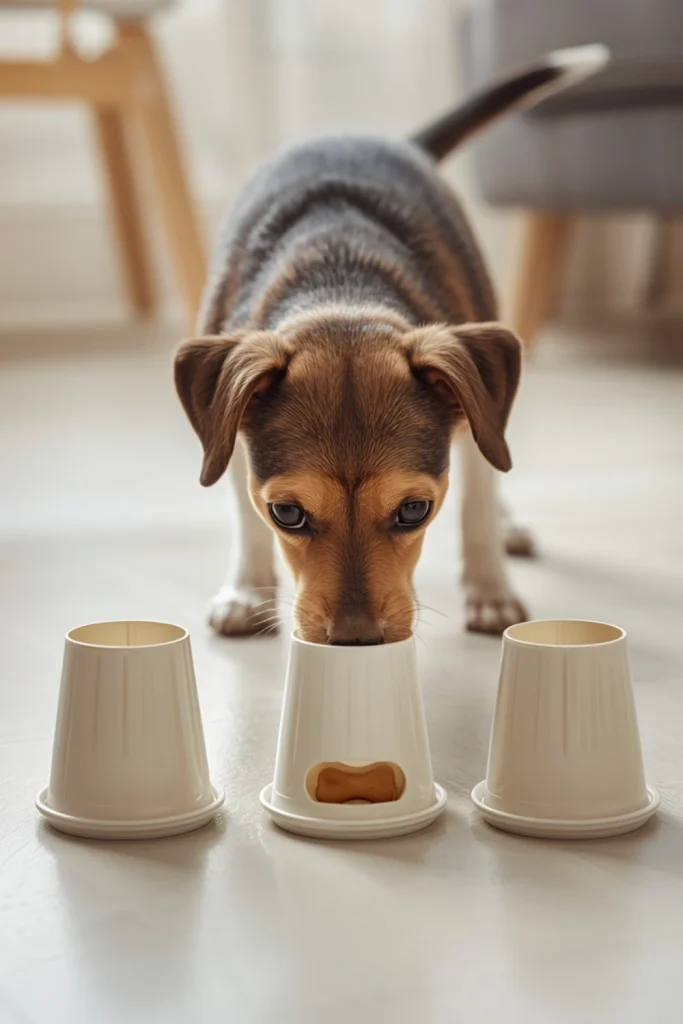
The cup puzzle is a simple activity that encourages your dog to use its nose to locate a hidden reward. Choose three identical, lightweight, sturdy cups that are safe for your dog’s size. Place a small treat under one upside-down cup while leaving the other two empty. Allow your dog to sniff each cup and discover where the reward is hiding. When your pet finds the correct cup, lift it and offer the treat. Start slowly so your dog understands that investigating the cups leads to something enjoyable.
After a few successful rounds, move the cups to different positions before each search. You can also increase the distance between them slightly. Avoid cups with sharp edges, breakable materials, or small detachable parts. Never use cups that are small enough for your dog to swallow. Some dogs may knock over every cup rather than sniff carefully, which is fine if the objects are safe. Keep sessions short and reward successful discoveries with praise. Always supervise the activity.
5. Snuffle Mat Food Search
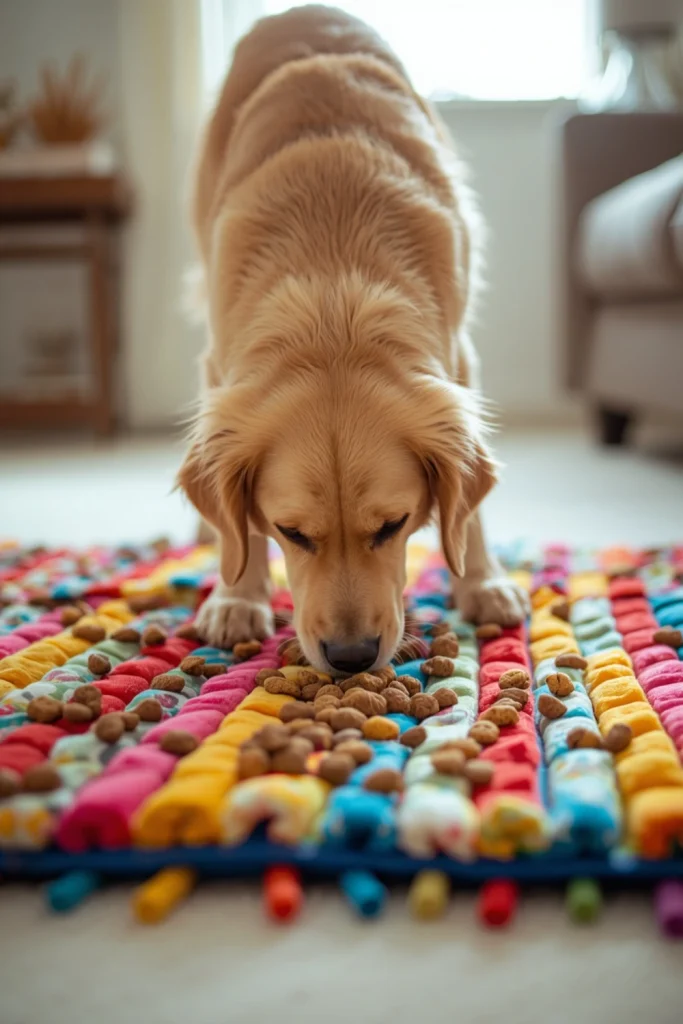
A snuffle mat is a popular enrichment tool designed to encourage dogs to search for food through soft fabric strips. Sprinkle a small amount of your dog’s regular kibble across the mat and hide some pieces between the folds. Place it on a flat surface and allow your dog to investigate. Your pet will use its nose to move through the fabric and locate the food. This activity can make mealtimes more interesting while encouraging natural searching behavior.
You can adjust the difficulty by changing how deeply you hide the food. For beginners, leave several pieces visible so your dog quickly understands the activity. Later, place some rewards deeper between the fabric strips. Always supervise your pet to make sure it does not chew or swallow parts of the mat. Wash the mat regularly and allow it to dry completely before using it again. Put it away after each session to prevent unsupervised chewing or damage.
6. Treats Hidden in a Paper Bag
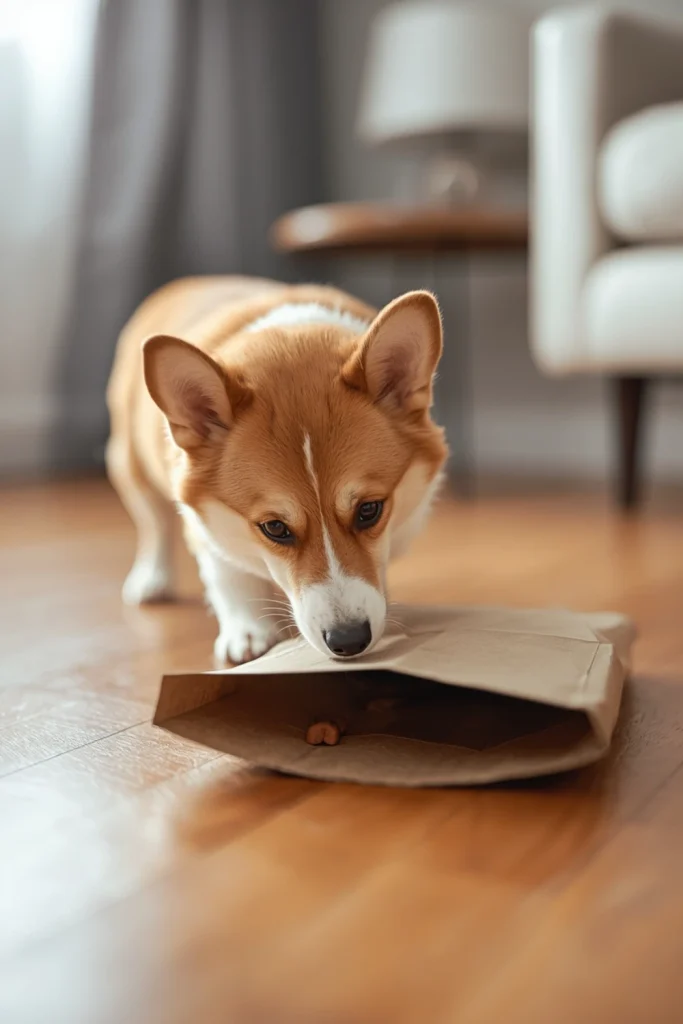
A plain paper bag can become a quick treat puzzle for dogs that enjoy investigating new objects. Choose a clean, unprinted or food-safe paper bag without handles, staples, plastic lining, or other attachments. Place a few pieces of kibble inside and fold the opening loosely so your dog can smell the food. Put the bag on a flat floor and allow your pet to investigate. Your dog may sniff around the opening and gently move the paper to reach the reward.
For an easier version, leave the bag completely open and place the treats near the top. As your dog becomes comfortable, you can fold the opening once or twice without sealing it. Never use plastic bags or paper packaging with strong inks, coatings, or chemical residues. Supervise your dog throughout the activity, particularly if it likes shredding paper. Remove the bag as soon as it becomes damaged, and do not allow your pet to eat pieces of paper. This puzzle is best for dogs that can explore paper safely.
7. Egg Carton Treat Puzzle
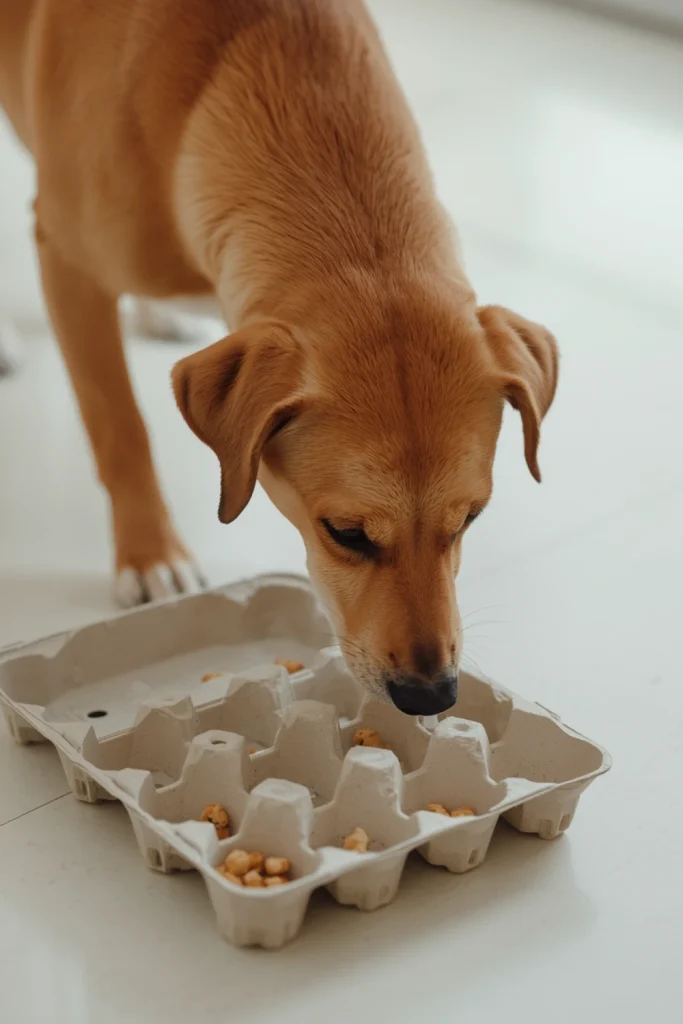
A clean cardboard egg carton can provide a simple puzzle with several small compartments. Place a few pieces of kibble inside selected sections and leave other sections empty. Keep the carton open and place it on the floor. Allow your dog to sniff each compartment and discover the hidden rewards. The different sections encourage your pet to investigate one area at a time, making the activity a little more interesting than searching for food on an open surface.
This puzzle should only be used with dogs that do not eat cardboard or tear it into small pieces. Remove labels, staples, plastic parts, or damaged sections before starting. Do not use cartons that previously contained spoiled food or have become dirty or damp. Supervise closely and remove the carton if your dog starts chewing or swallowing it. For dogs that enjoy destroying cardboard, choose a sturdy commercial puzzle toy or a safer alternative. Keep the game short and simple.
8. Treat-Dispensing Ball Game
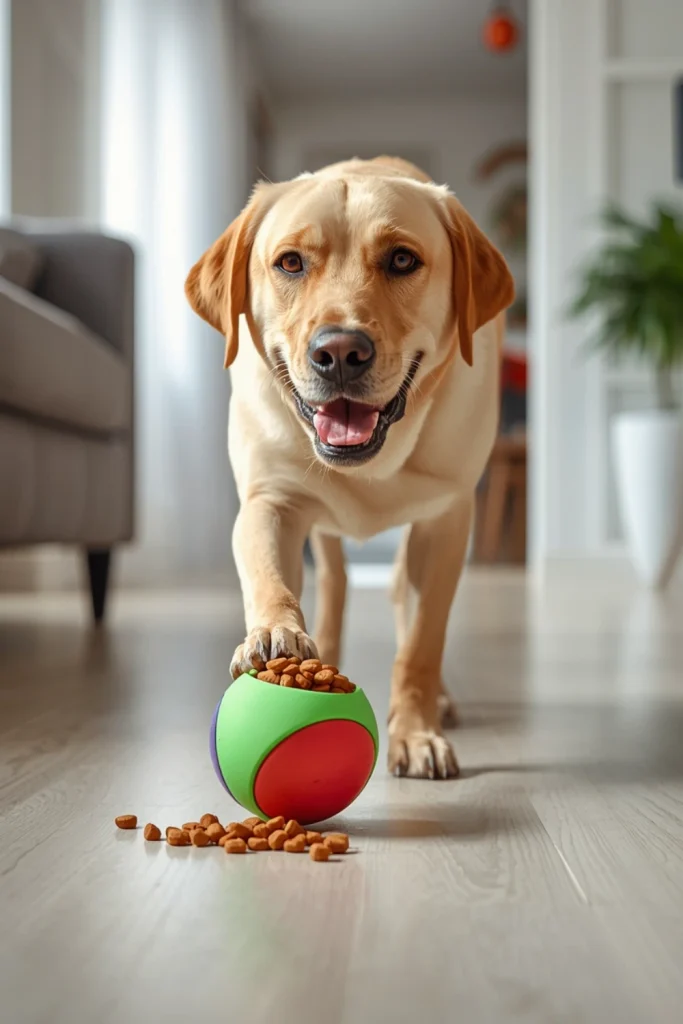
A treat-dispensing ball is a useful puzzle toy that releases small pieces of food when your dog rolls or moves it. Fill the ball with a few pieces of suitable kibble and show your dog how the food comes out. Your pet can investigate the toy using its nose and paws, gradually discovering that moving it in different directions releases a reward. This activity combines physical interaction with mental stimulation and can be particularly enjoyable for dogs that like chasing or pushing toys.
Choose a ball designed specifically for dogs and make sure it is the correct size for your pet. It should not be small enough to swallow or large enough to become uncomfortable to handle. Begin with an easy setting so food comes out without too much effort. As your dog becomes familiar with the toy, you can adjust the difficulty according to the manufacturer’s instructions. Inspect it regularly for cracks, loose parts, or damage, and clean it after use. Supervise play, especially with enthusiastic chewers.
9. Hidden Treats in a Blanket
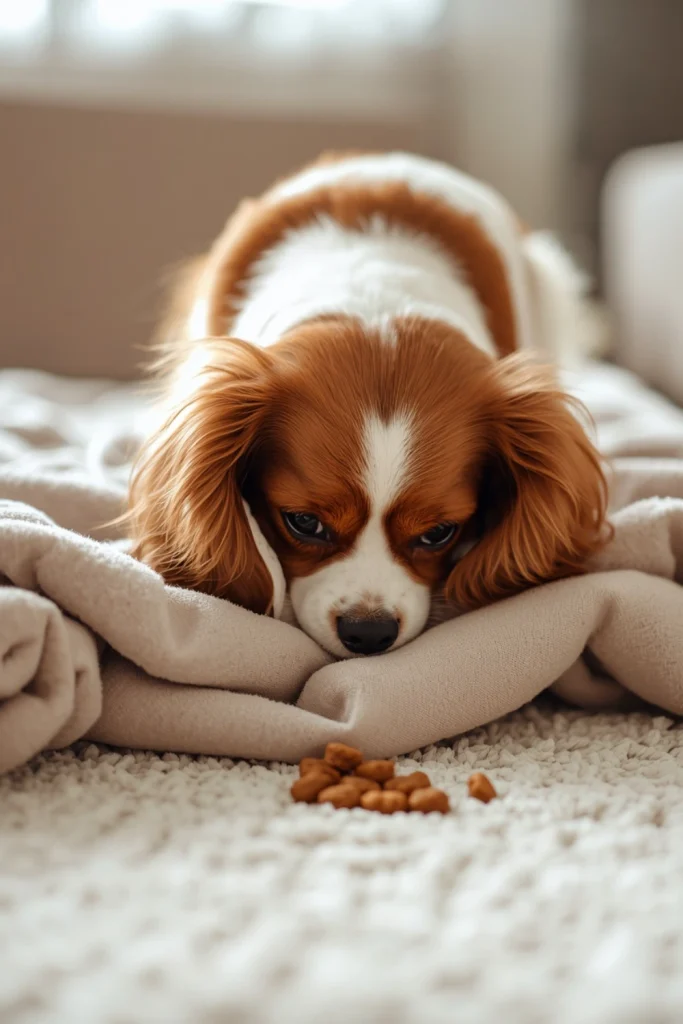
A clean blanket can become a soft and simple puzzle for dogs that enjoy searching through fabric. Spread the blanket on the floor and place a few pieces of kibble on top. Fold one section loosely over the food, allowing your dog to sniff and investigate the hidden rewards. Your pet can move its nose around the folds to find the treats. This activity requires very little preparation and can be adjusted for dogs with different experience levels.
For a more challenging version, create several loose folds and place treats in different sections. Keep the fabric easy to move and avoid tight knots or complicated arrangements. Choose a blanket without loose threads, damaged seams, buttons, or decorations that could be swallowed. Supervise your dog throughout the game, especially if it tends to chew fabric. Wash the blanket regularly and avoid strongly scented laundry products that may interfere with the food scent. Put the blanket away after the activity.
10. Tennis Ball Muffin Puzzle
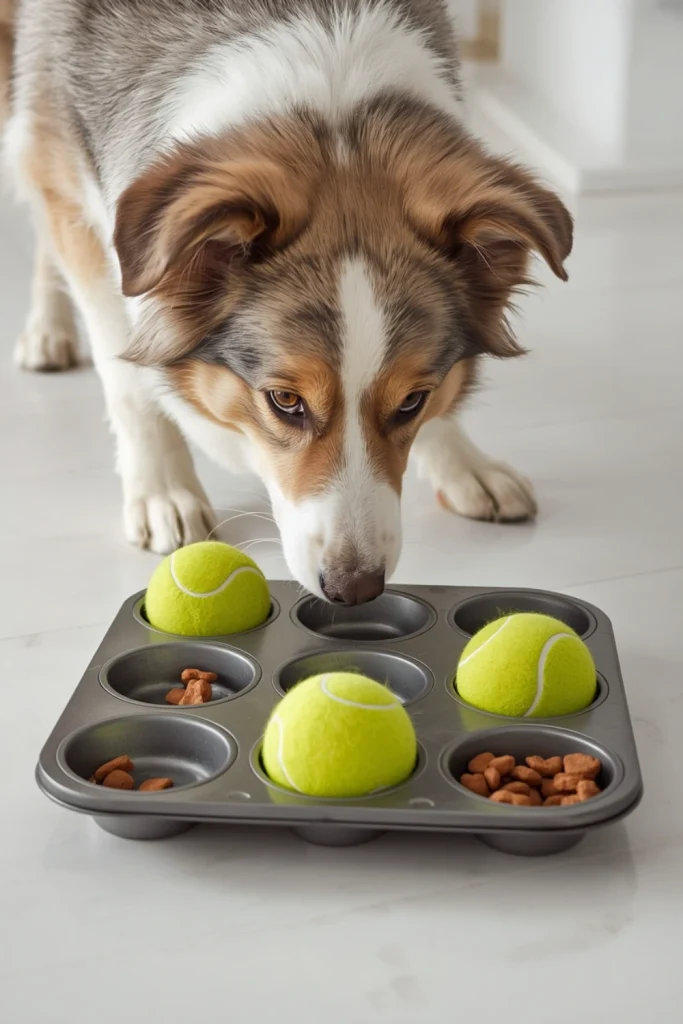
This activity is a variation of the muffin tin puzzle that adds another level of investigation. Place small treats in selected cups of a clean muffin tin and cover some of the cups with large, lightweight balls that are too big to swallow. Leave a few treats uncovered so your dog can discover rewards immediately. Your pet can sniff the different sections and gently move the covers to access the hidden food. The combination of scent and object movement makes this an interesting enrichment game.
Choose balls that are clean, intact, and appropriate for your dog’s size. Do not use damaged tennis balls or small balls that can become choking hazards. Supervise your dog closely and stop the game if it begins chewing the balls or pushing the tin aggressively. You can make the activity easier by using fewer covered cups or harder by changing the arrangement. Always keep the puzzle on a stable, non-slip surface. Remove all materials after the session and inspect them before storing.
11. Treat Trail Around the Room
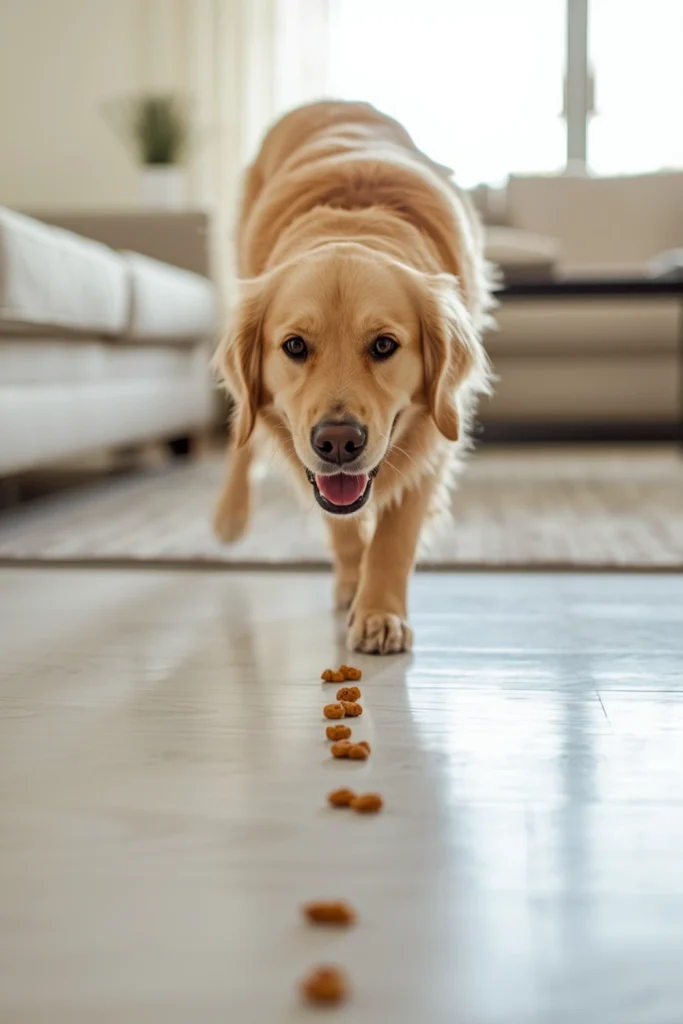
A treat trail is a simple puzzle that encourages your dog to follow a series of food rewards. Begin by placing a few tiny pieces of kibble in a short line on a clean floor. Keep the treats close together so your dog can easily discover the first few rewards. Invite your pet to start searching and follow the trail toward a final treat or favorite toy. This activity encourages scent tracking and helps your dog explore a familiar space in a new way.
When your dog becomes comfortable, gradually increase the distance between treats and create gentle turns around safe furniture. Avoid placing food near stairs, electrical wires, slippery areas, or objects your dog could knock over. Use small food portions and consider including them in your pet’s regular meal allowance. If your dog loses the trail, make it easier rather than repeatedly directing it. The goal is to encourage independent searching and make the experience rewarding.
12. Treats Inside a Puzzle Basket
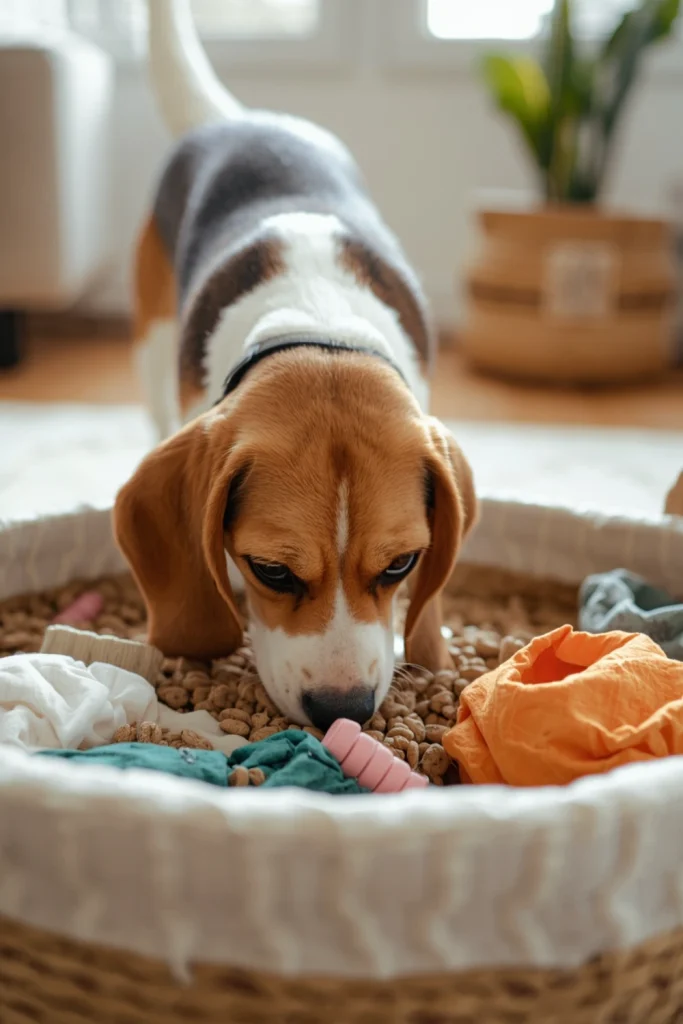
A shallow enrichment basket can hold several safe objects and create a fun search challenge. Choose a sturdy basket and place a few large, dog-safe toys or clean fabric pieces inside. Hide small pieces of kibble between the objects and let your dog investigate. Your pet can use its nose to search around the basket and discover the food. This activity offers variety because the arrangement can be changed each time you play.
Keep the basket simple and avoid small objects, plastic packaging, sharp edges, loose decorations, and materials that could break into swallowable pieces. Use items your dog can safely investigate, and supervise the activity from beginning to end. If your pet starts chewing the basket or destroying the contents, remove it and choose a different puzzle. You can make the game easier by leaving treats visible or slightly harder by placing food beneath safe, removable fabric pieces.
13. Sniffing Box Treat Challenge
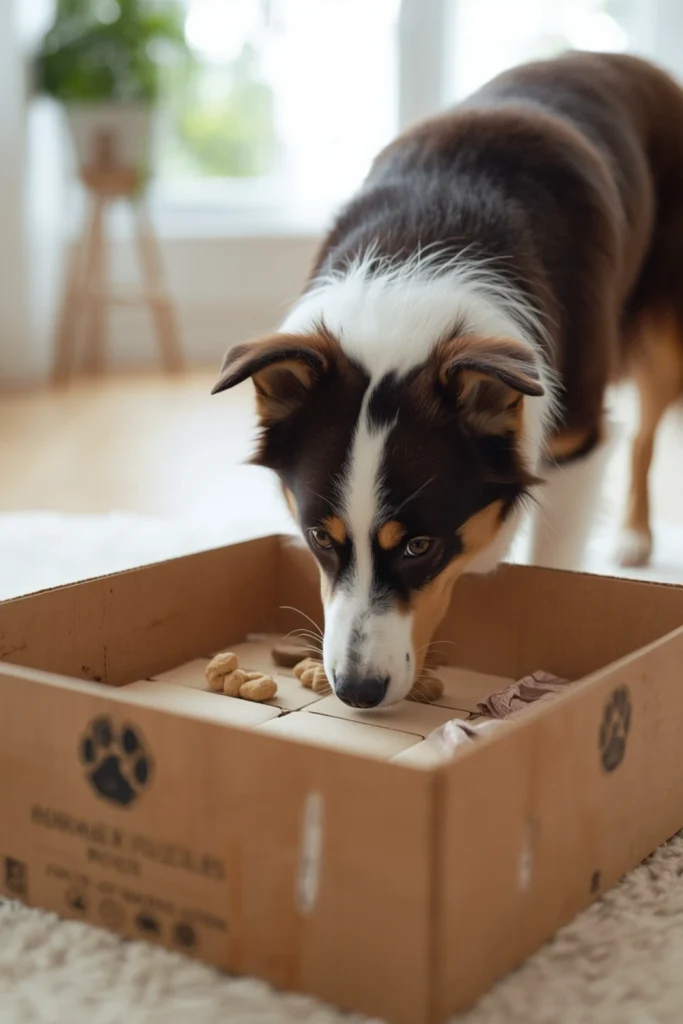
A sniffing box is a simple way to combine food searching with exploration. Use a clean, sturdy, open container that is large enough for your dog to investigate comfortably. Add a few safe, large enrichment objects or loosely arranged fabric pieces, then hide small pieces of kibble between them. Allow your dog to sniff through the box and locate the rewards. The different layers create a gentle challenge while keeping the activity in one place.
For beginners, use only a few objects and keep some treats visible. As your dog becomes familiar with the game, you can change the arrangement or add another safe layer. Avoid shredded paper, plastic fillers, packing peanuts, small cardboard pieces, and anything that can be swallowed. Never use packaging from chemicals or household cleaning products. Supervise carefully and remove the box if your dog begins chewing it. Clean the container after use and store it somewhere dry.
14. Find the Treat Under a Puzzle Cover
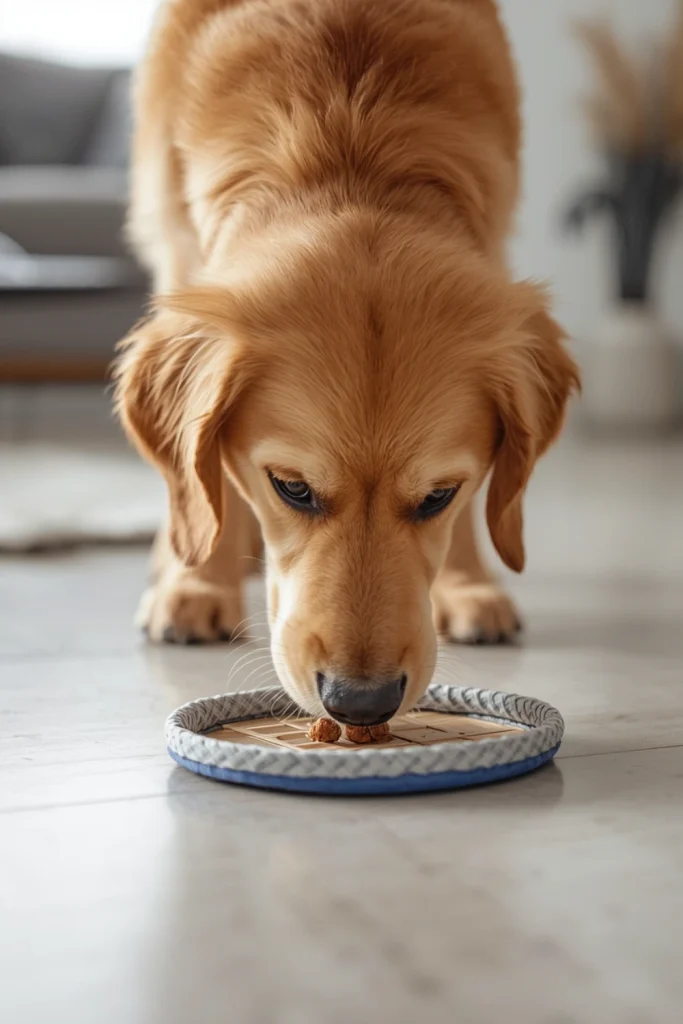
This simple puzzle encourages your dog to investigate a covered reward. Choose a lightweight, sturdy, dog-safe puzzle cover or shallow object that your dog cannot break or swallow. Place a small treat on a non-slip surface and cover it with the object, leaving enough space for your dog to smell the food. Allow your pet to investigate and gently move the cover to discover the reward. Start with an object that is easy to push aside so your dog quickly understands the game.
Avoid using breakable ceramic or glass plates, heavy objects, sharp-edged covers, or anything that could trap your dog’s nose. A purpose-made dog puzzle cover is preferable when available. If you use a household item, make sure it is stable, lightweight, and safe for your pet. Supervise closely and reward successful attempts with praise. If your dog becomes frustrated, uncover part of the treat and make the activity easier.
15. DIY Treat Compartment Tray
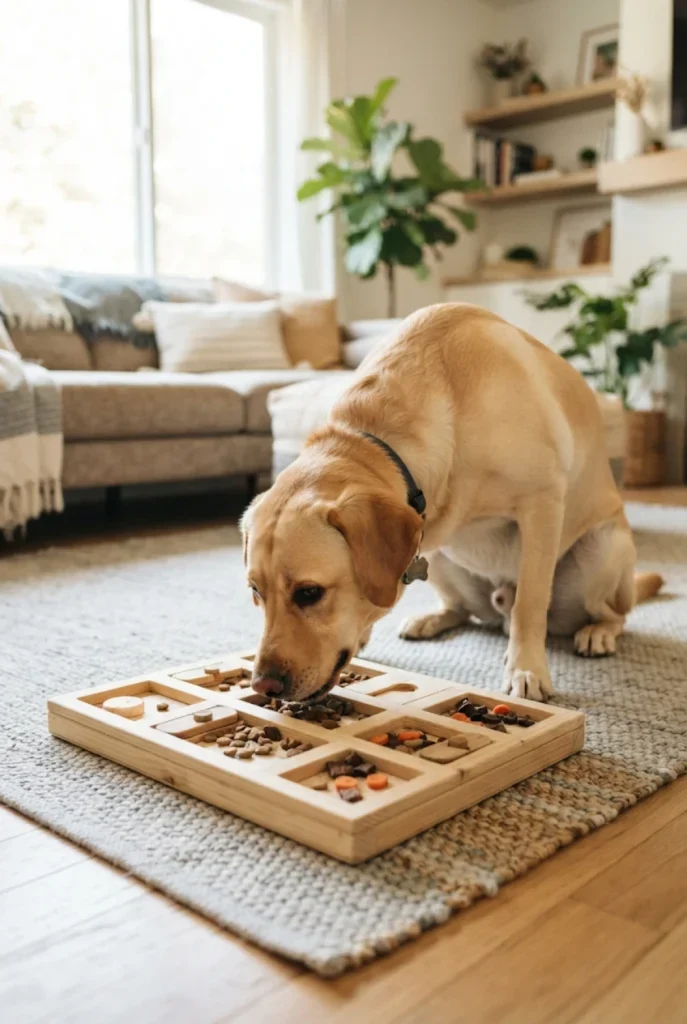
A DIY treat compartment tray can turn a familiar space into a simple scent challenge. Choose a low, stable enrichment tray with several open sections that are safe for your dog. Place a few treats in separate compartments and leave some empty. Let your dog sniff each section and discover where the food is hiding. This activity encourages careful investigation and gives your pet a different way to enjoy rewards. It is also easy to prepare when you want a quick indoor enrichment game.
Make sure the tray cannot tip over, slide, or trap your dog’s nose. Avoid using actual household drawers containing batteries, medicines, cleaning products, sharp objects, or other hazards. Keep the compartments large enough that your dog cannot swallow them. Begin with visible rewards and gradually hide some pieces in different sections. Supervise the entire activity and stop if your dog begins chewing the equipment. Put everything away once the game is finished.
Final Thoughts
Treat puzzle games are a simple and enjoyable way to add more mental stimulation to your dog’s daily routine. You do not need expensive equipment to get started. A clean towel, cardboard box, muffin tin, or suitable puzzle toy can provide an interesting challenge when used safely.
Try different Treat Puzzle Games and discover which activities your dog enjoys most. Start with easy puzzles, use small food rewards, and gradually introduce new challenges as your pet gains confidence. Remember that every dog learns at a different pace. With patience, variety, and supervision, treat puzzles can make everyday feeding and playtime more rewarding for your furry companion.


