

15 Dog Games You Can Make With Everyday Household Items
Keeping your dog happy, active, and mentally stimulated does not always require expensive toys or complicated equipment. Some of the most entertaining activities for dogs can be created using simple household items you already have at home. From cardboard boxes and old towels to plastic cups and empty paper rolls, everyday objects can become exciting tools for playtime.
Playing games with your dog is about more than having fun. It helps strengthen your relationship, encourages natural instincts, improves problem-solving skills, and provides healthy mental stimulation. Whether you have a playful puppy, an energetic adult dog, or a senior companion who prefers gentle activities, there are plenty of creative dog games you can enjoy together without spending extra money.
In this guide, you will discover 15 easy and entertaining dog games you can make with everyday household items. Each activity includes simple instructions, helpful tips, and ideas for making playtime enjoyable and safe for your furry friend.
1. The Muffin Tin Treat Game
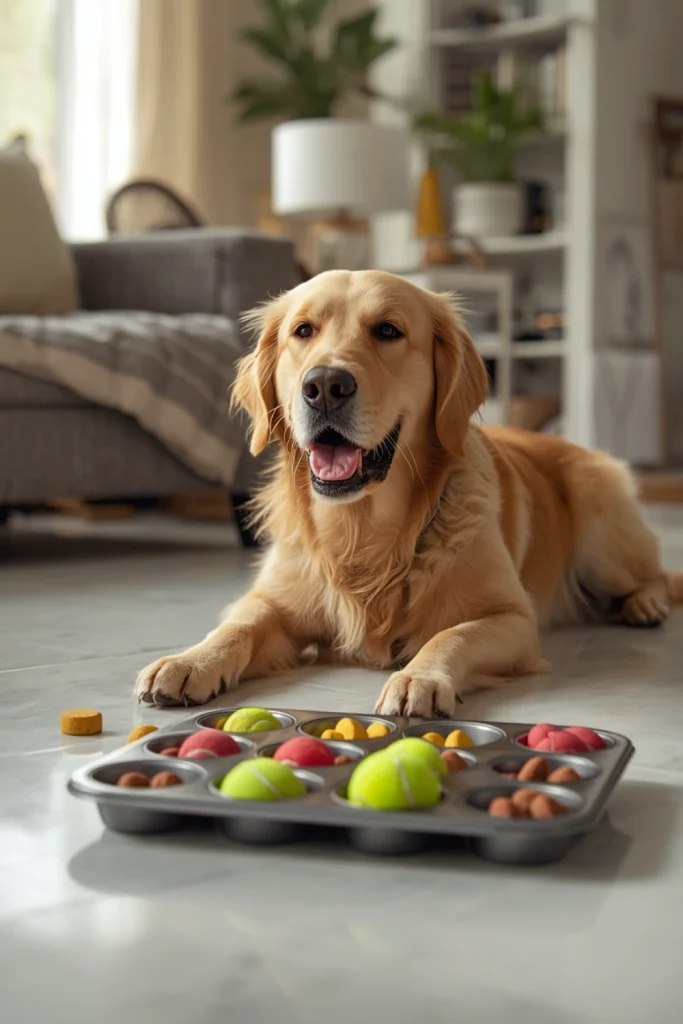
The muffin tin treat game is one of the easiest dog games you can create at home. All you need is a clean muffin tin and a few of your dog’s favorite treats. Place small treats inside several muffin cups, then cover each cup with a tennis ball or another appropriately sized, dog-safe ball. Your dog will need to figure out how to move the balls to discover the hidden rewards. This simple activity encourages curiosity and helps develop natural problem-solving abilities.
Start by making the game easy so your dog understands how it works. Place treats in only a few cups and allow your dog to watch you hide them. Once your dog becomes comfortable, increase the difficulty by covering more cups. Always supervise your pet to prevent chewing or swallowing the balls. Choose balls that are too large to swallow and remove damaged ones immediately. This activity is especially useful for dogs who enjoy sniffing and discovering hidden food.
2. The Cardboard Box Treasure Hunt
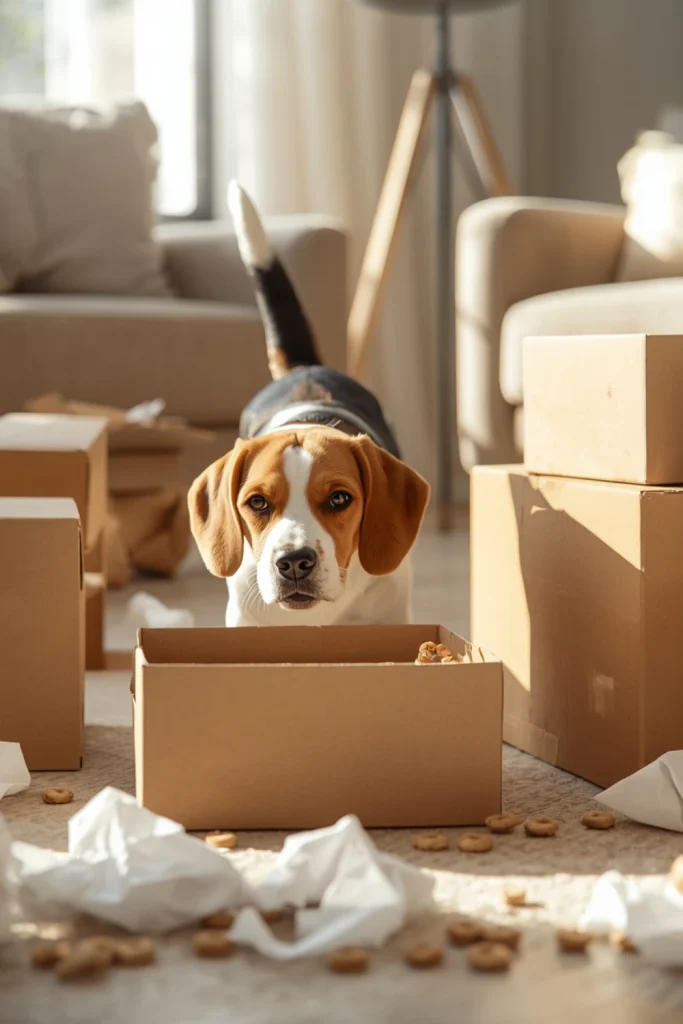
An ordinary cardboard box can become an exciting treasure hunt for your dog. Find a clean, empty cardboard box and place a few of your dog’s favorite treats inside. Leave the top open and allow your dog to investigate the box using its nose. The smell of the treats will encourage natural searching behavior. You can also place a few loosely crumpled pieces of plain paper around the treats to make the discovery more interesting. This activity gives your dog something enjoyable to explore without requiring expensive puzzle toys.
As your dog becomes more confident, try using several cardboard boxes of different sizes. Hide treats in only one or two boxes and encourage your pet to search for the rewards. You can introduce a simple verbal cue such as “Find it!” to make the activity part of your dog’s training routine. Make sure the cardboard is clean and free from staples, tape, labels, and sharp edges. Supervise your dog throughout the game, especially if it enjoys chewing cardboard, and remove any pieces that become torn or swallowed.
3. The Towel Roll-Up Treat Game
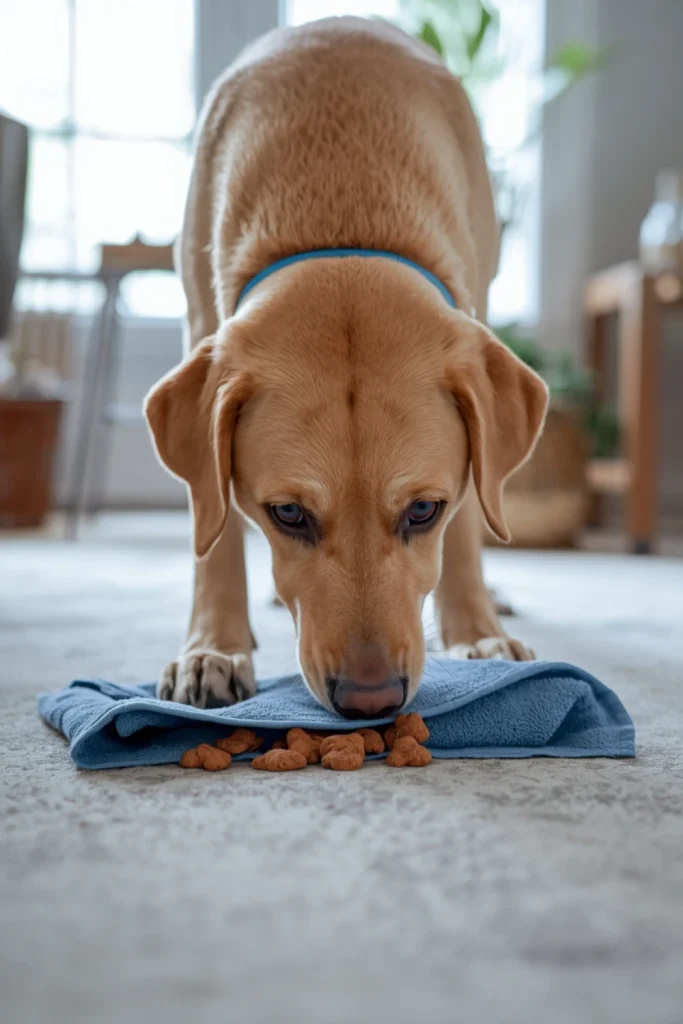
An old, clean towel can easily become a homemade puzzle for your dog. Spread the towel flat on the floor and place a few small treats along one side. Slowly roll the towel so the treats become hidden between its layers. Your dog will need to use its nose and paws to unroll the fabric and discover the rewards. This activity encourages natural sniffing behavior while providing gentle mental exercise. It is particularly suitable for dogs who enjoy food-based activities and prefer solving simple puzzles.
For beginners, roll the towel loosely so your dog can access the treats without becoming frustrated. Once your dog understands the activity, you can make the challenge slightly harder by folding the towel before rolling it. You can also hide treats in different sections to encourage more searching. Always use a towel without loose threads, holes, or damaged edges. Supervise your dog to prevent chewing or swallowing fabric. Avoid this game if your dog tends to eat non-food objects.
4. The Plastic Cup Shell Game
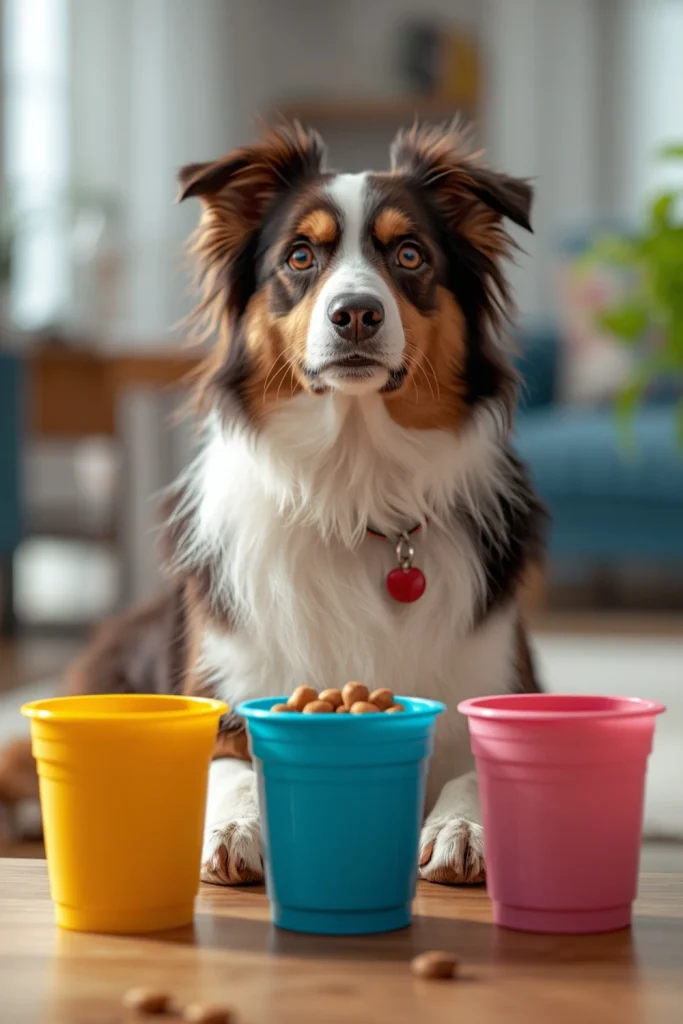
The plastic cup shell game is a fun way to challenge your dog’s observation and problem-solving skills. Take three lightweight, sturdy cups that are safe for supervised play. Place a treat underneath one cup while allowing your dog to watch. Move the cups slowly across the floor and encourage your dog to find the hidden reward. Your pet will need to pay attention to the cup containing the treat. This activity is simple to prepare and can turn an ordinary afternoon into an enjoyable training session.
Begin with two cups if your dog has never played this game before. Keep the cups stationary at first and allow your pet to discover the treat. When your dog understands the activity, introduce a third cup and slowly move the cups between rounds. Reward successful discoveries with praise and another small treat. Avoid thin disposable cups that can easily break or be swallowed. Use sturdy, non-toxic cups and supervise the entire activity. Stop if your dog becomes frustrated or starts chewing the cups.
5. The Paper Roll Treat Puzzle
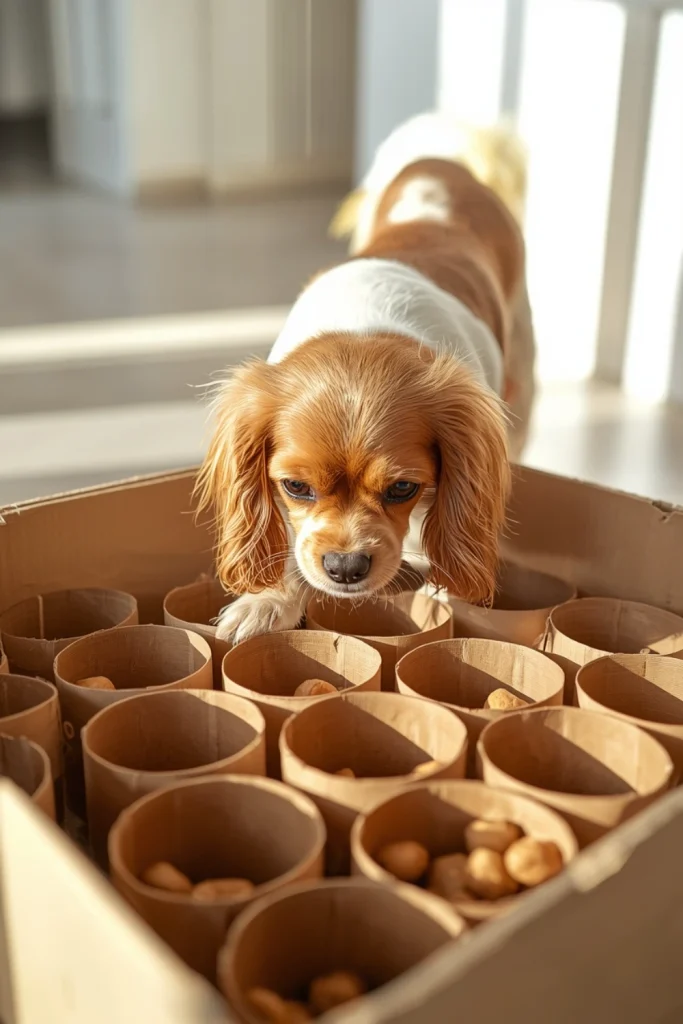
Empty cardboard paper rolls can be transformed into simple enrichment puzzles for dogs. Collect a few clean toilet paper or paper towel tubes and place small treats inside them. Fold the ends loosely to keep the treats from falling out immediately. Give the tube to your dog and let it investigate how to reach the hidden reward. This game encourages sniffing, curiosity, and independent problem-solving. It is also a useful way to reuse clean household cardboard instead of purchasing another expensive dog toy.
To make the activity more interesting, place several cardboard tubes inside a shallow box and hide treats in only a few of them. Your dog can explore the different tubes and search for the rewards. Keep the cardboard easy to open so your pet does not become frustrated. This game should always be supervised because some dogs enjoy shredding and swallowing cardboard. Remove the tubes as soon as they become damaged, and choose another activity if your dog tends to eat paper products.
6. The Sock Treasure Hunt
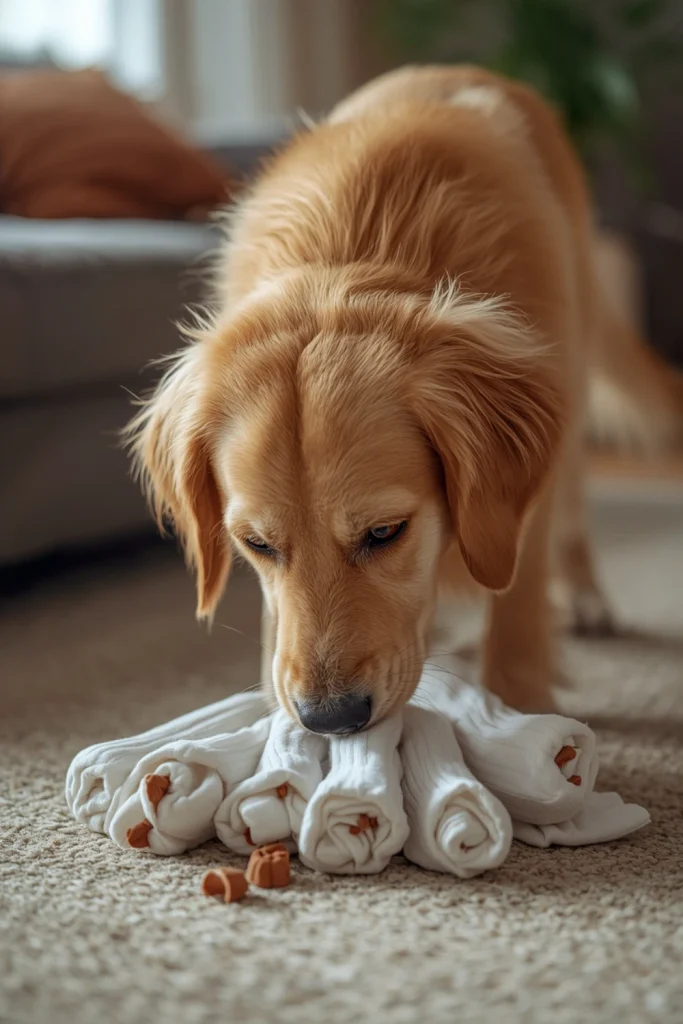
Clean, old socks can be used to create a simple scent-based activity for dogs. Take a few socks that are no longer needed and place a treat inside one of them. Roll or fold the sock loosely and allow your dog to investigate. Your pet will use its powerful sense of smell to locate the hidden reward. This activity can be especially entertaining for dogs that enjoy searching for food and exploring new scents. It also provides an opportunity to practice calm indoor play.
Start with one sock so your dog understands that a reward is hidden inside. Once your pet becomes familiar with the activity, place the sock among several other clean socks and encourage it to find the correct one. Keep the game short and rewarding. However, this activity is not suitable for dogs that chew or swallow fabric. Never leave your dog alone with socks, and remove the materials immediately if your pet begins tearing them apart. For dogs that swallow fabric, use a washable commercial snuffle mat instead.
7. The Homemade Snuffle Towel
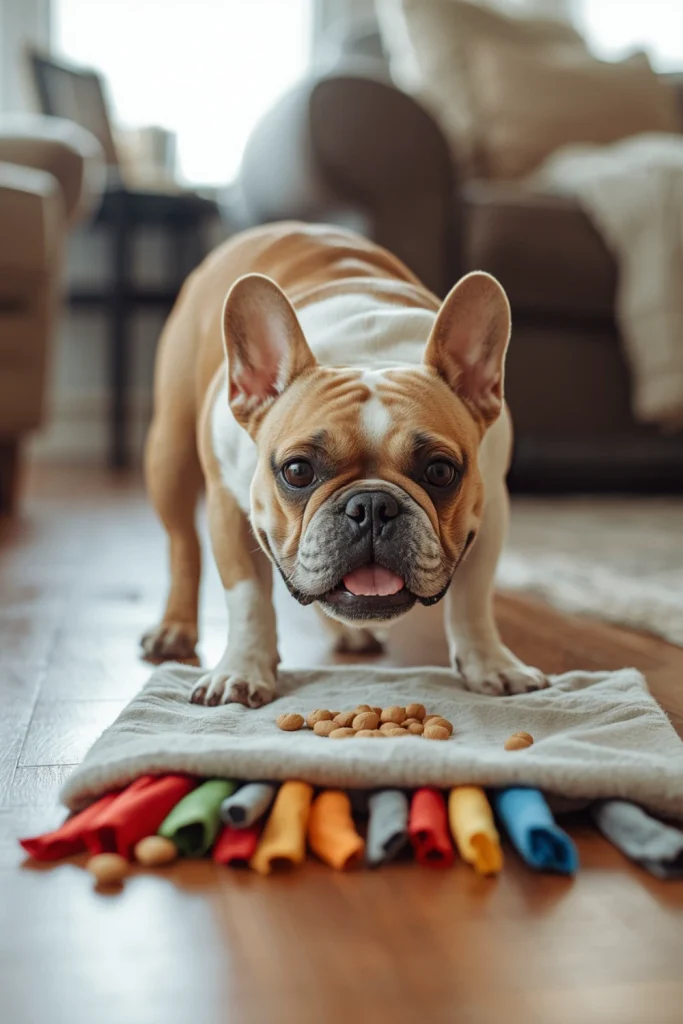
A homemade snuffle activity can provide excellent mental stimulation for dogs that love using their noses. You can create a simple version using a clean, flat towel or several strips of fleece securely attached to a suitable washable base. Hide a few small treats between the fabric folds and allow your dog to sniff around to discover them. The different fabric sections make searching more interesting because your pet must explore several areas to find every reward.
Keep the fabric folds loose enough for your dog to reach the treats comfortably. Begin with treats placed near the surface and gradually make the search more challenging. You can use this activity during rainy days, quiet afternoons, or whenever your dog needs an indoor enrichment break. Always supervise your pet and check the fabric for loose threads or damage. If your dog tries to chew or swallow the material, remove it immediately. The goal is to encourage sniffing rather than chewing.
8. The Blanket Hide-and-Seek Game
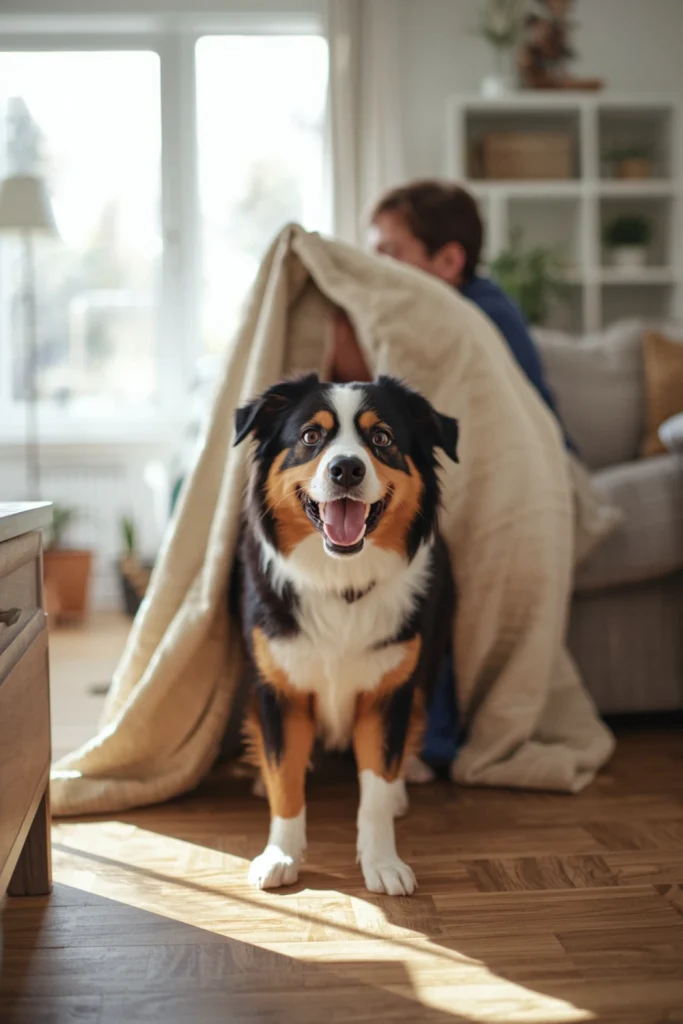
Hide-and-seek is one of the most enjoyable dog games because it combines playtime, attention, and bonding. You do not need special equipment to get started. Simply use a lightweight blanket or a familiar household throw. Ask your dog to stay in one place while you hide behind a piece of furniture or another safe location. Then call your dog using an excited, friendly voice. Your pet will use its senses to locate you, and finding you becomes the reward.
If your dog is unfamiliar with hide-and-seek, begin by hiding only a short distance away. You can also hide behind a partially open door or around a corner where your dog can easily find you. Avoid covering your dog completely with a blanket, as this may cause discomfort or anxiety. Keep pathways clear so your pet does not bump into furniture while searching. This activity can strengthen your relationship and help reinforce the recall command in a fun, positive way.
9. The Laundry Basket Treasure Search
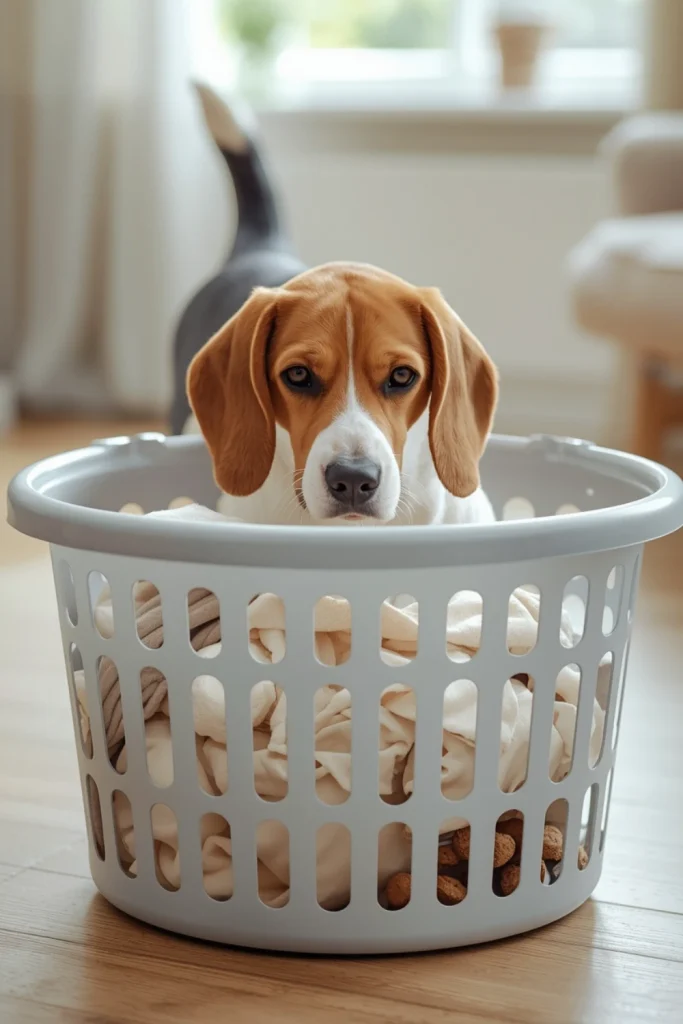
An empty laundry basket can become an interesting searching activity when used correctly. Choose a clean basket with smooth edges and a stable base. Place a few lightweight, dog-safe objects or treats inside and allow your dog to investigate. You can also use a few large pieces of clean fabric to create different spaces where treats can be hidden. Your dog will enjoy sniffing around the basket and discovering the rewards. This simple activity introduces a new environment without requiring expensive equipment.
Start by placing the basket on the floor and allowing your dog to explore it without pressure. Add a few treats in easy-to-find locations once your pet feels comfortable. Avoid baskets with sharp edges, broken plastic, small detachable parts, or unstable handles. Never encourage your dog to climb into a basket that could tip over. Keep the activity focused on sniffing and searching around the basket. If your dog becomes nervous, remove the basket and try again another day with an easier setup.
10. The DIY Obstacle Course
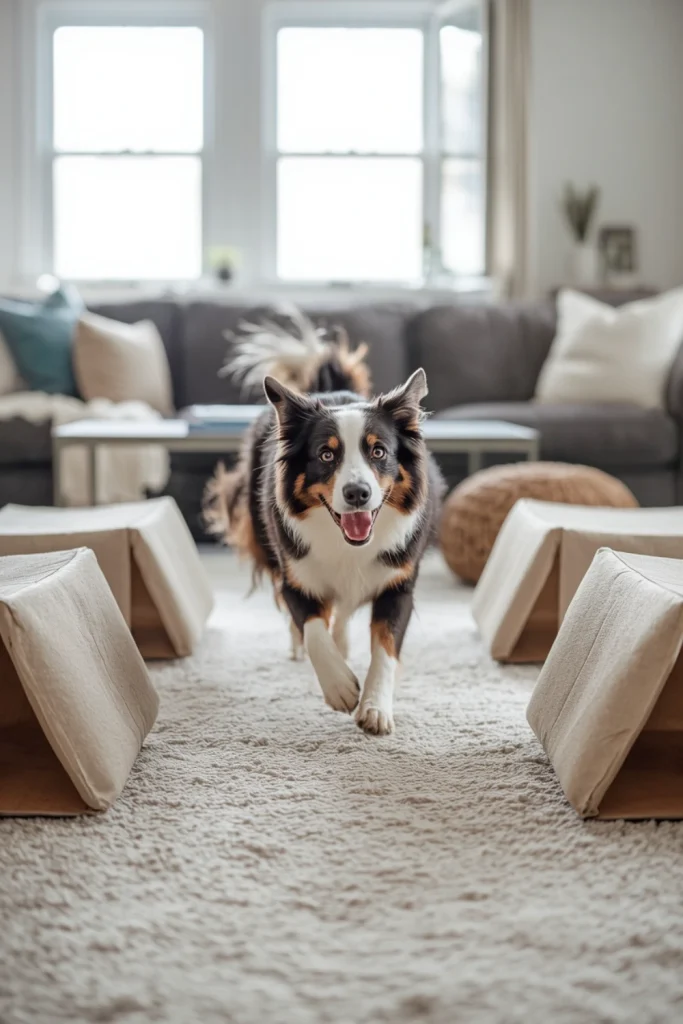
You can create a fun obstacle course for your dog using everyday household items such as cushions, pillows, cardboard boxes, and rolled blankets. Arrange the objects in a safe, open space and encourage your dog to walk around them, step over low obstacles, or move between cushions. This activity offers physical movement and mental engagement while helping your pet practice listening to simple commands. It is an excellent way to make indoor playtime more interesting when outdoor exercise is limited.
Keep the obstacles low, stable, and suitable for your dog’s size, age, and physical ability. You can guide your dog using treats, hand signals, and encouraging words. Avoid slippery floors, high jumps, narrow passages, and unstable furniture. Puppies with developing joints and senior dogs should stick to gentle walking activities rather than jumping. Make sure your dog has enough room to move comfortably. Reward every successful attempt with praise so the experience remains positive and enjoyable.
11. The Water Bottle Bowling Game
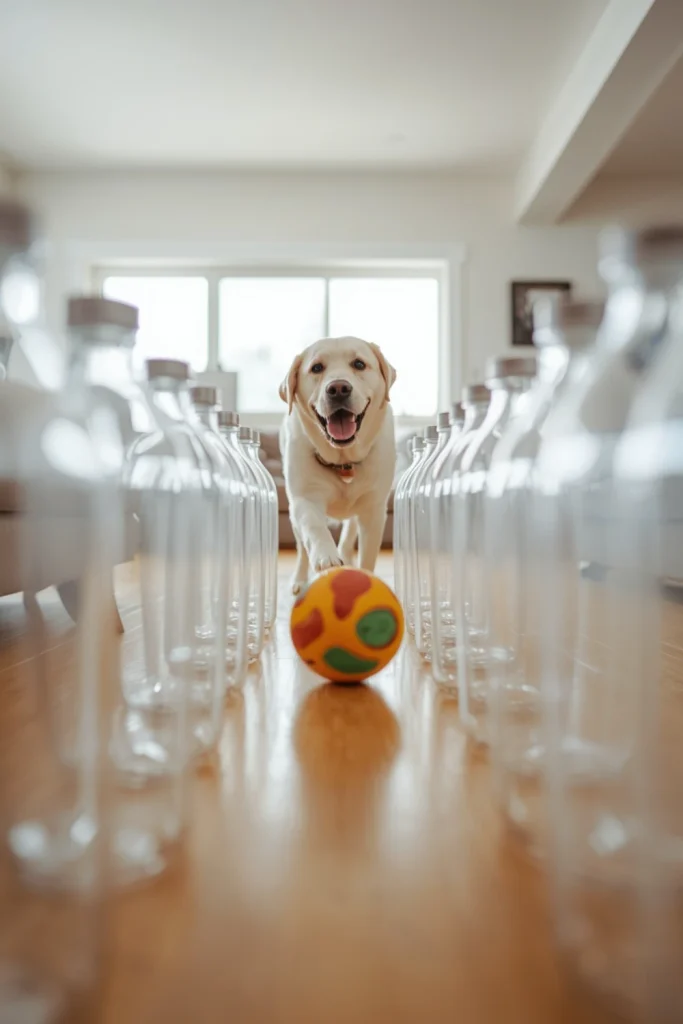
If your dog enjoys chasing moving objects, a simple bowling activity can provide an entertaining indoor experience. Collect a few large, empty, clean plastic bottles and arrange them upright in a wide, open area. Encourage your dog to gently push a soft ball toward the bottles or knock over a lightweight bottle with its nose. The movement and sound can make the activity exciting. It also provides an opportunity to practice simple cues such as “Go” and “Come.”
Use only sturdy, intact bottles with caps, rings, and labels removed, and supervise your dog closely. Never let your pet chew or play with loose bottle caps or plastic pieces. If your dog is frightened by sudden sounds, skip the bowling game or introduce the activity very gently. Use a soft ball that is appropriately sized for your dog. Keep the setup away from fragile furniture and slippery surfaces. Stop immediately if any bottle becomes damaged.
12. The Find Your Favorite Toy Game
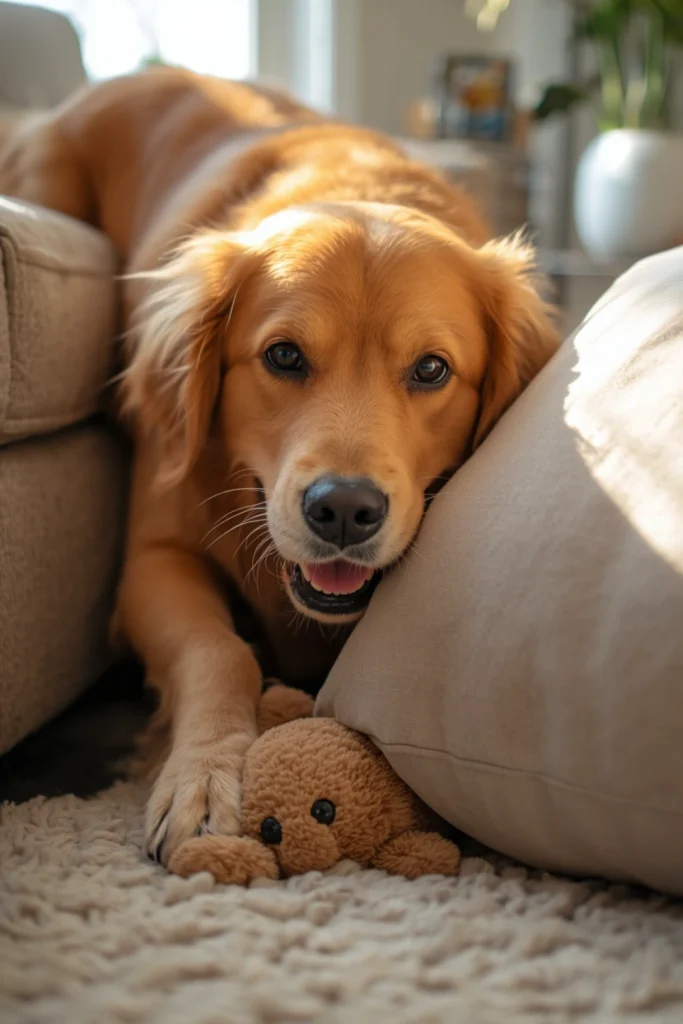
You can turn your dog’s favorite toy into a simple searching game using cushions, blankets, and other soft household items. Start by showing your dog the toy and allowing it to smell it. Then place the toy in an easy-to-see location near a cushion or blanket. Encourage your pet to find it using a friendly command such as “Find your toy!” When your dog discovers the toy, reward it with praise and a short play session. This activity makes familiar objects more exciting.
As your dog improves, hide the toy in slightly more challenging places around one room. You can place it beside a cushion, behind a safe piece of furniture, or under a loosely arranged blanket. Always make sure your dog can reach the toy without climbing or squeezing into tight spaces. Use a toy that is appropriate for your dog’s size and chewing habits. This game can also help build confidence and encourage your pet to pay attention to verbal instructions.
13. The Paper Ball Chase Game
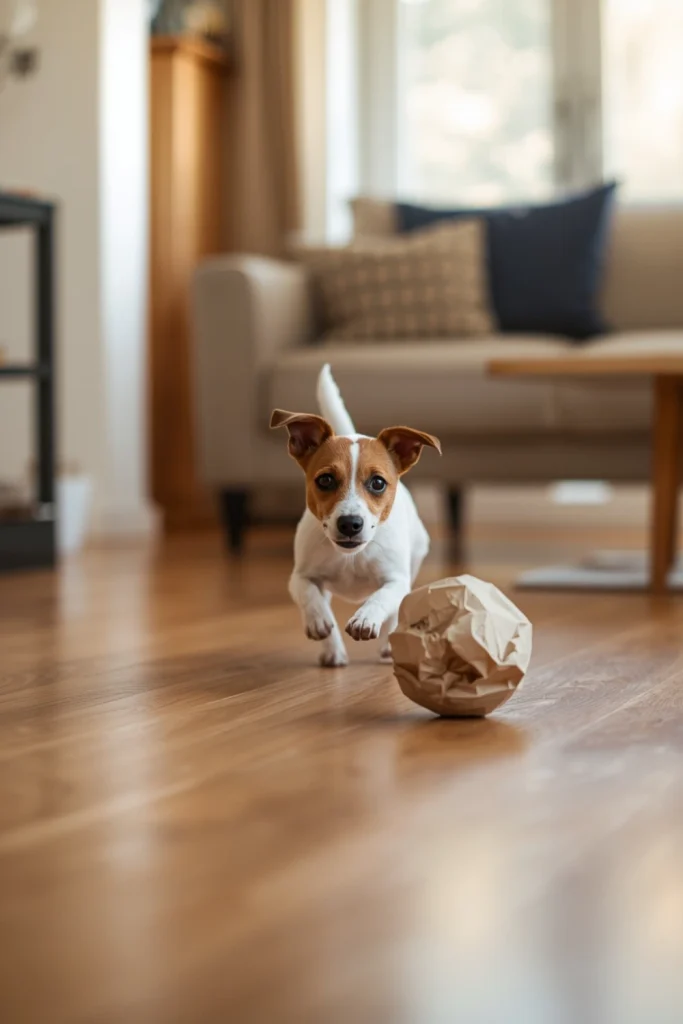
A simple piece of plain paper can become an entertaining play object for dogs that enjoy chasing lightweight items. Take a clean sheet of paper and gently crumple it into a large ball. Roll it slowly across a smooth, non-slippery floor and encourage your dog to follow it. The movement and gentle rustling sound may attract your dog’s attention. This is a quick way to introduce a little excitement into an ordinary indoor afternoon without purchasing a new toy.
Make sure the paper ball is large enough that your dog cannot swallow it. Avoid paper with staples, tape, plastic coatings, ink-heavy materials, or sharp edges. Some dogs may prefer chasing rather than picking up the paper, while others may immediately try to shred it. If your dog starts eating the paper, stop the game and choose a safer alternative. Keep sessions short and use positive encouragement to make the activity enjoyable rather than overly exciting.
14. The Cushion Maze Challenge
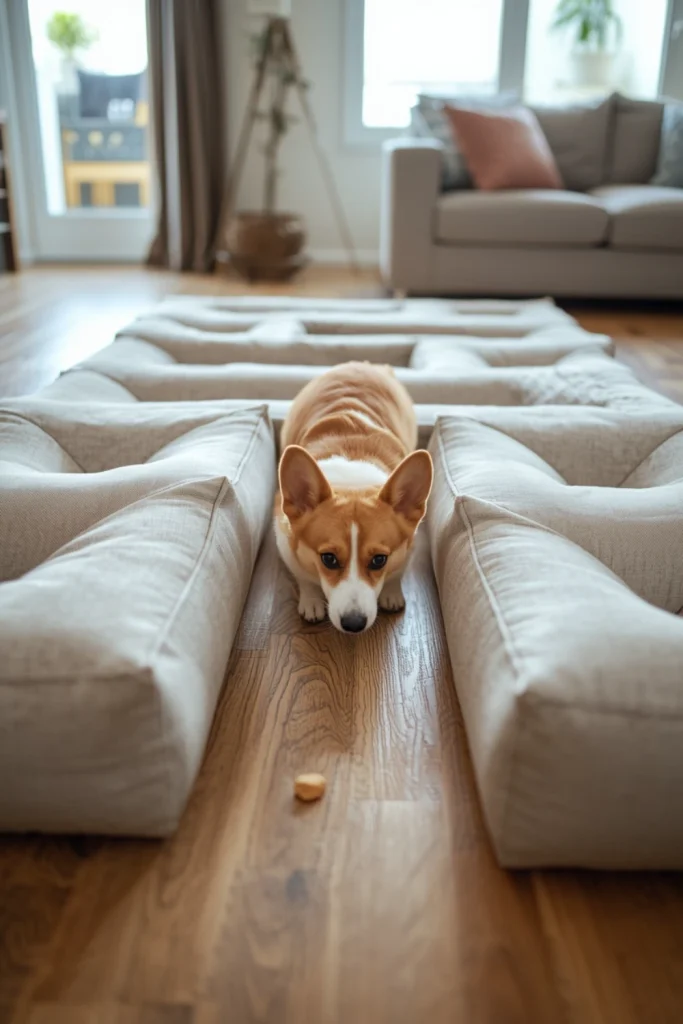
A cushion maze is a creative way to turn your living room into a small adventure area for your dog. Arrange several large, soft cushions on the floor to create a simple pathway with gentle turns. Leave enough space for your dog to walk through comfortably. You can place a small treat at the end of the pathway to encourage exploration. This activity helps your dog practice navigating around objects while providing a little mental stimulation.
Begin with a short, wide pathway so your dog can easily understand the activity. As your pet becomes more confident, you can add a few gentle turns or another cushion. Keep the cushions stable and make sure they cannot slide across the floor. Never create narrow spaces that might trap your dog or force it to jump. This game is especially suitable for gentle indoor activity, provided the setup matches your dog’s size, age, and mobility.
15. The Homemade Scent Trail Game
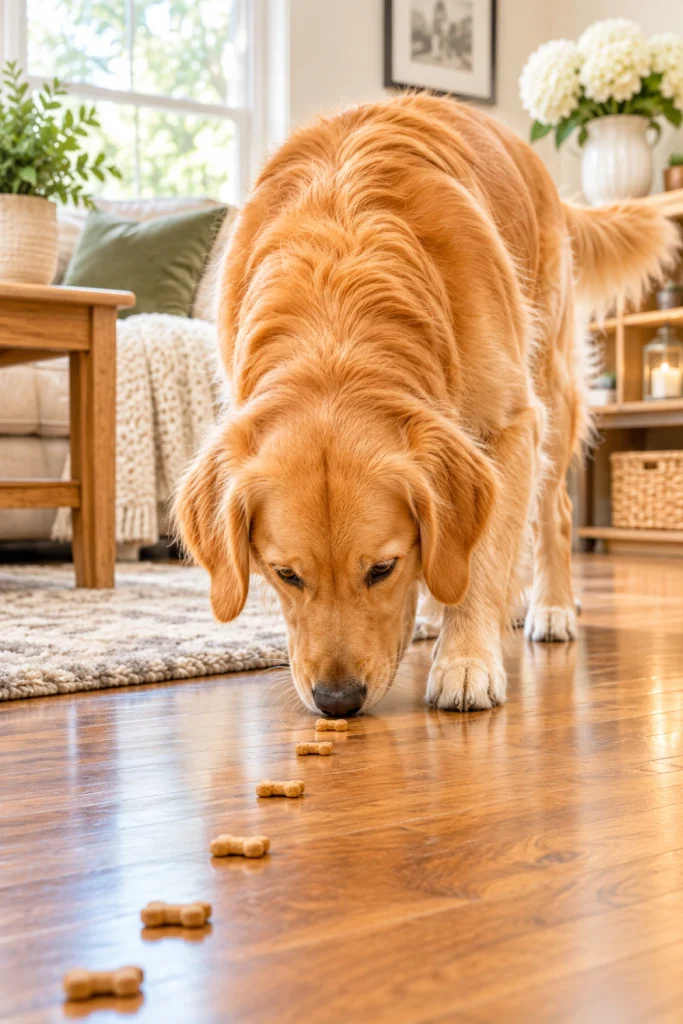
Dogs have an excellent sense of smell, making scent-based activities some of the most rewarding games you can create at home. For this activity, use a few tiny pieces of your dog’s regular food or favorite treats. Place them in a short, simple trail across a safe area of your home. Start by allowing your dog to smell the first treat, then encourage it to follow the trail. Your pet will naturally use its nose to discover each reward along the way.
Once your dog understands the activity, make the trail slightly longer or include a few gentle turns. You can finish the trail with a small reward at the final location. Keep the treats small so your dog does not consume too much extra food during playtime. Avoid placing food near cleaning products, electrical cords, or unsafe objects. This activity is particularly useful for rainy days and can help provide mental stimulation when your dog cannot spend much time outdoors.
Final Thoughts
You do not need expensive toys or complicated equipment to keep your dog entertained. With a little creativity, ordinary household items can become exciting opportunities for play, learning, and bonding. From cardboard box treasure hunts and towel puzzles to homemade obstacle courses and scent trails, these 15 dog games offer plenty of ways to make everyday playtime more enjoyable.
The most important thing is to choose activities that match your dog’s personality, age, and abilities. Start with simple challenges, use safe household materials, and always supervise your pet during playtime. Remember that every dog is different, so experiment with several activities to discover which ones your furry friend enjoys most.
Make time for a little creative play every day. Even a few minutes of fun can give your dog something exciting to look forward to while helping strengthen the special bond you share.


