10 Dog Brush Types and How to Choose the Right One
Choosing the right brush can make a big difference in your dog’s grooming routine. Regular brushing helps remove loose fur, prevent painful tangles, distribute natural oils, and keep your dog’s coat looking clean and healthy. However, with so many grooming tools available, it can be difficult for new dog owners to understand which brush is best for their pet.
Different dogs have different coat types, and each coat needs a suitable grooming tool. A brush that works perfectly for a short-haired dog may not be effective for a long-haired breed with a thick undercoat. In this guide, you will discover 10 common Dog Brush Types, learn how each one works, and understand how to choose the right brush for your dog’s coat, comfort, and grooming needs.
1. Slicker Brush
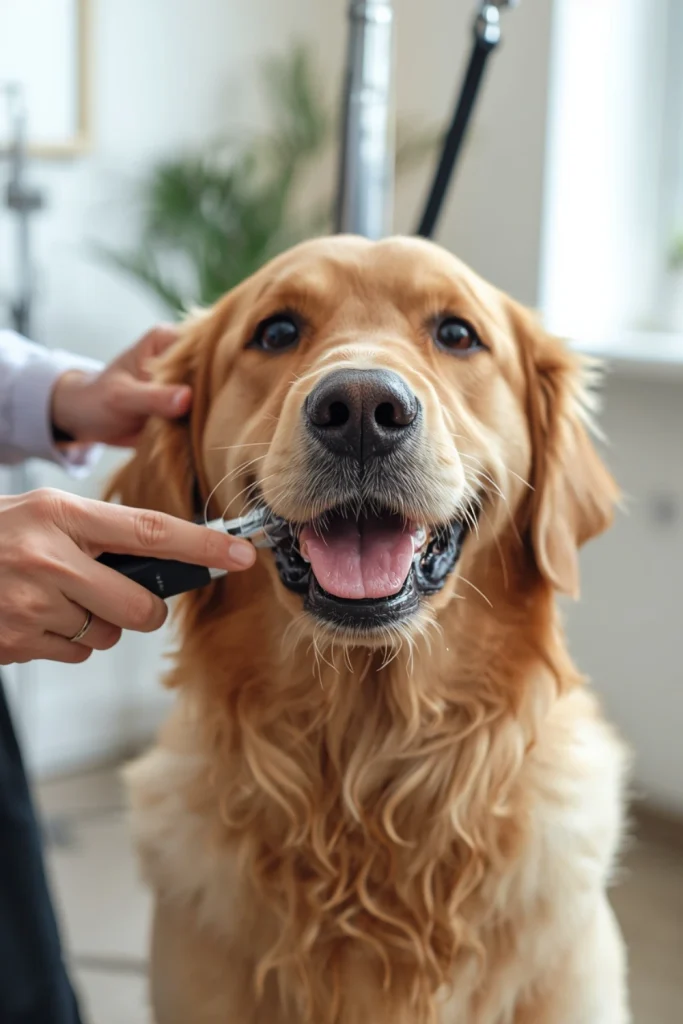
A slicker brush is one of the most popular grooming tools for dogs, especially those with medium-length, long, curly, or thick coats. It has a flat or slightly curved head covered with many fine wire bristles. These bristles help remove loose hair, small tangles, and surface debris from the coat. Slicker brushes are commonly used for breeds such as Poodles, Cocker Spaniels, and many mixed-breed dogs with longer fur. They can also help maintain coats that are prone to matting when used regularly and correctly.
When using a slicker brush, work through small sections of your dog’s coat instead of brushing large areas quickly. Use gentle movements and avoid pressing the wire bristles too firmly against the skin. Some slicker brushes have flexible or coated pins that provide extra comfort. If your dog has sensitive skin, choose a soft-pin version and introduce it gradually. A slicker brush is especially useful for regular maintenance, but severe mats should be handled carefully rather than pulled apart with force.
Best for: Medium, long, curly, and dense coats.
2. Bristle Brush
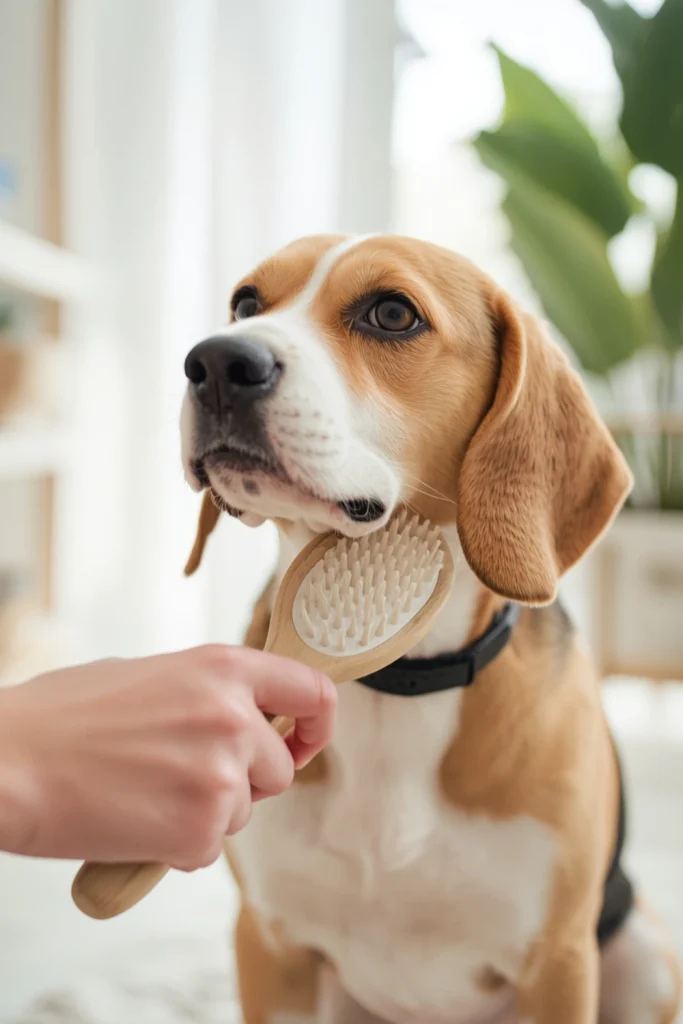
A bristle brush is a simple grooming tool with soft or firm bristles arranged across a flat or oval brush head. It is especially useful for short-haired dogs because it removes loose surface hair, dust, and everyday dirt while helping distribute natural oils through the coat. This can give a dog’s fur a cleaner and shinier appearance. Breeds such as Beagles, Pugs, Boxers, and many short-coated mixed breeds may benefit from regular brushing with a suitable bristle brush.
The best bristle brush depends on your dog’s coat thickness and skin sensitivity. Soft bristles are generally more comfortable for dogs with fine hair or delicate skin, while firmer bristles may work better on thicker, short coats. Brush in the direction of hair growth using gentle, even strokes. Although a bristle brush is excellent for surface grooming, it may not remove much loose undercoat from double-coated dogs. You may need another grooming tool if your dog sheds heavily.
Best for: Short, smooth, and fine coats.
3. Pin Brush
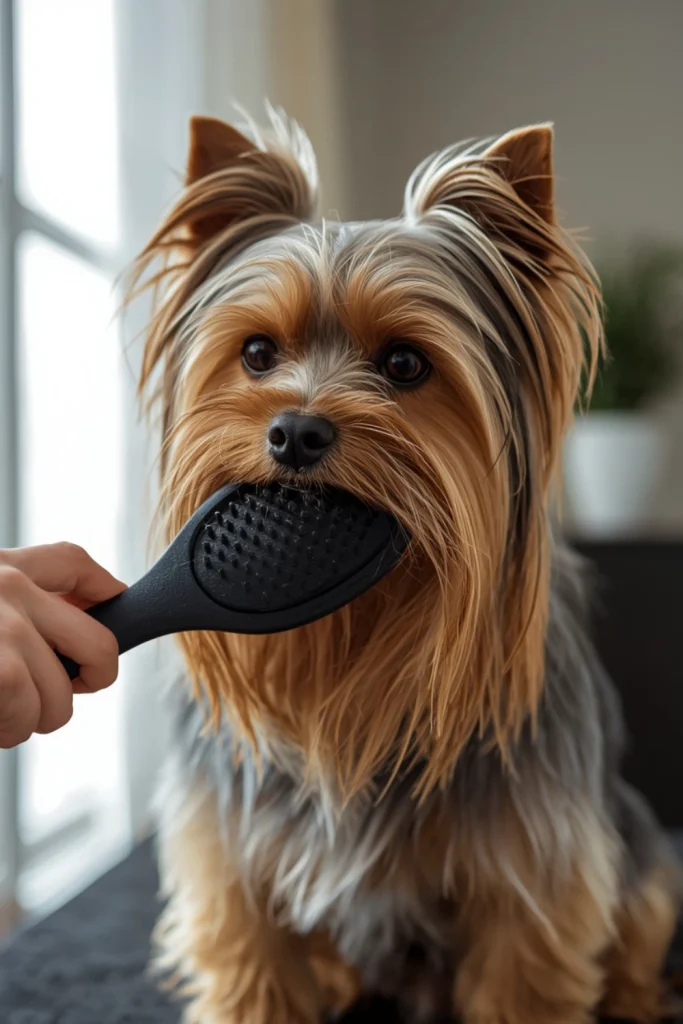
A pin brush usually has widely spaced metal pins with rounded or protective tips attached to a cushioned brush head. Its design helps move through longer coats without pulling too much on the hair. It is often suitable for dogs with long, silky, or flowing fur, including Yorkshire Terriers, Afghan Hounds, and some Spaniels. The pins help separate individual strands, remove loose surface hair, and make the coat easier to manage during routine grooming.
A pin brush is useful for maintaining a long coat, but it may not remove deep tangles or thick undercoat effectively. Before brushing, gently separate the hair with your fingers and work through small sections. Pay attention to areas behind the ears, under the legs, and around the tail because these areas can develop knots. Choose a brush with smooth, rounded pins that do not scratch your dog’s skin. If the pins are damaged or sharp, replace the brush to prevent discomfort.
Best for: Long, silky, and flowing coats.
4. Undercoat Rake
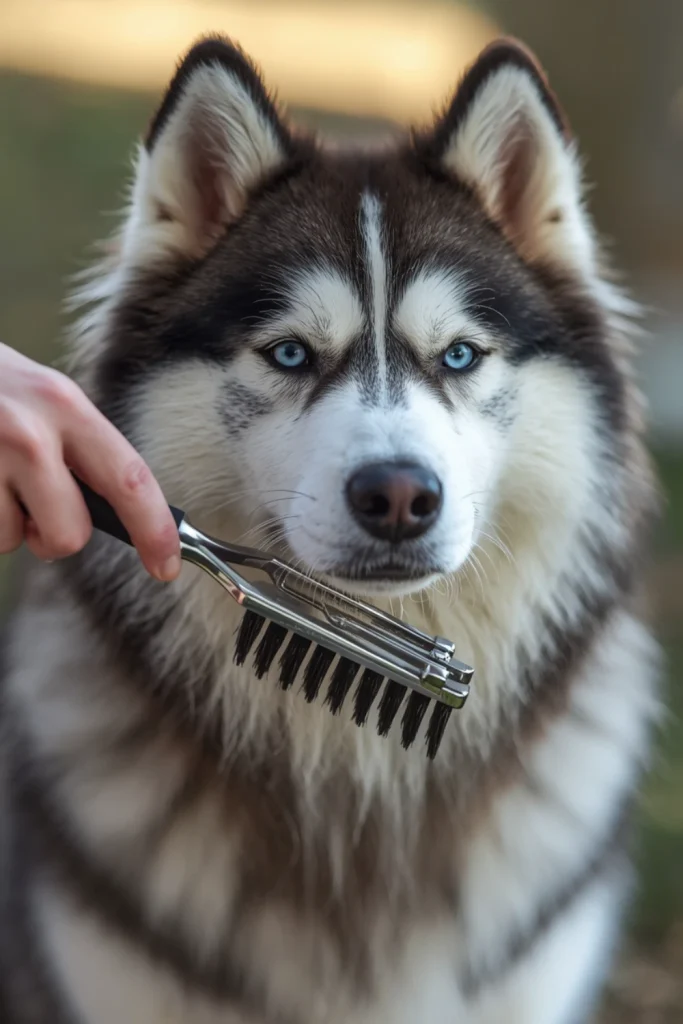
An undercoat rake is designed for dogs with thick double coats. These dogs have a topcoat and a softer undercoat beneath it. The undercoat can trap loose hair, especially during seasonal shedding. An undercoat rake usually has longer metal teeth that reach through the topcoat to loosen and remove some of the dead undercoat without unnecessarily cutting healthy outer hair. It can be useful for breeds such as German Shepherds, Huskies, Golden Retrievers, and Australian Shepherds.
Use an undercoat rake gently and follow the natural direction of hair growth. Avoid repeatedly brushing the same area or applying pressure because this can irritate the skin and damage the coat. The tool should glide through the fur rather than scrape against the dog’s body. Not every dog needs an undercoat rake, and it is generally unsuitable for single-coated breeds or dogs with very short hair. If you are unsure whether your dog has a double coat, ask a professional groomer or veterinarian.
Best for: Thick double coats and dogs with a dense undercoat.
5. Deshedding Tool
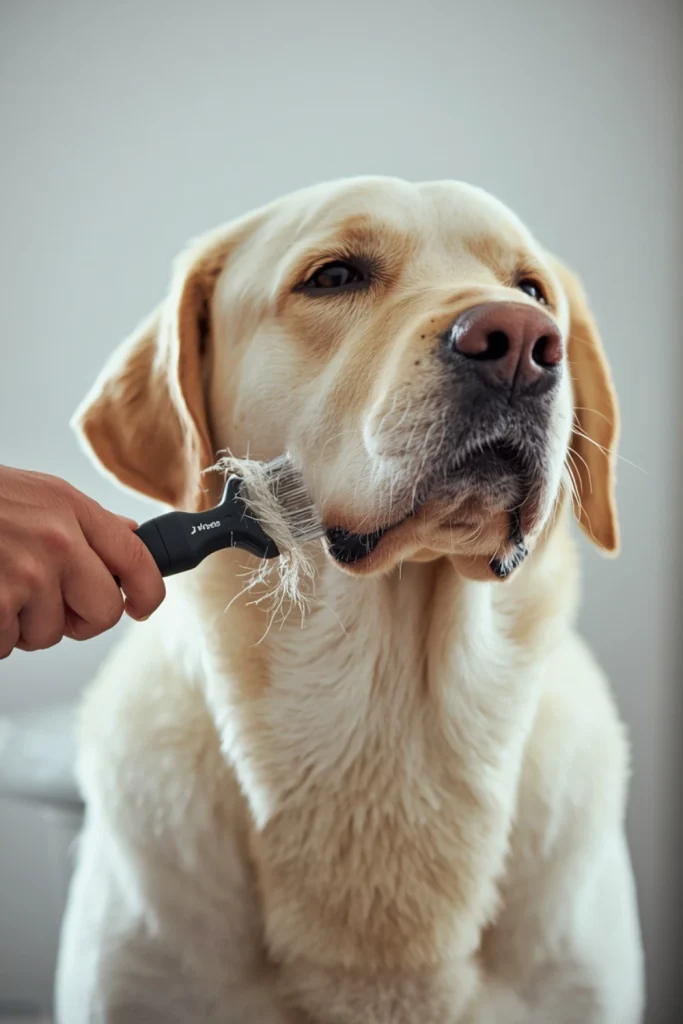
A deshedding tool is designed to help remove loose undercoat hair from dogs that shed regularly. It usually has a specially shaped metal edge or comb-like head that reaches through the topcoat to collect loose hair. These tools are popular among owners of heavy-shedding breeds such as Labrador Retrievers, German Shepherds, and Golden Retrievers. Used correctly, a deshedding tool can help reduce the amount of loose fur around the home and make routine coat maintenance easier.
However, a deshedding tool should not be used too frequently or aggressively. Excessive pressure and repeated strokes can irritate the skin or remove healthy hair. Always follow the manufacturer’s instructions and check whether the tool is appropriate for your dog’s coat. Some dogs have coats that are not suitable for this type of grooming tool. Begin with a few gentle strokes and stop if your dog shows signs of discomfort. A regular brush may be a better choice for dogs with sensitive skin or delicate coats.
Best for: Suitable double-coated dogs that shed heavily.
6. Rubber Curry Brush
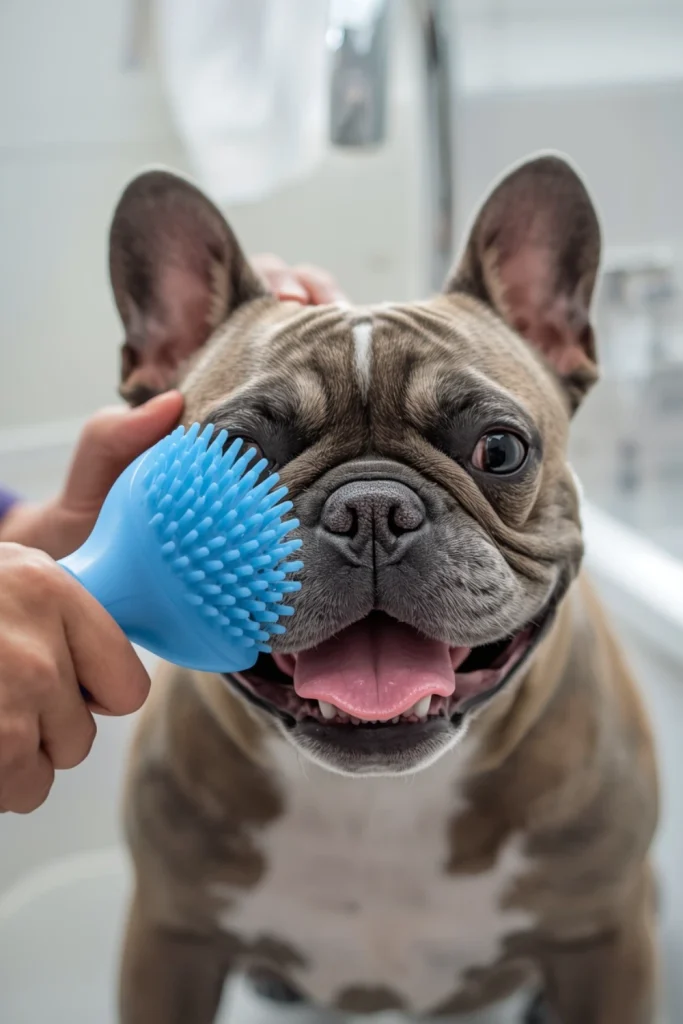
A rubber curry brush is made from soft rubber or silicone and usually has flexible bumps, nubs, or short teeth on its surface. It is commonly used on short-haired dogs to loosen dead hair, remove surface dirt, and provide a gentle massage. The soft material makes it a comfortable option for many dogs that dislike traditional metal brushes. Breeds such as Boxers, Pugs, Bulldogs, and short-haired mixed breeds may enjoy this type of grooming tool.
To use a rubber curry brush, move it in gentle circular motions or follow the direction of the coat, depending on the brush design. The flexible rubber surface can help lift loose hair while stimulating the skin. Many dogs enjoy the massage-like feeling, making this brush useful for introducing puppies to grooming. Some rubber curry brushes can also be used during bathing to help spread shampoo through the coat. Choose a soft, appropriately sized brush and avoid pressing too firmly.
Best for: Short-haired dogs and gentle grooming sessions.
7. Comb Brush
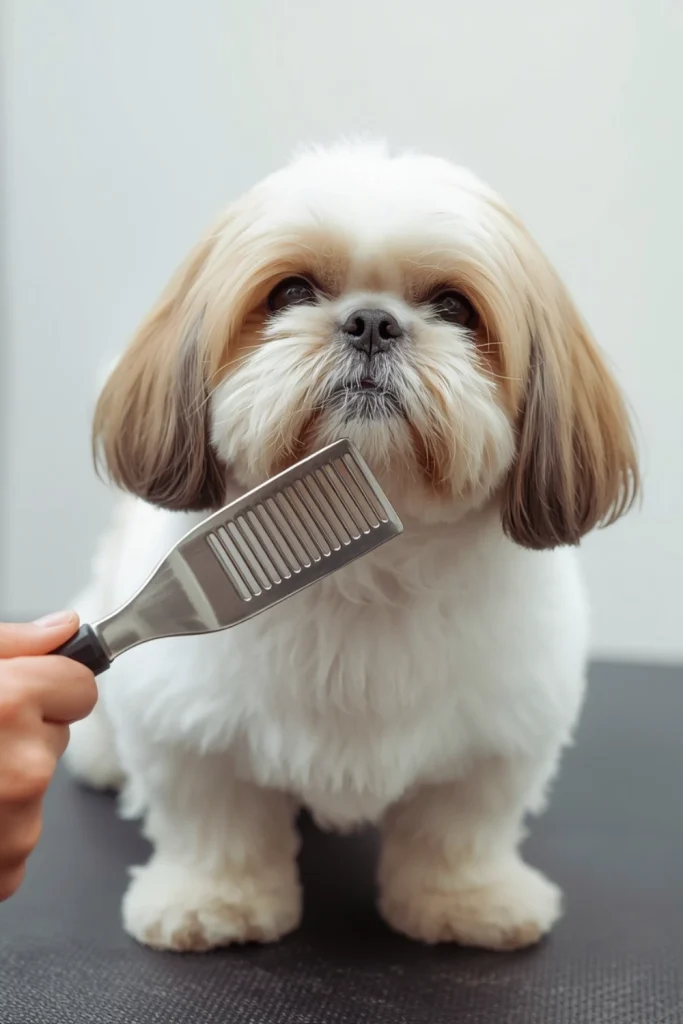
A dog grooming comb is a useful tool for checking the coat, separating hair, and finding small tangles that a regular brush may miss. Most dog combs have metal teeth, sometimes with different spacing on each side. The wider teeth help separate thicker hair, while the finer teeth can help remove smaller loose hairs and check for knots. Combs are particularly useful for dogs with long, curly, or dense coats, including Poodles, Shih Tzus, and many doodle breeds.
A comb is often most effective when used after brushing. Gently move it through the coat in small sections, starting near the ends of longer hair and working carefully toward the roots. If the comb catches on a knot, do not pull hard. Separate the hair with your fingers or use an appropriate detangling product if suitable for dogs. A comb can also help you check commonly missed areas, such as behind the ears, around the collar, and beneath the legs.
Best for: Long, curly, thick, and easily tangled coats.
8. Flea Comb
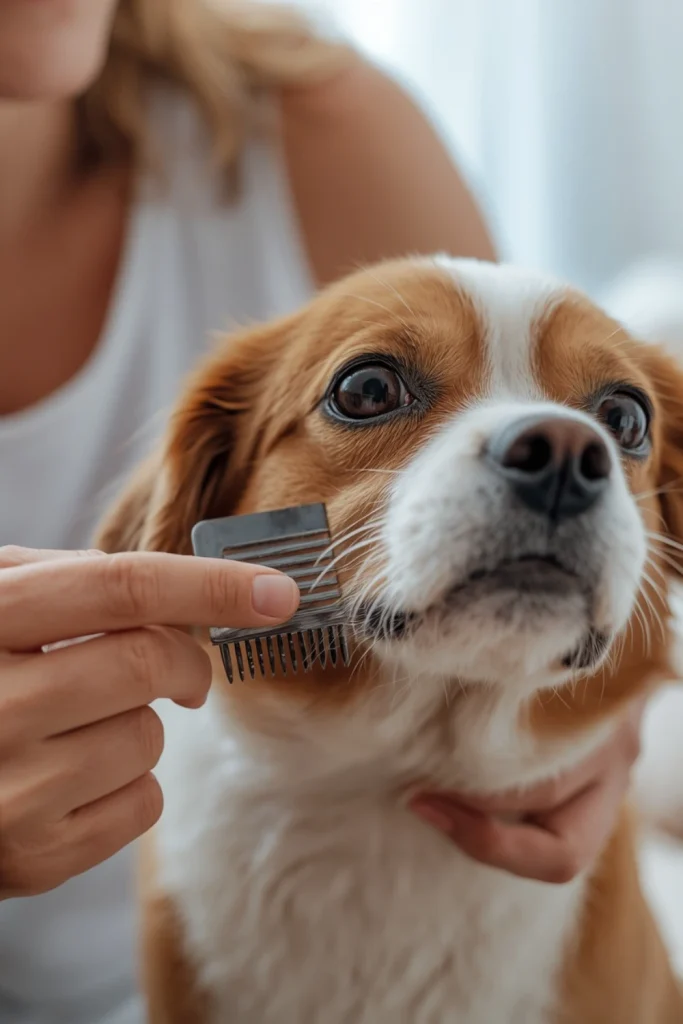
A flea comb is a small grooming tool with very fine, closely spaced teeth. It is designed to help detect fleas, flea dirt, and small debris in a dog’s coat. Unlike ordinary brushes, its narrow spaces allow it to collect tiny particles that may be difficult to see with the naked eye. A flea comb can be useful for dogs with short, medium, or long coats, although the time required to comb through the fur depends on coat thickness and length.
To use a flea comb, gently move it through small sections of your dog’s coat, paying particular attention to areas around the neck, tail base, and belly. After each pass, check the teeth for insects or dark specks. If you find signs of fleas, contact your veterinarian for advice on an appropriate flea-control plan. A flea comb can help with inspection, but it does not replace veterinarian-recommended flea prevention or treatment. Use it gently because the fine teeth can catch in knots or irritate sensitive skin.
Best for: Checking for fleas and fine debris in many coat types.
9. De-matting Comb or Rake
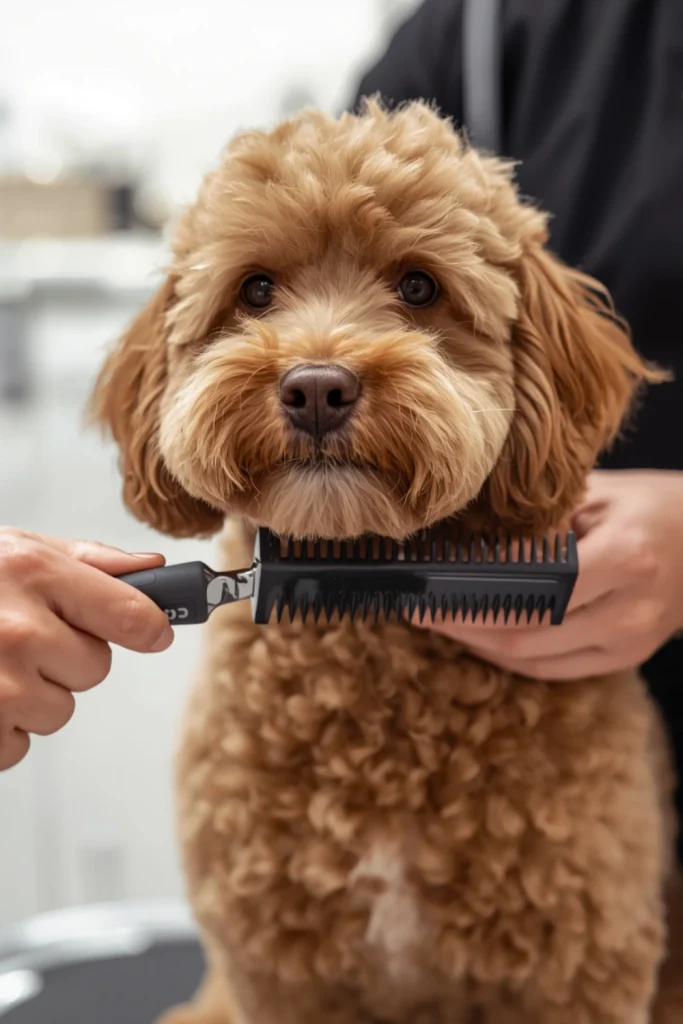
A de-matting comb or rake is designed to help loosen and separate small tangles and developing mats in a dog’s coat. Depending on the model, it may have specially shaped teeth, curved blades, or spaced metal prongs. These tools are often used for long-haired and curly-coated dogs that are more likely to develop knots. Areas such as behind the ears, under the collar, around the legs, and beneath the tail can become tangled when loose hair collects.
De-matting tools require extra care because some designs have sharp edges or blades. Always read the manufacturer’s instructions and keep the tool away from your dog’s skin. Never pull forcefully through a tight mat. Small tangles may sometimes be loosened gently, but large, tight, or painful mats should be assessed by a professional groomer or veterinarian. Trying to cut mats close to the skin with scissors can cause serious injuries. Regular brushing and coat checks are usually safer than waiting until mats become difficult to remove.
Best for: Dogs with long, curly, or mat-prone coats.
10. Grooming Glove
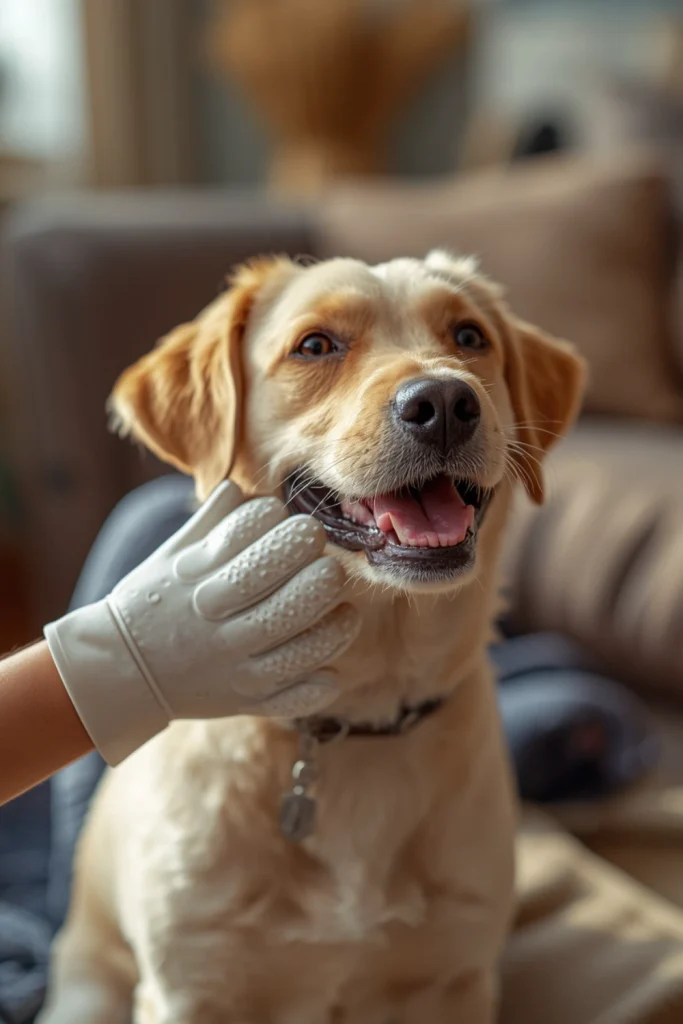
A grooming glove is a wearable grooming tool with soft rubber or silicone tips on the palm and fingers. It allows owners to remove loose surface hair while gently stroking their dogs. Because it feels similar to petting, many dogs find grooming gloves less intimidating than traditional brushes. They are especially useful for short-haired dogs and pets that are nervous around grooming tools. Owners can use them during everyday bonding time to collect loose fur and keep the coat looking tidy.
Put the glove on your hand and gently stroke your dog in the direction of hair growth. Use light pressure and pay attention to your dog’s body language. Grooming gloves are convenient for quick maintenance, but they may not remove deep undercoat or handle serious tangles. They are also useful during bath time if the product is designed for wet use. Choose a glove that fits comfortably and has soft, flexible tips. Clean it regularly so collected hair and dirt do not build up.
Best for: Short-haired dogs, sensitive pets, and dogs that dislike regular brushes.
Final Thoughts
Understanding different Dog Brush Types can help you make grooming easier, safer, and more comfortable for your pet. Slicker brushes, bristle brushes, pin brushes, undercoat rakes, deshedding tools, rubber curry brushes, combs, flea combs, de-matting tools, and grooming gloves each serve different purposes.
The best choice depends on your dog’s coat length, thickness, shedding habits, and skin sensitivity. You may need more than one grooming tool to maintain your dog’s coat properly. Start with a gentle approach, brush regularly, and pay attention to your dog’s comfort. With the right brush and a consistent routine, you can help keep your dog’s coat clean, healthy-looking, and easier to manage.