
10 Gentle Tips for Trimming a Puppy’s Nails
Regular nail care is an essential part of keeping your puppy comfortable and healthy. Puppies naturally use their paws when walking, running, playing, and exploring. However, their nails do not always wear down enough through everyday activity. When nails become too long, they can make walking uncomfortable, catch on carpets or furniture, and sometimes break or split. Long nails may also affect how your puppy places its paws on the ground.
Introducing nail trimming early helps your puppy become familiar with an important grooming activity. Instead of waiting until the nails become very long, you can begin with short handling sessions and gradually introduce the tools. A gentle approach teaches your puppy that having its paws touched is normal. This early experience can make regular grooming easier as your puppy grows into an adult dog.
1. Introduce Paw Handling Before Trimming Your Puppy’s Nails

Before using nail clippers, help your puppy become comfortable with having its paws touched. Many puppies naturally pull their paws away because they are not familiar with this type of handling. Start when your puppy is relaxed, perhaps after a short play session or while resting beside you. Gently touch one paw, then release it. Offer praise and a small treat when your puppy remains calm. Repeat this process for a few seconds at a time without trying to trim any nails immediately.
Gradually move from touching the top of the paw to gently holding each toe. Avoid squeezing the toes or pulling the legs into uncomfortable positions. If your puppy becomes restless, pause and try again later. The purpose of these early sessions is to build trust rather than complete a grooming task. When your puppy learns that paw handling brings gentle attention and rewards, it may become more accepting of future nail-trimming sessions.
2. Choose the Right Nail-Trimming Tools for Your Puppy

Choosing suitable tools is an important step when trimming a puppy’s nails. Large adult-dog clippers may be difficult to control on tiny puppy nails. Look for small, sharp, well-maintained nail clippers designed for puppies or small dogs. Some owners prefer scissor-style clippers, while others find a small guillotine-style tool easier to handle. The best option is one that fits comfortably in your hand and allows you to see exactly where you are cutting.
You may also consider a pet nail grinder, which gradually files the nail instead of cutting it in one motion. However, grinders make a sound and create vibration, so introduce them slowly if your puppy is nervous. Keep a nail file and pet-safe styptic powder nearby in case you accidentally nick the quick. Never use damaged, rusty, or dull tools because they can make trimming less controlled. If you are unsure which tool is suitable, ask your veterinarian or professional groomer for a demonstration.
3. Pick a Calm and Comfortable Time for Nail Trimming

The timing of nail trimming can affect how your puppy responds. Avoid trying to trim nails when your puppy is extremely excited, hungry, frightened, or eager to play. Choose a quiet moment when your puppy is relaxed and comfortable. Some puppies are more cooperative after a gentle walk or play session because they have used some of their energy. Others prefer being handled while resting beside their owner. Observe your puppy’s behaviour and choose a time that suits its personality.
Make sure you also have enough time to work slowly. Rushing can make you nervous and may cause your puppy to become uncomfortable. You do not have to trim every nail in one session, especially when your puppy is still learning. Start with one or two nails, offer a reward, and finish on a positive note. Short sessions can help your puppy develop confidence without feeling overwhelmed by the entire grooming process.
4. Learn Where the Quick Is Before Cutting
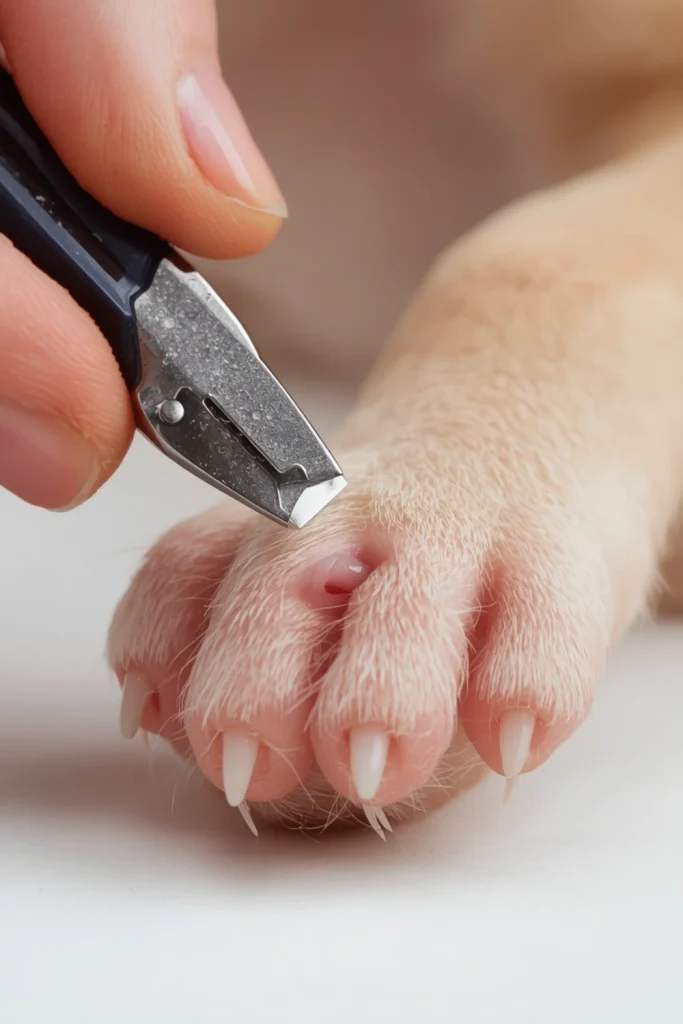
Understanding the quick is one of the most important parts of safe puppy nail trimming. The quick is the sensitive part inside the nail that contains blood vessels and nerves. Cutting into it can cause bleeding and pain, which may make your puppy frightened of future grooming. In light-coloured nails, the quick may appear as a pink area inside the nail. However, it can be difficult to see in dark nails, so extra care is necessary.
Never cut a large portion of the nail simply because it looks long. Remove only a very small amount from the tip, staying well away from the area where the quick may be located. If your puppy has black or dark nails, use good lighting and trim tiny sections at a time. When you cannot confidently identify a safe cutting point, ask a veterinarian or professional groomer to show you the correct technique. Safety is more important than achieving short nails in one session.
5. Hold Your Puppy’s Paw Gently and Securely

How you hold your puppy’s paw can make nail trimming easier and more comfortable. Support the paw with a relaxed hand rather than gripping it tightly. Keep the leg in a natural position and avoid pulling the paw away from the body. Gently separate the toes only as much as needed to access the nail. Your puppy should be able to remain comfortable throughout the process, so never twist a leg or force a paw into an awkward position.
If your puppy pulls away, stop for a moment and allow it to relax. You can try again after offering a treat or gently touching the paw without using the clippers. Some puppies prefer sitting beside their owner, while others feel more secure resting on a soft mat. Find a position that gives you good visibility without making your puppy uncomfortable. If your puppy struggles strongly, do not force the procedure. Take a break and consider professional help.
6. Trim Only a Small Amount of Nail at a Time

When you begin trimming your puppy’s nails, remove only a tiny amount from the tip. Making several small cuts is generally safer than attempting to shorten a long nail in one large cut. This is especially important if your puppy has dark nails and you cannot clearly see the quick. Position the clipper carefully and make a controlled cut rather than squeezing the nail repeatedly. If the nail is very long, do not try to bring it to the desired length in one session.
After each small trim, look at the nail before deciding whether another cut is needed. Stop if you notice a darker or pink area approaching the cutting edge, or if you are unsure how much nail remains safe to remove. Long nails may need gradual shortening over multiple sessions as the quick slowly adjusts. Never rush the process just to make all the nails look the same length. Your puppy’s comfort and safety should always come first.
7. Use Treats and Praise to Create a Positive Experience
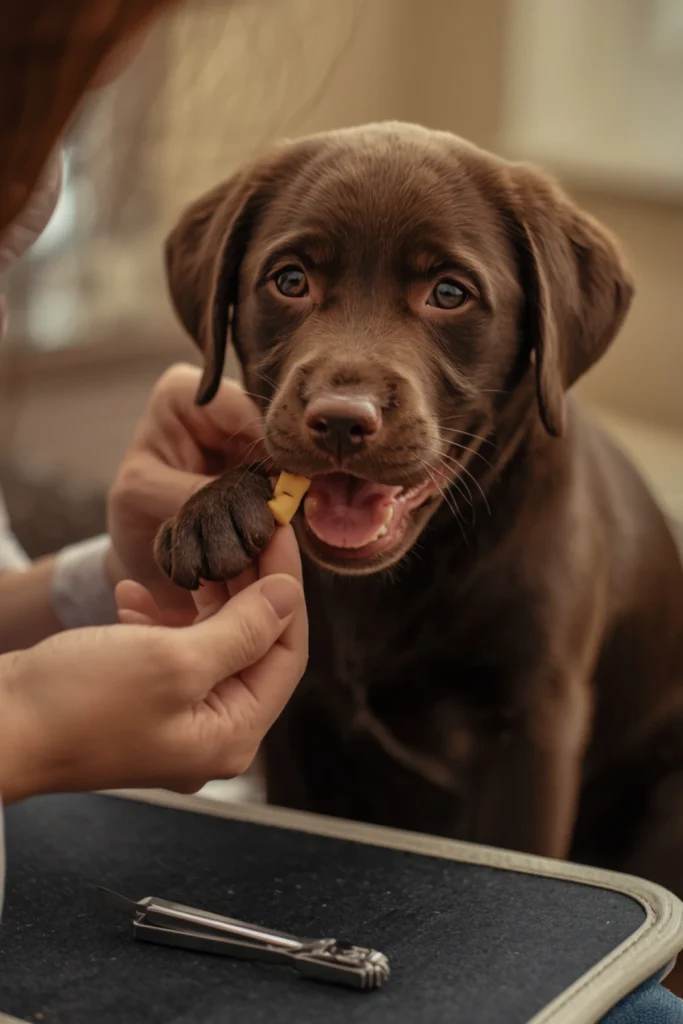
Positive reinforcement can make nail trimming more enjoyable for your puppy. Offer a small treat when your puppy allows you to touch its paw, stays calm while you hold a toe, or accepts the sound of the clippers. You can also use a calm, friendly voice to reassure your puppy throughout the session. Rewards help create a connection between grooming and pleasant experiences rather than fear or discomfort.
You do not need to give a treat after every single movement forever. In the beginning, frequent rewards can help your puppy understand what behaviour you want. As your puppy becomes more comfortable, you can gradually reduce the number of treats while continuing to offer praise. If your puppy becomes frightened, avoid using treats to force it through a stressful situation. Pause, give it time, and return to an easier step. A positive experience is more valuable than finishing quickly.
8. Make Nail Trimming Sessions Short and Gradual
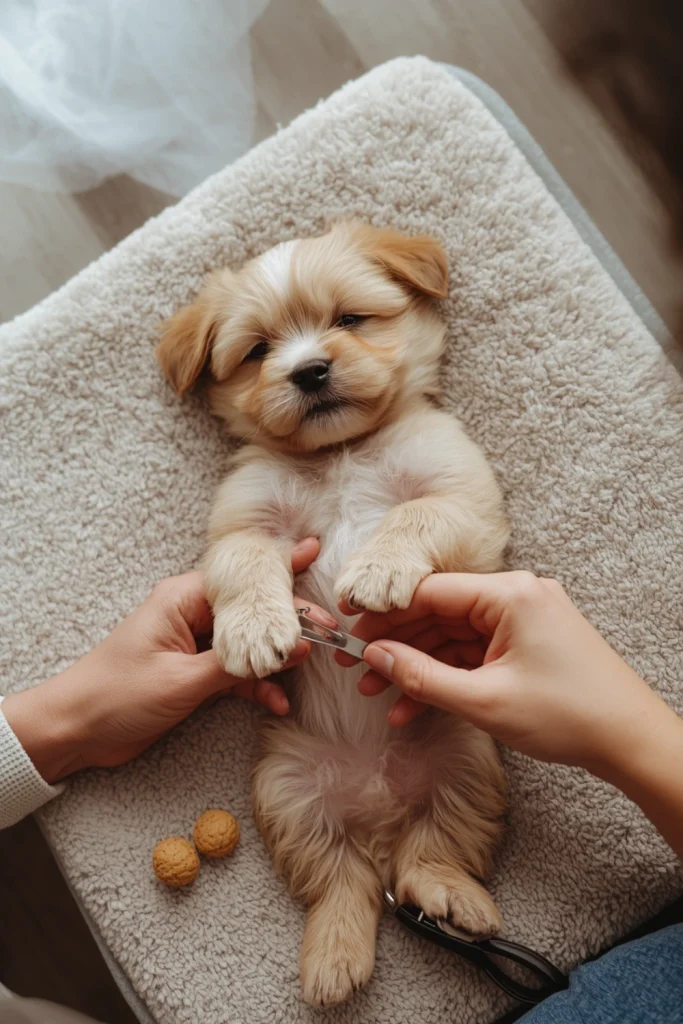
A puppy does not need to have all its nails trimmed in one sitting. For beginners, short sessions can be much easier than attempting to complete every paw at once. You might start by handling one paw, then reward your puppy and stop. During another session, you can introduce the clippers and allow your puppy to sniff them. Later, trim one nail if your puppy remains relaxed. This gradual process helps reduce pressure on both you and your puppy.
As your puppy becomes comfortable, you can slowly increase the number of nails trimmed during each session. Watch its body language and stop if it begins pulling away, trembling, hiding, or struggling. Do not assume that a puppy who tolerated one session will automatically enjoy a longer one. Every experience should build on the previous positive experience. Patience and consistency are key to teaching your puppy that nail care is a normal part of life.
9. Check the Dewclaws and All Four Paws
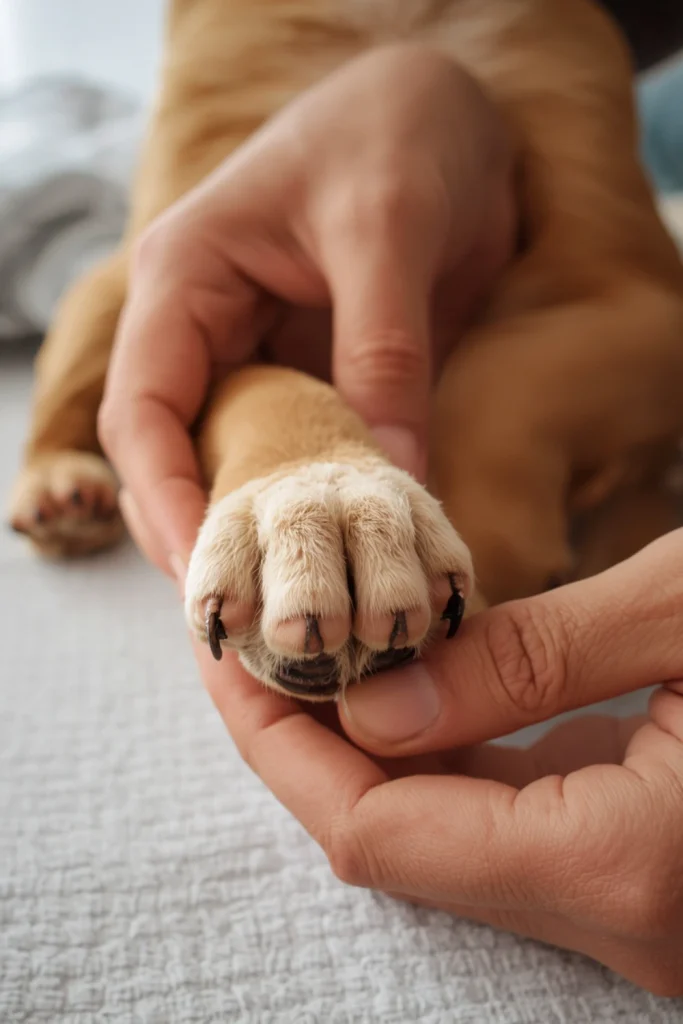
When trimming your puppy’s nails, remember to check all four paws and the dewclaws. Dewclaws are the extra nails located higher on the inside of some dogs’ front legs, and some dogs also have rear dewclaws. Because they may not touch the ground while walking, they can grow longer than the other nails. If they are overlooked, they may curl toward the skin or become caught on blankets and other materials.
Gently inspect each paw and count the nails so you do not accidentally miss one. Do not assume that all puppies have the same number of dewclaws, because this can vary. If a dewclaw is unusually long, twisted, broken, or growing toward the skin, seek professional advice before attempting to correct it yourself. Checking every paw regularly helps you notice problems early and keeps your puppy’s nails in better condition.
10. Know When to Stop and Ask a Professional for Help
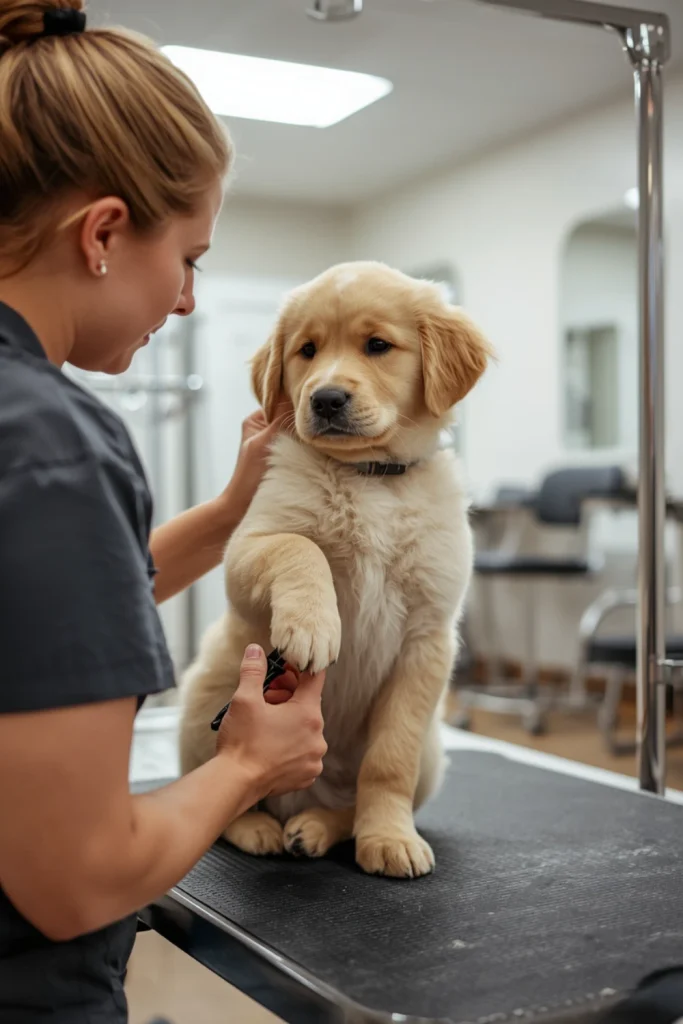
There may be times when trimming your puppy’s nails at home is not the best option. If your puppy becomes extremely frightened, struggles aggressively, or refuses to allow its paws to be handled, forcing the process can make future grooming more difficult. Stop the session and give your puppy time to relax. A veterinarian or experienced professional groomer can demonstrate safe handling techniques and help you create a gradual plan for nail care.
Professional assistance is especially useful when your puppy has very dark nails, unusually thick nails, injured paws, or nails that have grown too long. If a nail is broken, bleeding, swollen, or painful, do not attempt to solve the problem with ordinary trimming. Contact your veterinarian for advice. Asking for help does not mean you have failed as a pet owner. It shows that you are putting your puppy’s safety and comfort first.
Final Thoughts
Trimming your puppy’s nails is an important grooming responsibility, but it does not need to become a stressful experience. The best way to begin is by introducing gentle paw handling, choosing suitable puppy-sized tools, learning where the quick is, and removing only small amounts of nail at a time. Short sessions, calm handling, and positive rewards can help your puppy develop confidence and become more comfortable with regular nail care.
Remember that every puppy is different. Some puppies accept nail trimming quickly, while others need more time and practice. Never force your puppy to continue when it is frightened or struggling. If you are unsure about the correct technique, especially with dark nails or a damaged dewclaw, ask a veterinarian or professional groomer for help. With patience and consistency, you can build a safe nail-care routine that supports your puppy’s comfort as it grows.