
15 Dog Activities That Work in Small Spaces
Living in a small apartment or home doesn’t mean your dog has to miss out on fun, exercise, and mental stimulation. Even without a large backyard, you can create exciting daily activities that keep your furry friend happy, active, and engaged.
The secret is making the most of the space you have. With a few household items, simple training games, and creative indoor activities, you can turn a small room into an enjoyable playground for your dog. These dog activities in small spaces are perfect for apartment living, rainy days, busy schedules, and pet owners who want to keep their dogs entertained indoors.
1. Indoor Hide-and-Seek
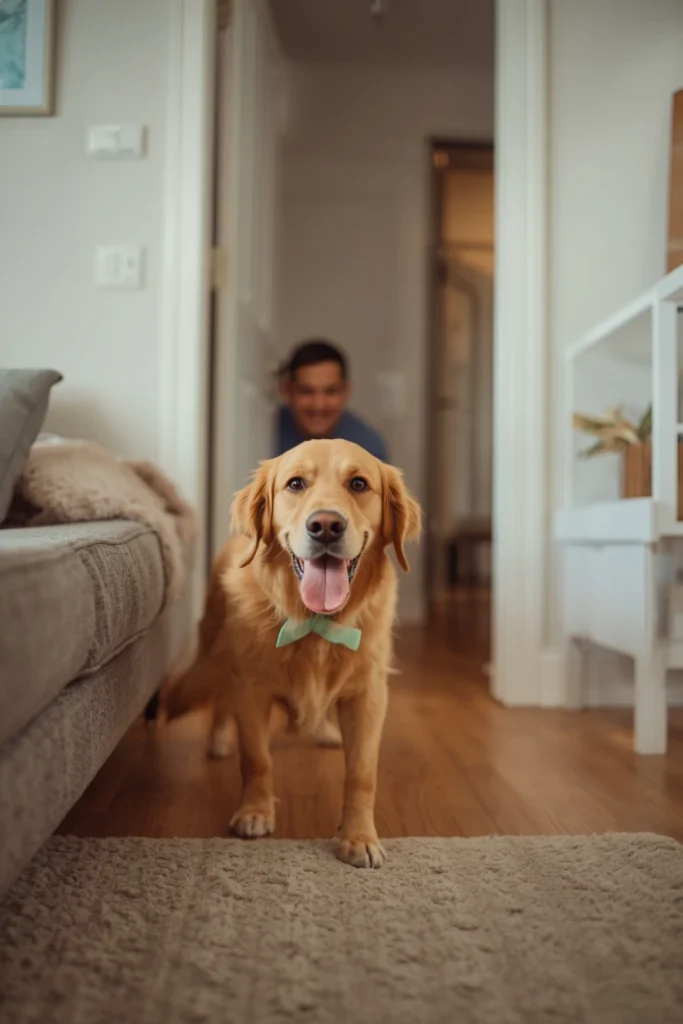
Hide-and-seek is one of the most entertaining dog activities in small spaces because it combines mental stimulation, light movement, and the natural desire to search for familiar people. Start by asking your dog to stay in one room while you hide behind a doorway, beside a sofa, or behind a curtain. Call your dog’s name or use a familiar cue such as “Come.” When your dog finds you, reward them with praise, affection, or a small treat. This simple game encourages your dog to use their nose, listen carefully, and move around the home in a purposeful way.
You can gradually make the game more challenging by choosing different hiding places or asking another family member to participate. For beginners, keep hiding spots easy and use an enthusiastic voice to help your dog understand the game. Avoid hiding in places where your dog might become trapped or knock over furniture. A few short rounds can provide enjoyable mental exercise without requiring a large play area. Hide-and-seek is especially useful for dogs who enjoy spending time with their owners.
2. Treat Scavenger Hunt
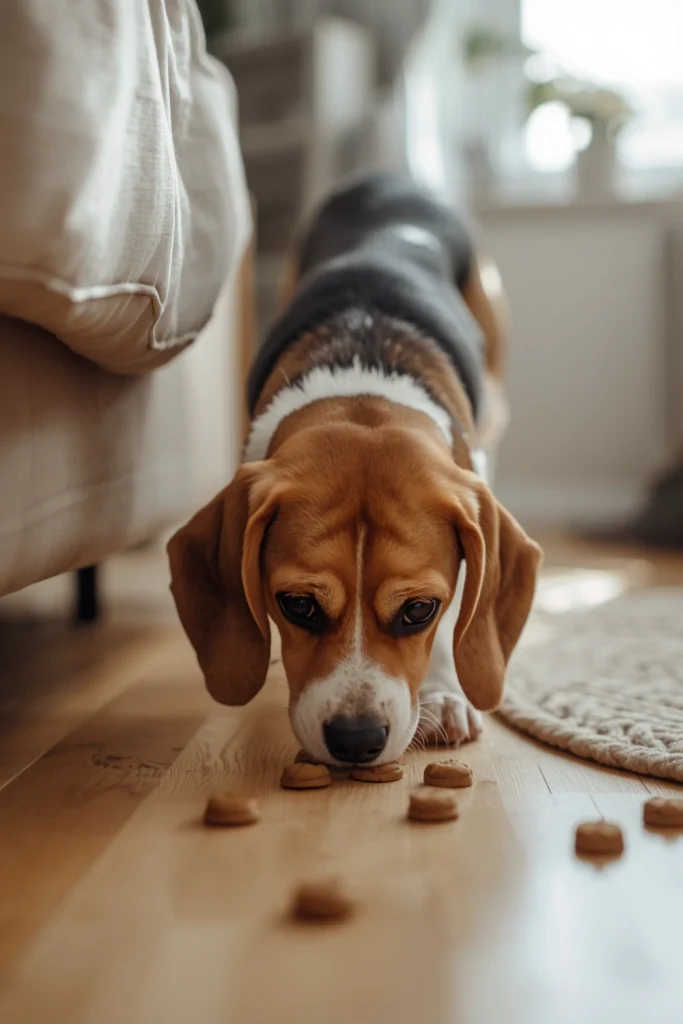
A treat scavenger hunt is a wonderful way to encourage natural sniffing behavior while keeping your dog entertained indoors. Begin by placing a few small dog treats in easy-to-find locations around one room. Let your dog watch you hide the treats at first so they understand what to do. Then encourage them to search using a cue such as “Find it.” As your dog becomes more confident, hide treats behind a cushion, near a safe table leg, or beside a dog bed. This activity transforms an ordinary room into an exciting scent-based adventure.
Keep the hiding places accessible and make sure your dog does not need to climb, jump, or move heavy objects to reach the rewards. Use treats that fit your dog’s daily feeding plan, and consider hiding small portions of their regular kibble instead. Supervise the entire activity, especially if your dog tends to chew household objects. A scavenger hunt can be completed in just a few minutes and is ideal for dogs who enjoy exploring their environment through smell.
3. Indoor Obstacle Course
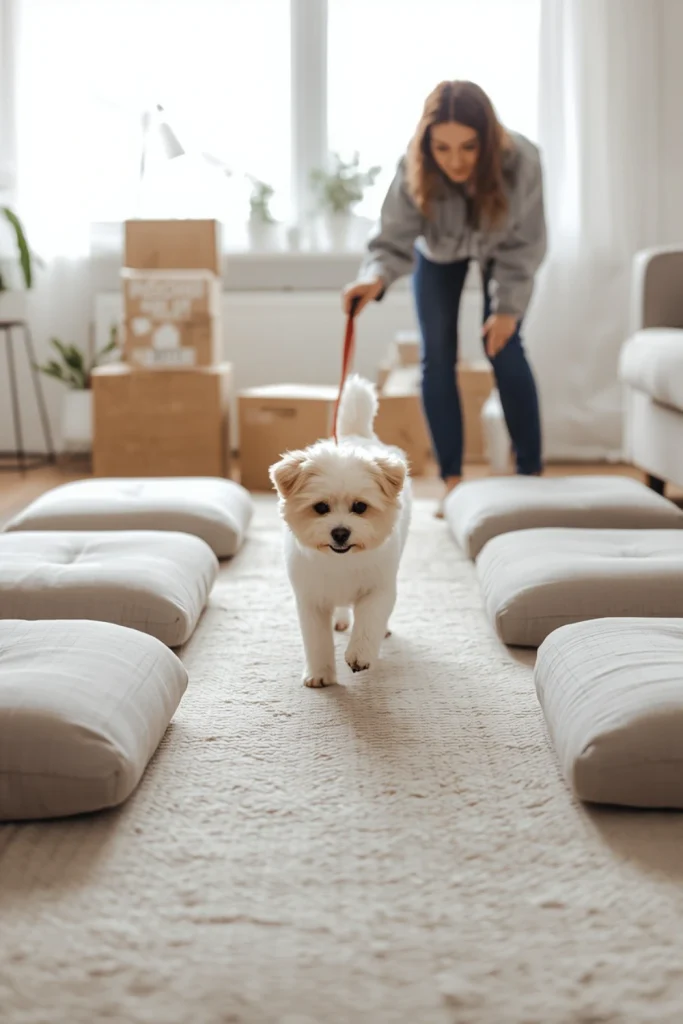
You do not need a large backyard to create a simple obstacle course for your dog. A small living room or hallway can become an engaging activity area using safe household items. Arrange a few cushions, sturdy cardboard boxes, or low objects that your dog can comfortably walk around. Encourage your dog to follow a simple path using treats, verbal cues, and praise. The goal is not speed or difficult tricks but controlled movement, confidence, and gentle physical activity.
Keep the obstacle course low-impact and suitable for your dog’s size and physical ability. Avoid slippery surfaces, unstable furniture, high jumps, and narrow spaces that could cause injury. For puppies and senior dogs, choose obstacles that require only walking, turning, or stepping over very low objects. Change the arrangement occasionally to keep the activity interesting. A carefully designed indoor obstacle course can help your dog practice coordination and focus while making good use of limited space.
4. Tug-of-War With a Dog Toy
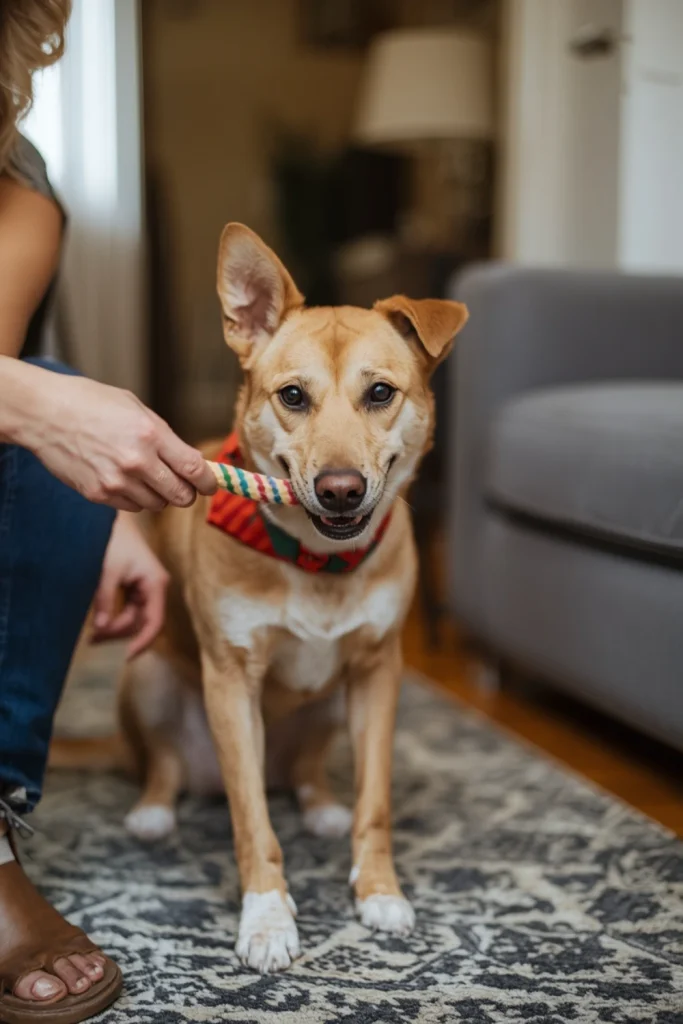
Tug-of-war is a classic game that can work beautifully in a small home when played with the right rules. Choose a durable tug toy that is appropriate for your dog’s size and chewing strength. Invite your dog to hold one end while you gently move the other end. Keep the movement controlled and avoid pulling too hard, lifting your dog off the ground, or making sudden jerks. This game offers a fun way to engage your dog’s muscles and strengthen the bond between you.
Teaching simple rules can make tug-of-war even more useful. Practice cues such as “Take it,” “Drop it,” and “Gentle” during short play sessions. Pause the game if your dog becomes overly excited or starts grabbing clothing or hands. Play on a nonslip surface and leave enough room for comfortable movement. When played safely, tug-of-war provides an enjoyable combination of physical activity, training, and interactive play without needing much floor space.
5. Food Puzzle Toys
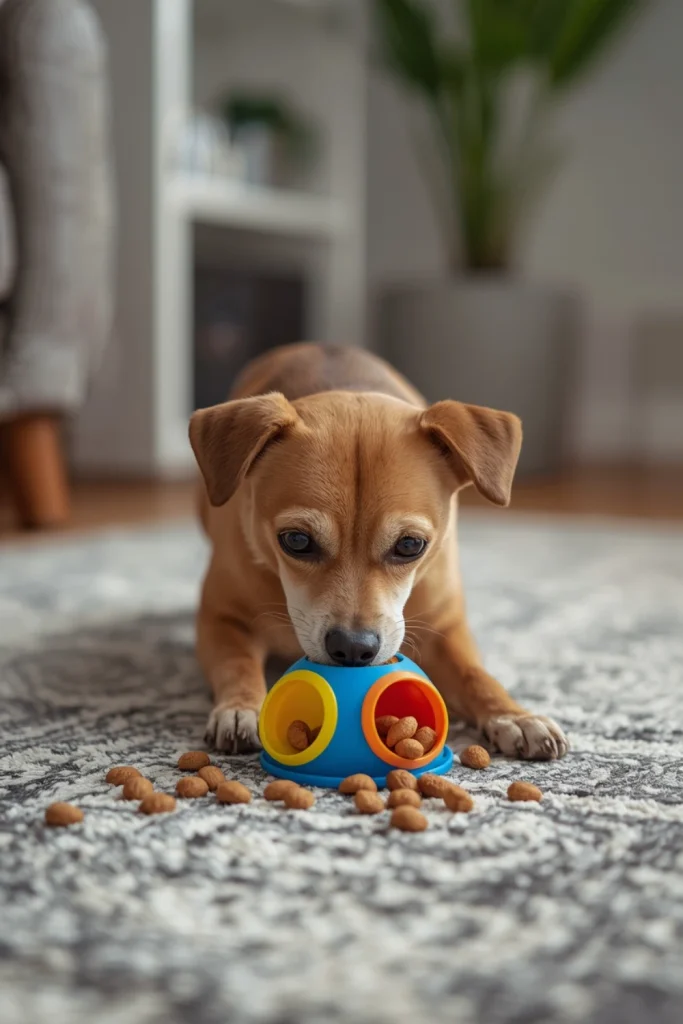
Food puzzle toys are excellent for keeping dogs mentally busy when outdoor exercise is limited. These toys encourage dogs to work for their food by nudging, rolling, or manipulating a safe object. You can begin with a simple treat-dispensing toy or a puzzle designed specifically for dogs. Fill it with a portion of your dog’s regular kibble or a few suitable treats, then allow your dog to investigate how the toy works. The activity encourages problem-solving and can make mealtime more engaging.
Choose a puzzle that matches your dog’s experience level and chewing habits. Beginners should start with easy toys that release food quickly, while experienced dogs may enjoy more challenging designs. Always inspect toys for damage and supervise your dog during use. Avoid puzzles with loose parts that could be swallowed. Food puzzle toys are particularly helpful for apartment dogs because they provide meaningful mental stimulation while requiring very little space.
6. Basic Trick Training
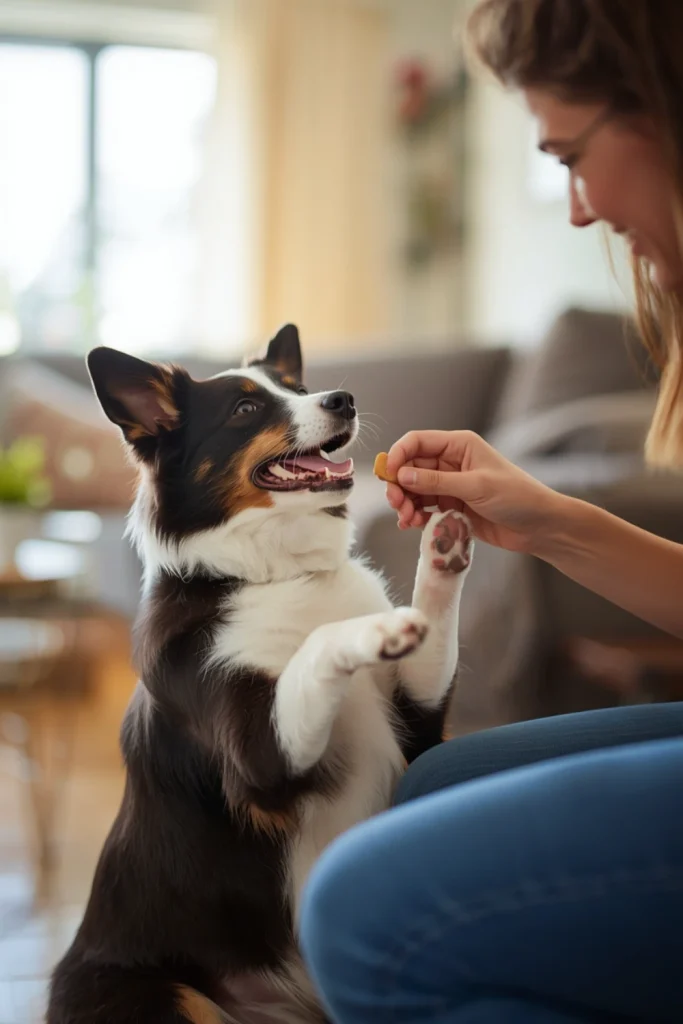
Teaching new tricks is one of the most productive dog activities in small spaces. You can practice simple behaviors such as sit, down, paw, spin, touch, or stay without moving furniture or creating a large play area. Choose one trick at a time and break it into small steps. Reward your dog whenever they make progress, and keep your training sessions short enough to maintain interest. Positive reinforcement helps your dog associate learning with enjoyable experiences.
Trick training also strengthens communication between you and your dog. A few minutes of practice can improve attention, confidence, and responsiveness to everyday cues. Use a quiet area with enough room for your dog to stand and turn comfortably. Avoid repeatedly asking for difficult movements that may strain your dog’s joints. Finish each session with an easy, familiar trick and praise. Regular practice can turn a small corner of your home into a useful training space.
7. Indoor Fetch With a Soft Toy
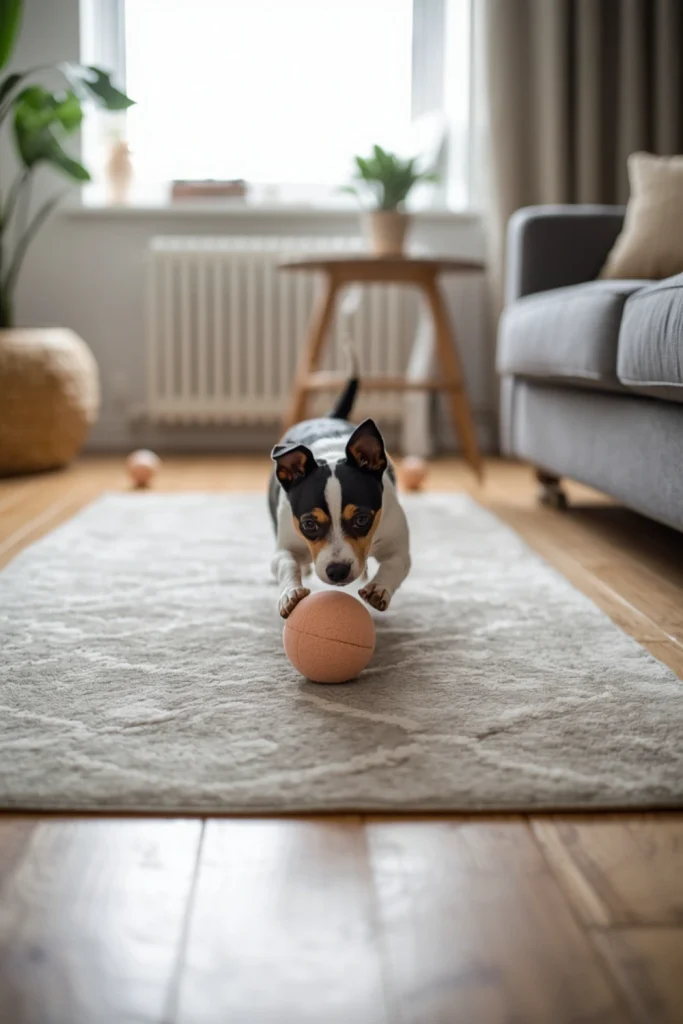
Traditional fetch usually requires a large open area, but a modified indoor version can work in a small home. Use a lightweight soft toy or plush ball that is safe for your dog. Instead of throwing it across the room, gently roll it a short distance along a clear, nonslip pathway. Encourage your dog to retrieve the toy and bring it back. This creates a simple movement game without encouraging high-speed running or collisions with furniture.
Before starting, move fragile objects and make sure the floor offers enough traction. Avoid playing fetch on polished tiles or near stairs. Dogs who become overly excited may benefit from slower toy movements and frequent pauses. You can also practice retrieving the toy from a short distance and rewarding your dog for returning it. This indoor activity is best kept brief and controlled, particularly for energetic dogs living in apartments.
8. Snuffle Mat Feeding
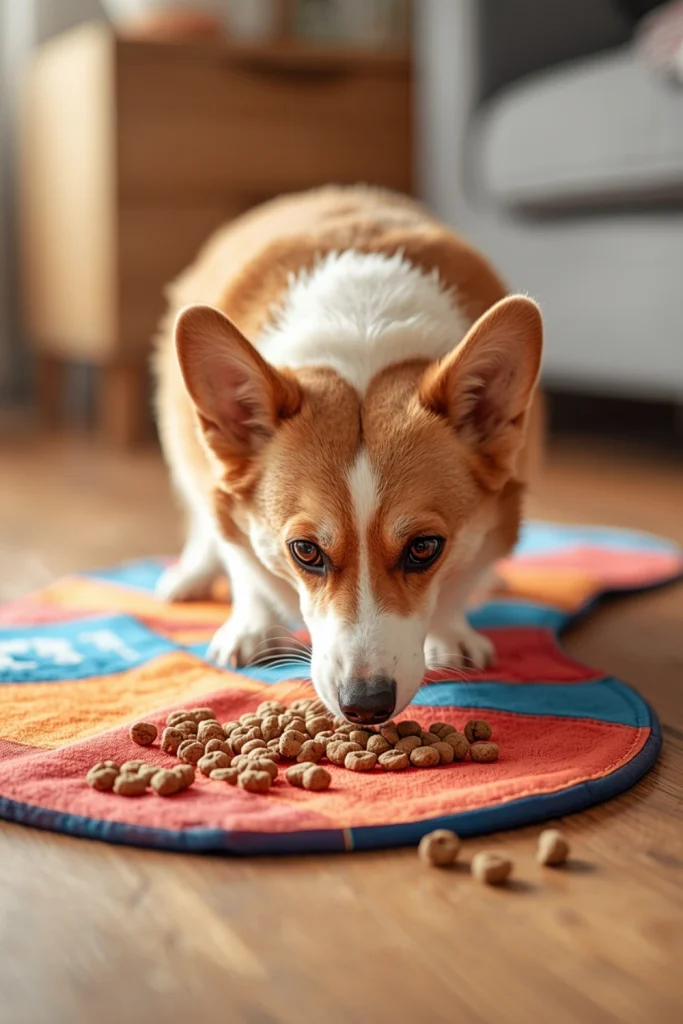
A snuffle mat is a simple enrichment tool designed to encourage dogs to search for food using their noses. The mat contains soft fabric strips where you can hide pieces of kibble or small treats. Place it on a stable floor and let your dog sniff through the fabric to find the food. This activity slows down eating for some dogs and creates a satisfying scent-based challenge. It is particularly useful when you want to provide entertainment without encouraging energetic movement.
Start with a small amount of food placed in easy-to-find locations. As your dog learns the activity, you can spread the kibble more evenly throughout the mat. Always supervise your dog to prevent chewing or pulling apart the fabric. Choose a washable mat made from pet-safe materials and clean it regularly. Snuffle mat feeding can be a practical daily routine for dogs who enjoy nose work and need extra indoor stimulation.
9. Cardboard Box Exploration
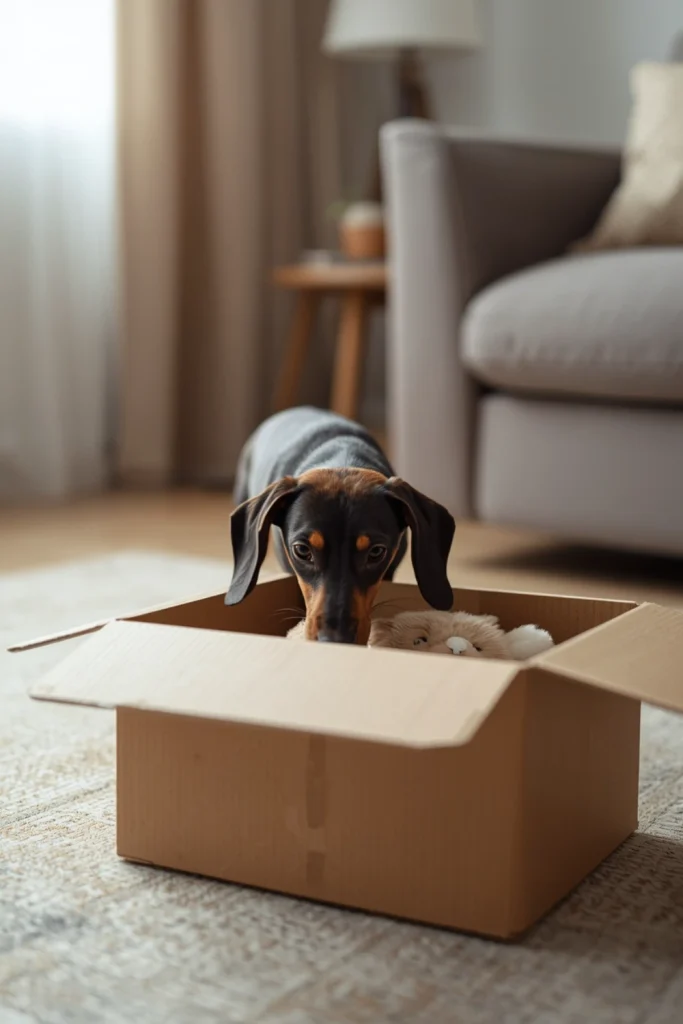
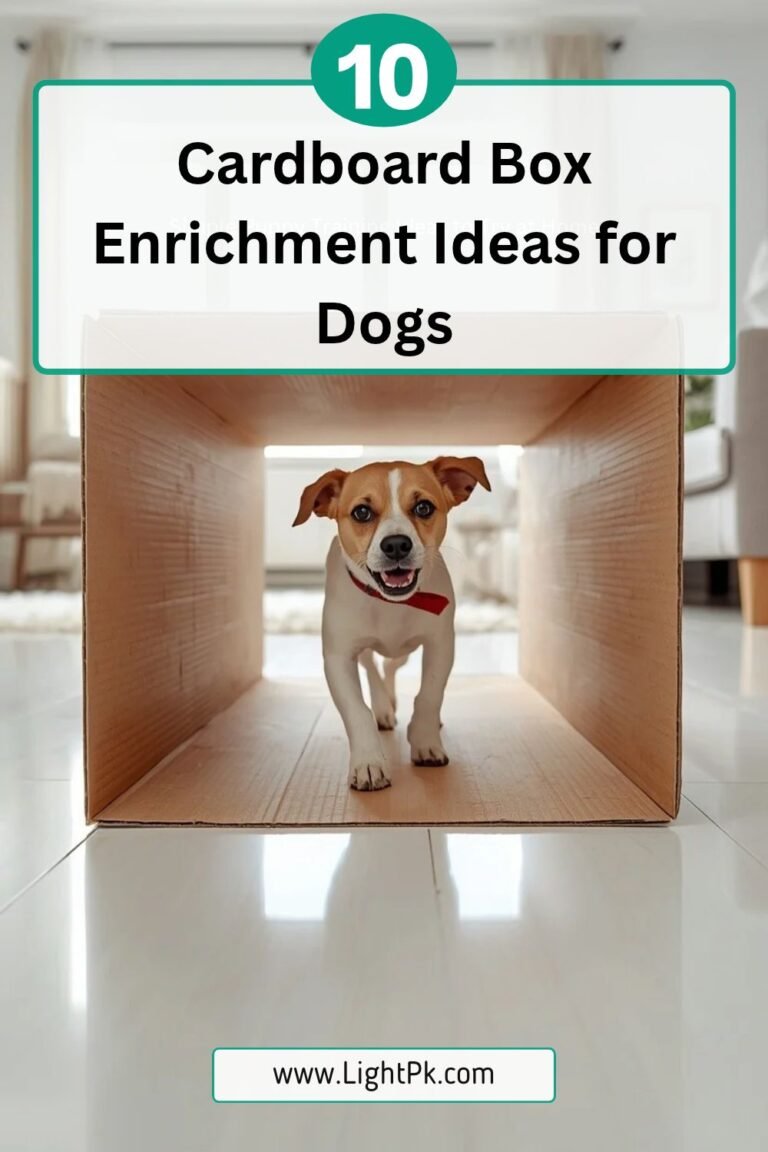
Cardboard box exploration is an inexpensive and creative activity for dogs who enjoy investigating new objects. Use a clean, sturdy cardboard box without staples, sharp edges, tape, or plastic packaging. Place a few safe toys or treats inside and encourage your dog to explore. Some dogs enjoy sniffing the box, stepping around it, or searching for hidden rewards. The activity introduces gentle novelty and allows your dog to investigate an everyday household item in a controlled environment.
You can make the game more interesting by placing several open boxes in a small area and hiding a toy in one of them. Let your dog use their nose to discover the correct box. Keep the boxes stable and avoid forcing your dog to enter a container if they feel uncomfortable. Remove the cardboard if your dog begins chewing or swallowing pieces. This simple enrichment activity is easy to prepare and can be adapted to different confidence levels.
10. Gentle Indoor Chase Games
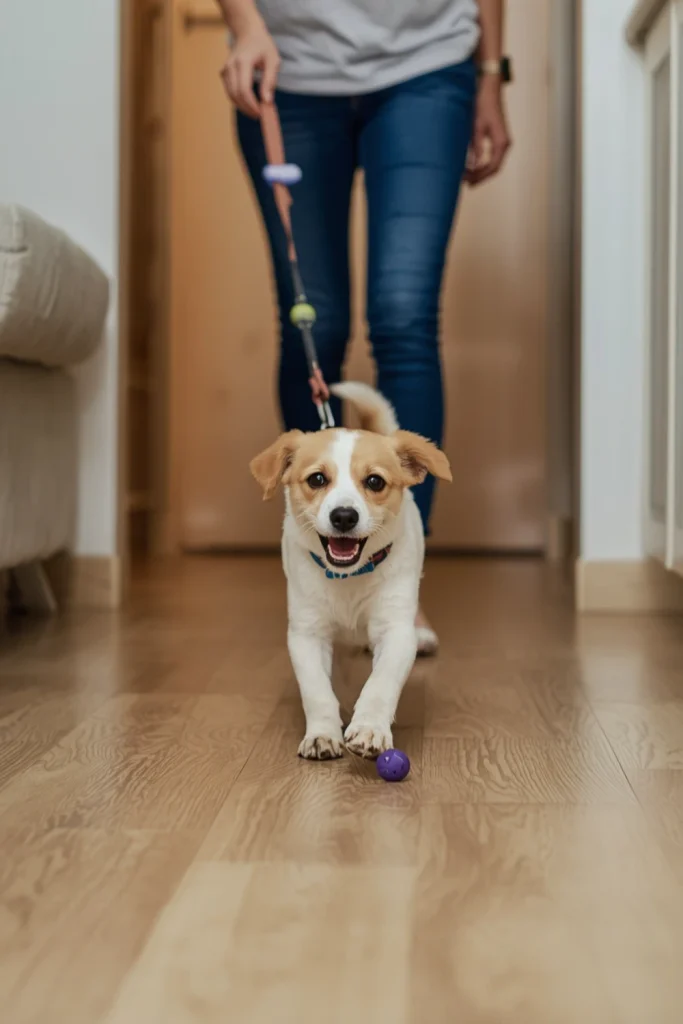
Gentle chase games can provide light exercise for dogs who enjoy following moving objects or people. In a small space, avoid running rapidly around the room or encouraging your dog to chase your hands, feet, or clothing. Instead, use a soft toy on a short, controlled movement or invite your dog to follow you between two clear points. Reward them when they reach you or bring the toy back. The activity should remain calm, predictable, and comfortable.
Choose a room with enough space for turning and walking without hitting furniture. Keep the game slow for puppies, senior dogs, and dogs with mobility concerns. If your dog becomes too excited, pause and ask for a simple cue such as sit or touch. Gentle chase games are most useful when they encourage movement while maintaining control. They can add variety to an indoor routine without requiring a large play area.
11. Nose Work With Scented Objects
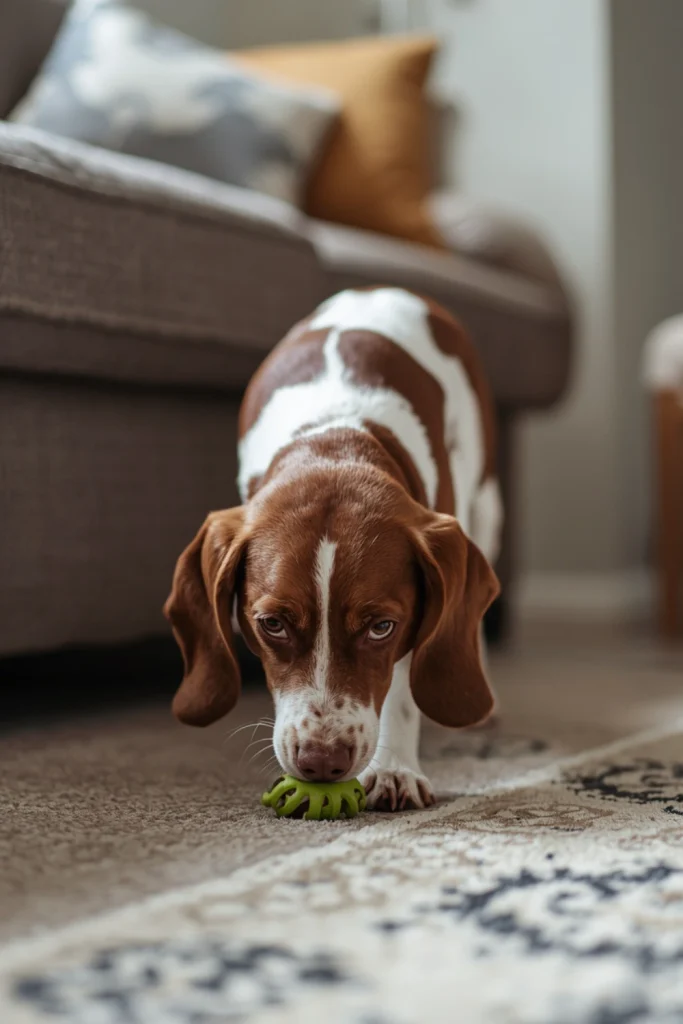
Nose work allows dogs to use their powerful sense of smell in a fun and rewarding way. Begin with a familiar toy or a safe object that carries a recognizable scent. Place it in an easy location and encourage your dog to find it. Once your dog understands the activity, hide the object behind a cushion or beside a piece of furniture where it remains accessible. Reward your dog when they locate the target.
This game can be adapted to almost any small home because it requires very little physical movement. It is especially useful for dogs who enjoy sniffing and searching. Keep the scent objects safe, clean, and free from substances that could irritate your dog’s nose or skin. Do not use essential oils or strong fragrances without veterinary guidance. Nose work can provide a satisfying mental challenge and help make indoor time more engaging.
12. Follow-the-Leader Training
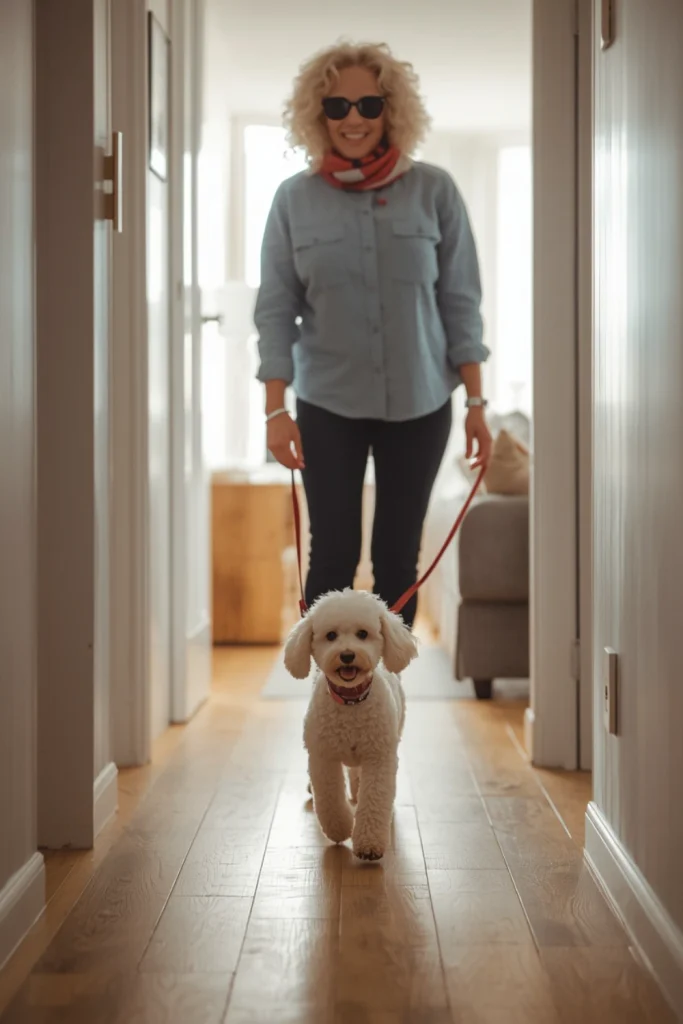
Follow-the-leader is a simple activity that encourages your dog to pay attention to your movements. Walk slowly around a clear area of your home and invite your dog to follow you. Change direction gently, pause, or walk between two open spaces. Reward your dog for staying nearby and responding to your movement. This game helps build attention and can be especially useful for dogs who need practice focusing on their owners.
You can add familiar cues such as “Come,” “Wait,” or “Touch” to make the activity more educational. Keep the route simple and avoid tight turns that could cause your dog to slip. Use a nonslip rug or suitable flooring and provide breaks when needed. Follow-the-leader does not require special equipment, making it an easy choice for apartment owners who want to combine movement with basic obedience practice.
13. DIY Muffin Tin Puzzle
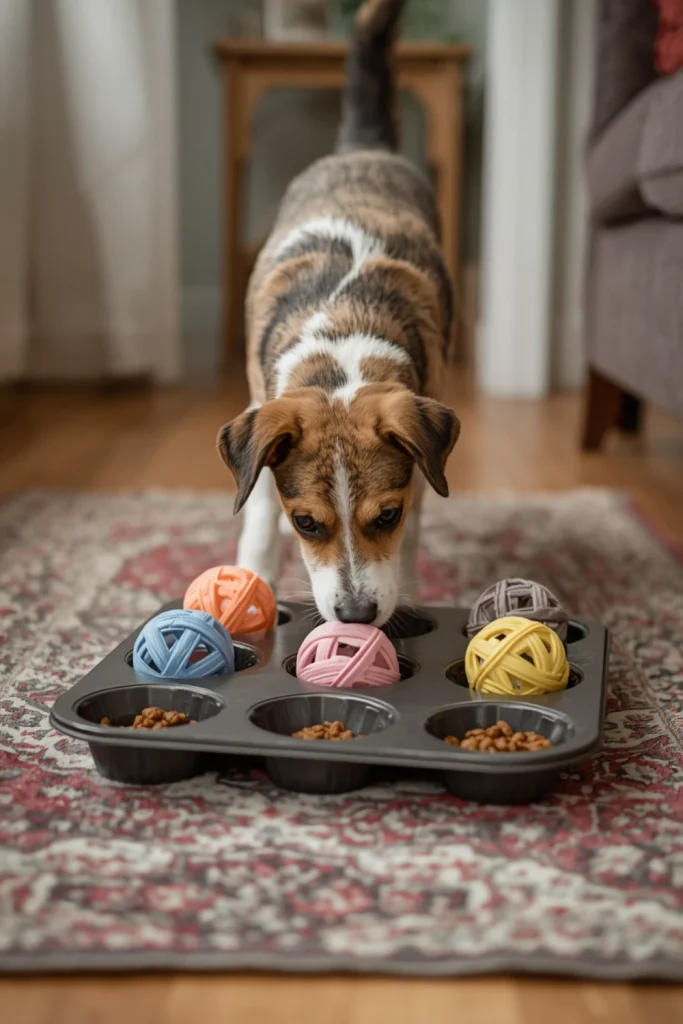
A muffin tin puzzle is a budget-friendly enrichment game that can be prepared using a clean muffin tray and safe dog treats. Place a few pieces of kibble in selected cups and cover them with lightweight dog-safe toys or suitable balls that your dog can move easily. Allow your dog to investigate the tray and discover how to uncover the food. The puzzle encourages problem-solving and provides an interesting alternative to ordinary treat feeding.
Choose a sturdy tray with smooth edges and supervise your dog closely. The covering objects should be large enough to avoid swallowing and should not break into small pieces. Start with only a few covered cups so your dog can learn the game without frustration. Once your dog understands the puzzle, you can change the arrangement. This activity is ideal for small spaces because it can be completed on a mat or low surface.
14. Calm Mat Training
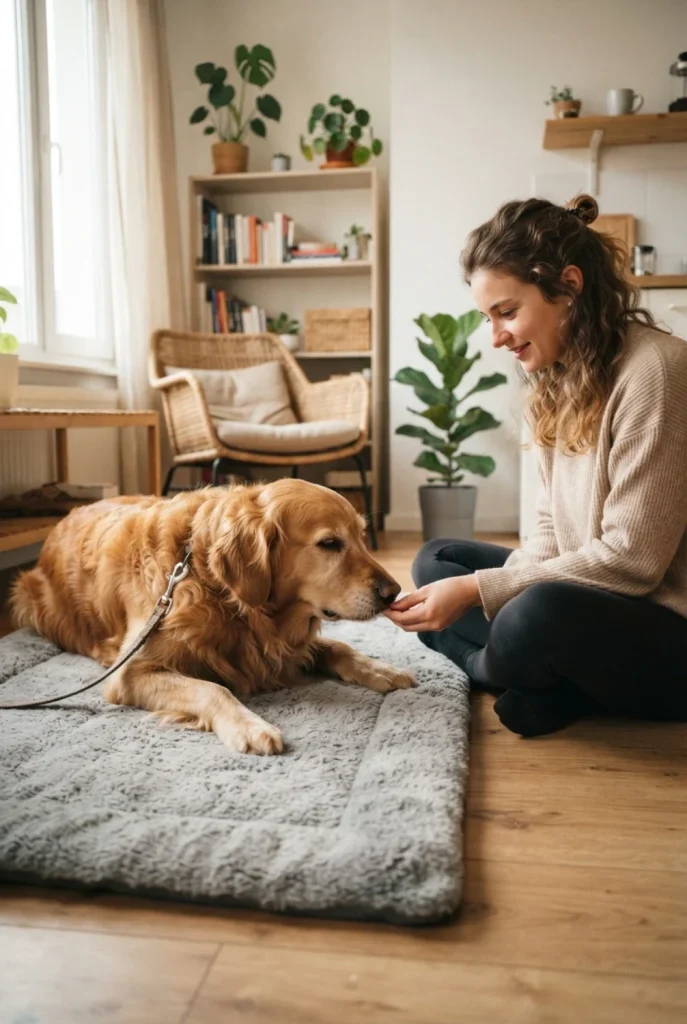
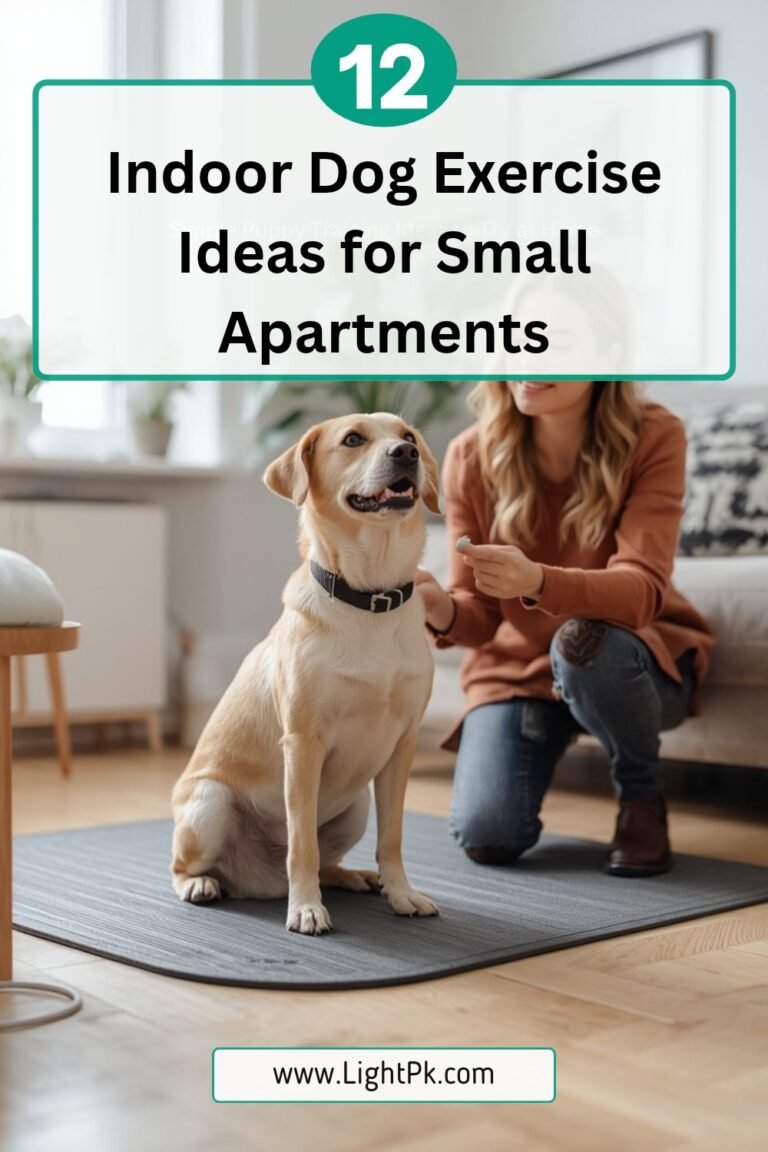
Calm mat training is an excellent indoor activity for dogs who need help relaxing in busy households or small apartments. Place a comfortable mat or dog bed in a quiet area and reward your dog for stepping onto it. Gradually encourage them to sit, lie down, or remain calmly on the mat for a short period. Use gentle praise and occasional treats to create a positive association with the resting space.
This activity is not about forcing your dog to stay still for a long time. Instead, it teaches them that relaxing can be rewarding. Begin with a few seconds and gradually increase the duration according to your dog’s comfort. Calm mat training can be useful during meal preparation, visitors, or quiet family time. It provides mental engagement while supporting a peaceful indoor routine and requires only a small, dedicated space.
15. Toy Rotation and Discovery Game
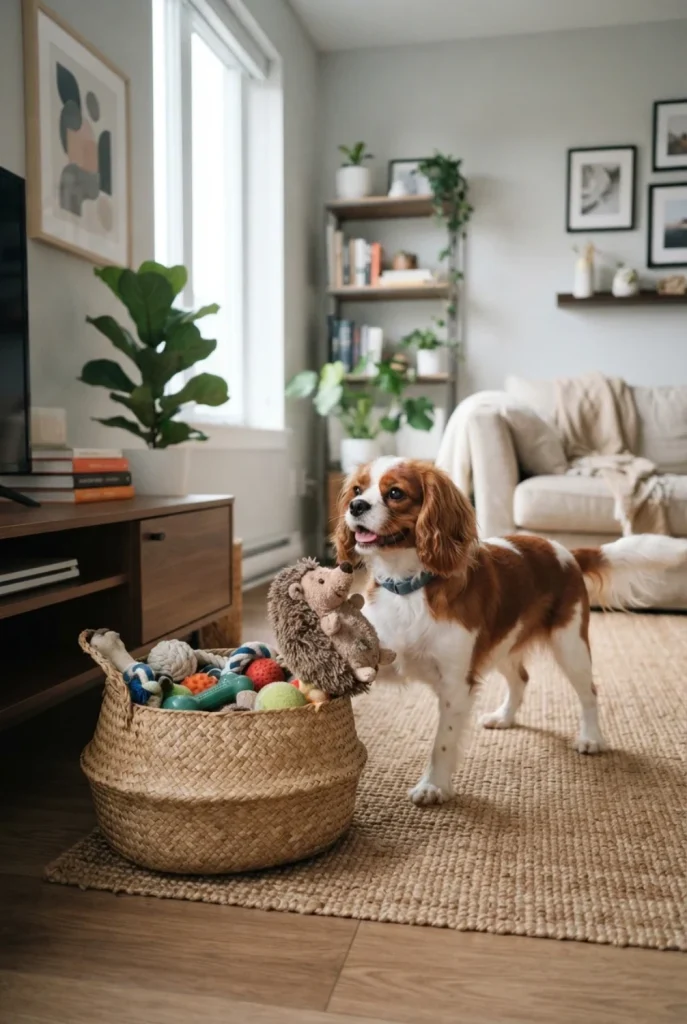
Toy rotation is a simple way to make your dog’s indoor environment feel fresh without buying new toys every week. Keep a selection of safe toys and offer only a few at a time. After several days, put some toys away and introduce different ones. Your dog may become more interested in toys that have been unavailable for a while. This approach helps reduce clutter in small homes while providing variety and opportunities for independent play.
You can turn toy rotation into a discovery game by placing a familiar toy in an easy-to-find location and encouraging your dog to search for it. Observe which toys your dog enjoys most and choose options that match their play style. Always inspect toys for damage and remove anything with loose parts or sharp edges. A thoughtful toy rotation routine can support enrichment, reduce boredom, and make limited indoor space more enjoyable for your dog.
Final Thoughts
Finding enjoyable dog activities in small spaces is easier than many pet owners think. You do not need a large backyard, expensive equipment, or complicated training methods to keep your dog engaged. Simple games such as hide-and-seek, treat puzzles, nose work, trick training, and calm mat practice can turn an ordinary apartment into a stimulating and comfortable environment.
The most important thing is to choose activities that suit your dog’s personality, age, and physical ability. Start with easy games, reward positive behavior, and introduce variety gradually. With consistency, creativity, and a little daily effort, even the smallest home can provide plenty of opportunities for fun, learning, and bonding.
A happy dog does not measure enjoyment by the size of the room. What matters most is safe exploration, meaningful interaction, and quality time with the people they love.