
15 Easy Ways to Remove Dog Hair From Furniture
Dog hair on furniture can quickly make your home look untidy, even when you clean regularly. Whether your dog loves sleeping on the sofa, relaxing on your favorite chair, or curling up on the bed, loose fur can collect on almost every fabric surface. It can be frustrating to find hair on cushions, blankets, armrests, and upholstery just after cleaning.
The good news is that you do not need expensive cleaning equipment to keep your furniture looking fresh. With a few simple household tools, consistent cleaning habits, and the right techniques, you can remove dog hair from furniture more easily. These 15 practical methods will help you control pet hair, protect your upholstery, and create a cleaner, more comfortable home for your family and furry friend.
1. Use a Vacuum Cleaner With an Upholstery Attachment
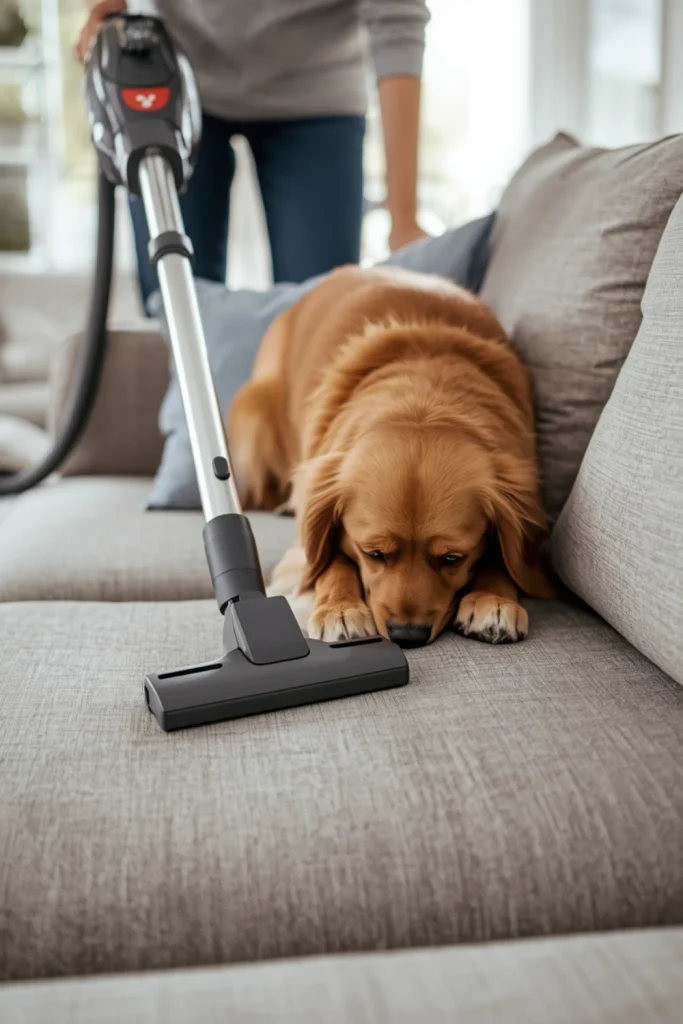
A vacuum cleaner with an upholstery attachment is one of the easiest ways to remove dog hair from furniture. Many vacuum cleaners come with a small brush or fabric tool designed to clean sofas, chairs, cushions, and other soft surfaces. The attachment helps loosen and collect hair without requiring too much effort. Move the vacuum slowly across the furniture, paying special attention to corners, seams, and areas where your dog usually rests. For better results, vacuum in different directions to collect hair trapped between fabric fibers.
Choose a vacuum cleaner with strong suction and a pet-hair attachment if your dog sheds frequently. Some models include motorized brush heads that are especially helpful for removing stubborn fur from upholstery. Before cleaning delicate furniture, check the manufacturer’s care instructions and test the attachment on a hidden area. Empty the dust container regularly so suction remains effective. Making vacuuming part of your weekly cleaning routine can prevent dog hair from building up on your furniture.
2. Remove Dog Hair With a Lint Roller
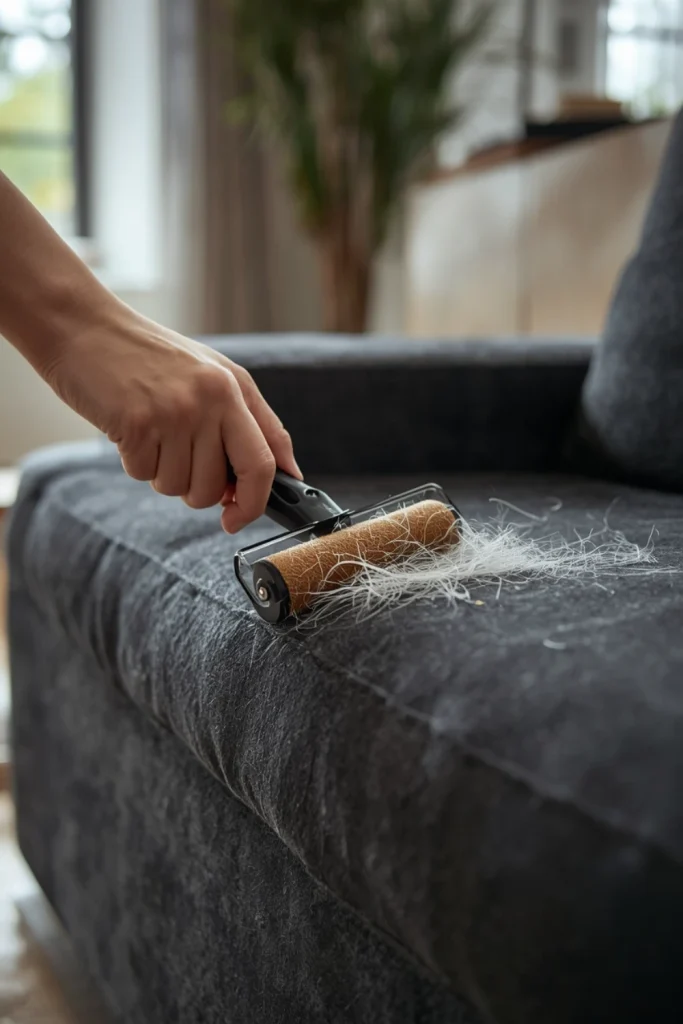
A lint roller is a simple and convenient tool for removing loose dog hair from sofas, chairs, cushions, and fabric-covered furniture. It uses adhesive sheets to pick up hair when you roll it across the surface. This method works particularly well for small cleaning jobs when you do not want to bring out the vacuum cleaner. Roll gently over the furniture, using overlapping strokes to cover the entire area. Replace the adhesive sheet when it becomes full of fur or loses its stickiness.
Keep a lint roller in your living room so you can quickly clean your furniture whenever you notice loose hair. It is especially useful before guests arrive or when you want to freshen up a chair or cushion. Standard lint rollers are suitable for many durable fabrics, but you should test them first on delicate materials such as velvet or loosely woven upholstery. Avoid pressing too hard because excessive pressure may affect sensitive fabric surfaces. A reusable lint roller can also be a convenient option for regular pet owners.
3. Try a Slightly Damp Rubber Glove
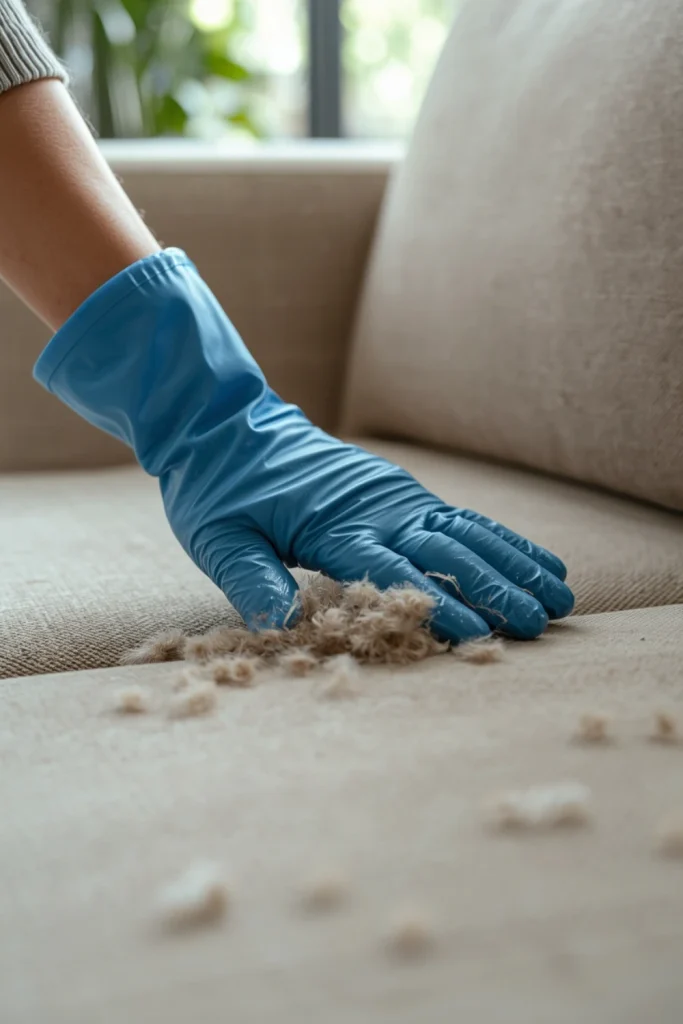
A rubber cleaning glove can be surprisingly effective when you need to remove dog hair from furniture. Put on a clean household rubber glove and lightly dampen its surface with water. Run your hand over the upholstery using short strokes. The friction and slight moisture help gather loose fur into small clumps that you can pick up by hand. This technique is especially helpful on fabric sofas, cushions, and upholstered chairs where hair becomes difficult to remove with ordinary brushing.
Do not soak the glove or furniture because too much moisture can damage certain materials or leave water marks. Start with a small hidden section to make sure the fabric responds well. After collecting the hair, rinse the glove and repeat until the surface looks clean. This method is inexpensive, reusable, and easy to include in your regular cleaning routine. It may not remove every deeply embedded hair, but it is a useful solution for everyday maintenance between vacuuming sessions.
4. Use a Rubber Squeegee on Fabric Furniture
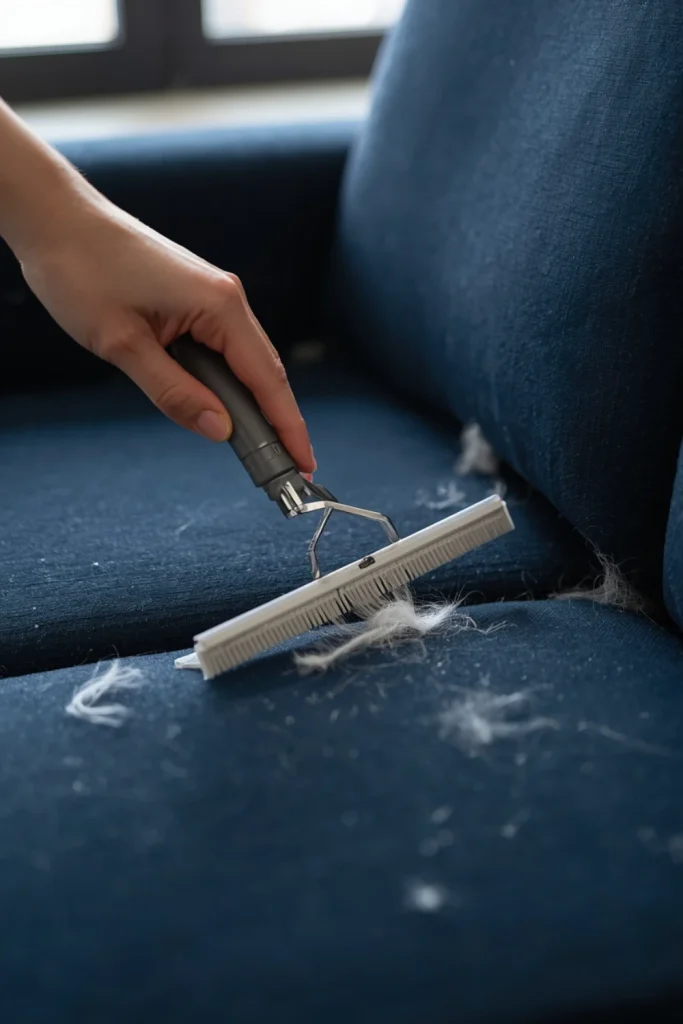
A rubber squeegee is another useful household tool for collecting dog hair from upholstery. Its flexible rubber edge creates friction against the fabric, helping pull loose fur toward one area. Hold the squeegee at a slight angle and move it across the sofa using gentle, consistent strokes. You will often see the hair gather into visible lines or clumps, making it easier to pick up and dispose of. This method can work well on durable fabric sofas, padded chairs, and other suitable upholstery.
For the best results, work in small sections instead of trying to clean the entire sofa at once. Remove the collected hair before moving to another area so it does not spread back across the furniture. Avoid using a squeegee on delicate fabrics, loose weaves, or materials that may snag. Test it in an inconspicuous place first. A clean, dry rubber squeegee is usually sufficient, so you do not need to apply water or cleaning chemicals. It is an affordable tool that can make routine pet-hair removal easier.
5. Wipe Furniture With a Microfiber Cloth
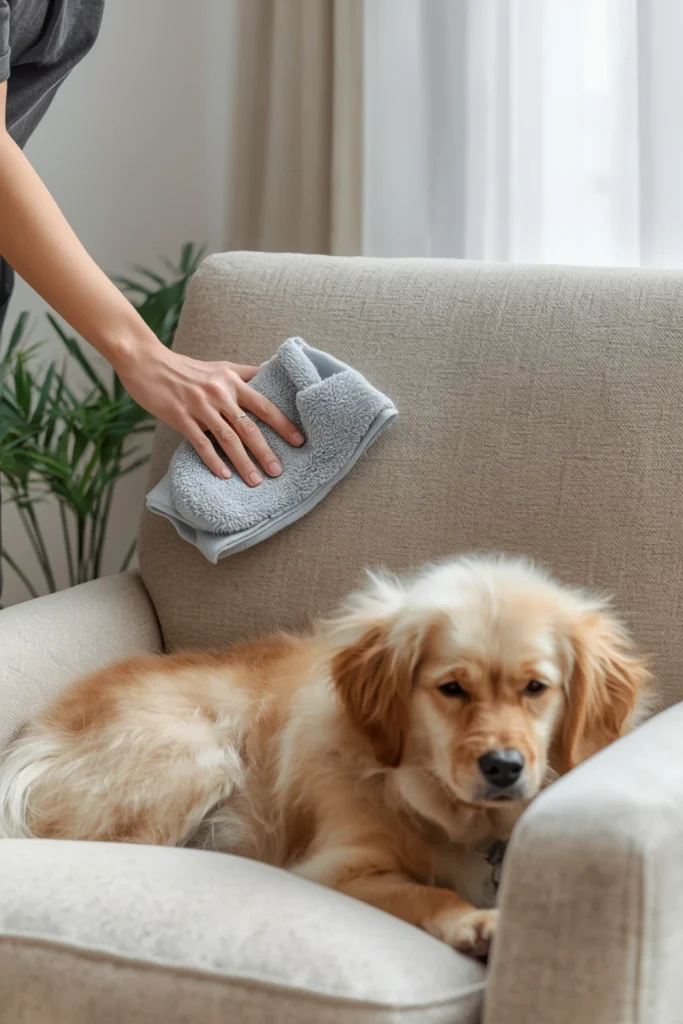
Microfiber cloths are useful for collecting loose dog hair from furniture, especially smooth surfaces and some types of upholstery. Their fine fibers attract and hold dust, lint, and loose fur as you wipe. Use a clean, dry microfiber cloth and move it gently over the surface. For fabric furniture, try short strokes in one direction to gather the hair instead of spreading it around. Microfiber cloths are also helpful for cleaning wooden armrests, table surfaces, and other areas where pet hair may settle.
If the fur is difficult to collect, slightly dampen the cloth, but make sure it is not dripping wet. Always check whether the furniture material can tolerate moisture before using a damp cloth. Rinse or shake out the cloth when it becomes covered in hair, then continue cleaning. Wash microfiber cloths separately from lint-producing fabrics and follow the care label. Avoid fabric softener because it can reduce their ability to collect particles. Keeping several microfiber cloths available makes it easier to clean small areas whenever needed.
6. Use a Pet Hair Removal Brush
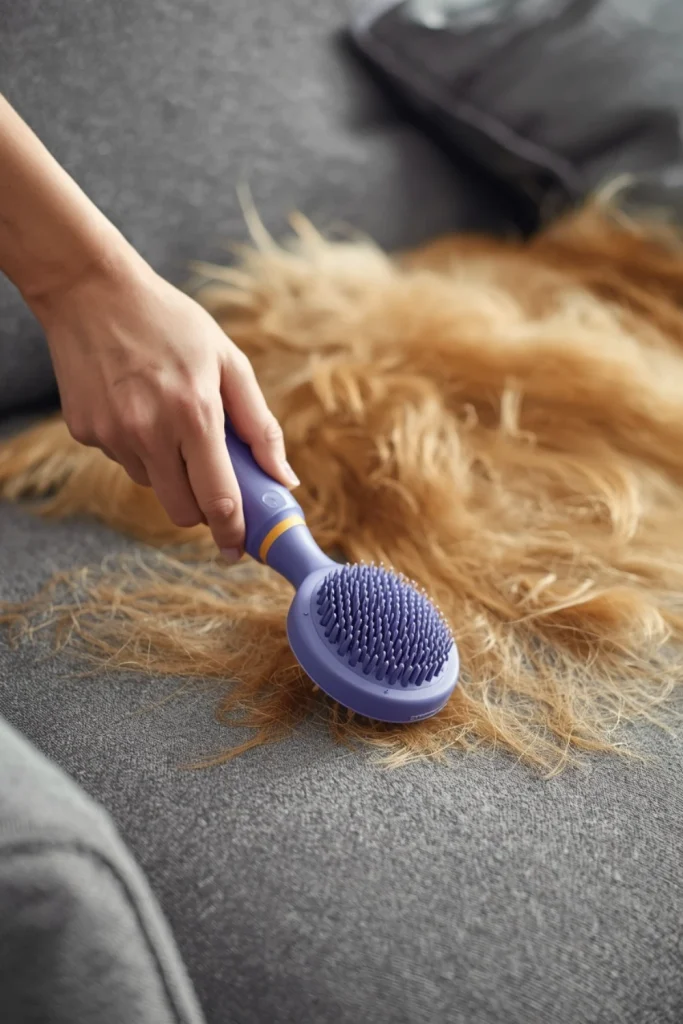
A pet hair removal brush is designed to lift fur from upholstery and other fabric surfaces. Many versions have rubber bristles or specially shaped edges that collect hair as you move the brush across the material. Use gentle back-and-forth strokes, working in one small section at a time. The brush can help remove hair that is caught between fabric fibers and may be difficult to collect with a regular cloth. It is a useful option for pet owners who regularly clean sofas, cushions, and fabric chairs.
Choose a brush that is suitable for your furniture’s material. A brush with soft rubber bristles may work well on durable upholstery, while a rough or stiff brush could damage delicate fabrics. Read the product instructions before using it and test a hidden area first. After brushing, gather the loose hair and dispose of it. Clean the brush regularly so it continues to work effectively. A dedicated pet hair brush can become an important part of your home-cleaning supplies, particularly if your dog sheds throughout the year.
7. Try a Damp Sponge on Suitable Upholstery
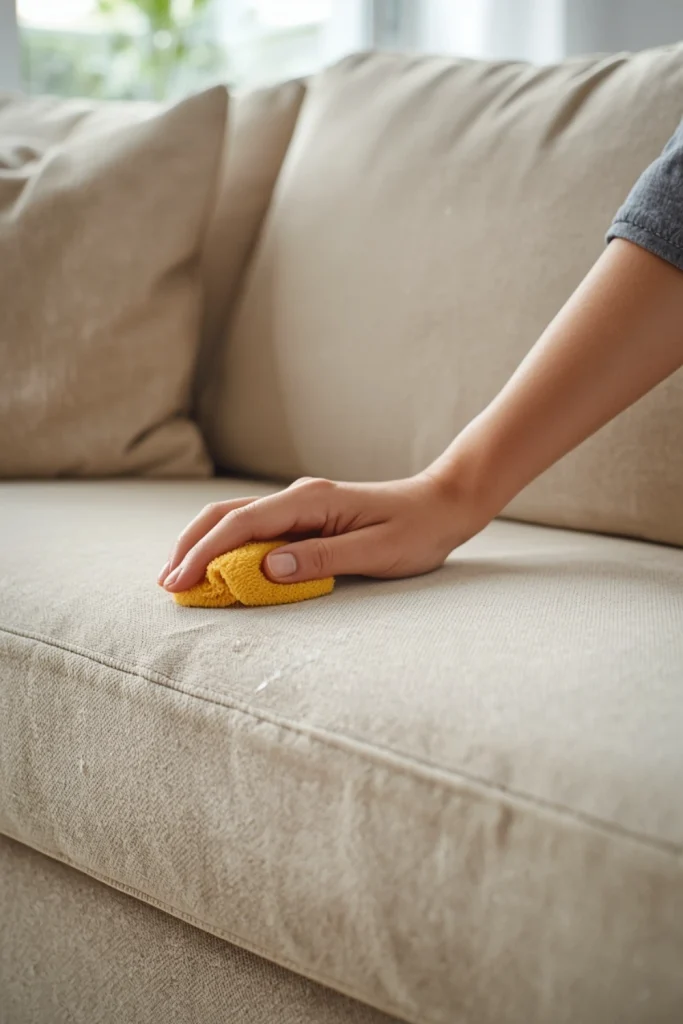
A clean sponge can help collect dog hair from certain types of fabric furniture. Slightly dampen a soft sponge with water, squeeze out the excess, and gently wipe the upholstery in one direction. The moisture and friction help bring loose hair together so you can remove it more easily. This method is particularly convenient for small areas such as cushion covers, chair seats, and fabric sections where loose fur has gathered. Use a plain sponge without harsh cleaning chemicals or abrasive surfaces.
Before using a damp sponge, check the furniture care label and test a hidden area. Some fabrics may develop water spots, discoloration, or texture changes when exposed to moisture. Avoid rubbing aggressively because this can push hair deeper into the material or damage delicate fibers. Once the hair gathers into clumps, pick it up and rinse the sponge. Allow the furniture to dry completely before using it again. A sponge is inexpensive and easy to find, making it a practical option when you need a quick cleaning solution.
8. Use Washable Sofa Covers
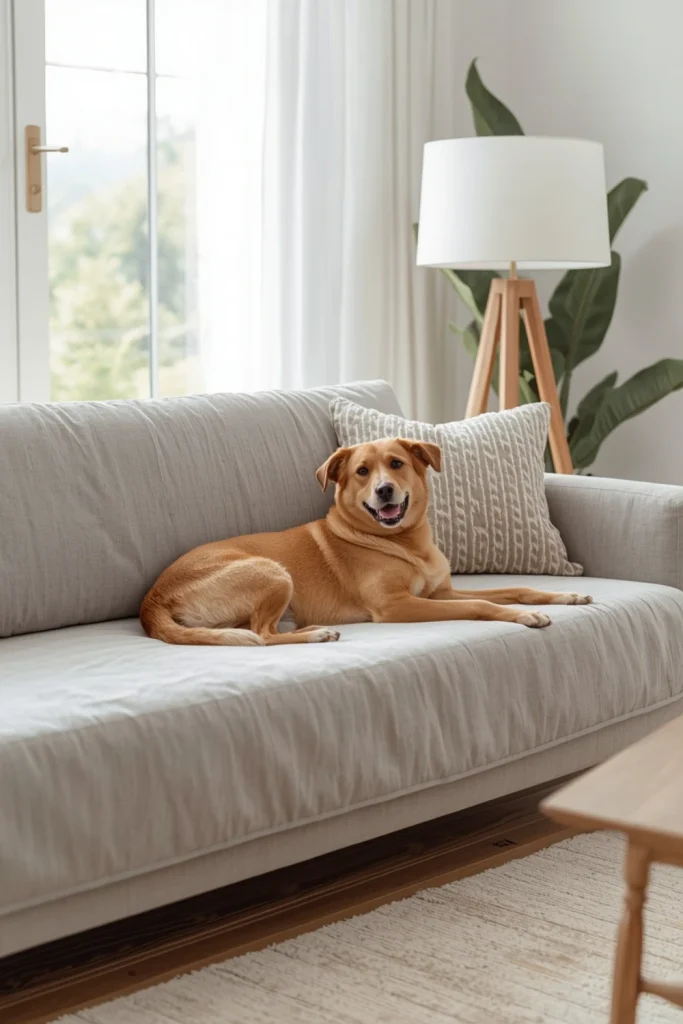
Washable sofa covers are one of the best ways to reduce the amount of dog hair that collects directly on your furniture. Instead of allowing fur to become trapped in the sofa fabric, a removable cover creates an extra protective layer. Choose a cover that fits your furniture properly and is made from a durable, washable material. When it becomes covered in hair, remove it and follow the manufacturer’s washing instructions. This makes regular cleaning much easier, especially if your dog spends a lot of time relaxing on the sofa.
A washable cover can also protect furniture from muddy paws, everyday dirt, and minor spills. Consider keeping an extra cover so you can use one while the other is being washed. Select a color and fabric that complement your living room while also being practical for pet ownership. Shake the cover outdoors before washing to remove loose fur, and clean your washing machine afterward if necessary. Although a sofa cover does not eliminate shedding, it helps keep the original upholstery cleaner and reduces the effort required to remove dog hair from furniture.
9. Use a Pet Hair Removal Stone Carefully
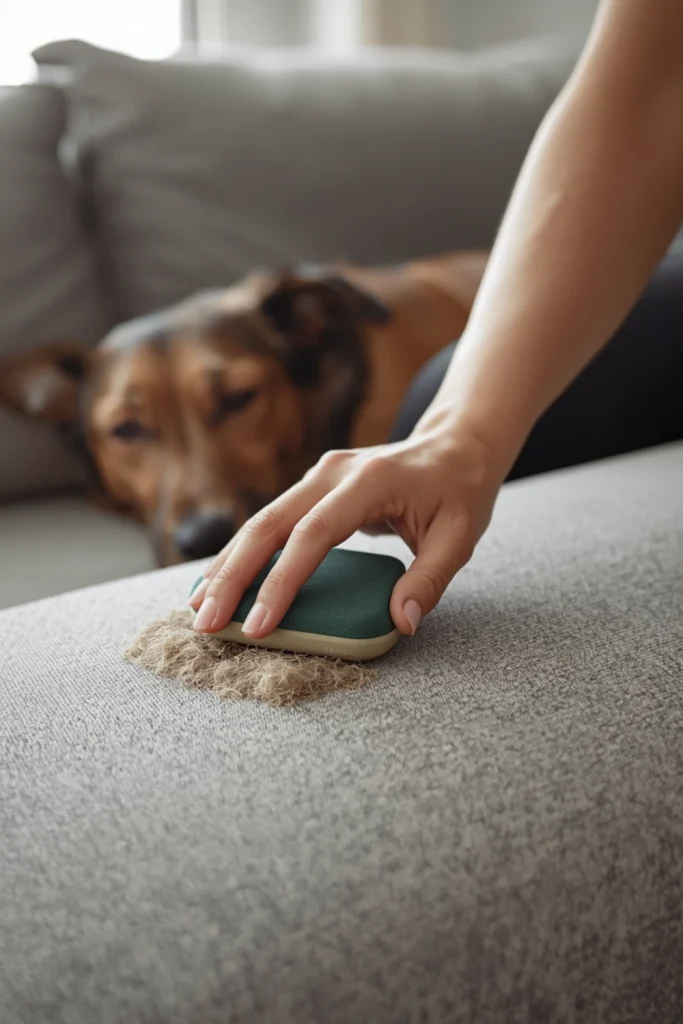
Some pet hair removal stones are designed to collect stubborn fur from durable fabric surfaces. These tools usually have a textured surface that gathers loose hair when moved gently across suitable upholstery. They can be helpful when dog hair has become trapped in a sofa or fabric chair and ordinary cleaning tools are not working well. Use short, light strokes in one direction, and check the collected hair frequently so you can remove it before continuing.
This method requires extra care because textured stones can be too abrasive for certain materials. Never assume that a product is safe for every type of upholstery. Avoid using it on delicate fabrics, velvet, leather, silk, loosely woven materials, or any surface that may scratch or snag. Test the tool in a hidden area and stop immediately if you notice damage, pilling, or color changes. Follow the product’s instructions carefully. A pet hair removal stone may be useful for suitable durable fabrics, but a softer cleaning method is a better choice whenever you are unsure.
10. Clean Cushion Covers Regularly
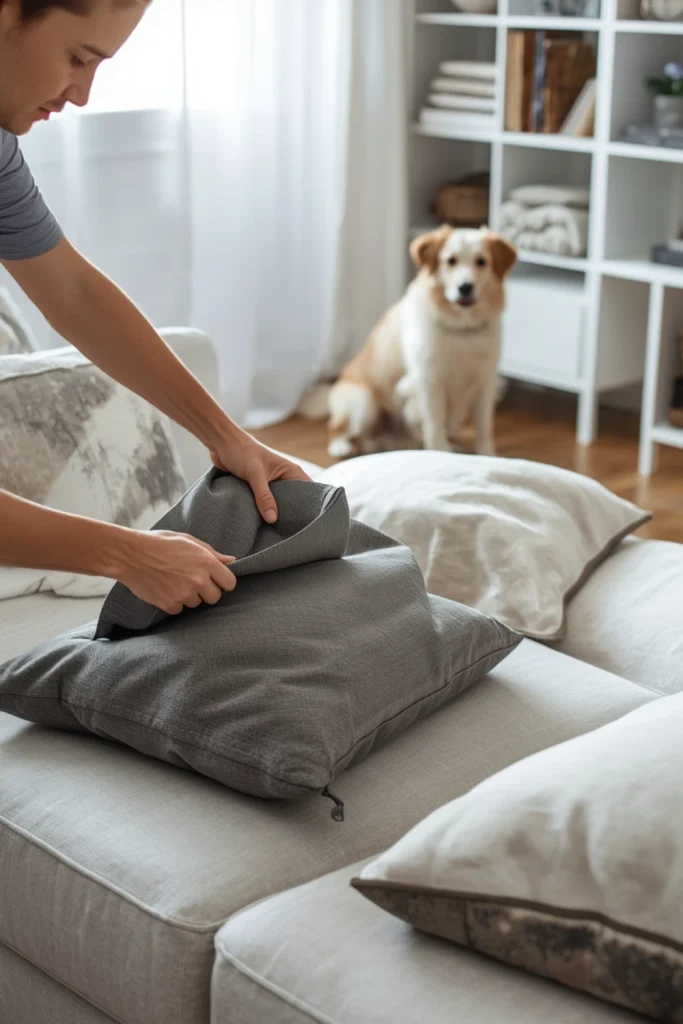
Cushions often collect more dog hair than other furniture areas because pets like to sleep, stretch, and curl up on them. Removing and washing cushion covers regularly can help prevent fur from building up. If the covers have zippers, remove them carefully and check the washing instructions before placing them in the machine. Shake off loose hair first, then wash them according to the recommended temperature and drying method. Regular washing can also remove dust and everyday dirt that collect on cushions.
If your cushion covers cannot be removed, use a suitable vacuum attachment, lint roller, or pet hair brush to clean them. Pay special attention to seams, piping, and corners because these areas can trap fur. Avoid washing covers in hot water unless the care label allows it, as heat may cause shrinking or damage. Let covers dry fully before putting them back on the cushions. A consistent cushion-cleaning schedule keeps your seating area fresher and helps reduce the spread of dog hair around your home.
11. Use a Handheld Vacuum for Corners and Crevices
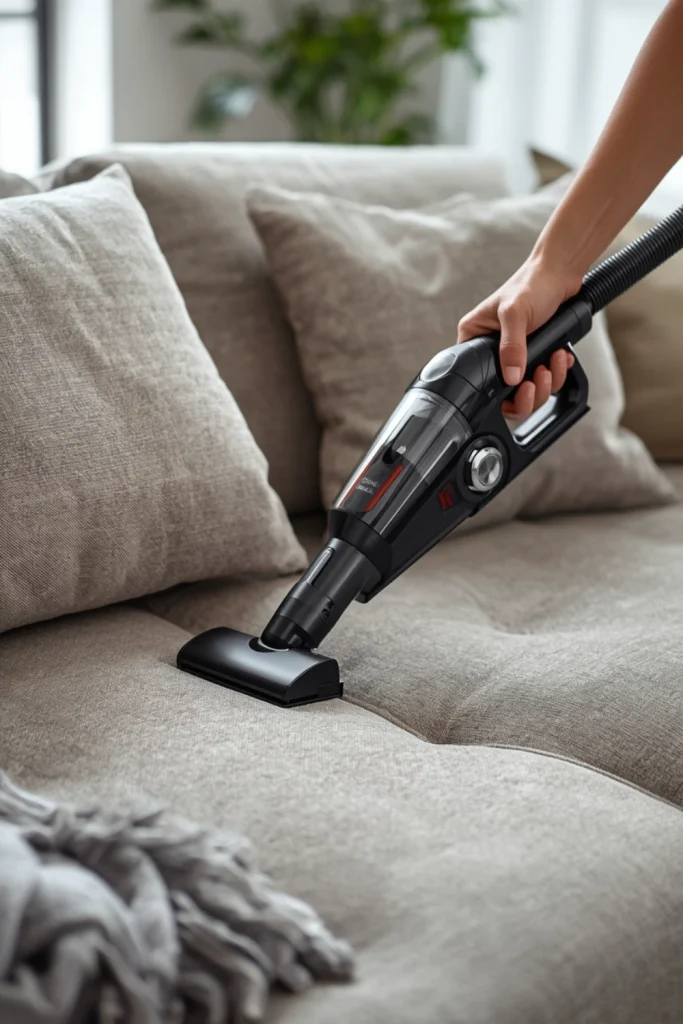
Dog hair often collects in places that are difficult to reach with a full-size vacuum cleaner. Sofa seams, gaps between cushions, armrest edges, and narrow corners can hold surprising amounts of fur. A handheld vacuum cleaner with a crevice tool makes these areas easier to clean. Remove loose cushions when possible and slowly vacuum the spaces underneath. Use the narrow attachment along seams and edges to collect hair without having to move heavy furniture.
A handheld vacuum is especially useful for quick cleaning sessions because it is easy to carry and store. Choose a model with enough suction for upholstery and a filter that is easy to clean. Empty the dust container after each major cleaning session, particularly if you have a heavy-shedding dog. Do not press the nozzle too firmly against delicate fabric. For best results, use the handheld vacuum after collecting surface hair with a brush or lint roller. Cleaning hidden areas regularly prevents fur from accumulating and spreading whenever someone sits down.
12. Brush Your Dog Regularly
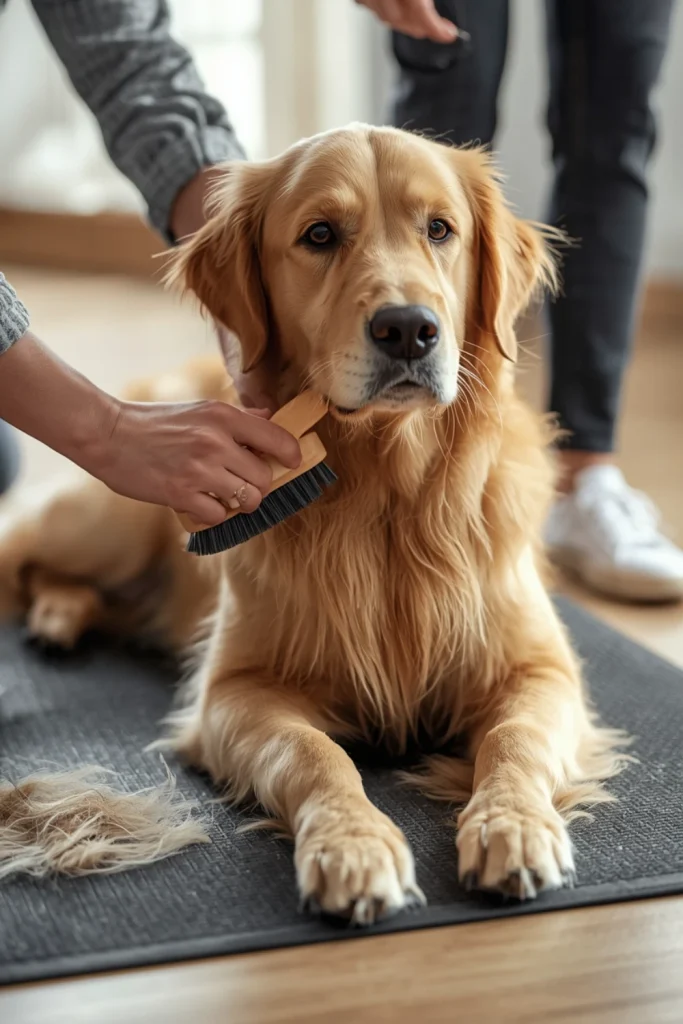
One of the most effective ways to reduce dog hair on furniture is to remove loose fur before it falls around your home. Regular brushing helps collect shedding hair directly from your dog’s coat. Choose a brush designed for your dog’s coat type, length, and grooming needs. Short-haired dogs may benefit from a soft grooming brush or rubber grooming mitt, while some long-haired or double-coated dogs need a suitable slicker brush or undercoat tool. Brush gently and follow the direction of hair growth.
Create a regular grooming schedule based on your dog’s coat and shedding pattern. Some dogs need brushing several times a week, while heavy shedders may require more frequent sessions during seasonal coat changes. Brush your dog in an easy-to-clean area, such as outdoors or on a washable mat. Avoid pulling at tangles or using tools that irritate the skin. If your dog has mats, sensitive skin, or unusual hair loss, ask a professional groomer or veterinarian for guidance. Removing loose fur from the coat can reduce the amount that reaches your sofa and chairs.
13. Keep a Dedicated Dog Blanket on the Sofa
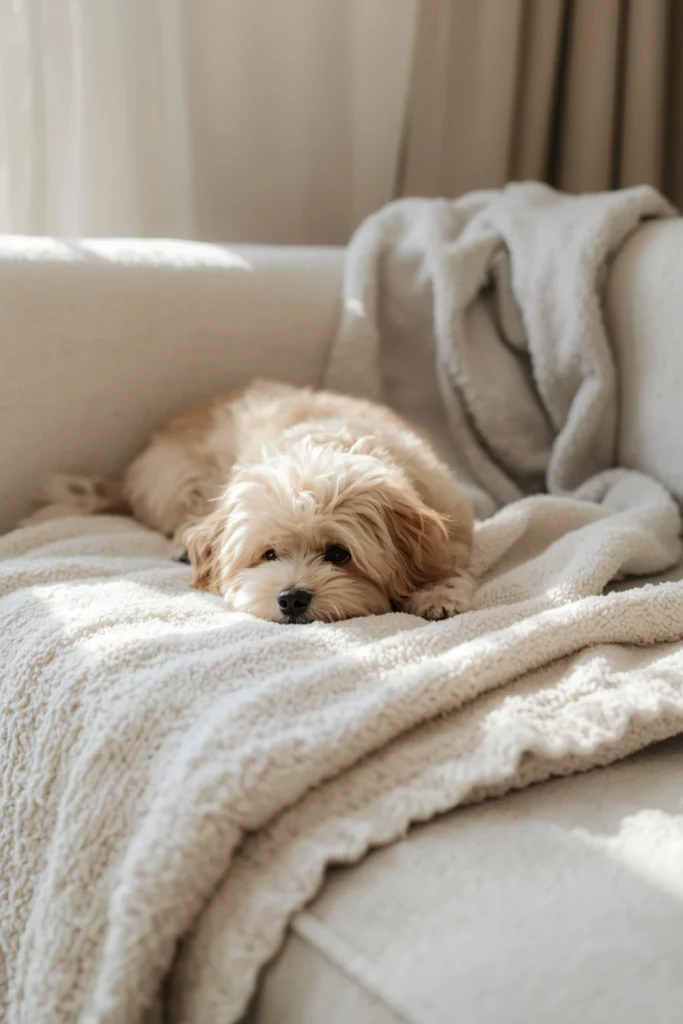
A dedicated dog blanket provides a comfortable place for your pet while protecting the sofa from direct contact with loose fur. Place a washable blanket on your dog’s favorite sitting or sleeping spot. Choose a material that is easy to shake, vacuum, and wash. When the blanket becomes covered in hair, remove it and clean it separately. This simple habit can save time because you will be cleaning one removable item instead of trying to remove fur from the entire sofa.
Choose a blanket that is large enough to cover the area your dog normally uses. Wash it regularly according to its care label, and keep a second blanket available while the first one is being cleaned. You can also place a smaller washable mat on a favorite chair or at the end of a sofa. Make the blanket comfortable and familiar so your dog is more likely to use it. A dedicated resting area will not stop every stray hair, but it can greatly reduce the amount of fur that becomes embedded in your furniture.
14. Use Furniture-Friendly Pet Hair Cleaning Products
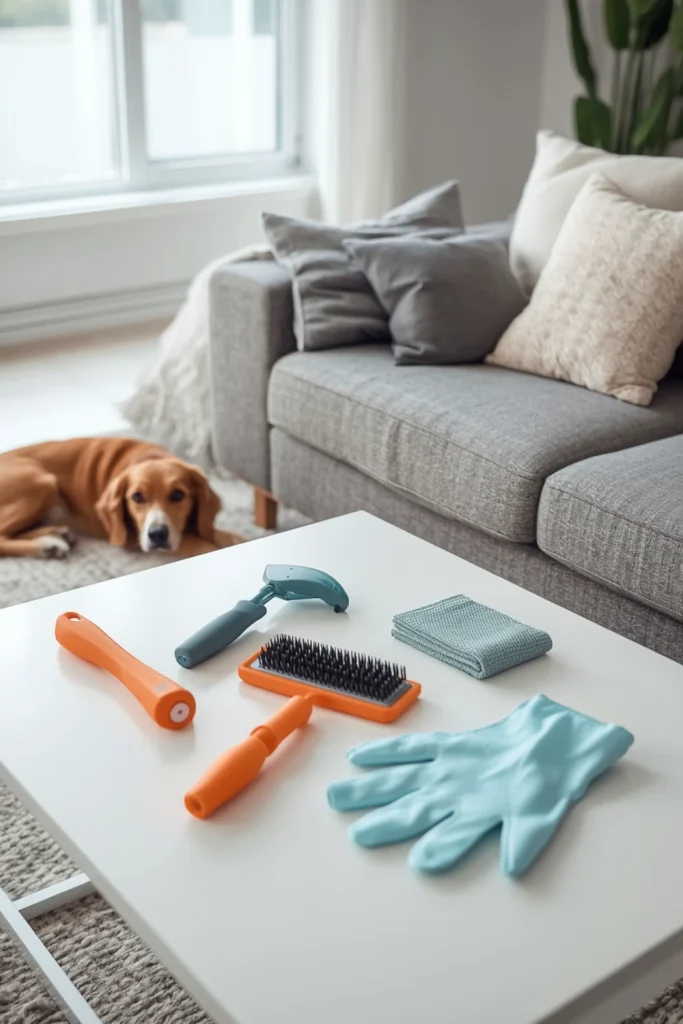
There are different pet hair cleaning products available that can help remove fur from upholstery. These include reusable rubber brushes, fabric-safe rollers, specialized cleaning gloves, and tools designed for pet owners. Choosing the right product can make cleaning faster and reduce the need to rely on disposable adhesive sheets. Before buying a tool, consider your furniture material, the amount of shedding, and how frequently you need to clean. A reusable tool that works well with your sofa fabric may be more practical than a product designed for a different surface.
Always read product instructions and check whether the tool is suitable for your furniture. Some products are designed for carpets or clothing rather than upholstery, so they may not work safely on every sofa. Avoid using strong chemicals, sprays, or cleaning solutions unless the manufacturer confirms that they are safe for the material. Test new products on a hidden area first. Keep cleaning tools in one convenient location so you can use them whenever fur appears. The best product is one that removes hair effectively without damaging your furniture.
15. Create a Regular Furniture Cleaning Routine
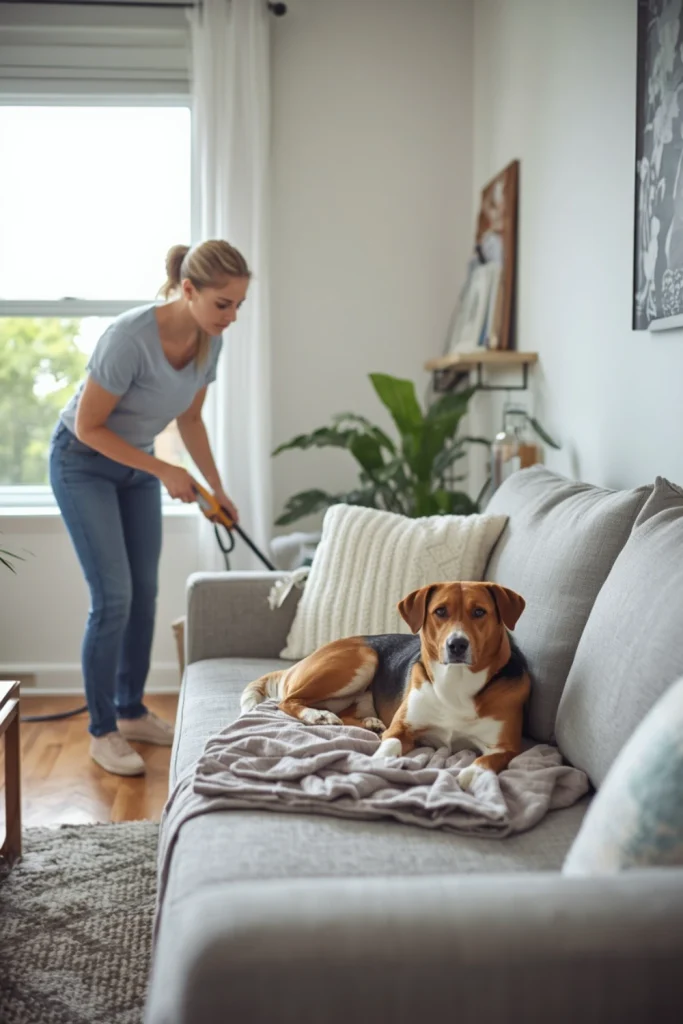
A regular cleaning routine is one of the most reliable ways to prevent dog hair from taking over your furniture. Instead of waiting until the sofa is completely covered, spend a few minutes collecting loose hair every day or every other day. Use a lint roller or rubber glove for quick cleaning, then vacuum cushions and crevices as needed. If your dog has a favorite resting place, give that area extra attention. Small, consistent cleaning sessions are usually easier than removing a large amount of accumulated fur.
Set aside time each week for deeper cleaning. Wash removable cushion covers and dog blankets when necessary, clean sofa seams with a handheld vacuum, and wipe suitable hard surfaces with a microfiber cloth. Keep your cleaning supplies together so you can reach them quickly. Adjust the schedule during seasonal shedding periods when your dog may lose more hair than usual. A simple routine helps keep your furniture fresh, reduces loose fur around the house, and makes pet ownership more comfortable for everyone.
Final Thoughts
Keeping furniture free from pet hair can feel like a never-ending task, but the right cleaning methods make it much easier. From vacuum cleaners and lint rollers to rubber gloves and washable sofa covers, there are many simple ways to remove dog hair from furniture without spending a lot of money.
The most effective approach is to combine regular furniture cleaning with consistent dog grooming. Give your pet a dedicated blanket, clean cushions and sofa seams regularly, and choose tools that are safe for your upholstery. With these 15 easy methods and a simple cleaning routine, you can enjoy a cleaner, fresher living space while still giving your dog a comfortable place in your home.