
When Can Puppies Have Their First Bath? A Beginner’s Guide
Bringing a new puppy home is an exciting experience, and every owner wants to keep their little companion clean, healthy, and comfortable. However, one common question many new puppy owners ask is: When can puppies have their first bath? Bathing a puppy too early or using the wrong products can make the experience uncomfortable and may even affect their health.
Most healthy puppies can have their first gentle bath at around eight weeks of age, but the right time depends on their health, environment, coat condition, and individual needs. With the correct preparation, gentle handling, and puppy-safe products, you can introduce bathing without making your puppy afraid of water. This beginner-friendly guide explains when to start, how to prepare, what products to use, and how to make your puppy’s first bath a positive experience.
1. When Can Puppies Have Their First Bath?
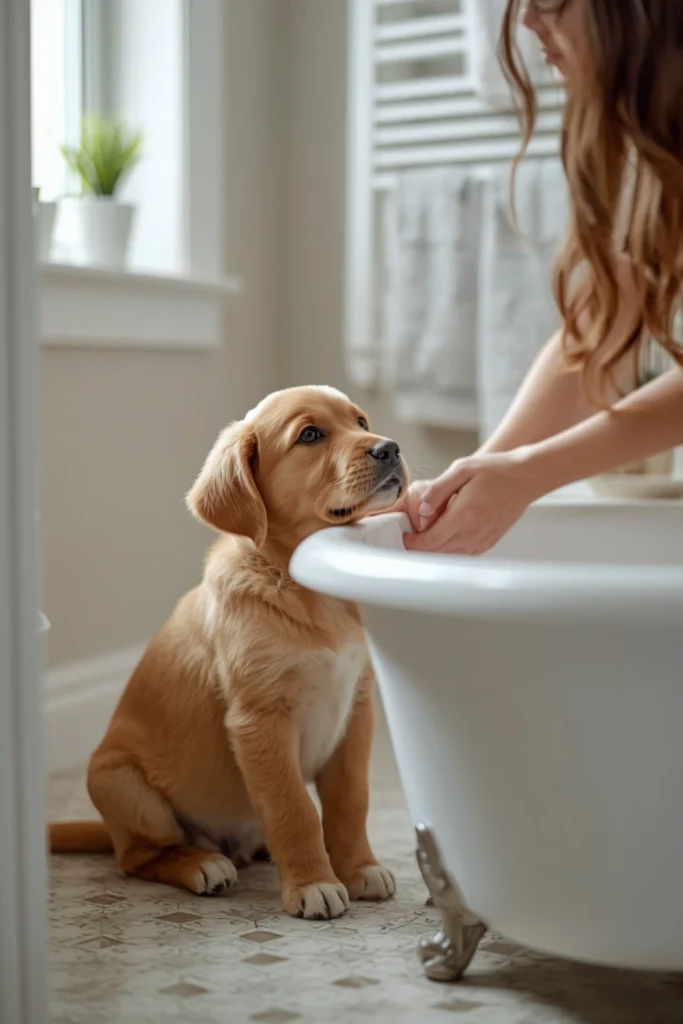
Most healthy puppies can have their first proper bath when they are around eight weeks old. By this age, they are generally better able to regulate their body temperature and handle the mild stress of a short bathing session. However, eight weeks is a general guideline rather than a strict rule for every puppy. Some puppies may need more time, especially if they are small, weak, sick, or adjusting to a new home.
Before giving your puppy a bath, consider their overall condition. A healthy, active puppy who is eating normally and behaving comfortably may be ready for a gentle bath. If your puppy is younger than eight weeks, consult your veterinarian before giving a full bath. For small messes, use a soft, slightly damp cloth to clean only the dirty areas.
2. Why Is It Important to Wait Until Puppies Are Old Enough?

Very young puppies are more sensitive to temperature changes than adult dogs. Their bodies are still developing, and they may have difficulty maintaining a comfortable body temperature when wet. A long bath, cold water, or an uncomfortable environment can make a young puppy stressed and chilled. Waiting until your puppy is old enough helps make the first bathing experience safer and easier to manage.
Another reason to wait is that puppies are still learning about the world around them. Their early experiences can influence how they react to handling, water, and grooming later in life. Introducing bathing when your puppy is physically ready gives you an opportunity to build a positive association. Rather than rushing into a full bath, start with gentle handling and short introductions to water.
3. Can You Bathe a Puppy Before Eight Weeks?
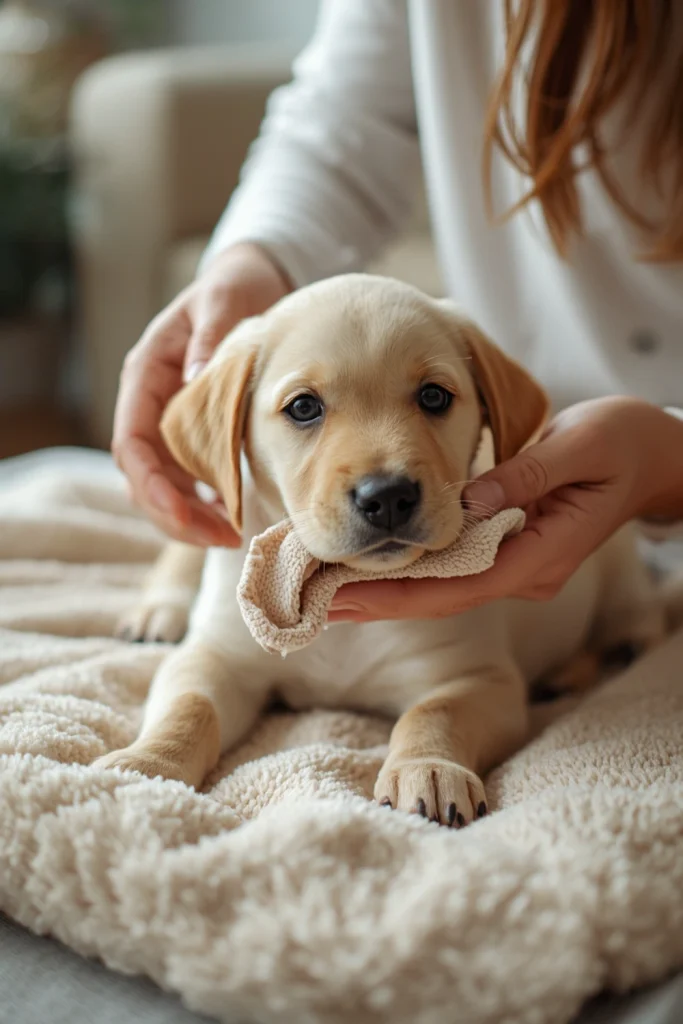
A full bath is generally unnecessary for puppies younger than eight weeks unless there is a specific reason. Very young puppies are delicate and can become chilled quickly when their fur gets wet. If a puppy has a small dirty area, gently clean it with a soft cloth dampened with lukewarm water. Avoid soaking the puppy or keeping it wet for an extended period.
If your very young puppy has become covered in something sticky, dirty, or potentially harmful, contact a veterinarian for advice on the safest cleaning method. Some substances may need immediate attention, and simply wiping them away may not be enough. Never use strong household cleaners, scented wipes, or human grooming products on a young puppy. When in doubt, professional guidance is the safest option.
4. Does Your Puppy’s Breed Affect the First Bath?

A puppy’s breed can influence its grooming needs, coat type, and how often it may need bathing, but it does not automatically change the general age guideline for a first bath. Golden Retrievers, Poodles, German Shepherds, Shih Tzus, and other breeds all benefit from gentle early grooming experiences. However, their coats may require different brushes, shampoos, and drying methods as they grow.
Long-haired breeds may need extra attention to prevent tangles, while short-haired puppies may be easier to clean and dry. Puppies with thick or double coats can take longer to dry completely. Regardless of breed, wait until your puppy is physically ready, choose products made for puppies, and keep the first bath short. If your breed has special skin or coat requirements, ask your veterinarian or a qualified groomer for advice.
5. Check Your Puppy’s Health Before Bathing
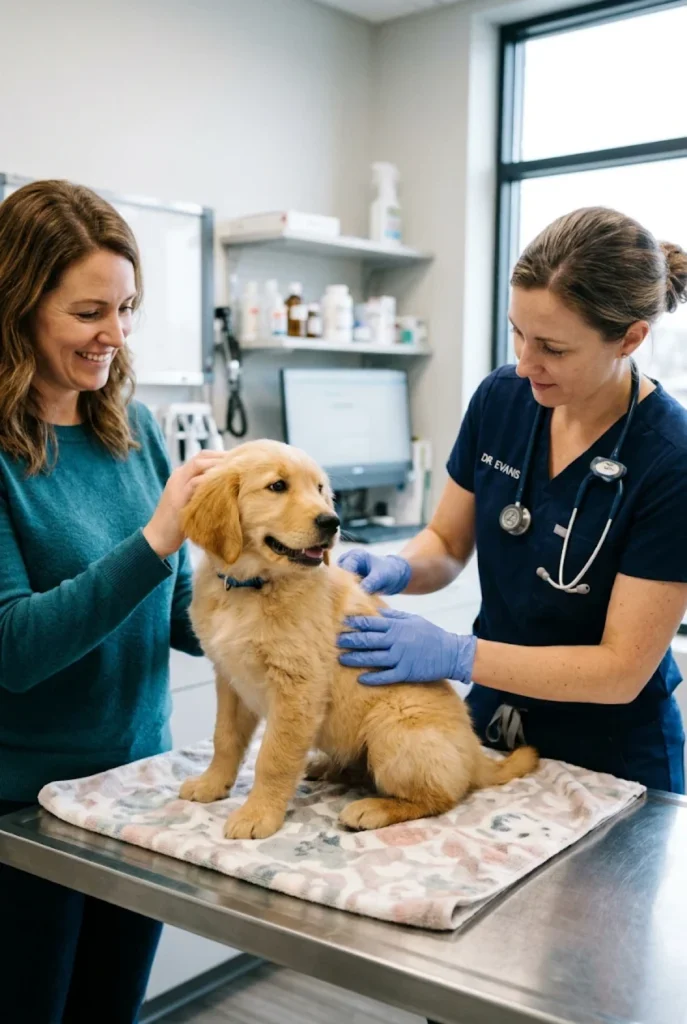
Before planning your puppy’s first bath, make sure your little companion is feeling well. A healthy puppy is generally active, responsive, eating normally, and comfortable with gentle handling. If your puppy has a fever, vomiting, diarrhea, unusual tiredness, coughing, or another concerning symptom, postpone the bath and contact your veterinarian. Bathing can add unnecessary stress when a puppy is already unwell.
You should also check the skin and coat for redness, wounds, swelling, unusual bumps, or signs of irritation. A bath is not a treatment for every skin problem, and some shampoos can make certain conditions worse. If you notice persistent itching, hair loss, a bad smell, or irritated skin, seek veterinary advice before using a grooming product. Your puppy’s comfort and health should always come before keeping the coat perfectly clean.
6. Prepare Your Puppy Before the First Bath
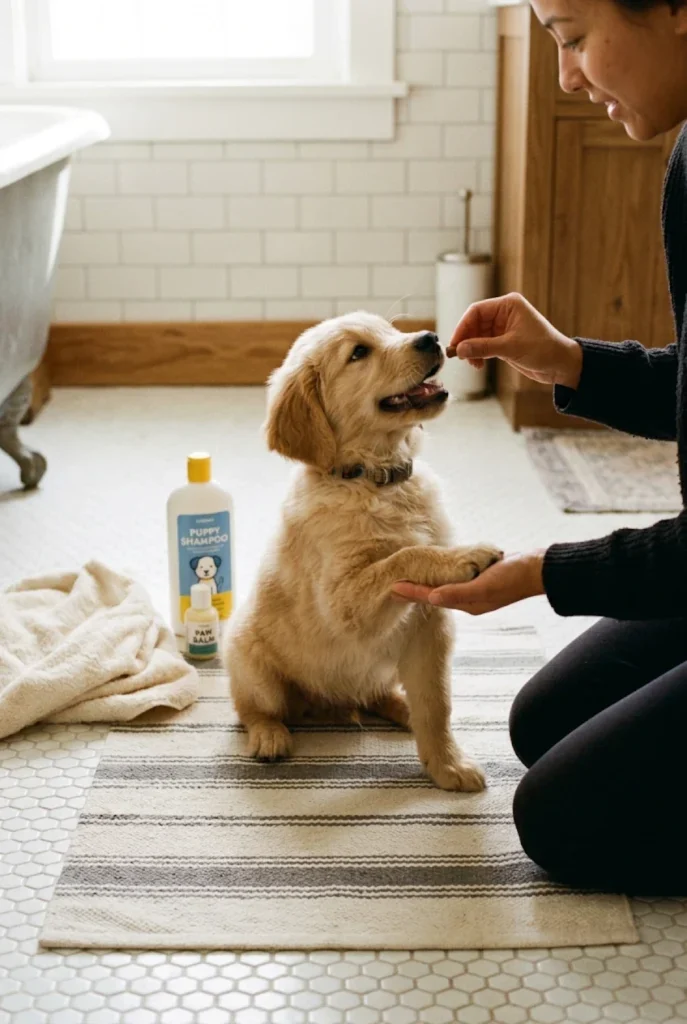
Preparation can make a big difference in how your puppy responds to bathing. Before introducing water, spend a few days helping your puppy become comfortable with gentle handling. Touch their paws, ears, legs, back, and tail softly while offering praise and small treats. This helps them understand that being handled is a normal and safe experience.
You can also introduce your puppy to the bathroom without turning on the water. Let them explore the room, sniff the bathtub, and investigate the towels and grooming supplies. Keep these introductions short and pleasant. Never force your puppy to enter a bathtub or remain in a place that makes them frightened. When your puppy feels relaxed around the bathing area, the actual first bath may become much easier.
7. Gather All Bathing Supplies Before You Begin
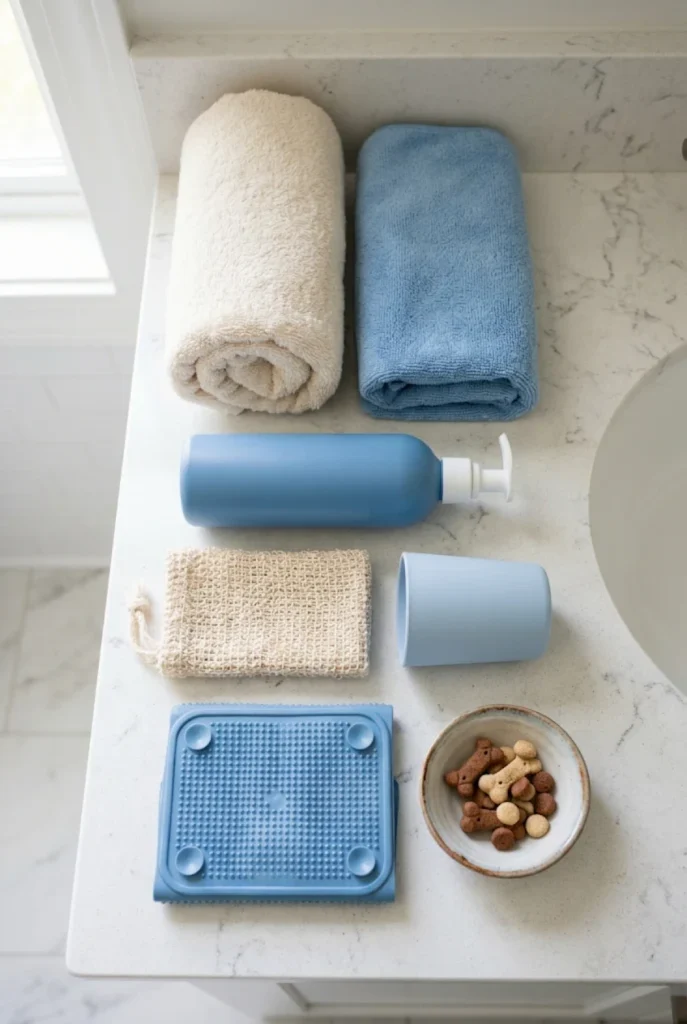
Having everything ready before the bath helps you avoid leaving your puppy unattended. Gather a puppy-safe shampoo, several soft towels, a non-slip mat, a cup or gentle rinsing attachment, and a few small treats. You may also want a soft washcloth for cleaning the face and paws. Keep all products within easy reach before bringing your puppy into the bathing area.
Avoid using products that are not specifically suitable for dogs. Human shampoo, strong fragrances, household cleaning products, and harsh soaps can irritate a puppy’s skin. Read the shampoo label and follow its instructions. If you are unsure whether a product is appropriate for your puppy’s age, coat, or skin condition, ask your veterinarian. A simple collection of safe supplies is better than using too many unnecessary products.
8. Choose a Gentle Puppy-Safe Shampoo
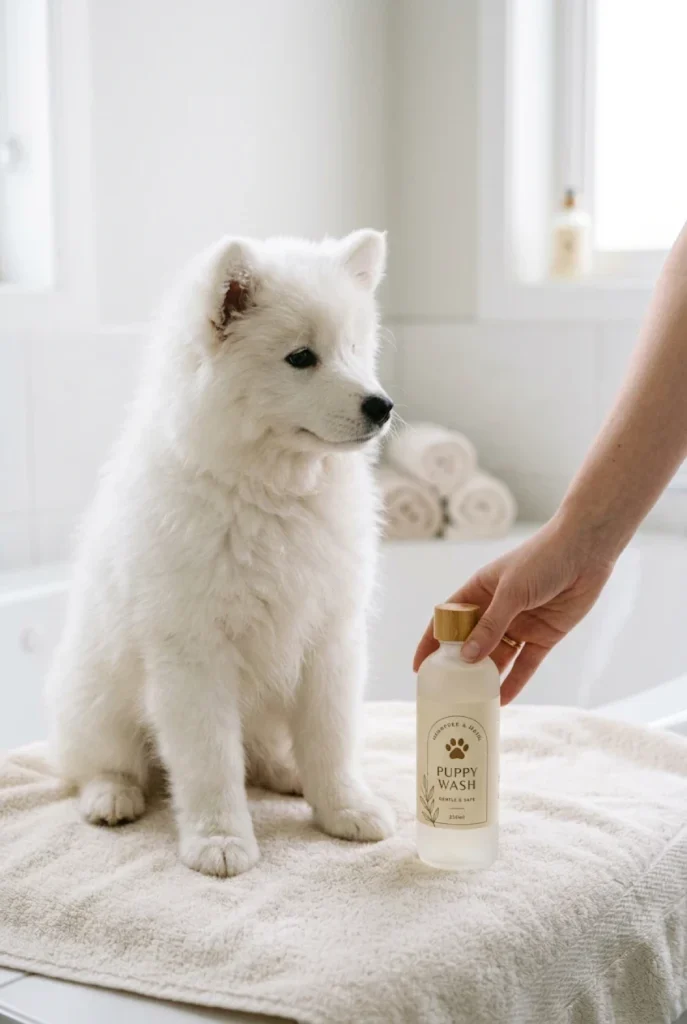
Your puppy’s skin can be sensitive, so selecting the right shampoo is an important part of the first bath. Choose a mild product specifically formulated for puppies or recommended by your veterinarian. A suitable shampoo should clean the coat without unnecessary harshness. Follow the product instructions carefully, including any guidance about dilution, application, and rinsing.
Do not assume that a product is safe simply because it is labelled natural, herbal, or gentle. Ingredients and formulas vary, and some fragrances or essential oils may irritate pets. Avoid using human shampoo, baby shampoo, dishwashing liquid, or homemade cleaning mixtures unless your veterinarian specifically recommends a product for a particular situation. If your puppy has sensitive skin, allergies, or a diagnosed skin condition, ask your veterinarian which shampoo is appropriate.
9. Choose the Right Time for Your Puppy’s First Bath
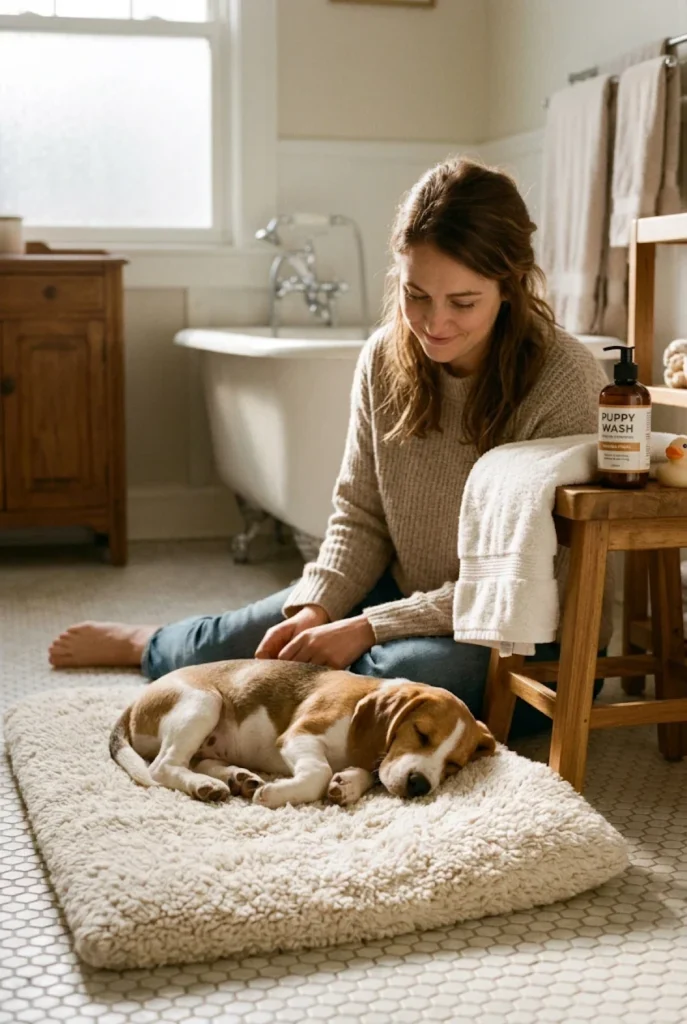
Choose a time when your puppy is calm, comfortable, and not overly excited. Avoid bathing immediately after a long play session, a stressful event, or a large meal. A relaxed puppy may be more willing to explore the bathing area and tolerate gentle handling. It is also helpful to choose a time when you are not in a hurry, so you can move slowly and remain patient.
Your puppy’s mood matters just as much as the bathing supplies. If they are sleepy, frightened, hungry, or unusually restless, consider waiting until they are more settled. Keep the environment quiet and avoid loud noises or sudden movements. A calm introduction helps your puppy learn that bathing is a normal part of life rather than something to fear.
10. Make Sure the Bathroom Is Warm and Comfortable

A warm, comfortable environment is especially important for a puppy’s first bath. Puppies can become chilled when their coats are wet, so choose a room without cold drafts. Close windows if necessary and make sure the floor is not cold or slippery. Have clean, dry towels ready so you can wrap your puppy immediately after rinsing.
The room should also be quiet and free from distractions. Loud fans, running appliances, sudden noises, or people moving around can make a nervous puppy uncomfortable. You do not need a complicated bathing setup. A clean, warm bathroom with a stable surface, safe water temperature, and everything within reach is usually enough for a short first bath.
11. Check the Water Temperature Carefully
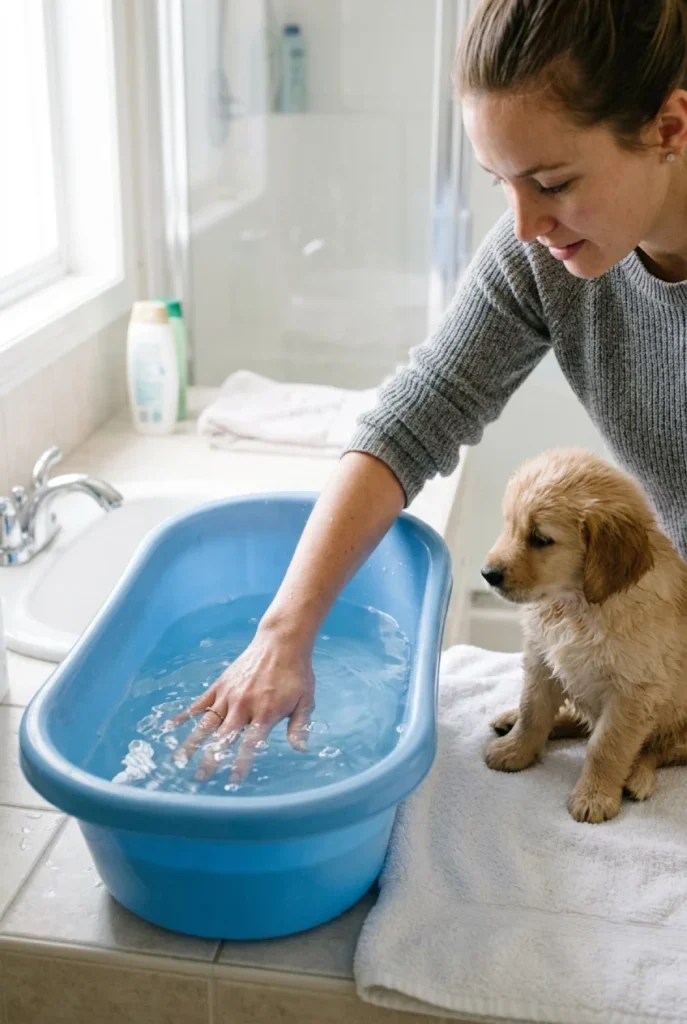
Always check the water temperature before placing your puppy in the bath. Use lukewarm water that feels comfortably warm rather than hot or cold when tested with your wrist or hand. Puppies are more sensitive to uncomfortable temperatures than adult dogs, so never rely only on how the water feels to you. Test it again if the temperature changes during the bath.
Avoid filling the tub deeply. A small amount of water is usually enough for a gentle puppy bath, and many puppies feel more secure when their feet remain on a stable surface. Never pour water over your puppy suddenly or use a strong shower spray. Gentle, controlled water helps reduce fear and makes the first bath more comfortable.
12. Use a Non-Slip Mat to Help Your Puppy Feel Safe
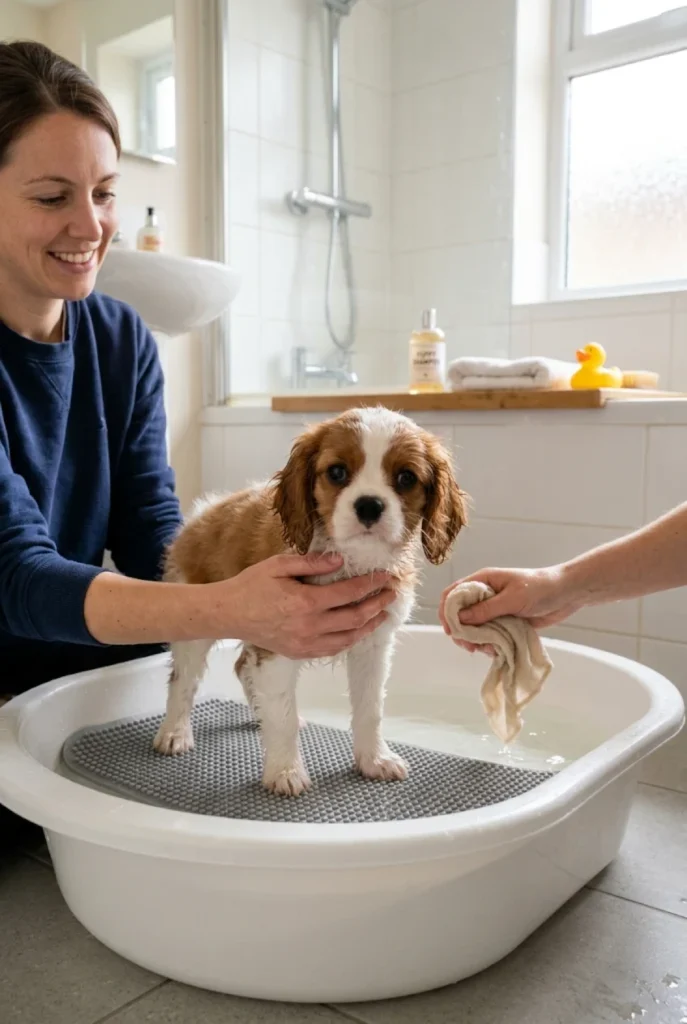
A slippery bathtub can make a puppy nervous. When their paws slide around, they may panic, struggle, or try to jump out. Place a non-slip rubber mat or a suitable bath mat on the bottom of the tub to provide a secure surface. Make sure the mat is stable and does not move when your puppy stands on it.
During the bath, support your puppy gently without squeezing or holding them too tightly. Keep one hand close enough to prevent slipping while using the other hand to apply water or shampoo. Never leave your puppy unattended, even for a moment. A secure surface and calm handling can help your puppy feel more confident throughout the bathing process.
13. Introduce Water Slowly and Gently
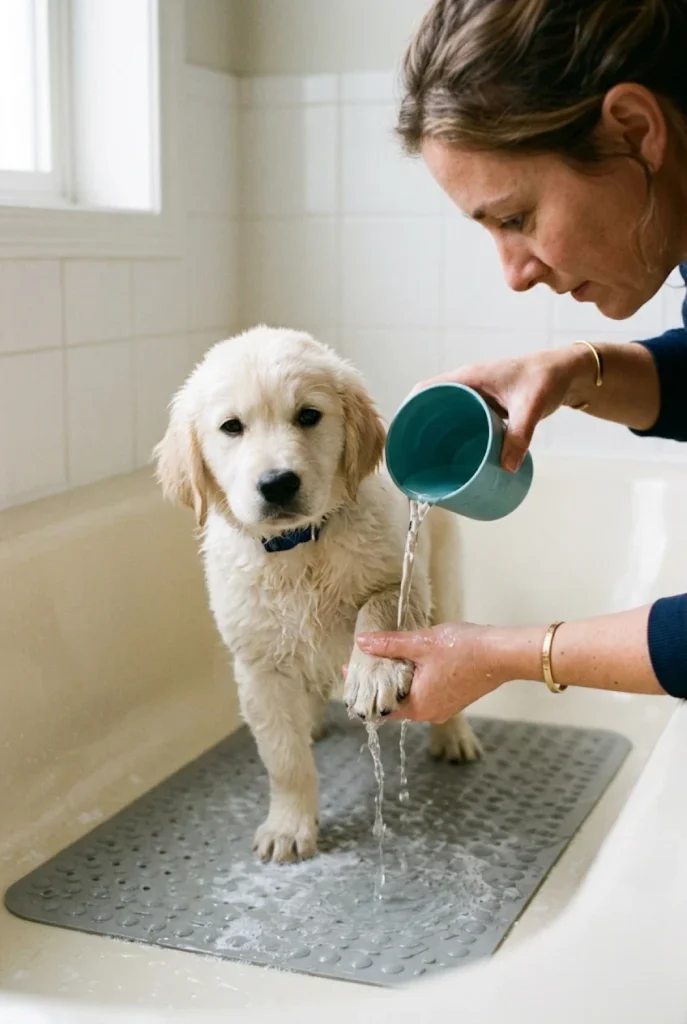
Do not rush your puppy into a full bath by pouring water over its body immediately. Start by allowing your puppy to stand on the non-slip mat and become familiar with the water. Use your hand or a small cup to wet the paws gently. Watch your puppy’s body language and give praise when they remain relaxed.
Once your puppy is comfortable, gradually wet the legs and body using a gentle stream of lukewarm water. Avoid the face, eyes, nose, and ears. If your puppy becomes frightened, pause and give them time to settle. You can stop the bath and try again another day if necessary. The goal of the first bath is not to finish quickly at any cost; it is to create a safe and positive experience.
14. Keep the First Bath Short and Simple
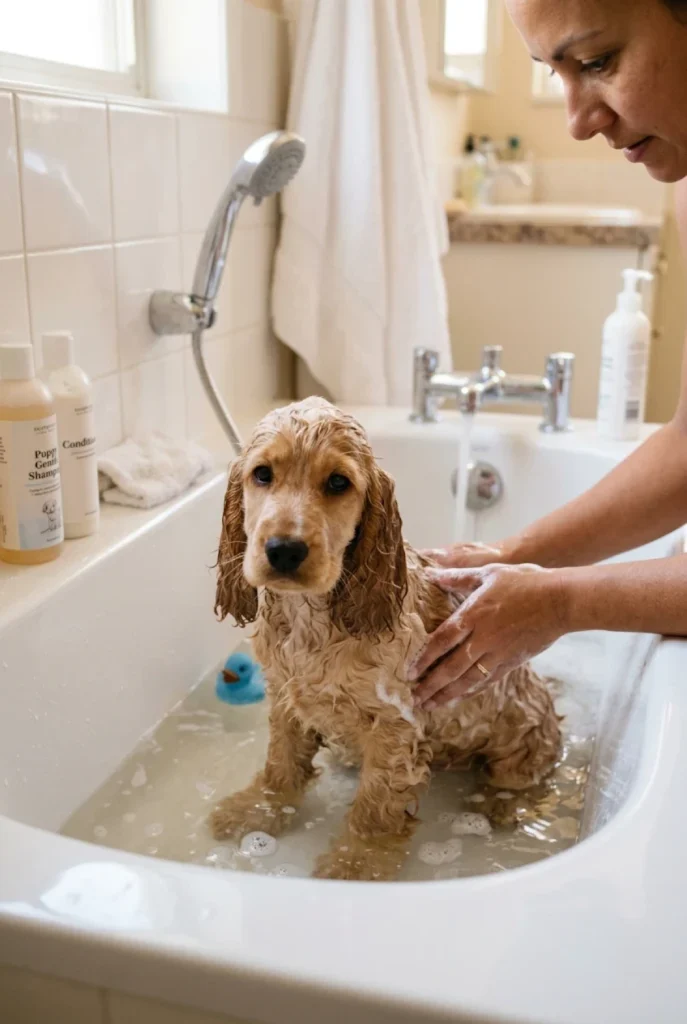
A puppy’s first bath should be brief and gentle. You do not need to scrub every part of the coat or spend a long time making it perfectly clean. Focus on the areas that need washing and avoid unnecessary handling. A short bath helps prevent your puppy from becoming tired, frightened, or uncomfortable.
If your puppy is calm, you can gently wash the body and rinse the shampoo thoroughly. If they begin trembling, struggling, or showing signs of distress, stop and assess the situation. Do not force them to continue just to complete the routine. As your puppy becomes familiar with bathing, you can gradually build a more comfortable grooming routine. Early positive experiences are more valuable than a perfect-looking coat.
15. Wash Your Puppy’s Body Gently

When your puppy is comfortable with the water, gently wet the body and apply a small amount of puppy-safe shampoo according to the product instructions. Start around the neck and work toward the back and body, avoiding the eyes, nose, mouth, and ears. Use your fingertips to massage the coat softly instead of scrubbing hard. Be careful around the belly, legs, and other sensitive areas.
Pay attention to areas where dirt may collect, such as the paws and underside of the body. However, do not pull at tangled fur or rub irritated skin. If you find a mat, wound, or unusual skin problem, avoid working on it during the bath and ask a professional for advice. Gentle movements and a calm voice can help your puppy remain relaxed.
16. Clean Your Puppy’s Face Carefully
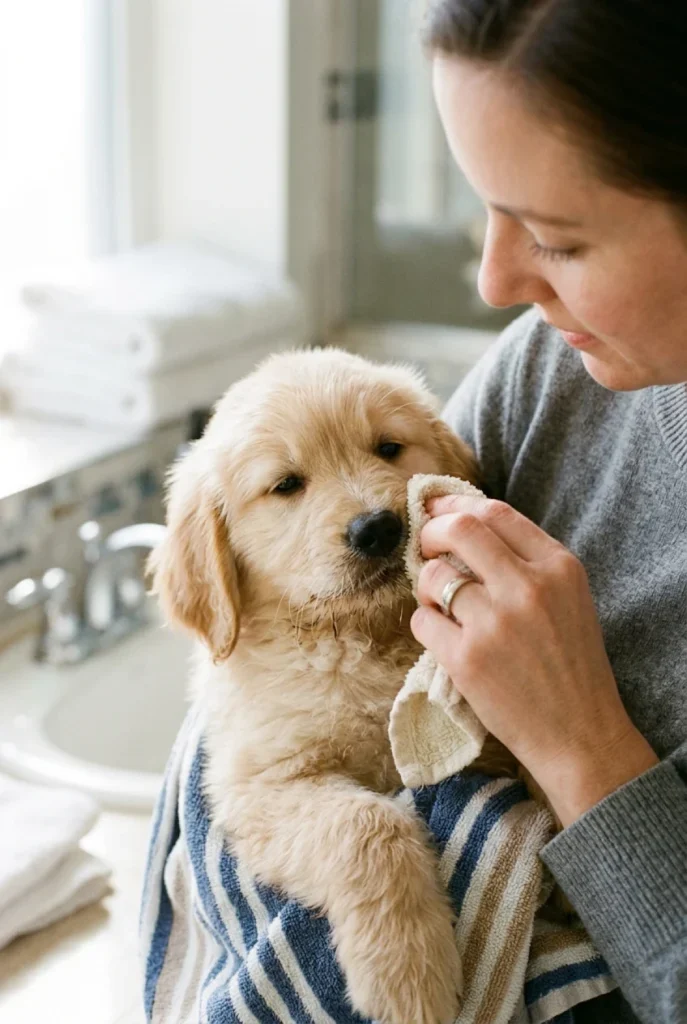
Your puppy’s face needs special care because shampoo and water can easily enter the eyes, nose, and mouth. Avoid pouring water directly over the head. Instead, use a soft washcloth slightly dampened with lukewarm water to clean around the muzzle, cheeks, and forehead. Wipe gently and use a clean part of the cloth for each area.
If your puppy has dirt around the eyes, clean only the surrounding fur carefully without rubbing the eyeball. Do not use shampoo near the eyes unless the product is specifically approved for that purpose and your veterinarian recommends it. If you notice unusual discharge, swelling, redness, or persistent irritation, contact your veterinarian. Gentle face cleaning is usually enough for a young puppy’s first bath.
17. Keep Water Out of Your Puppy’s Ears

Puppies have delicate ears, so avoid directing water into their ear canals during bathing. Water trapped in the ears can contribute to irritation and may increase the risk of ear problems in some dogs. When washing around the head, use a damp cloth rather than pouring water over the ears. Keep the outer ear area as dry as possible.
Never push cotton swabs, fingers, or other objects into your puppy’s ear canal to remove water or dirt. If the ears become wet on the outside, gently pat them dry with a soft towel. Watch for signs such as persistent scratching, head shaking, redness, unusual discharge, or a bad smell. These symptoms may need veterinary attention rather than routine cleaning.
18. Rinse the Shampoo Thoroughly

Rinsing is one of the most important parts of bathing your puppy. Shampoo left behind in the coat can irritate the skin and may cause itching or discomfort. Use lukewarm water and rinse slowly, working through the coat until no visible foam remains. Pay extra attention to the belly, legs, paws, and areas where the fur is thick.
Keep the water stream gentle and avoid spraying your puppy’s face or ears. You can use a small cup or a low-pressure rinsing attachment to control the water. Run your fingers gently through the coat while rinsing to help remove leftover shampoo. Do not rush this step, even if your puppy is becoming impatient. A thorough rinse helps leave the coat clean and comfortable.
19. Dry Your Puppy Immediately After the Bath

Once the shampoo has been rinsed away, lift your puppy carefully and wrap them in a soft, absorbent towel. Gently press the towel against the coat to remove excess water rather than rubbing roughly. Pay attention to the belly, legs, paws, and areas where moisture can remain trapped. Keep your puppy in a warm room while drying.
Some puppies may tolerate a pet-safe dryer on a low, gentle setting, but many are frightened by the sound. If you use one, keep it at a safe distance, avoid hot air, and never direct it toward the face or ears. Stop if your puppy becomes distressed. For a first bath, a soft towel may be all you need, especially if your puppy has a short coat.
20. Reward Your Puppy After Bathing
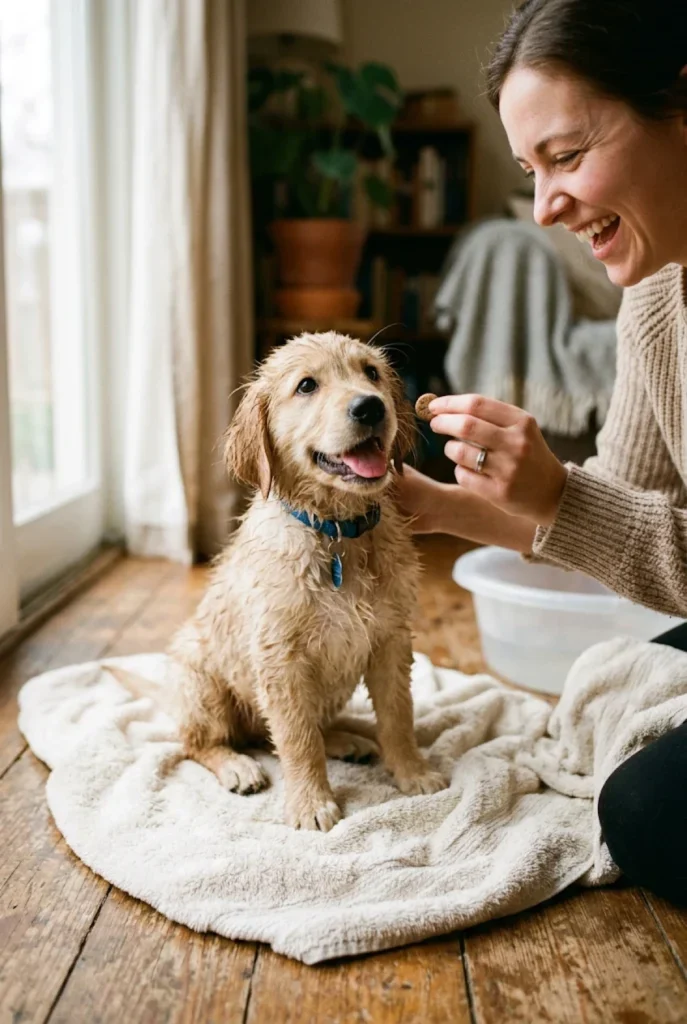
Positive rewards can help your puppy develop a comfortable attitude toward bathing. After the bath, offer gentle praise, affection, and a small treat if your puppy can safely enjoy it. Keep your voice calm and friendly. Avoid making a big fuss if your puppy is still nervous, because too much excitement can make the situation overwhelming.
You can also let your puppy relax on a warm, dry blanket after the bath. Allow them to rest and recover before starting another activity. Over time, your puppy may begin to associate bathing with comfort, attention, and rewards. You do not need to reward only after the bath; small treats and praise during calm moments can also make grooming easier.
21. How Often Should You Bathe a Puppy?
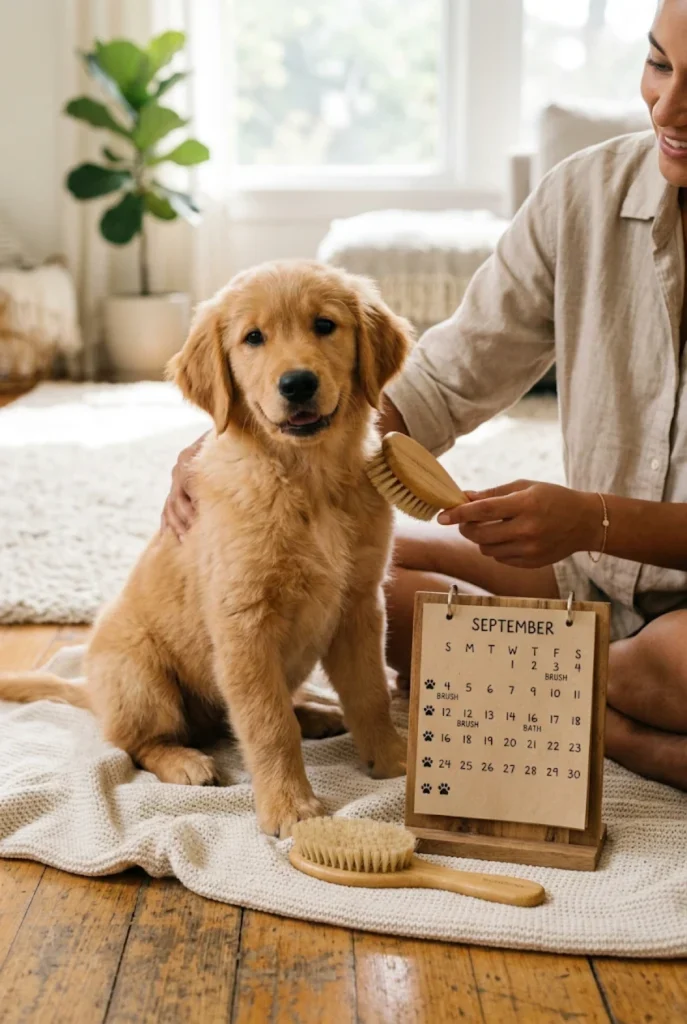
Puppies do not usually need frequent baths. The right bathing schedule depends on their breed, coat type, lifestyle, skin condition, and how dirty they become. For many healthy puppies, occasional bathing is enough to keep the coat fresh. Between baths, you can remove light dirt with a soft damp cloth and brush the coat regularly using an appropriate brush.
Bathing too frequently may remove natural oils from the skin and contribute to dryness or irritation, particularly if you use unsuitable products. Follow your veterinarian’s advice if your puppy has a skin condition or needs a medicated shampoo. Your puppy’s coat should guide the routine rather than a rigid weekly schedule. If the puppy becomes dirty after playing outside, spot cleaning may be all that is needed.
22. What If Your Puppy Is Afraid of Water?
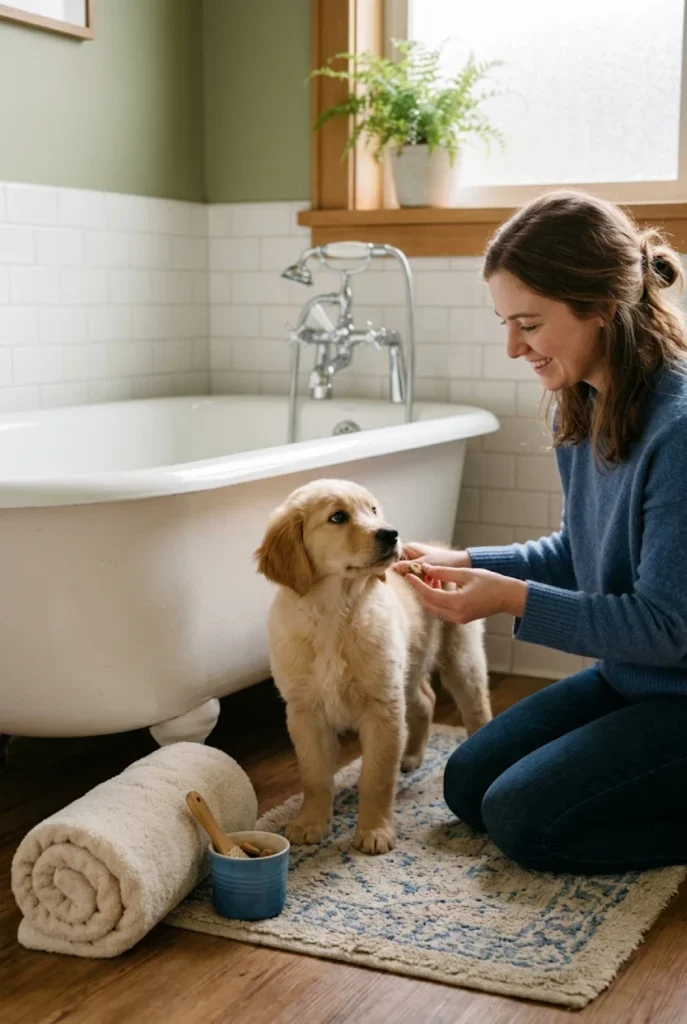
Some puppies naturally feel nervous around water, especially when they have never experienced a bath before. They may move away, shake, whine, or try to climb out of the tub. These reactions do not mean your puppy will always dislike bathing. They may simply need more time to become comfortable with the sounds, smells, and sensations associated with water.
Start with small steps. Allow your puppy to explore an empty bathtub, then introduce a damp cloth, and later let them feel a little water on their paws. Reward calm behaviour and keep each session short. Never shout, punish, or force a frightened puppy into the water. If fear is severe or continues despite gradual introductions, ask a qualified trainer or veterinarian for guidance.
23. Common First-Bath Mistakes New Puppy Owners Should Avoid
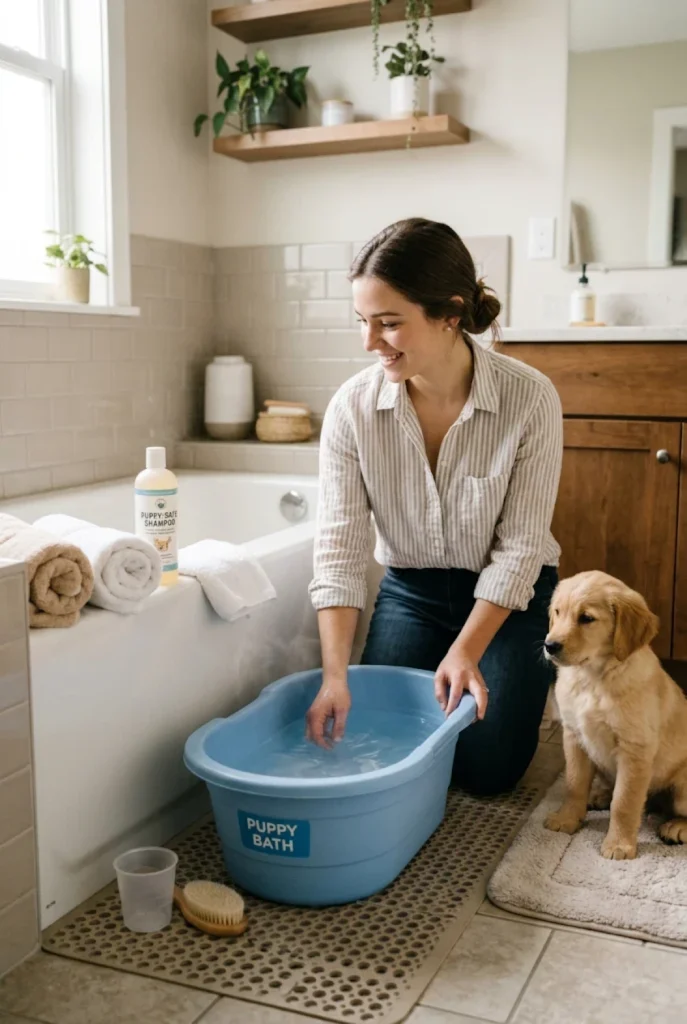
One common mistake is bathing a puppy before it is ready. Very young puppies can become chilled easily, so avoid unnecessary full baths before the general eight-week guideline and consult a veterinarian when unsure. Other mistakes include using human shampoo, filling the tub too deeply, using hot or cold water, and spraying water directly onto the face. These actions can make the experience uncomfortable or frightening.
Another mistake is rushing the process or leaving a puppy unattended. Always prepare supplies in advance, keep a secure hand near your puppy, and rinse the coat thoroughly. Do not use a hot hair dryer or rub the fur aggressively with a towel. Most importantly, avoid forcing your puppy to continue when they are distressed. A gentle, patient approach helps build trust and makes future grooming easier.
24. How to Keep Your Puppy Clean Between Baths
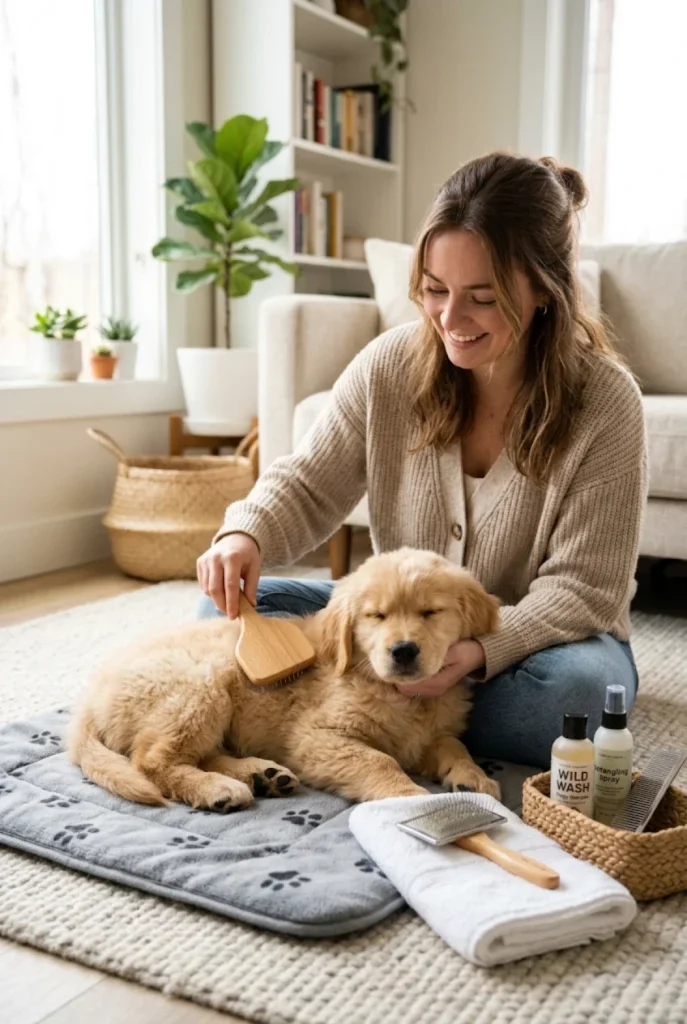
Regular brushing is one of the easiest ways to keep your puppy’s coat clean between baths. It removes loose hair, light dirt, and small debris while helping prevent tangles. Choose a brush suitable for your puppy’s coat type and introduce it slowly. Use gentle strokes and stop if the puppy becomes uncomfortable. Short, positive brushing sessions are often more effective than long grooming sessions.
You can also wipe dirty paws, the underside of the body, and small messy areas with a soft damp cloth. Check the coat after outdoor play and remove visible dirt before it dries. Keep your puppy’s bedding clean and wash it regularly according to the care instructions. These simple habits can help maintain cleanliness without bathing too often.
25. When Should You Ask a Veterinarian About Bathing?

A veterinarian can help you decide whether your puppy is ready for a bath, particularly if the puppy is younger than eight weeks, underweight, unwell, or has a medical condition. Professional advice is also important if your puppy has sensitive skin, allergies, open wounds, parasites, or a persistent skin problem. The wrong bathing product may make some conditions worse, so do not try several shampoos without guidance.
Contact your veterinarian if your puppy develops unusual redness, swelling, intense itching, or discomfort after bathing. If the puppy becomes weak, unusually cold, or unresponsive, seek urgent veterinary care. You should also ask for advice if your puppy gets a potentially harmful substance on its coat. A veterinarian can recommend a safe cleaning method based on the substance and your puppy’s age and health.
26. A Simple First-Bath Checklist for Puppy Owners
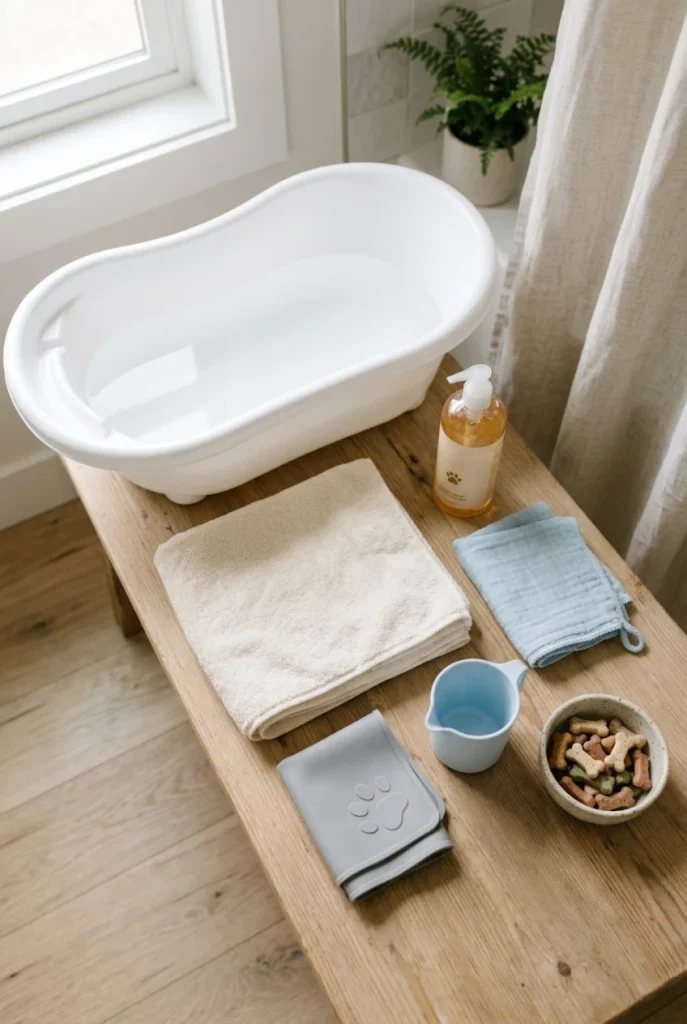
A checklist can help new puppy owners feel more confident before starting the first bath. First, confirm that your puppy is old enough and healthy enough for a full bath. Prepare a warm, draft-free room and gather puppy-safe shampoo, a non-slip mat, soft towels, a washcloth, and a small cup for rinsing. Make sure the water is lukewarm before your puppy enters the tub.
During the bath, keep the water shallow, move gently, and avoid the eyes, nose, and ears. Rinse the shampoo thoroughly and dry your puppy immediately. Offer praise and a small reward for calm behaviour. Never leave your puppy alone in the tub. Keep the first session short and stop if your puppy becomes very frightened or uncomfortable. This simple checklist can help you remember the most important safety steps.
27. How to Build a Regular Puppy Grooming Routine
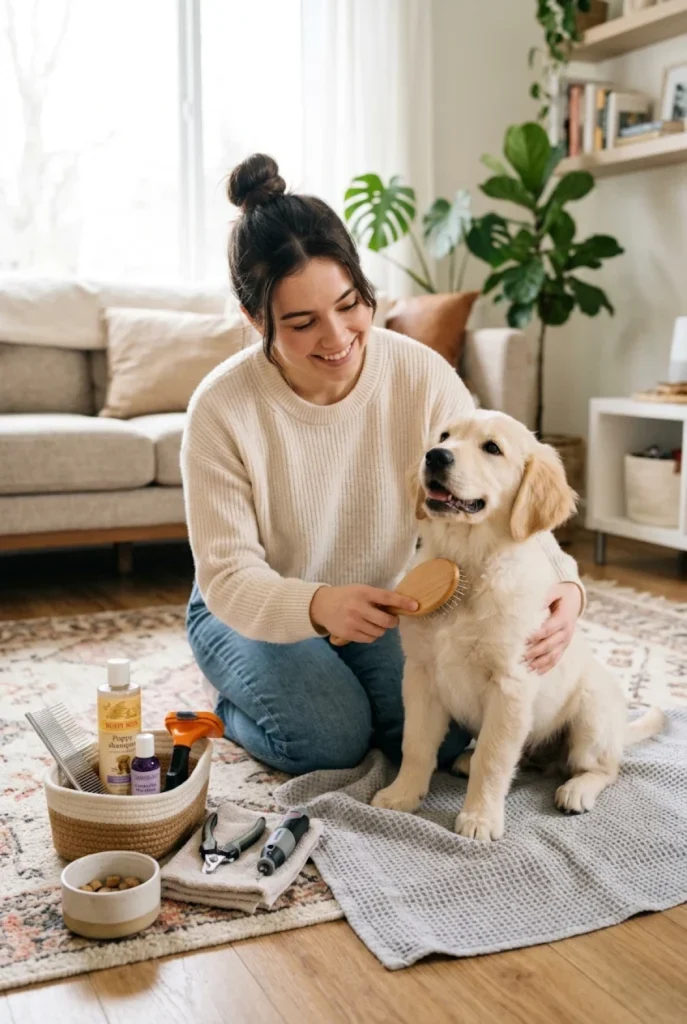
Your puppy’s first bath is only one part of a healthy grooming routine. As your puppy grows, gradually introduce brushing, paw handling, nail checks, ear inspections, and gentle body handling. These activities help your puppy become familiar with regular care and make future grooming appointments easier. Keep each activity brief and reward calm behaviour.
A consistent routine also gives you an opportunity to notice changes in your puppy’s skin, coat, paws, and ears. You may spot a small tangle, irritated area, or unusual smell before it becomes a bigger concern. The exact routine depends on your puppy’s breed and coat type, so adjust the frequency as needed. If you are unsure how to groom a particular area safely, ask your veterinarian or a professional groomer to demonstrate.
Final Thoughts
Knowing when puppies can have their first bath helps you protect their comfort while introducing an important part of grooming. For most healthy puppies, around eight weeks is a reasonable general starting point for a gentle first bath. However, age is not the only factor. Your puppy should also be healthy, comfortable, and ready for the experience. If your puppy is younger, unwell, or has a skin problem, ask your veterinarian before bathing.
Keep the first bath simple: prepare your supplies, use lukewarm water, choose a puppy-safe shampoo, and handle your little companion gently. Avoid the eyes and ears, rinse thoroughly, and dry your puppy promptly. Most importantly, use patience, praise, and rewards to create a positive experience. With gentle introductions and a consistent grooming routine, your puppy can gradually become more comfortable with baths as it grows.