
The Simple Dog Paw Cleaning Routine for Every Walk
Taking your dog for a walk is one of the best ways to keep them happy, healthy, and active. Whether you enjoy a morning stroll around the neighborhood or an evening walk in the park, your dog encounters different surfaces, dirt, mud, grass, and outdoor debris. While these adventures are great for your dog’s physical and mental health, they can leave their paws dirty and uncomfortable.
A simple Dog Paw Cleaning Routine after every walk can make a big difference in your dog’s daily hygiene. Cleaning your dog’s paws helps remove dirt, mud, allergens, and small particles that may cause irritation. It also keeps your floors cleaner and gives you an opportunity to check for cuts, scratches, and other paw problems. The good news is that paw cleaning does not need to be complicated. With a few basic supplies and a consistent routine, you can make it a quick and comfortable part of every walk.
1. Prepare Your Paw Cleaning Supplies Before Every Walk
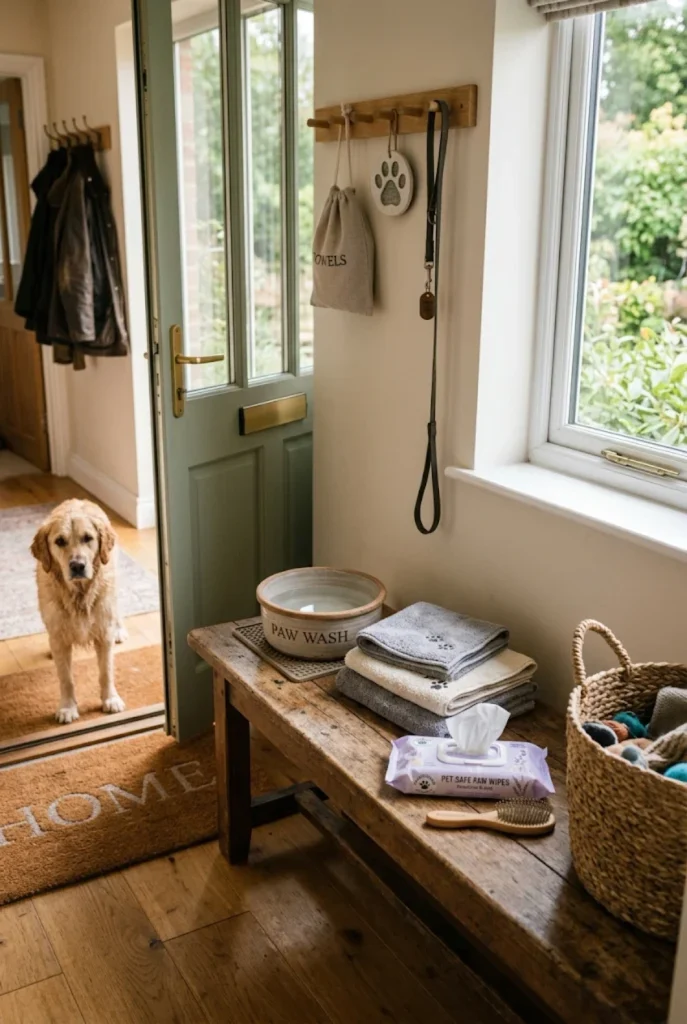
One of the easiest ways to establish a successful Dog Paw Cleaning Routine is to prepare your supplies before taking your dog outside. Having everything ready saves time and prevents you from searching for towels or cleaning products while your dog is waiting. You do not need expensive equipment to get started. A soft microfiber towel, a small bowl of lukewarm water, a pet-safe cleaning cloth, and a clean drying towel are usually enough for everyday cleaning.
Keep your supplies together in a small basket near the entrance of your home. This makes it easier to follow the same routine after every walk. If your dog regularly walks through muddy areas, consider keeping a shallow paw-washing container nearby. Avoid using strong household cleaners, scented wipes, or products containing ingredients that may irritate your dog’s skin.
2. Choose a Comfortable Place for Paw Cleaning
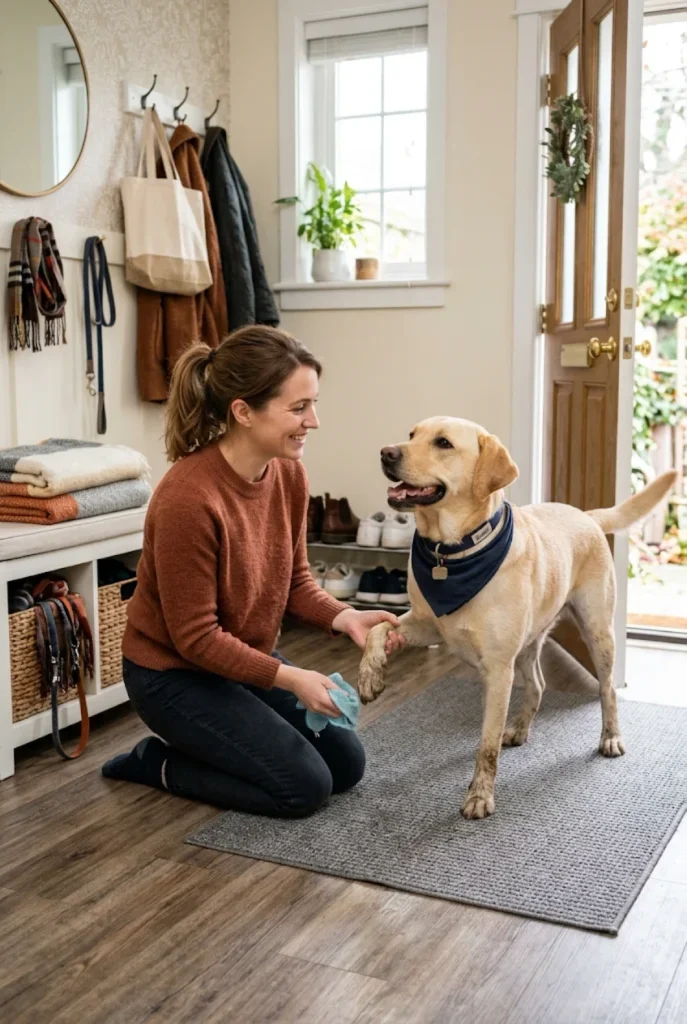
Choosing the right location can make paw cleaning much easier for both you and your dog. A quiet area near your entrance, laundry room, or bathroom is often a good choice. Select a space with a washable floor where your dog can stand comfortably without slipping. A non-slip mat can provide extra stability, especially for puppies, senior dogs, and pets that feel nervous during grooming activities.
Try to use the same location after every walk. Dogs often become more comfortable when they recognize familiar surroundings and understand what will happen next. Keep the environment calm and avoid rushing your dog. If your pet is uncomfortable standing, you can allow them to sit while you gently clean one paw at a time.
3. Let Your Dog Settle Down After the Walk
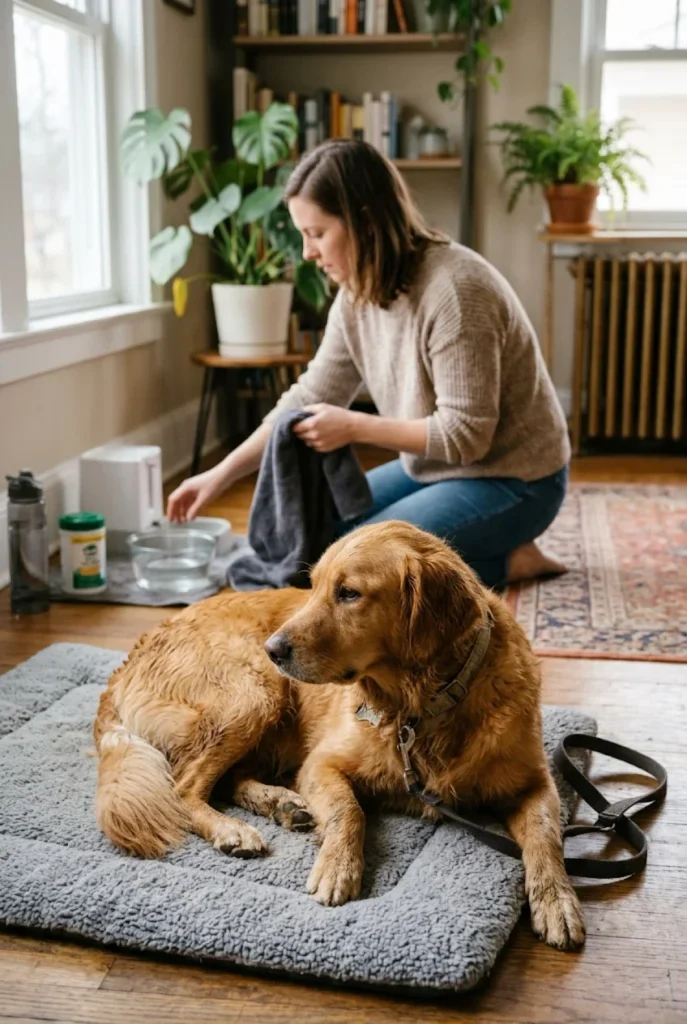
After returning from a walk, give your dog a moment to relax before starting the cleaning process. Excitement, exercise, and new outdoor smells can make dogs energetic or restless. Trying to clean their paws immediately while they are moving around may make the experience difficult. Allow your dog to drink some fresh water and settle down in a familiar spot.
Once your dog becomes calmer, gently invite them to the cleaning area. Use a friendly voice and reward relaxed behavior with praise. Avoid grabbing their legs suddenly or forcing them into a position they dislike. A peaceful beginning helps your dog associate paw cleaning with a positive experience rather than something uncomfortable.
4. Inspect Your Dog’s Paws Before Cleaning
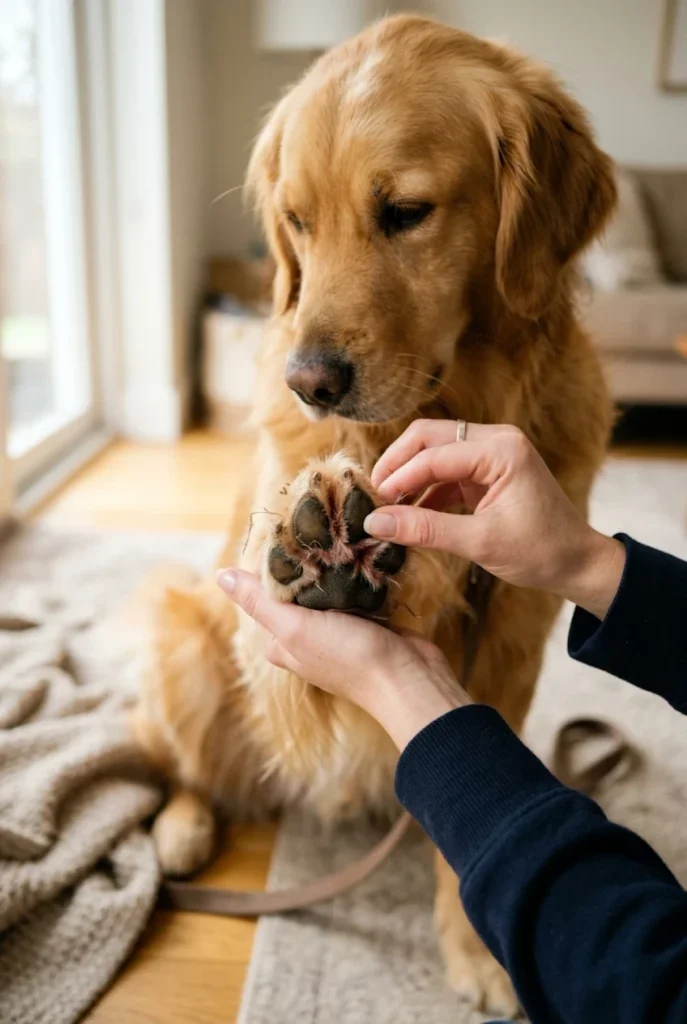
Before adding water or wiping away dirt, take a few seconds to inspect each paw carefully. Look at the paw pads, nails, and spaces between the toes. Check for mud, tiny stones, grass seeds, thorns, or other objects that may have become trapped during the walk. These small particles can cause irritation if they remain inside the paw.
Pay attention to unusual signs such as swelling, redness, bleeding, or visible cracks. If your dog suddenly pulls its paw away or reacts painfully when touched, stop and examine the area gently. Do not attempt to remove deeply embedded objects yourself. Contact your veterinarian if you notice a serious injury, persistent pain, or signs of infection.
5. Remove Loose Dirt With a Soft Towel
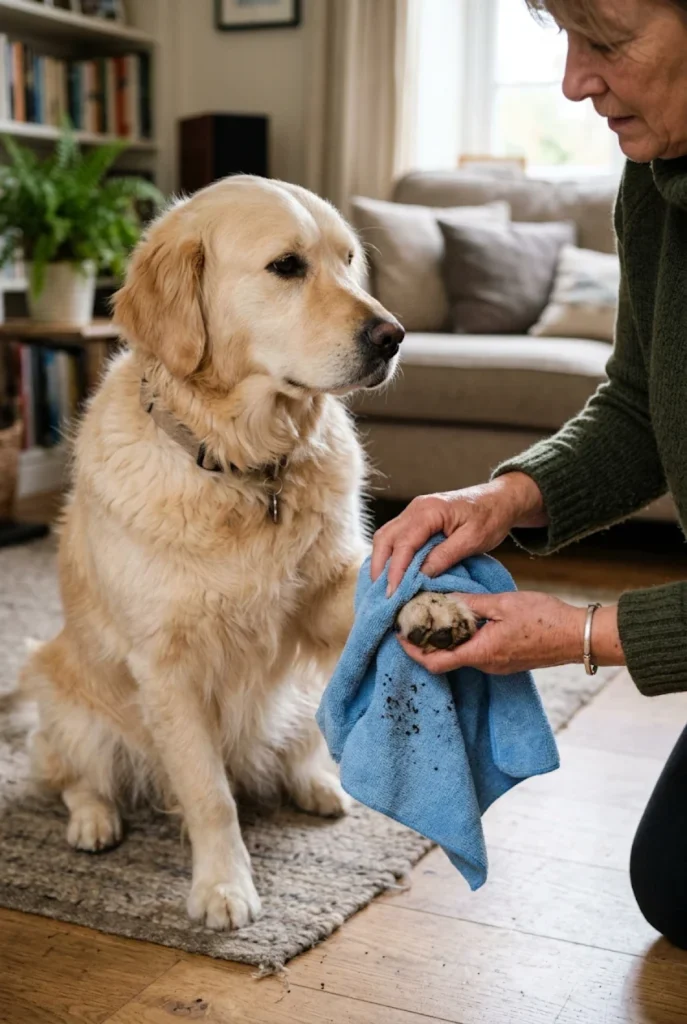
The first cleaning step should be removing loose dirt from your dog’s paws. Use a soft, dry microfiber towel to gently wipe the bottom of each paw and the surrounding fur. This removes dust, dry soil, and loose particles before you use water. Start with one paw and work slowly so your dog understands what you are doing.
Avoid rubbing too hard, especially if your dog has sensitive paw pads. Gentle wiping is usually enough for ordinary dirt collected during a short walk. If mud has dried around the toes, do not pull it forcefully. A little lukewarm water can help loosen the dirt without causing unnecessary discomfort.
6. Use Lukewarm Water for Everyday Paw Washing
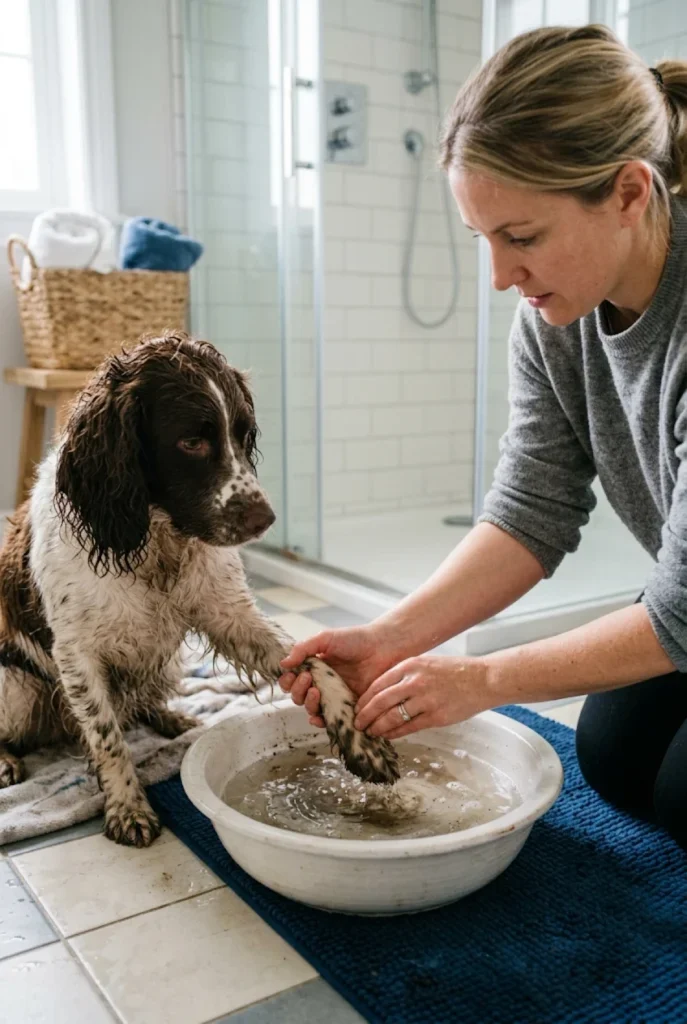
When your dog’s paws are muddy or noticeably dirty, lukewarm water can provide a simple and effective cleaning solution. Fill a shallow bowl or use a gentle stream of clean water to rinse away dirt from the paw pads. Avoid water that is too hot or too cold because extreme temperatures may make your dog uncomfortable.
Focus on the bottom of the paws and the spaces between the toes. Move slowly and allow the dirt to loosen naturally. You do not need to soak your dog’s entire foot for ordinary cleaning. After rinsing, use a clean towel to remove excess moisture. Fresh water is generally sufficient for routine paw washing after normal outdoor activities.
7. Clean Between Your Dog’s Toes Carefully
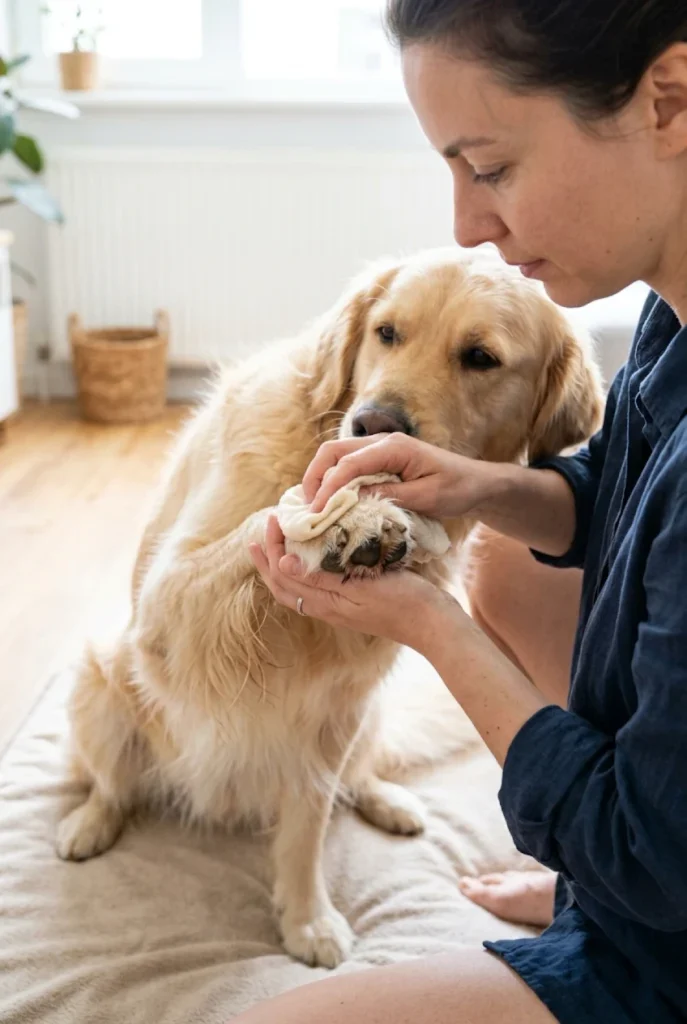
The spaces between your dog’s toes can collect dirt, moisture, small leaves, and other outdoor debris. These areas deserve special attention during your Dog Paw Cleaning Routine because trapped material may irritate the skin. Use a soft damp cloth or pet-safe cleaning wipe to gently clean between the toes.
Avoid pushing your fingers deeply into sensitive areas or pulling the fur. If you notice a small stone or piece of grass that is easy to remove, carefully take it out. However, do not forcefully remove anything embedded in the skin. Dogs with long fur around their feet may need extra attention because dirt can become trapped more easily. Ask a professional groomer or veterinarian about suitable paw hair maintenance.
8. Use Pet-Safe Wipes When You Are in a Hurry
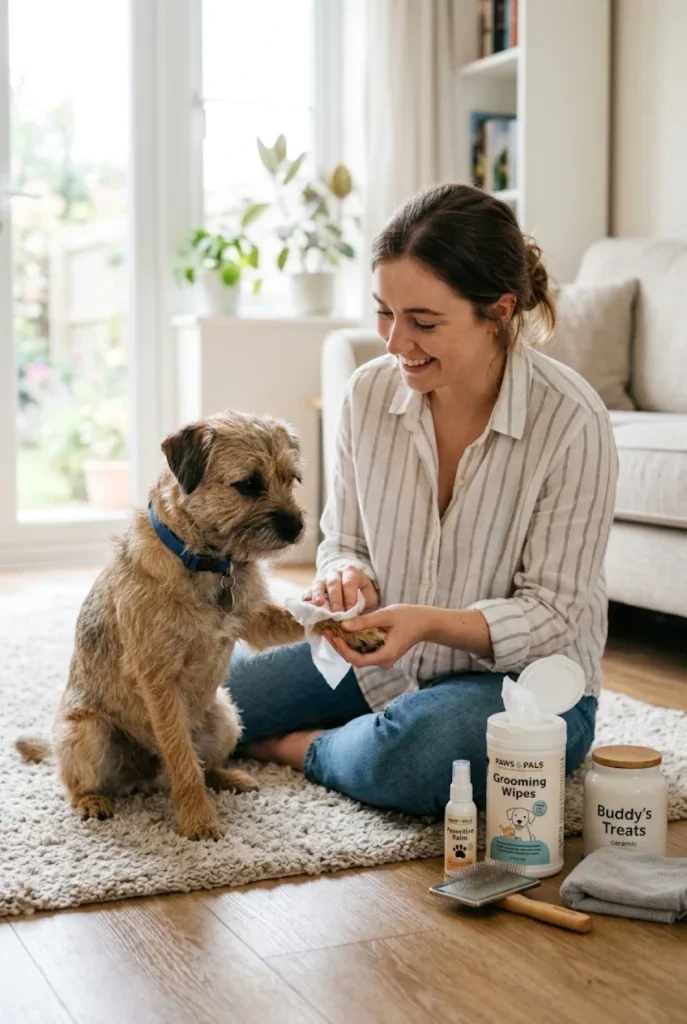
Sometimes you may not have enough time to wash your dog’s paws after every short walk. Pet-safe grooming wipes can be a convenient alternative for removing light dirt and everyday outdoor residue. Keep a pack near your entrance or inside your dog-walking bag so you can clean your pet’s paws whenever necessary.
Always select wipes specifically designed for dogs and follow the manufacturer’s instructions. Avoid using household disinfectant wipes, alcohol-based wipes, or heavily fragranced products on paw pads. These products may cause irritation if they are unsuitable for animal skin. Wipes are useful for light cleaning, but heavily muddy paws still need proper rinsing with clean water.
9. Pay Extra Attention to Muddy Paws
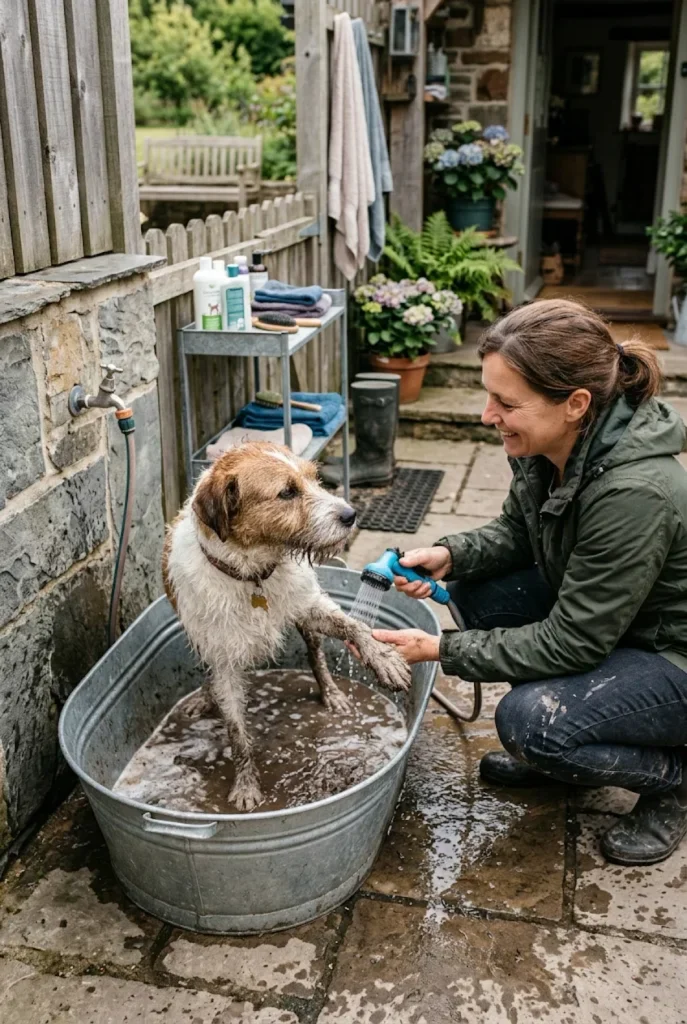
Walking through muddy parks, wet gardens, and dirt trails can leave your dog’s paws covered with thick mud. In these situations, dry wiping alone may not be enough. Start by gently removing large pieces of mud with your fingers or a soft towel. Then rinse the paws with lukewarm water until most of the dirt has disappeared.
Be particularly careful around the spaces between the toes, where wet soil can become trapped. Avoid scraping dried mud with sharp tools or pulling tangled fur. If the mud contains unknown chemicals, oil, or other potentially harmful substances, prevent your dog from licking its paws and contact your veterinarian for appropriate cleaning advice.
10. Check for Small Stones and Grass Seeds
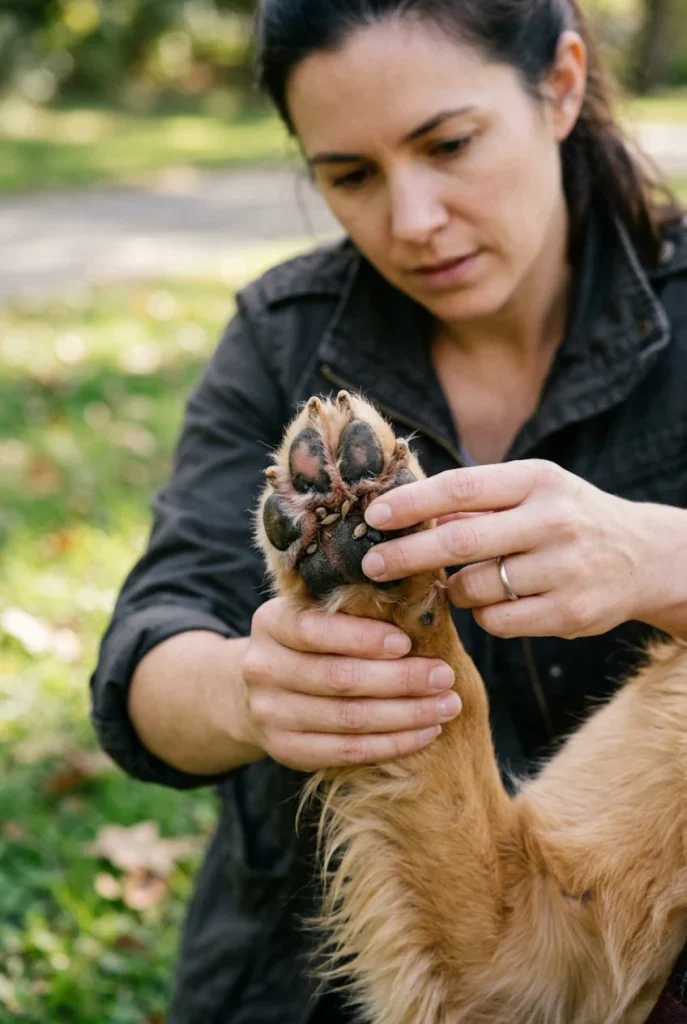
Small stones, grass seeds, and tiny pieces of wood can become trapped between paw pads during outdoor adventures. These objects may not be immediately visible, especially in dogs with thick fur. Carefully separate the toes and inspect the area after each walk, particularly if your dog has been exploring parks, fields, or hiking trails.
If a loose particle is sitting on the surface, gently remove it without pulling the skin. Never use sharp scissors, tweezers, or other tools near a painful or injured area unless you know it is safe. Some grass seeds can penetrate the skin and cause serious irritation. Contact your veterinarian if you notice swelling, persistent licking, limping, or a deeply embedded object.
11. Dry Every Paw Thoroughly After Washing
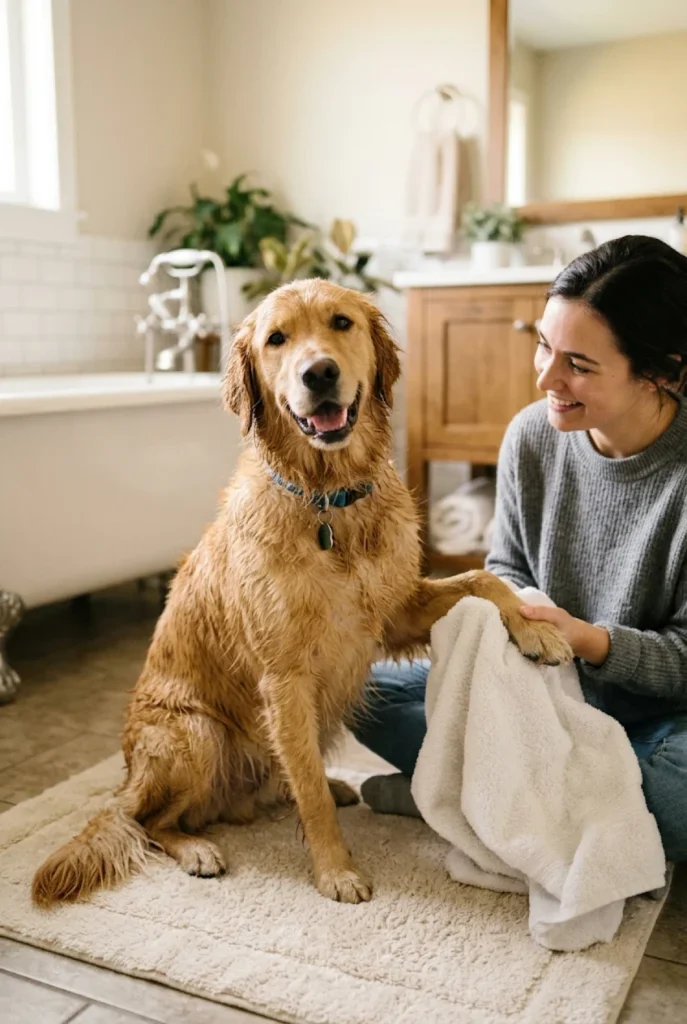
Drying is one of the most important parts of a proper Dog Paw Cleaning Routine. Leaving your dog’s paws wet can create an uncomfortable environment, particularly between the toes and around the paw pads. Use a clean, soft towel to gently pat each paw until the visible moisture is removed.
Pay special attention to long-haired breeds because their foot fur can hold water for longer periods. Avoid aggressive rubbing because it may irritate sensitive skin. You can gently separate the toes to help dry the spaces between them. If you use a pet hair dryer, choose a suitable low-heat setting and keep it at a comfortable distance. Never use excessive heat on your dog’s paws.
12. Check Your Dog’s Paw Pads for Cracks and Dryness
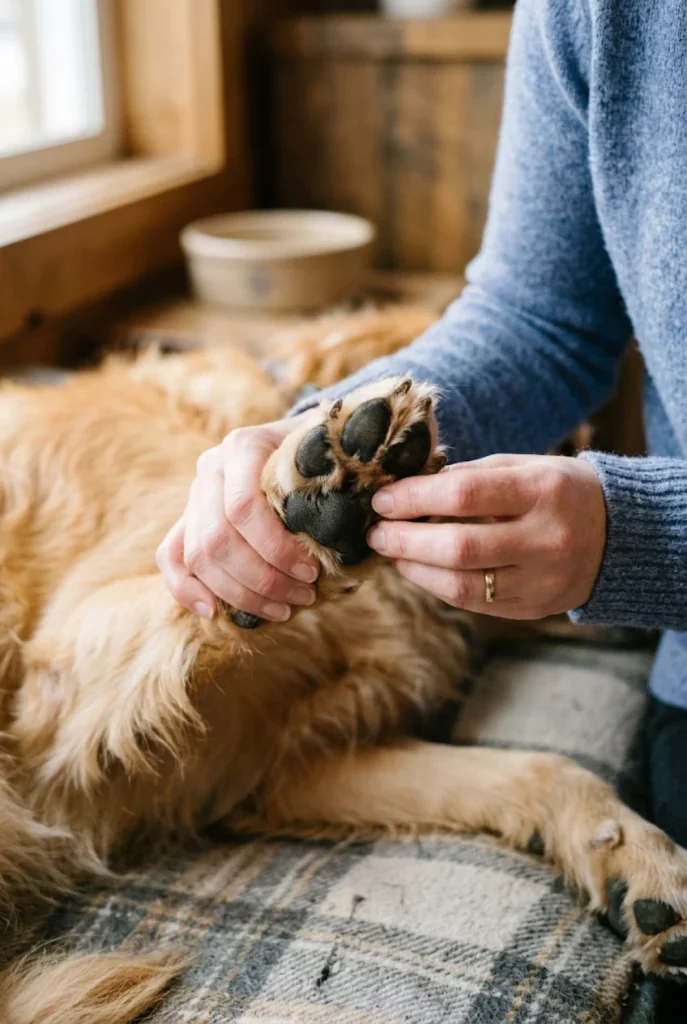
Paw pads are designed to protect your dog’s feet, but they can still become dry, rough, or irritated. Hot pavement, cold weather, rough walking surfaces, and repeated exposure to moisture may affect paw pad condition. During cleaning, take a moment to look for cracks, unusual roughness, peeling skin, or areas that appear uncomfortable.
Healthy paw pads do not always need additional products. If your dog’s pads seem dry, ask your veterinarian whether a dog-specific paw balm is appropriate. Choose products made for canine use and follow the directions carefully. Avoid applying ordinary human lotions or skincare products because some ingredients may be unsuitable if your dog licks its feet.
13. Apply Dog-Safe Paw Balm When Needed
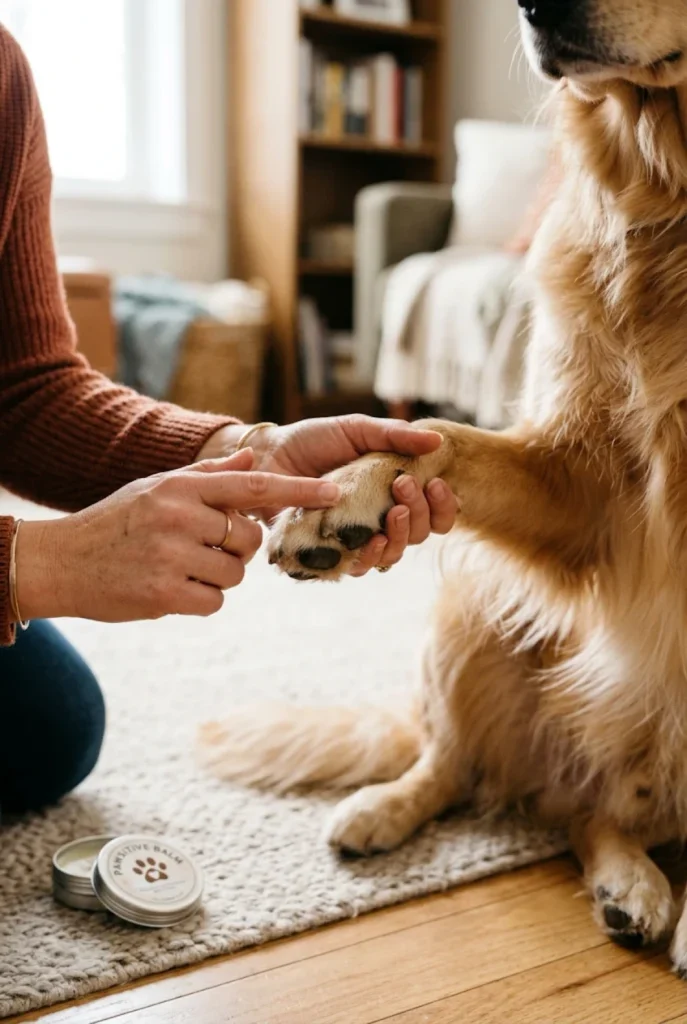
Some dogs experience dry or rough paw pads, especially during extreme weather or after walking on rough surfaces. A dog-specific paw balm may help support skin moisture and protect the paw pads when recommended by your veterinarian. These products are generally designed for canine skin and should be used according to their labels.
Before applying balm, make sure your dog’s paws are clean and completely dry. Use a small amount and spread it gently over the paw pads without creating a thick layer. Allow the product to absorb as directed. Watch your dog to prevent excessive licking immediately after application. Remember that paw balm is not a substitute for treating injuries, infections, or painful skin conditions.
14. Trim Excess Paw Hair When Necessary
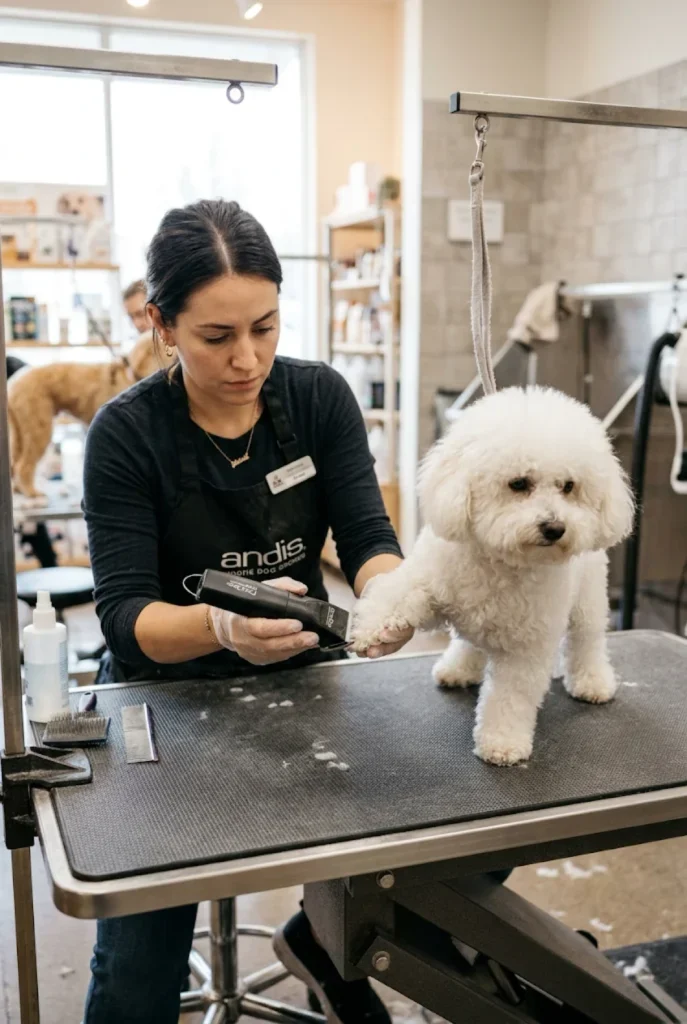
Dogs with long or curly coats may develop extra fur around their paw pads. This hair can collect dirt, hold moisture, and make cleaning more difficult. Keeping excessive paw hair neatly maintained may help you inspect and clean your dog’s feet more easily. However, the goal is not to remove all the natural fur.
If trimming is needed, ask a professional groomer to demonstrate the safest approach. Hair near paw pads should only be trimmed when necessary and with suitable grooming equipment. Avoid cutting close to the skin or using sharp scissors if your dog moves unexpectedly. Regular grooming can make your everyday paw-cleaning process simpler and more comfortable.
15. Make Paw Cleaning a Positive Experience With Rewards
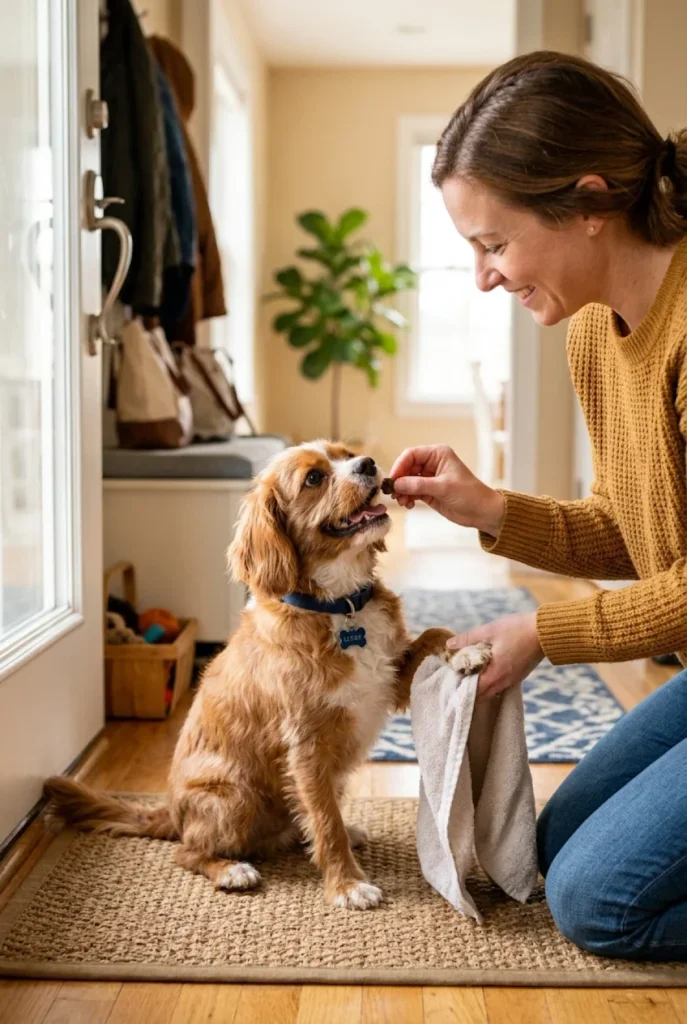
Some dogs naturally enjoy having their paws handled, while others may feel nervous or uncomfortable. Positive reinforcement can help make cleaning easier. Offer small treats, gentle praise, and encouragement when your dog calmly allows you to touch its paws. Start with brief sessions and gradually increase the amount of cleaning as your pet becomes comfortable.
Never punish your dog for pulling its paw away or showing signs of fear. Instead, take a break and try again more slowly. If your dog consistently reacts with intense fear, growling, or pain, investigate the cause rather than forcing the routine. Rewards should make paw cleaning feel like a pleasant part of returning home after an enjoyable walk.
16. Clean Your Dog’s Paws After Rainy Walks
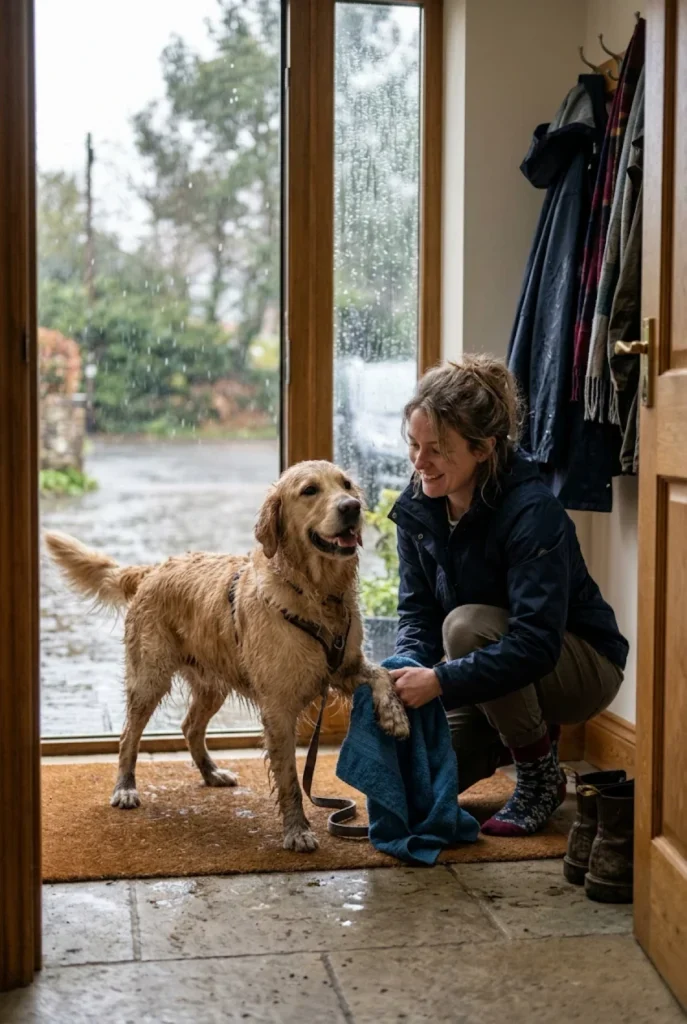
Rainy walks can leave your dog’s feet covered with wet dirt, muddy water, and outdoor debris. Even if your dog looks relatively clean, moisture can remain around the toes and foot fur. After returning home, gently inspect the paws and rinse away any visible mud using clean lukewarm water.
Dry the feet thoroughly before allowing your dog to rest on its bed. Pay attention to wet fur because prolonged dampness may contribute to skin irritation. You can keep a dedicated towel near the entrance during rainy seasons. This small preparation makes it easier to maintain a consistent cleaning routine even when the weather is unpleasant.
17. Protect Your Dog’s Paws During Hot Weather
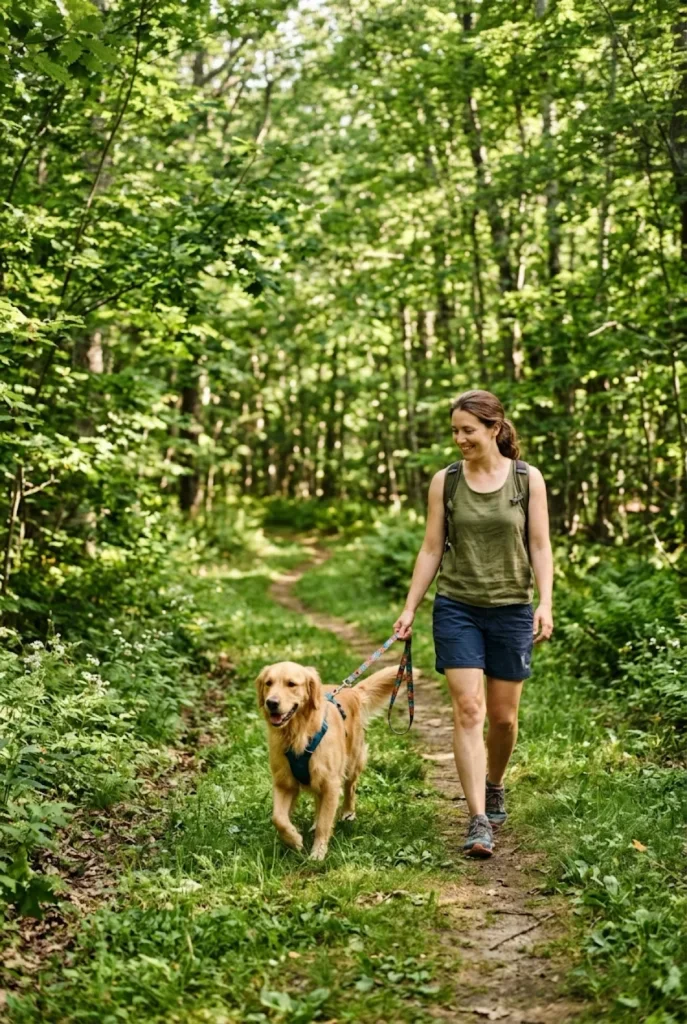
Hot weather can make outdoor surfaces uncomfortable or even dangerous for your dog’s feet. Pavement, asphalt, and sand may become extremely hot under direct sunlight. Cleaning your dog’s paws after a walk is helpful, but prevention is equally important. Choose cooler walking times, such as early morning or evening, and prefer grassy paths when possible.
After outdoor activities, inspect the paw pads for redness, tenderness, peeling, or blisters. Do not assume that rinsing with water will fix a heat-related injury. If you suspect burns, stop walking and contact your veterinarian promptly. A suitable walking schedule and careful surface selection can help protect your dog’s paws throughout summer.
18. Adjust Your Paw Cleaning Routine During Winter
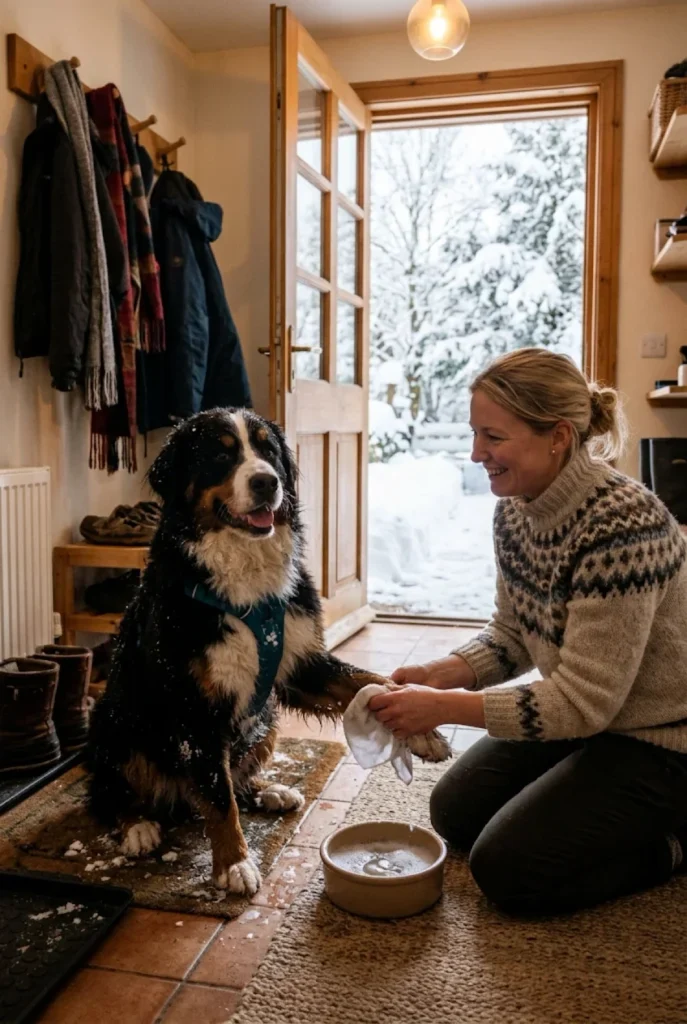
Cold weather brings different challenges for dog paws. Snow, ice, freezing surfaces, and road de-icing products can collect around the feet. Some of these substances may irritate the skin or cause problems if your dog licks them. After winter walks, carefully inspect the paw pads and rinse away visible salt, ice-melting products, and dirt.
Use lukewarm water to loosen ice and debris instead of pulling frozen material from the fur. Dry the paws completely afterward, paying particular attention to the spaces between the toes. In very cold conditions, consider appropriate dog boots if your veterinarian recommends them. These precautions can help make winter walks more comfortable.
19. Use a Dog Paw Cleaner Cup for Messy Walks
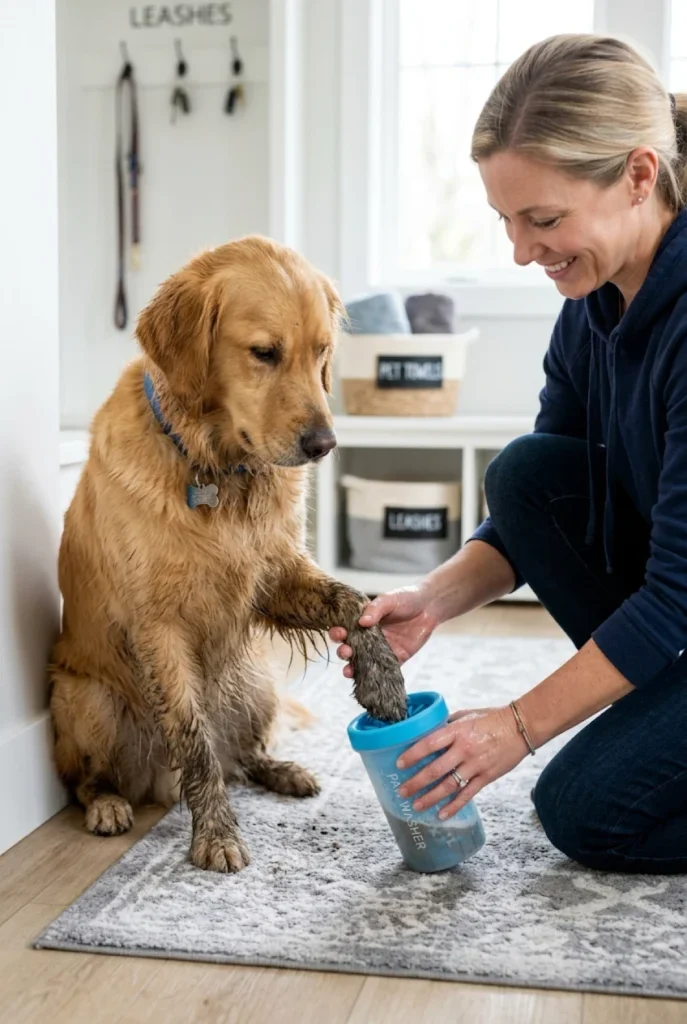
A paw cleaner cup can be a convenient tool for dogs that frequently return home with muddy feet. These devices usually contain soft internal bristles that help loosen dirt when you gently add water and place the paw inside. They can be especially useful after walks through wet grass, gardens, and muddy trails.
Choose a cup that fits your dog’s paw comfortably and follow the manufacturer’s instructions. Never force the paw into a device that feels too tight or uncomfortable. Rinse the cleaner after each use and allow it to dry properly. A paw cleaner cup is optional, not essential, but it can make cleaning easier for some dogs and owners.
20. Keep Your Paw Cleaning Towels Separate
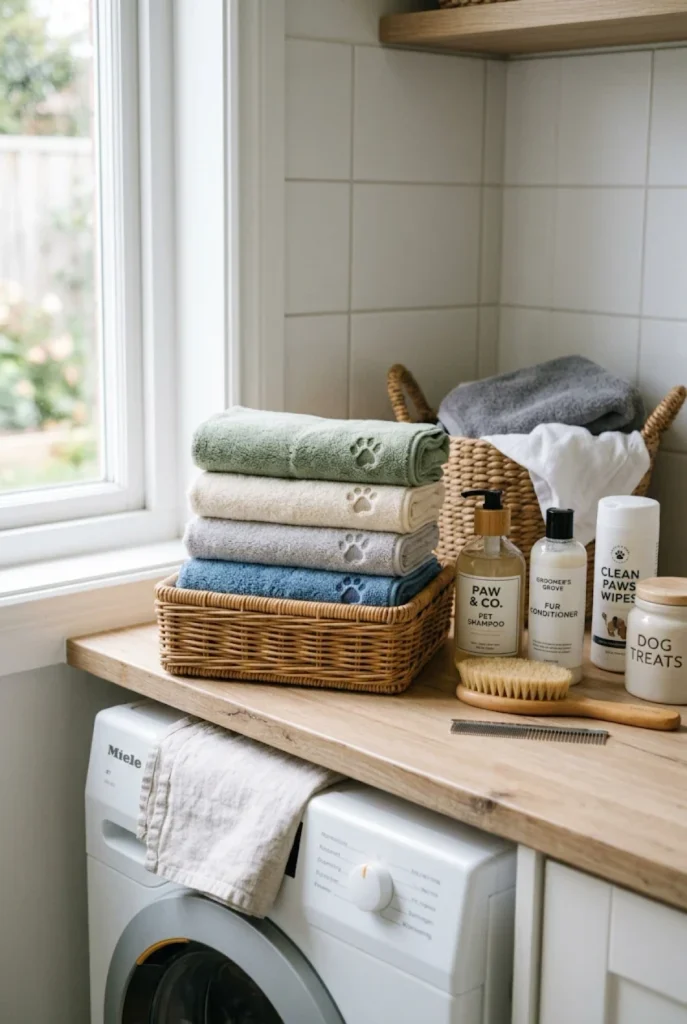
Using separate towels for your dog’s paws is a simple hygiene habit that can make your cleaning routine more organized. Outdoor dirt, mud, and debris should not be transferred to the towels you use for your own face or body. Choose soft, washable towels that are suitable for repeated use.
Keep one towel for removing loose dirt and another clean towel for drying after washing. Wash them regularly with a suitable detergent and allow them to dry completely before storing. Avoid leaving damp towels in closed baskets because unpleasant odors and unwanted microbial growth can develop. Clean supplies make everyday paw care more hygienic.
21. Clean Your Dog’s Paws Before Entering the Main Living Area
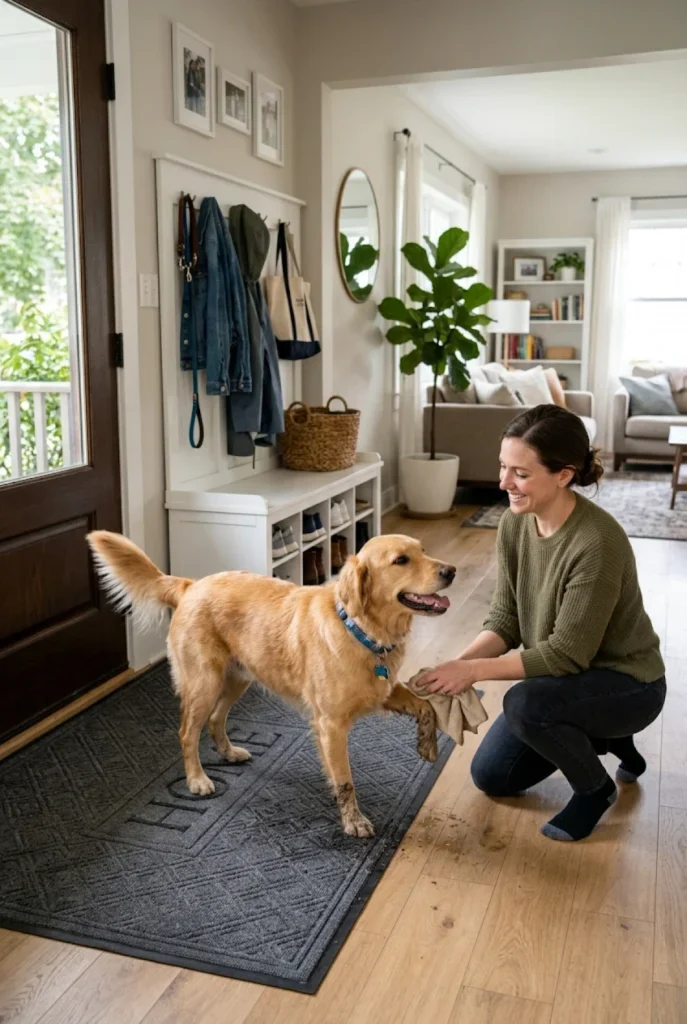
Creating a small cleaning station near your entrance can help prevent outdoor dirt from spreading throughout your home. After every walk, guide your dog to this area before allowing them to explore the living room, bedroom, or kitchen. Gently clean and dry each paw before letting your dog move around freely.
This habit is especially useful for dogs that enjoy muddy parks or outdoor adventures. You can place a washable mat near the door to catch loose dirt and water. With consistency, your dog may learn to wait at the entrance until its paws are cleaned. This makes your home easier to maintain while supporting better pet hygiene.
22. Wash Your Hands After Cleaning Your Dog’s Paws
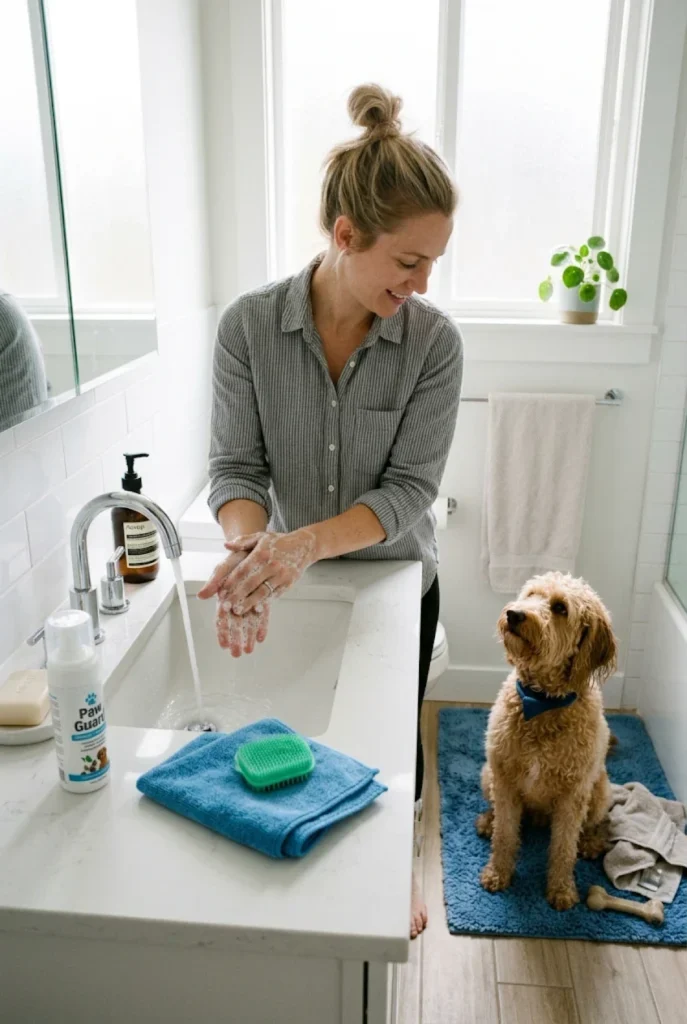
Although cleaning your dog’s feet helps remove outdoor dirt, it is also important to maintain your own hygiene. Your hands may come into contact with soil, bacteria, outdoor debris, and other unwanted material during the process. Washing your hands with soap and clean water after every paw-cleaning session is a simple precaution.
If your dog has been walking through areas with animal waste or other potentially contaminated material, be especially careful. Clean any reusable equipment after use and avoid touching your face during the process. Proper handwashing helps protect your household and makes your dog’s hygiene routine more complete.
23. Watch for Excessive Paw Licking After Walks
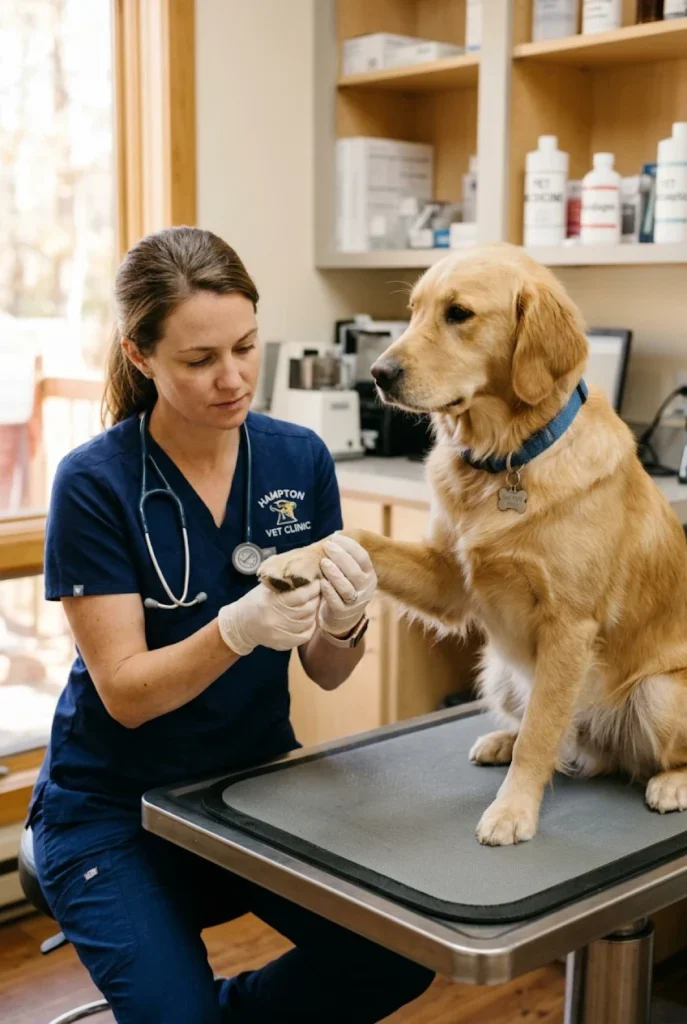
Occasional paw licking is normal for many dogs, but repeated or excessive licking may indicate discomfort. Dirt, grass seeds, allergies, insect bites, cuts, or skin irritation can cause dogs to focus on their feet. During your cleaning routine, observe whether your dog repeatedly licks or chews a particular paw.
If the behavior continues after cleaning, inspect the area for redness, swelling, discharge, broken skin, or an unusual smell. Do not assume that excessive licking is simply a grooming habit. Persistent licking can worsen irritation and may indicate an underlying problem that needs veterinary attention. Early investigation helps prevent minor discomfort from becoming more serious.
24. Establish a Consistent Cleaning Routine for Puppies
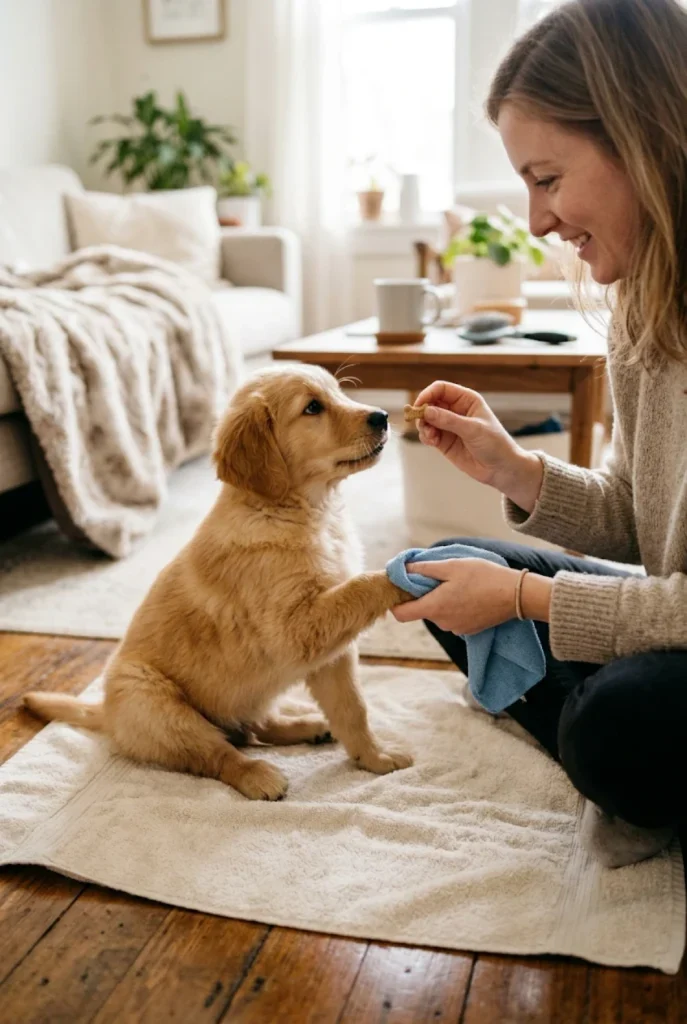
Puppies benefit from learning gentle paw handling at an early age. Introducing a simple Dog Paw Cleaning Routine during puppyhood can help prevent fear of grooming and make future cleaning sessions easier. Begin by touching your puppy’s paws gently for a few seconds and offering a small reward.
Once your puppy becomes comfortable, introduce a soft towel and gradually practice wiping each paw. Keep early sessions short and enjoyable. Avoid forcing your puppy to stand still for too long or using unnecessary cleaning products. A patient approach helps build trust and teaches your puppy that paw care is a normal part of returning home after a walk.
25. Make Paw Cleaning Easier for Senior Dogs
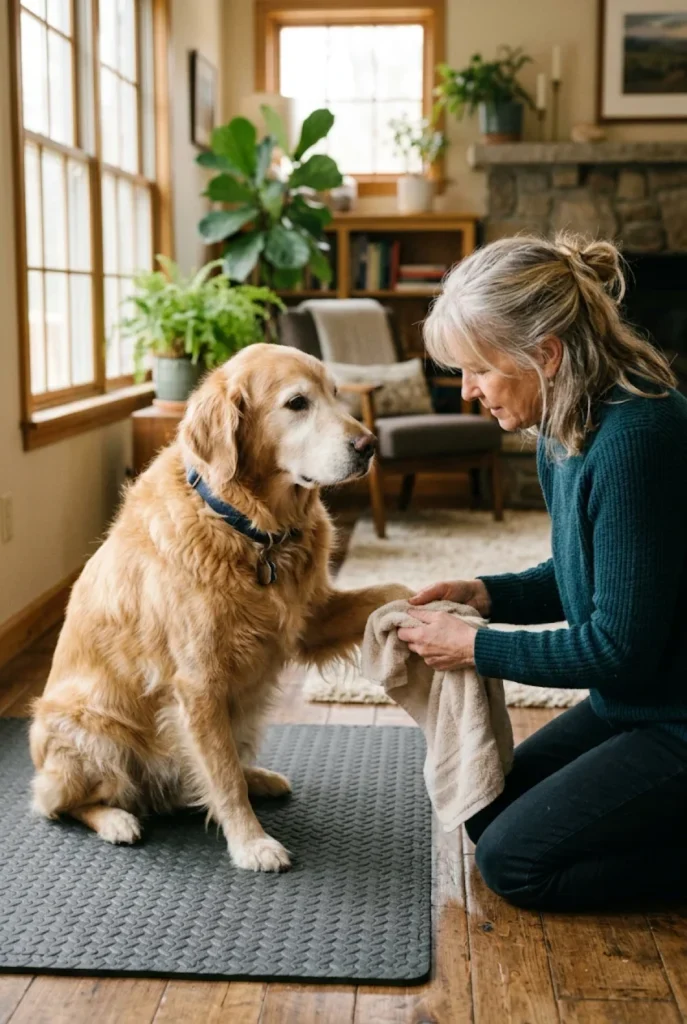
Senior dogs may have joint stiffness, reduced balance, or difficulty standing for long periods. These changes can make ordinary grooming activities more challenging. When cleaning an older dog’s paws, choose a comfortable position that does not require unnecessary bending or lifting. A non-slip mat and supportive surface can help your dog feel more secure.
Clean one paw at a time and take breaks whenever necessary. Avoid pulling the legs or forcing uncomfortable positions. If your senior dog suddenly becomes sensitive about paw handling, consult your veterinarian because pain or joint problems may be responsible. Gentle adjustments can make paw cleaning safer and more comfortable for older pets.
26. Clean Your Dog’s Paws After Beach or Park Visits
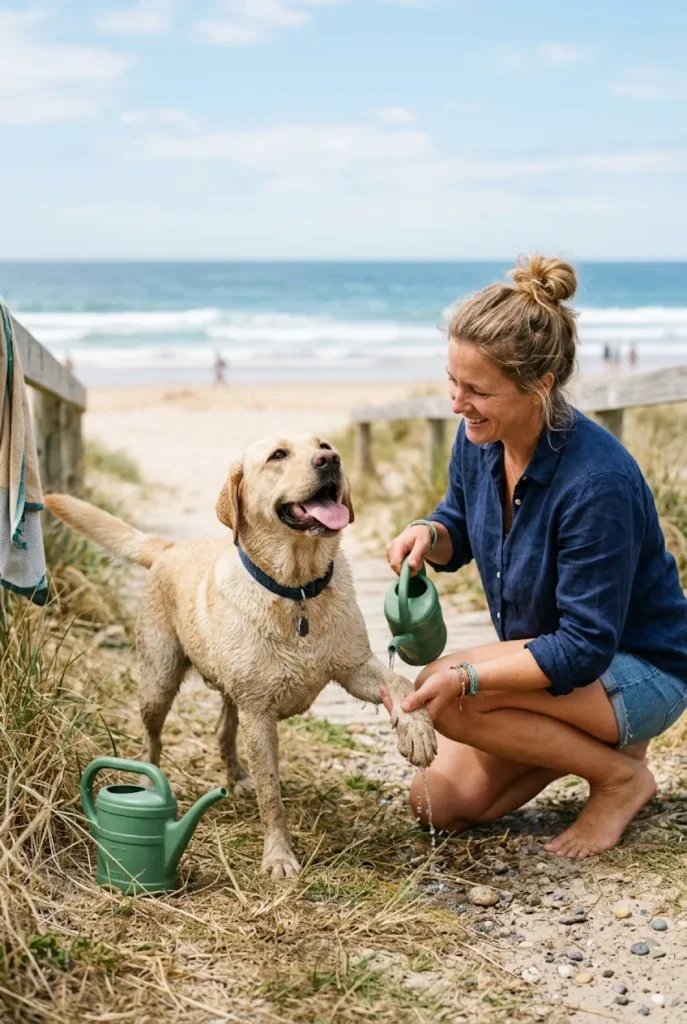
Different outdoor environments expose your dog’s feet to different types of dirt. Beach visits may leave sand and salt around the paw pads, while parks can introduce grass, soil, leaves, and tiny branches. After these outings, carefully inspect each foot and rinse away any visible debris.
Sand can collect between the toes and cause rubbing, while salt and other outdoor substances may irritate sensitive skin. Use clean water and a soft towel to remove these materials. Do not forget to check the lower legs if your dog has been playing in wet sand or muddy grass. A little extra attention after longer adventures can help maintain paw comfort.
27. Avoid Using Harsh Household Cleaning Products
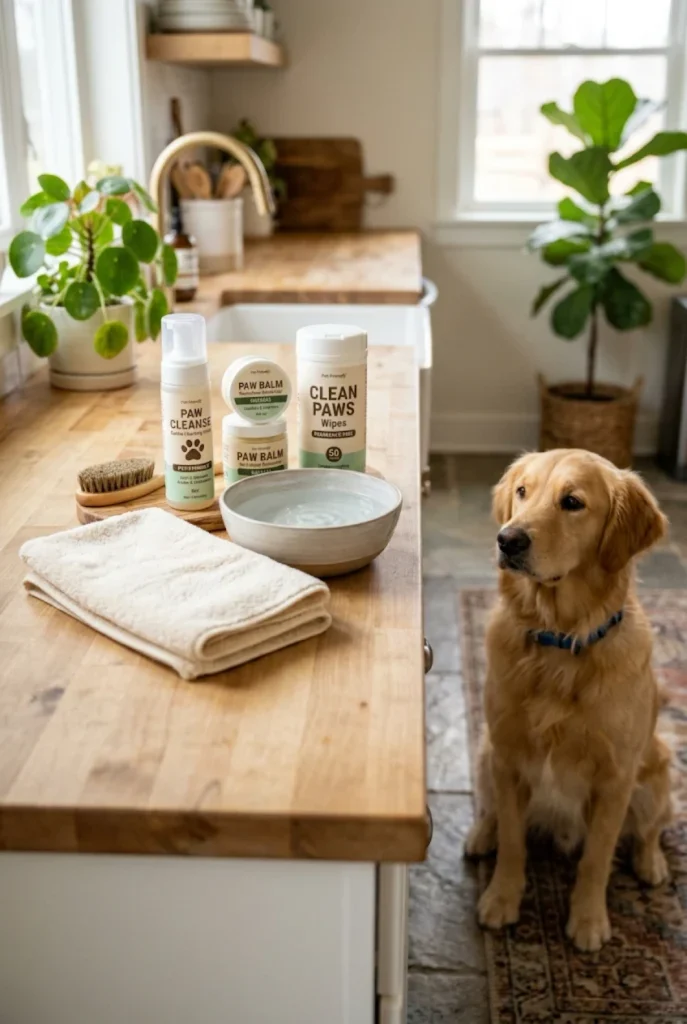
It may seem convenient to use ordinary household cleaning products on dirty dog paws, but many are not designed for animal skin. Strong detergents, disinfectants, bleach, alcohol-based products, and heavily fragranced cleaners can cause irritation or other problems. Some substances may also be harmful if your dog licks its paws afterward.
For everyday cleaning, clean water and a soft towel are generally sufficient. When a specific grooming product is necessary, select one made for dogs and follow its label instructions. If your dog comes into contact with a potentially toxic household chemical, prevent licking and contact a veterinarian or animal poison service for immediate advice.
28. Keep Your Dog’s Paw Cleaning Equipment Clean
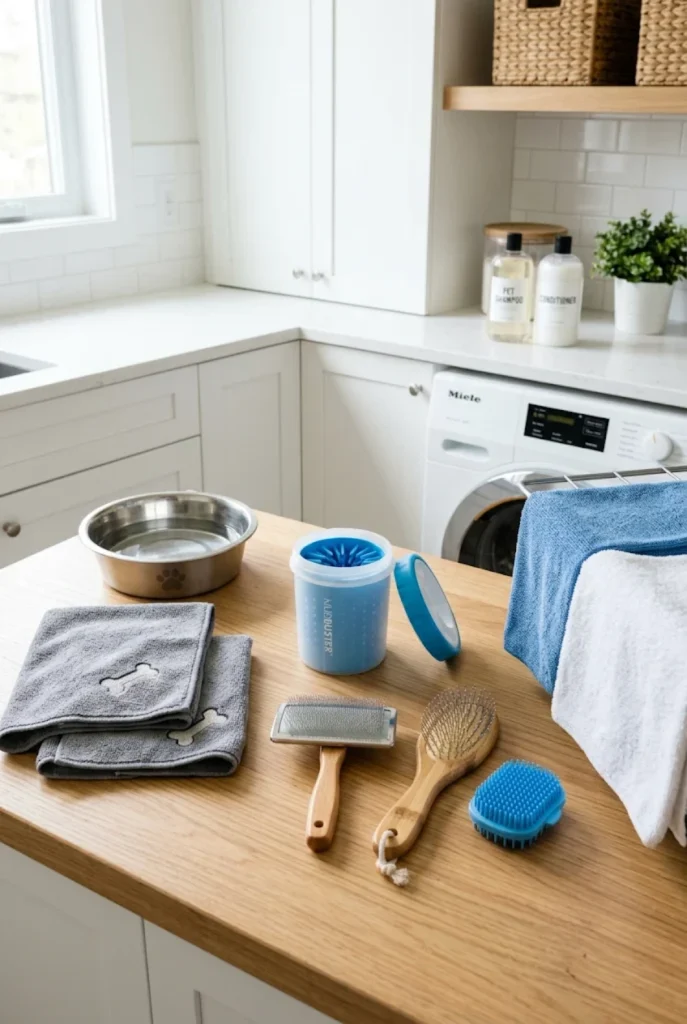
Your paw-cleaning equipment also needs regular attention. Towels, bowls, paw cleaner cups, and reusable grooming tools can collect dirt and moisture during repeated use. If these items are not cleaned properly, they may become unpleasant to use and compromise your hygiene routine.
Wash reusable towels regularly and rinse cleaning containers after every session. Remove visible dirt from brushes and allow all equipment to dry completely before putting it away. Check your supplies occasionally for damaged surfaces, rough edges, or unpleasant odors. Keeping everything clean ensures that the tools you use to care for your dog remain suitable for everyday use.
29. Create a Simple Daily Paw Cleaning Checklist
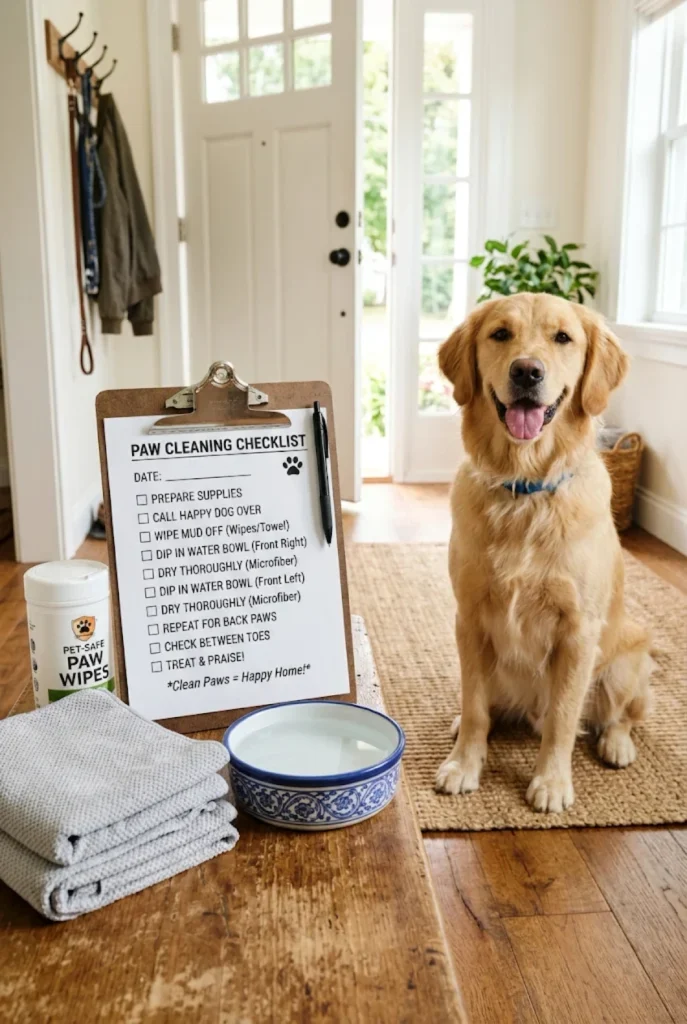
A checklist can help you remember every important step, especially when you are busy or have multiple dogs. Your daily routine does not need to be lengthy. Start by inspecting each paw, removing loose dirt, rinsing muddy areas when necessary, cleaning between the toes, and drying everything thoroughly.
You can place a small checklist near your dog’s cleaning station as a reminder. Over time, the steps will become familiar and require very little thought. A consistent routine is more useful than an overly complicated process that is difficult to maintain. Focus on gentle handling, regular inspections, and responding quickly to any unusual signs.
30. Make Paw Cleaning Part of Every Walk
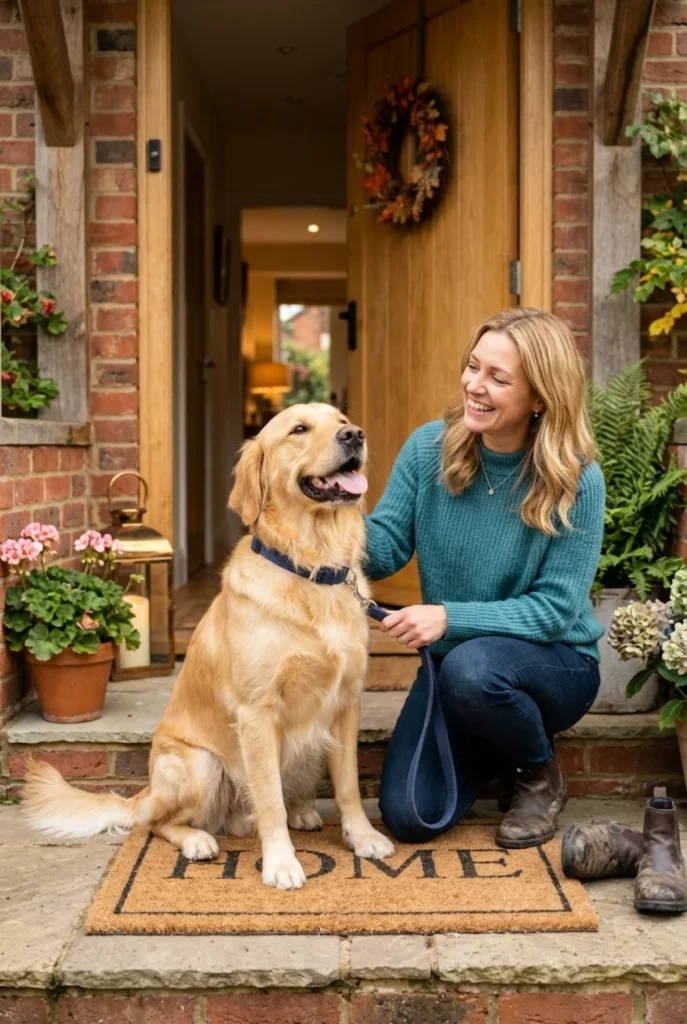
The easiest way to maintain healthy paw hygiene is to connect cleaning with your dog’s daily walking schedule. Instead of treating paw care as a separate chore, make it the final step of every outdoor adventure. When you return home, guide your dog to the cleaning station, inspect the paws, remove dirt, rinse when necessary, and dry thoroughly.
Consistency helps your dog understand what to expect. Some dogs may learn the routine within a short time, while others need more patience and rewards. Keep the process comfortable and adjust it according to the weather, walking surface, and your dog’s individual needs. A few minutes of attention after every walk can help keep your dog’s paws clean and comfortable.
Final Thoughts
A simple Dog Paw Cleaning Routine can make a meaningful difference in your dog’s everyday hygiene and comfort. Your dog’s paws experience different surfaces, weather conditions, and outdoor materials during every walk. Taking a few minutes to inspect, clean, and dry them helps remove unwanted dirt while giving you an opportunity to notice small problems early.
Remember that every dog has different needs. Some dogs may only need a quick towel wipe after a short neighborhood walk, while others may require a more thorough rinse after exploring muddy trails or wet parks. Keep your cleaning supplies ready, use gentle techniques, and reward your dog for cooperating. With patience and consistency, paw cleaning can become a simple and enjoyable part of your dog’s daily routine.