

12 Gentle Ways to Help Your Dog Accept Nail Trimming
Nail trimming is an important part of keeping your dog healthy, comfortable, and active. However, many dogs become nervous when they see nail clippers or feel someone touching their paws. Some pull their feet away, hide, whine, or struggle during grooming. If your dog dislikes nail trimming, you are not alone. Many pet owners experience the same challenge, especially when caring for a puppy or an adult dog that has never become comfortable with paw handling.
The good news is that you can teach your dog to accept nail trimming through patience, gentle practice, and positive experiences. You do not need to rush or force your pet to cooperate. Small steps can make a meaningful difference over time. In this guide, you will discover 12 gentle ways to help your dog accept nail trimming, reduce grooming anxiety, and build a more comfortable nail care routine at home.
1. Start by Making Paw Touching a Positive Experience

One of the easiest ways to help your dog accept nail trimming is to begin with gentle paw handling before introducing any grooming tools. Many dogs become uncomfortable when someone suddenly grabs their feet. Start by sitting beside your dog when they are relaxed. Gently touch their shoulder or leg, then move your hand toward the paw. If your dog remains comfortable, offer praise and a small treat. Keep the first practice sessions very short, and avoid squeezing the paw or separating the toes too quickly.
After your dog becomes comfortable with simple touches, gradually practice holding one paw for a second or two. Release it before your dog becomes uncomfortable and reward calm behavior. Repeat this exercise regularly, increasing the holding time only when your pet is relaxed. If your dog pulls away, do not punish or force them to stay. Simply make the next practice session easier. Teaching your dog that paw handling leads to rewards can create a strong foundation for future nail trimming.
2. Introduce Nail Clippers Without Using Them
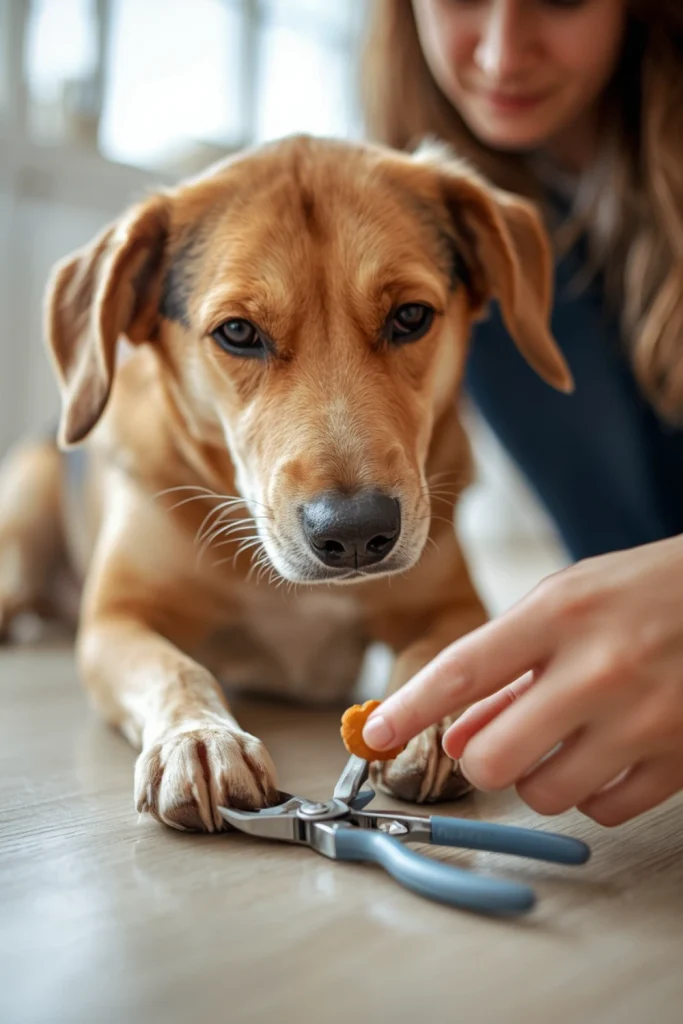
The sight of nail clippers can make some dogs nervous, especially if they have experienced uncomfortable grooming in the past. Instead of immediately trying to trim a nail, allow your dog to become familiar with the tool. Place the clippers on the floor near your pet while they are resting or enjoying a treat. Let your dog look at and sniff the clippers without pressure. Do not move the tool suddenly toward their paws or try to begin trimming during this introduction.
Once your dog is comfortable seeing the clippers, pick them up and hold them in your hand while offering a reward. You can gradually move the closed clippers closer to your dog’s paw without actually touching the nail. Reward calm behavior at every step. Some dogs may accept the tool quickly, while others need several days of practice. There is no need to rush. The goal is to help your dog understand that seeing nail clippers is a normal and harmless part of spending time with you.
3. Choose a Quiet and Comfortable Grooming Area
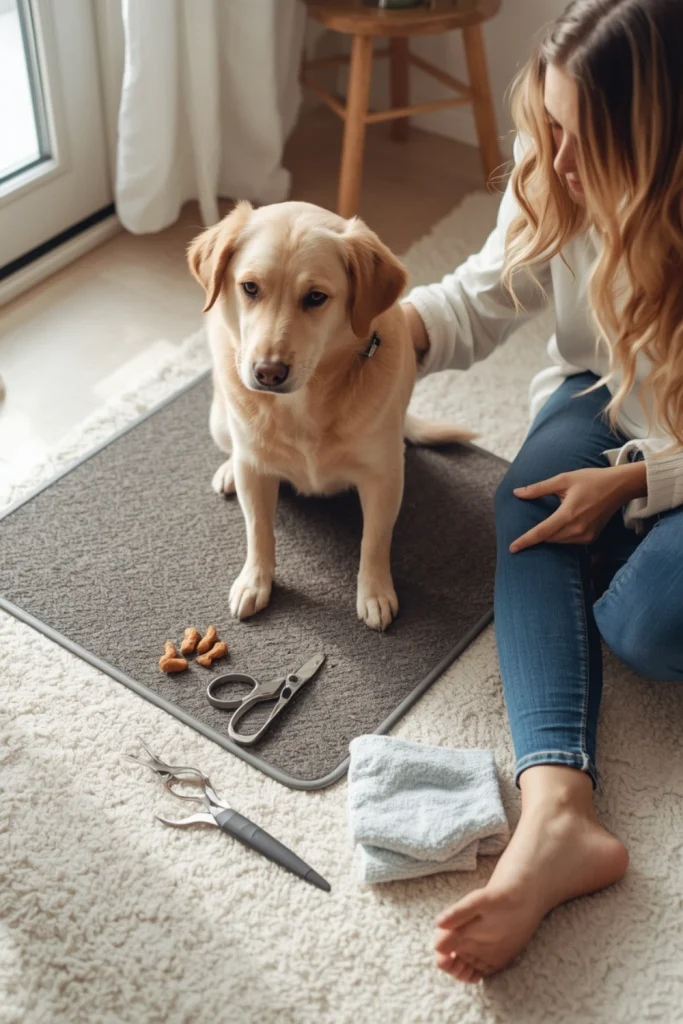
A busy or noisy environment can make nail trimming more stressful for a sensitive dog. Choose a quiet room where your pet feels safe and comfortable. Avoid areas with loud televisions, children running around, or other pets creating distractions. A familiar place can help your dog relax because they already recognize the surroundings. Good lighting is also important because it allows you to see the nails clearly and notice your dog’s reactions while you work.
Prepare everything before inviting your dog into the grooming area. Keep the clippers or grinder, treats, a towel, and pet-safe styptic powder nearby. Place a non-slip mat on the floor so your dog can stand or lie comfortably without sliding. Some dogs prefer sitting beside their owner, while others feel more secure lying on a soft surface. Choose a position that does not put pressure on your dog’s legs or force the paws into an uncomfortable angle. A calm environment can make every future grooming session easier.
4. Use Small Treats and Positive Reinforcement

Positive reinforcement is one of the most useful ways to help your dog accept nail trimming. Instead of rewarding your dog only after the entire grooming session, offer small treats throughout the learning process. Give a treat when your dog allows you to touch a paw, remains calm while seeing the clippers, or accepts having one toe gently handled. These rewards help your dog connect grooming activities with pleasant experiences. Choose treats that your pet enjoys but can eat comfortably during a short training session.
Keep your praise gentle and your movements relaxed. If your dog becomes nervous, stop and return to an easier step instead of continuing to offer treats while forcing the paw to remain still. Rewards should encourage voluntary cooperation, not distract your dog while you ignore signs of distress. You can also use a favorite toy or a small portion of your dog’s usual food. Consistent positive reinforcement can gradually improve your dog’s confidence and make nail care feel less intimidating.
5. Teach Your Dog to Stay Relaxed in a Comfortable Position
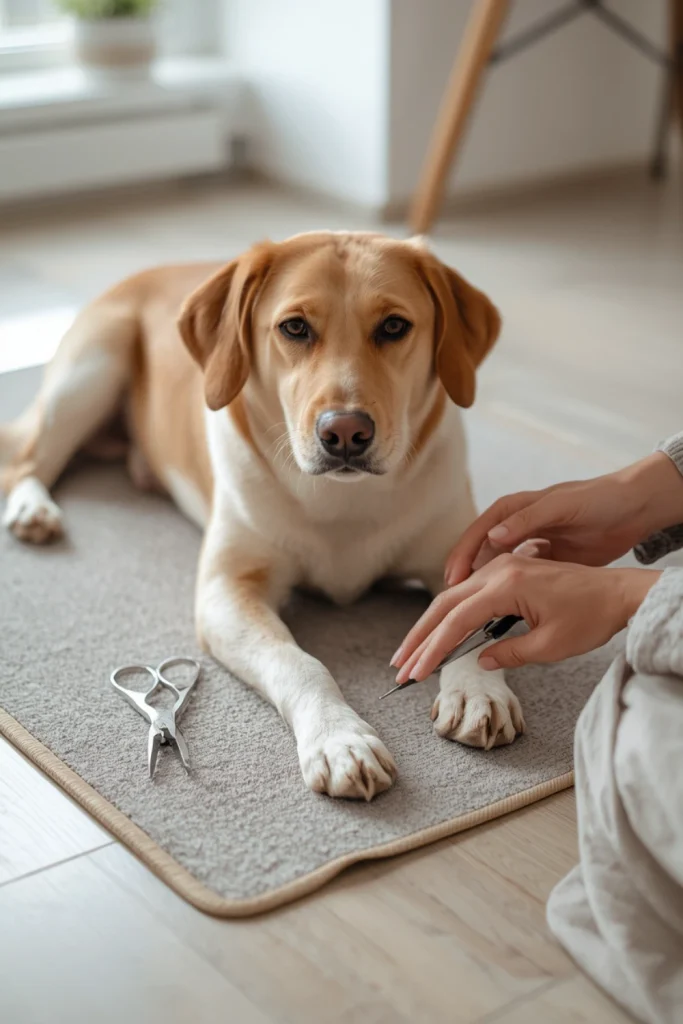
Some dogs become nervous because they are unsure where to stand or how to position their bodies during nail trimming. Teaching a simple relaxed position can make grooming more predictable. Begin by rewarding your dog for sitting or lying comfortably on a non-slip mat. Use a familiar verbal cue if your dog already understands one. Avoid pulling your dog into position or holding them down. Allow your pet to choose a comfortable posture while you practice touching their paws.
Once your dog can remain relaxed for a short period, gently approach one paw and reward calm behavior. Gradually increase the time your dog spends in the grooming position. If your pet becomes restless, allow them to stand, stretch, or take a short break. You can practice this exercise without clippers at first. The purpose is to build a calm routine that your dog understands. A comfortable position also helps you handle the paw more safely and avoid unnecessary pressure on the joints.
6. Get Your Dog Used to the Sound of Nail Clippers
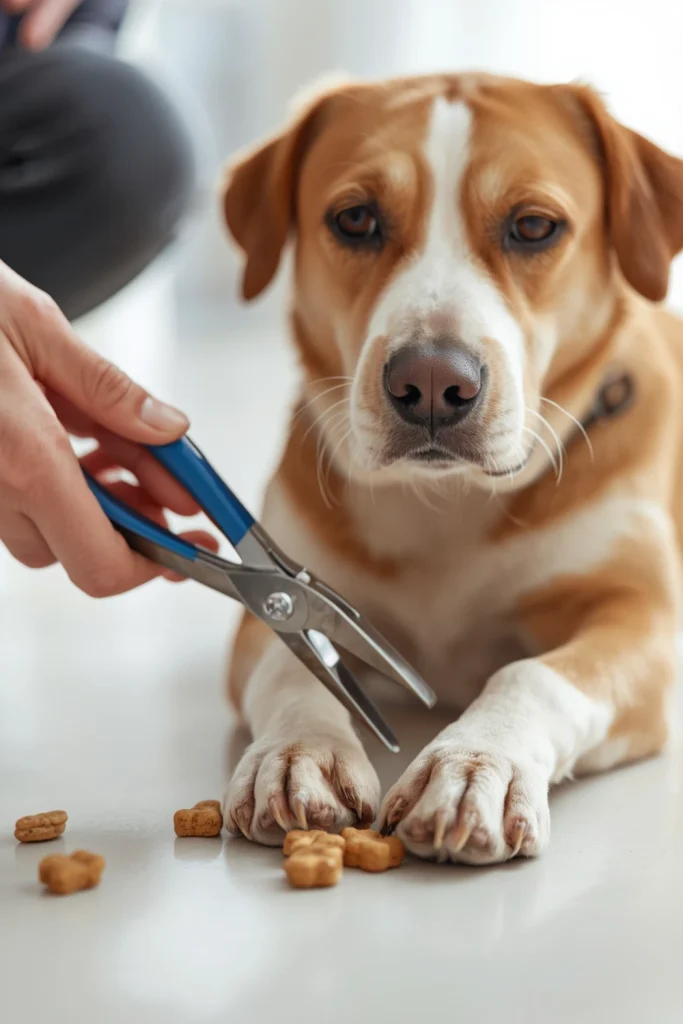
The clicking sound of nail clippers can surprise dogs that are unfamiliar with grooming. Some pets become frightened as soon as they hear the tool, even before it touches their paws. You can help your dog become more comfortable by introducing the sound gradually. Start by holding the clippers at a comfortable distance and making a gentle clicking sound away from your dog. Immediately reward calm behavior. Keep the sound brief, and do not repeat it continuously if your pet looks worried.
As your dog becomes more relaxed, gradually practice making the clicking sound closer to them. You can also use a piece of uncooked dry pasta or another safe demonstration material to show the sound of the clippers without involving your dog’s nails. Keep any practice material away from your dog’s mouth unless it is safe for your pet. Never snap the clippers close to your dog’s ears or face. The purpose is to make the sound familiar, predictable, and less frightening before you begin actual nail trimming.
7. Introduce One Nail at a Time
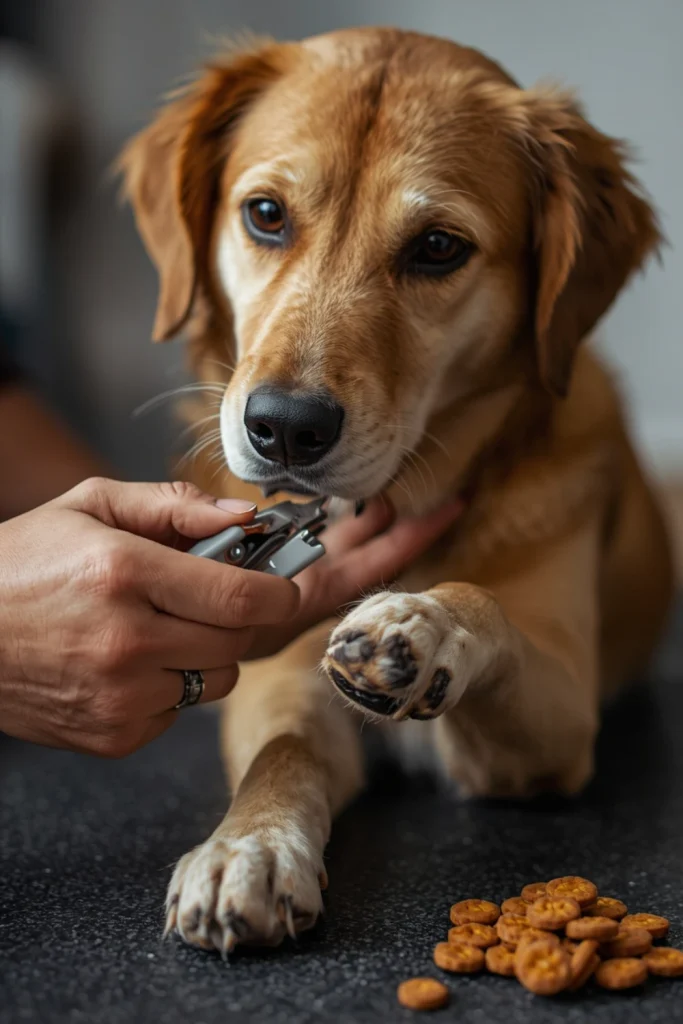
Trying to trim every nail during the first successful session can overwhelm your dog. A gentler approach is to begin with just one nail. Once your dog accepts paw handling and the presence of the clippers, choose a comfortable paw and carefully trim a tiny amount from one nail. Immediately stop, praise your dog, and offer a reward. If your pet remains relaxed, you may try another nail, but there is no requirement to continue.
Over several sessions, gradually increase the number of nails you trim as your dog becomes more comfortable. Some dogs may accept one or two nails at a time, while others may eventually tolerate a complete grooming session. Pay attention to your dog’s body language rather than following a strict schedule. If your dog starts pulling away, panting, or showing signs of anxiety, stop and give them a break. Finishing a few nails calmly is better than creating a frightening experience by rushing through all of them.
8. Consider a Dog Nail Grinder if Clippers Cause Anxiety
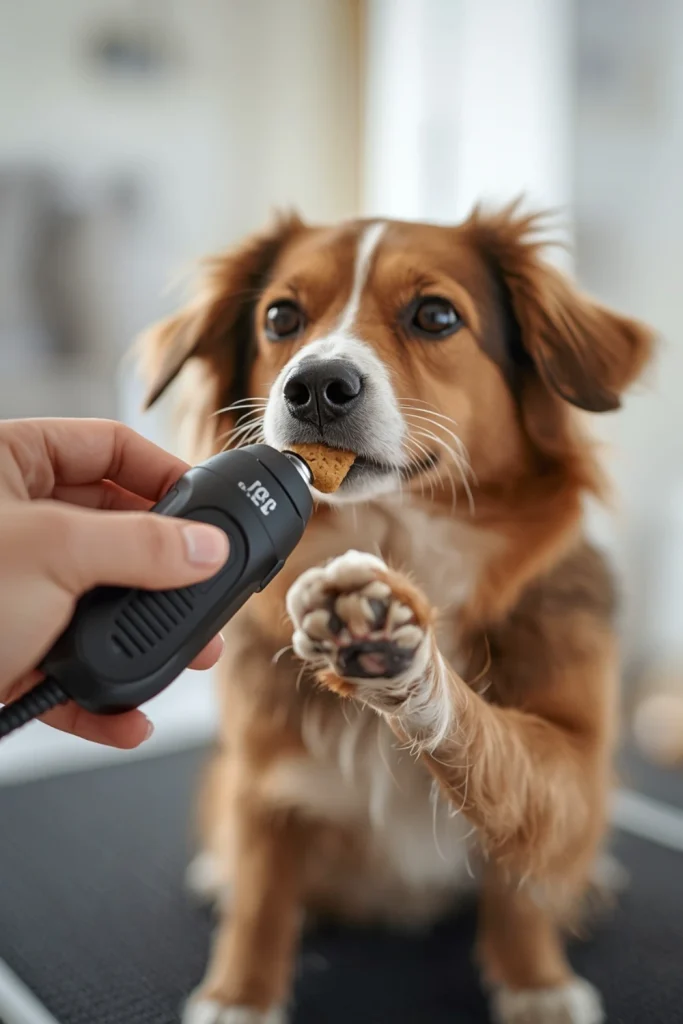
Some dogs dislike the pressure or cutting sensation of traditional nail clippers. A pet-specific nail grinder may be a suitable alternative for these dogs. A grinder gradually smooths the nail instead of cutting through it in one movement. However, it produces sound and vibration, which can also frighten sensitive pets. Before using one, allow your dog to see and sniff the switched-off tool. Gradually introduce the sound from a distance and reward relaxed behavior.
When your dog is comfortable with the grinder, follow the manufacturer’s instructions and begin with the lowest suitable speed. Touch the grinding surface to the nail for very brief periods, removing only small amounts at a time. Keep the tool moving to prevent friction and heat, and avoid contact with the skin or fur. Never assume a grinder is automatically safer than clippers. Both tools require careful handling and knowledge of the nail’s sensitive quick. If your dog dislikes the vibration, stop and consider another approach.
9. Practice Short Grooming Sessions Instead of Rushing

Long grooming sessions can make nervous dogs feel trapped or overwhelmed. Instead of trying to finish every nail in one sitting, divide the process into short practice sessions. You might spend one session touching the paws, another introducing the clippers, and a later session trimming a single nail. These small activities give your dog time to understand what is happening without becoming exhausted or frightened.
End each session while your dog is still reasonably comfortable. Offer a reward, release the paw, and allow your pet to return to a favorite activity. Avoid waiting until your dog becomes upset before stopping. Over time, you can gradually increase the length of each session as your dog gains confidence. Remember that progress may not happen every day. Some dogs need more time after a stressful experience, and that is normal. A patient routine is more effective than forcing quick results.
10. Learn to Recognize Your Dog’s Body Language

Understanding your dog’s body language can help you decide when to continue and when to stop nail trimming practice. A relaxed dog may have a loose body, normal breathing, soft eyes, and a comfortable posture. A nervous dog may repeatedly pull a paw away, lick their lips, yawn, turn their head, lower their body, or try to move away. More serious signs of distress can include trembling, growling, snapping, or attempting to hide.
Do not ignore these signals or assume your dog is simply being difficult. Stop the grooming activity if your pet appears uncomfortable, then give them space. Return to an easier training step during another session. If your dog suddenly begins resisting nail handling after previously accepting it, check for possible pain or injury. Body language is an important part of safe grooming because it helps you respect your dog’s limits. Learning these signals can prevent unnecessary stress and improve trust between you and your pet.
11. Make Nail Trimming Part of a Familiar Grooming Routine
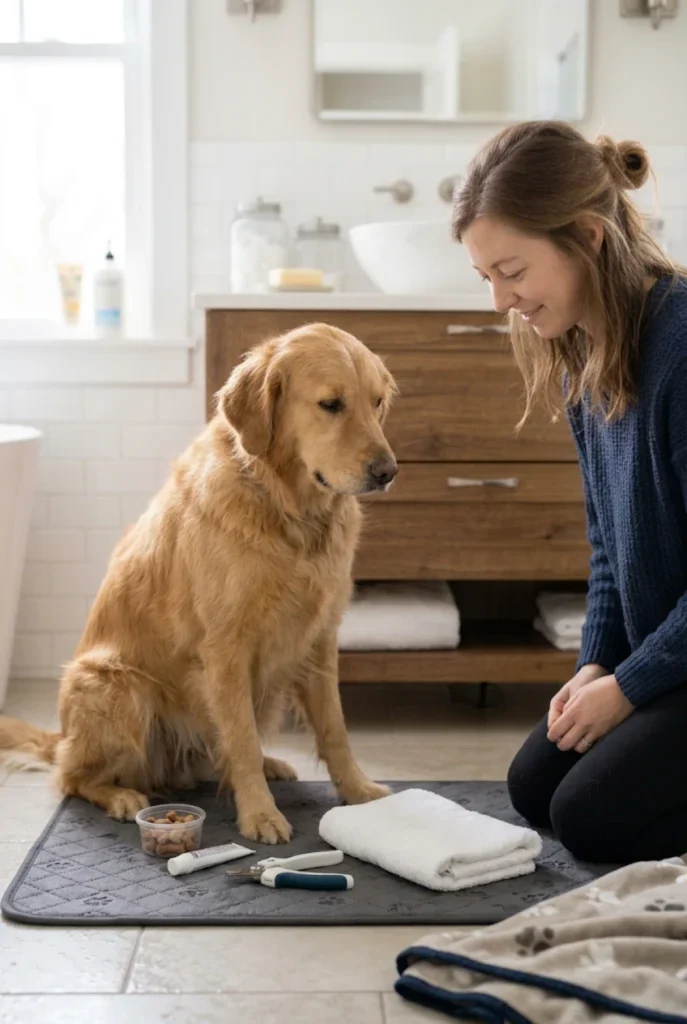
Dogs often feel more comfortable when they know what to expect. Creating a consistent nail care routine can make grooming feel like a normal part of everyday life. Choose a time when your dog is calm, such as after a gentle walk or a relaxed play session. Avoid beginning when your pet is extremely excited, hungry, tired, or already anxious. Use the same comfortable grooming area and familiar rewards whenever possible.
You do not need to trim nails every time you practice the routine. Some days can focus only on touching the paws, looking at the nails, or allowing your dog to see the clippers. Check the nails regularly and trim them according to their growth and your veterinarian’s advice. Consistency helps your dog become familiar with the process, while flexibility allows you to respond to their comfort level. A predictable routine can reduce surprises and make nail maintenance easier over time.
12. Ask a Professional Groomer or Veterinarian for Help
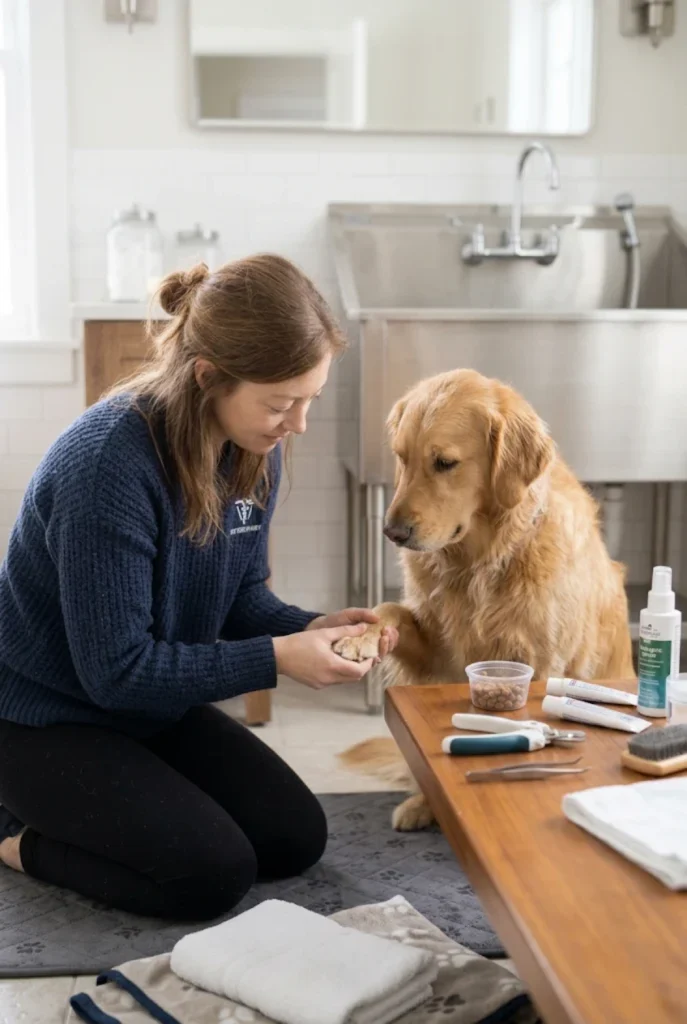
Sometimes a dog needs more support than an owner can provide at home. If your pet becomes extremely frightened, struggles aggressively, or cannot tolerate even gentle paw handling, a professional groomer or veterinarian can help. An experienced professional can demonstrate safe nail trimming techniques, explain how to position the paw, and show you how to identify the sensitive quick. This is especially useful for dogs with dark nails, thick nails, damaged nails, or a history of painful grooming experiences.
A veterinarian should also examine your dog if nail handling causes sudden discomfort or if you notice swelling, bleeding, cracked nails, limping, or signs of infection. Pain can make even a previously calm dog resist grooming. Do not punish your pet or attempt to force the process when they are distressed. Ask about a suitable handling plan and whether additional support is needed. Getting professional guidance is a responsible way to protect your dog’s comfort and make future nail care safer.
Final Thoughts
Helping your dog accept nail trimming is a gradual process that requires patience, consistency, and understanding. Begin with simple paw handling, introduce grooming tools slowly, and reward calm behavior. Choose a comfortable grooming area, work on one nail at a time, and pay attention to your dog’s body language. These small steps can help your pet feel safer and more confident during nail care.
Remember that every dog learns at a different pace. Some pets become comfortable quickly, while others need many short practice sessions. Never force your dog to continue when they are frightened or in pain. If home grooming becomes difficult, a professional groomer or veterinarian can provide valuable guidance. With a gentle approach, you can help your dog build a more positive relationship with nail trimming and maintain healthier paws.