15 Training Tips for Large Dogs and New Owners
Large dogs have big hearts, strong bodies, and wonderful personalities, but raising a well-mannered large dog requires patience, consistency, and the right training approach. Whether you have a German Shepherd, Golden Retriever, Labrador Retriever, Great Dane, Rottweiler, or another large breed, teaching good manners early can make everyday life safer and more enjoyable. Even the friendliest dog can accidentally knock someone over, pull hard on a leash, or become difficult to manage without proper guidance.
The best Training Tips for Large dogs focus on positive reinforcement, impulse control, reliable commands, and calm behaviour in different situations. Training is not about making your dog fearful or controlling every movement. It is about building communication, confidence, and trust while helping your dog understand how to behave around people, other animals, and unfamiliar environments. With regular practice and realistic expectations, new owners can raise large dogs that are easier to handle and more comfortable living alongside their families.
1. Start With Basic Obedience Commands
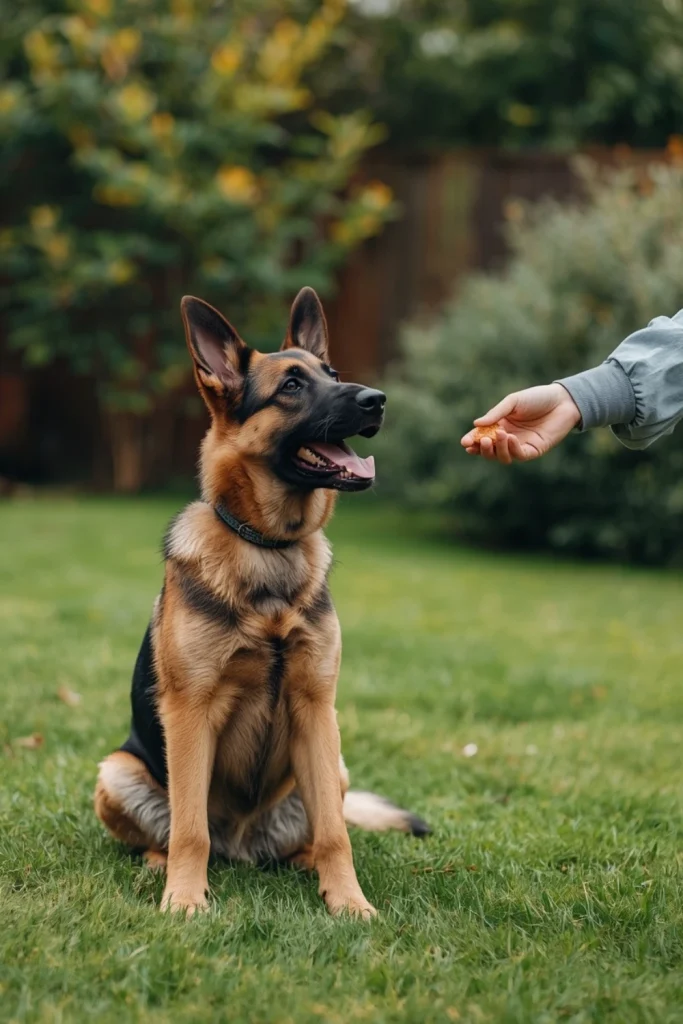
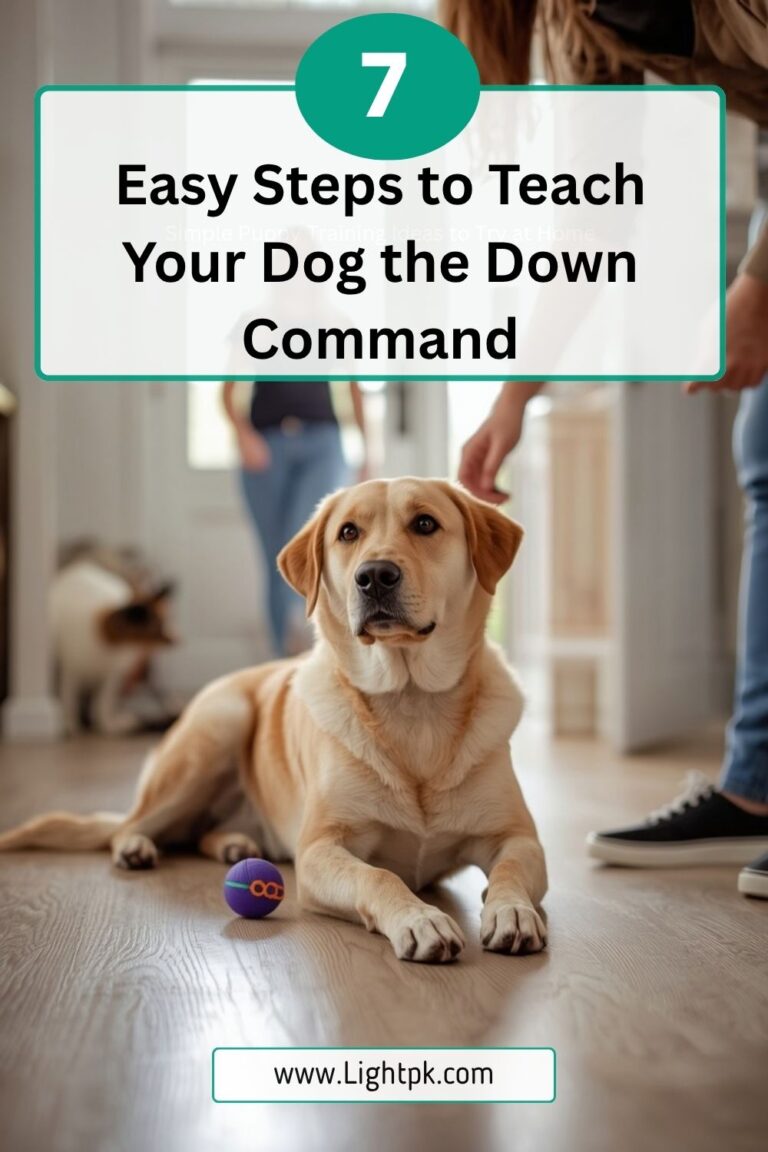
Basic obedience commands provide a foundation for everyday communication. Begin by teaching your large dog simple cues such as “sit,” “down,” “stay,” “come,” and “leave it.” These skills can help you guide your dog during meals, walks, greetings, and other daily activities. For example, asking your dog to sit before opening the front door encourages a calmer response and gives you a moment to check that the environment is safe.
Keep early training sessions short and practise in a quiet location with few distractions. Use a clear cue, give your dog time to respond, and reward the correct behaviour promptly. Avoid repeating commands several times when your dog does not understand what you want. Instead, make the exercise easier and help your dog succeed. Once your dog responds reliably at home, gradually practise in different rooms and quiet outdoor settings before adding more challenging distractions.
2. Use Positive Reinforcement Consistently
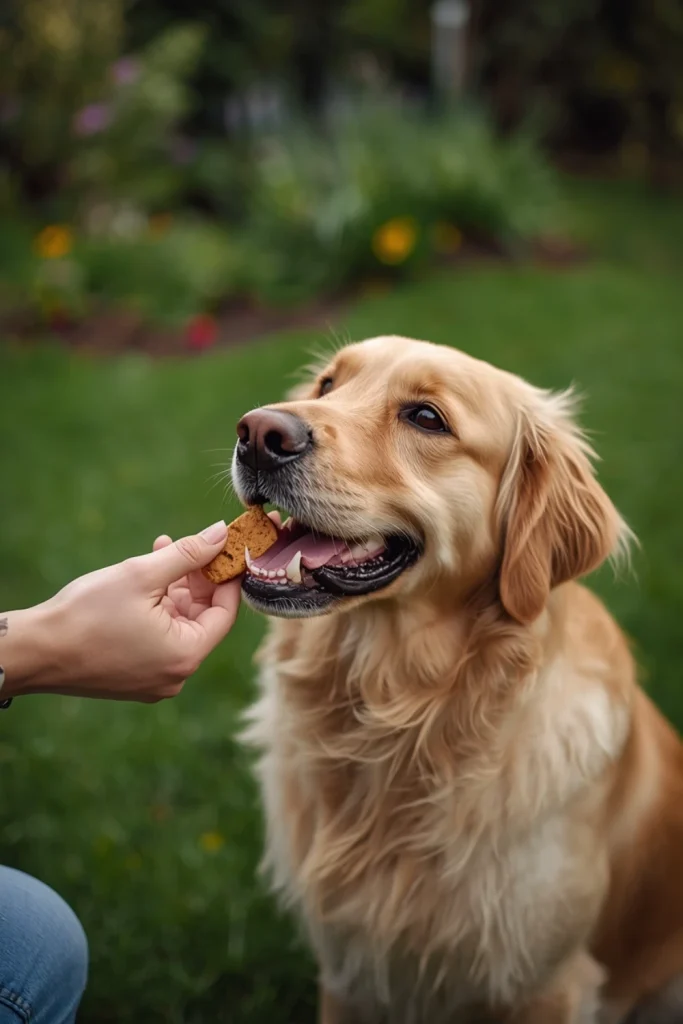
Positive reinforcement is one of the most useful training methods for large dogs. It involves rewarding behaviours you want your dog to repeat, using treats, praise, toys, or play. When a reward follows a behaviour promptly, your dog can more easily connect the action with the positive result. This approach encourages cooperation and helps build a trusting relationship between you and your dog. It is particularly helpful for powerful breeds because it teaches them to respond willingly rather than out of fear.
Choose rewards your dog genuinely enjoys and keep food treats small enough for frequent practice. You can also reward everyday good choices, such as walking calmly beside you, lying on a mat, or waiting patiently while you prepare a meal. Everyone in the household should follow similar rules so your dog receives consistent information. Avoid using physical punishment or intimidation, which can increase anxiety and make behaviour problems harder to understand and manage.
3. Teach Your Dog to Walk on a Loose Leash
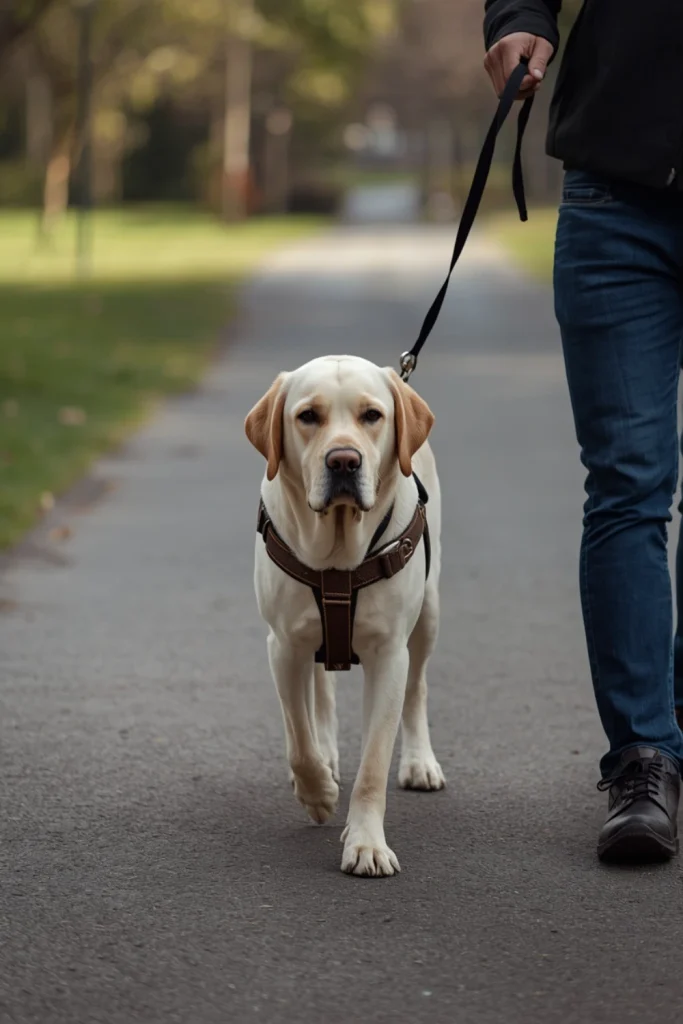
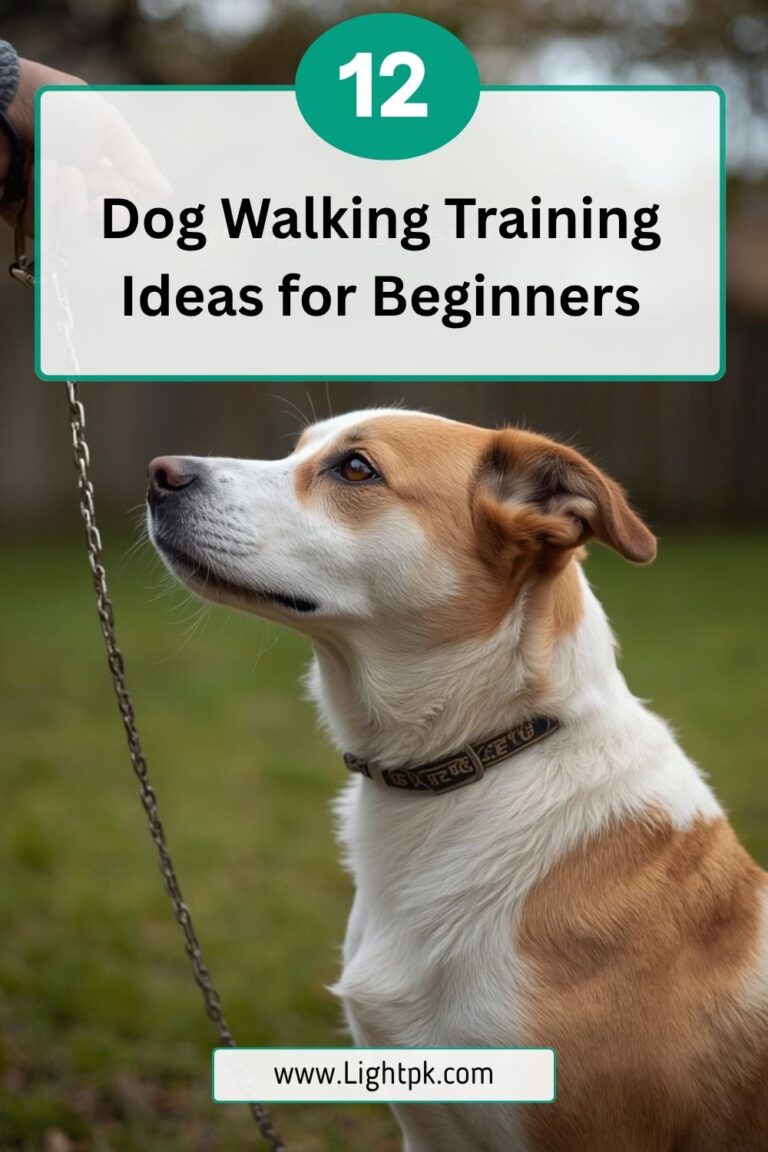
A large dog that pulls strongly on a leash can be difficult to control, even for an adult owner. Leash training should begin before pulling becomes a regular habit. Start in a quiet area with a well-fitted harness or suitable collar and a standard leash. Reward your dog for staying near you while the leash remains loose. Practise taking a few steps, rewarding calm walking, and changing direction when necessary. The goal is to teach your dog that walking beside you is rewarding.
If your dog starts pulling, stop in a safe place or calmly change direction when you have enough space. Resume walking when your dog returns closer to you and the leash relaxes. Avoid jerking the leash or dragging your dog forward. Begin with short sessions and gradually introduce more distractions as your dog improves. If your dog is already strong enough to pull you off balance, consider working with a qualified reward-based trainer to develop a safe handling plan.
4. Prevent Jumping on People
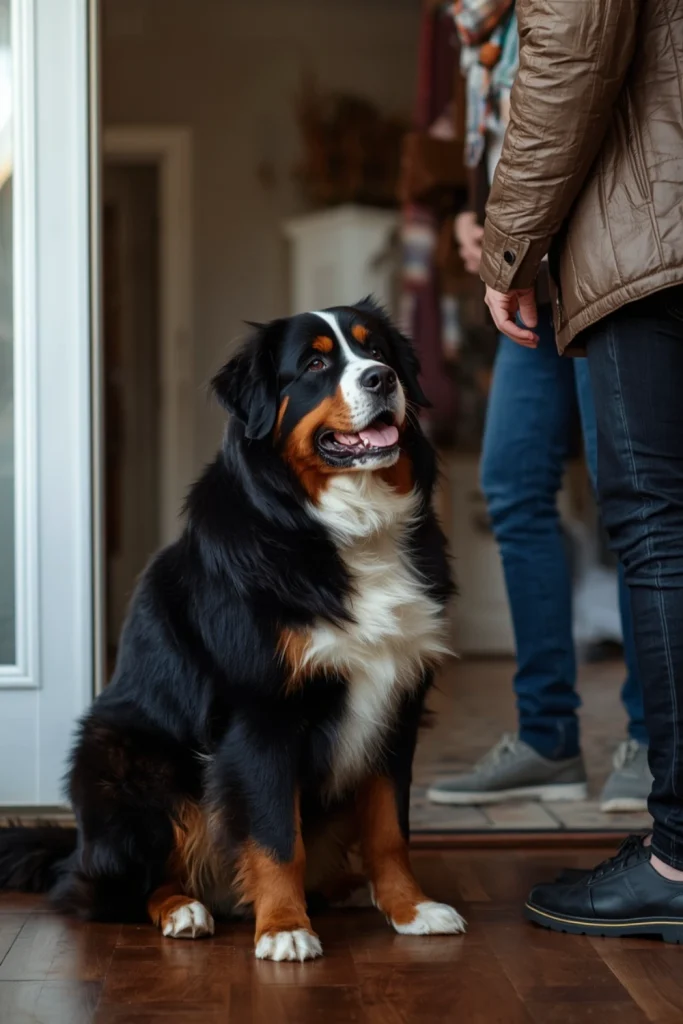
Jumping is a common behaviour in large dogs because they often want to greet people enthusiastically. Although a jump from a puppy may seem harmless, the same behaviour can become dangerous when the dog is fully grown. A large dog can knock over a child, frighten an older visitor, or accidentally injure someone who is unprepared. Teaching polite greetings early helps your dog learn that calm behaviour, rather than jumping, is the best way to receive attention.
Reward your dog for keeping all four paws on the floor or sitting when someone approaches. Ask family members and visitors to avoid petting the dog while it jumps. If your dog becomes too excited, create some distance and try again once it settles. Practise with familiar people before introducing more exciting situations. For extra safety, use a leash or baby gate during greetings while your dog is learning. Consistent responses from everyone help prevent jumping from becoming a reinforced habit.
5. Build a Reliable Recall Command
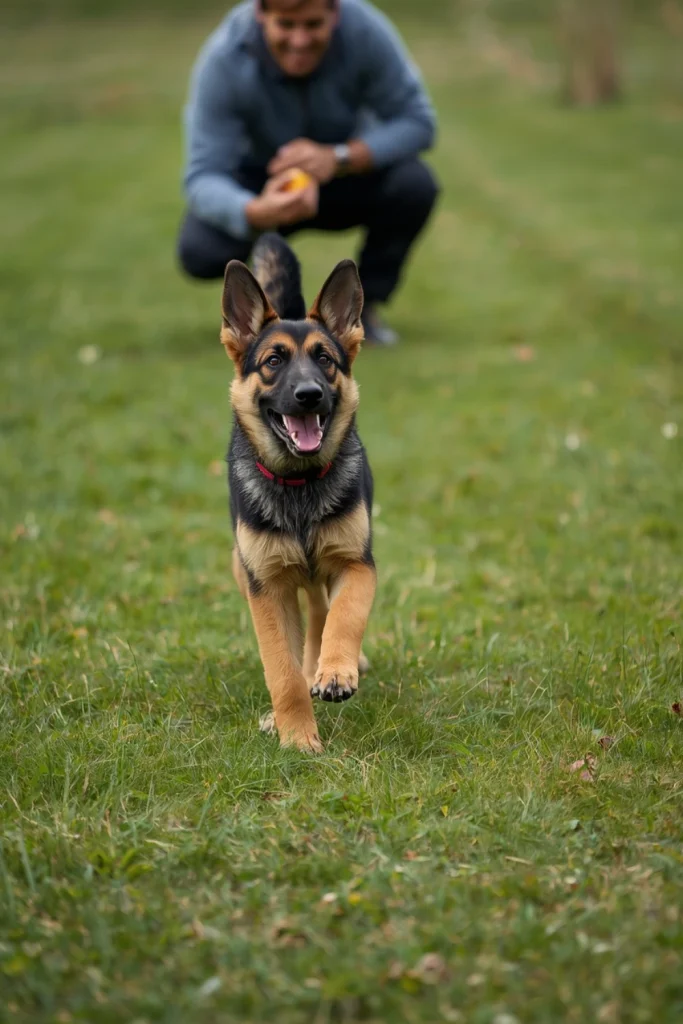
Recall means teaching your dog to return to you when called. It is an essential safety skill for large dogs, especially those that enjoy exploring, chasing scents, or running toward interesting distractions. Begin indoors or in a securely fenced area with minimal distractions. Say your chosen recall cue in a cheerful voice, move away slightly if helpful, and reward your dog generously when it comes to you. Make returning to you a positive experience rather than something the dog should fear.
Gradually practise at greater distances and around manageable distractions. Use a long training line in an appropriate open area if you need extra control, and never rely on an unreliable recall near roads or other hazards. Avoid calling your dog only to end enjoyable activities or deliver something unpleasant, because this can weaken the cue. Occasionally reward your dog for checking in with you during play and exploration. Reliable recall takes ongoing practice and should never be assumed simply because your dog responds well at home.
6. Teach Impulse Control and Patience
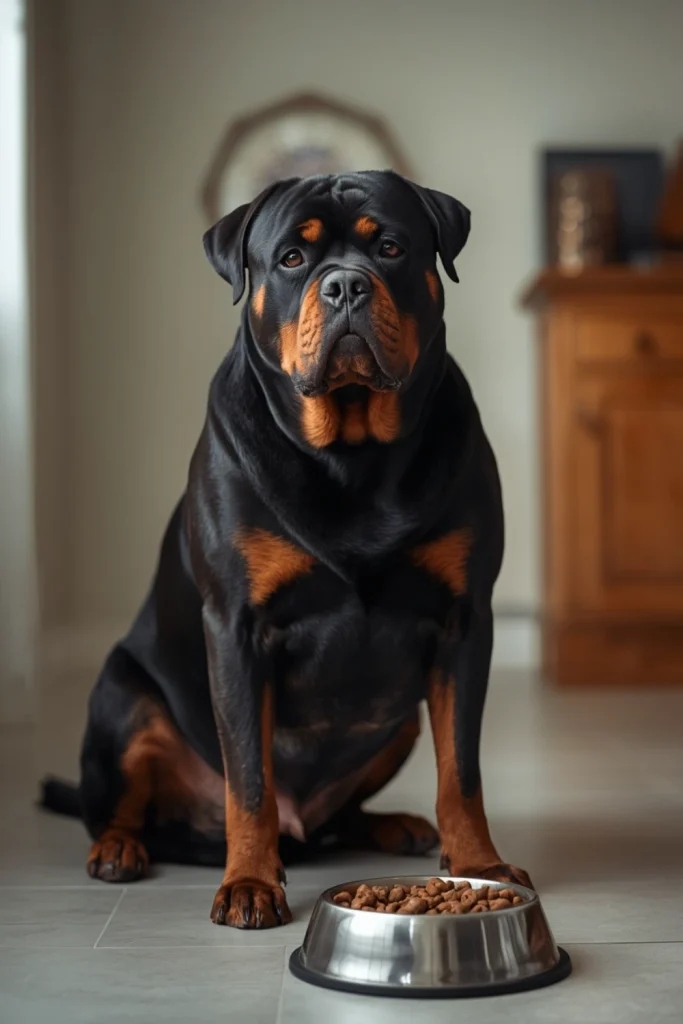
Large dogs benefit from learning how to pause and make calm choices before exciting activities. Impulse control helps your dog wait for meals, remain composed when the door opens, avoid rushing toward other dogs, and respond to cues even when something interesting is nearby. These skills do not require harsh discipline. Instead, they are built through small exercises that reward waiting, relaxing, and responding to guidance in manageable situations.
Start by asking your dog for a brief sit before placing its food bowl down. If it gets up, pause and try again with an easier expectation. You can also practise waiting before opening a door or taking a toy. Gradually increase the waiting time as your dog becomes successful, and release it with a consistent word such as “okay.” Keep these exercises fair and avoid making your dog wait so long that frustration builds. The goal is thoughtful behaviour, not prolonged restraint.
7. Socialize Your Large Dog Safely
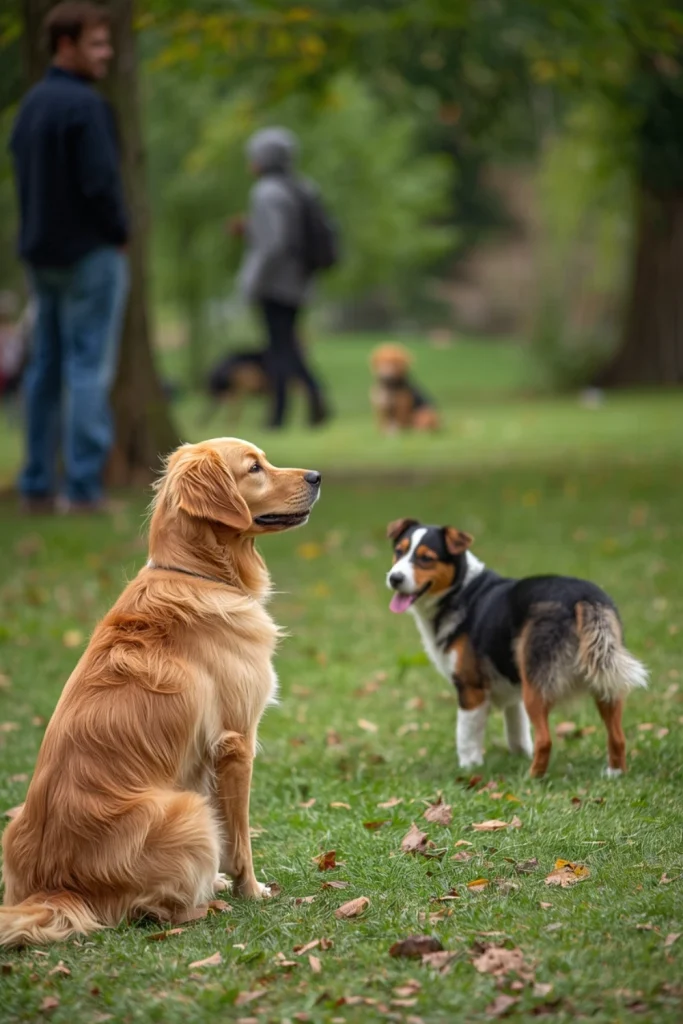
Socialization helps dogs become more comfortable around different people, animals, environments, sounds, and everyday situations. For a large dog, good socialization is particularly important because fearful or overexcited behaviour can be difficult to manage when the dog is physically powerful. Socialization does not mean allowing every stranger to approach or making your dog greet every animal. It means helping your dog learn to remain comfortable and respond appropriately to unfamiliar experiences.
Introduce new situations gradually and observe your dog’s body language. Begin by watching people or dogs from a comfortable distance, rewarding calm observation and allowing your dog to move away if needed. Choose suitable, healthy dogs for controlled interactions and supervise closely. Avoid crowded dog parks if your dog is overwhelmed or if you cannot safely manage the environment. For puppies, ask your veterinarian about safe socialization options based on vaccination status and local disease risks. Positive experiences at a manageable intensity are more valuable than forced interactions.
8. Teach Your Dog to Settle Calmly at Home
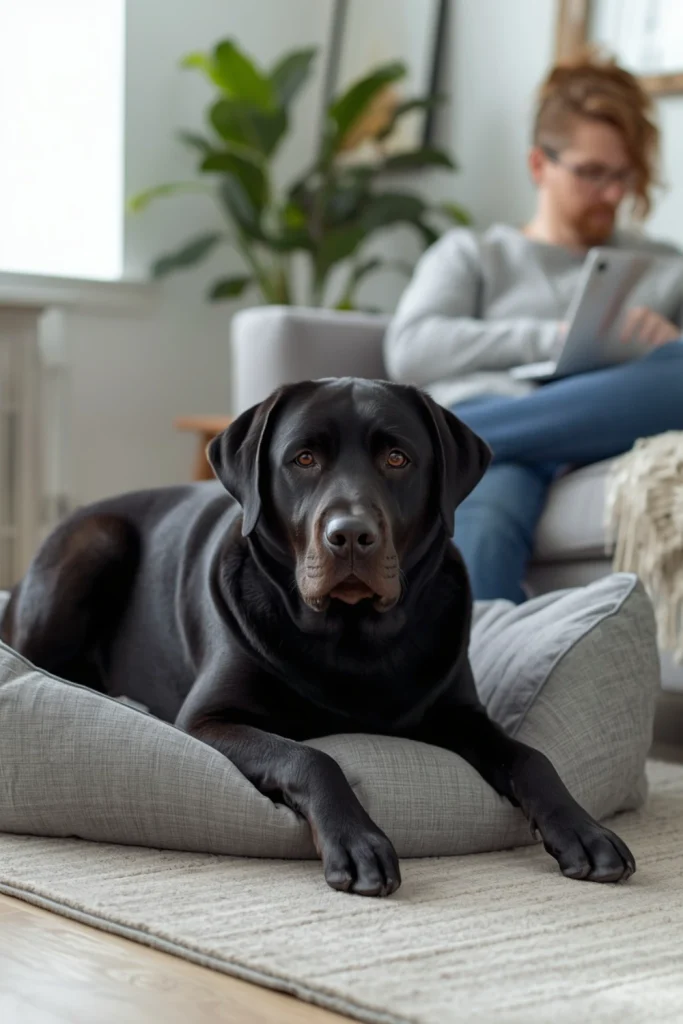
A well-trained large dog needs to know how to relax, not just how to perform commands. Some dogs become restless when visitors arrive, follow family members constantly, or demand attention by barking and nudging. Teaching a settle behaviour helps your dog understand that resting quietly is also a valuable choice. This skill can make daily life easier when you are working, eating meals, watching television, or welcoming guests into your home.
Choose a comfortable bed or mat and reward your dog for approaching it, lying down, and remaining relaxed. At first, reward even a few seconds of calm behaviour. Gradually extend the time while keeping the exercise easy enough for your dog to succeed. Offer suitable enrichment, such as a safe chew approved for your dog, when appropriate. Avoid using the mat as punishment. With regular practice, your dog can learn that the resting area is a comfortable place to settle when household activity becomes busy.
9. Stop Excessive Barking With the Right Approach
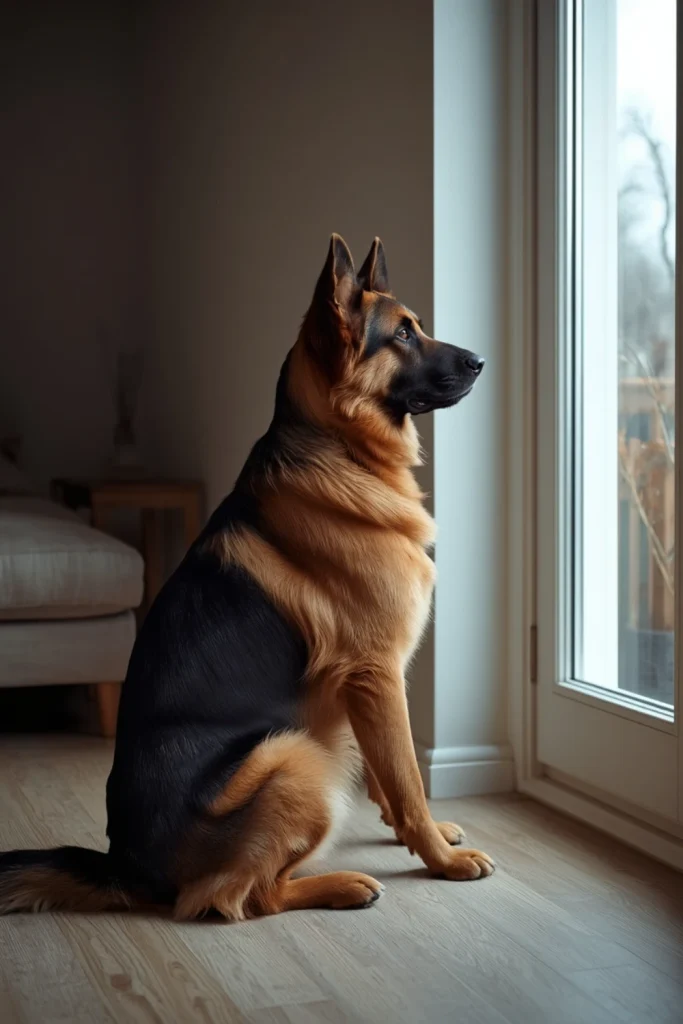
Barking is a normal form of canine communication, but frequent barking can become stressful for owners and neighbours. Large dogs may bark when they hear noises outside, see people through windows, become excited, feel uncertain, or seek attention. Before trying to change the behaviour, identify what triggers it. A dog that barks because it is frightened needs a different approach from a dog that barks during play or because it has learned that barking brings immediate attention.
Reduce unnecessary triggers where possible, such as blocking a busy window view or moving your dog’s resting area away from a noisy entrance. Reward quiet moments and teach an alternative behaviour, such as coming to you or settling on a mat. Avoid shouting, as your dog may interpret the raised voice as additional excitement or alarm. Make sure your dog receives suitable exercise, enrichment, and rest. If barking is persistent, fear-related, or linked to being alone, seek veterinary or qualified behavioural advice.
10. Make Crate Training a Positive Experience
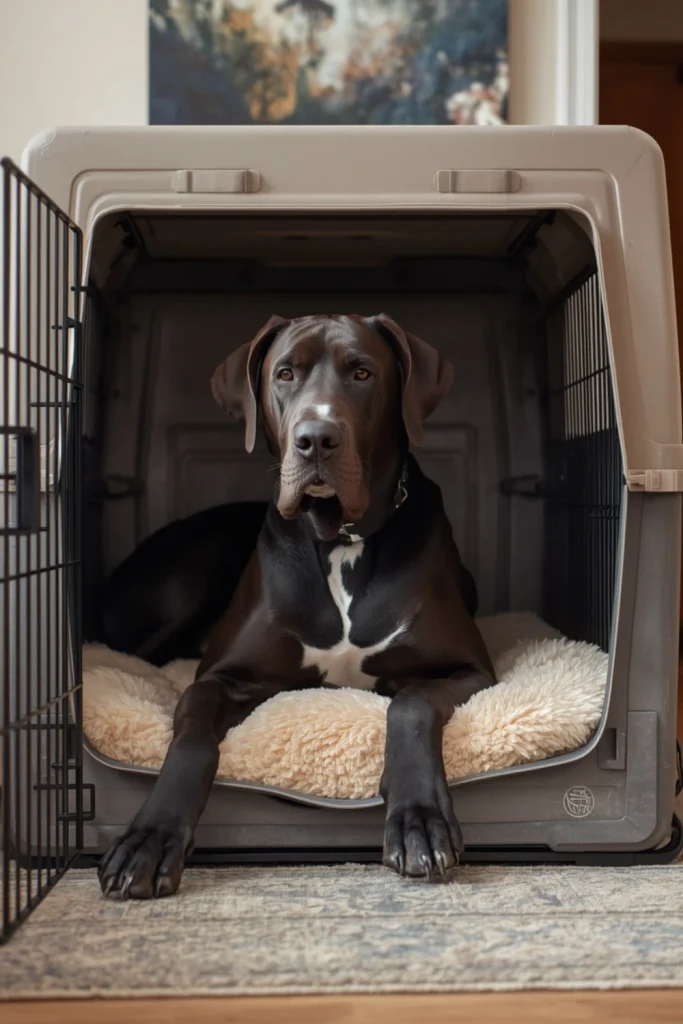
A crate can provide a comfortable resting space and help with management or travel when introduced appropriately. However, a crate should never be used to frighten or punish a dog. Large breeds need enough room to stand naturally, turn around, lie down comfortably, and stretch. Select a crate appropriate for your dog’s adult size and current needs, and make it a place where the dog can relax rather than somewhere it is forced to remain for excessive periods.
Begin by leaving the crate door open and placing treats, meals, or a comfortable bed inside. Let your dog explore voluntarily before briefly closing the door for a comfortable period. Gradually increase the duration only while your dog remains relaxed. Provide regular toilet breaks, exercise, and social contact, especially for puppies. If your dog pants excessively, drools, scratches frantically, or repeatedly tries to escape, stop increasing the difficulty and reassess the plan. Dogs with confinement-related distress may need professional guidance rather than more time in the crate.
11. Practise Gentle Handling and Grooming
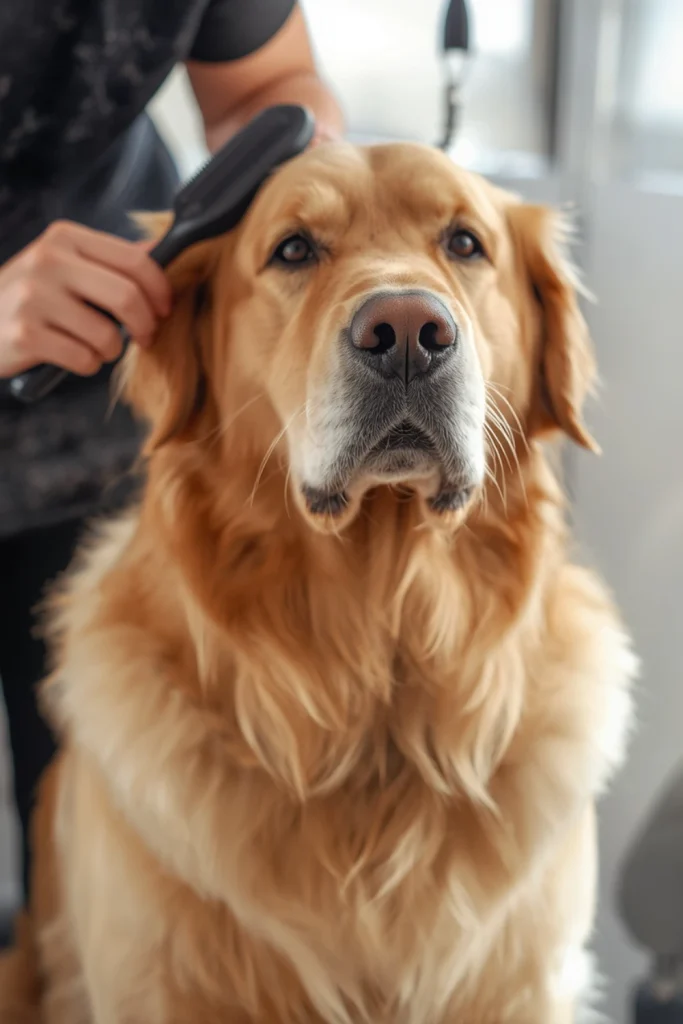
Large dogs may need regular brushing, nail trimming, ear checks, bathing, and dental care. Because they can be difficult to restrain physically, it is especially helpful to teach them to accept handling calmly. A dog that fears grooming may pull away, struggle, or growl when someone touches its paws or ears. Starting with gentle, reward-based handling can make routine care easier and help owners notice potential health problems earlier.
Introduce handling one step at a time. Briefly touch your dog’s shoulder, reward it, and stop before it becomes uncomfortable. Later, practise touching the paws, lifting an ear gently, or introducing a brush. Pair each step with rewards and allow breaks. Use suitable grooming tools and ask a veterinarian or professional groomer for help with tasks you cannot perform safely. Never force a large dog into prolonged handling when it is frightened. If your dog suddenly resists familiar grooming, consult a veterinarian because pain or illness may be involved.
12. Prevent Resource Guarding Around Food and Toys
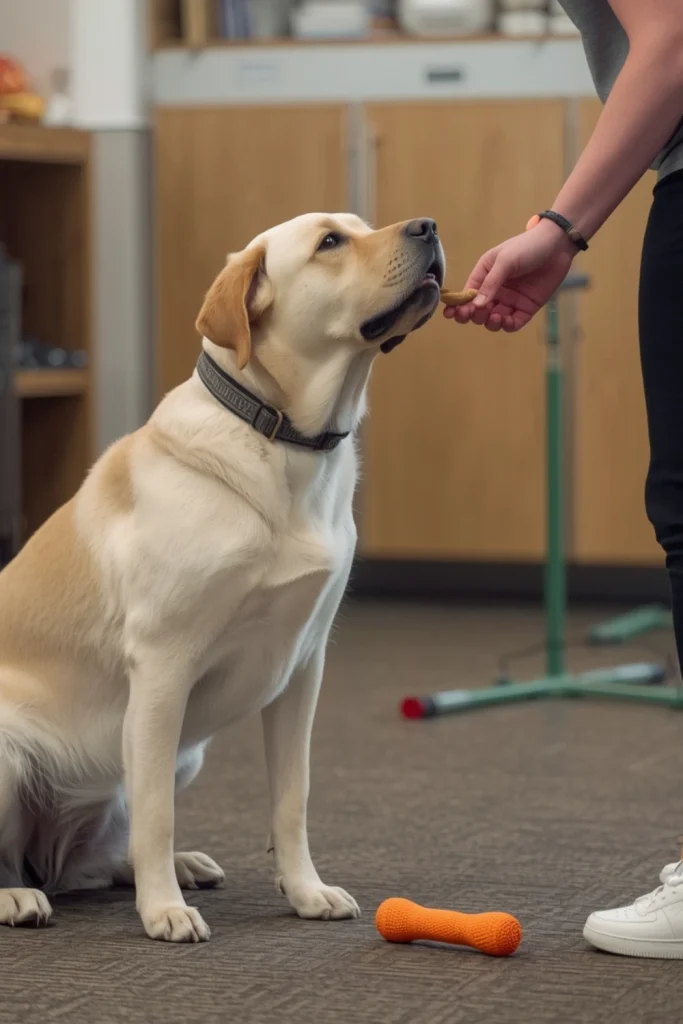
Resource guarding occurs when a dog behaves defensively to protect something valuable, such as food, a chew, a toy, or a resting place. Warning signs may include freezing, stiffening, hovering over an object, growling, or snapping when someone approaches. These behaviours should be taken seriously in any dog, particularly a large one. Punishing a growl or forcibly removing the item can increase fear and may make the situation more dangerous.
Give your dog a quiet feeding area and teach family members, especially children, not to disturb it while eating. Do not reach into the bowl or take objects away simply to prove that you are in control. Instead, use reward-based exchanges when appropriate, such as offering a more valuable treat for releasing a toy. If your dog has already growled, snapped, or bitten while guarding resources, avoid testing the behaviour. Arrange help from a qualified reward-based behaviour professional or veterinary behaviourist to develop a safe plan.
13. Provide Appropriate Exercise and Mental Stimulation
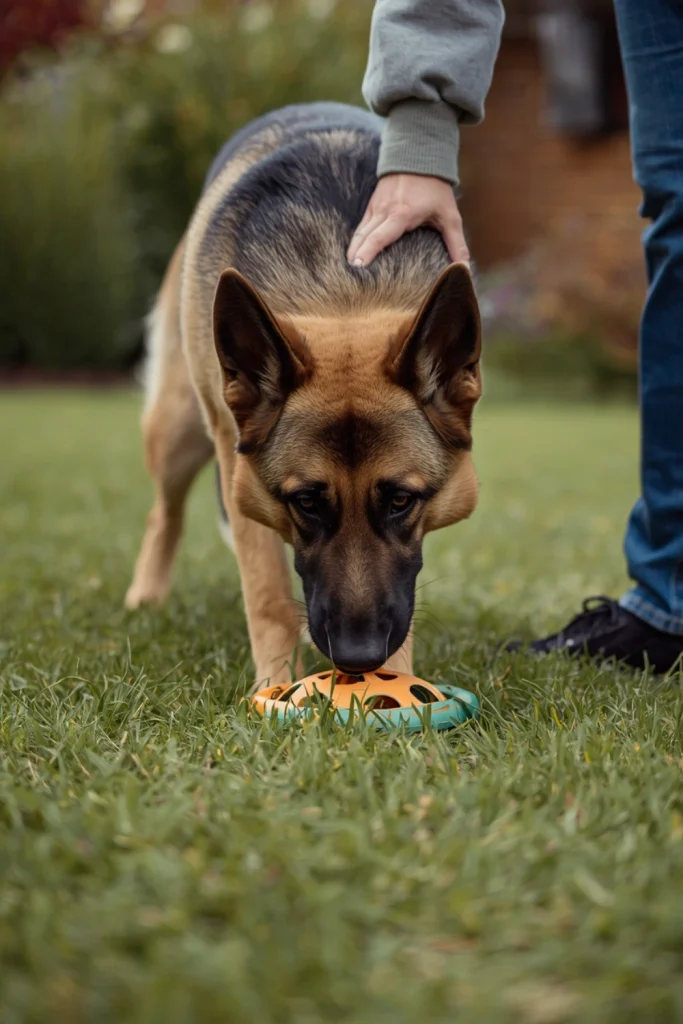
Many large dogs need regular opportunities to move, explore, sniff, and solve simple problems. Without enough suitable activity, some dogs may become restless, chew household objects, bark excessively, or struggle to settle. However, exercise requirements vary considerably between breeds and individual dogs. A young working-breed dog may enjoy structured training and longer walks, while a growing puppy, senior dog, or dog with joint concerns may require a gentler routine.
Combine physical activity with mental enrichment. Sniffing walks, food puzzles, toy searches, trick training, and controlled games can help your dog use its mind as well as its body. Avoid assuming that endless running is the answer to every behaviour problem, and be cautious with high-impact exercise in growing puppies or dogs with health concerns. Ask your veterinarian about appropriate activity for your dog’s age and condition. A balanced routine should include movement, learning, social interaction, and enough rest for recovery.
14. Teach Your Dog to Behave Calmly Around Children and Visitors
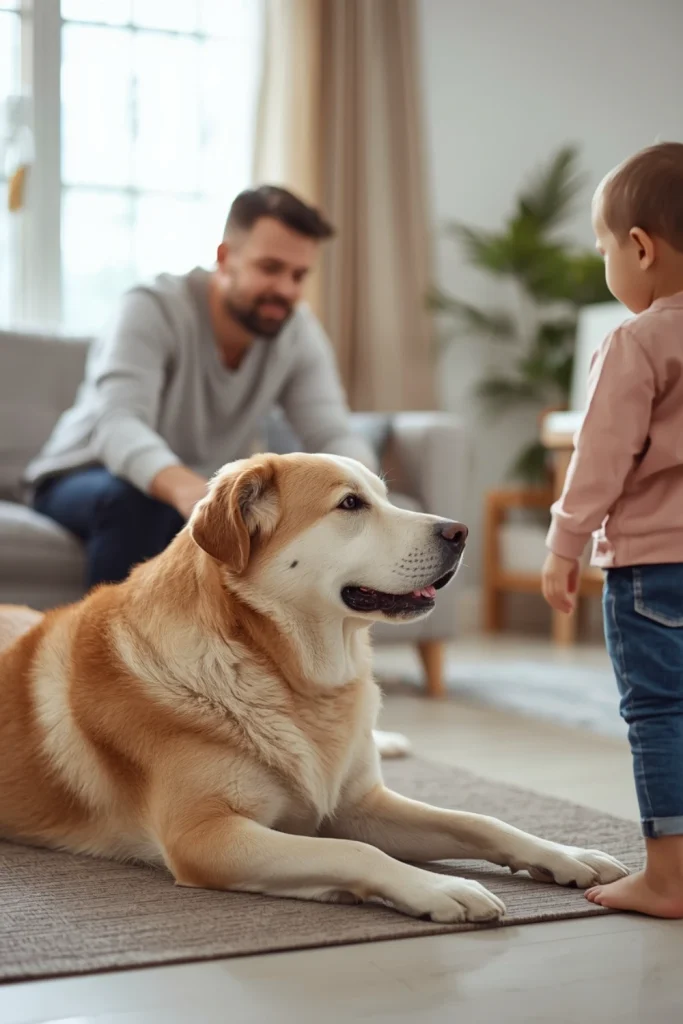
Large dogs and children can form wonderful bonds, but safe interaction requires supervision, training, and respect for the dog’s boundaries. Even a friendly dog can accidentally knock over a child, become startled by sudden movements, or react defensively if disturbed while eating or sleeping. Teach your dog to greet people calmly and respond to cues such as “sit,” “stay,” and “go to your mat.” These behaviours help create predictable interactions without expecting the dog to tolerate everything.
Teach children to approach respectfully, avoid hugging or climbing on the dog, and leave it alone when it is eating, resting, or moving away. Never leave young children unsupervised with a dog, regardless of breed or training level. Use gates or a separate resting space when needed, especially during busy gatherings. Reward calm behaviour around visitors and give your dog breaks from social activity. If your dog shows fear, stiff body posture, growling, or avoidance around children, create distance and seek qualified professional advice.
15. Stay Consistent and Practise Skills in Different Environments
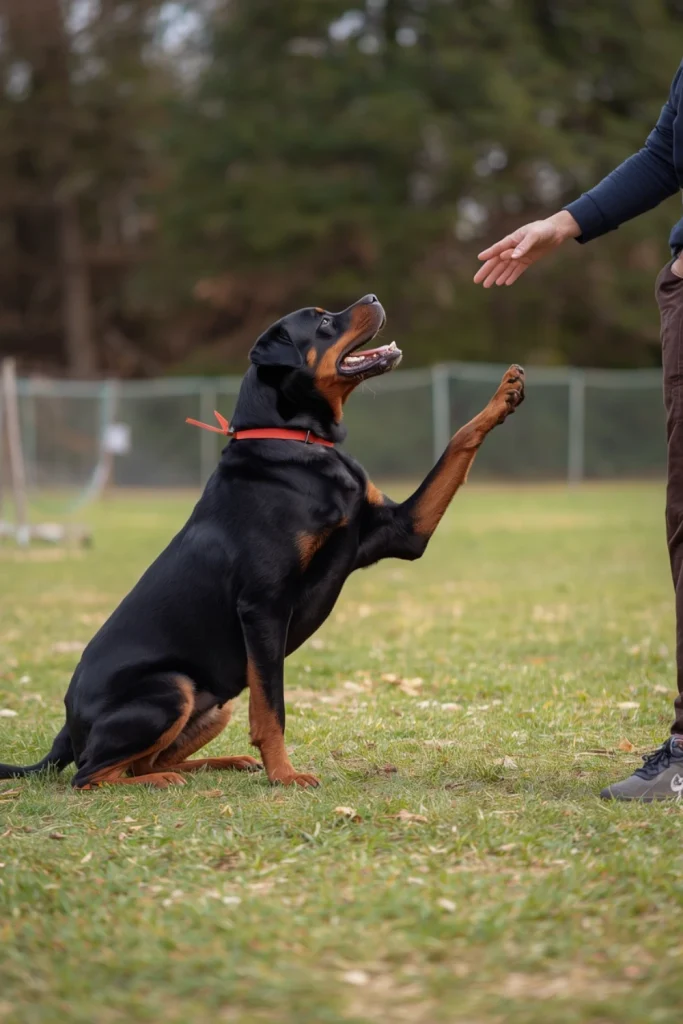
Consistency helps your dog understand which behaviours are expected. If one family member allows jumping while another discourages it, the dog receives mixed signals. Likewise, a dog that responds to “come” in the kitchen may not yet understand the cue in a busy park. Training needs to be practised across different locations and situations so your dog can gradually learn to respond even when new distractions appear.
Agree on a few clear household rules and use the same cues whenever possible. Practise familiar skills in the garden, on quiet walks, and around manageable distractions before increasing the difficulty. Reward successful responses and return to an easier environment when your dog struggles. Keep track of progress and celebrate small improvements. If a behaviour becomes unreliable, do not assume your dog is deliberately ignoring you; it may need more practice or a simpler setup. Consistent, patient training helps maintain skills throughout your dog’s life.
Conclusion
The best Training Tips for Large dogs focus on clear communication, positive reinforcement, consistent rules, and gradual practice. Basic obedience, loose-leash walking, reliable recall, calm greetings, impulse control, safe socialization, and appropriate enrichment can help your dog become a well-mannered companion. These skills are especially important when your dog grows large enough that unwanted behaviour becomes difficult to manage physically.
Remember that training is a long-term process, not a one-time task. Practise a little each day, reward good choices, and adjust the difficulty according to your dog’s needs. Avoid punishment and pay attention to signs of fear, stress, or discomfort. If you face persistent behavioural problems, seek help from a qualified professional. With patience, consistency, and a thoughtful approach, you can build a stronger bond with your large dog and help it feel more confident in everyday life.