
A Simple Puppy Crate Training Schedule for Beginners
Crate training can give your puppy a safe, comfortable place to rest while making daily routines easier for both of you. The key is not forcing your puppy to stay in the crate for long periods, but gradually helping them see it as a calm and positive space.
A Simple Puppy Crate Training Schedule can also make potty training, nap time, bedtime, and alone-time training more predictable. With the right routine, patience, and positive reinforcement, beginners can help a puppy become comfortable with their crate without unnecessary stress.
1. Choose the Right Crate for Your Puppy
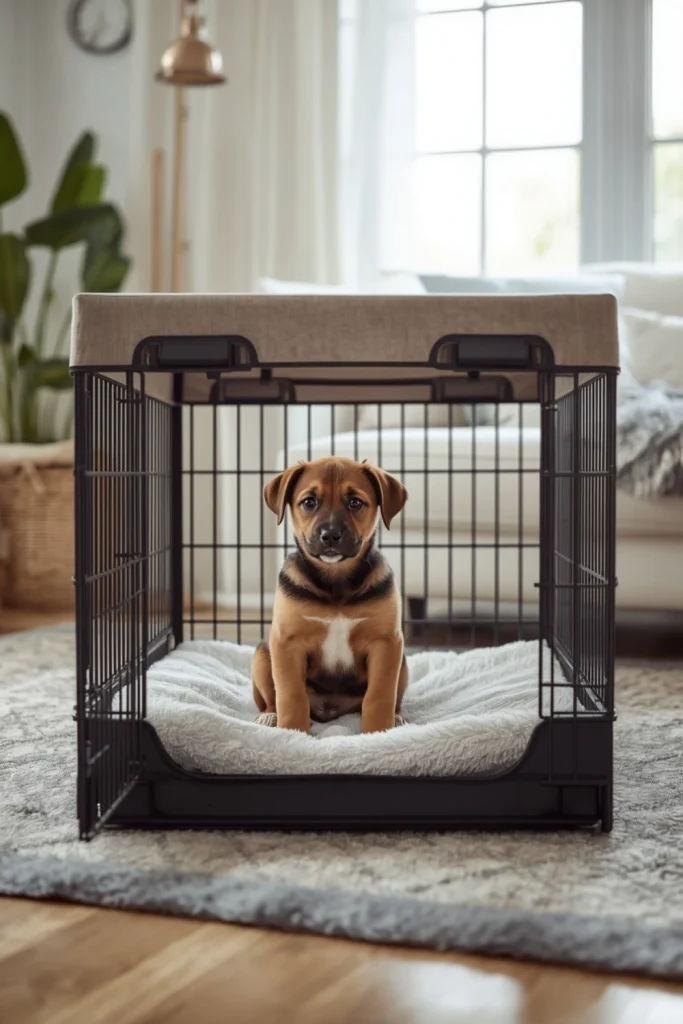
Choosing the right crate is the first step toward successful crate training. The crate should be large enough for your puppy to stand up, turn around, lie down comfortably, and stretch naturally. However, it should not be excessively large, especially if you are also using the crate as part of a potty-training routine.
Consider your puppy’s expected adult size when selecting a crate, particularly if you choose one with an adjustable divider. A divider allows you to increase the available space as your puppy grows. The crate should also have good ventilation and be placed somewhere comfortable where your puppy can still feel connected to the family.
2. Make the Crate Feel Comfortable and Safe
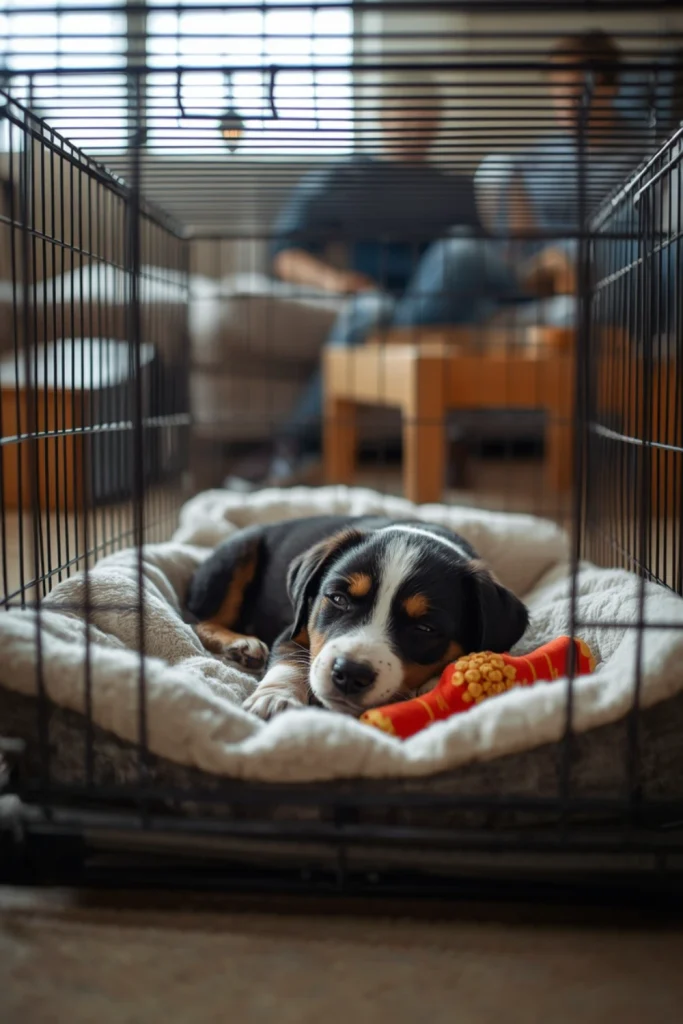
Your puppy should gradually learn that the crate is a comfortable place rather than a punishment area. Add suitable bedding or a comfortable mat if your puppy does not chew or destroy it. You can also place a safe puppy-appropriate toy inside to make the space more inviting.
Keep the crate in an area where your puppy can observe normal household activity without being overwhelmed. During the early stages, avoid using the crate only when you leave the house. If every crate session means you disappear, your puppy may begin to associate it with isolation. Instead, include short crate sessions while you are nearby.
3. Introduce the Crate Slowly
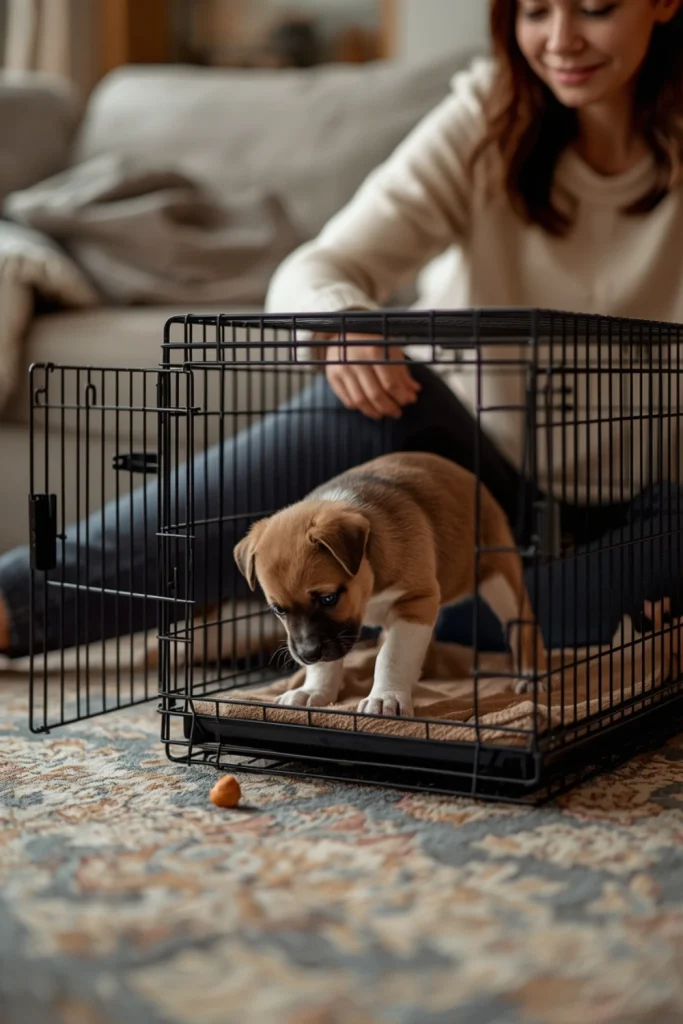
A common beginner mistake is expecting a puppy to stay inside the crate immediately for a long period. Instead, allow your puppy to investigate the crate at their own pace. Leave the door open and let them sniff around it without pressure.
You can place a small treat or favorite toy near the entrance and gradually move it farther inside. When your puppy willingly enters, provide calm praise. At first, there is no need to close the door. The goal is to create positive associations with the crate before introducing longer periods of confinement. Slow introductions can help prevent fear and make future training easier.
4. Start With Very Short Crate Sessions
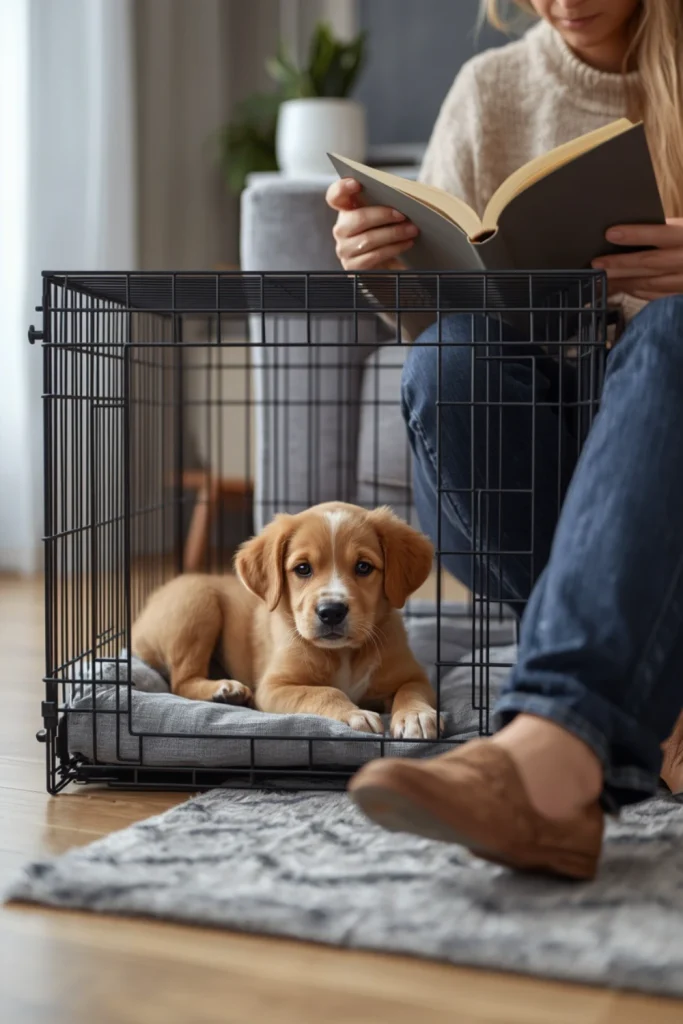
Once your puppy willingly enters the crate, begin practicing very short sessions. Ask your puppy to enter, reward them, and allow them to remain inside briefly while you sit nearby. Gradually increase the duration only when your puppy remains comfortable.
There is no benefit in rushing this stage. If your puppy becomes distressed, reduce the duration and return to an easier step. The purpose is to teach your puppy that being in the crate is normal and temporary. Short, successful sessions are more valuable than long sessions that cause fear or frustration.
5. Build a Consistent Daily Crate Training Schedule
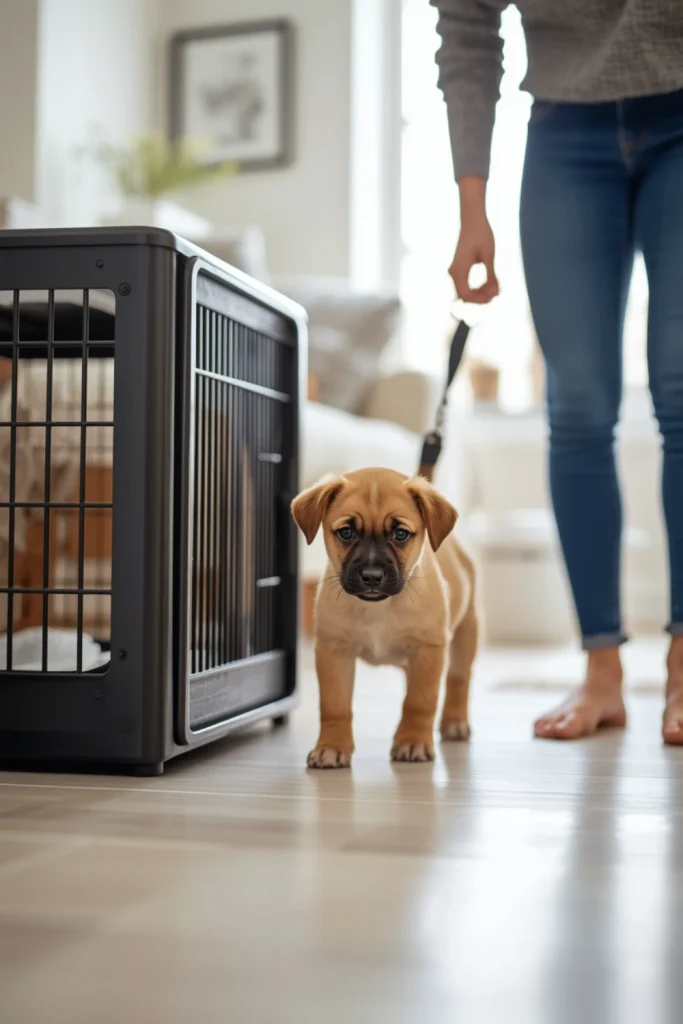
A predictable daily schedule can make crate training much easier. Puppies generally benefit from a routine that includes waking, potty breaks, meals, play, naps, training, and quiet time. The crate can be incorporated naturally into these activities rather than being treated as a separate event.
For example, your puppy might wake up, go outside for a potty break, eat breakfast, play for a while, and then have a supervised crate nap. Later, another potty break and play session can follow. The exact timing should be adjusted according to your puppy’s age, energy level, bladder control, and individual needs.
6. Use the Crate for Scheduled Nap Time
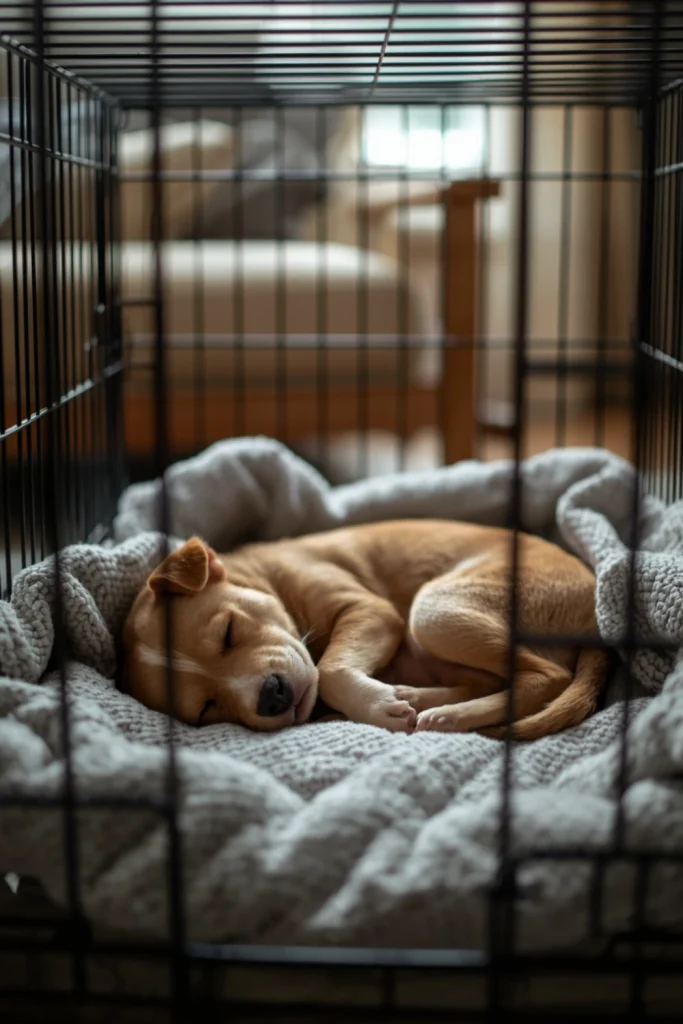
Puppies need plenty of sleep, and scheduled naps can prevent them from becoming overtired and difficult to manage. A crate can provide a quiet location where your puppy can rest without constantly being distracted by household activity.
After an appropriate period of play and interaction, take your puppy for a potty break and then guide them into the crate for a nap. Keep the environment calm and quiet. Over time, your puppy may begin to recognize the crate as a signal that it is time to relax. Scheduled rest can also help establish a healthier daily rhythm.
7. Include Potty Breaks Before and After Crate Time
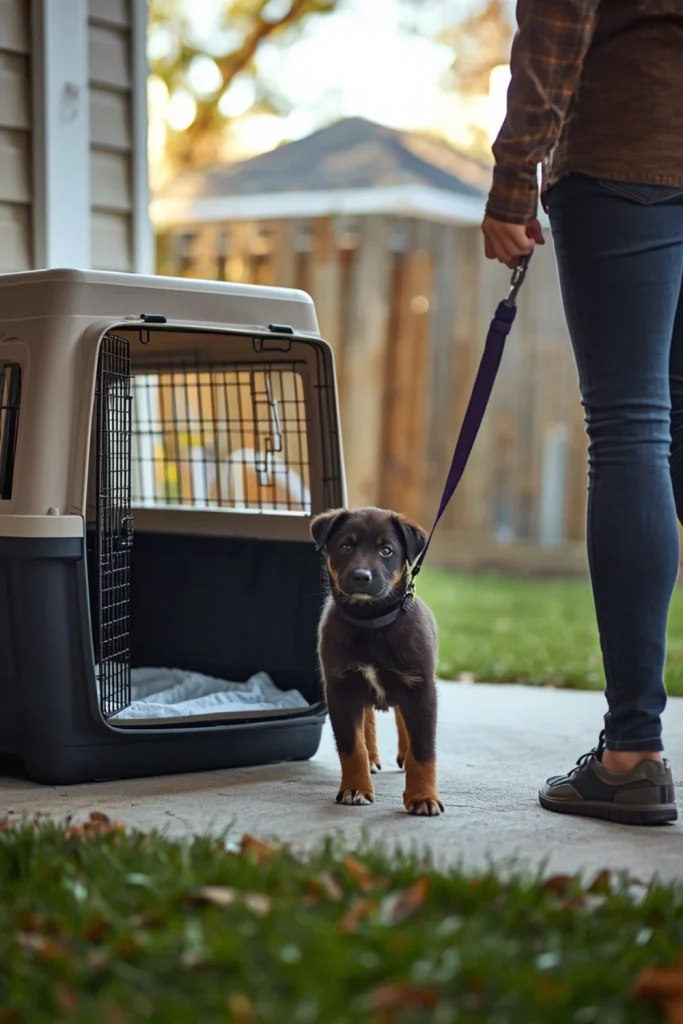
Potty breaks are especially important when crate training a young puppy. Take your puppy to the appropriate bathroom area before placing them in the crate, particularly before a longer rest period. This gives them an opportunity to empty their bladder first.
When your puppy comes out of the crate, take them for another potty break before starting play or other activities. This creates a predictable pattern: crate, potty break, activity, and then rest. Regular bathroom opportunities can reduce accidents and help connect crate training with a broader potty-training routine.
8. Practice Leaving the Room for Short Periods
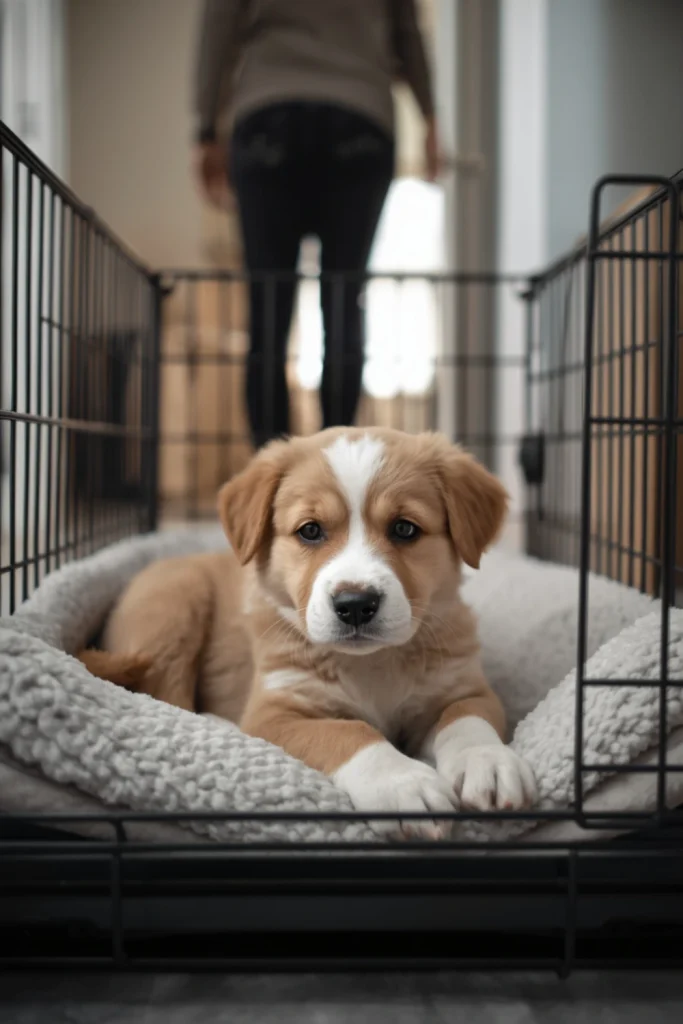
After your puppy is comfortable staying in the crate while you are nearby, gradually practice leaving the room. Start by stepping away for only a short period and then returning calmly. Your puppy learns that you can leave and come back safely.
Increase the duration gradually as your puppy becomes more relaxed. Avoid making departures and arrivals overly dramatic. Calmly entering and leaving can help your puppy understand that temporary separation is a normal part of daily life. If your puppy becomes distressed, shorten the next session and continue building confidence more gradually.
9. Create a Simple Nighttime Crate Routine
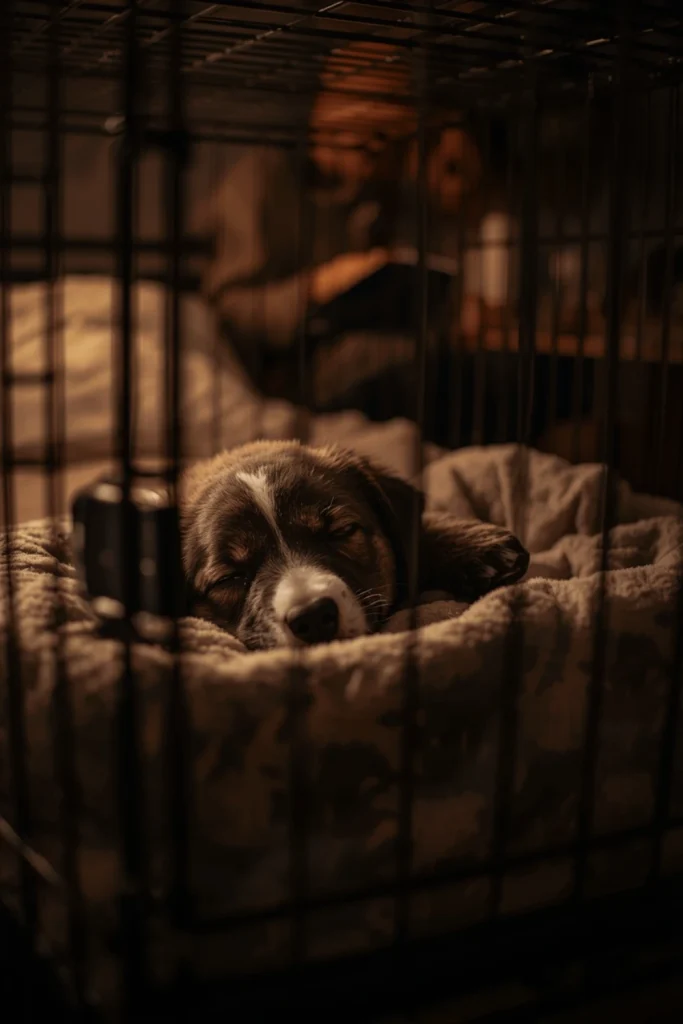
A consistent nighttime routine can help your puppy settle more easily. Before bedtime, provide a final potty opportunity, allow a calm period, and then guide your puppy into the crate. Keep the environment quiet and avoid exciting games immediately before sleep.
Very young puppies may still need nighttime bathroom breaks because they may not yet have enough bladder control to sleep through the entire night. If your puppy wakes and clearly needs to eliminate, take them calmly to the designated potty area and return them to the crate afterward. Keep nighttime trips boring and quiet so your puppy learns that nighttime is for sleeping.
10. Gradually Increase Crate Time as Your Puppy Matures
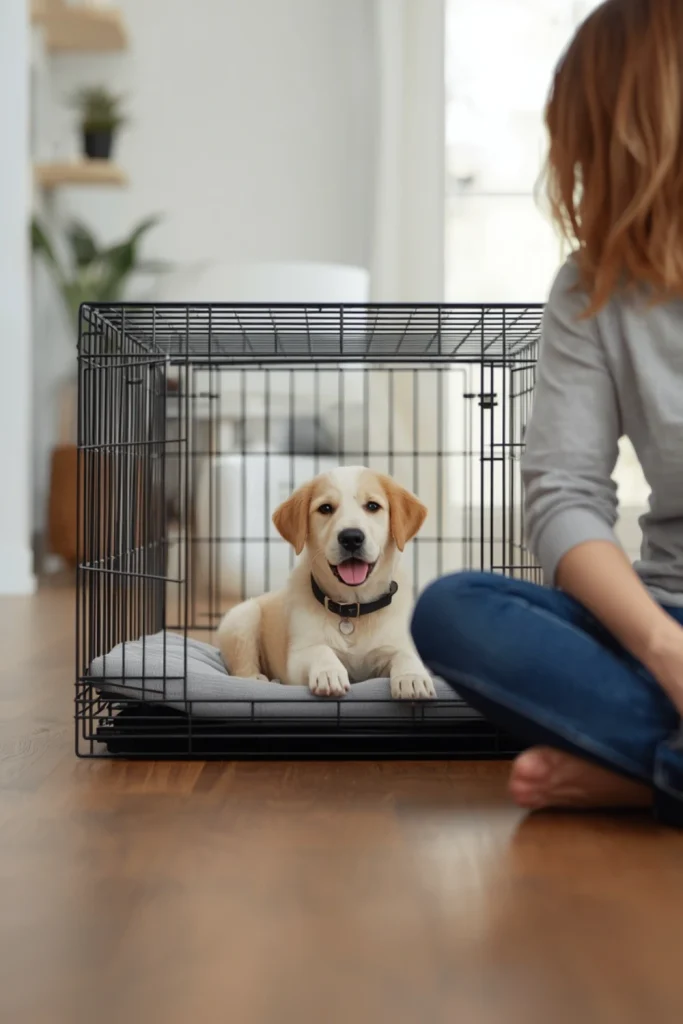
As your puppy becomes comfortable with the crate, you can gradually increase the duration of some sessions. However, crate time should always be appropriate for the puppy’s age, needs, and ability to remain comfortable.
Avoid using the crate simply as a way to keep your puppy confined for convenience throughout the day. Puppies need opportunities for movement, play, training, social interaction, meals, water, bathroom breaks, and rest outside the crate as appropriate. The long-term goal is a puppy that willingly relaxes in the crate rather than one that simply tolerates being confined.
Final Thoughts
A Simple Puppy Crate Training Schedule can make life easier for both new puppies and their owners. The most important part is creating a positive experience and introducing crate time gradually.
Start with a comfortable crate, short sessions, frequent potty breaks, scheduled naps, and plenty of positive reinforcement. As your puppy becomes more confident, you can slowly increase the duration of crate sessions while continuing to provide enough exercise, interaction, play, and bathroom opportunities.
Remember that every puppy learns at a different pace. Avoid rushing the process or using the crate as punishment. With patience and consistency, your puppy can learn that the crate is a safe and comfortable place to relax.