

12 Fun Brain Games for Puppies to Try Indoors
A puppy’s day should include more than eating, sleeping, and playing with toys. Just like physical exercise, mental stimulation is important for healthy puppy development. Brain games encourage puppies to think, explore, solve simple problems, and use their natural instincts in positive ways. The best part is that you do not need a large yard or expensive equipment to get started.
Indoor brain games are an excellent way to keep your puppy entertained, especially on rainy days, during extreme weather, or when outdoor activities are limited. With a few household items, small treats, and a little patience, you can create fun learning experiences right at home. Here are 12 easy brain games for puppies that can make playtime more interesting while helping your little companion develop confidence and useful skills.
1. The Treat Hunt Game
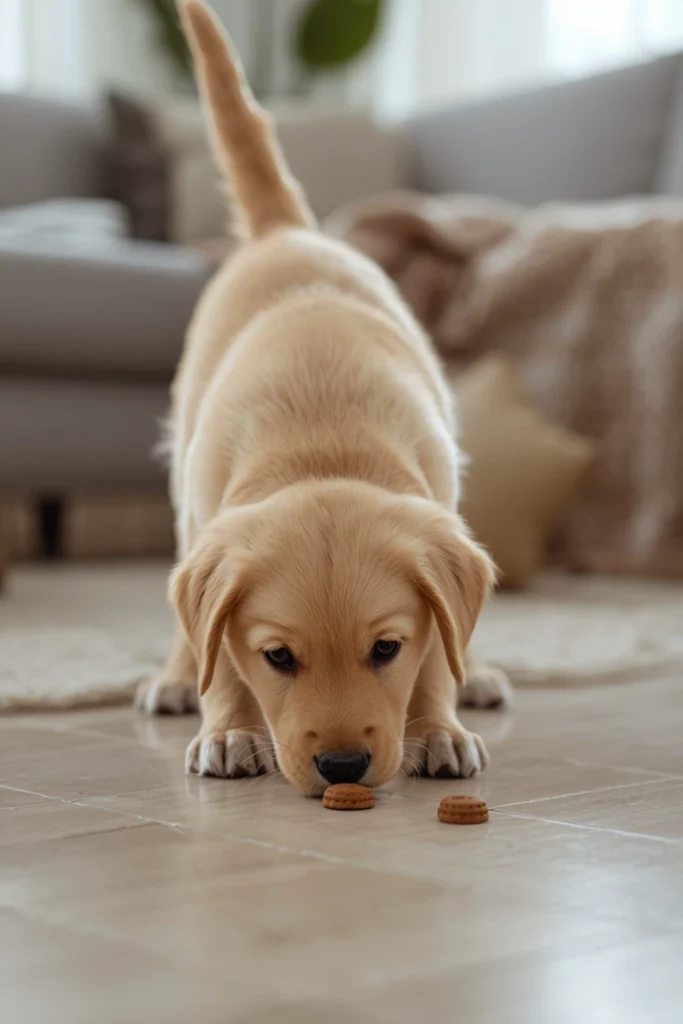
The treat hunt game is one of the easiest brain games for puppies because it encourages them to use their powerful sense of smell. Start by showing your puppy a small, suitable treat. Place it on the floor a short distance away while your puppy watches. Use an encouraging word such as “Find it” and allow your puppy to walk over and collect the reward. Repeat several times so your puppy understands the activity.
Once your puppy understands the game, begin hiding treats in easy-to-find locations around a puppy-safe room. You can place them beside a toy, near a chair leg, or behind an open box. Keep the hiding spots simple at first. Gradually increase the difficulty as your puppy becomes better at searching. Always supervise the activity and avoid places where your puppy might become stuck or reach unsafe objects.
2. The Muffin Tin Puzzle
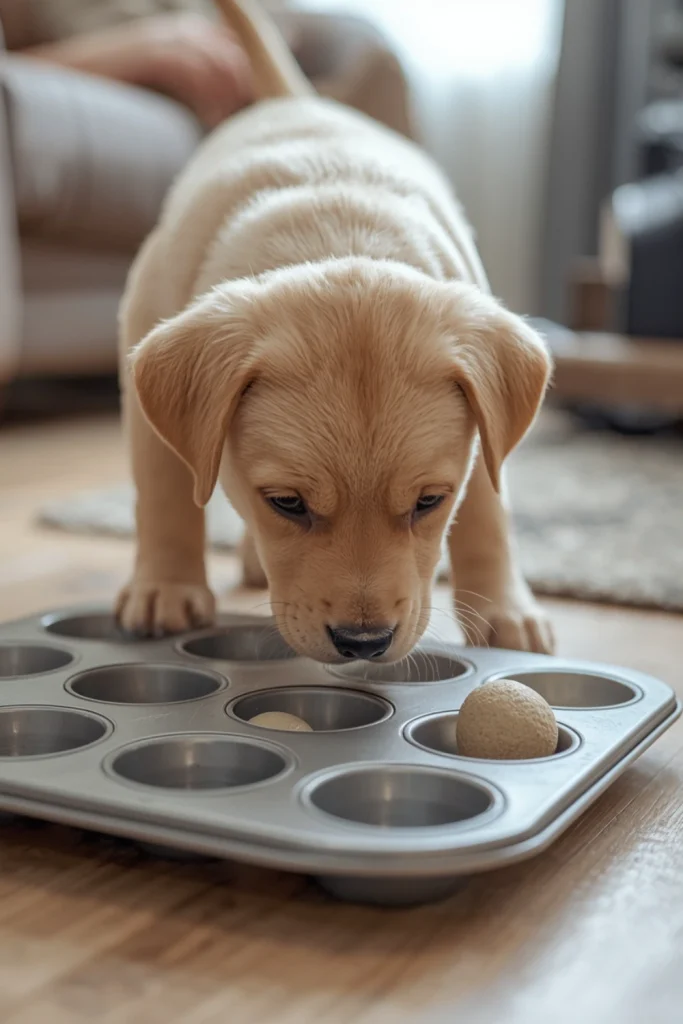
A muffin tin puzzle is a simple homemade activity that encourages puppies to explore and discover hidden rewards. Take a clean muffin tin and place a small treat inside one or two of its cups. Cover the cups with lightweight puppy-safe balls that your puppy can easily move. Put the tin on a non-slip surface and allow your puppy to investigate. Your puppy will use its nose and paws to discover how to reach the treats.
For beginners, cover only one or two cups so the activity remains easy. As your puppy learns the idea, you can add more covered sections. Choose balls that are too large to swallow and supervise the entire game. Remove the tin if your puppy begins chewing it or becomes frustrated. This activity is best for puppies who enjoy exploring objects and using their paws to solve simple challenges.
3. The Cup and Treat Game
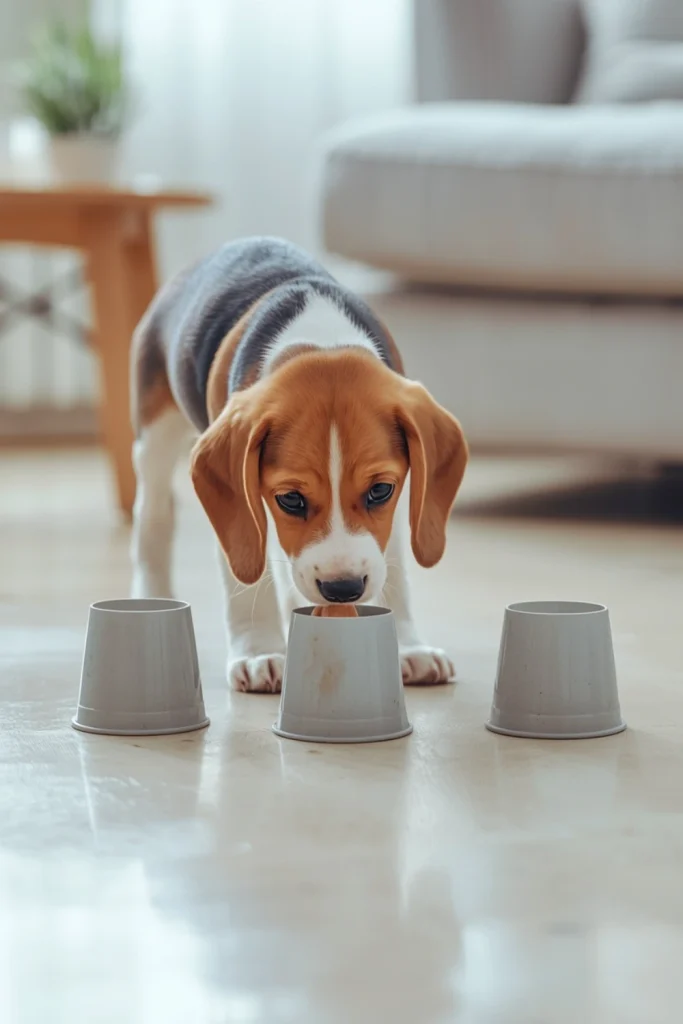
The cup and treat game is a fun way to introduce your puppy to simple problem-solving. Take two lightweight, sturdy, puppy-safe cups and show your puppy a treat. Place the treat under one cup while your puppy watches. Encourage your puppy to investigate and discover where the reward is hiding. When your puppy finds it, offer praise and let them enjoy the treat.
After a few successful rounds, you can introduce a third cup or gently change the position of the cups. Keep the cups stationary at first, especially if your puppy is still learning the game. Use containers without sharp edges and avoid lightweight cups that can easily break. This activity encourages observation, curiosity, and interaction with you while making indoor playtime more exciting.
4. The Snuffle Mat Search
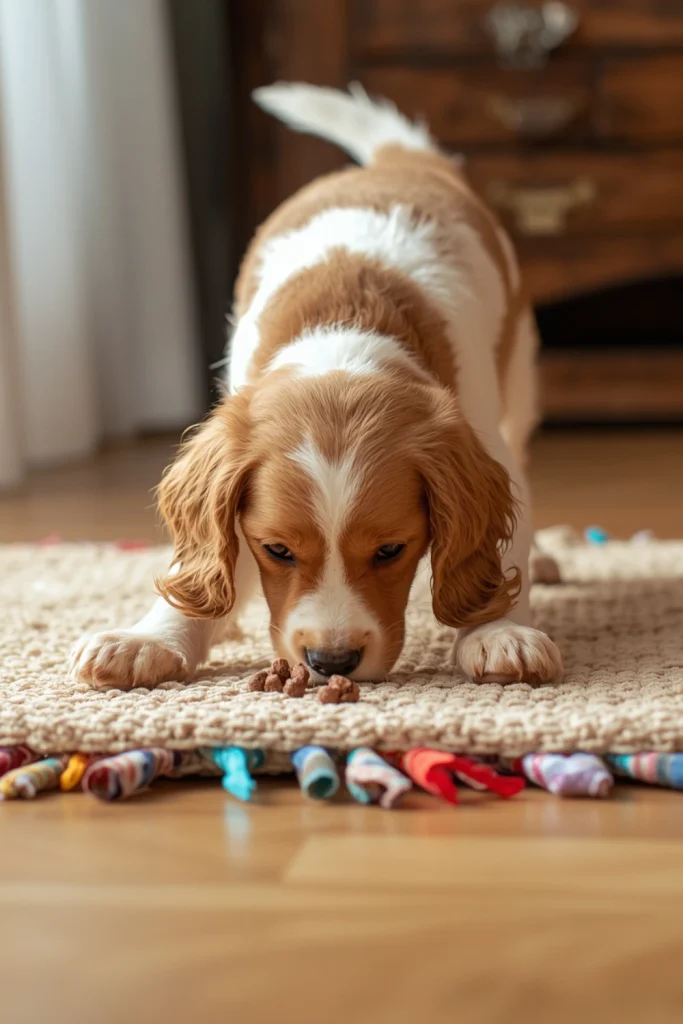
A snuffle mat is a useful enrichment tool designed to encourage dogs to search for food using their noses. It usually contains soft fabric strips or pockets where you can hide small pieces of kibble or puppy-safe treats. Spread a few rewards across the mat and let your puppy investigate. Your puppy will naturally sniff between the fabric pieces to locate the food.
Begin with treats placed near the surface so your puppy can find them easily. Once your puppy understands the activity, hide some rewards slightly deeper in the fabric. Use the snuffle mat during a quiet part of the day when your puppy can concentrate. Always choose a mat made from safe, durable materials and supervise your puppy to prevent chewing or swallowing fabric. Clean it regularly to keep food crumbs from collecting inside.
5. The Cardboard Box Discovery Game
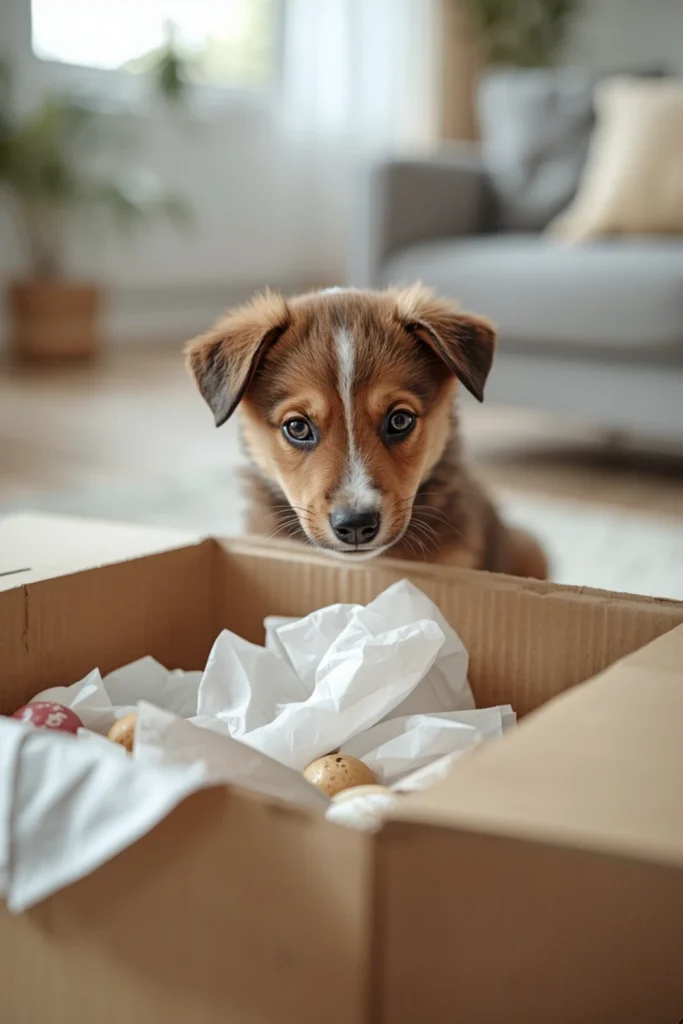
A simple cardboard box can become an exciting discovery activity for a curious puppy. Choose a clean, sturdy box without staples, tape, plastic pieces, or sharp edges. Place a familiar toy or a few pieces of kibble inside and leave the box open. Allow your puppy to approach, sniff, and explore it. You can encourage your puppy with gentle praise when they investigate the box.
When your puppy becomes comfortable, place a few loosely crumpled sheets of plain paper inside the box and hide treats between them. Your puppy can use its nose to search through the paper and discover the rewards. Keep the paper free from ink-heavy materials, and supervise closely to prevent chewing or swallowing. Remove the box if it becomes damaged. This activity offers an inexpensive way to introduce novelty and exploration into your puppy’s routine.
6. The Find Your Toy Game
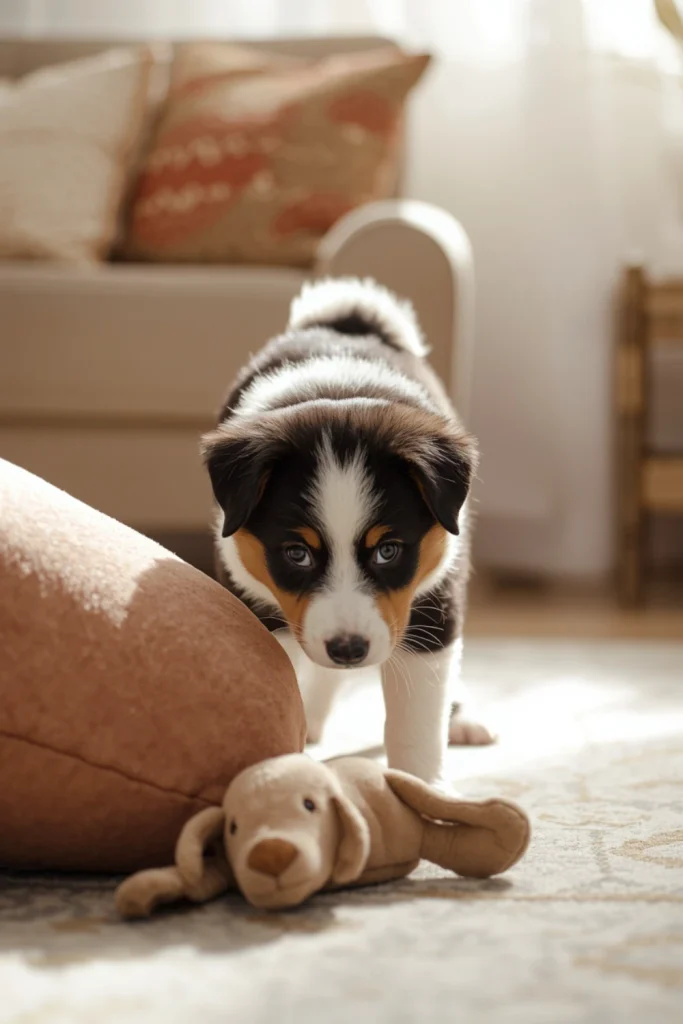
This activity combines mental stimulation with your puppy’s growing ability to recognize familiar objects. Start by choosing one favorite toy and showing it to your puppy. Say the toy’s name, such as “Ball” or “Teddy,” and encourage your puppy to touch or pick it up. Reward your puppy whenever they interact with the correct toy. Repeat the activity until they begin connecting the word with the object.
Next, place the toy a short distance away and ask your puppy to find it. Keep it visible during the first few attempts. As your puppy becomes more confident, hide it partially behind a safe object or beside a piece of furniture. Avoid difficult hiding places that could create frustration. This game can help develop listening skills, object recognition, and communication between you and your puppy.
7. The Towel Roll Treat Puzzle
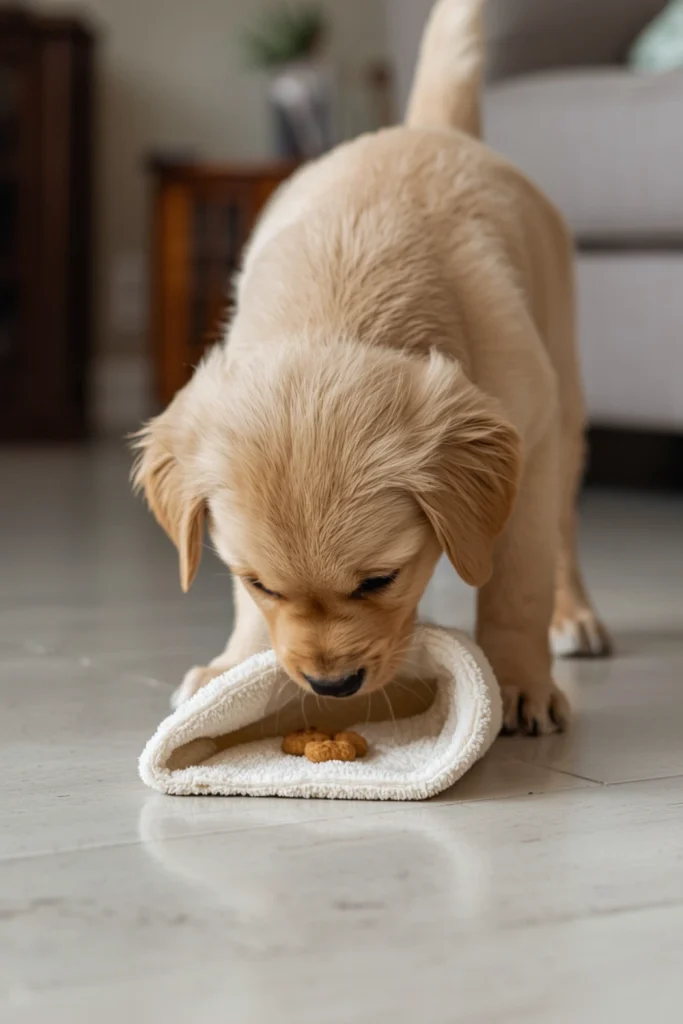
A towel roll puzzle is an easy indoor brain game that uses an ordinary household towel. Choose a clean towel that your puppy cannot easily tear into pieces. Spread it flat, place a few pieces of kibble along one side, and loosely roll the towel. Let your puppy sniff and investigate the roll to discover the hidden food. The activity encourages natural searching behavior and gives your puppy a simple challenge.
Keep the towel loosely rolled so the treats are easy to reach. For a beginner puppy, you can fold the towel instead of rolling it tightly. As your puppy learns, you can create slightly more interesting folds. Always supervise the game because some puppies may try to chew or swallow fabric. Stop immediately if your puppy starts pulling threads or damaging the towel. This is a short enrichment activity, not an unsupervised chew toy.
8. The Follow the Treat Trail Game
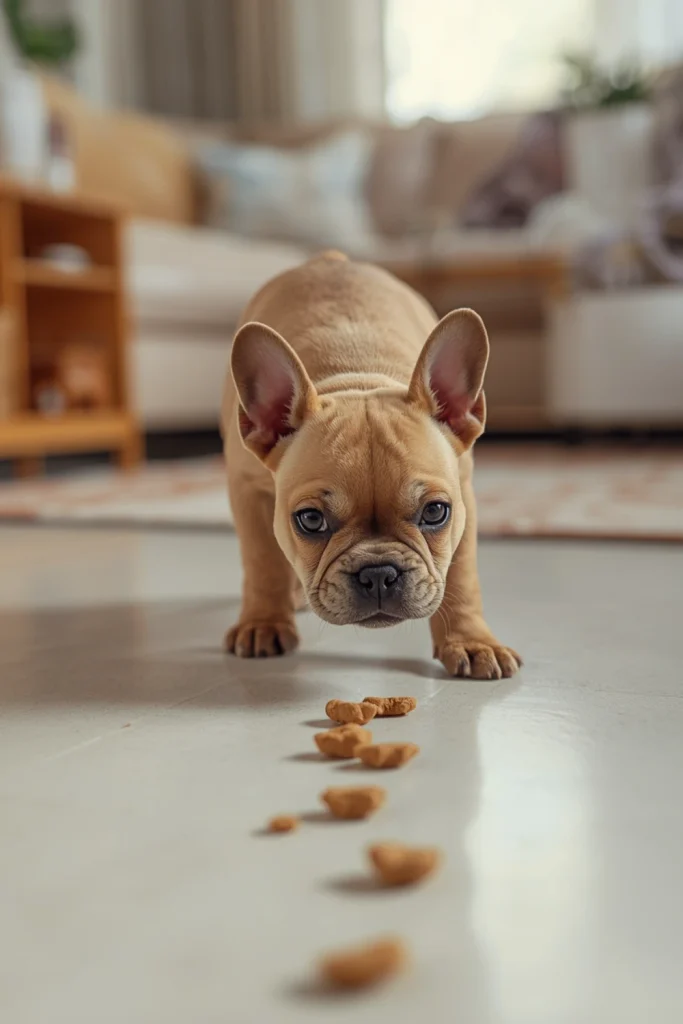
The follow the treat trail game is a simple way to encourage your puppy to use its nose and stay engaged. Start by placing three or four small pieces of kibble in a short line on a clean, non-slip floor. Keep the pieces close together and let your puppy discover the first one. Your puppy can then follow the trail to find the remaining rewards. Use a cheerful voice to encourage exploration without rushing.
As your puppy becomes familiar with the game, create a slightly curved trail or place a reward beside a safe object. Keep the trail short and easy enough for your puppy to complete successfully. Avoid using food on slippery surfaces, dirty floors, or areas where your puppy might reach dangerous objects. You can also use part of your puppy’s regular meal allowance to avoid offering too many extra treats.
9. The Name Recognition Game
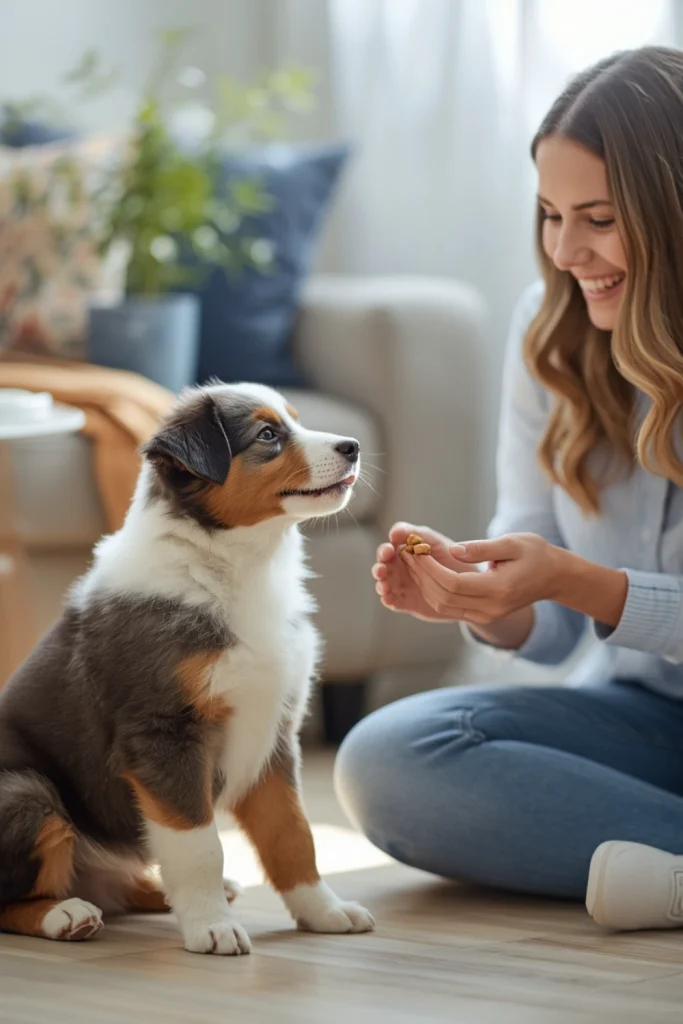
Teaching your puppy to recognize its name is both a useful training exercise and a simple brain game. Begin in a quiet room with very few distractions. Say your puppy’s name once in a friendly voice. When your puppy looks toward you, immediately reward the response with praise or a small treat. Repeat the activity several times, allowing short breaks so your puppy does not lose interest.
Once your puppy responds consistently, practise in different parts of your home. You can gradually introduce mild distractions, such as a toy placed nearby. Always reward your puppy for responding positively. Avoid repeating the name continuously or using it when you are upset, because you want your puppy to associate the sound with pleasant experiences. This game supports attention, communication, and the early development of reliable listening habits.
10. The Simple Obstacle Course
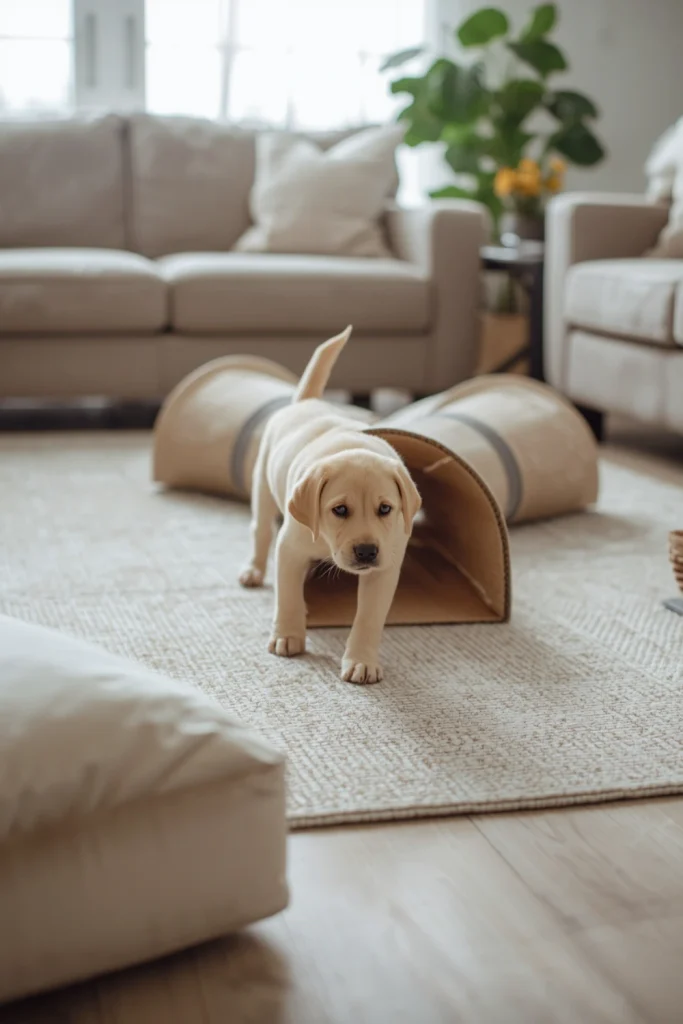
A simple indoor obstacle course gives your puppy an opportunity to explore different movements and solve small challenges. Use safe household items such as cushions, a low open cardboard tunnel, and a soft blanket. Arrange them with plenty of space between each object. Encourage your puppy to walk around a cushion, pass through the open tunnel, or step over a very low soft obstacle. Keep everything stable and close to the floor.
Start with one obstacle at a time so your puppy does not feel overwhelmed. Never ask a young puppy to jump from furniture, climb stairs as part of a challenge, or leap over high objects. Their growing bodies need age-appropriate activities that avoid unnecessary impact. Use treats and praise to encourage exploration. This game supports confidence, body awareness, and curiosity while making indoor playtime more varied.
11. The Touch Your Hand Game
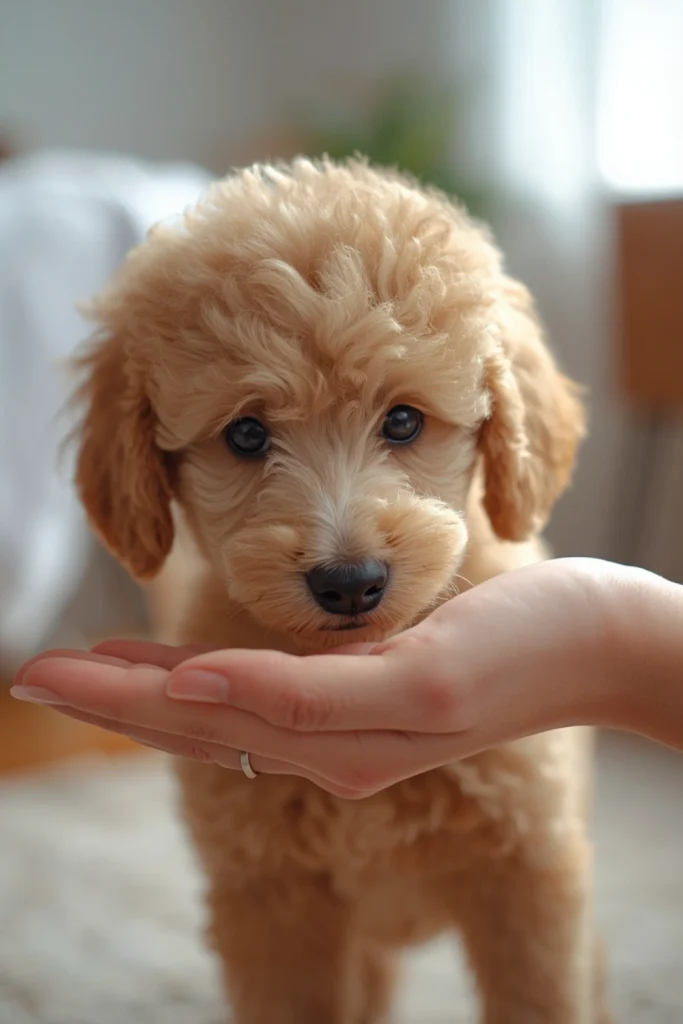
The hand target game teaches your puppy to gently touch your open palm with its nose. Sit or kneel in front of your puppy and hold one hand a few inches away. When your puppy naturally moves toward your hand to investigate, offer praise and a small reward. Repeat the activity until your puppy begins deliberately touching your palm. You can introduce a simple cue such as “Touch” once the puppy understands the action.
After practising several times, move your hand slightly to the left or right so your puppy has to follow it. Keep the movements gentle and within comfortable reach. Do not push your hand toward your puppy’s face or force physical contact. This game encourages attention, confidence, and cooperation. It can also become a useful foundation for other training activities, such as guiding your puppy into a position or redirecting attention.
12. The Choose Your Favorite Toy Game
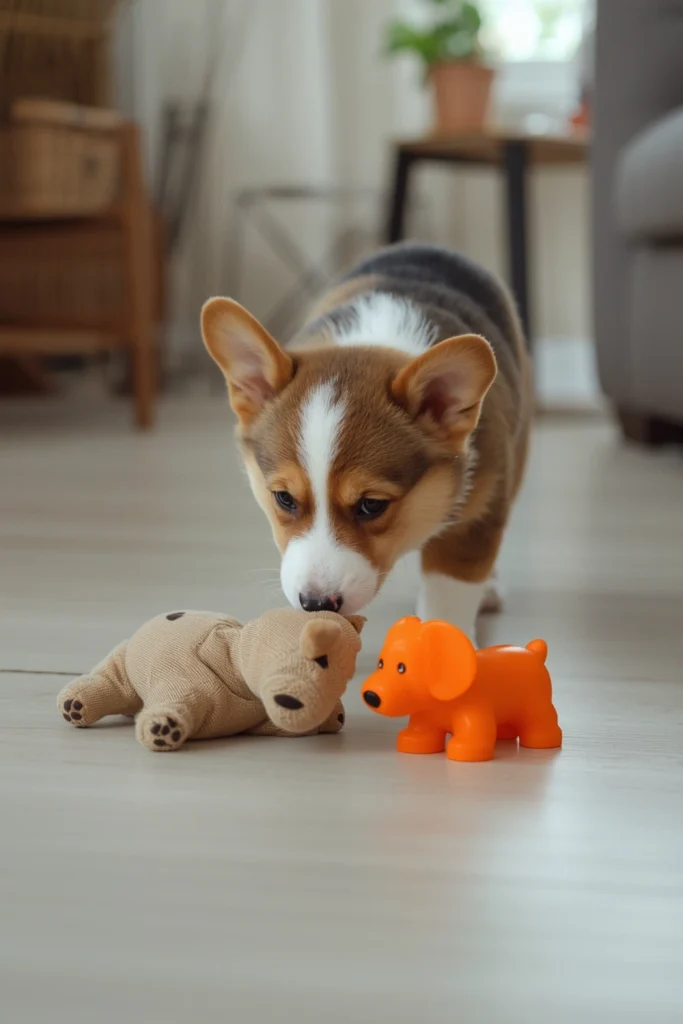
The choose your favorite toy game encourages your puppy to make simple decisions. Select two safe toys that your puppy already enjoys, such as a soft plush toy and a suitable rubber puppy toy. Place them a short distance apart on the floor. Allow your puppy to approach and choose whichever toy interests them. Praise the choice and enjoy a short play session with the selected toy.
You can repeat the activity with different pairs of familiar toys. Try changing their positions so your puppy explores both options rather than always choosing the same side. Keep the selection small and avoid toys with detachable parts, loose stuffing, or pieces that could be swallowed. This activity gives your puppy opportunities to explore preferences and practise independent decision-making while keeping playtime relaxed and enjoyable.
Final Thoughts
Brain games for puppies are a simple and enjoyable way to make indoor time more interesting. Activities such as treat hunts, snuffle mats, cardboard box puzzles, and toy searches encourage puppies to explore, think, and use their natural instincts. You do not need expensive equipment or complicated training methods to provide meaningful mental stimulation.
Start with easy games, use safe materials, and keep every session short and positive. Remember that each puppy learns at a different pace, so choose activities that match your little companion’s age, confidence, and personality. With consistency and variety, these 12 indoor brain games can become a fun part of your puppy’s daily routine while helping strengthen the bond you share.


