

15 Indoor Activities to Keep Your Dog Happy and Busy
Keeping your dog happy, healthy, and entertained is an important part of responsible pet ownership. However, there are days when going outside for long walks or outdoor playtime is not possible. Rainy weather, extreme temperatures, busy schedules, or limited outdoor space can make it difficult to provide your furry friend with enough physical exercise. Fortunately, there are plenty of exciting indoor activities that can help your dog stay active, entertained, and mentally stimulated without leaving home.
Dogs need more than food, water, and a comfortable place to sleep. They also need opportunities to explore, learn, play, and interact with their families. The good news is that you do not need expensive toys or a large house to keep your dog happy and busy. Simple activities such as hide-and-seek, puzzle games, indoor obstacle courses, and basic training exercises can make a big difference. In this guide, you will discover 15 enjoyable indoor activities that can help prevent boredom, strengthen your bond, and make your dog’s daily routine more exciting.
1. Play Hide-and-Seek With Your Dog
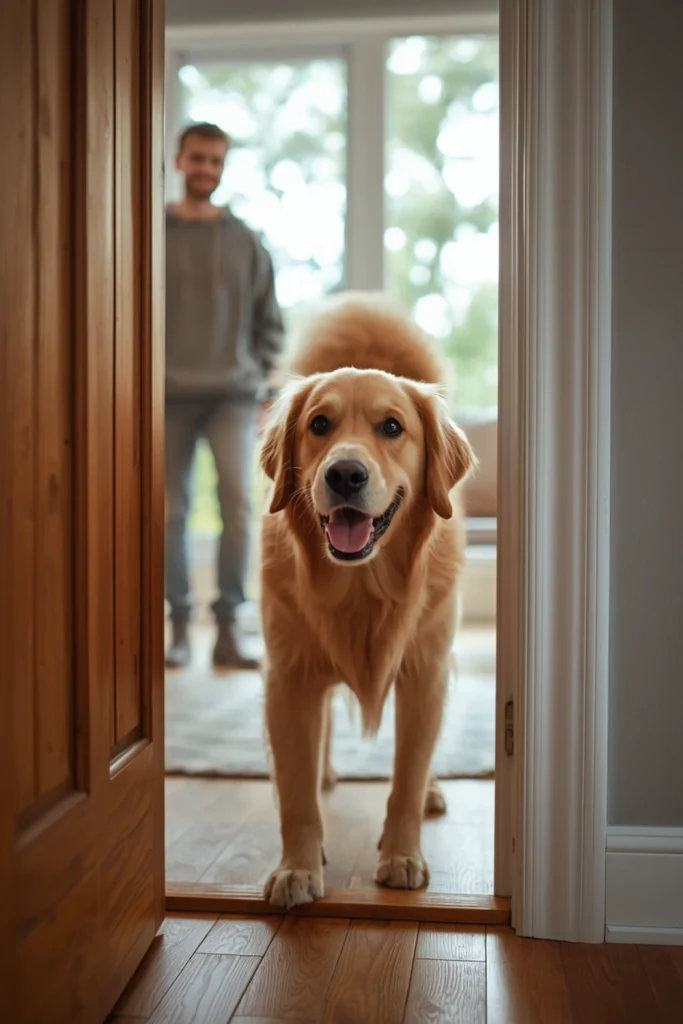
Hide-and-seek is one of the easiest and most entertaining indoor activities for dogs. It encourages your furry friend to use their natural curiosity and sense of smell while searching for you. Start by asking your dog to stay in one room or having another family member gently hold them. Find an easy hiding place behind a door, sofa, or curtain. Call your dog’s name and encourage them to find you. When they discover your hiding place, reward them with praise, affection, or a small treat.
As your dog becomes familiar with the game, gradually choose more challenging hiding spots. You can hide behind furniture or in another safe room. Keep the hiding places accessible and avoid locations where your dog might become frightened or stuck. This activity provides mental stimulation, encourages listening skills, and creates enjoyable bonding moments between you and your pet.
2. Create a DIY Snuffle Mat
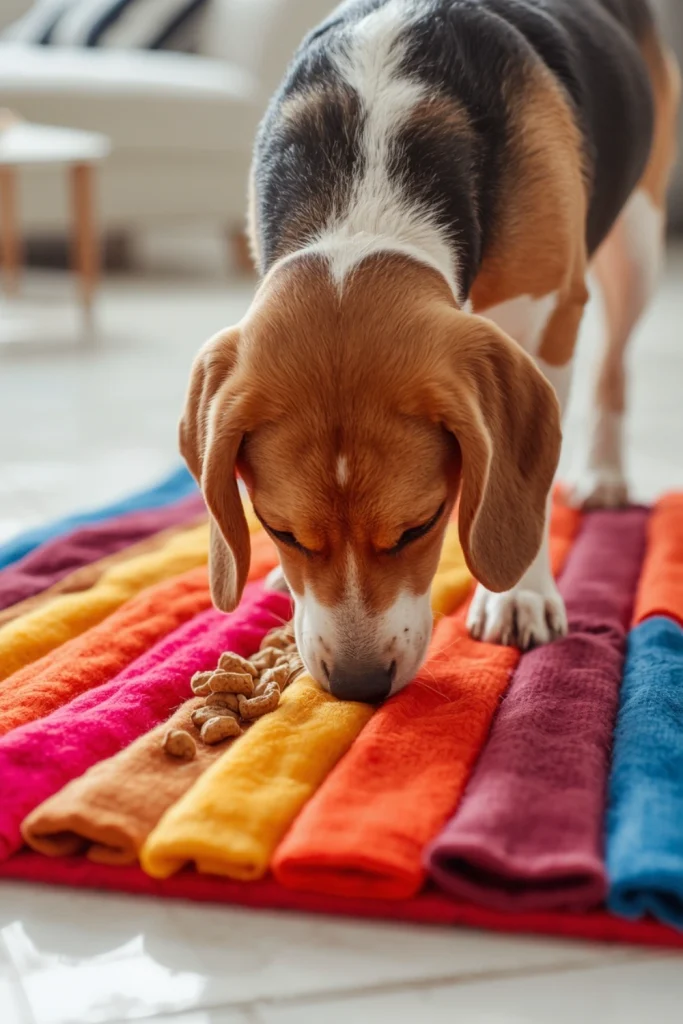
A snuffle mat is an excellent enrichment tool that allows dogs to search for hidden food using their powerful sense of smell. You can purchase one from a pet store or create a simple homemade version using fleece fabric strips attached securely to a rubber mat with suitable holes. Hide a few pieces of your dog’s regular kibble between the fabric strips and encourage your pet to search for them. This simple activity can turn an ordinary meal into an exciting experience.
Sniffing and searching provide mental stimulation and encourage dogs to use their natural foraging instincts. Start with easy-to-find treats so your dog understands the activity. As your pet becomes more confident, you can hide food in deeper sections of the mat. Always supervise your dog to prevent chewing or swallowing fabric pieces. Clean the mat regularly to keep it hygienic and safe.
3. Teach Your Dog New Tricks
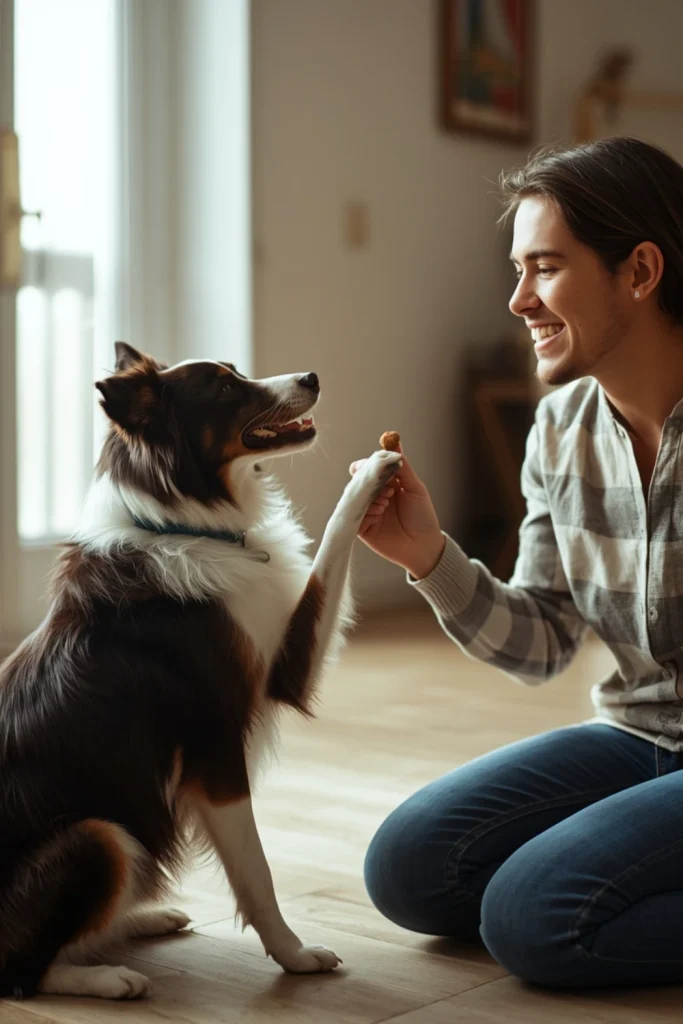
Teaching your dog new tricks is a wonderful way to keep them mentally active while spending quality time together. Dogs enjoy learning when training sessions are positive, rewarding, and interesting. You can start with simple tricks such as shake hands, spin, touch, roll over, or stand on their hind legs if physically appropriate. Use small treats, verbal praise, and gentle encouragement to reward your dog’s progress. Keep each training session short so your pet remains interested.
Once your dog understands basic tricks, introduce more challenging activities gradually. You can teach your pet to put toys into a basket, touch a target with their nose, or respond to different hand signals. Training helps improve communication and builds confidence. Remember that every dog learns at a different pace. Be patient, avoid punishment, and celebrate small improvements instead of expecting perfect results immediately.
4. Set Up an Indoor Obstacle Course
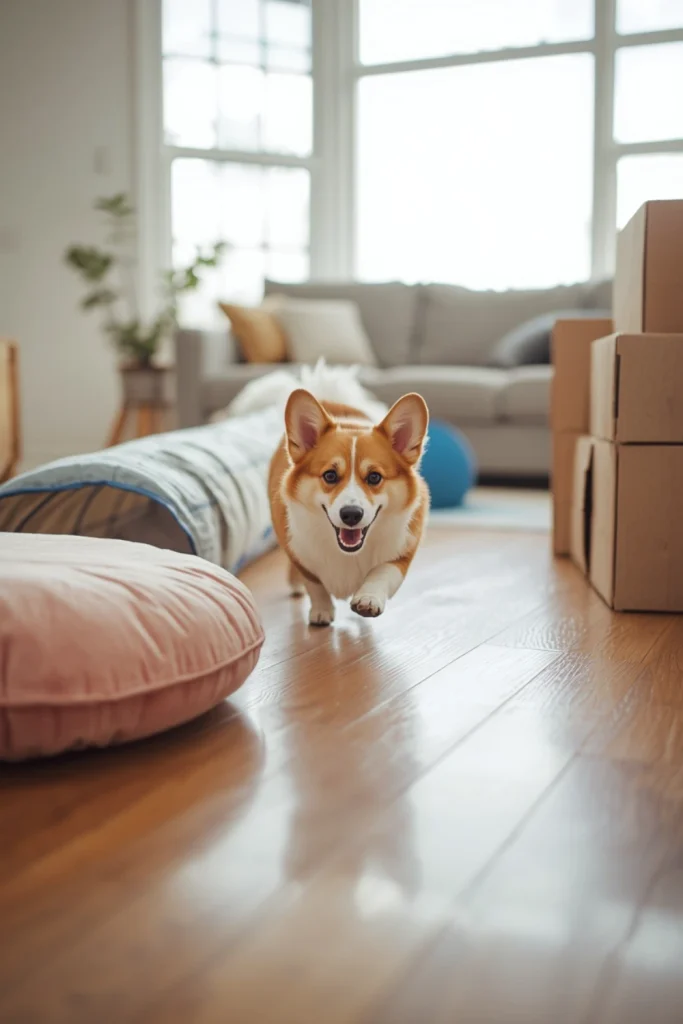
An indoor obstacle course can turn an ordinary living room into an exciting playground for your dog. You can use soft cushions, cardboard boxes, low tunnels, and lightweight objects to create a simple course. Encourage your dog to walk around obstacles, move through an open tunnel, or step over low objects. Guide your pet using treats and verbal encouragement. This activity provides gentle physical exercise while helping your dog learn to follow directions.
Make sure the obstacle course is appropriate for your dog’s age, size, and physical abilities. Avoid slippery floors, unstable furniture, high jumps, and narrow spaces. Puppies and senior dogs should have especially gentle courses that do not put pressure on their developing or aging joints. Change the arrangement occasionally to keep the experience interesting. Always supervise your dog and allow breaks whenever needed.
5. Play the Name-the-Toy Game
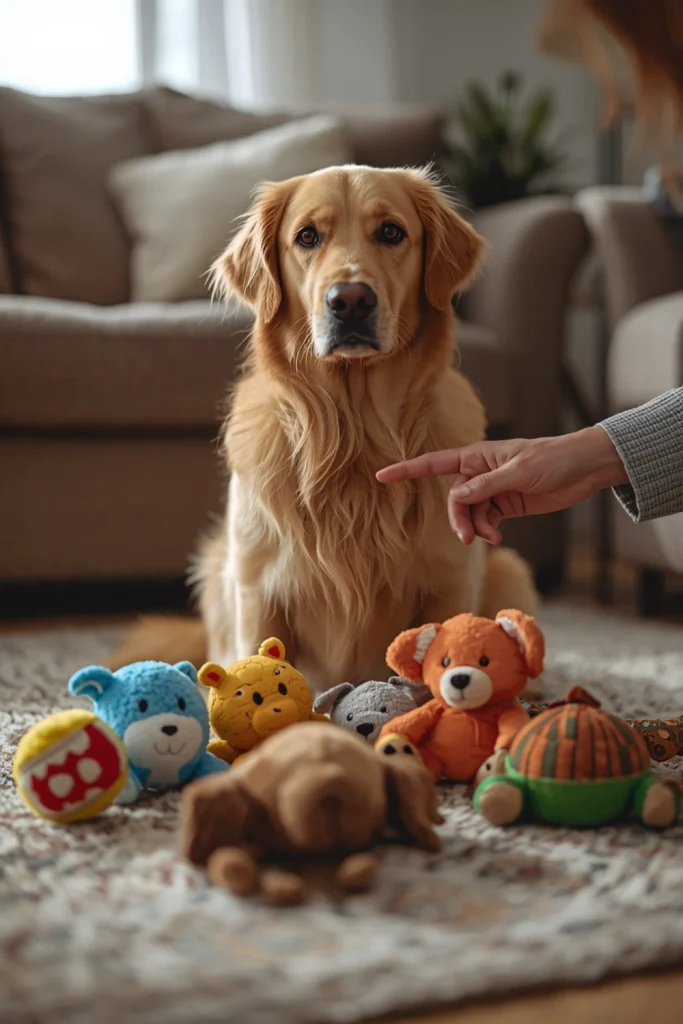
The name-the-toy game is a fun mental exercise that encourages dogs to recognize different objects. Begin by choosing two or three familiar toys and giving each one a simple name, such as Teddy, Ball, or Rope. Hold up one toy, say its name clearly, and reward your dog when they touch or pick it up. Repeat the process several times until your pet begins connecting the word with the correct object.
Once your dog understands the names, place the toys on the floor and ask them to bring a specific one. Start with two toys and gradually introduce additional choices. This game encourages listening, memory, and problem-solving skills. It is also a great way to make playtime more interactive. Choose durable, dog-safe toys and supervise your pet to prevent chewing or swallowing damaged pieces.
6. Enjoy Indoor Fetch With Soft Toys
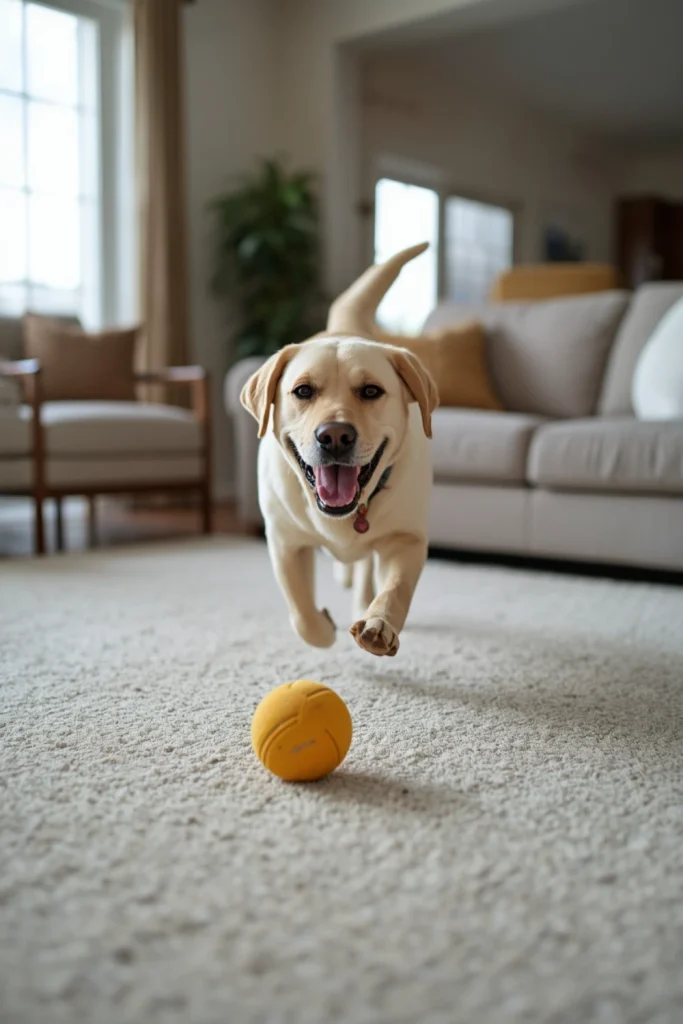
Fetch is a classic game that many dogs enjoy, and you can easily adapt it for indoor play. Instead of using a hard tennis ball, choose a lightweight, soft, and appropriately sized dog toy. Find a spacious area without sharp furniture corners or fragile objects. Gently roll the toy across a carpeted floor and encourage your dog to bring it back. Reward your pet with praise when they return the toy.
Indoor fetch can provide short bursts of physical activity, especially for energetic dogs that need something to do when outdoor exercise is limited. Keep the throwing distance short and avoid encouraging high-speed running on slippery surfaces. You can also alternate between rolling toys and asking your dog to retrieve them from different safe locations. Stop when your dog becomes tired or loses interest.
7. Make a Homemade Treat Puzzle
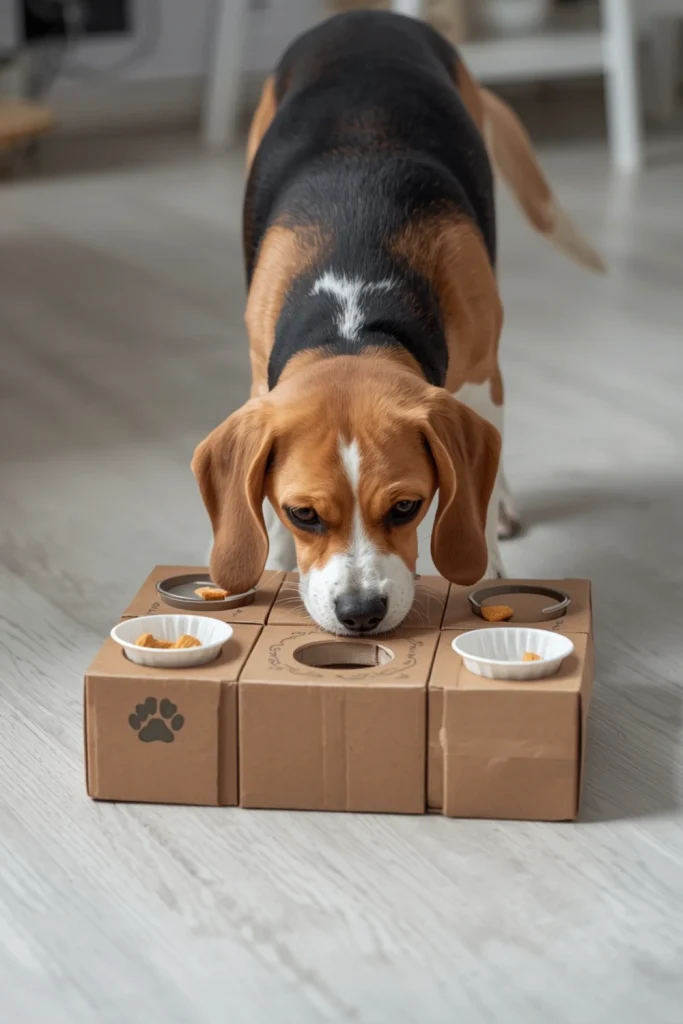
A homemade treat puzzle is an inexpensive way to challenge your dog’s problem-solving abilities. You can create a simple puzzle using a sturdy cardboard box, paper cups, or empty cardboard tubes. Place a few pieces of kibble inside and let your dog figure out how to reach the reward. Begin with an easy arrangement so your pet does not become frustrated. As your dog learns, introduce slightly more challenging setups.
This activity encourages dogs to investigate, sniff, and think independently. It can also make treat time more interesting than simply offering food from your hand. However, always supervise your dog when using homemade materials. Remove staples, tape, plastic pieces, and anything that could cause choking. If your dog enjoys shredding cardboard and swallowing pieces, choose a commercial food puzzle designed for dogs instead.
8. Practice Basic Obedience Training
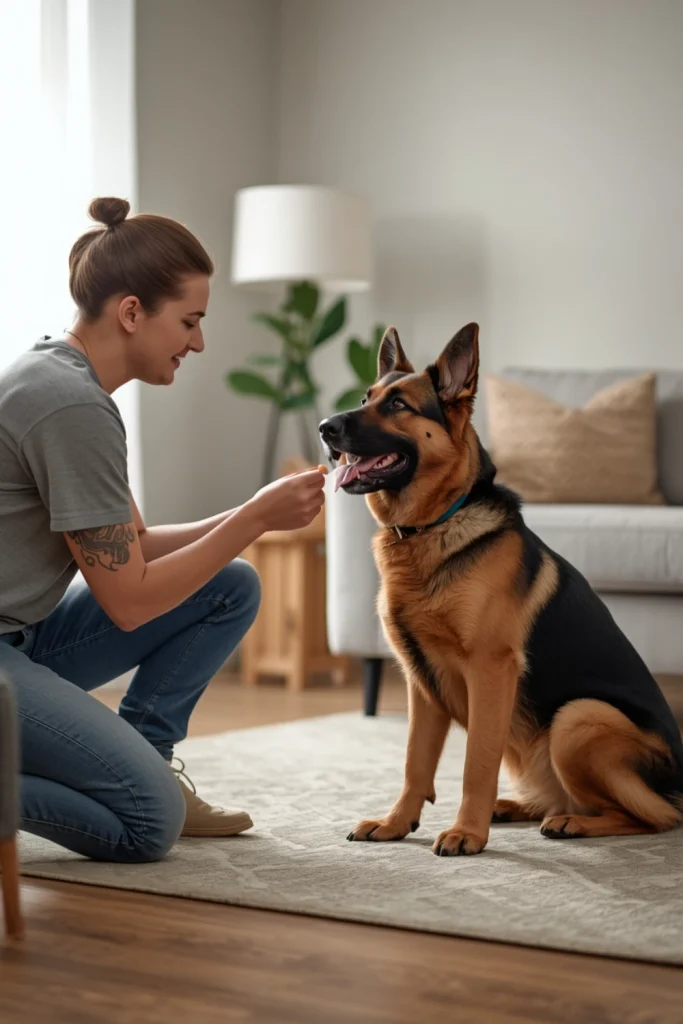
Basic obedience training is an excellent indoor activity that keeps your dog mentally engaged while reinforcing important everyday skills. Practice familiar commands such as sit, stay, down, come, and leave it. These commands can help your dog behave more confidently at home and in public spaces. Use positive reinforcement by rewarding correct responses with small treats, toys, or enthusiastic praise.
Try incorporating obedience exercises into your dog’s daily routine. For example, ask your pet to sit before receiving a meal or wait calmly before going through a doorway. Keep sessions around five to ten minutes, depending on your dog’s attention span and experience. Avoid repeating commands too quickly or becoming frustrated when your pet makes mistakes. Consistent, enjoyable practice helps dogs understand expectations and improves their relationship with their owners.
9. Play a Scent-Tracking Game
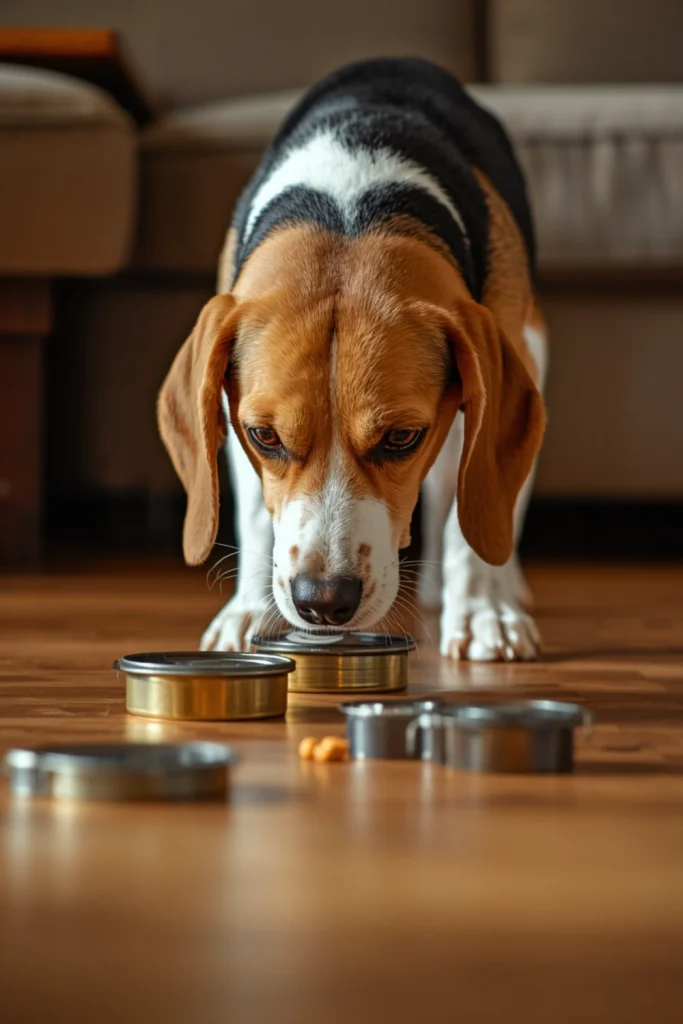
Dogs have an extraordinary sense of smell, making scent-tracking games one of the most rewarding indoor activities. Start by showing your dog a favorite treat and allowing them to smell it. Place the treat in an easy-to-find location while your dog watches. Give a cue such as find it and encourage them to search. Once your pet understands the game, hide treats in several safe locations around one room.
Gradually make the activity more challenging by hiding treats behind furniture or under lightweight objects that your dog can move safely. Scent games encourage natural searching behaviors and provide valuable mental stimulation. They are particularly useful for rainy days when outdoor walks are limited. Use small portions of your dog’s regular food to avoid excessive calories, and never hide treats near cleaning chemicals or other unsafe household items.
10. Give Your Dog a Food-Dispensing Toy
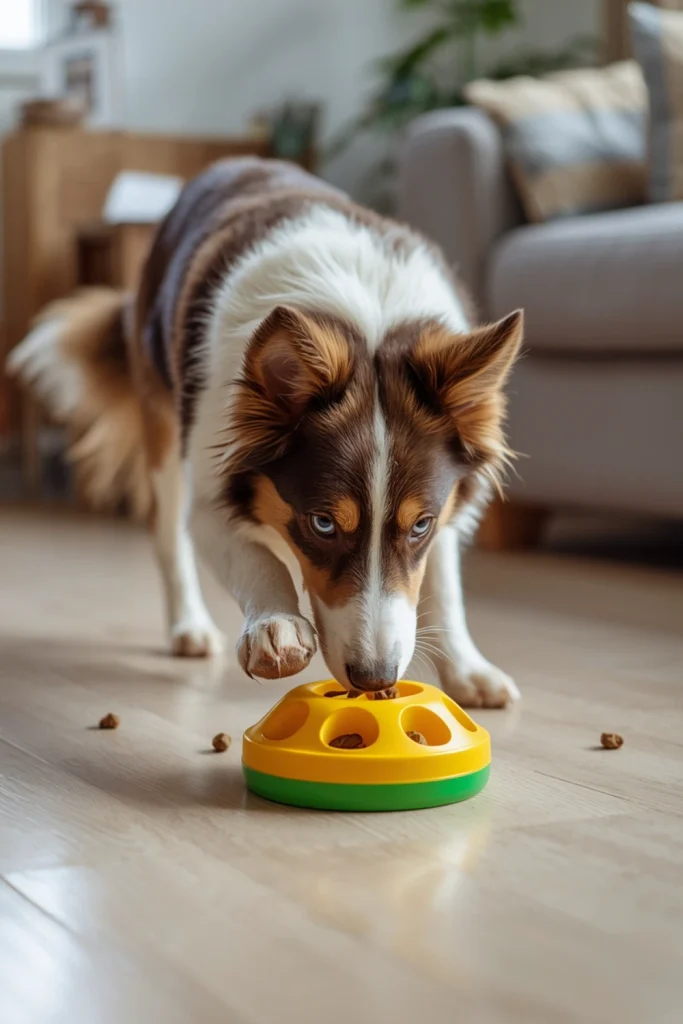
Food-dispensing toys can make mealtime more exciting while giving your dog a fun mental challenge. These toys release small amounts of kibble when your pet pushes, rolls, or moves them in the correct way. Choose a toy that matches your dog’s size, chewing strength, and experience level. Introduce it slowly by placing a few easily accessible treats inside so your dog can understand how it works.
As your pet becomes more familiar with the toy, you can adjust the difficulty according to their abilities. Some food-dispensing toys are designed to roll across the floor, while others require dogs to move different parts to access the food. These activities encourage problem-solving and can slow down fast eaters when the toy is suitable for that purpose. Clean the toy regularly and inspect it for damage.
11. Play Tug-of-War With Your Dog
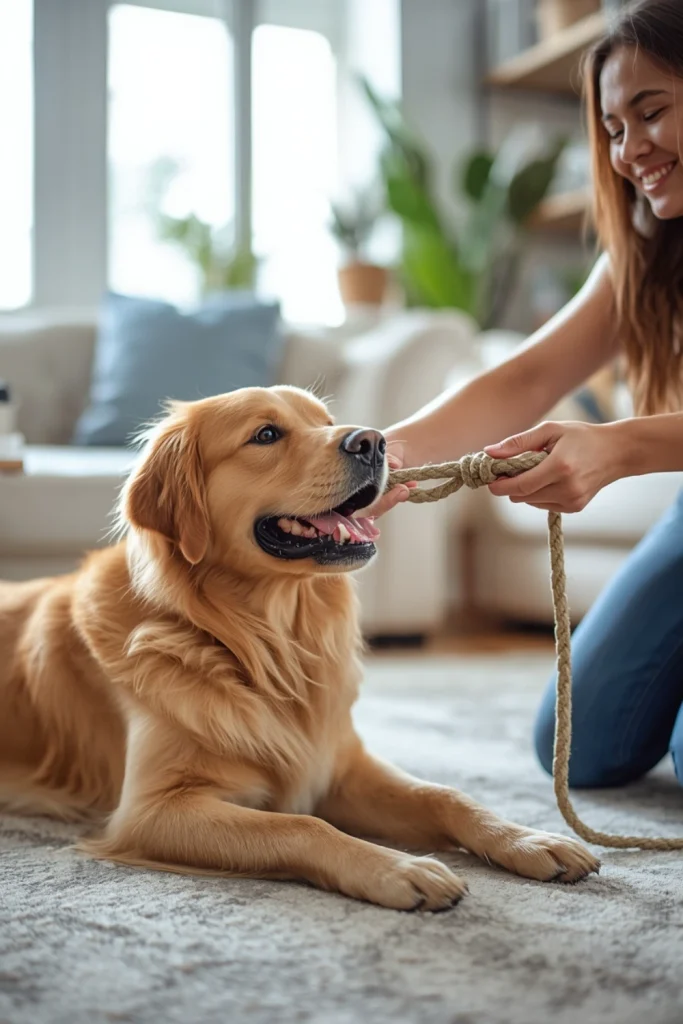
Tug-of-war is an exciting indoor game that allows dogs to use their natural pulling instincts in a controlled and enjoyable way. Choose a strong, dog-safe rope toy that is appropriate for your pet’s size. Hold one end and encourage your dog to grip the other end. Allow your pet to pull gently while keeping the game relaxed. You can also introduce simple rules such as releasing the toy when you give a drop it command.
This game can provide physical activity and strengthen communication between you and your dog. However, avoid pulling sharply, twisting your dog’s neck, or lifting them off the ground. Keep the movements controlled and stop if your dog becomes overly excited or uncomfortable. Dogs with dental problems, neck injuries, or other physical limitations may need alternative activities recommended by their veterinarian.
12. Introduce a Dog-Friendly Indoor Ball Pit
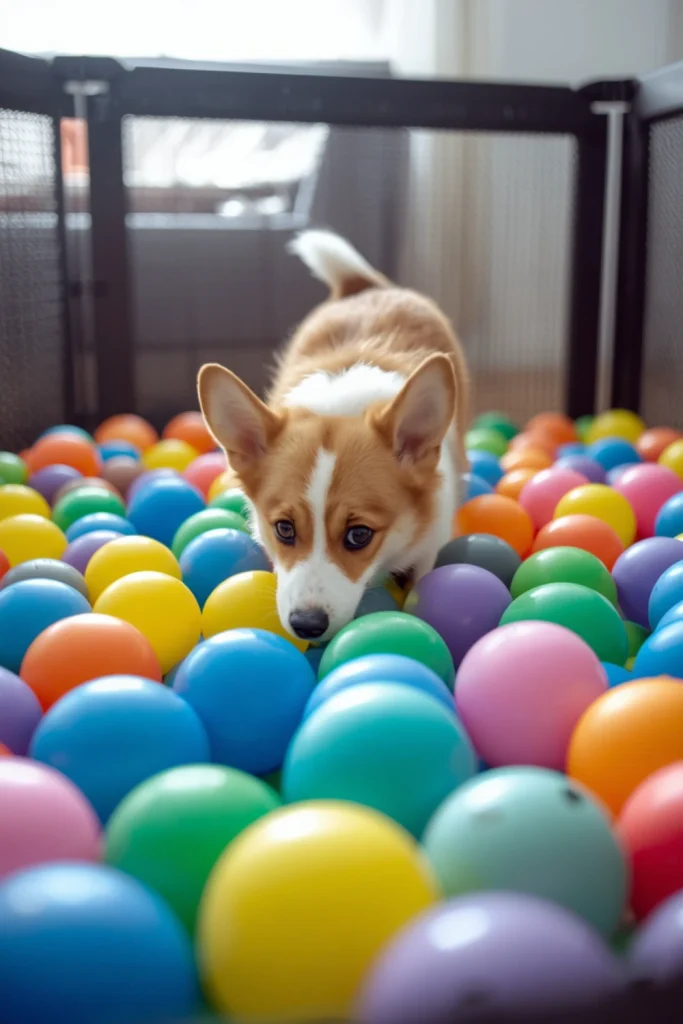
A dog-friendly ball pit can be an entertaining sensory activity for curious and playful pets. Use a sturdy, appropriately sized container or a secure playpen filled with large, lightweight plastic balls designed for safe supervised play. Place a few treats or favorite toys between the balls and encourage your dog to explore. Many dogs enjoy moving through the balls, sniffing for hidden rewards, and discovering new objects.
Introduce the ball pit slowly because some dogs may feel uncomfortable with unfamiliar textures or moving objects. Let your pet investigate at their own pace and never force them into the play area. Choose balls too large to swallow, inspect them regularly, and supervise the entire activity. If your dog shows signs of fear or attempts to chew the balls, remove the setup and try a different enrichment game.
13. Let Your Dog Enjoy a Window-Watching Break
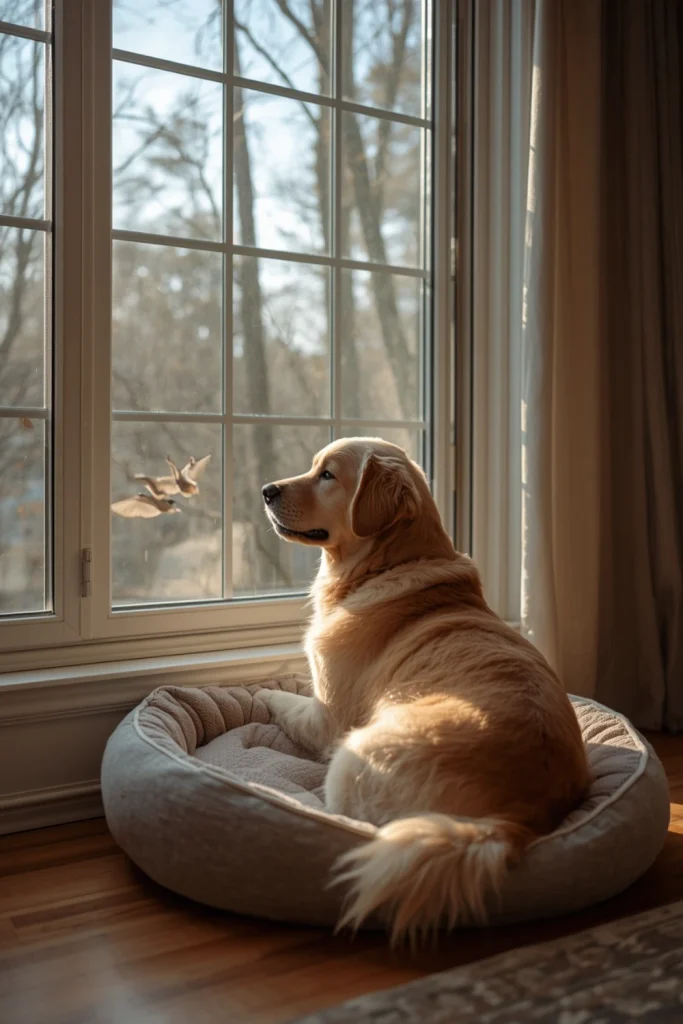
Window watching can be a simple but enjoyable way to provide environmental stimulation. Set up a comfortable resting area near a secure window where your dog can observe birds, trees, people, and other outdoor activity. Place a soft dog bed or blanket nearby so your pet can relax while watching the world outside. Some dogs enjoy observing moving objects, while others simply appreciate the fresh daylight and changing scenery.
Not every dog finds window watching relaxing. Some may become overly excited by passing animals, vehicles, or strangers. If your dog starts barking continuously or becomes anxious, use curtains or move their resting area to a quieter location. You can also combine window time with a chew toy or puzzle feeder. Keep windows securely closed or protected with suitable screens to prevent accidents.
14. Create an Indoor Treasure Hunt
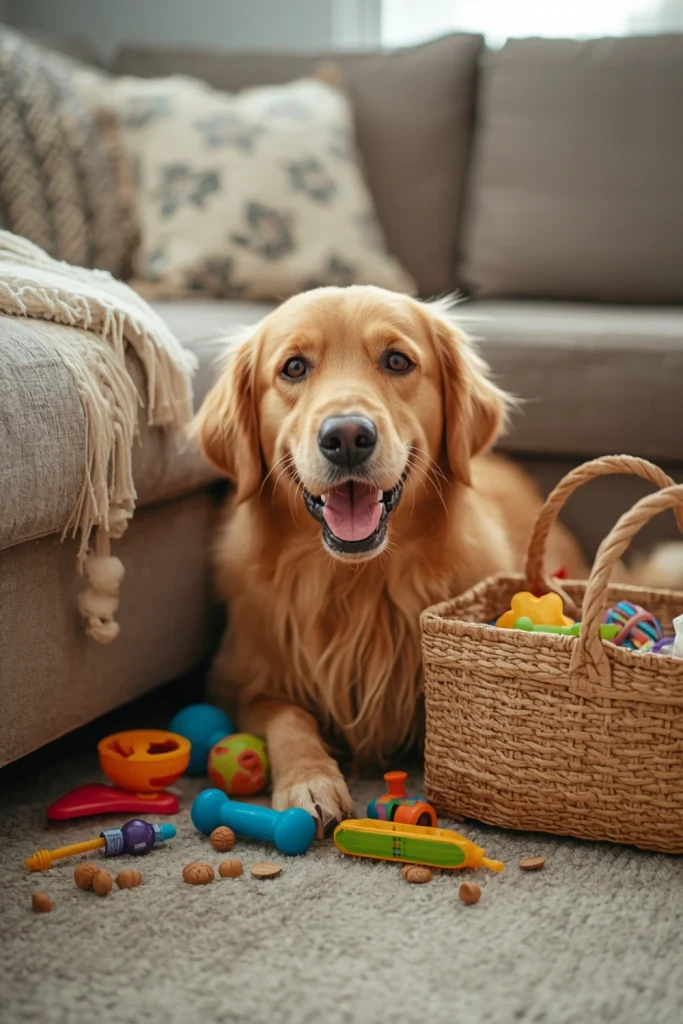
An indoor treasure hunt is a creative activity that combines sniffing, searching, and problem-solving. Choose several of your dog’s favorite toys or safe treats and hide them in different locations around one room. Start with visible hiding spots so your pet can easily discover the rewards. Give a cue such as find your toys and encourage your dog to investigate. Celebrate each successful discovery with praise.
Once your dog understands the activity, gradually increase the challenge by choosing different safe hiding places. You can hide toys behind cushions, next to furniture, or inside an open toy basket. Treasure hunts are especially useful for dogs that enjoy exploring their surroundings. Make sure every hiding location is accessible and free from dangerous objects. Avoid small items that could be swallowed and supervise your pet throughout the game.
15. Give Your Dog a Gentle Indoor Massage and Relaxation Time
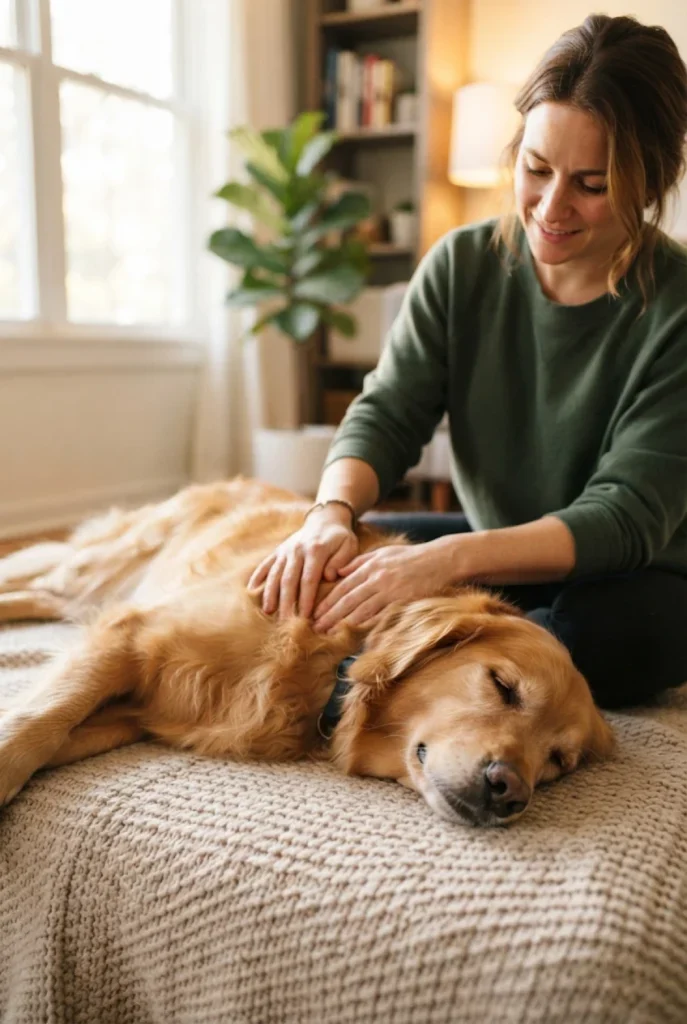
Not every indoor activity needs to involve running, jumping, or searching for treats. Gentle massage and relaxation time can help your dog unwind after an active day. Find a quiet location, sit beside your pet, and gently stroke areas where your dog enjoys being touched, such as the shoulders, chest, or back. Pay attention to your dog’s body language and allow them to move away whenever they want. A calm environment can make this experience especially enjoyable.
Relaxation activities are also useful for helping dogs become comfortable with gentle handling. You can combine massage time with quiet praise, soft brushing, or simply sitting together. Never apply pressure to painful areas or force your dog to remain still. If your pet shows signs of discomfort, stop immediately. A veterinarian or qualified canine massage professional can provide guidance if your dog has injuries or mobility problems.
Final Thoughts
Keeping your dog happy and busy indoors does not have to be expensive or complicated. With a little creativity, you can turn ordinary household spaces into exciting places for learning, playing, and exploring. Activities such as hide-and-seek, scent games, indoor fetch, treat puzzles, and obedience training provide opportunities for both mental stimulation and physical movement.
The most important thing is to understand your dog’s individual needs and choose activities that match their age, energy level, and personality. Rotate different games throughout the week, offer plenty of positive encouragement, and always prioritize safety.
Remember, a happy dog is not necessarily one that plays all day. Dogs also need enough sleep, affection, healthy meals, outdoor experiences, and quiet relaxation time. By balancing exercise, mental enrichment, and rest, you can help your furry friend enjoy a healthier and more fulfilling life.
Start with one or two activities from this list today and discover which games your dog enjoys most. Small moments of play and interaction can make a wonderful difference in your dog’s everyday happiness.


