
15 Simple Dog Enrichment Ideas Every Owner Can Try
Does your dog sometimes seem restless, bored, or constantly looking for something to do? Dogs need more than daily meals and a comfortable place to sleep. They also need opportunities to explore, solve problems, use their natural instincts, and enjoy meaningful activities. Without enough stimulation, some dogs may develop unwanted habits such as chewing furniture, excessive barking, or repeatedly demanding attention.
The good news is that keeping your dog mentally and physically engaged does not have to be expensive or complicated. With a few household items, simple toys, tasty rewards, and a little creativity, you can introduce enjoyable activities into your dog’s daily routine. These Dog Enrichment Ideas are easy to try at home and can be adapted for puppies, adult dogs, and senior companions.
1. Make a Homemade Treat Puzzle
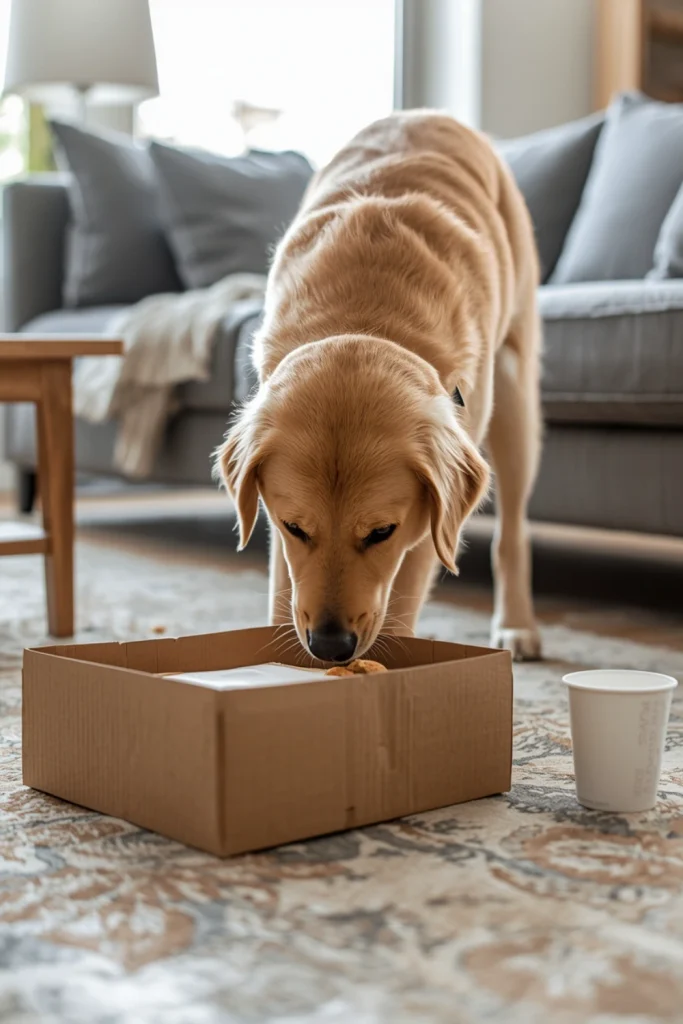
A homemade treat puzzle is one of the easiest Dog Enrichment Ideas to introduce at home. Take a clean, sturdy cardboard box and place a few pieces of your dog’s regular kibble inside. You can also use several open paper cups or small cardboard containers to create a simple searching challenge. Let your dog sniff around and discover how to reach the food. Begin with an easy arrangement so your pet can understand the activity without becoming frustrated.
As your dog becomes more confident, you can make the puzzle slightly more challenging by adding another container or spreading treats across different sections. Always supervise the activity and remove staples, tape, plastic, and other unsafe materials. If your dog starts chewing or swallowing cardboard, stop the game and choose a safer enrichment toy. Keep the rewards small and include them in your dog’s daily food allowance.
2. Introduce a Snuffle Mat
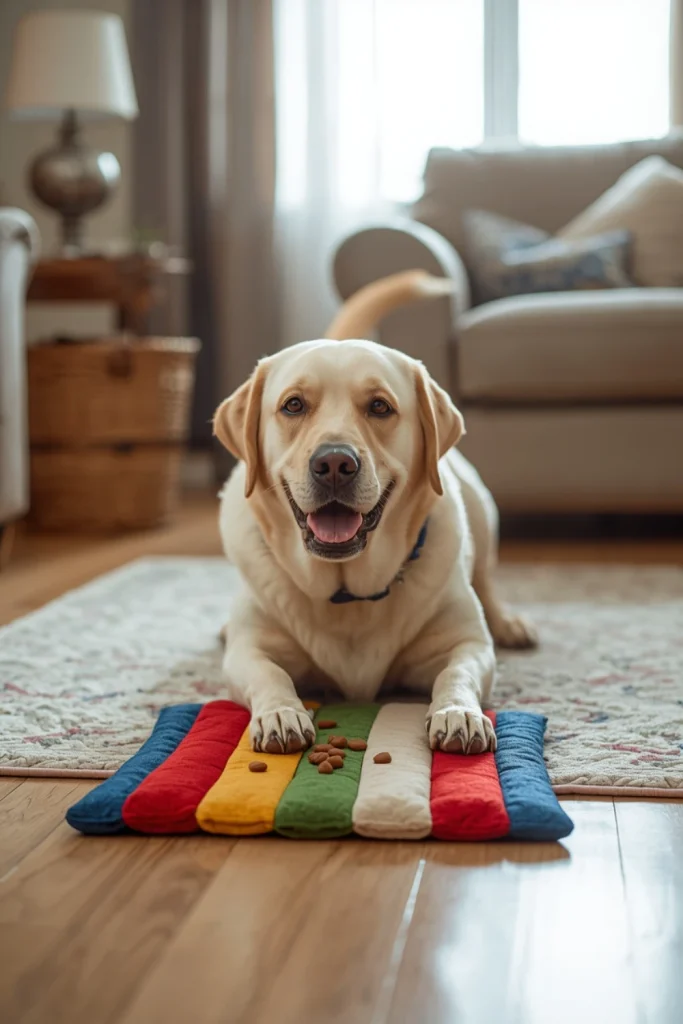
A snuffle mat is a useful enrichment tool that encourages dogs to use their natural sense of smell. It usually contains fabric strips where you can hide small pieces of kibble or dog-safe treats. Spread your dog’s food throughout the mat and allow your pet to search for each piece. Instead of finishing a meal quickly from a regular bowl, your dog gets an opportunity to sniff, explore, and work for its food.
Start by placing treats near the surface so your dog can find them easily. Once your pet understands the activity, hide some food deeper between the fabric strips. Choose a durable, washable mat and supervise your dog while using it. Remove the mat if your pet begins pulling apart or swallowing the fabric. A snuffle mat can be especially useful on rainy days or when outdoor activities are limited.
3. Play an Indoor Hide-and-Seek Game

Hide-and-seek is a simple activity that combines mental stimulation, listening skills, and interaction with your family. Ask your dog to stay in one room while you hide behind a doorway, sofa, or another safe location. Call your dog’s name and encourage it to find you. When your pet discovers your hiding place, reward it with praise, affection, or a small treat. Most dogs enjoy the excitement of finding someone familiar.
If your dog does not understand the game, begin with an easy hiding place where you are only partially hidden. Gradually make the game more challenging as your pet learns what to do. You can also allow another family member to participate. Avoid hiding in areas where your dog could become trapped or knock over objects. Keep the game friendly and give your pet enough time to find you without pressure.
4. Create a Simple Indoor Obstacle Course
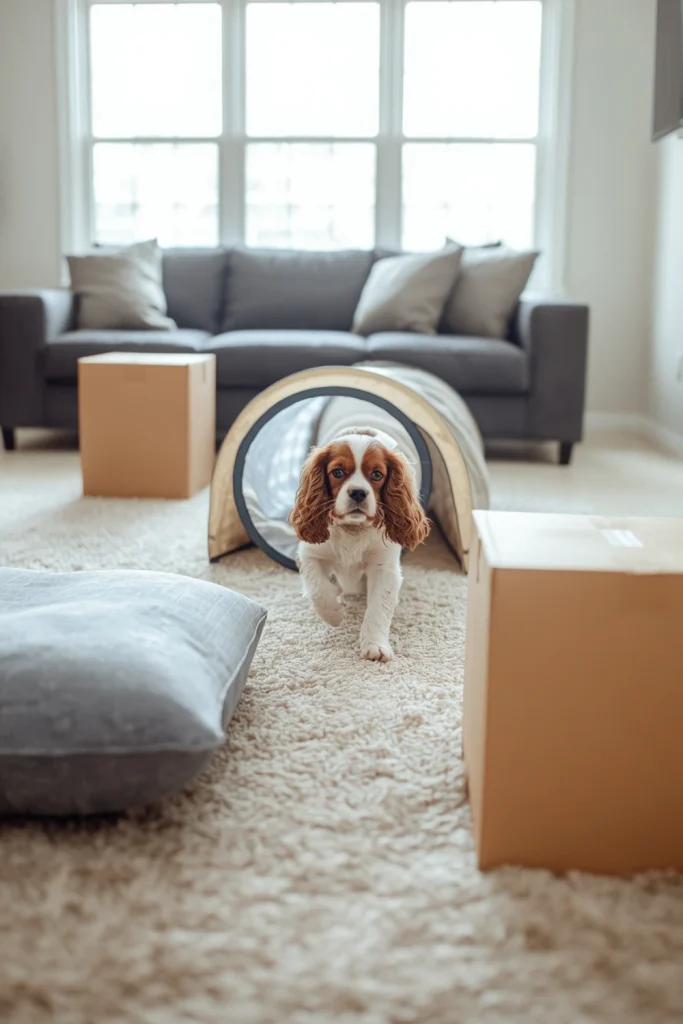
An indoor obstacle course can turn an ordinary room into an interesting activity area. Use soft cushions, a pet tunnel, sturdy cardboard boxes, and other safe objects to create a simple course. Encourage your dog to walk around the obstacles, move through a tunnel, or step over a low cushion. Guide your pet with treats and praise rather than forcing it to complete the course.
You can change the arrangement every few days to introduce something new. Keep the obstacles low and stable, and make sure the floor is not slippery. Avoid high jumps, narrow spaces, or unstable furniture that could cause injuries. Adjust the activity according to your dog’s age, size, and mobility. For puppies and senior dogs, use especially gentle obstacles and allow plenty of breaks.
5. Arrange a Dog-Friendly Scent Hunt
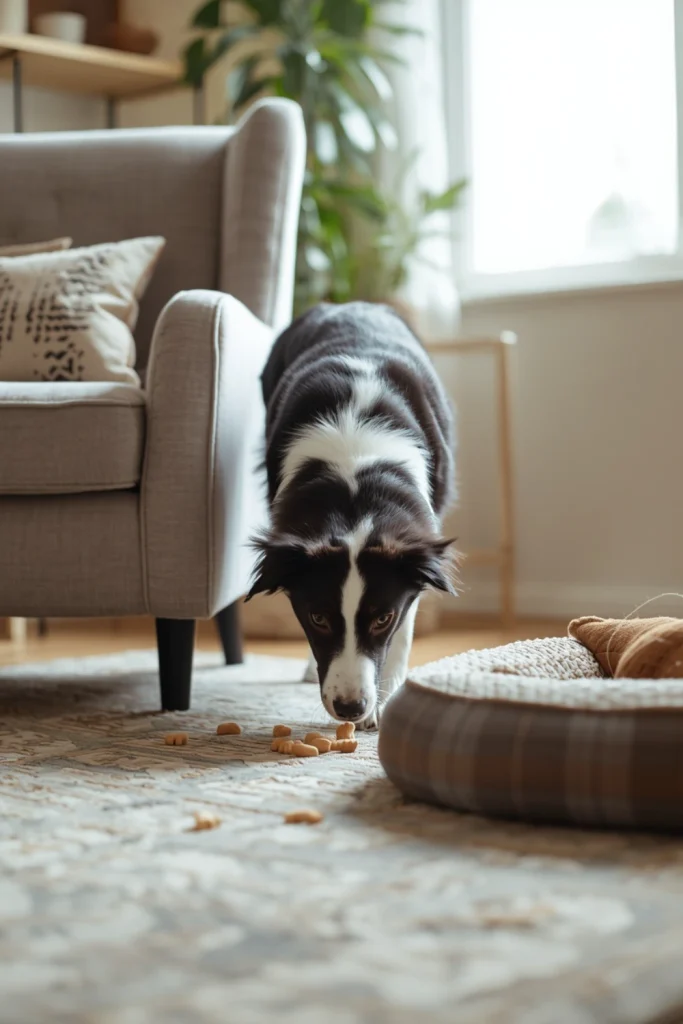
Dogs have an excellent sense of smell, and scent-based activities allow them to use this natural ability. Hide a few small pieces of your dog’s regular kibble around one room and encourage your pet to find them. Begin with easy hiding places, such as beside a chair, near a dog bed, or behind a safe object. Use a cheerful cue such as “find it” to help your dog understand the game.
As your pet improves, you can choose slightly more challenging hiding spots. Make sure the treats are accessible and never hide food near cleaning products, electrical cords, or dangerous household objects. Remember every hiding place so no food is left behind. Scent hunts are particularly useful for dogs that enjoy exploring and sniffing. They can provide a satisfying mental challenge without requiring a large space or expensive equipment.
6. Use a Food-Dispensing Toy
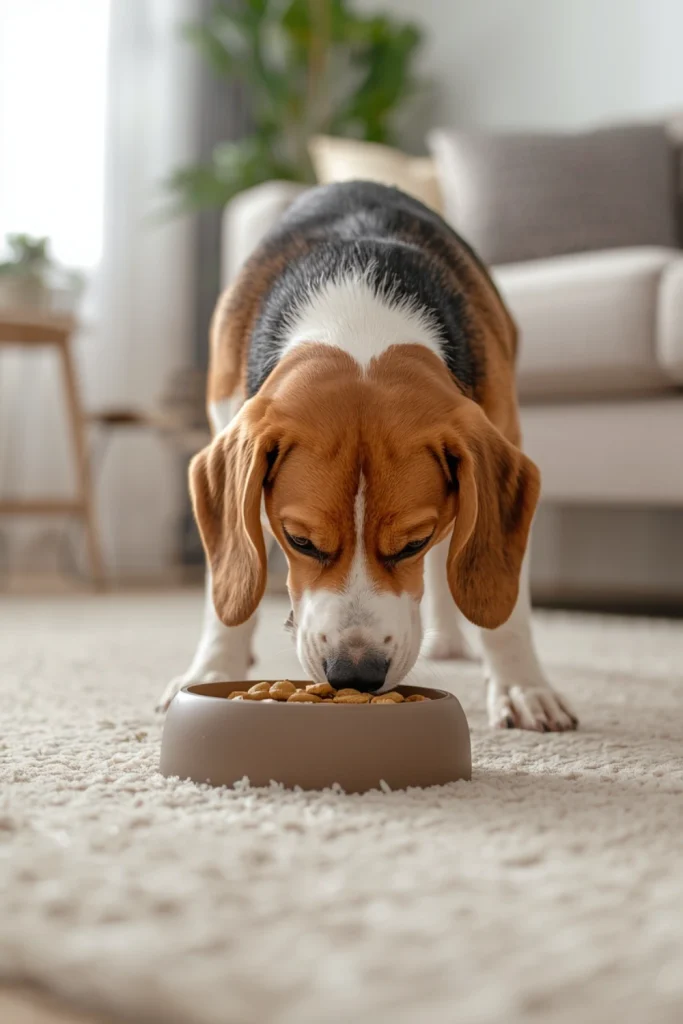
Food-dispensing toys are designed to make dogs work gently to reach their food or treats. Many are made from durable rubber and contain an opening where you can place kibble or suitable dog-safe fillings. Your dog can roll, move, or lick the toy to release the reward. This creates a fun challenge and can make an ordinary meal more interesting.
Choose a toy that matches your dog’s size and chewing strength. Start with an easy filling so your pet can quickly understand how the toy works. Avoid ingredients that are unsafe for dogs, including chocolate, grapes, raisins, onions, and products containing xylitol. Supervise your dog when introducing a new toy and clean it properly after use. Remember that treats and fillings should be included in your pet’s daily calorie allowance.
7. Teach Your Dog a New Trick
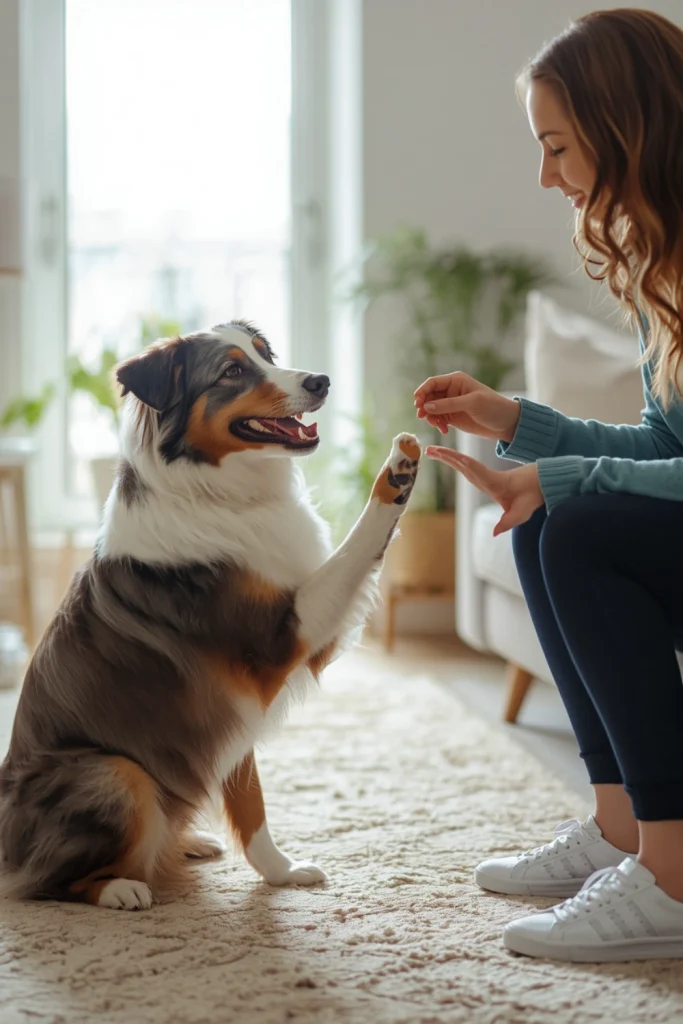
Learning new tricks is a wonderful way to provide mental enrichment. Choose a simple trick such as shake, spin, touch, wave, or bow. Break the activity into small steps and reward your dog whenever it makes progress. For example, if you are teaching your dog to shake paws, begin by rewarding it for lifting one paw slightly. Gradually encourage the complete movement.
Keep training sessions short and positive, especially if your dog is a beginner. Five to ten minutes may be enough for one session. Use small treats, praise, and patience rather than punishment or pressure. If your pet becomes tired or distracted, take a break and try again later. Learning new tricks gives dogs an enjoyable challenge and improves communication between pets and their owners.
8. Rotate Your Dog’s Toys

Dogs may lose interest in toys when the same items are available every day. Toy rotation is an easy way to make familiar playthings feel exciting again. Keep several safe toys in a storage box and offer only a few at a time. After a few days, replace some of the available toys with different ones. Your dog may become more interested in a toy it has not seen recently.
You do not need to purchase new toys constantly. Simply organizing your existing collection can provide enough variety. Choose toys according to your dog’s chewing habits and play style. Inspect each toy regularly for loose parts, damaged stitching, or pieces that could be swallowed. Remove damaged items immediately. Toy rotation is a simple enrichment habit that can make everyday play more interesting without adding unnecessary expense.
9. Play the Treat Shell Game
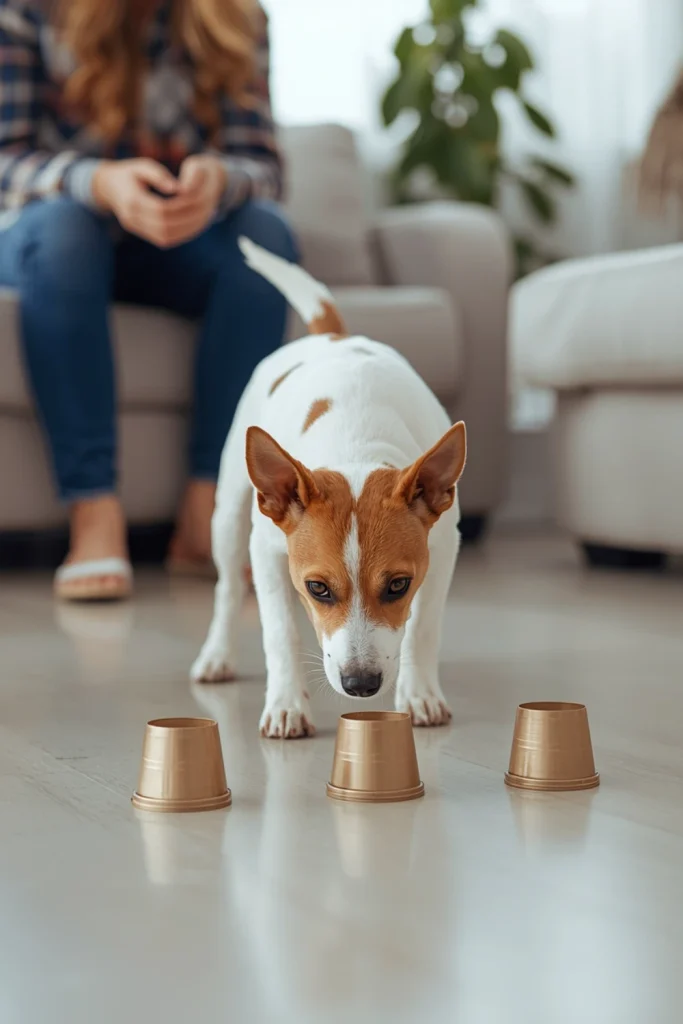
The treat shell game is a simple problem-solving activity that can keep your dog mentally engaged. Place a small treat under one of two or three lightweight, pet-safe cups. Allow your dog to watch where you hide the reward, then encourage it to choose the correct cup. When your pet finds the treat, offer praise and repeat the activity.
Begin with two cups placed a short distance apart. Once your dog understands the game, you can add another cup or change their positions. Avoid cups that can easily break or create sharp edges. Never allow your dog to chew or swallow the cups. Keep the game short and rewarding, and make it easier if your pet becomes confused. This activity is a great choice for food-motivated dogs that enjoy learning through play.
10. Make a DIY Towel Treat Game

A towel treat game is an inexpensive way to turn regular feeding time into an enrichment activity. Spread a clean towel on the floor and place a few pieces of your dog’s regular kibble across it. Loosely fold or roll the towel so the food is partly hidden. Allow your dog to sniff and explore until it discovers the rewards. Start with loose folds to make the activity easy for beginners.
Choose an old towel that is clean and free from loose threads or damaged edges. Always supervise the game because some dogs may chew or swallow fabric. If your pet starts eating the towel, remove it and use a safer alternative, such as a snuffle mat. This activity is best for dogs that enjoy sniffing and searching for food. It is also easy to prepare when you need a simple indoor game.
11. Give Your Dog a Safe Chewing Toy
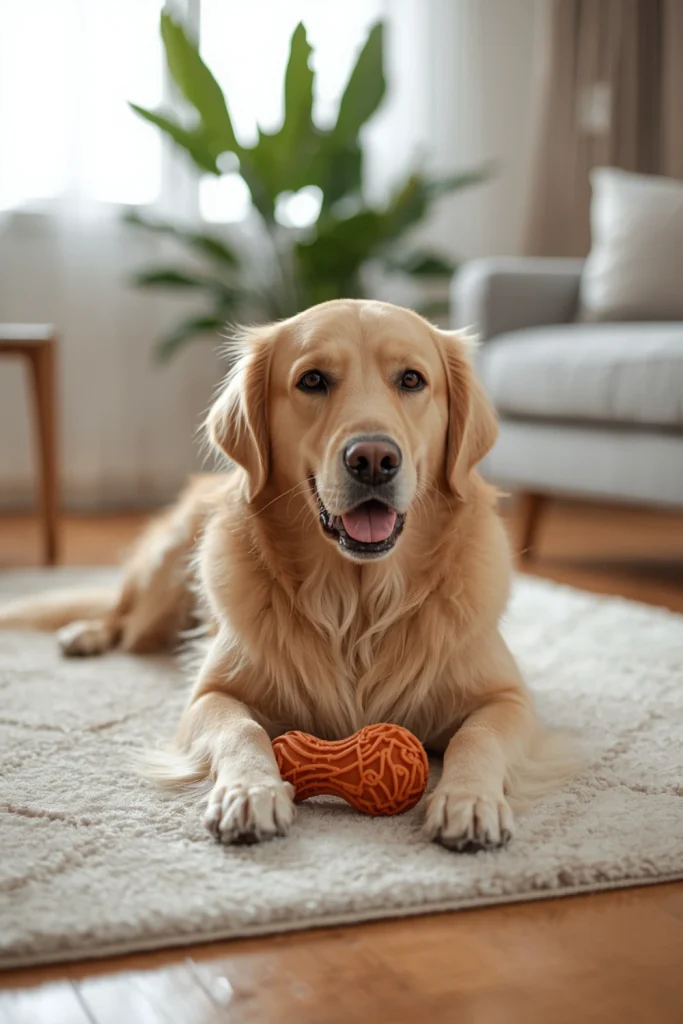
Chewing is a natural behavior for dogs, and providing appropriate chew toys gives your pet a suitable way to enjoy this activity. Choose a durable rubber toy or another dog-safe product designed for your dog’s age, size, and chewing strength. Some toys can also be filled with kibble to combine chewing with food-based enrichment. Offer the toy in a comfortable area where your dog can relax.
Not every chew product is suitable for every dog. Avoid extremely hard items that may damage teeth, as well as objects that splinter or break into pieces that could be swallowed. Supervise your dog when introducing a new chew toy and inspect it regularly for damage. Remove it if pieces begin coming loose. A safe chewing opportunity can provide entertainment and help redirect attention from shoes and household furniture.
12. Practice Basic Obedience Training
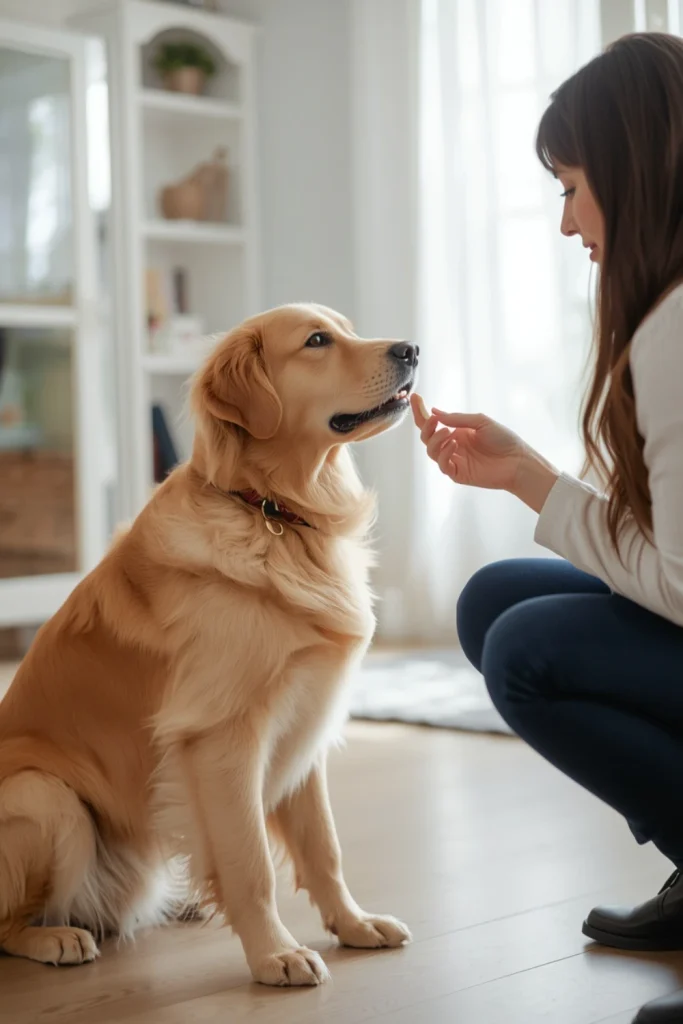
Basic obedience training is more than teaching good manners. It also gives your dog an opportunity to think, listen, and respond to different cues. Spend a few minutes practicing commands such as sit, stay, down, come, and leave it. Use small rewards and positive encouragement whenever your dog responds correctly. You can practice in different rooms to make the activity more interesting.
Keep each session short and avoid repeating commands in a frustrated voice. If your dog struggles, make the task easier and reward small improvements. Never punish your pet for making mistakes. Regular training helps build communication and gives your dog a productive activity during quiet hours. Even a short daily practice session can become a valuable part of your enrichment routine.
13. Create a Safe Window-Watching Area
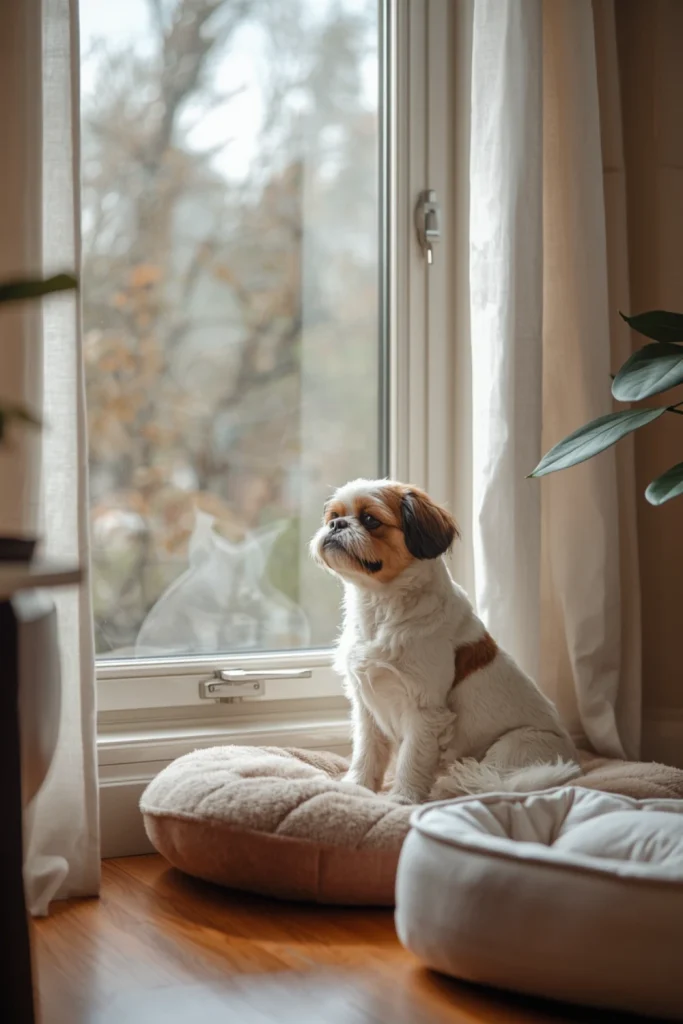
Many dogs enjoy watching birds, people, trees, and other outdoor activity from a comfortable indoor spot. Place a supportive dog bed or stable cushion near a secure window where your pet can safely observe the surroundings. This simple setup provides visual stimulation without requiring special equipment. Some dogs enjoy spending quiet time watching the outside world while their families are busy.
Make sure the window is secure and your dog cannot fall, escape, or damage the screen. Avoid using unstable furniture as a viewing platform. If your dog becomes anxious or barks continuously at outdoor activity, close the curtains or move the resting area somewhere quieter. The goal is to create a comfortable observation spot, not a source of constant excitement. Pay attention to your dog’s body language and adjust the environment accordingly.
14. Play Gentle Indoor Fetch
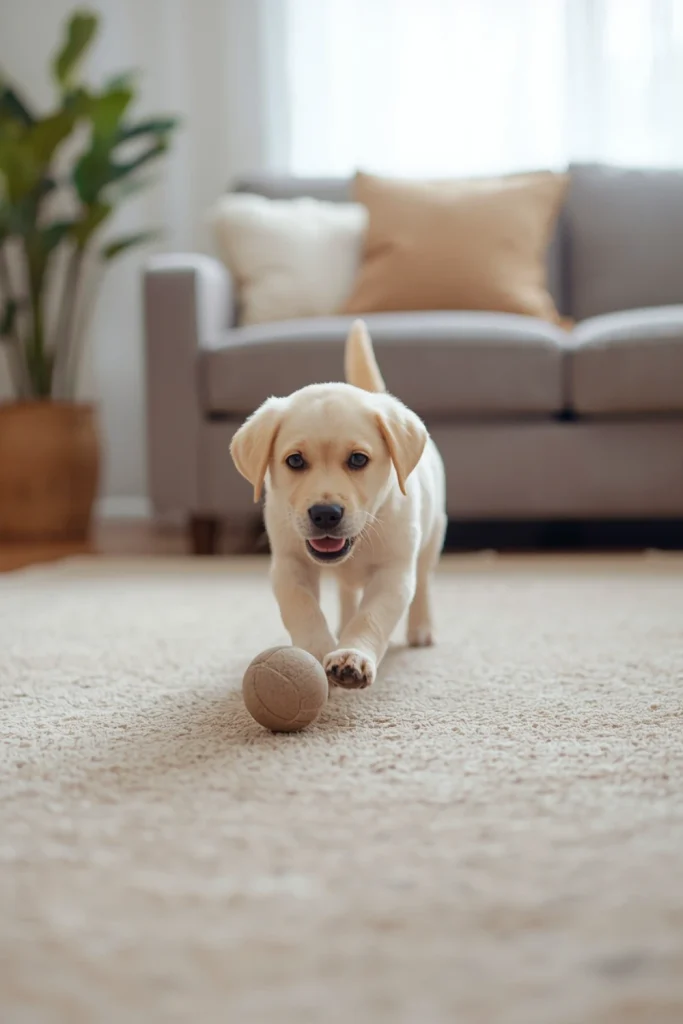
If your dog enjoys chasing toys, gentle indoor fetch can provide movement and entertainment when outdoor play is not possible. Choose a soft ball or lightweight toy and toss it a short distance across a clear, carpeted area. Encourage your dog to bring the toy back and reward it with praise. Keep the game relaxed and avoid throwing objects toward furniture or slippery surfaces.
Adjust the activity to your dog’s size, age, and physical ability. Avoid long, fast throws that encourage sudden turns or collisions. Puppies, senior dogs, and pets with joint problems may need gentler alternatives. Stop if your dog seems tired, uncomfortable, or overly excited. A few controlled rounds can add enjoyable movement to your dog’s daily routine without requiring a large outdoor space.
15. Enjoy Quality Interactive Playtime
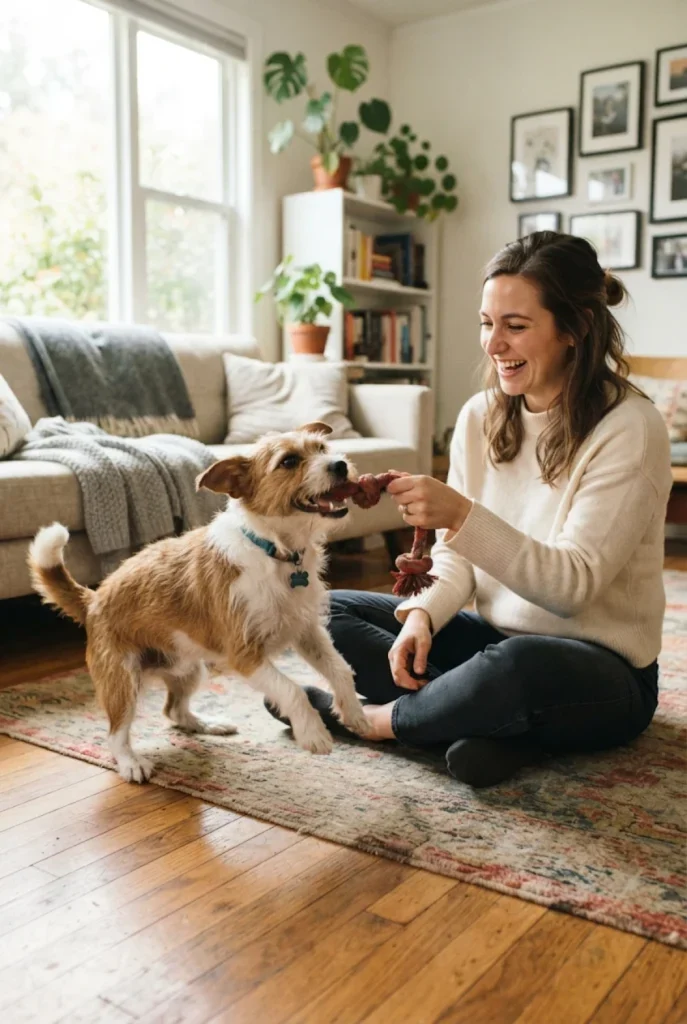
Sometimes the best enrichment activity is simply spending focused time with your dog. Put away distractions and enjoy a short play session using your pet’s favorite toy. You can combine gentle tug, toy searching, simple tricks, or a familiar interactive game. Talking to your dog, offering praise, and responding to its playful behavior can make ordinary moments more meaningful.
Dogs are social animals, and many enjoy being included in family activities. Even ten or fifteen minutes of focused interaction can provide valuable mental and emotional stimulation. Pay attention to your dog’s body language and choose games it genuinely enjoys. Some dogs prefer energetic play, while others enjoy gentle interaction and quiet companionship. Regular positive attention helps strengthen your relationship and makes your dog’s everyday routine more rewarding.
Final Thoughts
Dog enrichment does not have to involve expensive equipment, complicated training, or hours of preparation. Simple activities such as scent hunts, snuffle mats, homemade puzzles, toy rotation, and interactive play can make everyday life more interesting for your pet. The best Dog Enrichment Ideas are those that encourage natural behaviors while matching your dog’s personality, age, and physical abilities.
Start with two or three activities that your dog enjoys and gradually introduce more variety. Remember to supervise homemade games, use suitable rewards, provide regular exercise, and allow enough time for rest. Most importantly, make enrichment a positive experience rather than a daily task your dog must complete. A little creativity and consistent attention can help create a happier, healthier, and more engaging home environment for your furry companion.


