
12 Indoor Dog Exercise Ideas for Small Apartments
Living in a small apartment does not mean your dog has to miss out on daily exercise. Even without a backyard or a large living room, you can help your furry companion stay active, healthy, and happy with simple indoor activities. The right games can turn a small space into an enjoyable exercise area.
These Indoor Dog Exercise Ideas are designed for apartment dogs, busy owners, and anyone who wants to keep their pet physically and mentally engaged at home. From hallway games to indoor obstacle courses, these activities can help burn energy, reduce boredom, and strengthen the bond between you and your dog.
1. Play Indoor Hide-and-Seek
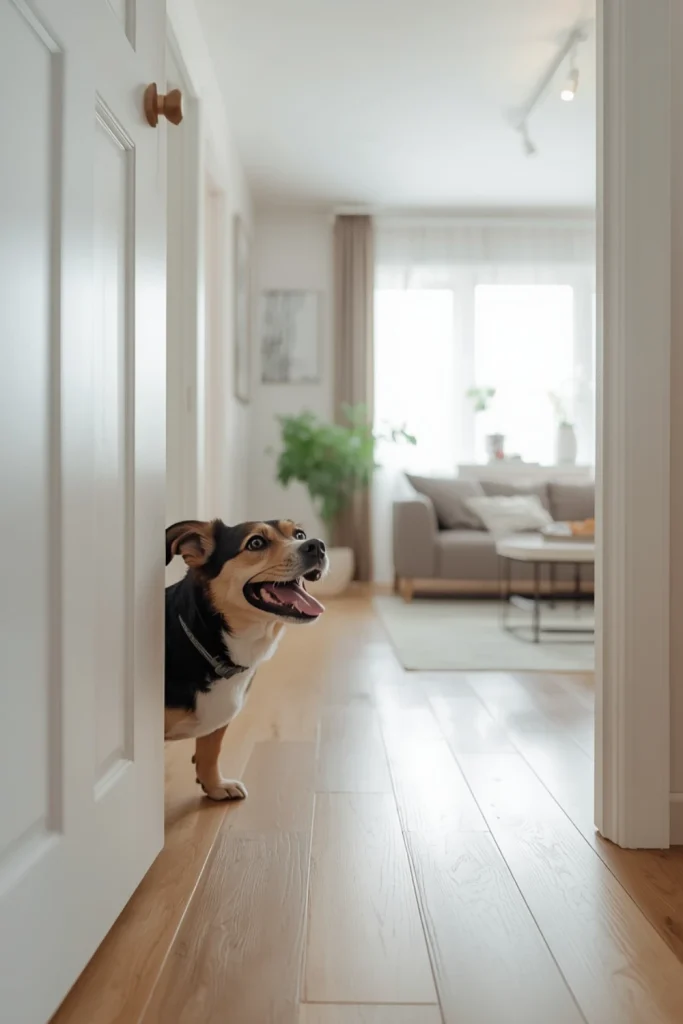
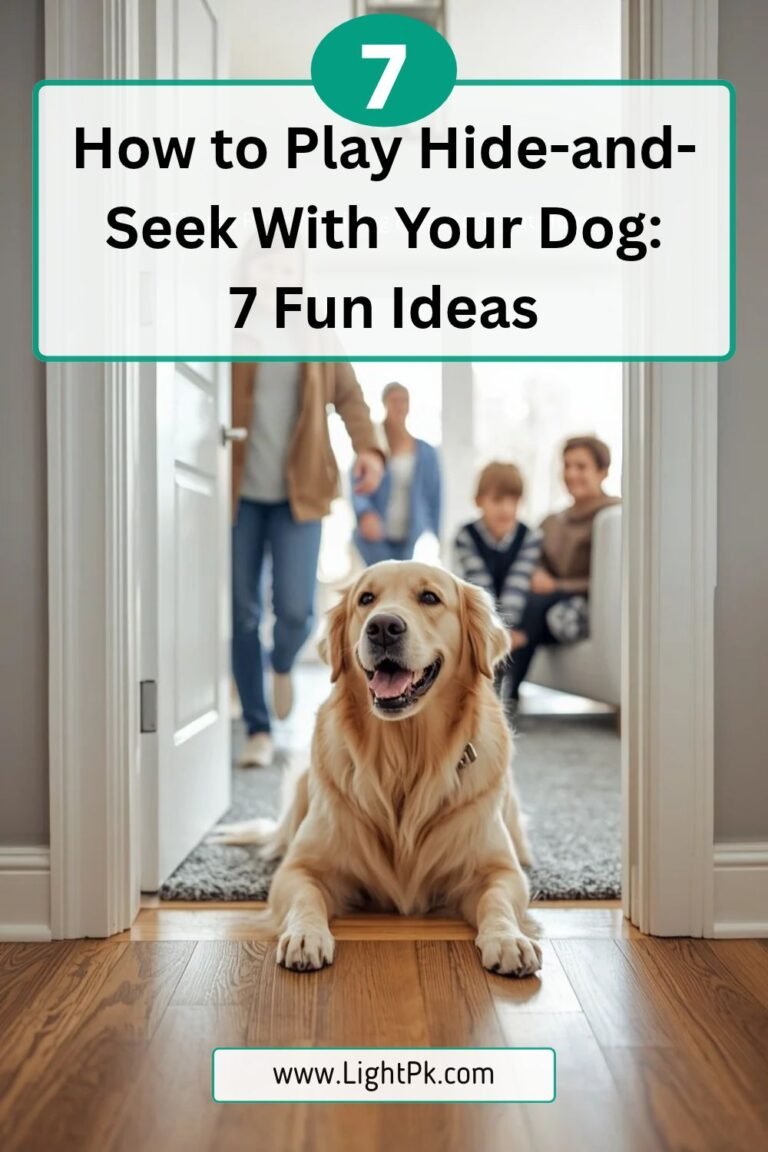
Hide-and-seek is one of the easiest Indoor Dog Exercise Ideas because it requires very little equipment. Ask your dog to stay in one safe area while you hide behind a doorway, around a corner, or behind a piece of furniture. Call your dog’s name in a cheerful voice and encourage them to find you. When your dog discovers your hiding place, reward them with praise, affection, or a small treat.
This game encourages your dog to walk around, explore, and use their senses. Start with easy hiding places so your dog understands the activity. Gradually make the game more challenging as your pet becomes confident. Keep pathways clear, avoid slippery floors, and never hide somewhere that could cause your dog to jump or squeeze into an unsafe space.
2. Create a Mini Indoor Obstacle Course
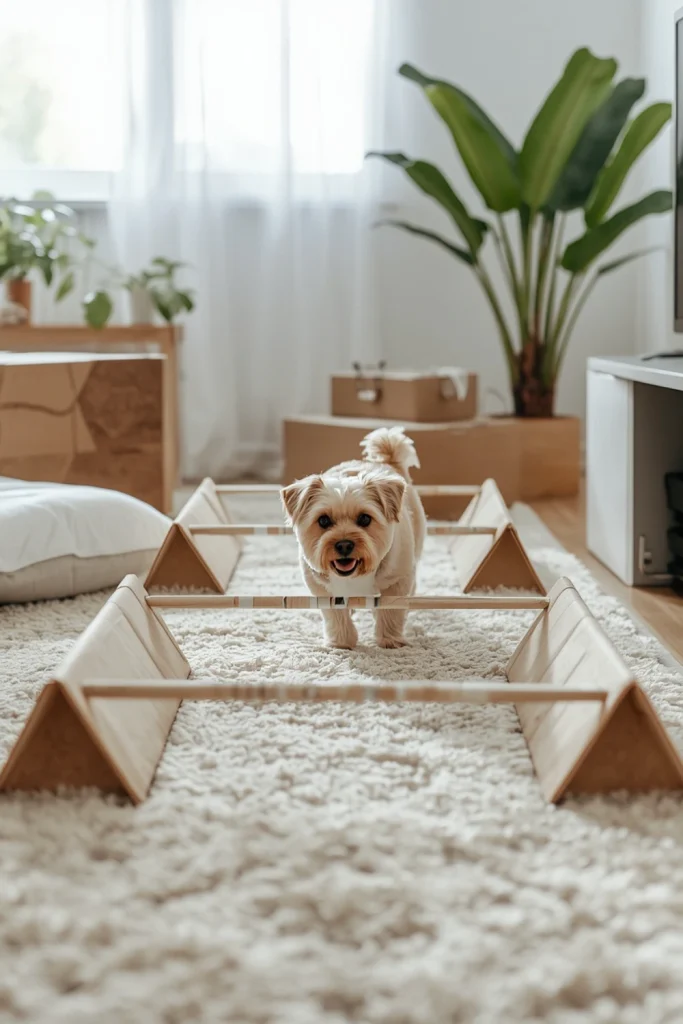
A mini obstacle course can turn an ordinary living room into an exciting activity area. Use soft cushions, low cardboard boxes, and stable objects to create a simple route for your dog to follow. Encourage your pet to walk around obstacles, step over a low rolled towel, or move between two cushions. Keep everything low and secure so your dog can move comfortably without jumping from heights.
Begin with just two or three obstacles and guide your dog through the course using treats or verbal encouragement. As your dog learns the route, you can rearrange the objects to make the activity more interesting. Avoid chairs, unstable furniture, sharp corners, and slippery surfaces. The purpose is controlled movement and confidence, not speed or difficult jumps.
3. Play Gentle Indoor Fetch
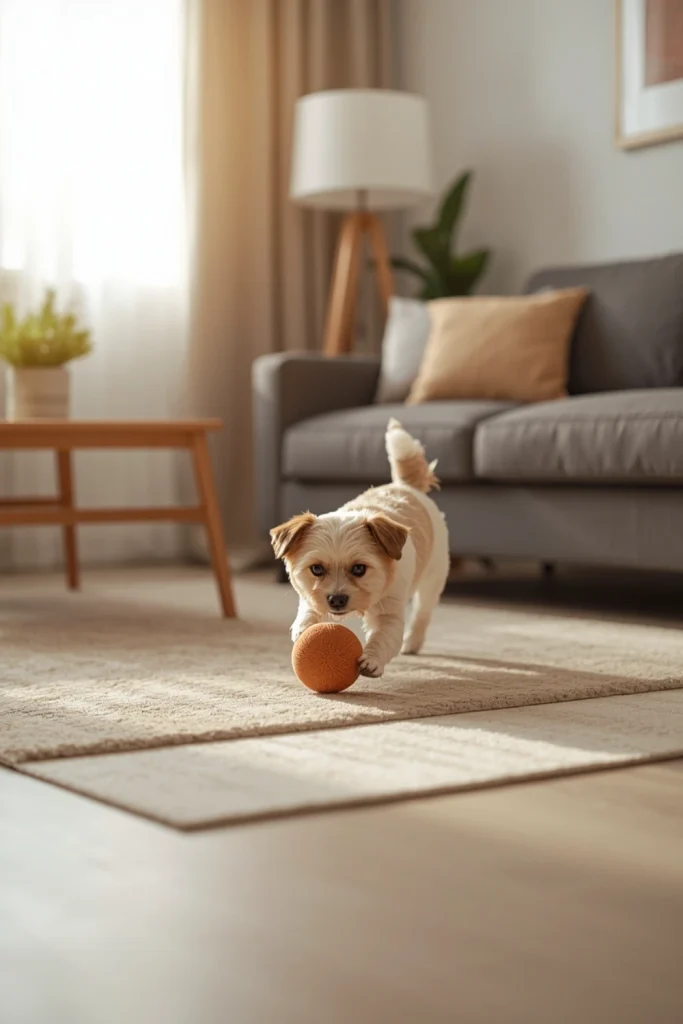
Indoor fetch is a simple way to encourage movement when outdoor play is not possible. Choose a soft plush ball or lightweight fabric toy that is suitable for your dog’s size. Roll the toy gently across a clear area of your living room or down a short hallway. Encourage your dog to retrieve it and bring it back. Rolling is usually safer than throwing because it reduces the chance of collisions with furniture.
Keep each round short and give your dog time to rest between turns. Avoid playing on polished tiles or other slippery flooring where your dog could lose balance. If your apartment has limited space, you do not need long throws. A few controlled retrieves can provide enjoyable movement while helping your dog practice listening and returning when called.
4. Try Indoor Tug-of-War
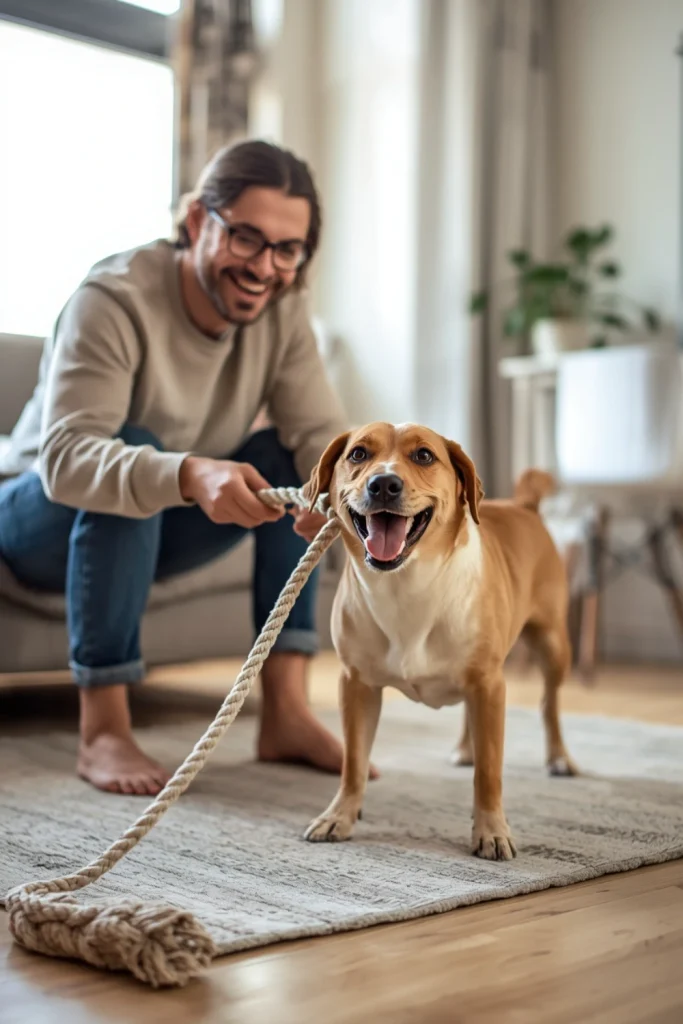
Tug-of-war can provide a fun physical activity in a small apartment. Choose a strong, dog-safe rope or fabric tug toy and invite your dog to hold one end while you gently hold the other. Keep your movements controlled and allow your dog to pull without twisting their neck or lifting their body off the floor. This activity can engage several muscle groups while giving your dog an enjoyable way to interact with you.
Teach a simple release cue, such as “drop it,” and reward your dog when they let go. Keep play sessions friendly and stop if your dog becomes uncomfortable, overly excited, or begins pulling too roughly. Avoid tugging with puppies who have dental discomfort or dogs with neck, back, or joint problems unless your veterinarian has approved the activity.
5. Set Up a Treat Scavenger Hunt
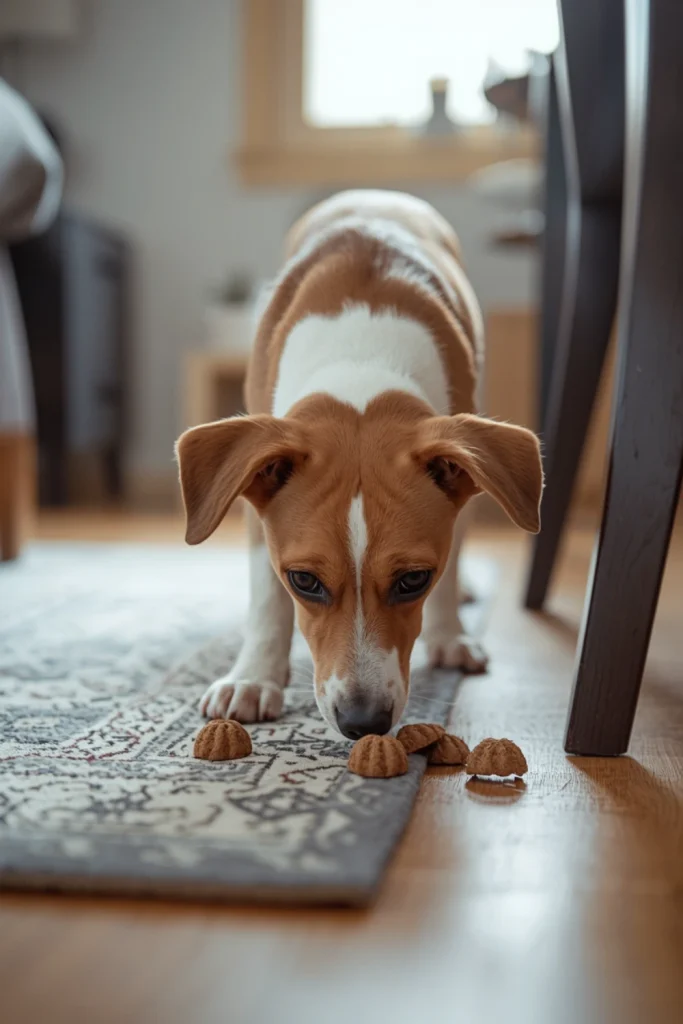
A treat scavenger hunt encourages your dog to move around while using their powerful sense of smell. Start by showing your dog a small treat and placing it somewhere easy to find, such as beside a chair or near a dog bed. Give a search cue and allow your pet to sniff it out. Once your dog understands the game, hide treats in a few different safe locations around the room.
Keep the treats visible or easy to reach at first, then gradually increase the challenge. Use only dog-safe treats and account for them in your dog’s daily food allowance. Do not hide food near electrical cables, cleaning products, houseplants, or small objects that your dog might swallow. Supervise the activity and make sure your pet can access every hiding place without climbing or squeezing into tight spaces.
6. Use a Snuffle Mat for Active Feeding
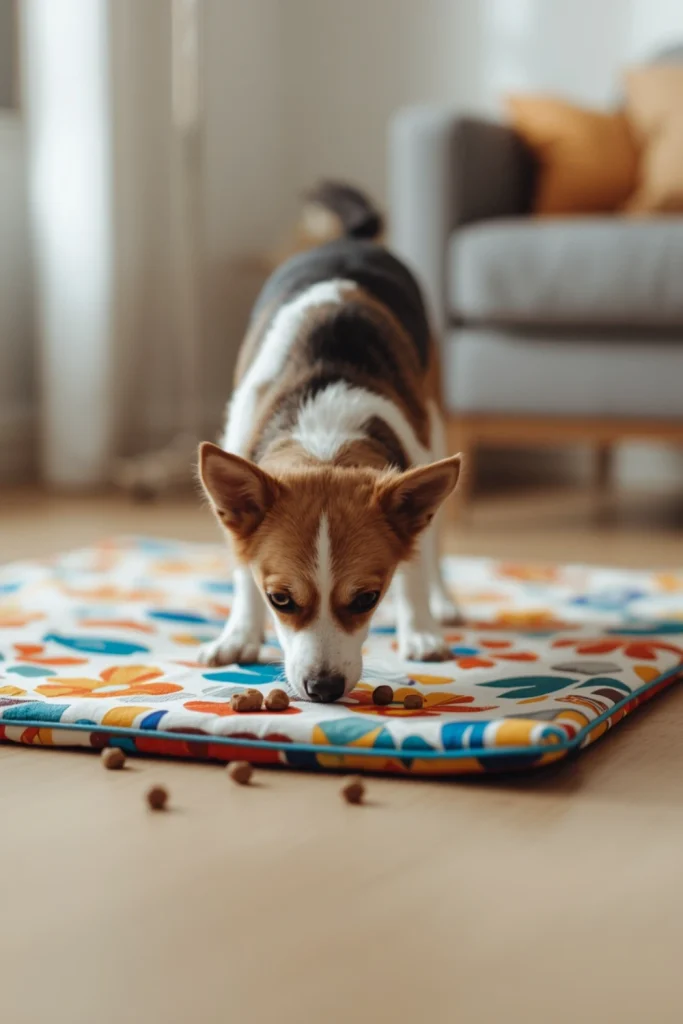
A snuffle mat turns ordinary mealtime into a gentle activity. The mat contains fabric folds where you can hide some of your dog’s regular kibble or small treats. Your dog uses their nose to search through the material and find the food. This encourages natural sniffing behavior and gives your pet something interesting to do without requiring a large play area.
Place the mat on a flat, non-slip surface and supervise your dog while using it, especially if they like chewing fabric. Begin by leaving a few pieces of food partly visible so your dog understands how the game works. Use a suitable portion of their normal meal rather than adding too many extra treats. Clean the mat regularly according to its care instructions and replace it if it becomes damaged.
7. Teach New Tricks and Commands
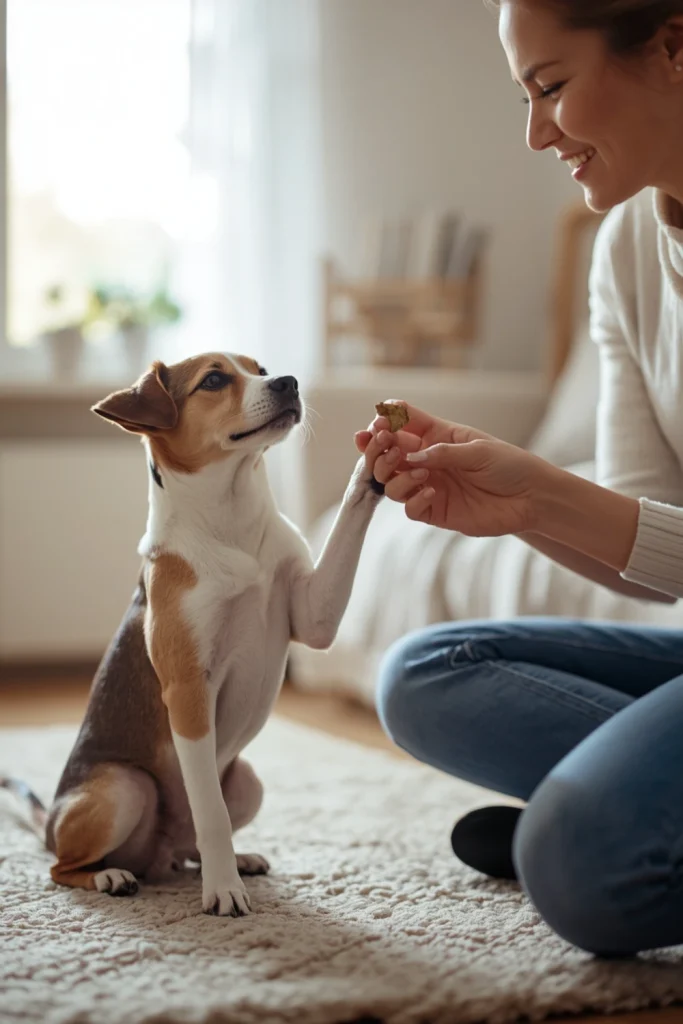
Training sessions can provide both mental and physical activity. Teach your dog simple tricks such as touch, spin, paw, sit, down, or going to a mat. These activities encourage your dog to move, change positions, and pay attention to your instructions. You can practice in a small area without moving furniture or purchasing special equipment.
Keep training sessions short and positive. Work on one skill at a time, reward small improvements, and finish before your dog becomes tired or frustrated. If your dog is learning to spin, practice slowly in both directions and avoid repeated turning if your pet has balance or joint issues. Training should be enjoyable rather than demanding. A few short sessions throughout the day can add variety to your dog’s routine.
8. Play the Which-Hand Game
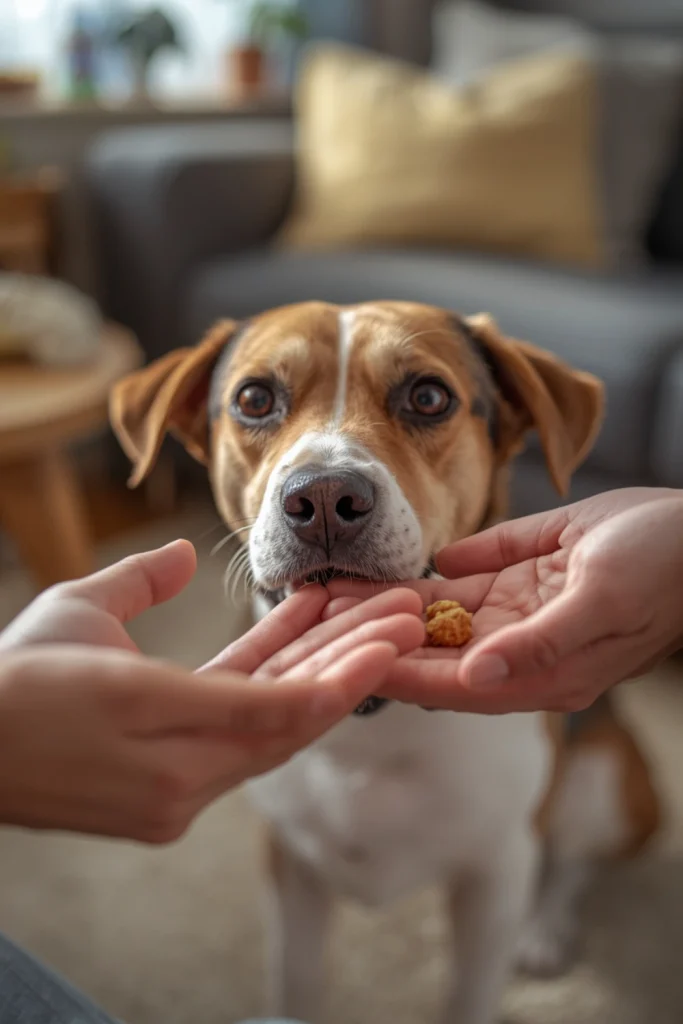
The which-hand game is an easy activity that combines gentle movement with scent-based problem-solving. Place a small treat in one hand while keeping both hands closed. Hold your hands in front of your dog and let them sniff. Encourage your pet to choose the hand containing the treat. When your dog makes the correct choice, open your hand and reward them.
This game works well in apartments because it needs almost no space. You can play it while sitting on the floor or standing in a clear area. Start with your hands close together so the answer is easy to discover. As your dog learns, change the position of your hands and occasionally switch the treat between them. Keep the game friendly and avoid confusing your pet with too many difficult rounds.
9. Practice Controlled Stair Walking Only When Safe
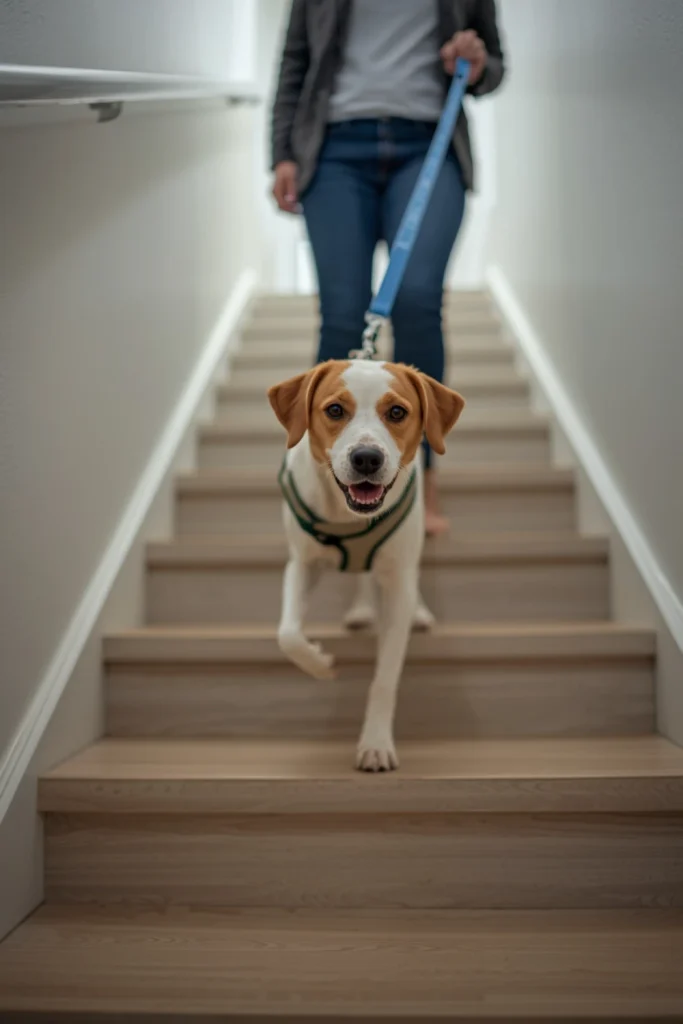
If your apartment building has safe, accessible stairs, controlled stair walking may be an occasional way to add movement. Walk slowly beside your dog on a leash and allow them to use the steps at a comfortable pace. Avoid rushing, running, jumping, or repeatedly going up and down. Stair use is not suitable for every dog, particularly puppies with developing joints, senior dogs, and pets with mobility problems.
Check that the stairs are dry, well-lit, and free from obstacles before using them. Follow your building’s rules and avoid disturbing other residents. For dogs that are small, nervous, or physically uncomfortable on stairs, choose a flat indoor walking activity instead. Ask your veterinarian whether stair exercise is appropriate if your dog has joint, back, or other mobility concerns.
10. Create a Cardboard Box Exploration Game
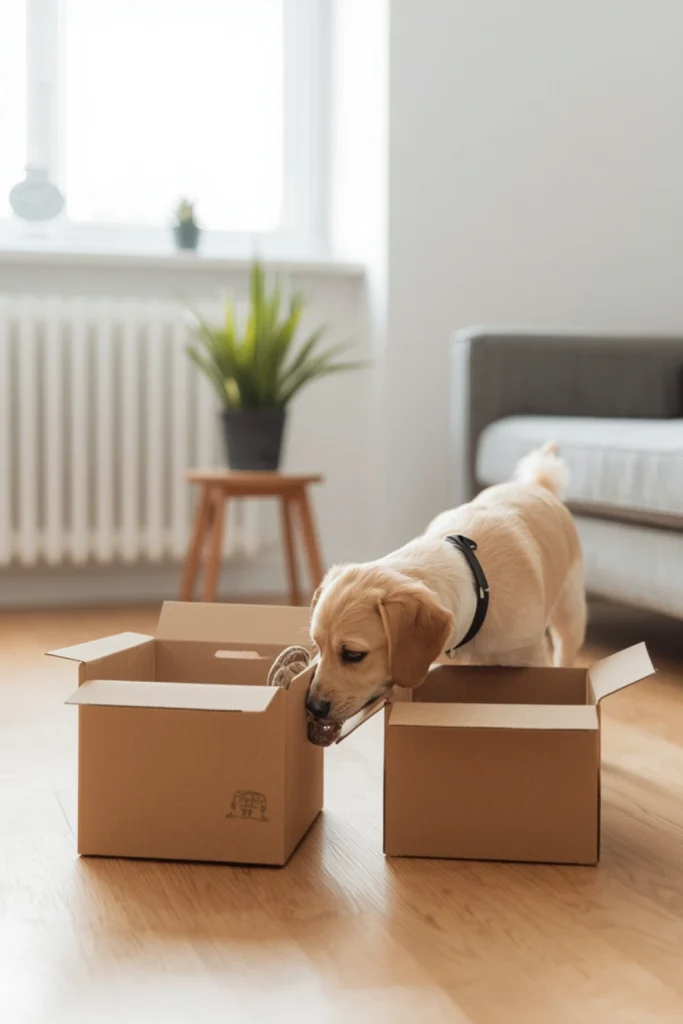
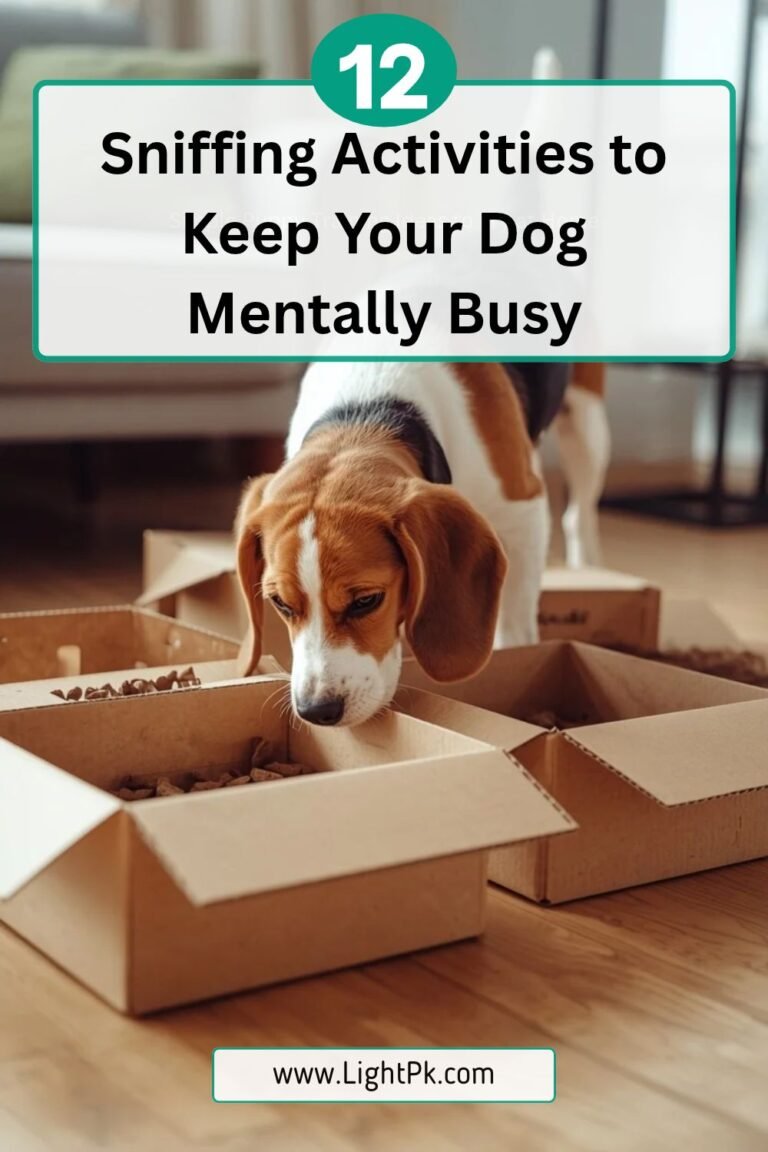
A few clean cardboard boxes can become an interesting exploration activity for your dog. Place one or two open boxes on the floor and encourage your pet to investigate them. You can hide a toy or a few pieces of kibble inside a box to make the activity more engaging. Some dogs enjoy sniffing, nudging, and exploring the new objects, making this a simple way to add variety to their day.
Choose plain boxes without staples, sharp edges, tape, plastic handles, or loose pieces that could be swallowed. Keep the boxes stable and large enough for your dog to explore without getting stuck. Supervise the entire game, especially if your dog enjoys chewing cardboard. Remove the boxes when the activity ends and stop if your pet begins eating the material.
11. Follow-the-Leader Walking Game
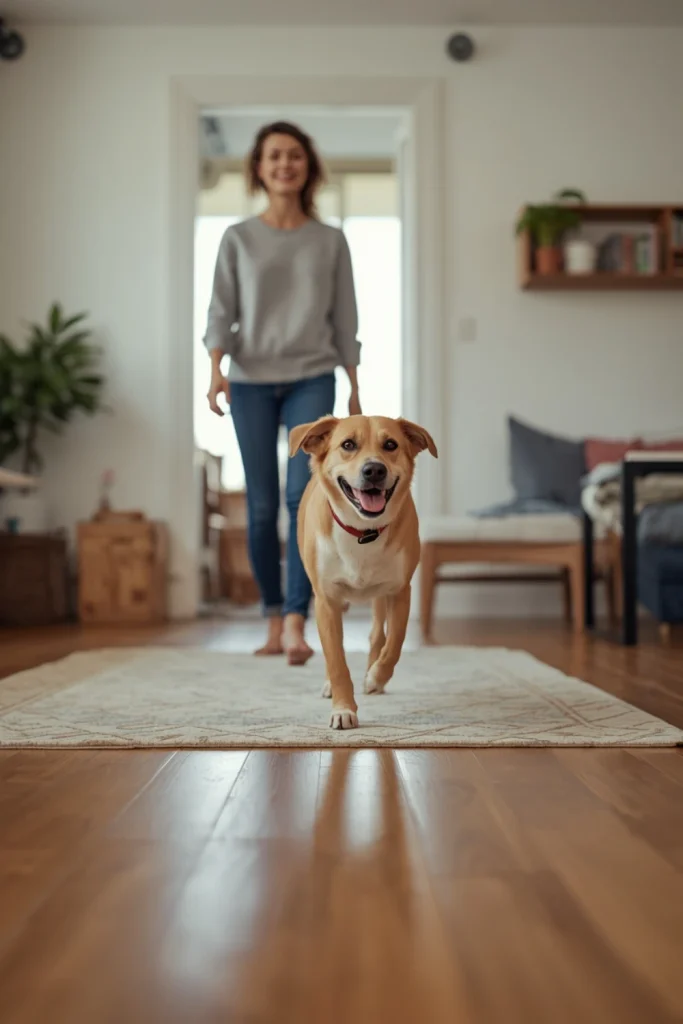
Follow-the-leader is a simple indoor walking game that encourages your dog to move while paying attention to you. Walk slowly around a clear living room or hallway and invite your dog to follow. Change direction gently, pause, and encourage your dog to come with you. You can use a familiar cue or reward your dog for staying nearby. This activity is especially useful when outdoor conditions make a longer walk difficult.
Keep the route simple and avoid sudden turns, fast running, or tight circles. Move around stable furniture with enough space for your dog to pass comfortably. Use a non-slip surface and keep the session short, especially for dogs that are not used to indoor games. You can add a few sit or touch commands along the way to make the activity more engaging.
12. Try a Gentle Indoor Fitness Routine
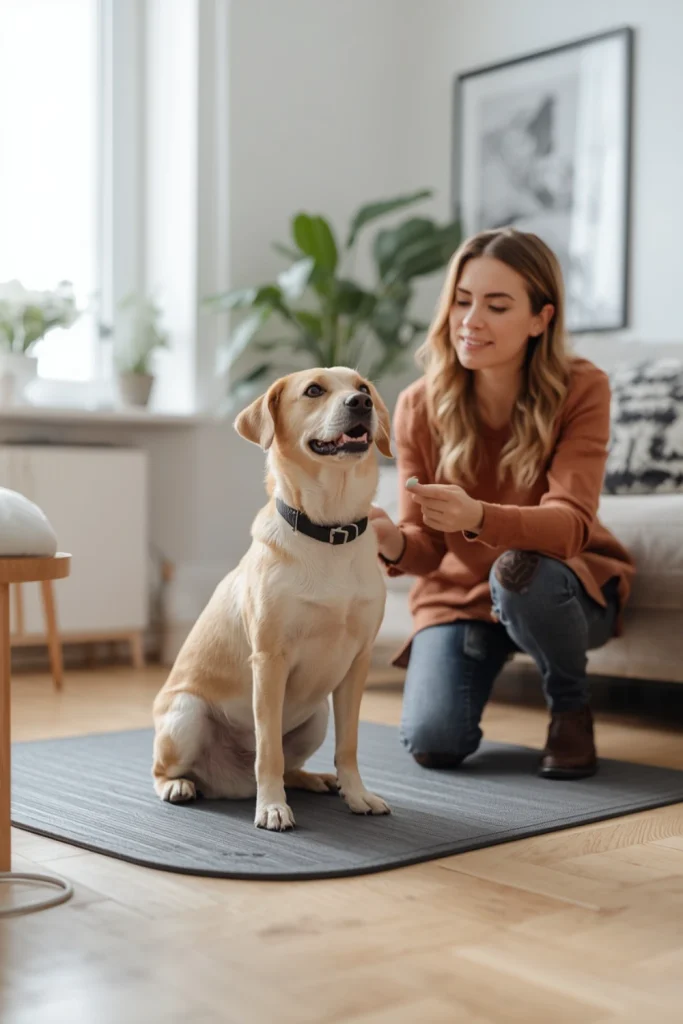
A gentle fitness routine can help your dog stay active through simple movements such as sit, stand, touch, and walking between two nearby points. Ask your dog to sit, then encourage them to stand using a reward or hand signal. You can also practice a few slow steps across a room before asking for another familiar command. These controlled movements are useful for adding variety without needing much space.
Always match the routine to your dog’s age, health, and fitness level. Do not force stretches, repeated squats, or movements that cause discomfort. Puppies, senior dogs, and pets with joint or back conditions may need a modified routine approved by a veterinarian. Use a stable, non-slip mat and stop if your dog shows signs of fatigue, limping, or reluctance to move.
Final Thoughts
Living in a small apartment does not mean your dog has to live a boring or inactive life. With a little creativity, you can turn an ordinary living room or hallway into a fun space for movement, learning, and play. Hide-and-seek, gentle fetch, treat scavenger hunts, indoor walking games, and simple training sessions are all practical ways to keep your dog engaged at home.
The best Indoor Dog Exercise Ideas are the ones that match your dog’s personality, age, health, and energy level. Start with a few simple activities, keep sessions positive, and introduce variety throughout the week. Always prioritize safety, provide enough rest, and continue offering regular outdoor walks and experiences. A consistent, balanced routine can help your apartment dog stay healthier, happier, and more connected with you.