

20 Fun Activities to Do With Your Dog at Home
Looking for fun ways to spend more quality time with your furry friend without leaving home? Dogs love spending time with their owners, and even simple everyday activities can become exciting adventures when you make them interactive. Whether you have an energetic puppy, a playful adult dog, or a relaxed senior companion, there are plenty of enjoyable activities you can try right inside your home.
You do not need expensive equipment, complicated training tools, or a large backyard to make your dog’s day special. From exciting hide-and-seek games and homemade puzzles to indoor obstacle courses and gentle training sessions, these activities can provide physical exercise, mental stimulation, and stronger bonding. In this guide, you will discover 20 fun activities to do with your dog at home, along with practical tips and creative ideas to keep your pet entertained, happy, and healthy.
1. Play Hide-and-Seek With Your Dog
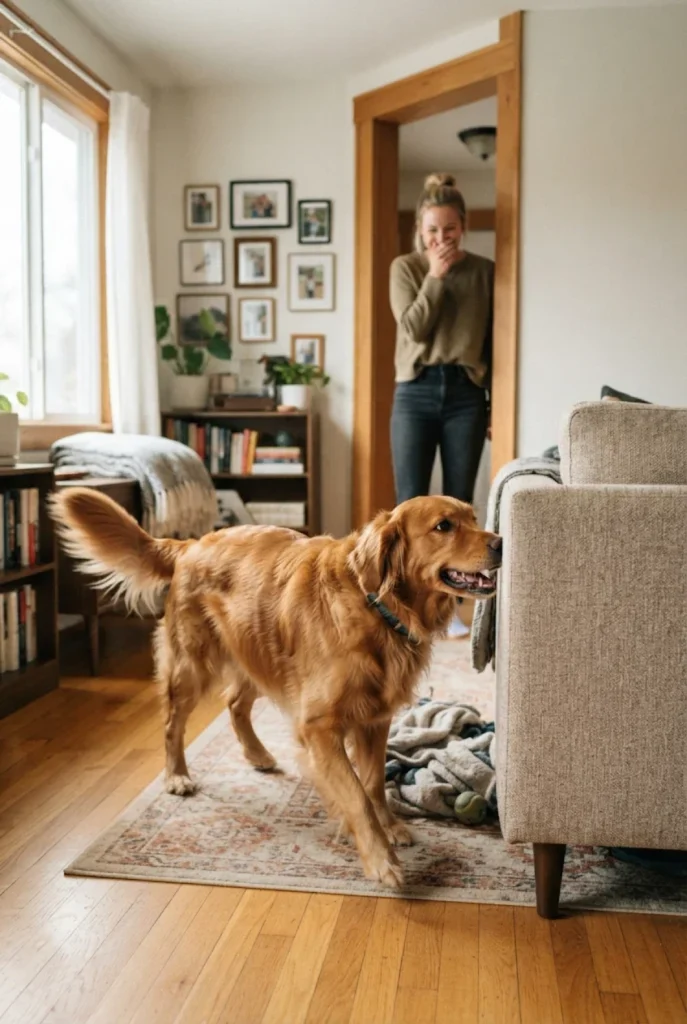
Hide-and-seek is one of the easiest and most entertaining fun activities to do with your dog at home. It allows your pet to use their natural curiosity and sense of smell while searching for you. Start by asking your dog to stay in one room or have another family member gently hold them. Find a simple hiding spot behind a door, sofa, or curtain. Call your dog’s name and encourage them to find you. When your dog discovers your location, reward them with praise, affection, or a small treat.
As your dog becomes familiar with the game, make it slightly more challenging by choosing different hiding places. You can hide in another room or behind furniture that is safe and accessible. This activity encourages problem-solving, listening skills, and mental engagement. It also creates wonderful bonding moments between you and your furry friend. Keep the game positive and avoid hiding in places where your dog might become frightened or stuck.
2. Teach Your Dog a New Trick
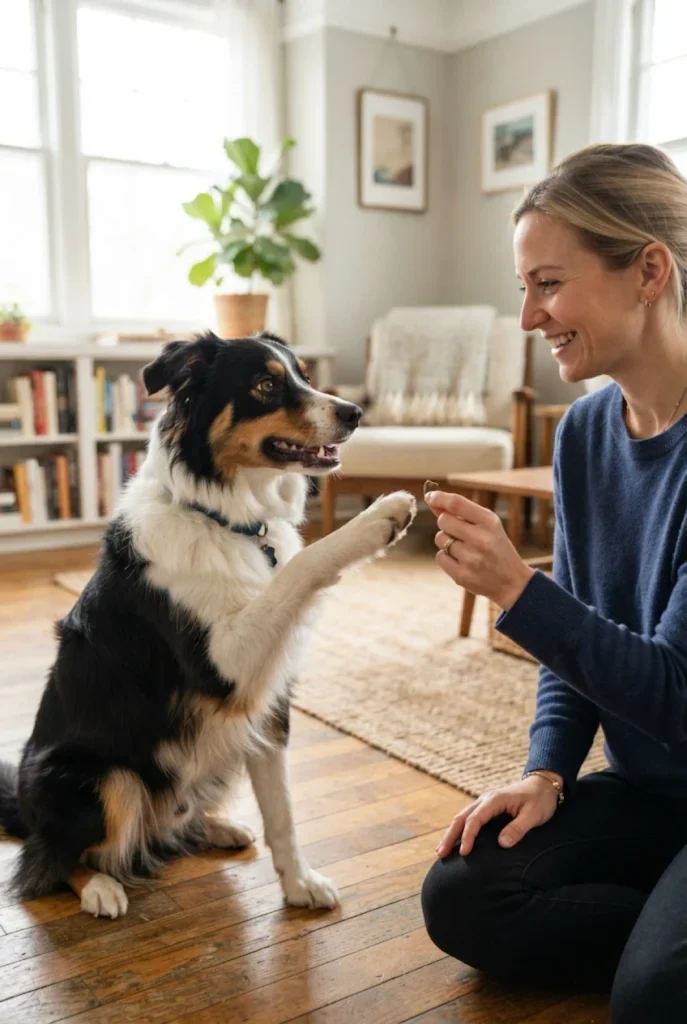
Teaching your dog a new trick is an excellent way to combine entertainment and learning. Dogs enjoy activities that challenge their minds, especially when they receive positive rewards. Start with simple tricks such as shake hands, spin, touch, sit pretty, or roll over if your dog can perform them comfortably. Use small treats and clear verbal instructions to help your pet understand what you want. Keep training sessions short and enjoyable so your dog does not become tired or frustrated.
Once your dog learns basic tricks, introduce more interesting challenges. You can teach your pet to touch your hand with their nose, bring a specific toy, or put their toys inside a basket. Learning new tricks improves communication, encourages confidence, and gives your dog a productive activity to enjoy at home. Remember that every dog learns at a different pace, so remain patient and celebrate small improvements.
3. Create a Homemade Obstacle Course
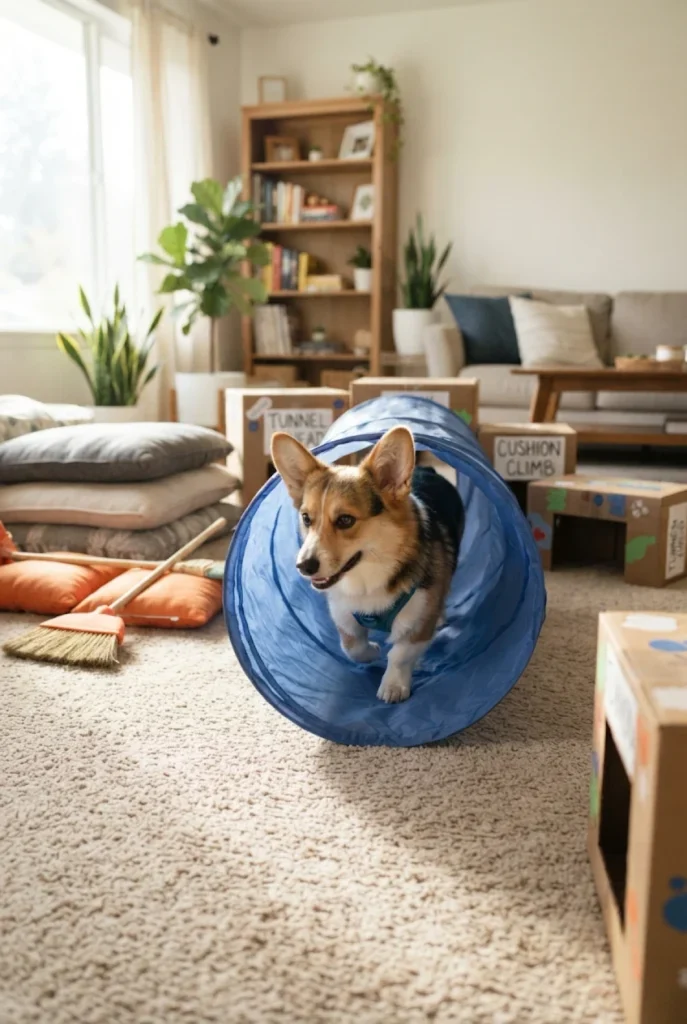
An indoor obstacle course can transform an ordinary room into an exciting playground for your dog. You can use household items such as soft cushions, cardboard boxes, lightweight tunnels, and low obstacles to create a simple course. Encourage your dog to walk around objects, move through a tunnel, or step over low barriers. Use treats and cheerful encouragement to guide your pet through each section. This activity offers a fun combination of movement, coordination, and mental stimulation.
Make sure the obstacle course is suitable for your dog’s size, age, and physical abilities. Avoid slippery surfaces, high jumps, unstable furniture, and sharp objects. Puppies and senior dogs should have especially gentle courses that do not put unnecessary pressure on their joints. You can change the arrangement every few days to make the game more interesting. Always supervise your dog and provide breaks when needed.
4. Play Indoor Fetch With Soft Toys
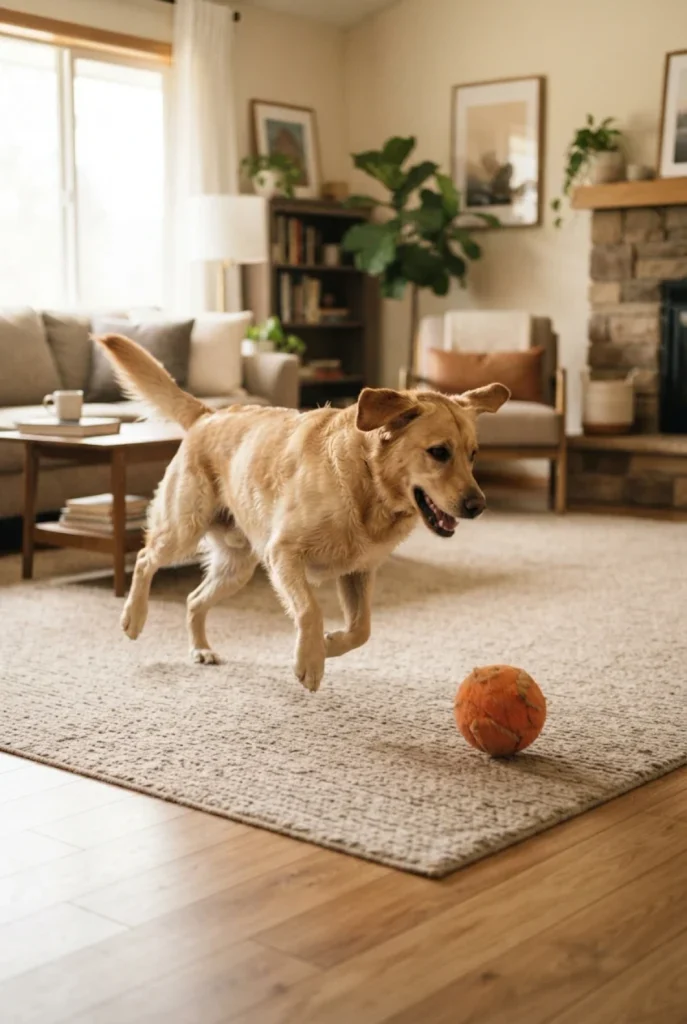
Fetch is a classic dog game that can easily be adapted for indoor entertainment. Instead of using a hard tennis ball, choose a lightweight and soft dog toy that is appropriate for your pet’s size. Find a spacious area with enough room to move safely. Gently roll the toy across the carpet and encourage your dog to bring it back. Reward your furry friend with praise whenever they return the toy. This simple game can provide enjoyable physical activity without requiring a backyard.
You can make indoor fetch more interesting by using different soft toys or changing the direction in which you roll them. Keep the throwing distance short and avoid encouraging fast running on slippery floors. If your dog becomes overly excited, take a short break before continuing. Fetch is especially useful for dogs that enjoy retrieving objects, but remember that not every dog enjoys the same games. Follow your pet’s interests and physical limitations.
5. Make a DIY Treat Puzzle

A DIY treat puzzle is an inexpensive way to keep your dog entertained while encouraging problem-solving skills. You can create a simple puzzle using a sturdy cardboard box, paper cups, or empty cardboard tubes. Place a few pieces of your dog’s regular kibble inside and allow your pet to discover how to reach the food. Begin with an easy arrangement so your dog can understand the activity. As your pet becomes more confident, introduce slightly more challenging puzzles.
This activity encourages dogs to investigate, sniff, and use their natural curiosity. It can also make ordinary mealtime more exciting. You can hide a few treats under lightweight cups or place kibble inside a safe cardboard container with easy openings. Always supervise your dog when using homemade materials. Remove staples, tape, plastic pieces, and other potential hazards. If your dog likes swallowing cardboard or paper, choose a commercially made dog puzzle instead.
6. Have a Fun Indoor Tug-of-War Session

Tug-of-war is an exciting activity for dogs that enjoy pulling and interacting with their owners. Choose a durable rope toy that is appropriate for your dog’s size and chewing strength. Hold one end of the toy while encouraging your dog to grip the other end. Allow your pet to pull gently and enjoy the game. You can also introduce a simple drop it command so your dog learns when to release the toy. This makes playtime more structured and interactive.
Keep tug-of-war controlled and avoid sudden pulling, twisting, or lifting your dog off the ground. The goal is to enjoy a friendly game rather than encourage rough behavior. Take breaks if your dog becomes overly excited, and stop if they show discomfort. Dogs with dental problems, neck injuries, or certain physical conditions may need alternative activities. When played gently and with clear boundaries, tug-of-war can be an enjoyable way to strengthen your relationship.
7. Organize an Indoor Treasure Hunt
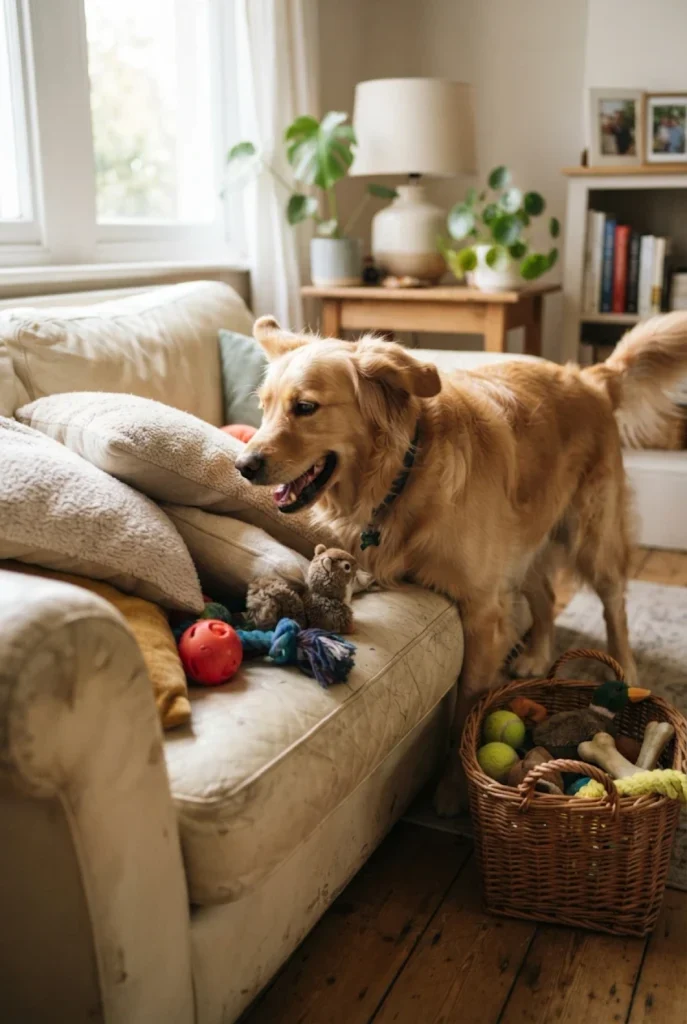
An indoor treasure hunt is a creative way to turn your home into an exciting exploration area. Choose several of your dog’s favorite toys or small treats and hide them around one room. Start with easy hiding places where your dog can see or smell the rewards. Give a cue such as find it and encourage your pet to investigate. Celebrate every successful discovery with praise. This game allows your dog to use natural searching instincts while enjoying time with you.
Once your dog understands the activity, make the treasure hunt more challenging by hiding toys behind cushions, beside furniture, or inside an open toy basket. You can also create separate searching areas in different rooms. Always choose accessible hiding places and avoid areas containing cleaning products, electrical wires, or small objects. Use healthy treats in moderation and supervise your pet throughout the game.
8. Practice Basic Obedience Commands
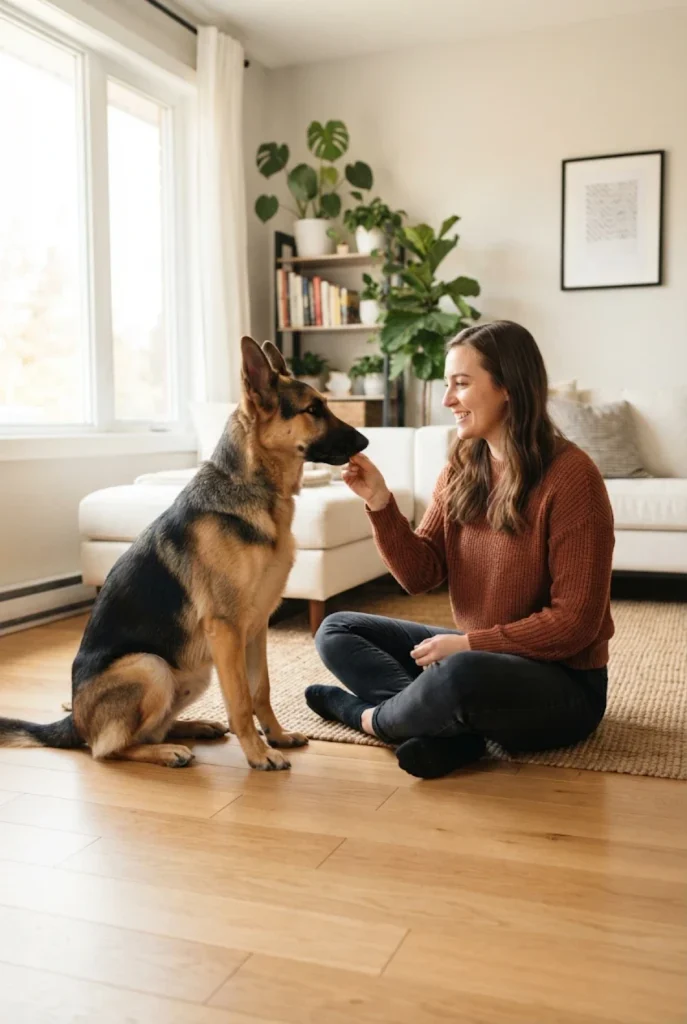
Basic obedience training is a productive activity that helps your dog learn important everyday behaviors. Spend a few minutes practicing commands such as sit, stay, come, down, and leave it. These skills can improve communication and make daily routines easier. Use positive reinforcement by rewarding your dog with small treats, toys, or praise whenever they respond correctly. Start with familiar commands before introducing new instructions.
You can make obedience practice more interesting by changing the order of commands or introducing simple combinations. For example, ask your dog to sit, wait, and then come toward you. Keep the training environment calm and free from unnecessary distractions, especially when teaching beginners. Avoid shouting or punishing mistakes because these methods can create confusion and fear. Consistent, reward-based training helps your dog build confidence and understand what you expect.
9. Make a Homemade Snuffle Mat
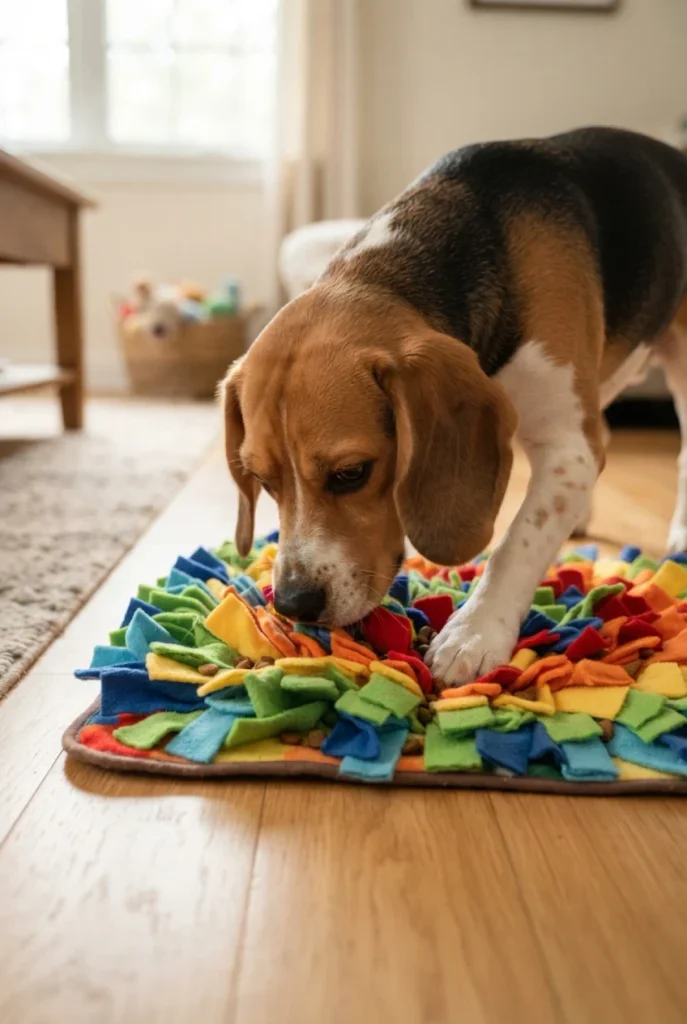
A snuffle mat is a wonderful enrichment activity that encourages dogs to use their powerful sense of smell. You can purchase one or make a homemade version using fleece strips securely attached to a suitable rubber mat. Hide small pieces of your dog’s regular kibble between the fabric strips and allow your pet to search for the food. This activity transforms an ordinary meal into an enjoyable searching game. It is particularly helpful for dogs that enjoy sniffing and exploring.
Start with treats that are easy to find so your dog understands the purpose of the mat. Gradually hide food in different sections to increase the challenge. Snuffle mats can provide mental stimulation and encourage natural foraging behavior. Always supervise your dog to make sure they do not chew or swallow fabric pieces. Wash the mat regularly and allow it to dry completely before using it again.
10. Enjoy a Gentle Grooming Session Together
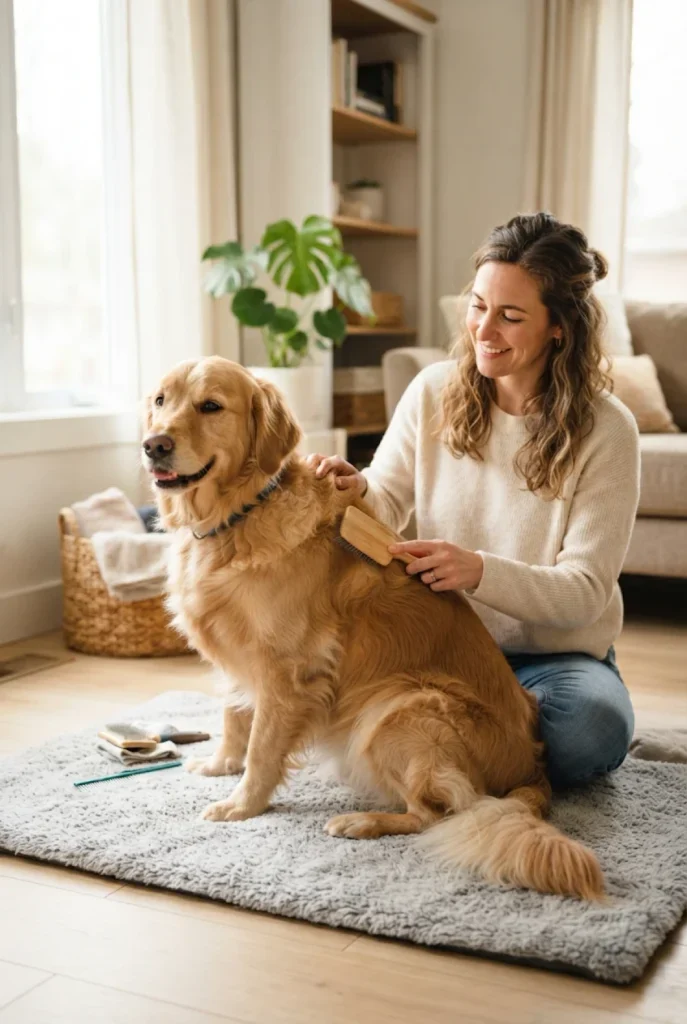
Grooming can become a relaxing and enjoyable activity when you introduce it gradually. Choose a comfortable place in your home and use a brush suitable for your dog’s coat type. Start with gentle strokes and reward your pet for remaining calm. Many dogs enjoy being brushed when they are comfortable with the process. Regular grooming also helps remove loose hair, prevent tangles, and keep the coat looking healthy.
You can turn grooming into a positive bonding experience by combining brushing with gentle praise and short breaks. Check your dog’s ears, paws, and coat while respecting their comfort level. Never force your pet to remain still if they appear frightened or uncomfortable. Introduce grooming tools slowly, especially if your dog is not used to them. If you notice skin irritation, unusual lumps, painful areas, or persistent ear problems, consult your veterinarian rather than trying to treat them yourself.
11. Play the Name-the-Toy Game

The name-the-toy game is a fun way to encourage your dog’s memory and listening skills. Choose two familiar toys and give each one a simple name, such as Teddy and Ball. Hold up one toy, repeat its name clearly, and reward your dog when they touch or pick it up. Practice with the same toys several times until your pet begins connecting the words with the correct objects. Keep the activity positive and avoid making the learning process too complicated.
When your dog becomes familiar with the names, place both toys on the floor and ask your pet to find a specific one. Gradually introduce more toys if your dog understands the first two. This game encourages mental engagement and can become a favorite daily activity. Choose safe toys that are appropriate for your dog’s size and remove any damaged objects. Even a few minutes of practice can make playtime more interesting.
12. Practice Indoor Nose Work
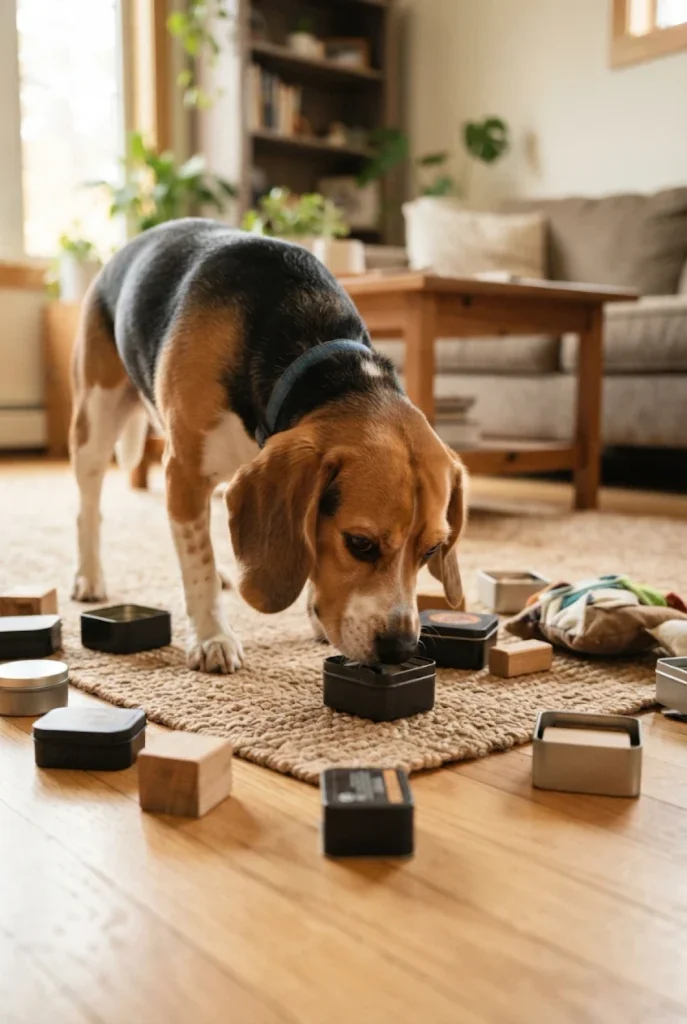
Nose work is one of the most rewarding activities for dogs because it allows them to use their natural scent-detection abilities. Begin by showing your dog a favorite treat and letting them smell it. Place the treat in an easy-to-find location while your pet watches. Give a cue such as search or find it and encourage your dog to locate the reward. Repeat the exercise several times until your dog understands the game.
As your pet becomes more confident, hide treats in different safe locations around one room. You can use lightweight containers or simple hiding spots behind furniture. Make the activity gradually more challenging without creating frustration. Nose work can be especially useful on rainy days or when outdoor exercise is limited. Use small treat portions, avoid hiding food near cleaning chemicals, and supervise your dog during every session.
13. Have a Mini Indoor Photo Session
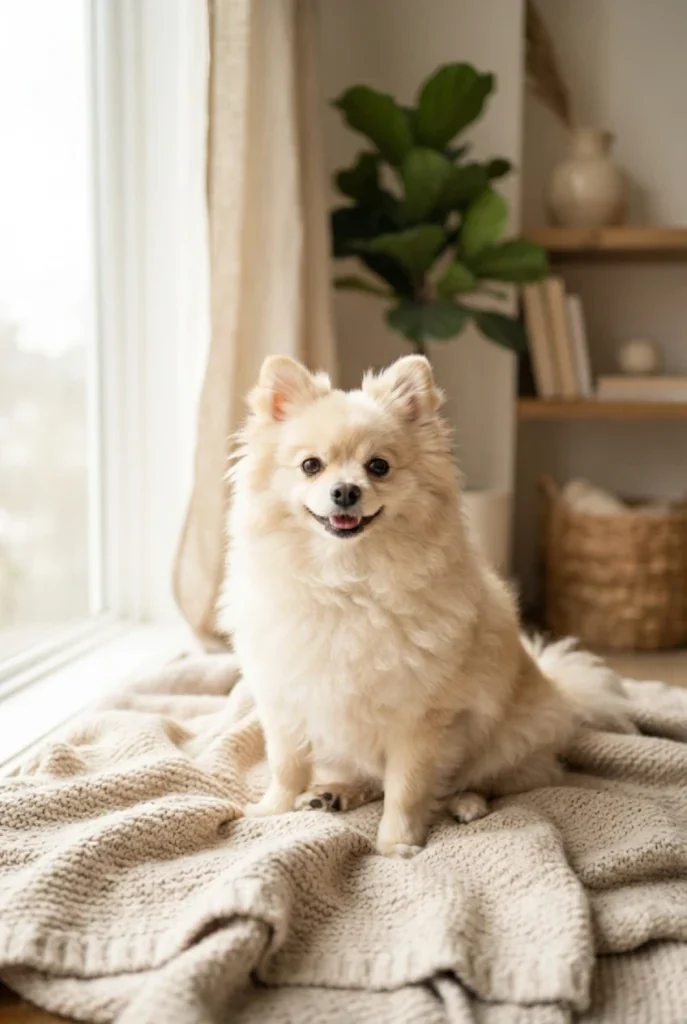
A mini indoor photo session is a fun way to spend time with your dog while creating memorable pictures. Choose a bright area near a window and prepare a comfortable background using a blanket, cushion, or simple pet-friendly decoration. Let your dog explore the area before taking pictures. You can capture natural moments such as sitting, looking toward the camera, playing with a favorite toy, or relaxing on a soft bed.
Make the experience enjoyable instead of expecting your dog to pose perfectly. Use small treats, gentle encouragement, and short breaks to maintain interest. Avoid bright camera flashes or decorations that might frighten your pet. You can try different angles and capture your dog’s unique expressions. These photographs can become wonderful memories and provide a creative activity for the whole family.
14. Play With a Food-Dispensing Toy
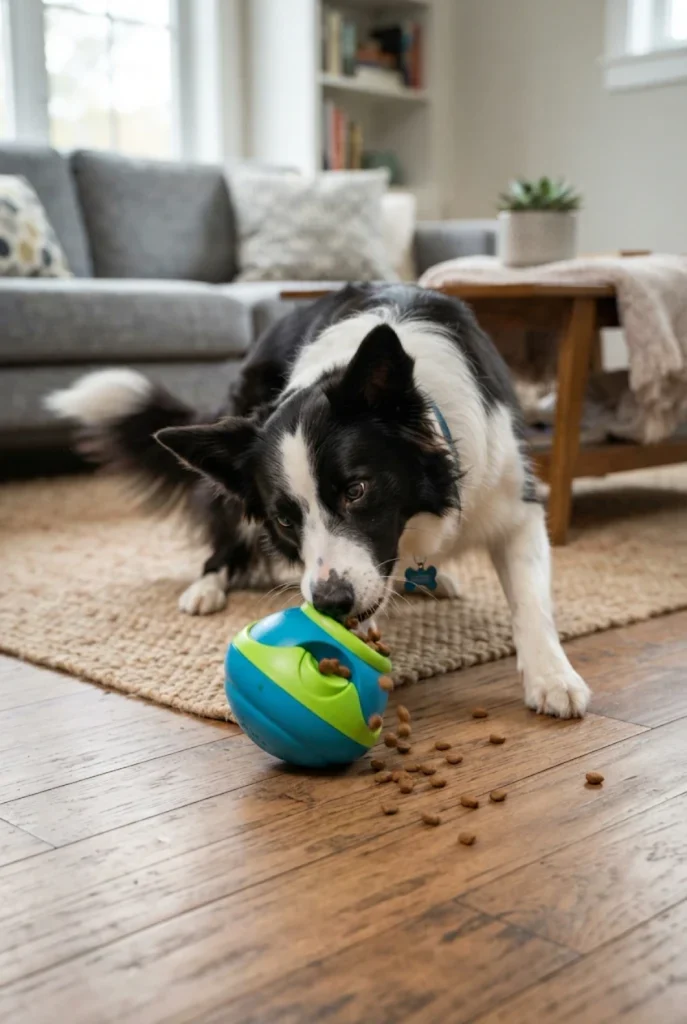
Food-dispensing toys can make snack time more exciting while giving your dog a simple mental challenge. These toys release small amounts of kibble when your pet pushes, rolls, or moves them in the correct way. Choose a durable toy designed for dogs and appropriate for your pet’s size and chewing strength. Introduce it slowly by placing a few easily accessible treats inside so your dog can understand how the toy works.
Once your dog becomes familiar with the activity, you can gradually increase the difficulty. Some toys require gentle pushing, while others involve moving different sections to access the food. These games encourage curiosity, independent problem-solving, and mental stimulation. You can also use part of your dog’s regular meal instead of additional treats to manage daily calories. Clean the toy regularly and replace it if it becomes damaged.
15. Have a Relaxing Storytime Together
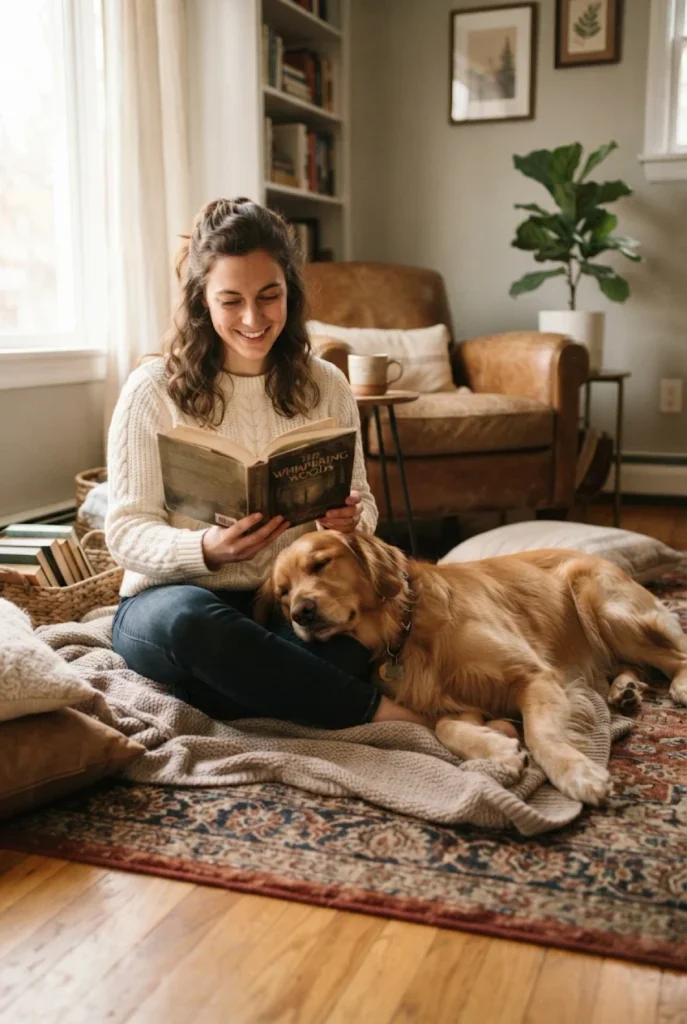
Storytime can be a peaceful way to spend quality time with your dog, especially if your pet enjoys relaxing beside you. Choose a comfortable spot on the sofa or floor and invite your dog to settle nearby. You can read a book, magazine, or even speak softly about your day. Your dog may not understand every word, but the familiar sound of your voice and your calm presence can make the experience enjoyable.
You can make storytime more interesting by giving your dog a comfortable blanket or a suitable chew toy. Keep the environment quiet and allow your pet to rest whenever they want. This activity is particularly useful for dogs that enjoy close companionship rather than energetic games. It also gives busy owners an opportunity to relax while spending time with their furry friends. Remember that some dogs prefer movement and play, so respect your pet’s individual personality.
16. Build a Safe Indoor Ball Pit
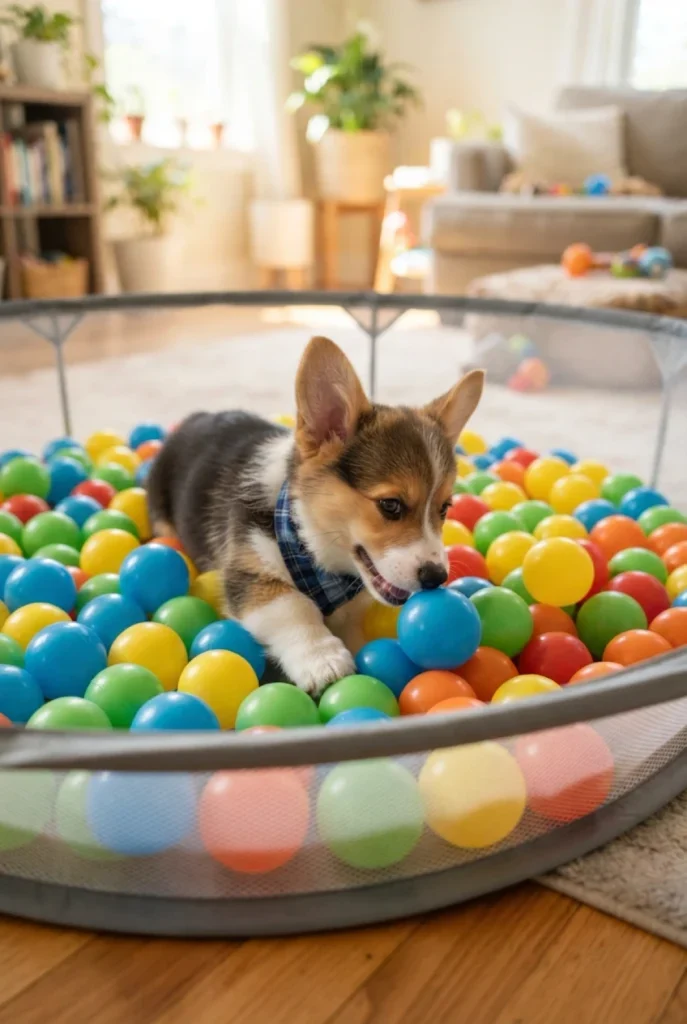
An indoor ball pit can provide a fun sensory experience for curious dogs. Use a secure playpen or sturdy container filled with large, lightweight balls that are too big to swallow. Place a few favorite toys or treats between the balls and allow your dog to explore. Some dogs enjoy moving through the balls, sniffing around, and discovering hidden rewards. It can be a playful alternative when outdoor activities are limited.
Introduce the ball pit slowly because some dogs may feel uncomfortable with unfamiliar textures or moving objects. Let your pet investigate at their own pace and never force them inside. Check the balls for damage before every session and supervise your dog throughout the activity. Avoid small balls that could become choking hazards. If your dog becomes frightened or starts chewing the balls, remove the setup and try a different game.
17. Practice Hand Target Training
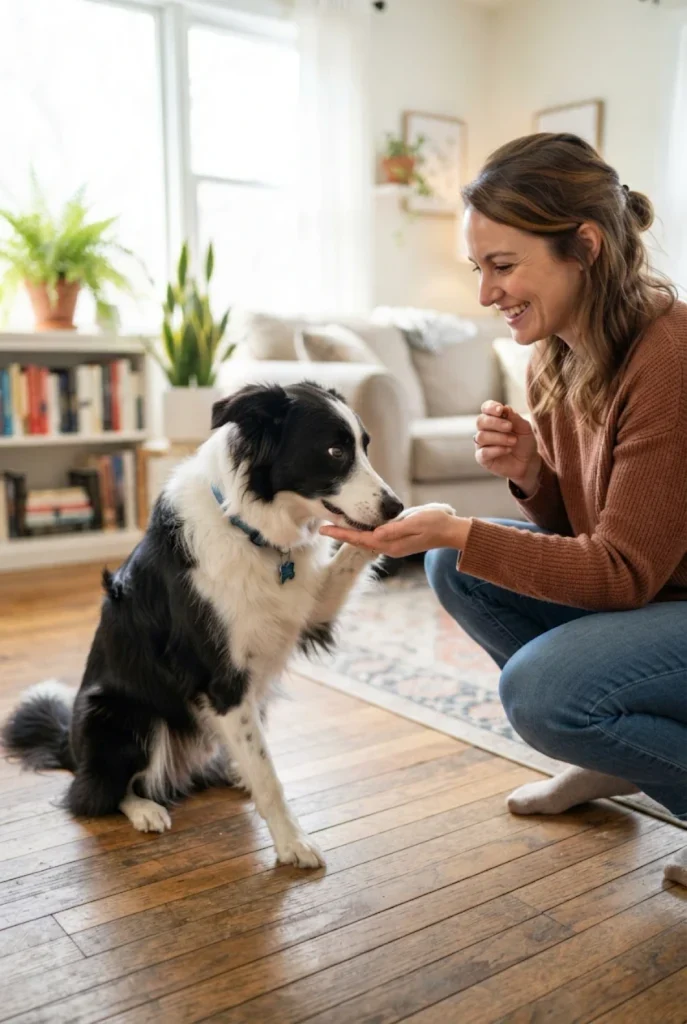
Hand target training is a simple activity that teaches your dog to touch your open palm with their nose. Hold your hand a short distance from your dog’s face and wait for them to investigate. When their nose touches your palm, immediately reward them with a small treat and praise. Repeat the exercise several times until your dog begins responding consistently. This activity is easy to learn and can be practiced in a small indoor space.
Once your dog understands the basic movement, gradually change the position of your hand. You can hold it slightly to the left, right, or lower to encourage your dog to follow the target. Hand targeting can also help guide your pet during everyday activities and introduce more advanced training exercises. Keep sessions short and rewarding. Avoid moving your hand too quickly or making your dog uncomfortable.
18. Play Gentle Indoor Chase and Follow
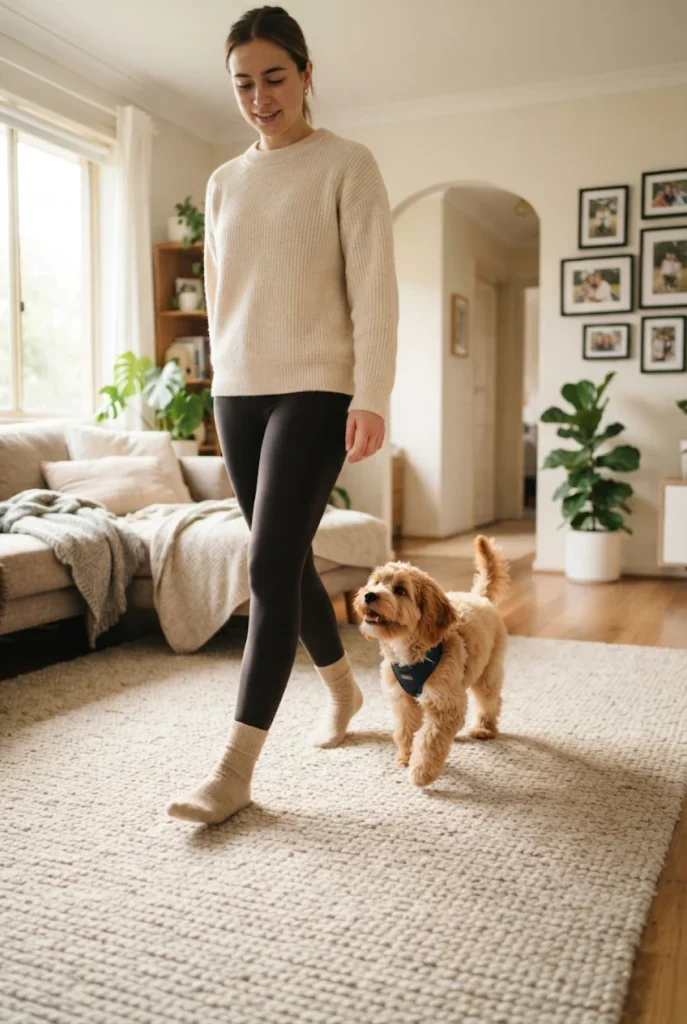
Some dogs enjoy following their owners from one room to another, making gentle chase-and-follow games an easy source of entertainment. Begin by walking slowly across a spacious carpeted area while encouraging your dog to follow you. Change directions occasionally and reward your pet for staying engaged. You can introduce simple cues such as follow me or come along to make the game more interactive. This activity combines movement, attention, and communication.
Keep the pace comfortable and avoid sudden movements that might cause your dog to slip or collide with furniture. Never encourage your pet to chase family members in a way that involves rough play, jumping, or biting clothing. Choose a safe area with enough space and remove obstacles. This activity is best for dogs that enjoy movement and interaction. If your dog prefers calm activities, try a scent game or puzzle instead.
19. Have a Toy Cleanup Challenge
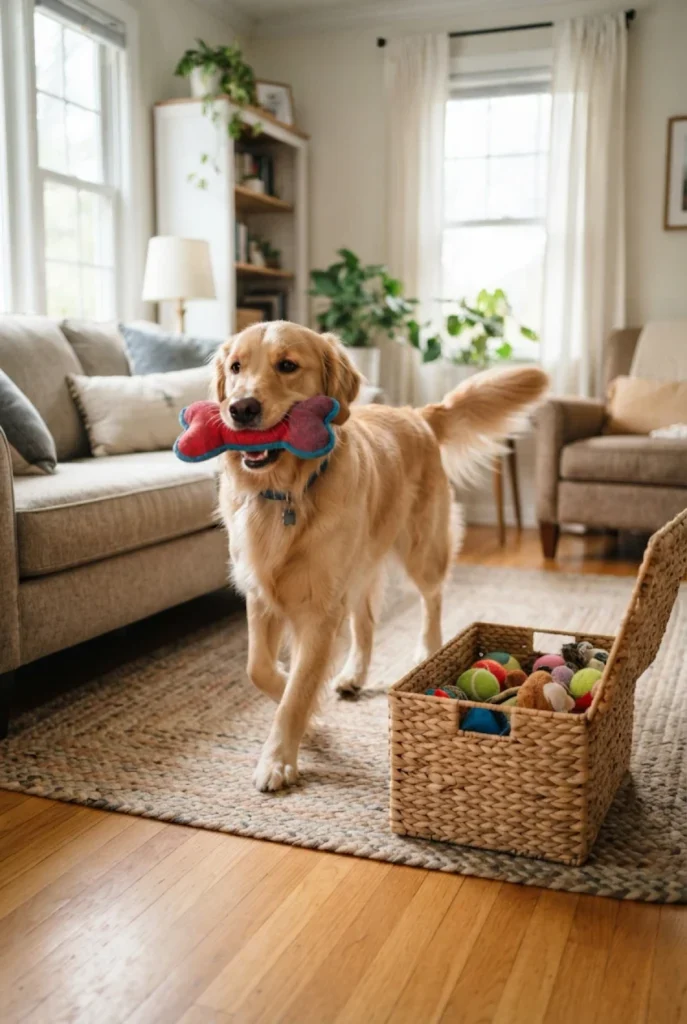
Turning toy cleanup into a game is a clever way to combine training and entertainment. Start by teaching your dog to pick up one familiar toy and bring it toward an open basket. Use a simple cue such as clean up and reward your pet when they place the toy inside. At first, you may need to guide your dog with treats and practice the movement in small steps. Keep the basket easy to reach.
As your dog understands the activity, gradually encourage them to collect additional toys. This game helps reinforce object retrieval and introduces a useful household behavior. It also provides mental stimulation because your dog must understand what you are asking and complete a simple task. Be patient and avoid expecting perfect results immediately. Choose lightweight, safe toys and make sure the basket does not have sharp edges or unstable parts.
20. Enjoy a Gentle Massage and Relaxation Session

Not every fun activity needs to involve running, jumping, or searching for treats. A gentle massage can help your dog relax after an active day. Find a quiet place, sit beside your pet, and gently stroke areas where your dog enjoys being touched, such as the shoulders, chest, or back. Watch your dog’s body language and allow them to move away whenever they want. A peaceful environment and gentle interaction can make this experience especially enjoyable.
You can combine relaxation time with quiet praise, gentle brushing, or simply sitting together. This activity is particularly suitable for dogs that enjoy calm companionship. Never apply pressure to painful areas or force your pet to remain still. If your dog shows signs of discomfort, stop immediately. Dogs with injuries, joint problems, or other medical conditions should receive appropriate guidance from a veterinarian before massage activities.
Final Thoughts
Spending quality time with your dog at home does not have to be expensive or complicated. With a little creativity, you can turn ordinary household activities into exciting opportunities for learning, playing, and bonding. From hide-and-seek and indoor fetch to homemade puzzles, scent games, and gentle grooming, there are countless ways to make your dog’s day more enjoyable.
The most important thing is to understand your dog’s personality, age, and energy level. Some dogs love active games, while others prefer mental challenges or quiet companionship. Try different activities, observe what your pet enjoys, and create a routine that includes physical exercise, mental stimulation, affection, and plenty of rest.
Remember, your dog does not need expensive toys or elaborate entertainment to feel happy. Your attention, patience, and love are often the most rewarding parts of their day. Start with a few activities from this list and make every day a new opportunity to create wonderful memories with your furry friend.


