
How to Set Up a Simple Dog Grooming Station at Home
Creating a comfortable grooming space at home can make caring for your dog easier, safer, and more enjoyable. You do not need an expensive salon or a large room to get started. With a few useful supplies, a suitable location, and a little planning, you can create a Simple Dog Grooming Station that helps you brush, bathe, dry, and care for your furry friend without unnecessary stress.
A well-organized grooming station also saves time because everything you need stays in one convenient place. Whether you have a playful puppy, a small apartment dog, or a large breed with a thick coat, a dedicated grooming area can make regular care easier to manage. In this guide, you will learn how to choose the right location, organize essential tools, create a safe setup, and build a simple grooming routine at home.
1. Choose the Right Location for Your Grooming Station
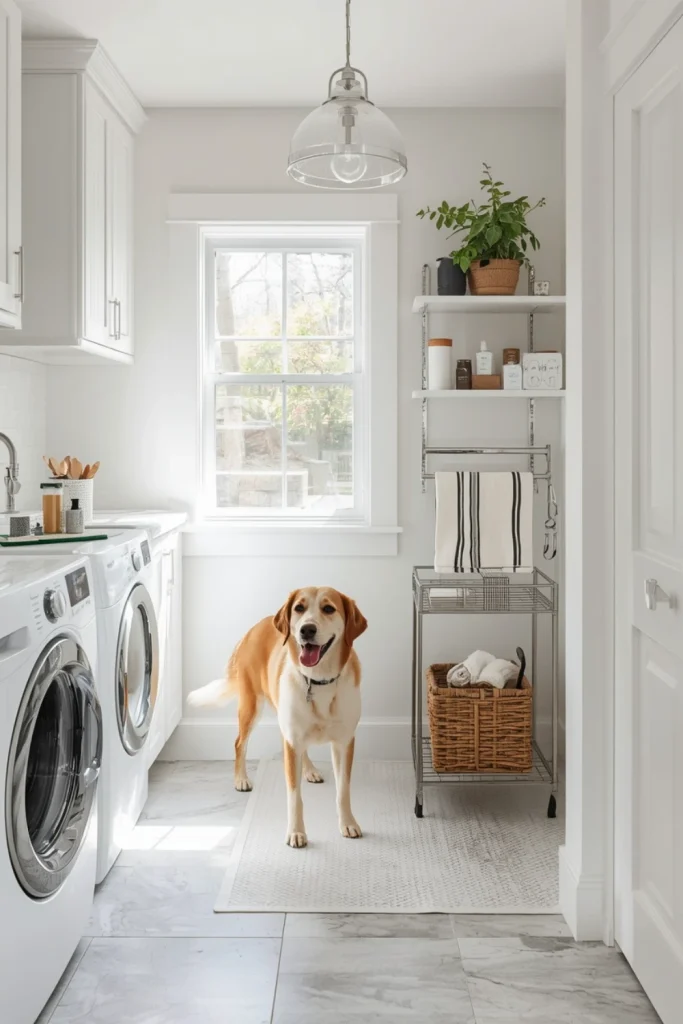
The first step is finding a suitable location in your home. Choose an area with enough space for your dog to stand, sit, and turn around comfortably. A bathroom, laundry room, utility area, or quiet corner with a washable floor can work well. If you have a small home, you can use a compact corner and store the supplies in a basket or cabinet. The most important thing is to select a place that is easy to clean and does not become crowded when you bring out grooming tools.
Think about your dog’s comfort when choosing the location. Avoid areas with heavy foot traffic, loud appliances, or constant interruptions. A nervous dog may feel uncomfortable if family members keep walking through the grooming space. Good lighting is also important because it helps you see tangles, dirt, and small details while brushing or trimming. If you use a bathroom, make sure the floor is dry and safe before starting. Keep electrical appliances away from water and use them only in suitable dry areas.
2. Select a Comfortable and Safe Grooming Surface
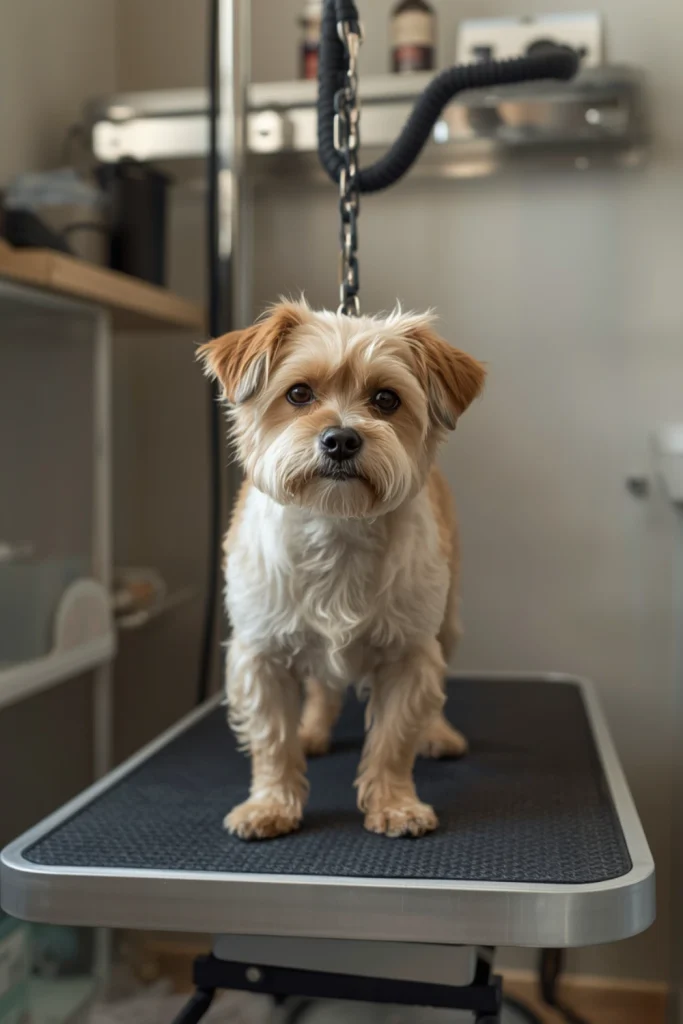
A stable grooming surface helps your dog feel secure during brushing, nail care, and other basic grooming activities. For many dogs, a sturdy non-slip floor mat is enough. It creates a comfortable place to stand and reduces the chance of slipping on smooth tiles. Choose a mat that is easy to wash and large enough for your dog to stand naturally. Avoid soft, unstable surfaces that move around when your dog changes position.
If you have a small dog, a properly designed grooming table may be useful, but it is not essential for every home grooming station. Never place your dog on an ordinary table, washing machine, or other unstable furniture. A raised surface can create a serious fall risk if your dog jumps or becomes frightened. If you use a professional grooming table, choose one with a secure non-slip top and follow the manufacturer’s safety instructions. Always supervise your dog and never leave it unattended on a raised surface.
3. Gather Essential Dog Grooming Tools
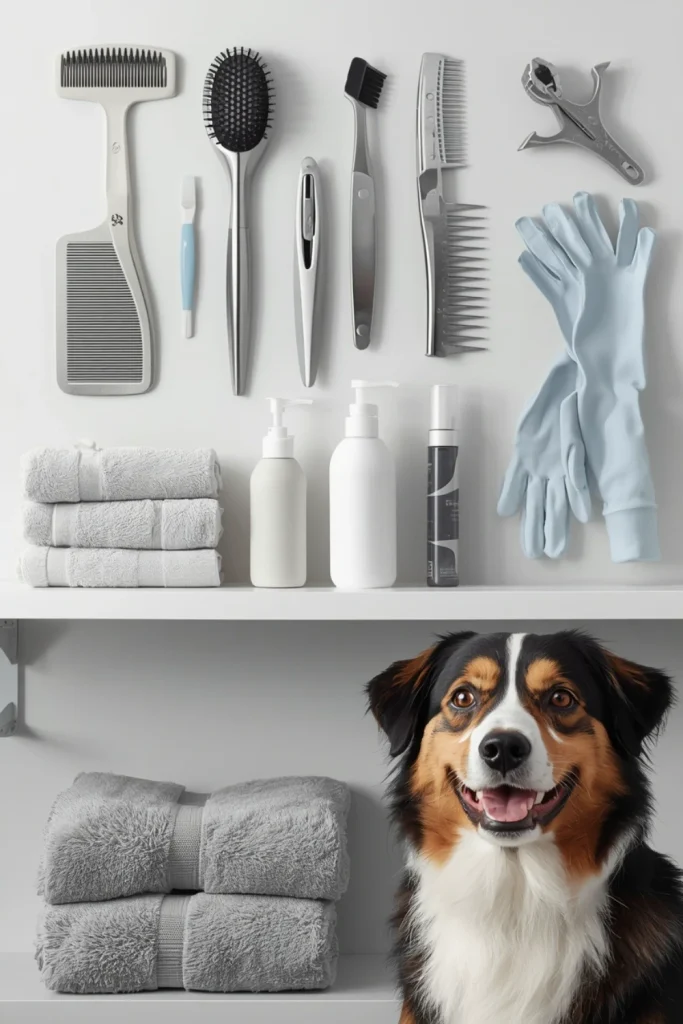
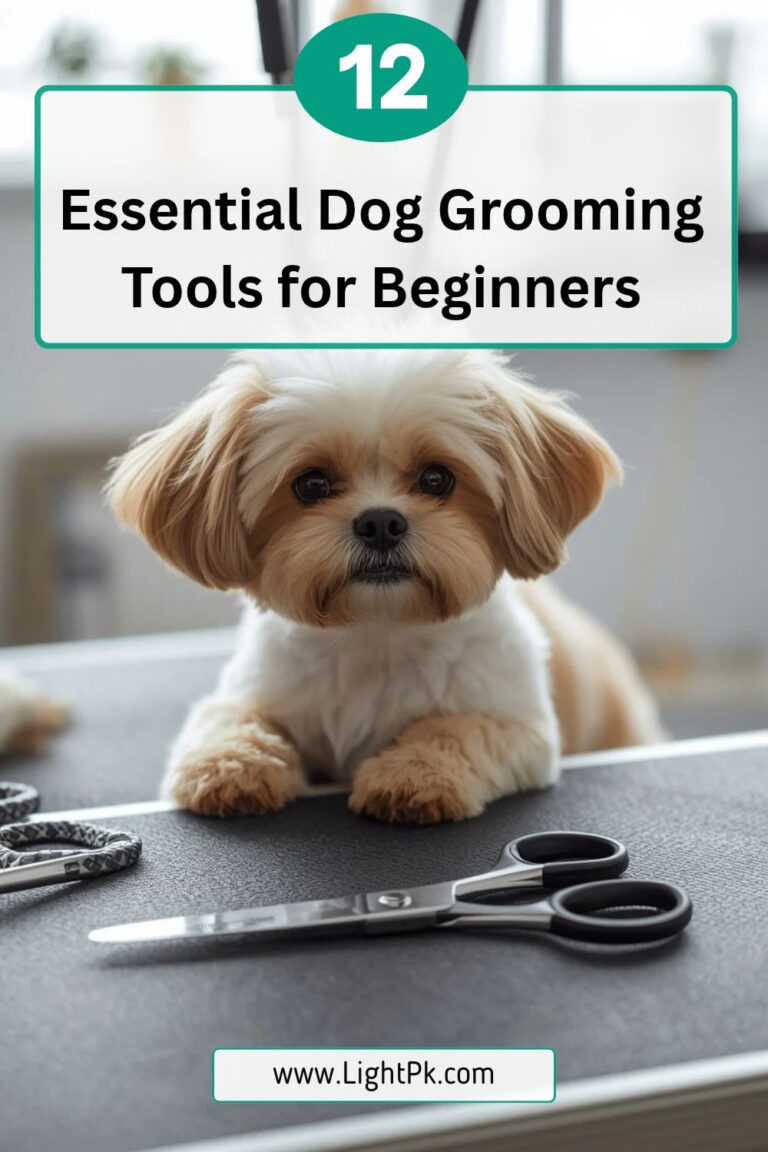
Before you begin grooming, collect the basic tools your dog needs. These may include a suitable brush, metal comb, dog shampoo, towels, nail clippers, a toothbrush, dog toothpaste, and a few cleaning supplies. You do not have to purchase every grooming product at once. Start with the items needed for your dog’s coat type and routine, then add other tools when necessary. Keeping the supplies together prevents interruptions and makes each grooming session easier to manage.
Choose quality tools that are comfortable to hold and appropriate for your dog’s size. A brush designed for a short-haired dog may not work well on a long, curly coat. Similarly, nail clippers should match your dog’s nail size. Read product instructions before using any grooming equipment, especially scissors, grinders, or dryers. Avoid using sharp tools close to your dog’s skin unless you have the right experience. If you are unsure which equipment to buy, ask a professional groomer for recommendations based on your dog’s breed and coat.
4. Organize Grooming Supplies in Storage Baskets
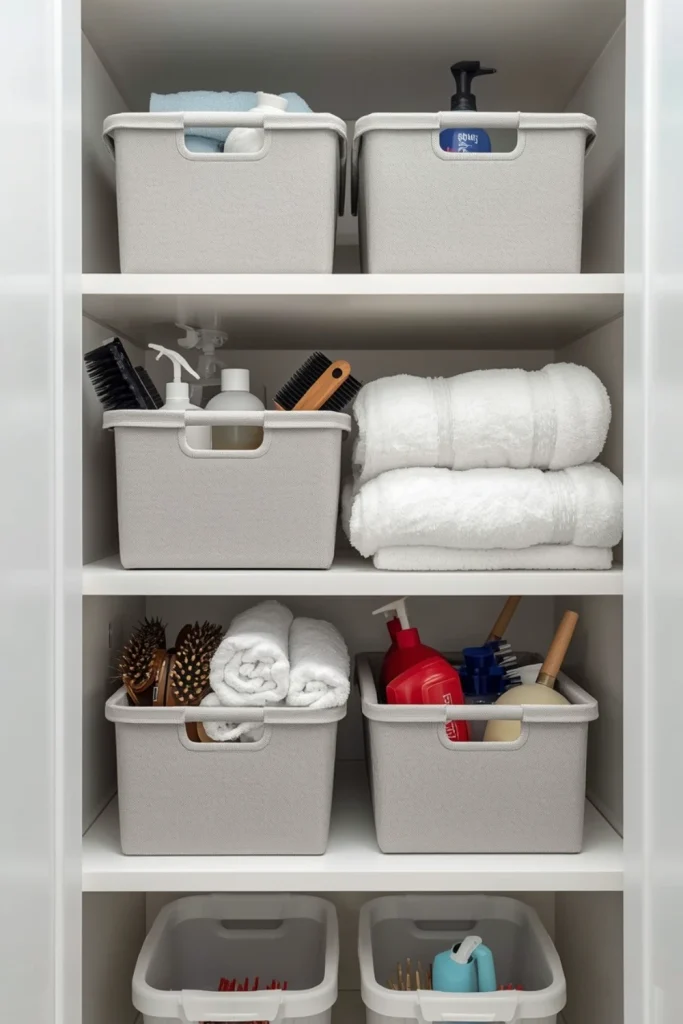
Storage baskets are an affordable way to keep your grooming station tidy. Use one basket for brushes and combs, another for bathing supplies, and a separate container for nail-care products. This simple organization makes it easier to find the correct tool without emptying an entire cupboard. Choose washable plastic or other easy-to-clean containers, especially if you store products near a bathing area. Labeling the baskets can also help other family members return items to the correct place after grooming.
Place frequently used supplies where you can reach them easily, but keep potentially dangerous tools out of your dog’s reach. Nail clippers, scissors, blades, and grooming equipment should be stored securely when not in use. Keep shampoos and cleaning products closed to prevent accidental spills or chewing. Avoid overfilling baskets because crowded storage makes it harder to find what you need. A simple organization system is usually better than buying lots of decorative storage products that take up valuable space.
5. Set Up a Dedicated Brushing Area
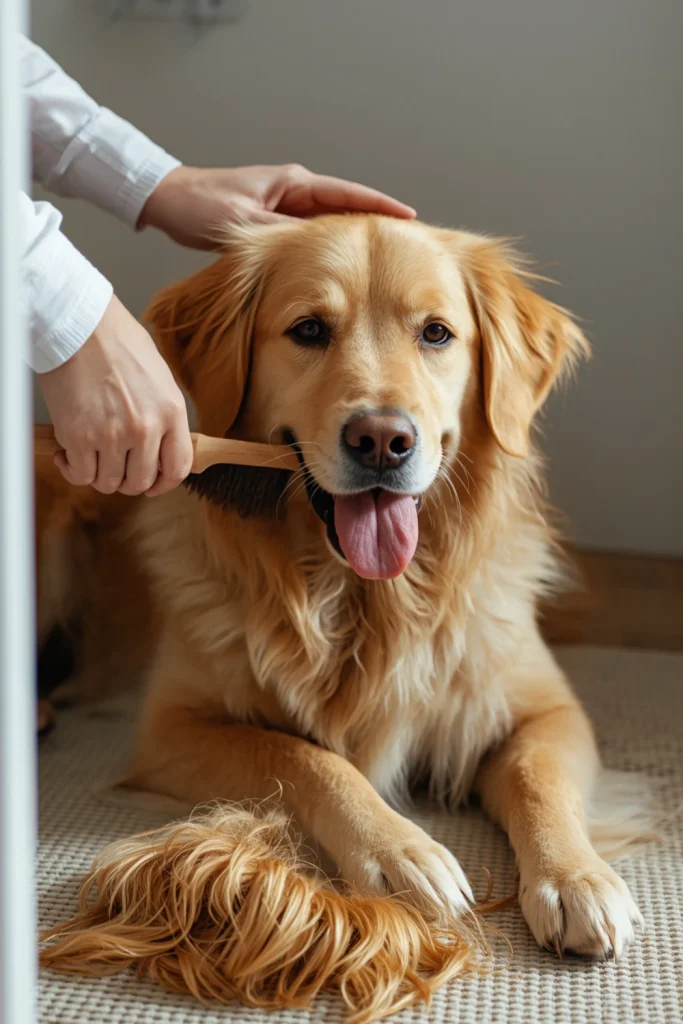
Brushing is one of the most common grooming activities, so it helps to create a comfortable place for it. Choose a spot with enough room for your dog to stand or sit naturally while you work around its body. Keep a suitable brush and comb nearby, along with a small container for collected loose hair. If your dog sheds heavily, place a washable mat underneath to make cleanup easier. A well-planned brushing area encourages you to maintain a regular coat-care routine.
The correct brushing method depends on your dog’s coat. Short-haired dogs may need a soft brush or grooming mitt, while long-haired dogs often require a suitable brush and comb to manage tangles. Curly or double-coated breeds may need specialized tools and techniques. Brush gently, working in manageable sections, and avoid pulling hard on knots. If you find tight mats close to the skin, do not cut them out with ordinary scissors because you could injure your dog. Ask a professional groomer to handle difficult matting.
6. Prepare a Convenient Bathing Area
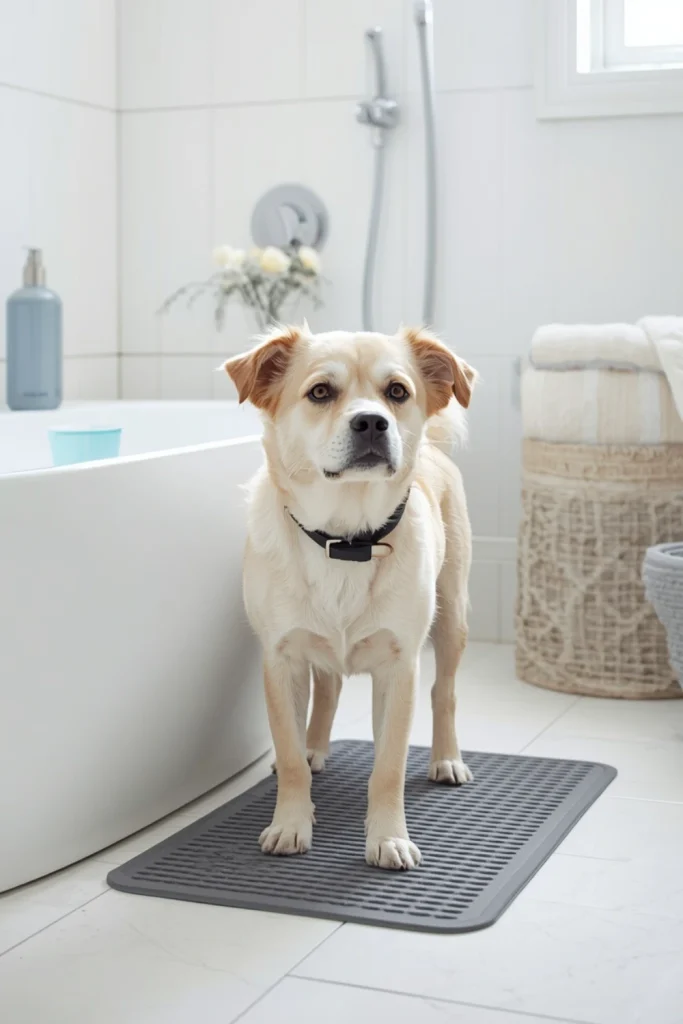
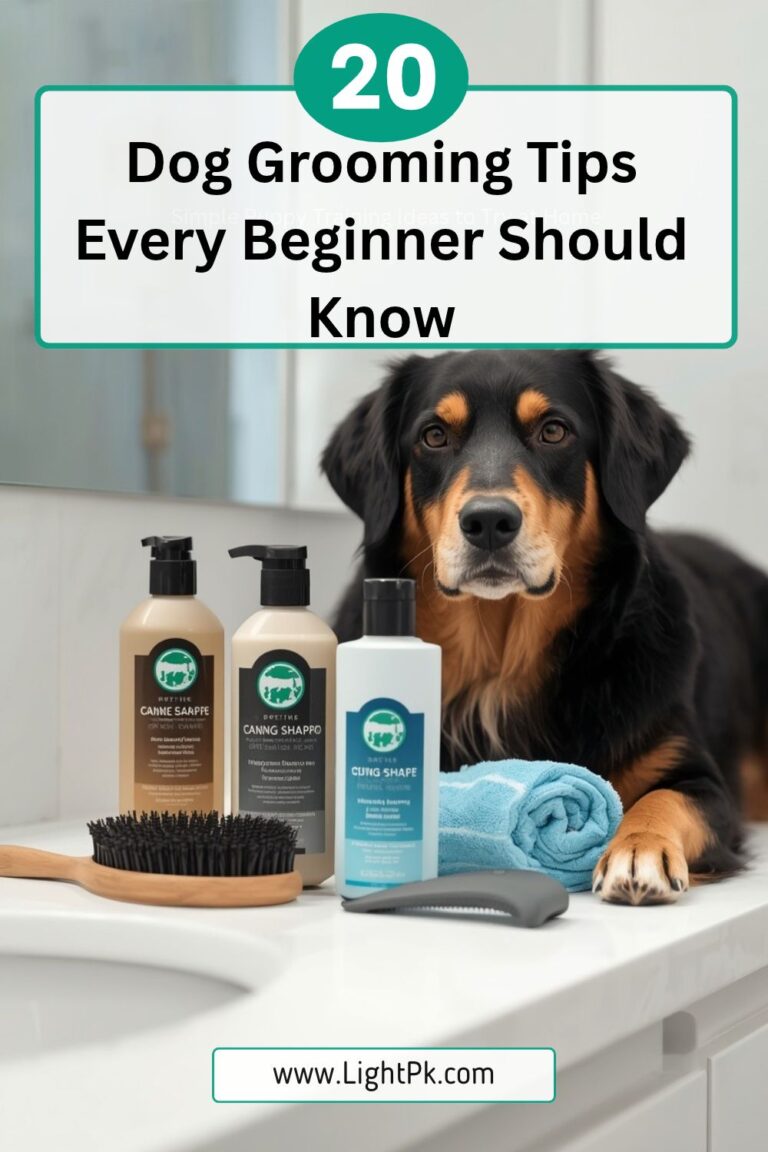
If you plan to bathe your dog at home, choose a location with access to water and enough room to work safely. A bathtub, walk-in shower, or suitable washing area may be appropriate depending on your dog’s size. Keep dog shampoo, a rinsing cup or suitable shower attachment, towels, and a non-slip bathing mat nearby. Preparing everything before bringing your dog into the bathing area prevents you from leaving your pet unattended while searching for supplies.
Check the water temperature before bathing and use comfortably lukewarm water. Avoid spraying water directly into your dog’s eyes, nose, or ears. Use a shampoo specifically formulated for dogs, following the label instructions and any veterinary recommendations. Rinse thoroughly because leftover shampoo can irritate the skin. If your dog is frightened by baths, begin with short, positive experiences rather than forcing it to stay in the tub. For large dogs or pets with mobility problems, choose a bathing setup that allows safe handling without lifting or twisting them awkwardly.
7. Keep Plenty of Clean Towels Nearby
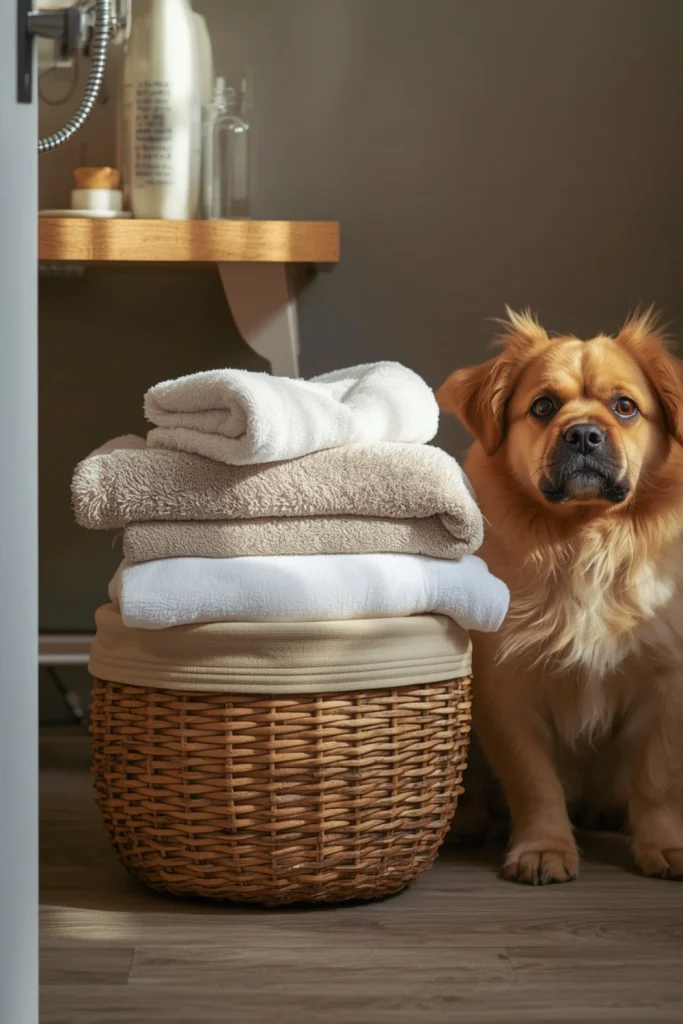
Towels are essential for a practical grooming station. After bathing, you can use them to absorb excess water before your dog begins air-drying or you use an appropriate pet dryer. Keep two or three clean towels in a dedicated basket so you always have a dry one available. Choose absorbent, soft towels that are large enough for your dog’s body. Smaller microfiber towels can also be useful for drying paws, cleaning around the face, and wiping away light dirt after outdoor walks.
Store clean towels separately from used ones to maintain good hygiene. After grooming, wash wet or dirty towels and allow them to dry completely before putting them back into storage. Damp towels left in a closed basket can develop unpleasant odors. You may also keep a small towel near the entrance of your grooming area for wiping muddy paws. Having towels ready before bathing makes the process more comfortable and reduces the amount of water spread around your home.
8. Add Proper Lighting to Your Grooming Space
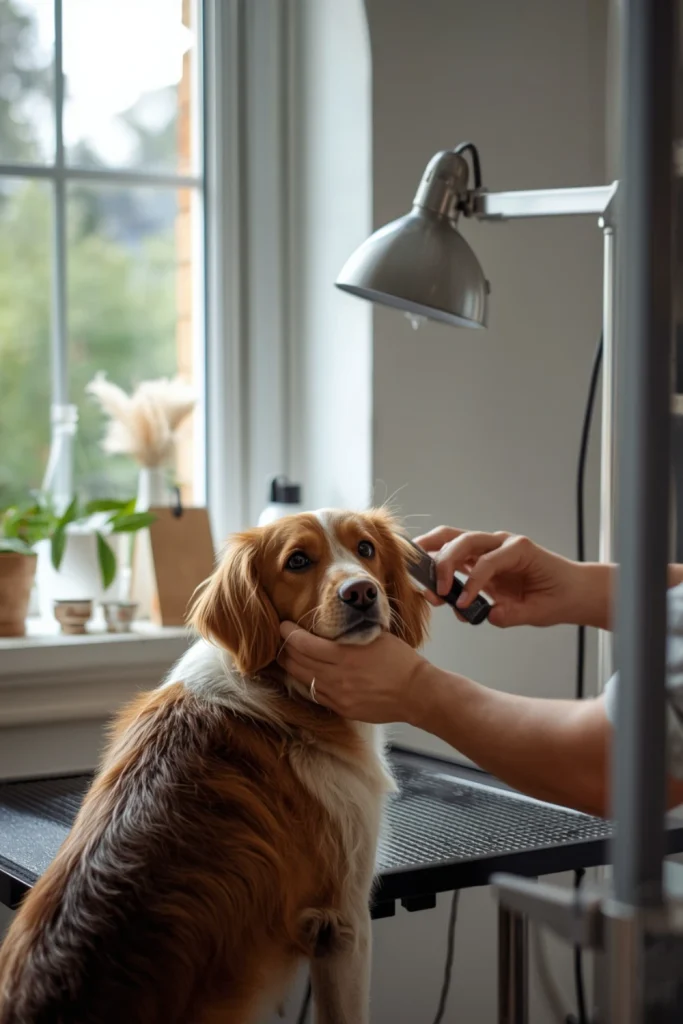
Good lighting helps you groom more carefully and notice details that might otherwise be missed. Natural light from a window is useful, but it may not be available throughout the day. A bright ceiling light or suitable lamp can improve visibility in darker corners. Position the lighting so it illuminates your dog’s coat without shining directly into its eyes. Good visibility is particularly helpful when checking for tangles, inspecting paws, brushing around the face, or looking for dirt in the coat.
Avoid using candles or hot lamps near towels, grooming products, or your dog. Electrical lights should be safely installed and kept away from wet areas. If you groom your dog in a bathroom, make sure any electrical equipment is suitable for that environment and follow safety instructions. You can also use a small adjustable lamp in a dry grooming corner. The goal is not to create a professional salon atmosphere but to make the space bright enough for careful, comfortable grooming.
9. Create a Safe Place for Nail Care
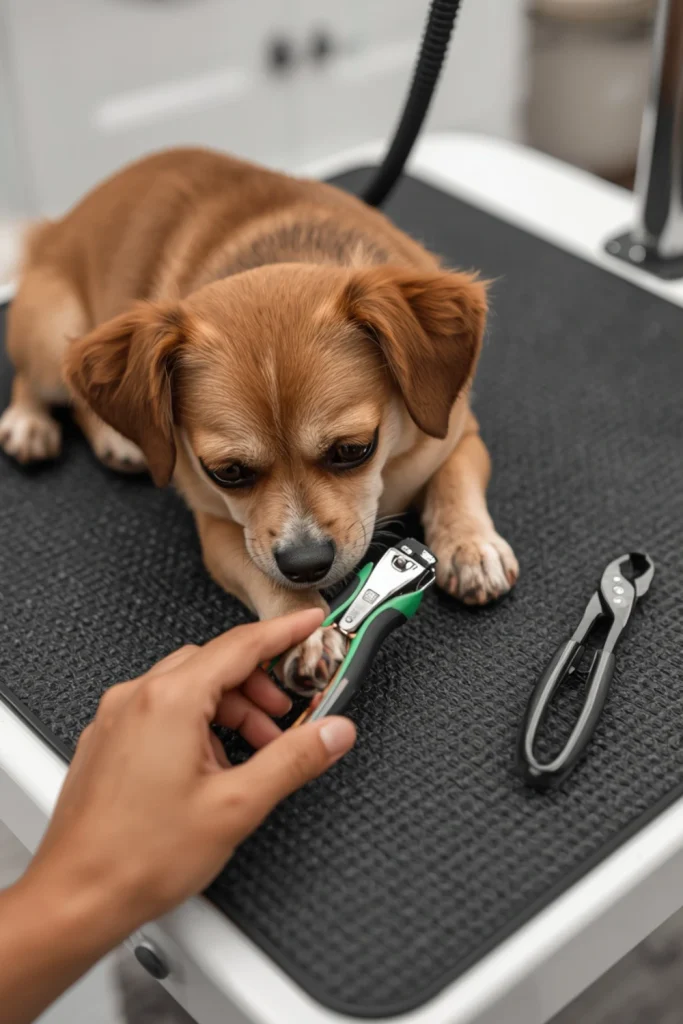
Nail care is easier when you have a clean, quiet place where your dog can relax. Keep dog nail clippers or a suitable nail grinder in a secure container near your grooming supplies. Choose equipment designed for your dog’s nail size and read the instructions before use. A comfortable non-slip mat can help your dog maintain balance while you gently handle one paw at a time. You may also keep a small towel nearby in case your dog needs a break or becomes uncomfortable.
If your dog is not used to nail trimming, introduce the equipment gradually. Let your pet sniff the clippers while they are switched off or inactive, reward calm behavior, and gently touch the paws without immediately cutting the nails. When you begin trimming, remove only a small amount at a time and avoid the quick, which contains blood vessels and nerves. If your dog’s nails are dark or you cannot identify the safe cutting area, ask a veterinarian or professional groomer to demonstrate the correct technique.
10. Keep Dental and Ear-Care Supplies Organized
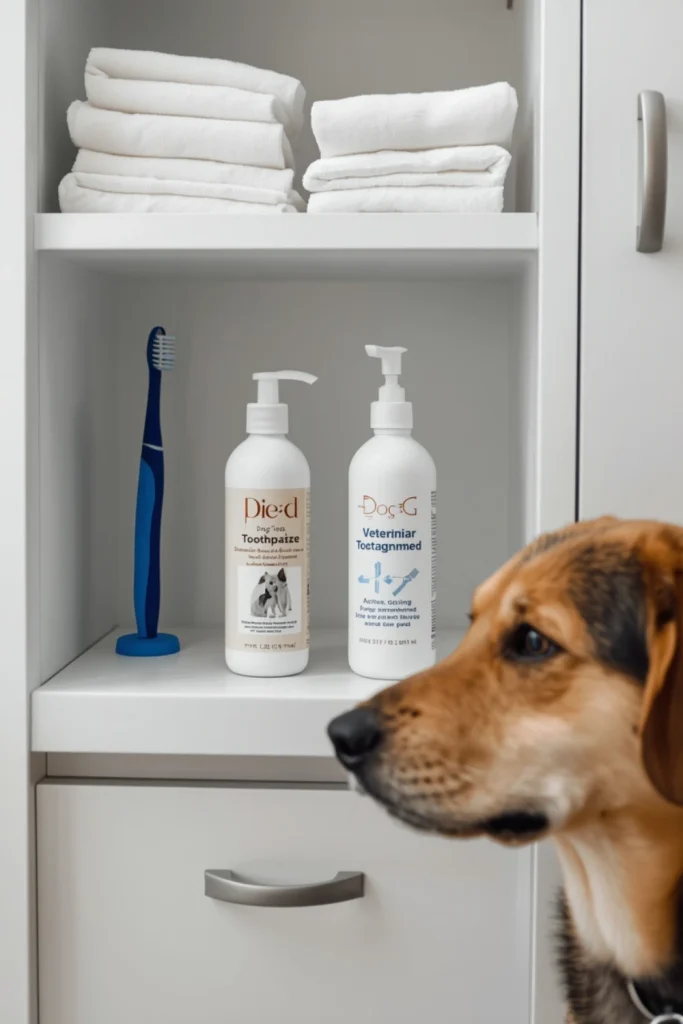
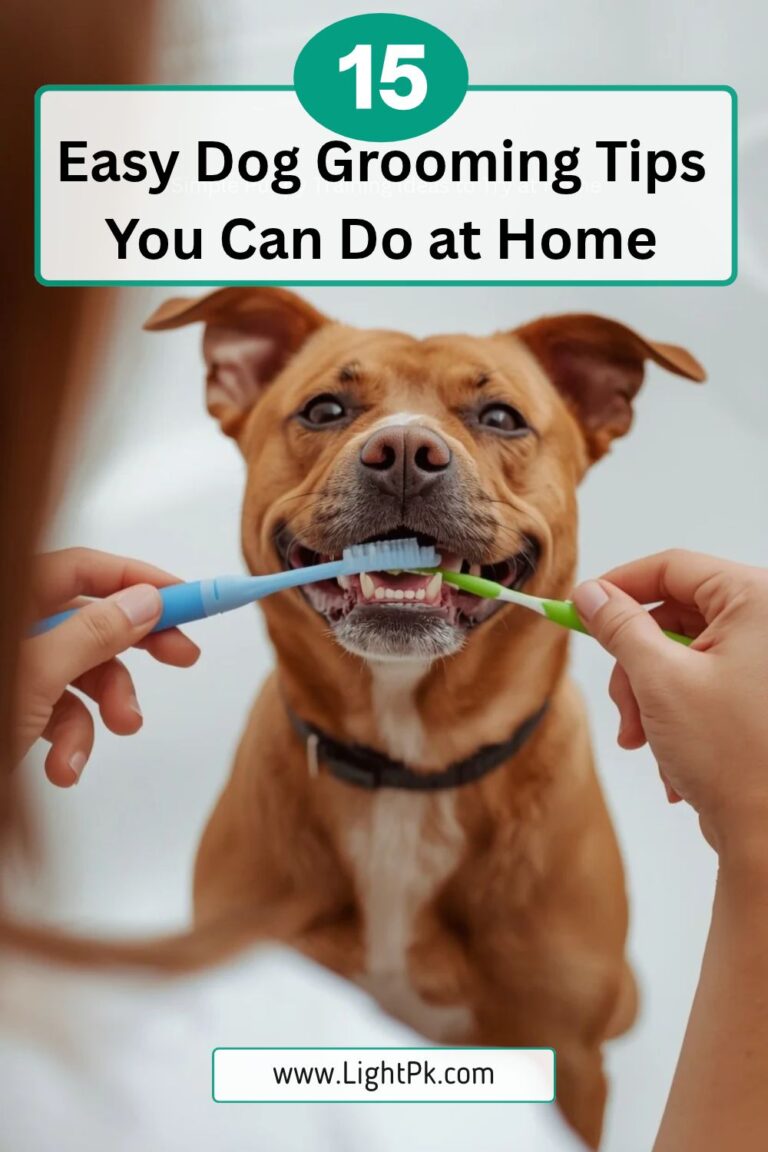
A complete home grooming station can include basic dental and ear-care supplies. For dental hygiene, keep a dog toothbrush and dog-specific toothpaste in a clean, separate container. Never use human toothpaste because some ingredients may be unsafe for dogs. Begin slowly by allowing your dog to become familiar with the toothbrush and gently touching the outside of the mouth. Regular brushing can support oral hygiene, but it does not replace professional veterinary dental examinations or treatment when needed.
For ear care, store veterinarian-recommended ear-cleaning products separately from bathing supplies. Not every dog needs routine ear cleaning, and cleaning too often or using unsuitable products can cause irritation. Never insert cotton swabs or other objects deep into the ear canal. If you notice redness, swelling, a bad smell, discharge, frequent head shaking, or signs of pain, contact your veterinarian instead of trying to treat the problem yourself. Keeping these products organized helps you follow a safe routine without confusing dental and ear-care items.
11. Make the Grooming Station Comfortable for Your Dog
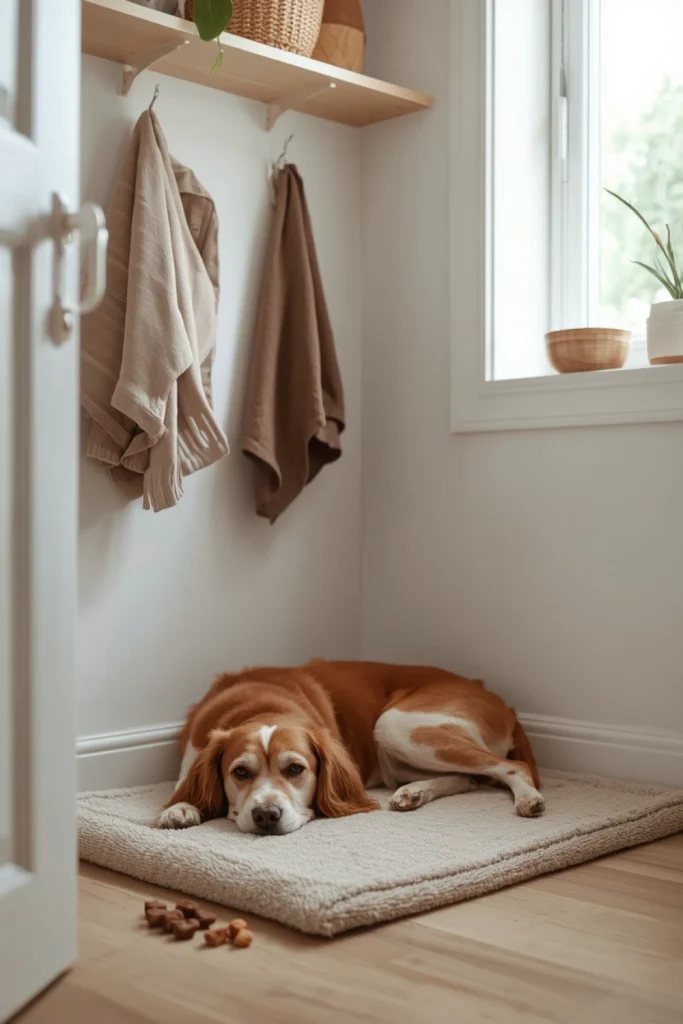
A grooming station should feel safe and welcoming rather than like a place where your dog is forced to stay still. Add a washable non-slip mat and allow enough room for your pet to change position. Some dogs feel more comfortable when a familiar blanket or washable resting mat is nearby. You can also keep small dog treats within reach to reward calm behavior. Avoid filling the area with too many objects because a crowded space may make it harder for your dog to move comfortably.
Pay attention to your dog’s body language during grooming. Repeated attempts to move away, trembling, panting unrelated to heat, tucked tails, or growling may indicate stress or discomfort. Give your pet breaks and keep early grooming sessions short. Never punish a dog for being nervous. Instead, build confidence through gradual handling and rewards. If your dog becomes extremely frightened or reacts aggressively, stop the session and seek guidance from a qualified force-free trainer, veterinarian, or experienced groomer.
12. Keep Cleaning Supplies Within Easy Reach
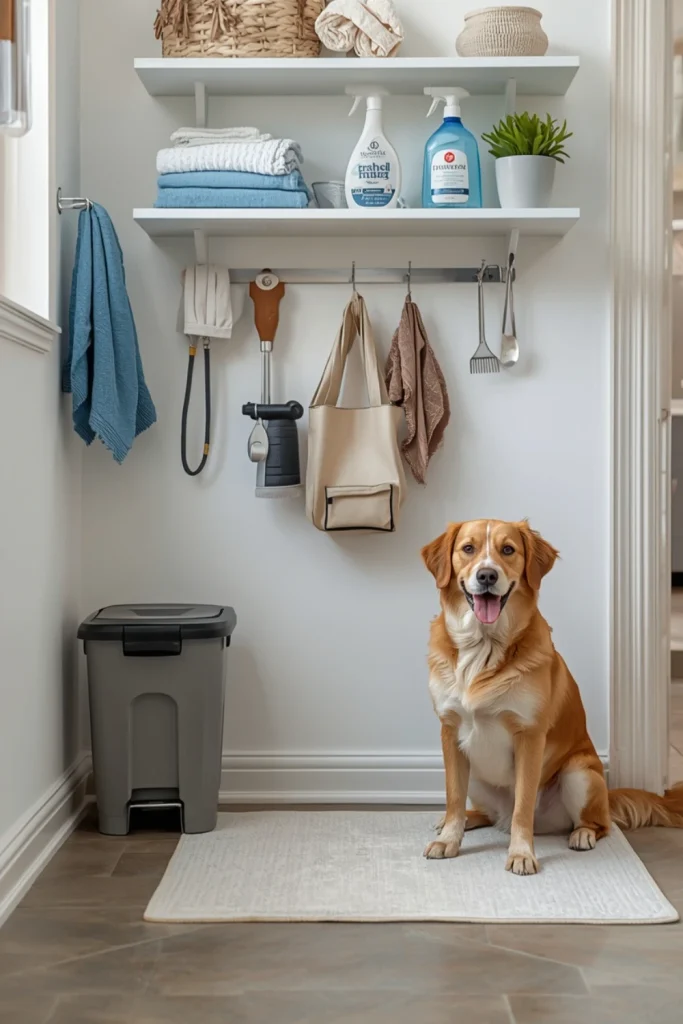
Grooming can create loose hair, dirty towels, water spills, and small amounts of product residue. Keeping cleaning supplies nearby makes it easier to restore the area after each session. Useful items include a broom, washable cloths, paper towels, a small waste bin, and a pet-safe floor cleaner suitable for your flooring. Choose cleaning products carefully and follow the label directions. Keep your dog away from wet floors and cleaning chemicals until the area is safe and completely dry.
Create a quick cleanup routine so dirt does not build up around your grooming station. Remove loose hair from brushes, wash used towels, wipe down surfaces, and put tools back into their storage containers. Dispose of collected fur and other waste safely. Do not mix cleaning chemicals or use strong products around your dog without checking their safety instructions. A clean grooming area helps maintain hygiene and makes your next grooming session easier because you will not need to prepare the space from the beginning.
13. Arrange Your Grooming Station for Small Spaces
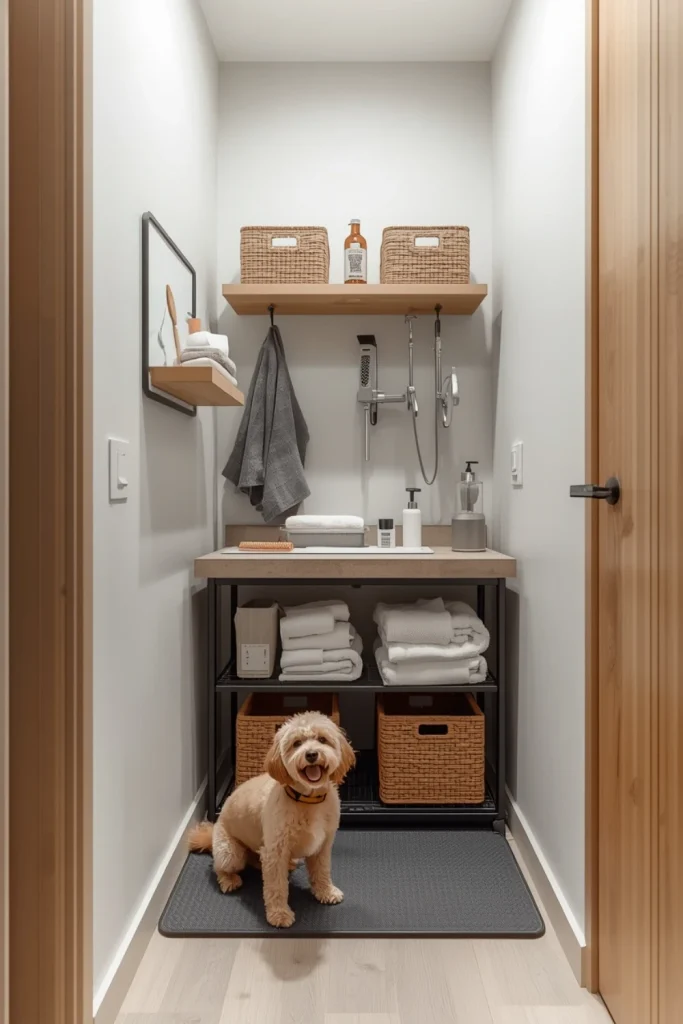
You do not need a large room to create a useful dog grooming station. If you live in an apartment or have limited storage, use a small corner near a bathroom or laundry area. A compact shelf, wall-mounted organizer, or stackable storage containers can hold basic grooming supplies without taking up much floor space. Keep the floor area clear so your dog has enough room to stand and turn around. A foldable mat can be stored away when grooming is finished.
Choose multipurpose storage products that are easy to move and clean. For example, one handled basket can hold brushes, combs, and grooming gloves, while a separate waterproof container can store bathing products. You can keep towels in a nearby cupboard instead of using a large towel rack. Avoid stacking heavy objects above the grooming area where they could fall. A small, carefully organized station can be just as practical as a large setup when every item has a clear place.
14. Store Grooming Tools Safely After Every Session
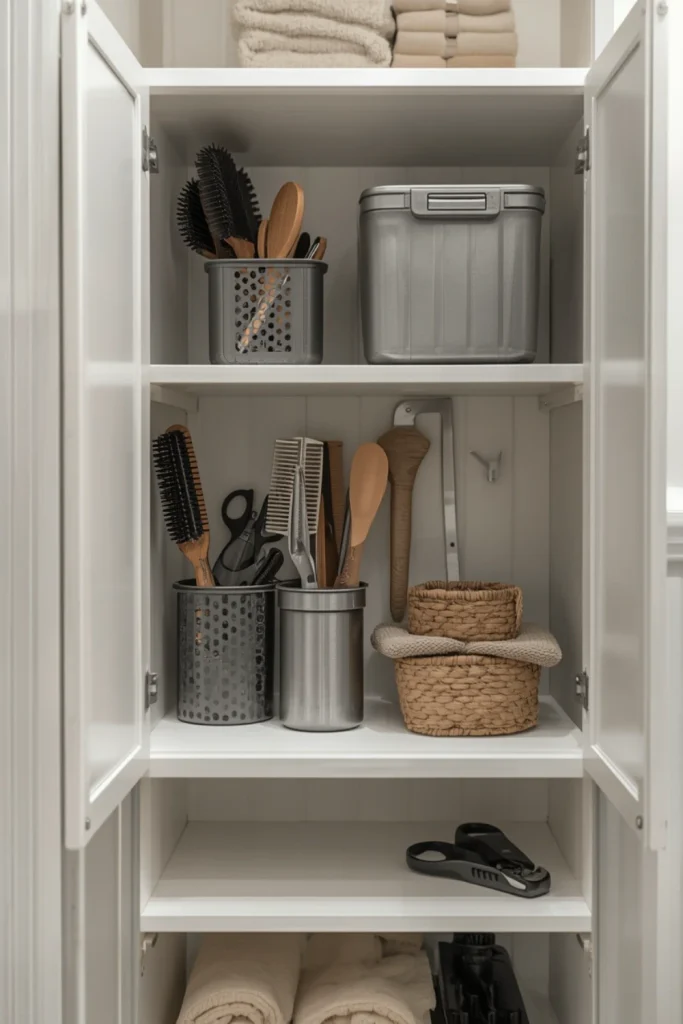
Safe storage is an important part of maintaining your grooming station. Sharp scissors, nail clippers, blades, and electrical tools should be placed in secure containers or cabinets after use. Never leave small tools on the floor where your dog might chew them or accidentally step on them. Store shampoos and other grooming products with their lids closed, and keep them away from children and pets. Check equipment regularly for damage, rust, loose parts, or worn-out components.
Electrical grooming equipment should be unplugged after use and stored in a dry location. Keep cords neatly arranged so your dog cannot chew or become tangled in them. Allow dryers and other equipment to cool before putting them away, following the manufacturer’s instructions. Clean brushes and combs before storage, and replace damaged tools rather than continuing to use them. These small habits help protect your dog and extend the useful life of your grooming supplies.
15. Build a Simple Grooming Routine Around Your Station
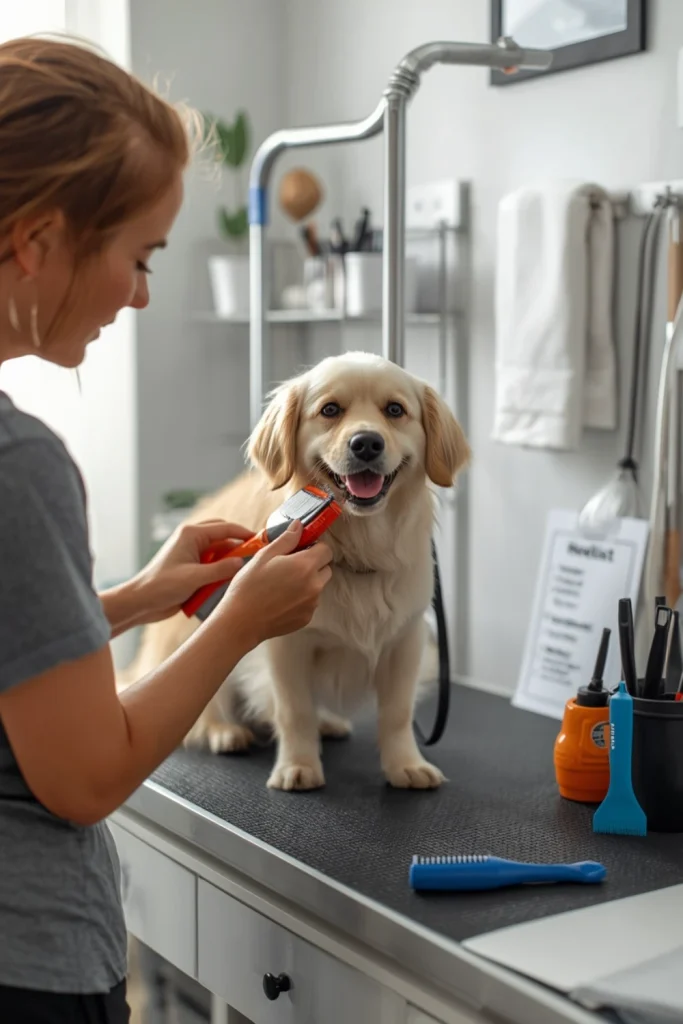
Once your grooming station is ready, create a routine that fits your dog’s needs. Start with short activities such as brushing for a few minutes, checking the paws, or gently handling the ears. The right frequency depends on your dog’s breed, coat, activity level, and skin condition. Some dogs need frequent brushing to prevent tangles, while others require less frequent coat maintenance. Follow professional grooming advice for your dog’s coat type instead of using the same schedule for every breed.
Try to keep grooming sessions predictable and positive. You might brush your dog on certain days, check the nails regularly, and schedule baths when needed rather than bathing too frequently. Dental care should be part of the routine as recommended by your veterinarian. Keep a simple checklist near the grooming station to track tasks and supplies that need replacing. If your dog becomes tired or uncomfortable, pause and continue later. A consistent, gentle approach is more useful than trying to complete every grooming task in one session.
Final Thoughts
Setting up a Simple Dog Grooming Station at home is an easy way to make regular dog care more organized and convenient. You do not need a large room, expensive equipment, or a professional salon setup. A suitable location, non-slip surface, essential grooming tools, clean towels, and organized storage can provide everything you need to begin basic grooming at home.
Remember that your dog’s comfort and safety should always come first. Choose tools that match your pet’s coat, introduce the grooming area gradually, and keep each session calm and positive. With a little preparation and a consistent routine, your home grooming station can become a useful part of your dog’s everyday care.