
15 Puppy Grooming Tips Every New Owner Should Know
Bringing a new puppy home is an exciting experience filled with adorable moments, playful energy, and plenty of new responsibilities. While feeding, training, and socialization are important parts of puppy care, grooming is another essential habit every new puppy owner should introduce early. A clean, well-groomed puppy is not only adorable but also more comfortable and easier to care for as it grows.
The best time to introduce grooming is when your puppy is young. Gentle brushing, regular bathing, nail trimming, ear cleaning, and dental care can help your puppy become comfortable with everyday grooming activities. You don’t need expensive equipment or professional skills to get started. With patience, positive reinforcement, and the right techniques, these 15 Puppy Grooming Tips will help you build a simple grooming routine and keep your furry friend clean, healthy, and happy.
1. Start Grooming Your Puppy at an Early Age

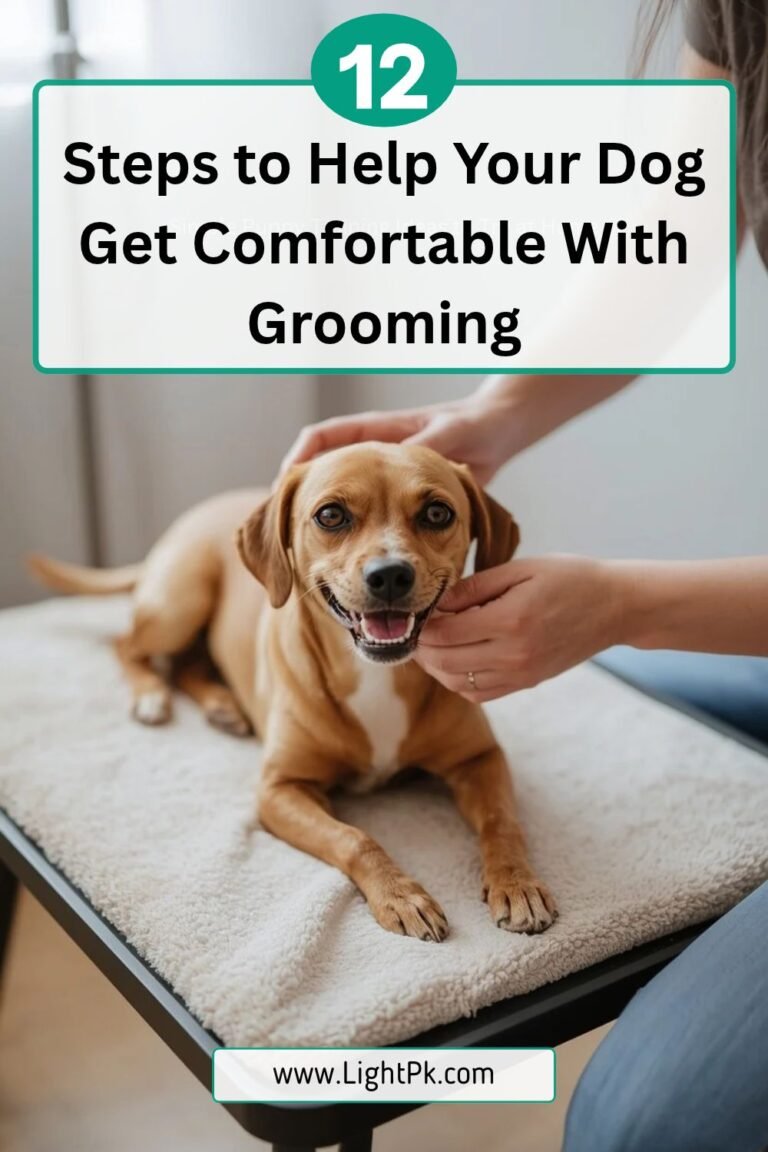
One of the most important Puppy Grooming Tips for new owners is to introduce grooming as early as possible. Puppies learn about the world through new experiences, sounds, smells, and physical interactions. Introducing a soft brush, gentle paw handling, and brief ear inspections during puppyhood can help them become comfortable with grooming. Start slowly and allow your puppy to investigate grooming tools before using them. Never force your puppy to remain still for long periods during its first grooming experiences.
Begin with simple activities such as gently touching your puppy’s paws, rubbing its back, and brushing a small section of its coat. Keep the first sessions short, preferably just a few minutes. Reward your puppy with praise or small treats whenever it remains relaxed. Gradually introduce additional activities as your puppy becomes more comfortable. Early positive experiences can make regular grooming much easier when your puppy becomes an adult dog.
2. Choose the Right Brush for Your Puppy’s Coat

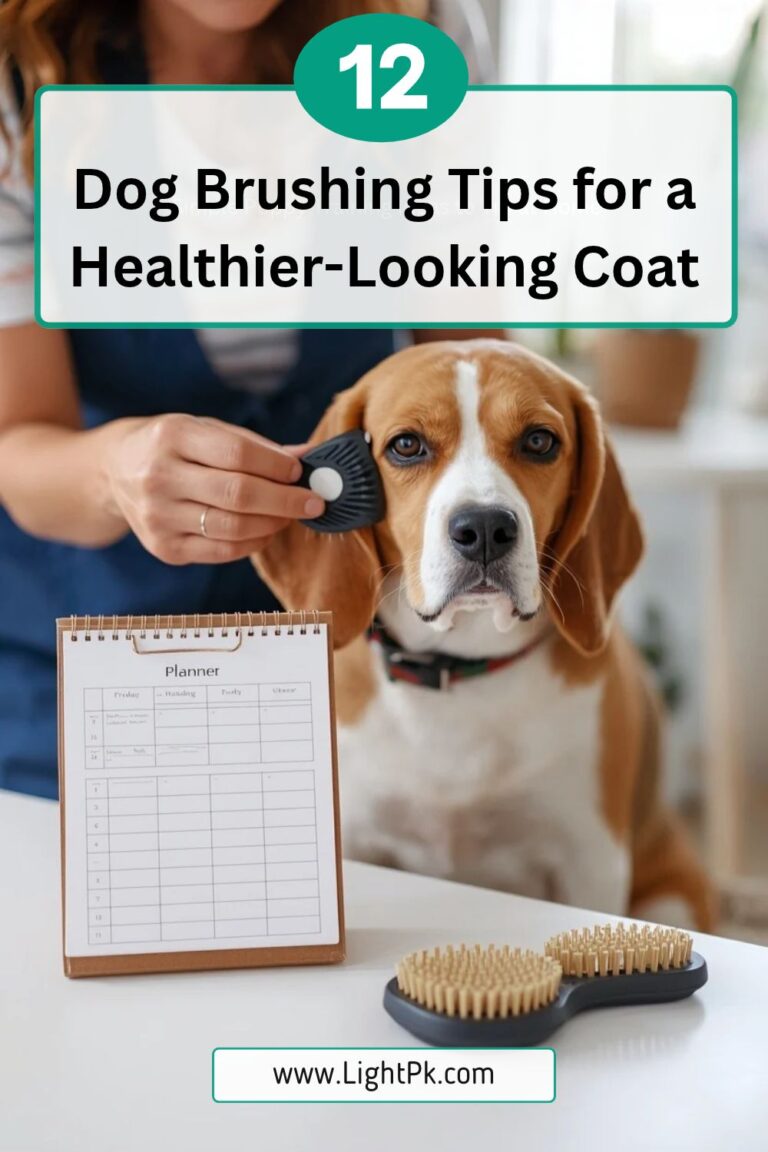
Choosing the correct brush is essential for keeping your puppy’s coat clean and healthy. Different breeds have different coat types, so one grooming tool may not work for every puppy. Short-haired puppies may benefit from a soft-bristle brush or grooming mitt, while long-haired breeds may need a gentle pin brush or wide-tooth comb. Curly-coated puppies often require specialized brushes to prevent tangles and mats. Always select a brush designed for your puppy’s coat and age.
Before brushing, allow your puppy to smell and explore the grooming tool. Use gentle strokes in the direction of hair growth and avoid applying too much pressure. Pay attention to areas where tangles commonly develop, such as behind the ears, under the legs, and around the tail. If your puppy becomes uncomfortable, pause and offer a treat. Regular brushing helps remove loose hair, distribute natural oils, and keep your puppy’s coat looking neat.
3. Make Brushing a Regular Habit
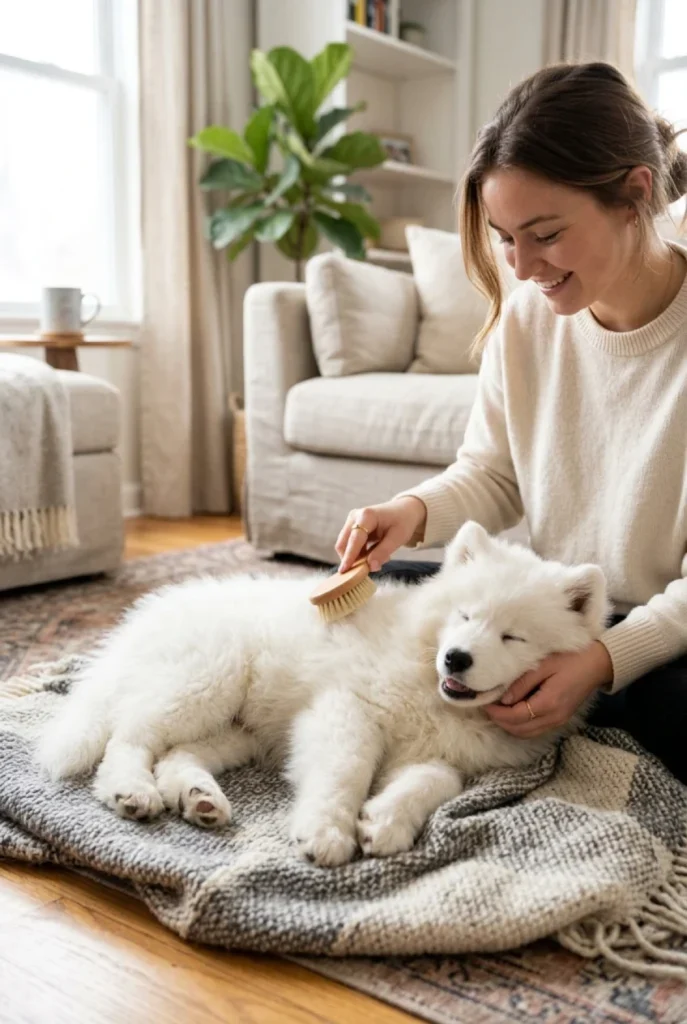
Regular brushing is one of the easiest ways to maintain your puppy’s coat between baths. It removes loose hair, dirt, and small tangles before they become difficult to manage. Short-haired puppies may only need brushing once or twice a week, while long-haired and curly-coated breeds often require more frequent brushing. Establishing a consistent schedule helps your puppy become familiar with the process and reduces the chances of developing uncomfortable mats.
Choose a quiet time when your puppy is relaxed, such as after a gentle play session or a short walk. Start brushing for a few minutes and gradually increase the duration as your puppy becomes comfortable. Remember to brush gently around sensitive areas, including the belly, ears, and legs. If you find a small tangle, carefully work through it with your fingers or a suitable comb. Never pull sharply on your puppy’s fur because this can cause pain and make future brushing stressful.
4. Give Your Puppy Its First Bath Carefully

Your puppy’s first bath should be a calm and positive experience. Some puppies are naturally curious about water, while others may feel nervous when they hear running water or step into a bathtub. Begin by introducing your puppy to the bathing area without turning on the water. Let it explore the space and reward calm behavior. Use lukewarm water, a non-slip mat, and a gentle puppy-specific shampoo. Avoid filling the tub too deeply because young puppies may become frightened.
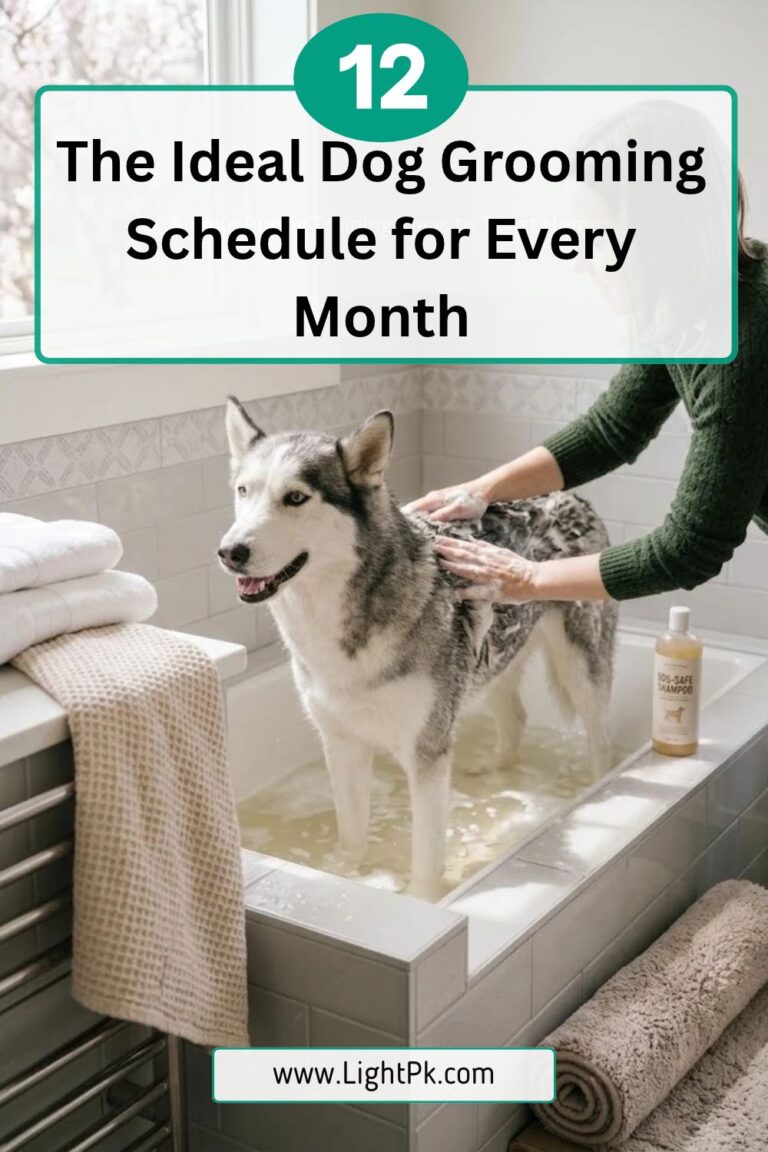
When bathing your puppy, wet its coat slowly and avoid pouring water directly over its face. Apply a small amount of shampoo and gently massage it into the fur. Rinse thoroughly to remove all product residue, which can otherwise irritate the skin. Keep the bath short and comfortable, and never leave your puppy unattended around water. Afterward, wrap it in a soft towel and gently dry its coat. The goal of the first bath is to create a pleasant experience rather than achieve a perfect grooming result.
5. Use a Gentle Puppy-Safe Shampoo
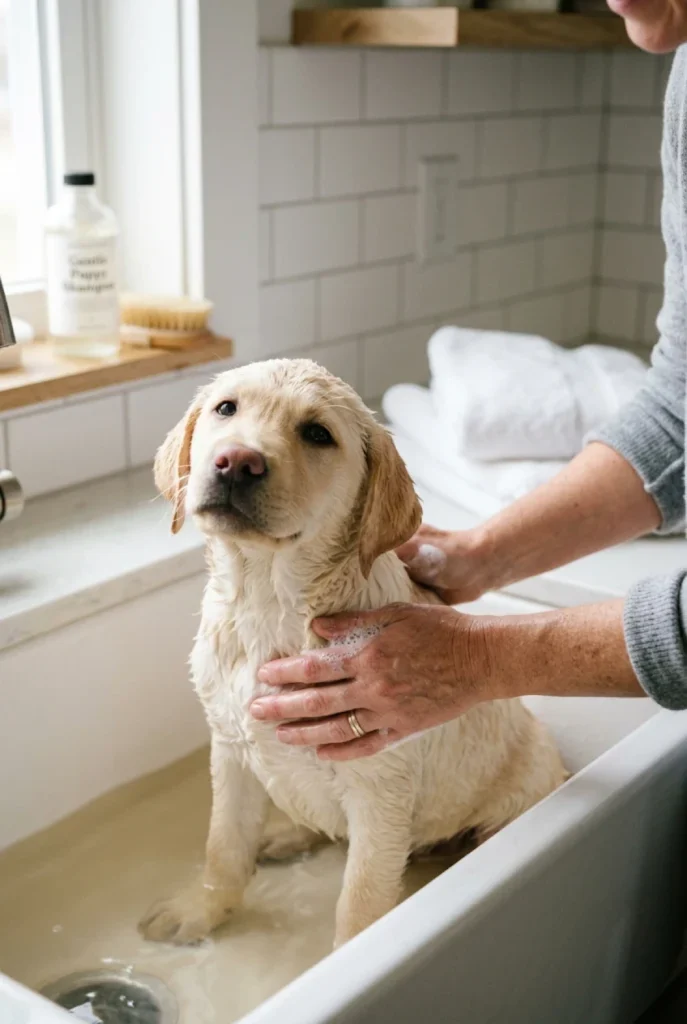
Choosing the right shampoo is an important part of puppy grooming. Puppies have delicate skin that can become irritated by harsh cleaning products, strong fragrances, and unsuitable ingredients. Always choose a shampoo specifically formulated for puppies. These products are generally designed to clean gently without unnecessarily stripping natural oils from the coat. Avoid using human shampoo, adult dog products that are not suitable for puppies, or household soaps. If your puppy has sensitive skin, allergies, or persistent itching, ask your veterinarian for product recommendations.
Before using a new shampoo, read its instructions and check the recommended age for use. Apply a small amount to your puppy’s wet coat and massage gently, keeping the product away from the eyes, nose, and inside of the ears. Rinse thoroughly because leftover shampoo can cause itching and skin irritation. Avoid bathing too frequently, as excessive washing may dry out your puppy’s skin. The correct bathing frequency depends on your puppy’s breed, coat type, activities, and individual skin needs.
6. Clean Your Puppy’s Ears Gently
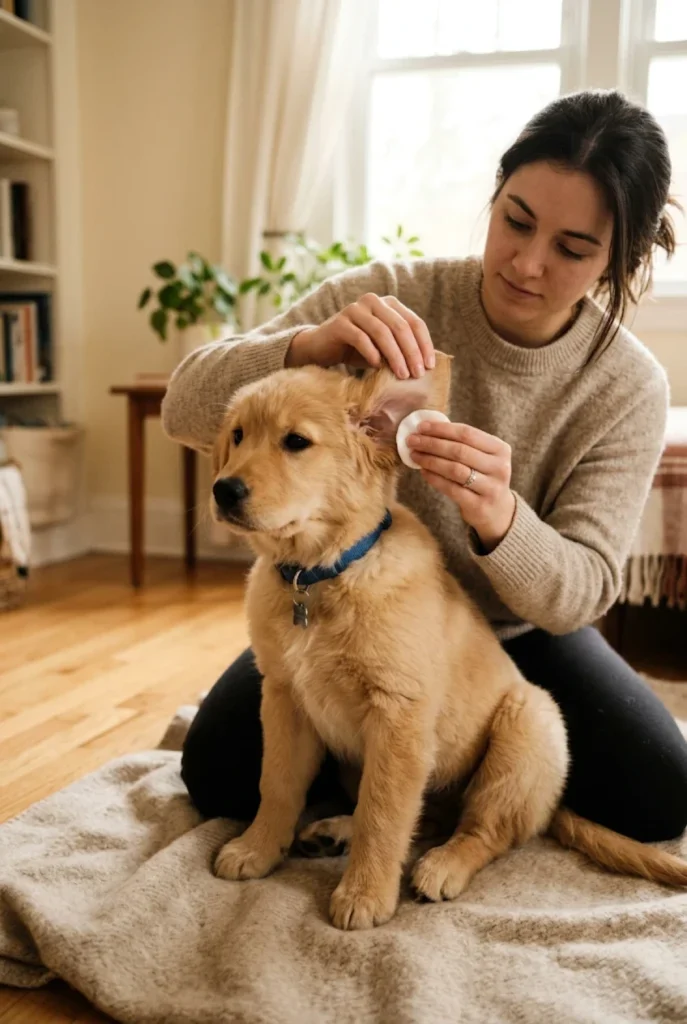
Ear cleaning is another important habit to introduce during puppyhood. Dirt, wax, and moisture can collect inside your puppy’s ears, particularly in breeds with long or floppy ears. Regularly check the visible parts of the ears for redness, unusual discharge, swelling, or unpleasant smells. Healthy ears generally should not have a strong odor. Gentle inspections help your puppy become comfortable with ear handling while allowing you to notice potential problems early. However, not every puppy needs routine ear cleaning, so avoid cleaning unnecessarily.
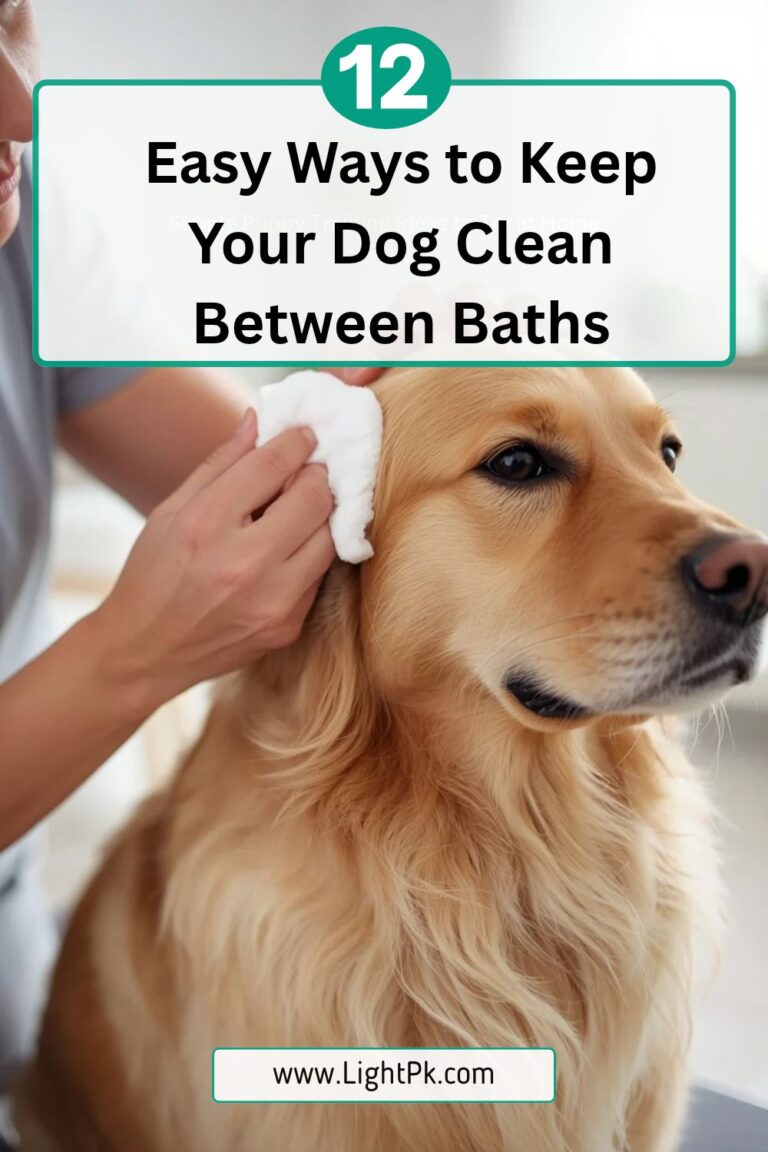
If cleaning is needed, use a veterinarian-approved dog ear-cleaning solution and a soft cotton pad. Gently wipe the visible outer ear without inserting anything deep into the ear canal. Never use cotton swabs inside the ear because they can push debris deeper or injure delicate tissues. If your puppy frequently scratches its ears, shakes its head, or shows signs of pain, contact your veterinarian. These symptoms may indicate an ear infection or another problem that requires proper treatment.
7. Introduce Nail Trimming Slowly
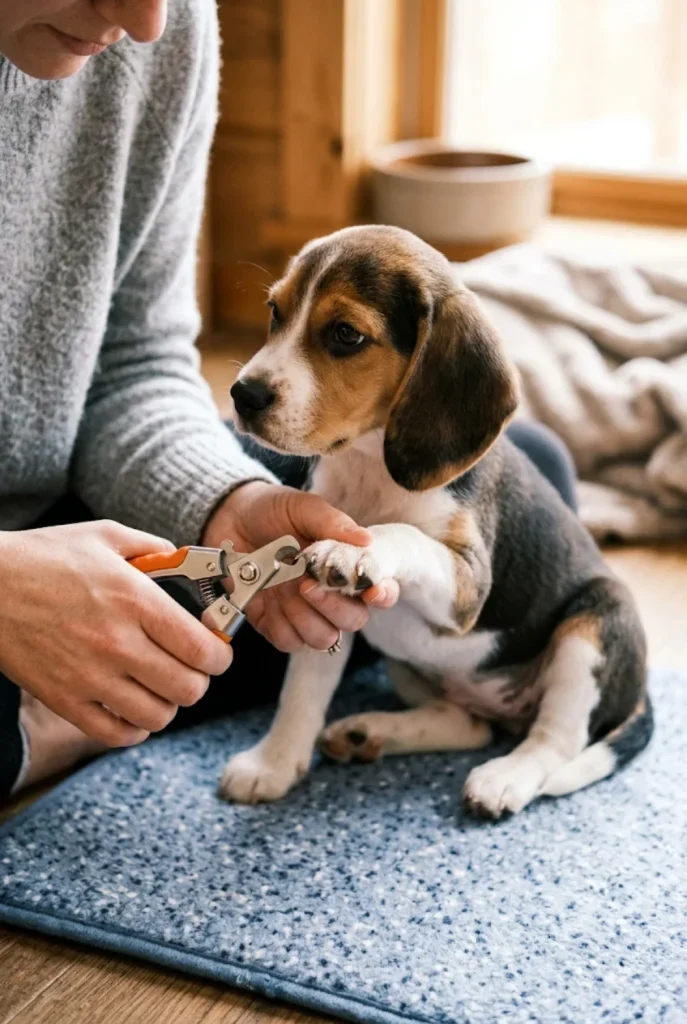
Many new puppy owners feel nervous about trimming their pet’s nails, but introducing the activity early can make future nail care easier. Puppies have small, delicate nails that can become sharp and uncomfortable. Long nails may also affect how your puppy places its paws while walking. Start by gently touching your puppy’s paws during relaxed moments. Allow it to become comfortable with having each paw handled before introducing nail clippers or a nail grinder. You can also let your puppy smell the grooming tool before using it.
When you begin trimming, use nail clippers specifically designed for puppies or small dogs. Remove only a tiny amount from the nail tip and avoid cutting the quick, which contains blood vessels and nerves. The quick may be difficult to see, especially in dark nails, so take extra care. If you are unsure about the correct technique, ask your veterinarian or professional groomer to demonstrate it. Never rush nail trimming or force your puppy to continue when it becomes frightened.
8. Start Dental Care Early
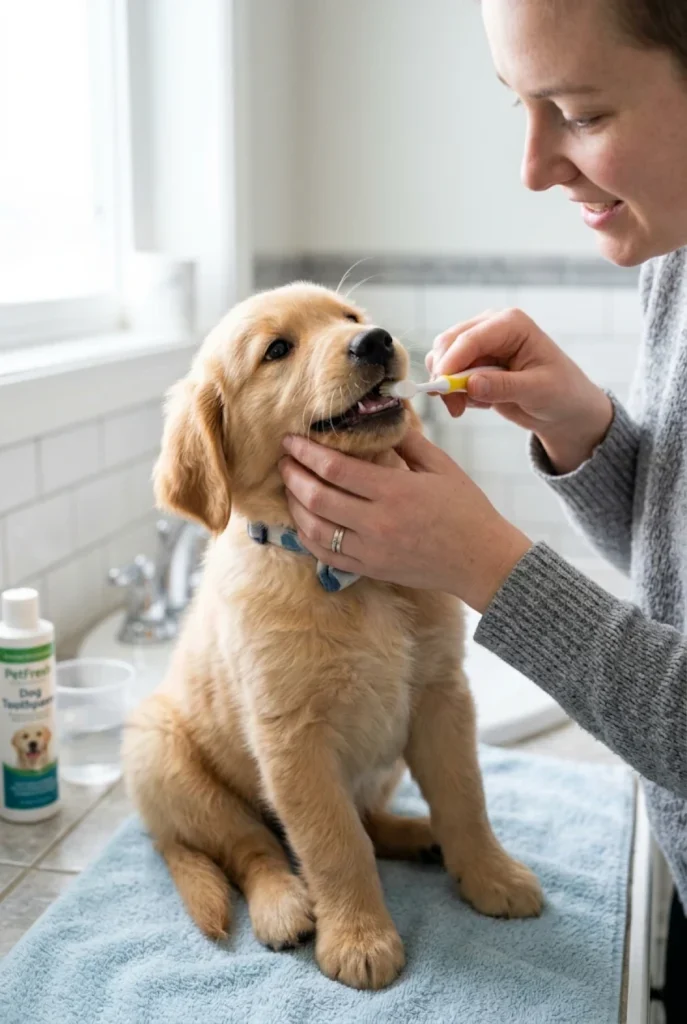
Dental care is often overlooked by new puppy owners, but it is an essential part of a healthy grooming routine. Introducing toothbrushing early helps your puppy become familiar with having its mouth handled. Begin by gently touching your puppy’s lips and allowing it to explore a puppy-safe toothbrush. You can initially use your finger to gently touch the outside surfaces of its teeth before introducing a toothbrush. Always move slowly and reward your puppy for remaining calm.
Use a toothbrush and toothpaste specifically designed for dogs. Human toothpaste is not suitable for puppies because some ingredients, including xylitol, can be dangerous to dogs. Brush gently along the outer surfaces of the teeth, paying attention to the gumline. Aim to build toward daily brushing if your puppy tolerates it. Regular dental care helps reduce plaque buildup and supports better oral hygiene. If you notice bleeding gums, persistent bad breath, or difficulty chewing, consult your veterinarian.
9. Keep Your Puppy’s Eyes Clean
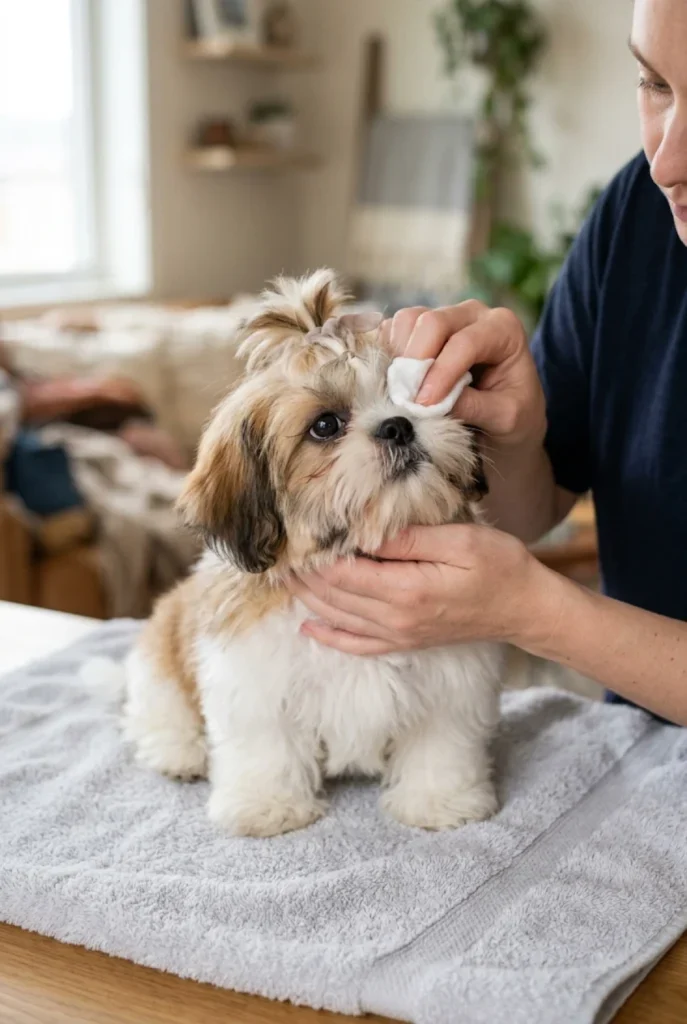
Puppies sometimes develop small amounts of discharge around their eyes, especially after sleeping or playing outdoors. Dirt and dried tear stains can collect around the corners of the eyes and make the facial fur look untidy. Regularly inspect your puppy’s eyes and gently clean visible dirt using a clean, soft, damp cloth or a veterinarian-approved eye-cleaning product. Be careful not to touch the eyeball directly. For puppies with long facial hair, keeping the hair neatly managed can also help prevent irritation around the eyes.
Never use soap, shampoo, household cleaning products, or human eye drops unless your veterinarian specifically recommends them. If your puppy has excessive tearing, thick discharge, redness, swelling, squinting, or keeps rubbing its eyes, arrange a veterinary examination. Eye problems can sometimes develop quickly, and delaying treatment may make the situation worse. Gentle cleaning is useful for everyday hygiene, but it should never replace medical attention when unusual symptoms appear.
10. Keep Your Puppy’s Paws Clean and Healthy

Your puppy’s paws come into contact with different surfaces throughout the day, including grass, soil, pavement, and indoor floors. These surfaces can leave dirt, dust, and small pieces of debris between the toes and around the paw pads. Make paw inspections part of your regular grooming routine, especially after outdoor walks and playtime. Check for small stones, cuts, redness, swelling, and anything stuck between the toes. Puppies that spend time outdoors may need more frequent paw cleaning than those that mostly stay inside.
Use a clean, soft, damp cloth or pet-safe wipes to remove dirt from the paws. Gently clean between the toes and dry the area afterward. If your puppy has long hair around its paw pads, ask a professional groomer how to keep it neatly trimmed without damaging the sensitive skin. Avoid using harsh disinfectants or human skincare products. If you notice persistent licking, limping, cracked pads, or swelling, contact your veterinarian to check for irritation or injury.
11. Learn How to Dry Your Puppy Properly
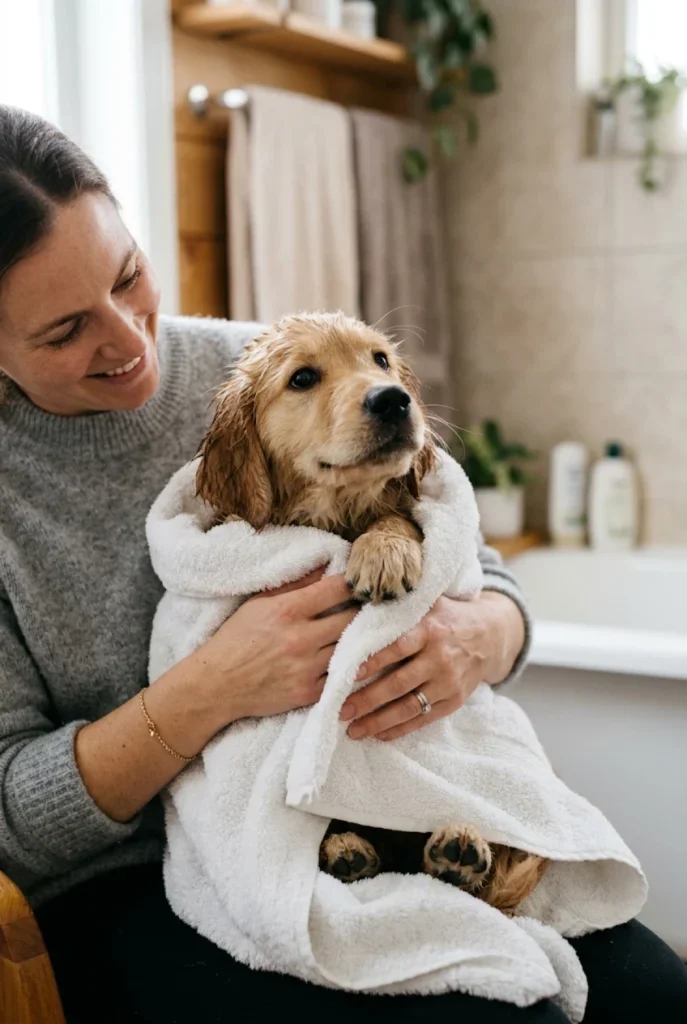
Drying is just as important as bathing when it comes to puppy grooming. After a bath, gently remove excess water using a clean, absorbent towel. Avoid rubbing your puppy’s coat aggressively because this can cause tangles and discomfort. Pay attention to areas where moisture can collect, including the belly, paws, armpits, and spaces between the toes. Puppies with thick or long coats may take longer to dry, so make sure moisture does not remain trapped close to the skin.
Some puppies may become frightened by the sound of a hair dryer. If you decide to use one, choose a pet-safe dryer or an appropriate low-heat setting and keep it at a safe distance. Never use hot air directly on your puppy’s skin. Introduce the sound gradually and stop if your puppy becomes nervous. For very young puppies, make sure they stay comfortably warm after bathing. A calm drying experience helps your puppy associate grooming with comfort instead of fear.
12. Introduce Hair Trimming and Professional Grooming

Some puppy breeds need regular hair trimming to keep their coats manageable. Poodles, Shih Tzus, Yorkshire Terriers, and other breeds with continuously growing or easily tangled coats may require professional grooming. However, puppies should be introduced to grooming tools and salon environments gradually. Before booking a full grooming appointment, consider arranging a short introductory visit where your puppy can explore the surroundings and become familiar with the groomer’s presence. Always choose someone experienced with young dogs.
Do not attempt complicated haircuts with sharp scissors if you are inexperienced. Puppies move suddenly, and accidental cuts can happen when trimming around the face, ears, paws, and sensitive areas. A professional groomer can recommend a suitable haircut based on your puppy’s breed and coat condition. Ask about gentle handling, appropriate grooming equipment, and age-related requirements. If your puppy has skin problems or other medical concerns, speak with your veterinarian before arranging a grooming session.
13. Check Your Puppy’s Skin and Coat Regularly

Regular grooming provides a useful opportunity to check your puppy’s skin and coat for unusual changes. While brushing, gently move the fur aside and look for redness, dry patches, small bumps, scratches, hair loss, or signs of parasites. Puppies enjoy exploring, and their outdoor activities can sometimes expose them to fleas, ticks, and other skin irritants. Checking the coat regularly helps you notice problems early and understand what is normal for your puppy.
Pay attention to areas such as the belly, neck, ears, legs, and the base of the tail. If you discover fleas, ticks, persistent itching, or unusual skin changes, contact your veterinarian for suitable treatment advice. Never apply flea or tick products without checking whether they are appropriate for your puppy’s age and weight. Some products designed for adult dogs may not be safe for young puppies. A regular skin inspection is a simple habit that supports better overall puppy care.
14. Make Grooming Fun With Positive Reinforcement
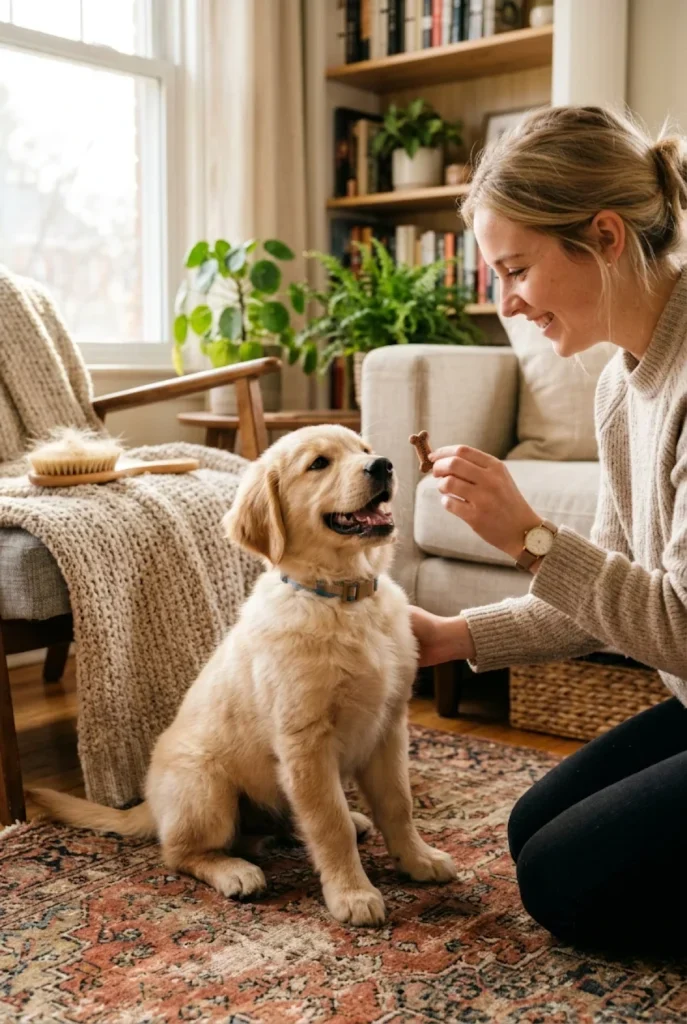
Positive reinforcement can make a major difference when teaching your puppy to enjoy grooming. Puppies naturally respond well to rewards, praise, and enjoyable interactions. Instead of immediately introducing a complete grooming routine, reward small steps such as allowing you to touch a paw, smelling a brush, or sitting calmly during a short brushing session. These small successes help your puppy develop positive associations with grooming activities. Keep treats small and suitable for your puppy’s age.
If your puppy becomes nervous, avoid scolding or forcing it to continue. Take a short break and return to the activity later. Some puppies may need several sessions before becoming comfortable with nail clippers, bathing, or dental care. Be patient and celebrate gradual progress. You can also combine grooming with gentle affection and quiet praise to make the experience more enjoyable. A puppy that learns to trust its owner during grooming is generally easier to handle as it grows older.
15. Create a Simple and Consistent Puppy Grooming Schedule
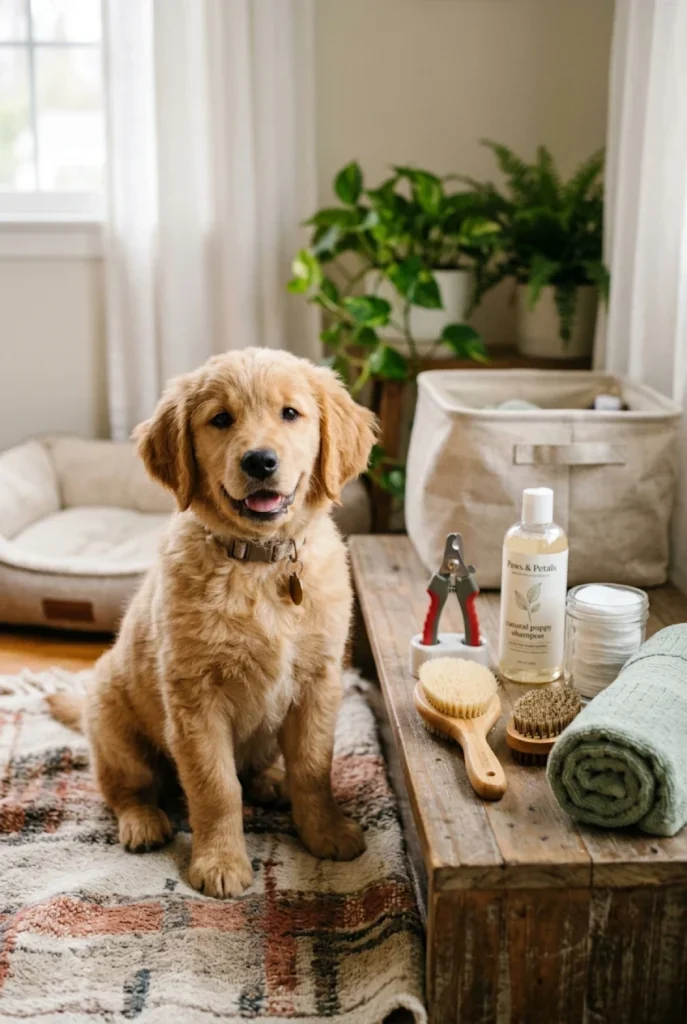
One of the best ways to maintain your puppy’s hygiene is to follow a simple grooming schedule. New owners sometimes forget important activities because puppy care involves feeding, training, exercise, and playtime. A basic routine helps you remember when to brush the coat, inspect the ears, check the nails, and clean the paws. Your schedule should depend on your puppy’s breed, coat type, age, and individual needs rather than following a strict routine designed for every dog.
Start with a manageable plan and adjust it as your puppy grows. For example, you can brush the coat several times a week, inspect the paws regularly, and check the ears and skin during routine handling. Introduce toothbrushing gradually and work toward daily care if your puppy tolerates it. Bathing should be occasional and based on how dirty your puppy becomes. Remember that consistency matters more than completing every grooming activity on a single day.
Final Thoughts
Grooming is an essential part of raising a happy, healthy, and confident puppy. Starting early helps your puppy become familiar with brushing, bathing, nail trimming, ear cleaning, and dental care. These simple activities also give you an opportunity to monitor your puppy’s skin, coat, paws, and overall condition.
Remember that every puppy is different. Some puppies enjoy grooming immediately, while others need extra time and patience. Choose gentle grooming products, introduce new activities gradually, and reward your puppy for positive behavior. Never rush grooming or ignore signs of discomfort.
By following these 15 Puppy Grooming Tips Every New Owner Should Know, you can establish healthy habits that will benefit your puppy throughout its life. Make grooming a regular bonding activity, provide plenty of encouragement, and enjoy watching your little companion grow into a clean, comfortable, and well-cared-for adult dog.