10 Steps to Clean Your Dog After Outdoor Adventures
Outdoor adventures are one of the best ways to keep your dog happy, active, and healthy. Whether your furry friend enjoys running through grassy parks, exploring muddy trails, playing on the beach, or walking around the neighborhood, these activities provide exercise and mental stimulation. However, outdoor fun often comes with muddy paws, dusty fur, tangled hair, and unwanted dirt that can quickly spread throughout your home.
Cleaning your dog after outdoor activities does not have to be difficult or time-consuming. With a simple cleaning routine and a few essential grooming supplies, you can remove dirt, protect your dog’s skin, and keep your living space fresh. In this guide, you will discover 10 practical steps to clean your dog after outdoor adventures while making the experience comfortable and stress-free.
1. Prepare a Dog Cleaning Station Before Returning Home
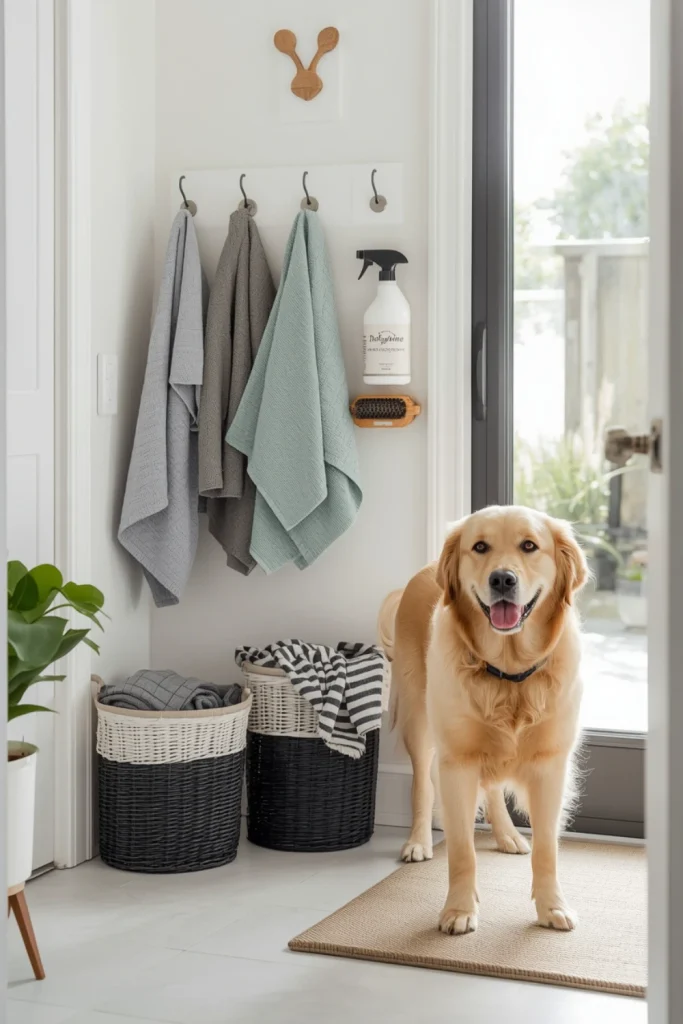
Before cleaning your dog, prepare a dedicated area where you can remove outdoor dirt without making a mess inside your home. A cleaning station near the main entrance, laundry room, or backyard door is especially useful. Keep essential supplies together so you do not need to search for towels, brushes, or cleaning products while your dog is waiting.
Your basic cleaning station should include clean microfiber towels, pet-safe wipes, a paw-cleaning cup, a suitable brush, and a washable floor mat. You can also keep a small container for dirty towels and a basket for grooming supplies. Having everything ready makes the cleaning process faster and encourages you to follow the same routine after every adventure.
2. Inspect Your Dog’s Body for Dirt, Injuries, and Ticks
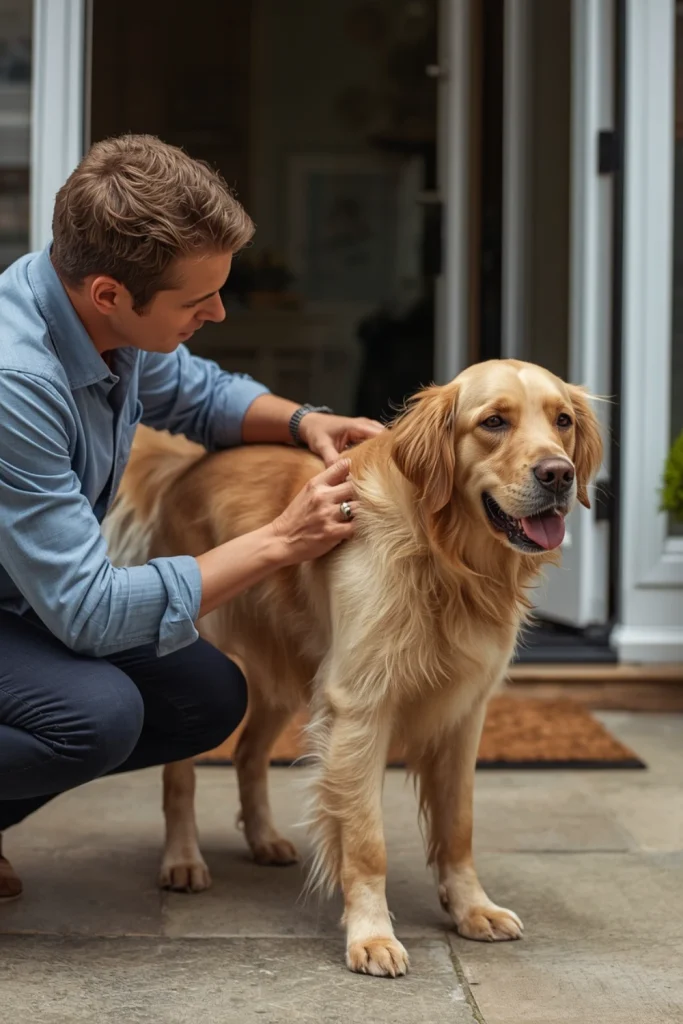
Before using water or grooming products, take a few moments to inspect your dog from head to tail. Outdoor adventures can expose dogs to ticks, fleas, grass seeds, small stones, thorny plants, and other debris. Your dog may also develop minor scratches or paw injuries while exploring unfamiliar areas. A quick inspection helps you identify these problems before starting the cleaning process.
Pay particular attention to the ears, neck, belly, armpits, legs, paws, and areas underneath the tail. Gently separate thick fur to look for hidden dirt, parasites, redness, or swelling. If you discover a tick, use an appropriate tick-removal tool and follow veterinary guidance. Do not ignore painful injuries, embedded objects, or unusual skin changes; seek professional veterinary assistance when necessary.
3. Remove Loose Dirt and Debris From Your Dog’s Coat

After inspecting your dog, remove loose dirt and debris from its coat before deciding whether a full bath is necessary. Dust, dry soil, leaves, and small pieces of grass can often be removed with gentle brushing. Cleaning these materials first makes the remaining grooming steps easier and prevents unnecessary dirt from entering your bathtub.
Choose a brush designed for your dog’s coat type and work gently in the direction of hair growth. Use your fingers to carefully remove larger pieces of leaves or grass, but never pull tangled debris forcefully. If mud has dried into the coat, allow it to become completely dry before gently brushing it out. For stubborn tangles, use an appropriate pet detangling product or ask a professional groomer for help.
4. Clean Your Dog’s Paws Thoroughly
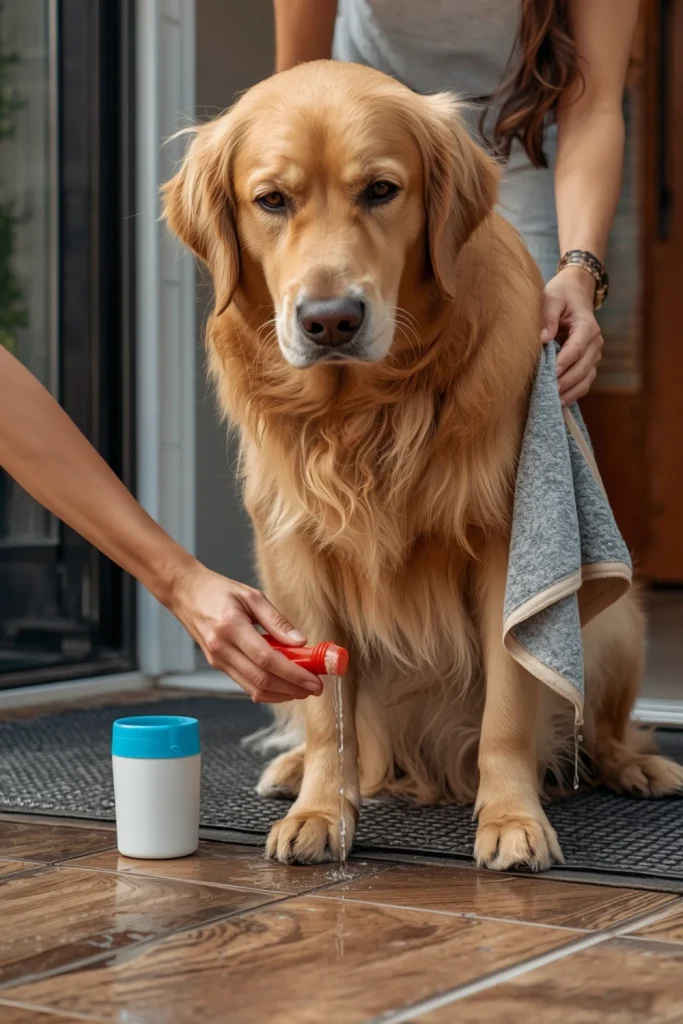
Your dog’s paws usually collect the most dirt during outdoor adventures. Mud, sand, dust, road salt, grass seeds, and small stones can become trapped around the paw pads and between the toes. Cleaning the paws before your dog enters the main living area helps prevent muddy footprints and reduces the amount of outdoor debris spread across your floors.
Use lukewarm water and a soft cloth or pet-safe paw cleaner to remove dirt. Gently separate the toes and inspect the spaces between them for trapped debris, cuts, or irritation. Avoid using hot water, harsh soaps, or strong cleaning chemicals. After washing, dry each paw carefully, especially between the toes, because trapped moisture may contribute to irritation.
5. Wipe Your Dog’s Legs, Belly, and Sensitive Areas
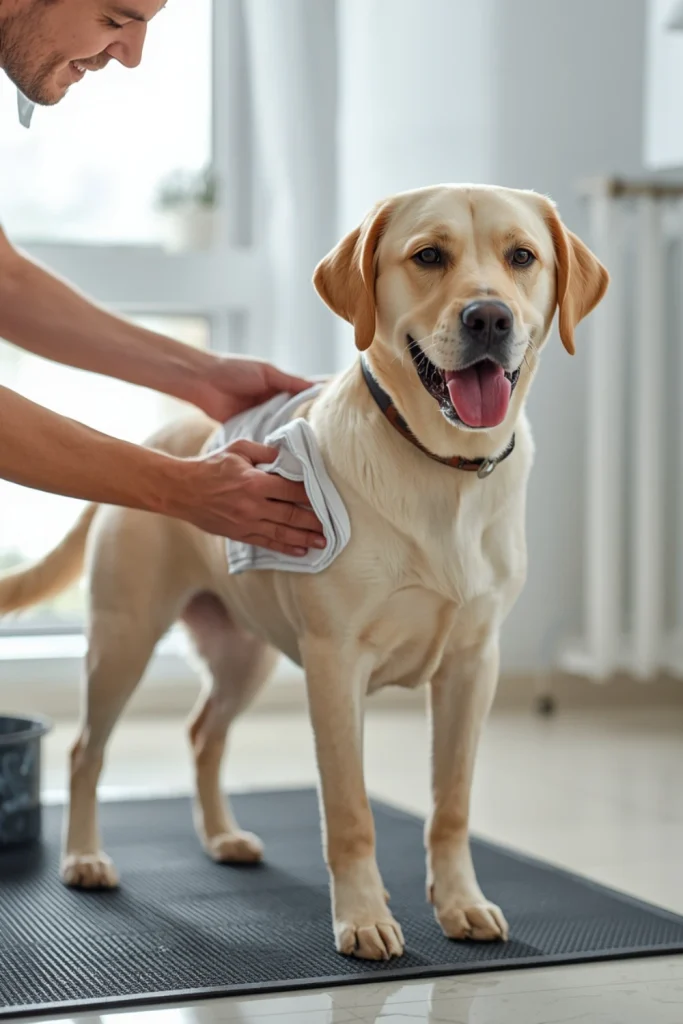
After cleaning the paws, move to your dog’s legs, belly, and other areas that may have collected outdoor dirt. These parts of the body often come into contact with wet grass, muddy ground, sand, leaves, and dusty walking paths. Dogs with shorter legs or long coats may collect more dirt underneath their bodies, especially after exploring muddy trails or playing in gardens. A gentle wipe-down can remove surface dirt without requiring a complete bath.
Use a soft microfiber cloth slightly dampened with clean water. Wipe the legs from top to bottom and gently clean the belly, chest, and lower body. Be particularly careful around the genital area and other sensitive skin. Avoid scrubbing, pulling fur, or using strongly scented products. If your dog has skin folds, clean them gently and dry them properly. For heavily soiled areas, use a veterinarian-approved pet cleaning product.
6. Clean Your Dog’s Face, Eyes, and Ears Carefully
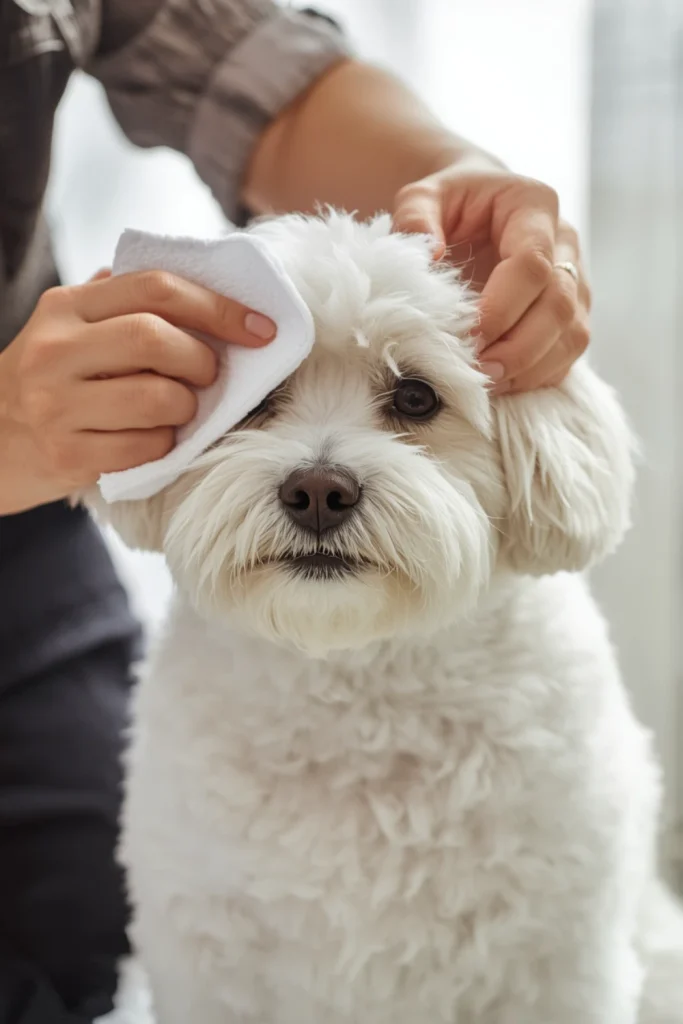
Your dog’s face and ears can collect dust, pollen, grass particles, and small pieces of outdoor debris. Dogs that explore gardens or grassy areas may also develop dirt around their muzzle and eyes. Cleaning these areas carefully helps maintain comfort and prevents accumulated dirt from becoming a source of irritation. However, facial and ear cleaning requires extra care because these areas are sensitive.
Use a clean, soft, damp cloth to wipe visible dirt around the muzzle and outer eye area. Use a separate clean section of cloth for each eye, and never rub the eyeball directly. Inspect the ears for dirt, moisture, and unusual smells. If cleaning is needed, use a veterinarian-approved ear solution and follow its instructions. Never insert cotton swabs deep into the ear canal. Redness, pain, swelling, or unusual discharge should be checked by a veterinarian.
7. Remove Tangles and Brush Your Dog’s Coat Again
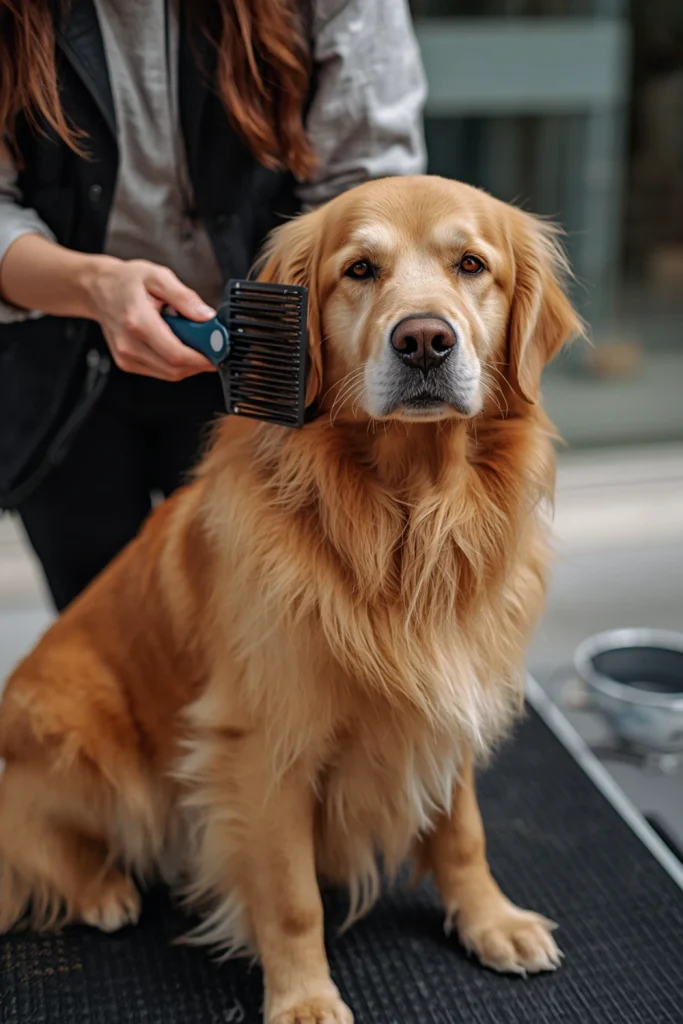
Outdoor activities can leave your dog’s coat tangled with grass, leaves, twigs, and other small materials. Running through bushes or playing in tall grass can create knots, especially in long-haired and curly-coated breeds. Removing these tangles after an adventure helps keep the coat comfortable and prevents dirt from becoming trapped close to the skin. It also makes future grooming sessions easier.
Once the loose dirt has been removed, gently brush your dog’s coat using a suitable grooming tool. Start with areas that are prone to tangling, such as behind the ears, under the legs, around the chest, and near the tail. Use a metal comb or detangling brush when appropriate, working through small sections rather than pulling hard. Never cut close to your dog’s skin to remove a mat yourself because it can be difficult to see where the skin begins. Seek professional grooming assistance for severe matting.
8. Give Your Dog a Bath When Necessary
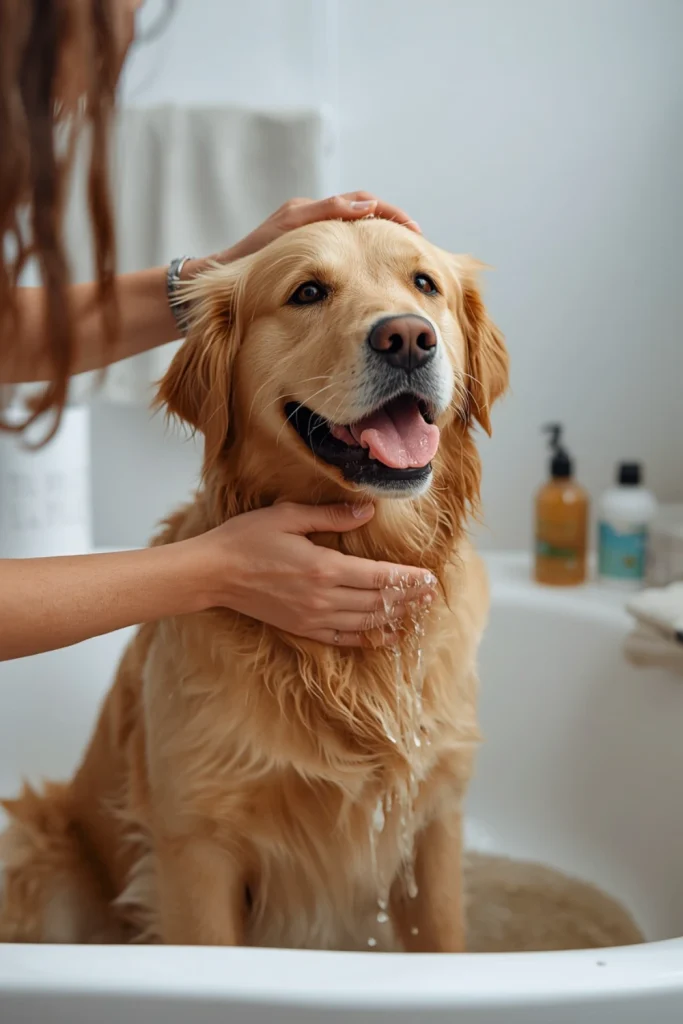
Sometimes brushing and wiping are not enough to remove the dirt your dog collects outdoors. If your pet has rolled in mud, played in dirty water, or developed a strong unpleasant smell, a proper bath may be necessary. Bathing helps remove accumulated dirt, excess oils, and unwanted substances from the coat. However, not every outdoor adventure requires a full shampoo session. For light dirt, a simple wipe-down may be sufficient.
Before bathing, prepare everything you need, including dog-specific shampoo, towels, and a non-slip bathing surface. Use lukewarm water and wet the coat gradually to help your dog feel comfortable. Apply shampoo according to its instructions, avoiding the eyes, nose, and inside of the ears. Rinse thoroughly so no product remains on the skin or fur. Avoid excessive bathing because it can strip natural oils and cause dryness. Follow your veterinarian’s advice if your dog has allergies or sensitive skin.
9. Dry Your Dog Completely After Cleaning
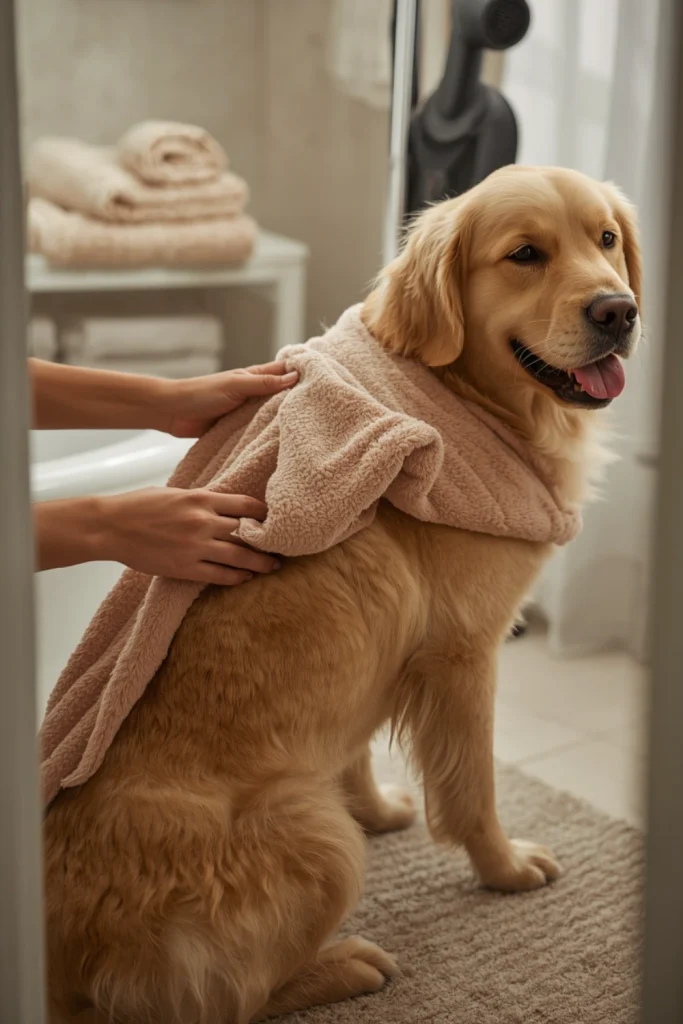
Drying is just as important as washing your dog after outdoor activities. Moisture can remain trapped underneath thick fur, between the toes, around the belly, and inside skin folds. If these areas stay damp for extended periods, they may become uncomfortable and develop irritation. Proper drying also helps prevent wet-dog odors from spreading throughout your home, particularly when your dog returns from rainy walks.
Start by using a clean, absorbent microfiber towel to remove excess water. Gently press the towel against the coat instead of rubbing aggressively. Pay special attention to the paws, legs, belly, chest, and areas with dense fur. If you use a pet dryer, choose a suitable low-heat setting and keep the airflow moving. Avoid hot air near the face or sensitive skin. Before allowing your dog onto furniture or bedding, check that its coat and paws are comfortably dry.
10. Clean Your Dog’s Accessories and Prepare for the Next Adventure
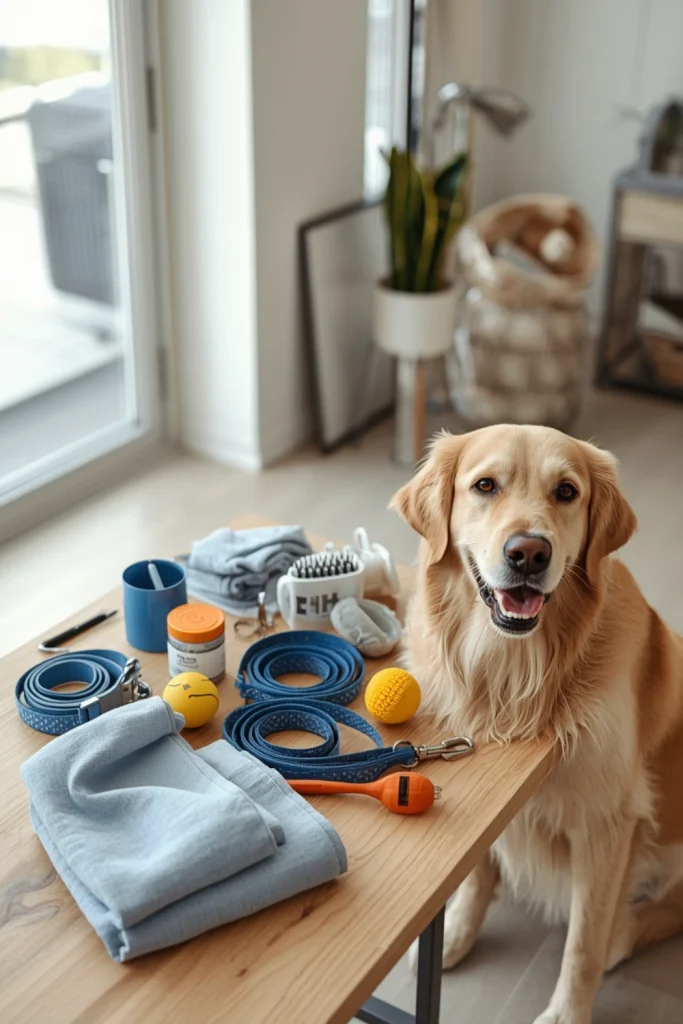
Your dog is not the only thing that needs cleaning after an outdoor adventure. Collars, harnesses, leashes, travel blankets, portable water bowls, and toys can also collect mud, sweat, saliva, and outdoor debris. If these accessories are returned to storage without cleaning, they can develop unpleasant smells and transfer dirt to your dog the next time you use them.
Inspect washable accessories and clean them according to their material and manufacturer’s instructions. Remove visible dirt from leashes and harnesses, wash fabric items when necessary, and allow everything to dry completely. Clean reusable water bottles and travel bowls before storing them. Also, wash dirty towels and organize your grooming supplies. Having clean equipment ready makes your next outdoor adventure more enjoyable and helps maintain a consistent dog hygiene routine.
Final Thoughts
Outdoor adventures are an important part of a happy dog’s life, but keeping your furry friend clean afterward is equally important. Muddy paws, dusty fur, tangled hair, and outdoor debris can quickly create a mess inside your home if they are not handled properly.
By following these 10 Steps to Clean Your Dog After Outdoor Adventures, you can make post-walk grooming easier and more enjoyable. Start by inspecting your dog’s body, cleaning its paws, removing loose dirt, wiping sensitive areas, and drying the coat properly. Remember to clean collars, harnesses, and other accessories too.
You do not need to give your dog a full bath after every outdoor activity. Sometimes a quick wipe with a damp microfiber towel and gentle brushing are enough. Adjust your cleaning routine according to your dog’s coat type, activity level, and skin condition.
Most importantly, make cleaning a positive experience through gentle handling, patience, and rewards. With a consistent routine and the right grooming supplies, you can keep your dog comfortable, protect its coat and skin, and enjoy a cleaner, fresher home after every adventure.