
15 Simple Dog Hygiene Habits for a Cleaner Home
Sharing your home with a dog brings happiness, love, and countless wonderful memories. However, keeping your home clean while caring for a furry companion can sometimes feel challenging. Loose hair on furniture, muddy paw prints on floors, unpleasant pet odors, and dirty dog toys can quickly make your living space messy.
The good news is that you do not need expensive cleaning products or hours of daily work to maintain a fresh and comfortable home. Developing a few simple dog hygiene habits can make a significant difference. From cleaning your dog’s paws after walks to washing bedding and maintaining a regular grooming routine, these practical tips will help you keep your dog healthy and your home cleaner.
1. Clean Your Dog’s Paws After Every Walk
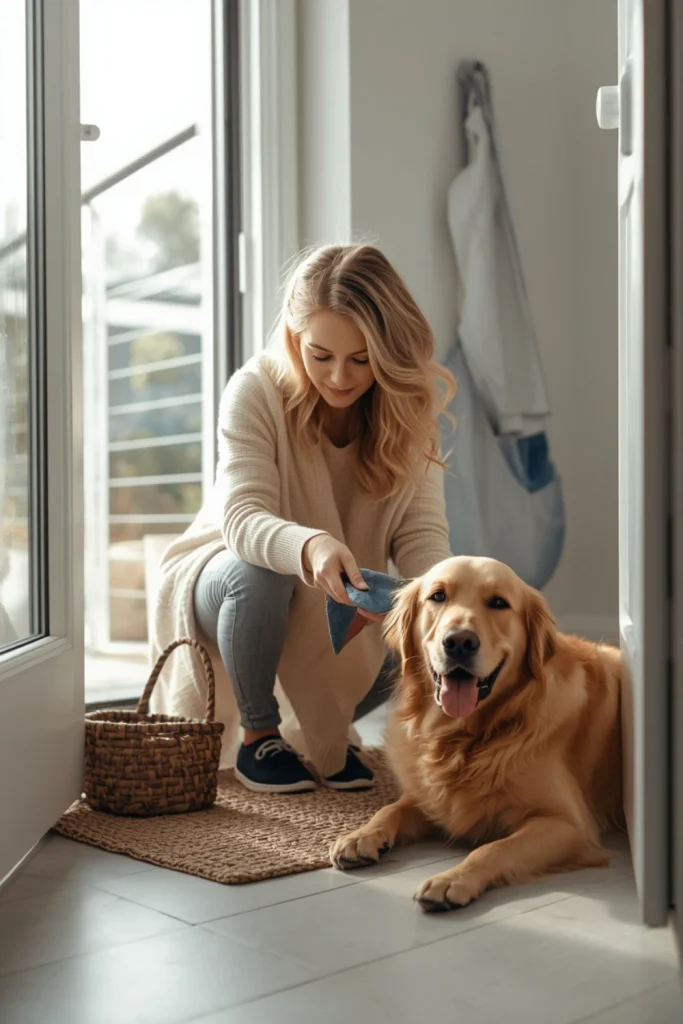
One of the easiest ways to maintain a cleaner home is to clean your dog’s paws after every outdoor walk. Your dog’s feet can collect mud, dust, grass, sand, road salt, and other unwanted substances. When your pet walks directly into the house, these materials can spread across floors, carpets, furniture, and bedding. A quick paw-cleaning routine helps prevent this mess and keeps your living space more hygienic.
Keep a clean microfiber towel or pet-safe paw wipes near your entrance. Gently wipe each paw, paying attention to the spaces between the toes and around the paw pads. For heavily muddy feet, use a little clean water and dry the paws thoroughly. This simple habit is particularly useful during rainy weather and after outdoor adventures.
2. Brush Your Dog Regularly to Control Shedding
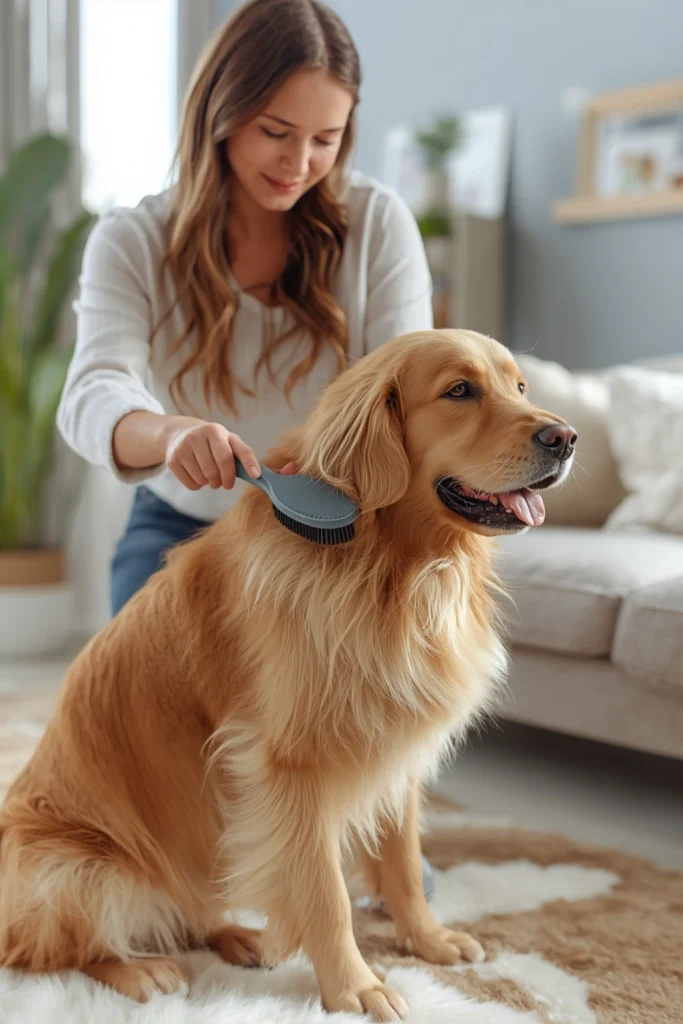
Loose dog hair is one of the most common reasons homes become messy. It can accumulate on sofas, carpets, clothing, blankets, and other surfaces. Regular brushing helps remove loose hair before it spreads throughout your home. It also removes dust and small debris while distributing natural oils that help maintain a healthy-looking coat.
Choose a brush suitable for your dog’s coat type. Long-haired dogs may need daily brushing, while short-haired breeds often benefit from brushing once or twice a week. Double-coated breeds may require additional attention during seasonal shedding. Brush your dog in an easy-to-clean area and collect the loose hair immediately. This habit can significantly reduce the amount of fur you need to remove from furniture.
3. Give Your Dog Regular Baths
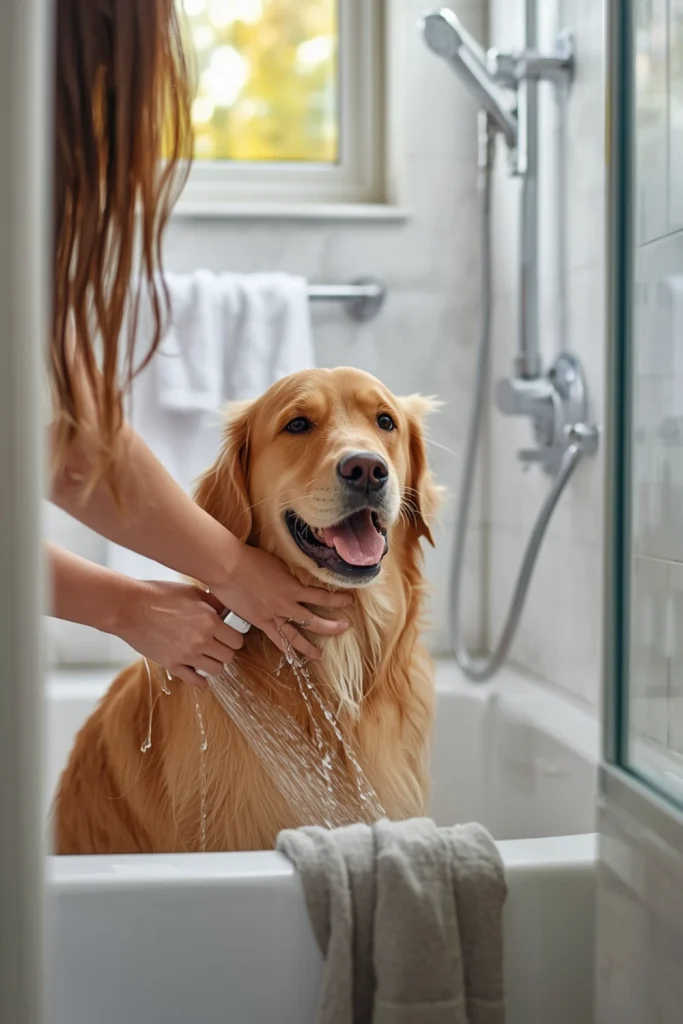
Regular bathing helps remove dirt, excess oils, outdoor debris, and unpleasant odors from your dog’s coat. Dogs that enjoy playing outside may become dirty more quickly, especially after visiting parks, gardens, or muddy areas. Maintaining an appropriate bathing routine helps your dog stay fresh and prevents dirt from being transferred onto your furniture and household surfaces.
However, avoid bathing your dog too frequently because excessive washing can remove natural skin oils and contribute to dryness or irritation. The ideal schedule depends on coat type, activity level, and skin condition. Use a dog-specific shampoo, rinse thoroughly, and dry your pet properly. If your dog has sensitive skin or a skin condition, ask your veterinarian about an appropriate bathing schedule.
4. Wash Your Dog’s Bedding Every Week
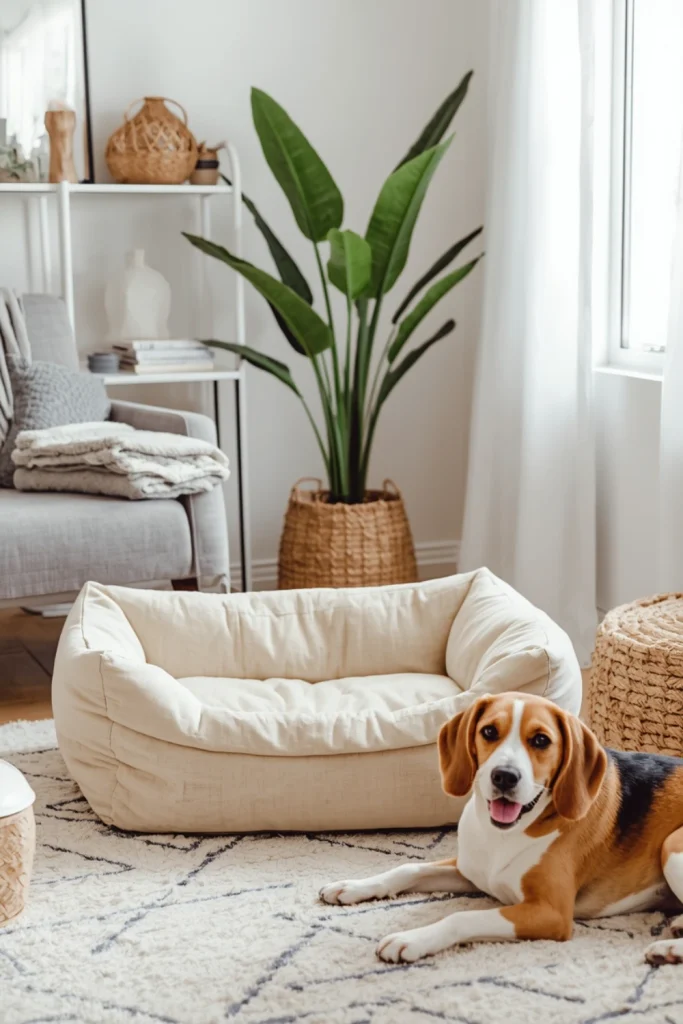
Your dog’s bed is a place where dirt, loose hair, saliva, dust, and outdoor debris can accumulate. Even when your dog looks clean, its bedding may gradually develop unpleasant smells and collect unwanted particles. Washing the bed regularly helps create a fresher sleeping environment and prevents dirt from building up around your dog’s favorite resting area.
If your dog’s bed has removable covers, wash them according to the manufacturer’s instructions. Weekly cleaning is a useful starting point for many households, although heavily soiled bedding should be washed sooner. Use a mild detergent, rinse properly, and allow everything to dry completely. Remember to clean blankets, washable cushions, and other fabric items your dog regularly uses.
5. Keep Food and Water Bowls Clean
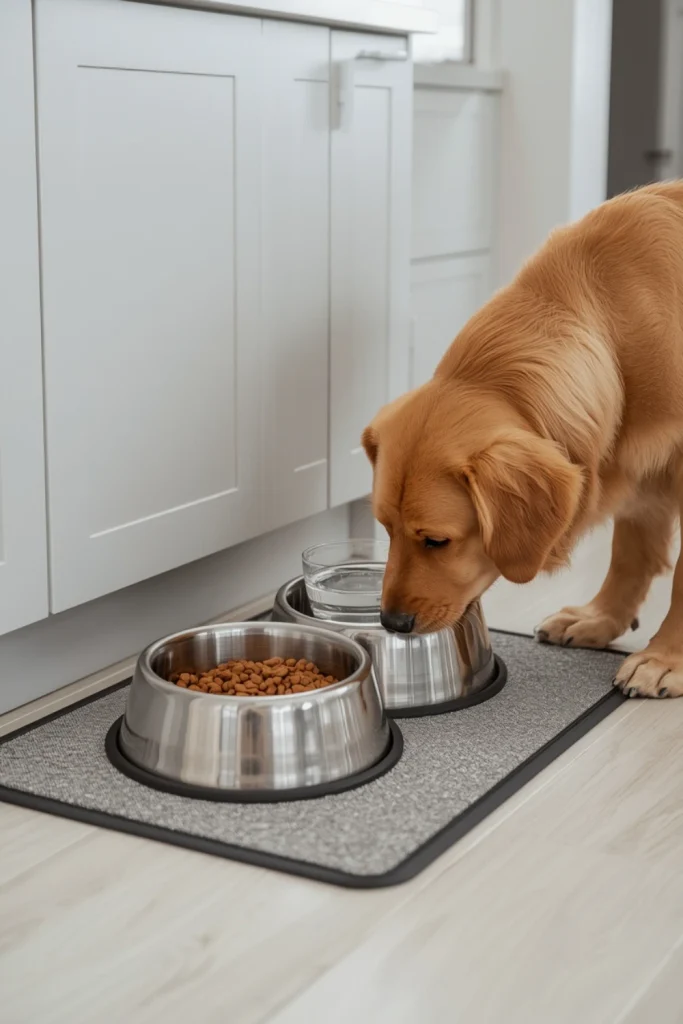
Dirty food and water bowls can make your dog’s feeding area look untidy and create an unhealthy environment. Food residue, saliva, and moisture can collect on bowl surfaces throughout the day. If these materials are not removed regularly, unpleasant smells and bacterial buildup may develop. Clean feeding equipment is an important part of maintaining good dog hygiene.
Wash food bowls after meals, particularly when serving wet food or fresh meals. Clean water bowls daily and refill them with fresh drinking water. Stainless steel bowls are a convenient choice because they are generally easy to wash and maintain. Place bowls on a washable feeding mat to catch spills and food crumbs, making kitchen cleanup easier.
6. Create a Dedicated Dog Cleaning Station
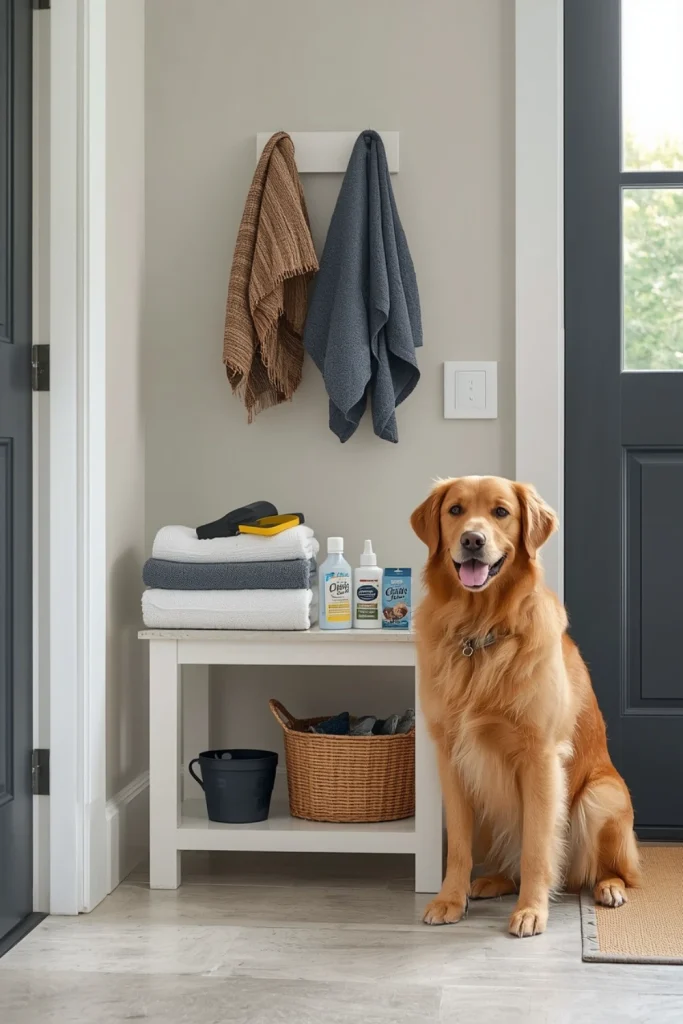
A dedicated dog cleaning station can make everyday pet care much easier. Instead of searching for towels, brushes, or cleaning supplies whenever your dog comes inside, keep essential items together in one convenient location. This organization encourages consistent cleaning habits and prevents muddy paws and wet fur from spreading throughout the house.
Choose a location near your main entrance, laundry room, or another easy-to-clean area. Store clean towels, pet-safe wipes, a brush, and a paw cleaner in a small basket or cabinet. Keep dirty towels separate from clean supplies and replace them regularly. Make sure all cleaning products are stored safely away from your dog’s reach.
7. Clean Your Dog’s Toys Regularly
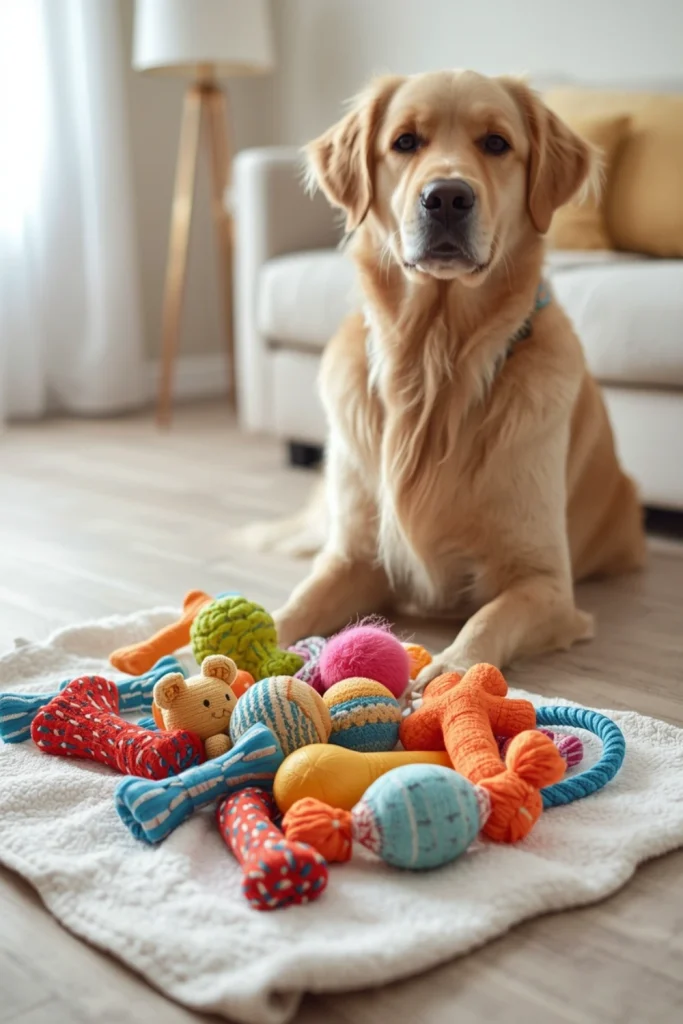
Dog toys often travel from your pet’s mouth to the floor, garden, outdoor spaces, and sometimes even your furniture. As a result, they can collect saliva, dust, dirt, and food particles. Dirty toys may also develop unpleasant smells and make your home feel less organized. Regular cleaning keeps your dog’s play area fresher and helps maintain better hygiene.
Wash rubber and plastic toys with warm water and mild soap when appropriate, following the manufacturer’s instructions. Machine-washable plush toys can usually be cleaned according to their labels. Rinse thoroughly and allow toys to dry completely before giving them back to your dog. Inspect each toy for cracks, loose stuffing, or damaged pieces that could become choking hazards.
8. Keep Your Dog’s Ears Clean and Dry
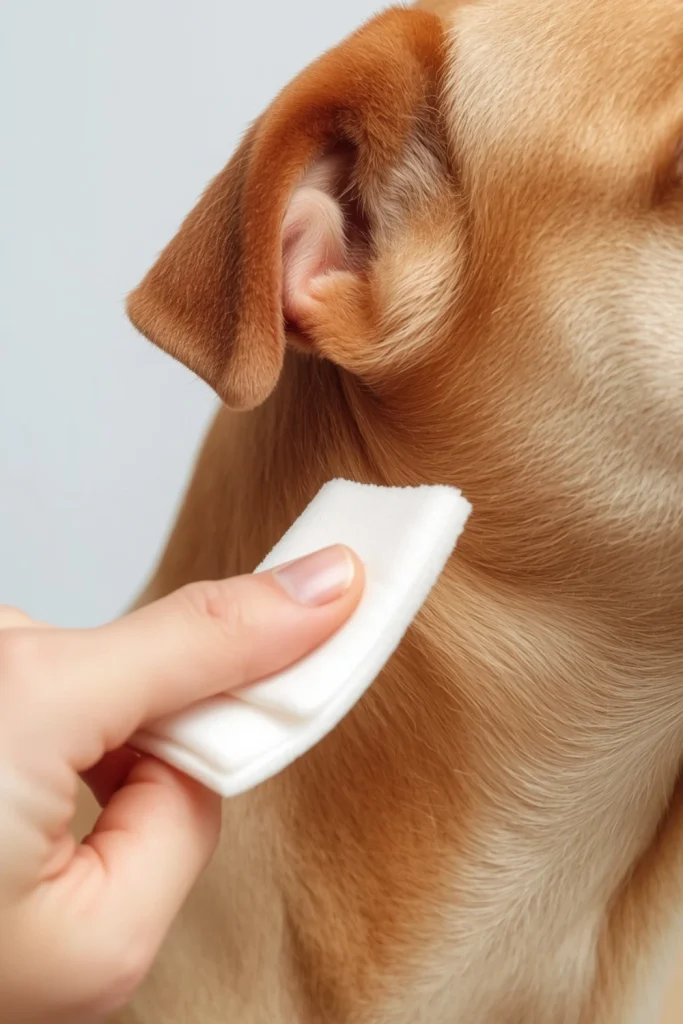
Your dog’s ears can collect wax, moisture, dirt, and debris, especially after outdoor activities or bathing. Dogs with floppy ears may need more frequent inspections because their ear shape can retain moisture. Maintaining clean ears helps prevent dirt from accumulating and allows you to notice unusual smells, redness, or discharge early.
Check your dog’s ears regularly and clean them only when necessary. Use a veterinarian-recommended ear cleaner and gently wipe visible dirt from the outer ear with a soft cotton pad. Never push cotton swabs or other objects into the ear canal. If you notice a strong smell, swelling, excessive scratching, or unusual discharge, consult your veterinarian instead of attempting to treat the problem yourself.
9. Vacuum and Clean Your Floors Frequently
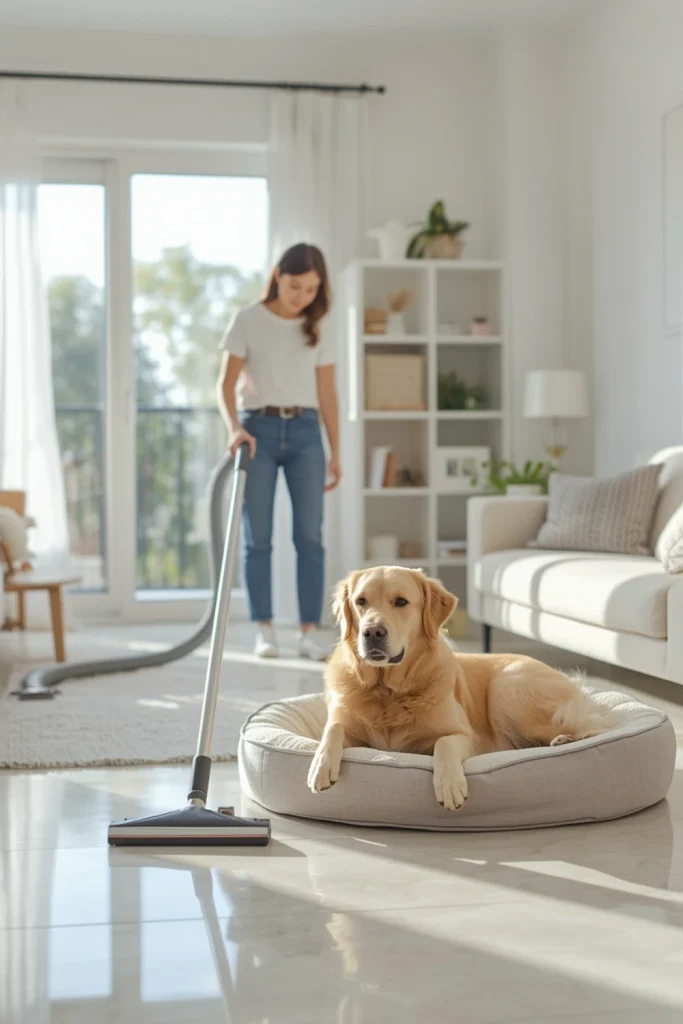
Even with regular grooming, dogs naturally bring loose hair, dust, and dirt into the home. These particles can accumulate on floors, carpets, and corners, especially in areas where your dog spends most of its time. Regular vacuuming helps remove pet hair and debris before they spread into other parts of your living space.
Vacuum high-traffic areas several times a week or more frequently if your dog sheds heavily. Pay special attention to corners, under furniture, rugs, and spaces around your dog’s bed. Use a vacuum suitable for pet hair and clean its filters according to the manufacturer’s instructions. For hard floors, follow up with an appropriate pet-safe floor cleaner when necessary.
10. Wipe Your Dog’s Coat After Outdoor Activities
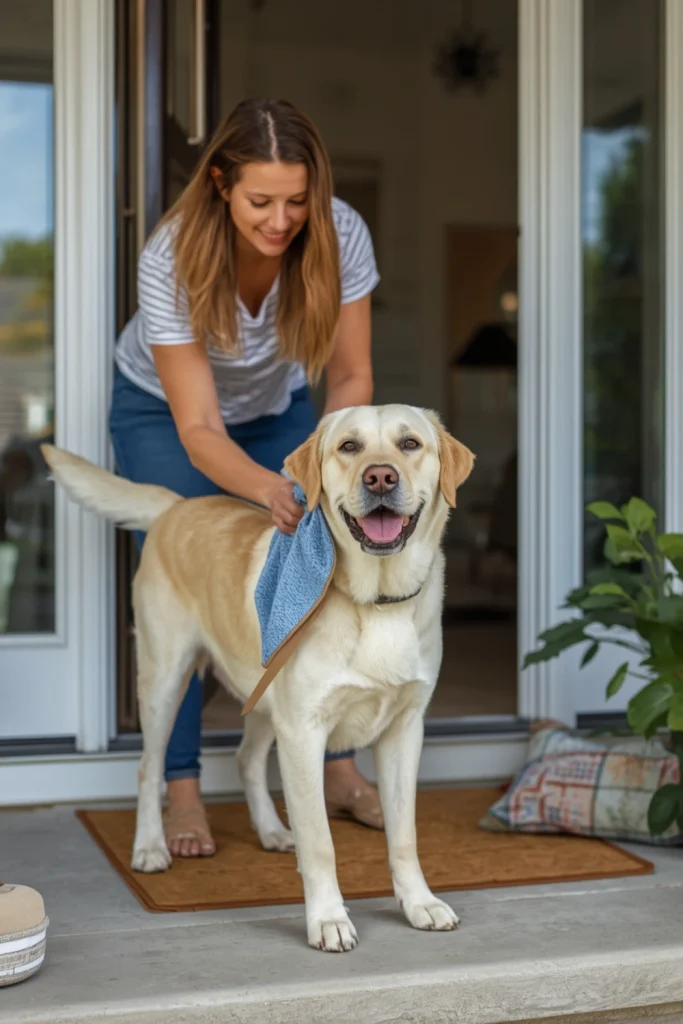
Your dog does not always need a full bath after playing outside. Sometimes a simple wipe-down is enough to remove surface dust, grass, pollen, and light dirt from its coat. This habit is especially helpful for dogs that enjoy spending time in gardens, parks, and outdoor walking areas. It can also reduce the amount of dirt transferred to sofas and carpets.
Keep a clean, slightly damp microfiber towel near your entrance and gently wipe your dog’s legs, belly, and other visibly dirty areas. Use pet-safe grooming wipes when appropriate and avoid products with strong fragrances or irritating ingredients. Dry damp areas properly, especially in dogs with thick coats or skin folds. A quick cleanup after outdoor activities can save you considerable household cleaning time.
11. Keep Your Dog’s Collar and Harness Clean

Your dog’s collar and harness are used almost every day, making them easy places for dirt, sweat, moisture, and outdoor debris to accumulate. When these accessories are not cleaned regularly, they can develop unpleasant odors and transfer dirt onto your dog’s coat. A dirty collar may also cause skin irritation if it rubs against the neck, particularly when it stays damp after rainy walks or outdoor activities.
Inspect your dog’s collar, harness, and leash regularly for dirt, damage, and worn stitching. Wash fabric accessories according to their care instructions and allow them to dry completely before using them again. Wipe suitable leather or synthetic materials with an appropriate cleaner. Make sure the collar fits comfortably and does not rub tightly against your dog’s skin.
12. Clean Your Dog’s Paws and Nails Between Walks
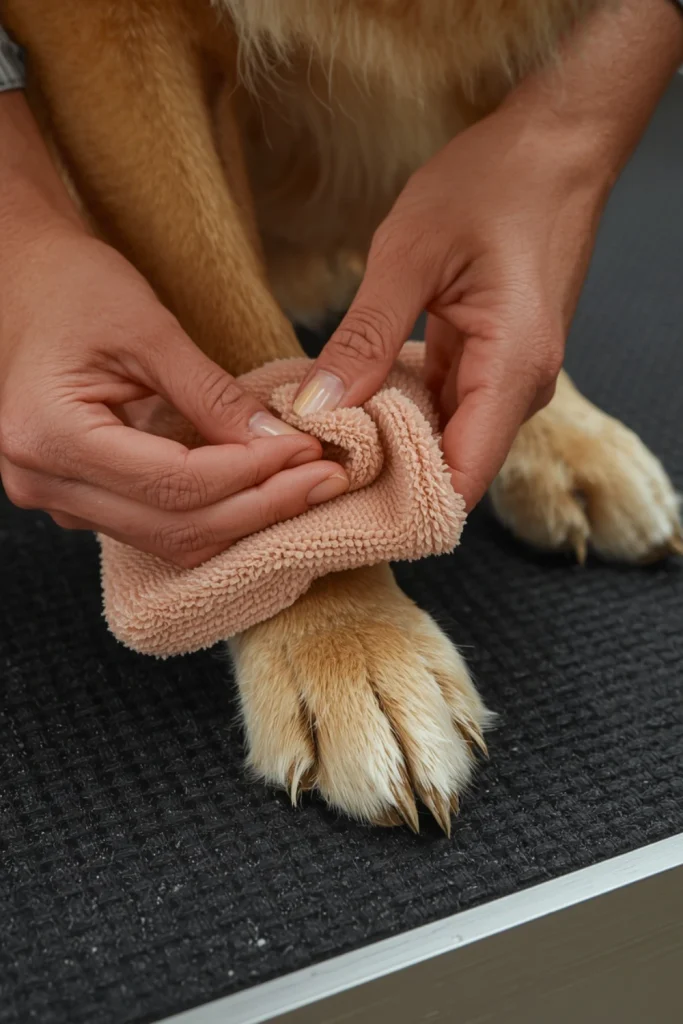
Paw hygiene involves more than simply removing mud after outdoor walks. Small stones, grass seeds, dust, and other debris can become trapped between your dog’s toes and around its nails. If ignored, these materials may cause discomfort and encourage excessive paw licking. Regular paw inspections help you identify minor problems before they become more serious.
After cleaning your dog’s paws, gently separate the toes and check the spaces between them. Look for redness, swelling, cuts, or trapped debris. Keep the fur around the paw pads neatly maintained when appropriate, but avoid cutting too close to the skin. Check nail length regularly and trim overgrown nails safely. If you notice persistent licking, pain, or swelling, contact your veterinarian.
13. Prevent Wet Dog Smells by Drying Your Dog Properly
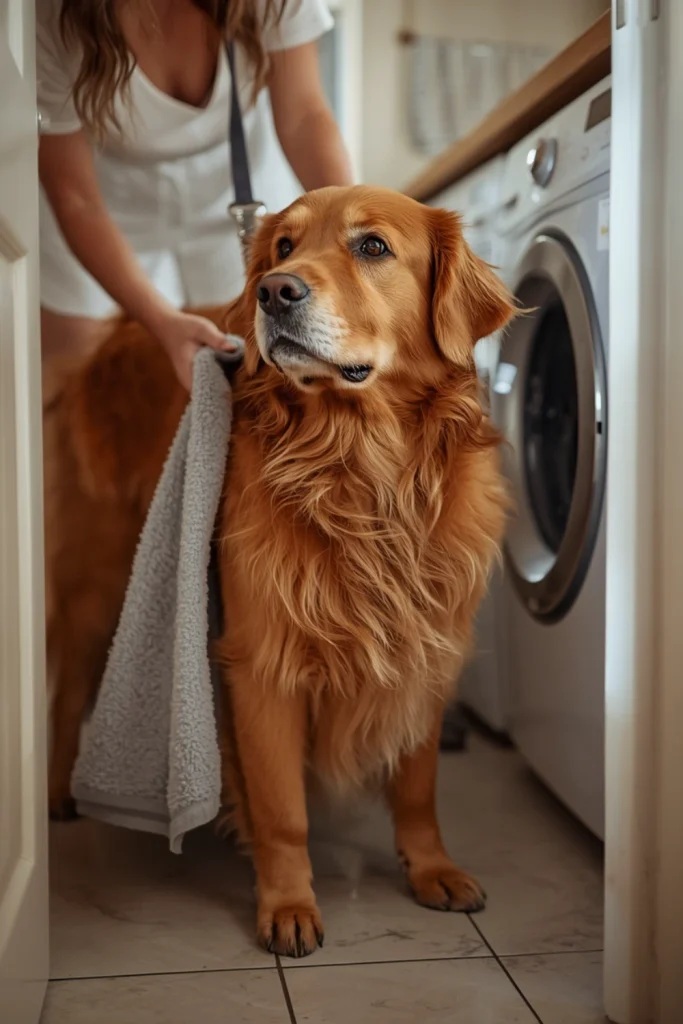
Wet fur can quickly create an unpleasant smell inside your home, especially when your dog has been playing in the rain or swimming outdoors. Moisture trapped in thick coats, under the belly, and around the paws can also contribute to skin irritation. Drying your dog properly after getting wet is an important habit for maintaining a fresh-smelling home.
Keep a few absorbent towels near the entrance so you can dry your dog immediately after returning indoors. Gently remove excess moisture from the legs, belly, paws, and other wet areas. Dogs with long or thick coats may require additional drying time. If you use a pet dryer, choose a low-heat setting and avoid directing hot air toward one area for too long.
14. Keep Your Dog Away From Kitchen Counters and Food Areas
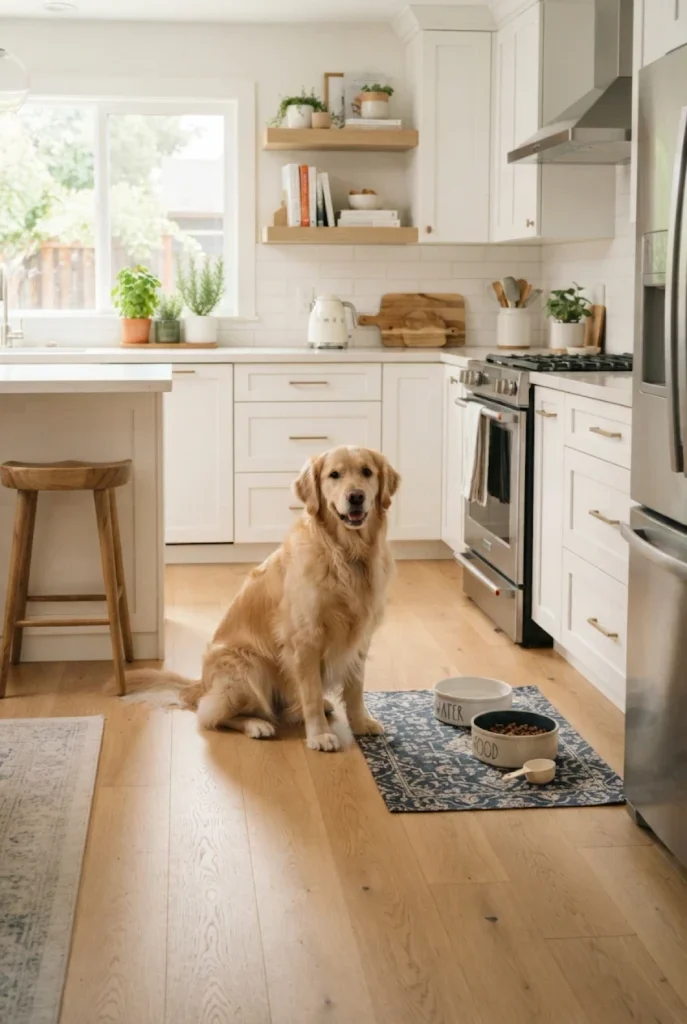
Dogs are naturally curious, especially when they smell food in the kitchen. Jumping against counters, sniffing food preparation areas, and walking around cooking spaces can spread pet hair, saliva, and dirt onto surfaces where meals are prepared. Teaching your dog to stay away from kitchen counters and food preparation areas helps maintain a cleaner and more hygienic home.
Create a comfortable feeding area for your dog away from food preparation surfaces. Teach basic commands such as “stay” and “leave it” using positive reinforcement. Clean food spills immediately and never leave uncovered meals within your dog’s reach. Also, keep kitchen waste bins securely closed because dogs may investigate discarded food and spread rubbish around the house.
15. Establish a Consistent Dog Cleaning Schedule
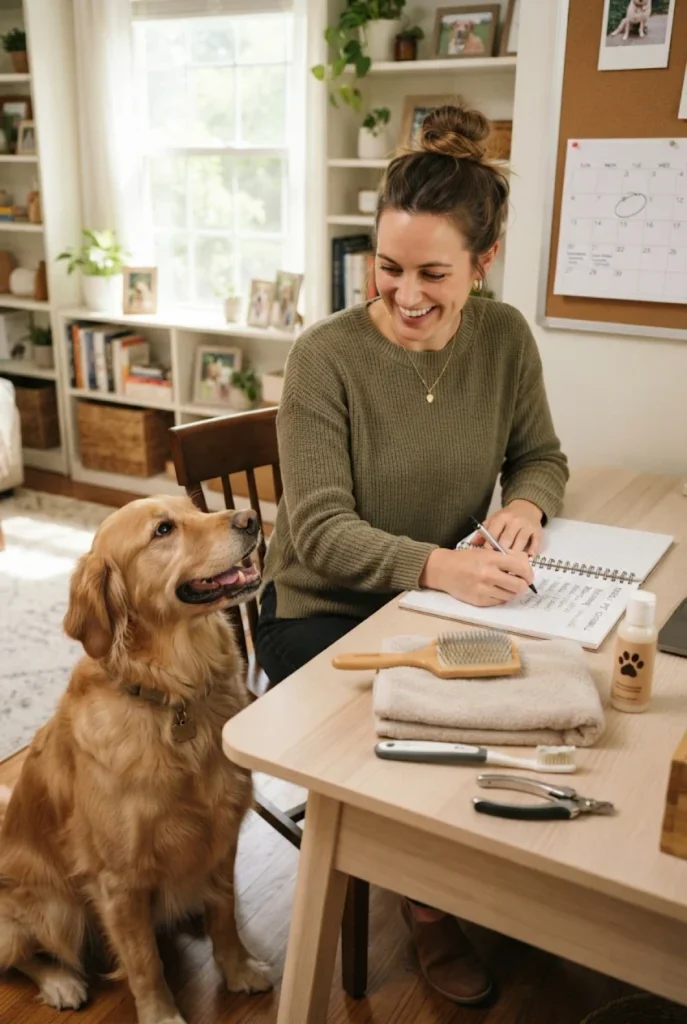
One of the best ways to maintain a cleaner home is to turn dog hygiene into a regular habit instead of waiting until everything becomes dirty. Without a schedule, it is easy to forget about washing bedding, cleaning toys, brushing your dog’s coat, or checking its paws. Organizing these responsibilities makes pet care easier and prevents small cleaning tasks from becoming overwhelming.
Create a simple weekly routine that includes brushing, washing feeding equipment, cleaning toys, vacuuming pet areas, and checking your dog’s coat and paws. Schedule bedding laundry and other deeper cleaning tasks according to how quickly they become dirty. Adjust the routine for shedding seasons, rainy weather, and your dog’s activity level. Consistency is more important than following a complicated cleaning plan.
Final Thoughts
Keeping a clean home while enjoying life with your furry companion does not have to be difficult. The secret is developing small, consistent habits that prevent dirt, loose hair, and unpleasant odors from spreading throughout your living space.
These 15 Simple Dog Hygiene Habits can help you create a cleaner environment while supporting your dog’s health and comfort. Start with simple activities such as cleaning paws after walks, brushing regularly, washing bedding, maintaining clean food bowls, and organizing a dedicated pet cleaning station.
Remember that a clean dog and a clean home go hand in hand. Every dog has different grooming and hygiene requirements, so adjust your routine according to your pet’s coat type, age, activity level, and health needs. With patience and consistency, you can enjoy a fresh, organized, and dog-friendly home without making cleaning a stressful daily responsibility.