
10 Clicker Training Games for Young Puppies
Training a young puppy does not have to feel like hard work. With a little patience, a few tasty treats, and a simple clicker, you can turn everyday learning into an enjoyable game. Clicker training helps your puppy understand which behaviors earn rewards, making it easier to teach useful skills while building trust and confidence. From responding to their name to learning to come when called, small training activities can create a strong foundation for a happy, well-mannered dog.
The best part is that you do not need long training sessions or complicated equipment to get started. These Clicker Training Games for young puppies are designed to make learning fun, encourage positive behavior, and strengthen your connection with your furry companion. Whether you have just welcomed a new puppy into your home or want to improve your current training routine, these simple games can help you make everyday moments more rewarding.
1. Name Recognition Clicker Game
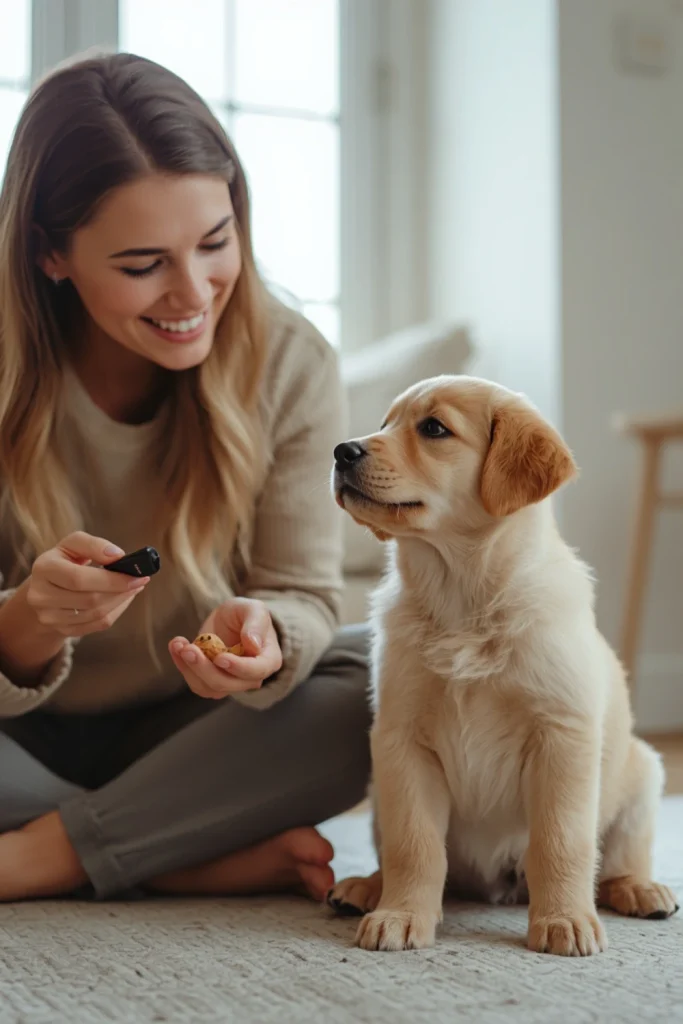
One of the first Clicker Training Games for young puppies should be name recognition. Learning their name helps puppies focus on their owners and prepares them for more advanced skills. Start in a quiet room when your puppy is relaxed. Say their name once in a cheerful voice and wait for a response. The moment your puppy turns toward you or looks in your direction, click and offer a tiny treat. If your puppy does not respond, avoid repeating the name rapidly. Instead, wait a moment, reduce distractions, and try again when your puppy is ready.
As your puppy becomes familiar with the game, practise from slightly different positions around the room. Reward a brief glance at first, then gradually encourage a more complete turn toward you. Later, try the game in another quiet room or a secure outdoor area. Keep the name associated with pleasant experiences rather than scolding or frightening situations. Short, successful repetitions help your puppy understand that paying attention to you is worthwhile. This simple foundation can support future recall practice, everyday communication, and safer interactions in different environments.
2. Click and Reward Association Game
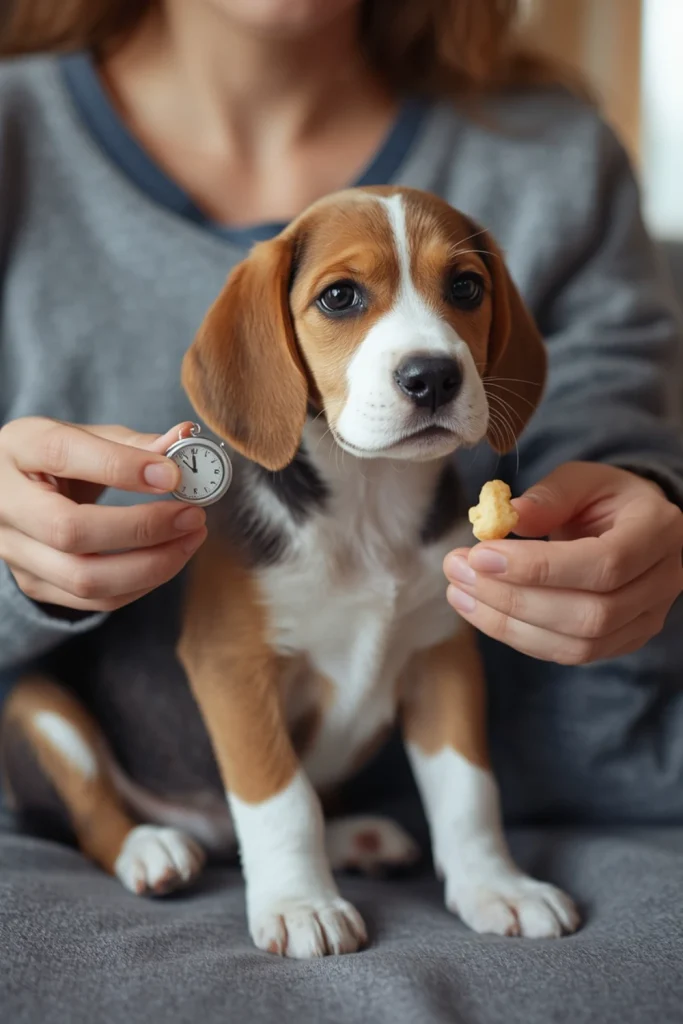
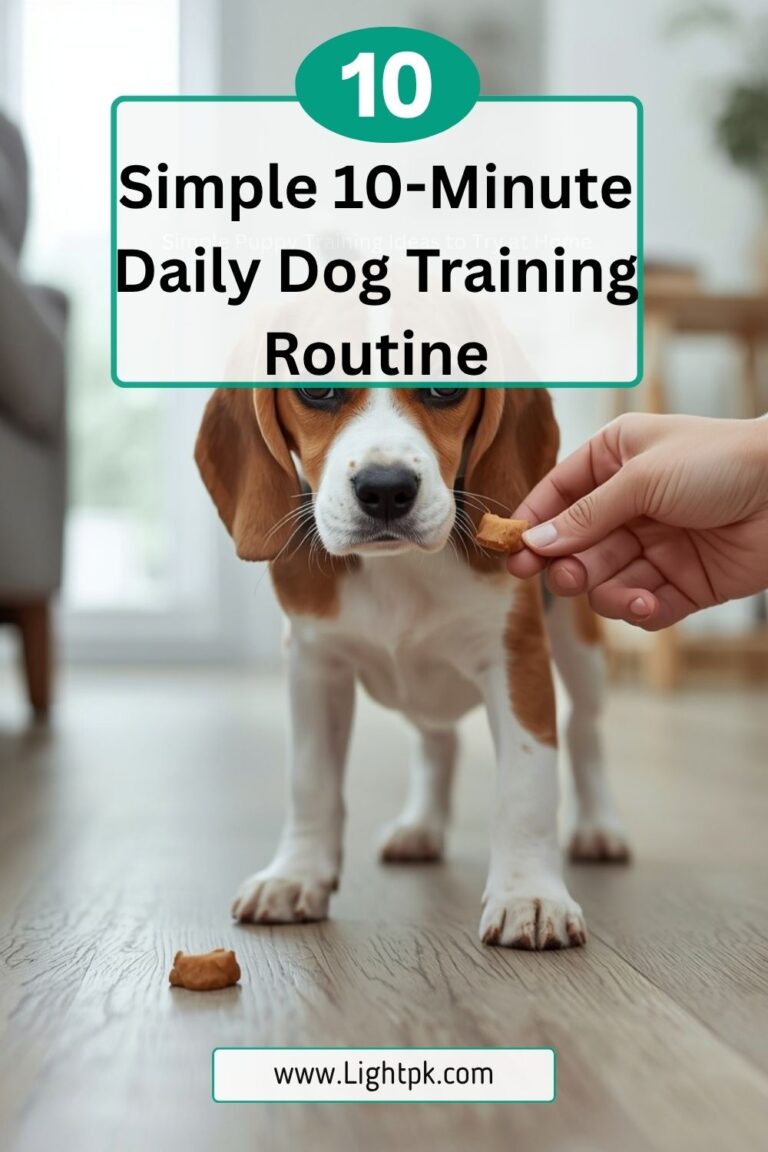
Before using a clicker to teach commands, help your puppy understand the connection between the click and a reward. This introductory game is sometimes called charging the clicker. Sit comfortably near your puppy, click once, and immediately give a small treat. Pause briefly before repeating. Your puppy does not need to sit, stand, or perform any special action. The only purpose is to create a clear association between the sound and the reward. Keep your movements calm and let your puppy eat the treat before starting the next repetition.
After several repetitions, observe whether your puppy begins looking toward you or anticipating a treat when they hear the click. This suggests they are starting to understand the association. Use the clicker consistently to mark behaviors rather than clicking repeatedly to attract attention. If you accidentally click at the wrong time, calmly provide the reward and continue with an easier repetition. If the sound frightens your puppy, use a quieter clicker or switch to a consistent verbal marker, such as “yes.” A comfortable puppy learns more effectively than one who feels worried or pressured.
3. Follow the Hand Target Game
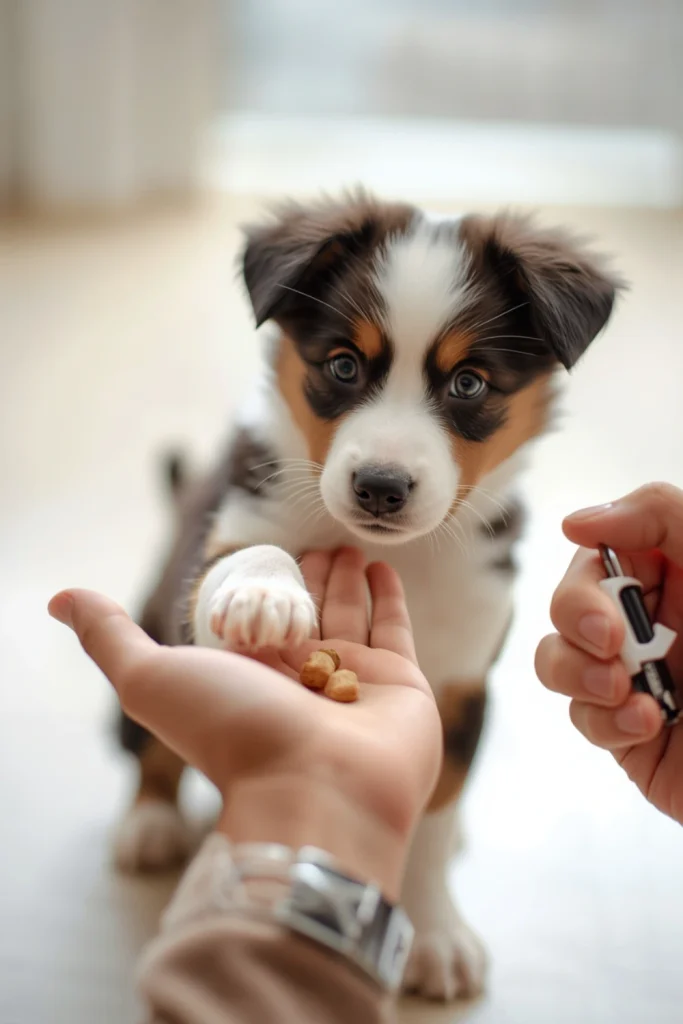
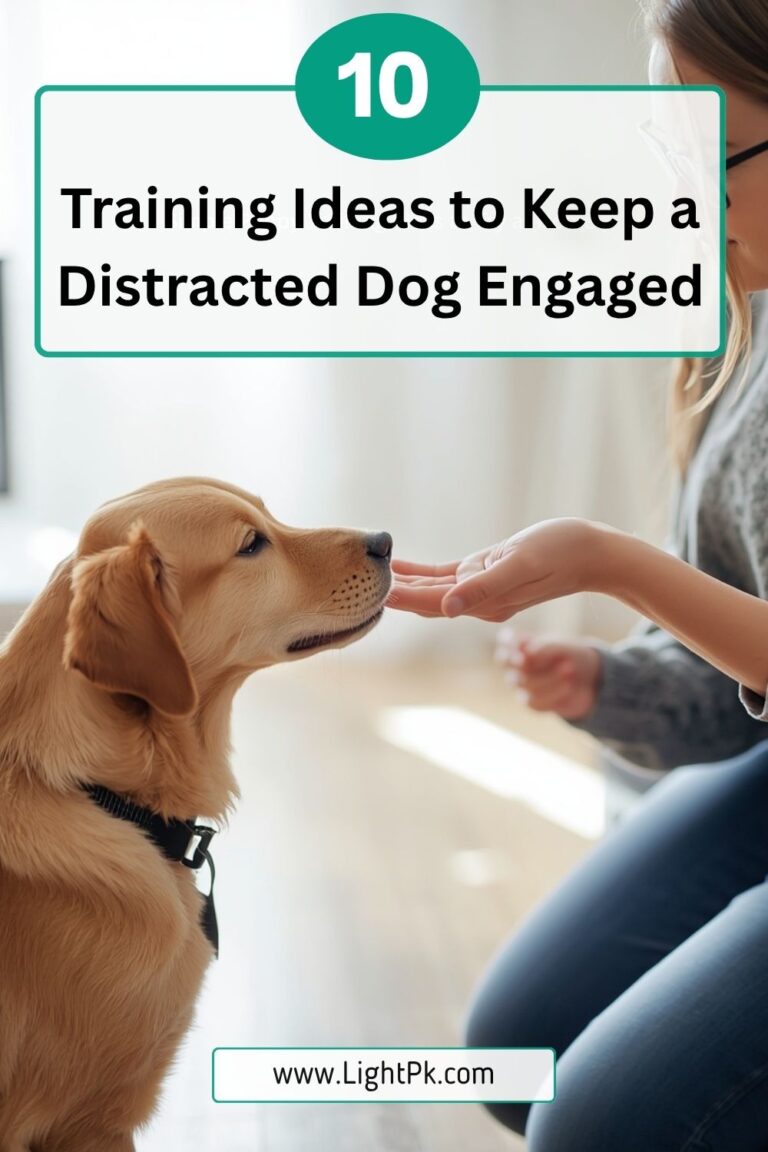
Hand targeting is a simple game that teaches your puppy to touch your open palm with their nose. It encourages attention and gives you a gentle way to guide your puppy without pulling or pushing. Begin by holding your open hand a few inches from your puppy’s nose. Many puppies will naturally investigate it. As soon as their nose touches your palm, click and reward. If they hesitate, keep your hand still and give them time to explore. Avoid pushing your hand toward their face or repeatedly waving it around, which may confuse or distract them.
When your puppy understands the activity, gradually present your hand in different positions, such as slightly to the left, right, or farther away. Click each successful nose touch and reward promptly. Once the behavior becomes predictable, introduce a cue such as “touch” just before presenting your palm. Hand targeting can later help you guide your puppy toward a mat, encourage them to approach you, or redirect their attention during everyday situations. Keep the game gentle and reward nose touches rather than mouthing or pawing at your hand.
4. Sit and Click Game
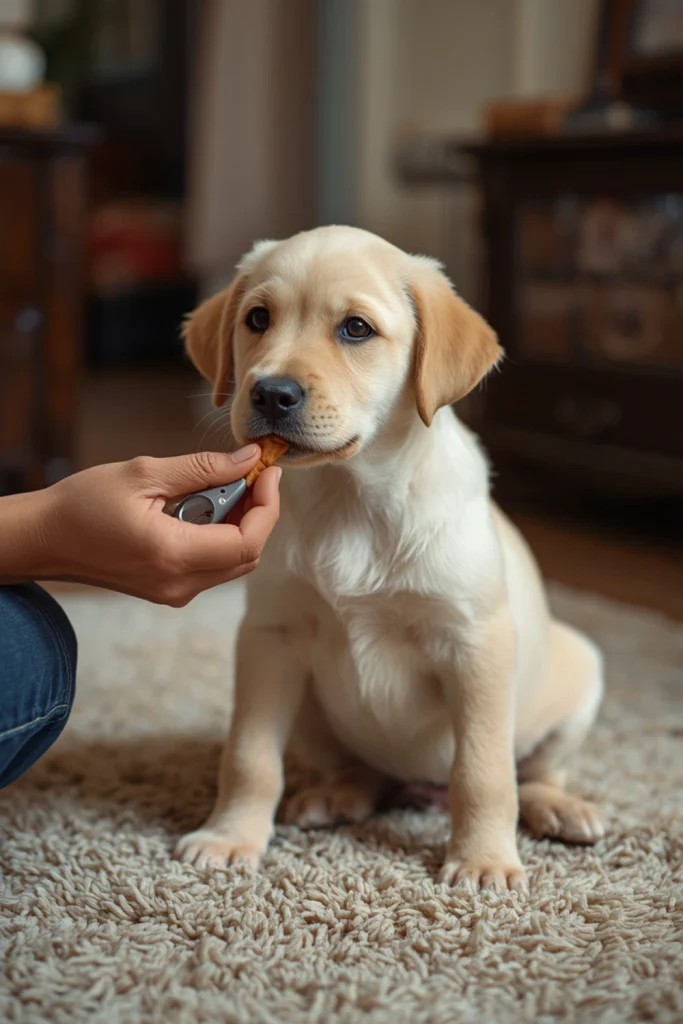
Teaching your puppy to sit provides a useful foundation for everyday manners. You can turn this skill into a simple clicker game by rewarding the moment your puppy naturally places their bottom on the floor. Start in a quiet room and observe your puppy without repeatedly giving commands. When they sit on their own, click and immediately offer a treat. You can also guide the movement by holding a treat near their nose and slowly moving it upward and slightly backward. Many puppies will sit as they follow the treat. Avoid pushing their hindquarters down, as this can make training uncomfortable.
Once your puppy begins sitting regularly, introduce the verbal cue “sit” just before they perform the movement. Click at the moment their bottom touches the floor, then deliver the treat. Practise a few repetitions at a time and gradually reduce the amount of hand movement needed. You can use the sit game before meals, while preparing a harness, or during calm greetings. Do not expect your puppy to remain seated for a long time at first. Reward small successes and gradually build the skill as your puppy becomes more comfortable and confident.
5. Come When Called Game
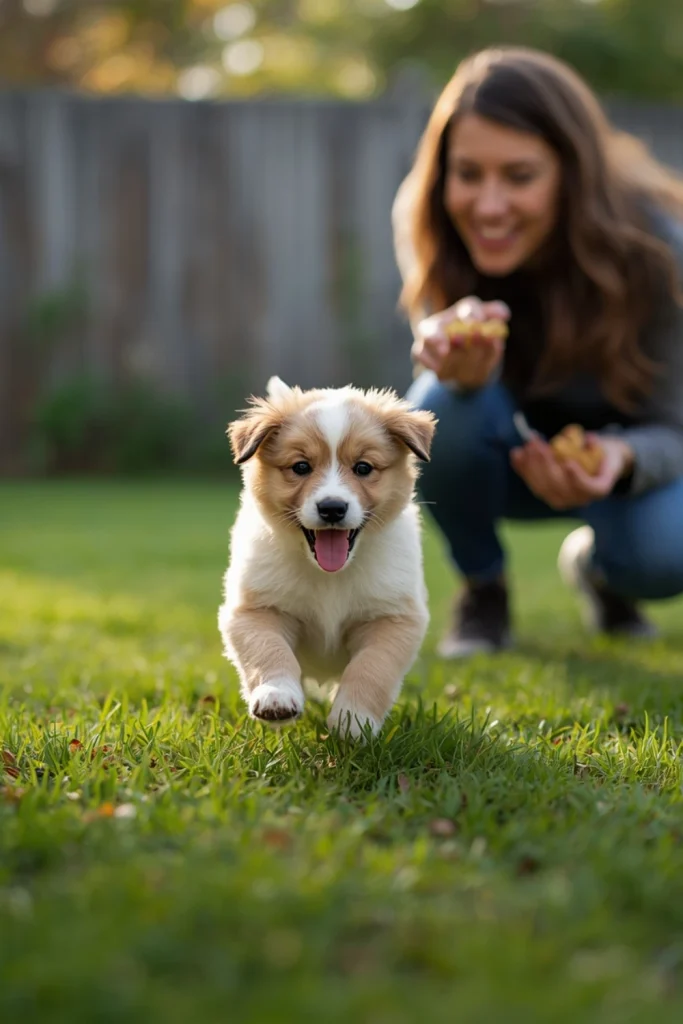
Teaching your puppy to come when called is an important part of everyday safety and communication. Begin indoors with your puppy only a short distance away. Say their name followed by a cheerful cue such as “come.” You can crouch slightly or take a step backward to encourage them to move toward you. When your puppy reaches you, click and immediately reward them with a treat. Make the experience exciting but not overwhelming. If your puppy is distracted, reduce the distance or practise when the room is quieter.
As your puppy improves, gradually increase the distance and practise in different secure environments. A fenced yard can provide a useful next step before you introduce more distractions. You can also practise with a suitable long line attached to a harness for extra security. Never punish your puppy for coming to you, even if they take longer than expected. Keep recall rewarding with treats, praise, or a short play session. Do not practise off-leash in an unfenced public area, near traffic, or anywhere your puppy could run into danger.
6. Find the Treat Game
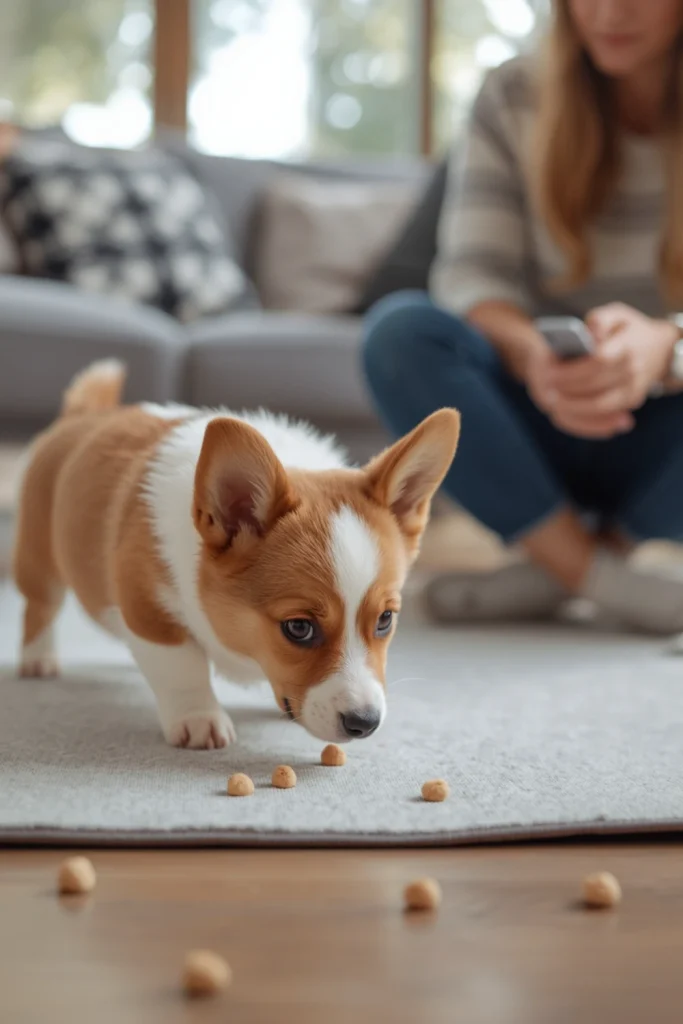
The find-the-treat game gives your puppy a chance to use their natural sense of smell while practising focus. Start by placing a tiny treat on the floor where your puppy can see it. Let them walk toward it, and click as they locate the treat. After a few easy repetitions, hide another treat beside a safe object or partly beneath the edge of a towel while your puppy watches. Click when they find it, then allow them to enjoy the reward. Always supervise the activity and make sure the puppy cannot chew or swallow unsafe materials.
As your puppy understands the game, create a few simple hiding places around the room. Let your puppy sniff and explore instead of pointing toward every treat. You can introduce a cue such as “find it” just before beginning the search. Keep the difficulty appropriate to your puppy’s age and experience. If your puppy becomes frustrated or begins chewing objects rather than searching, make the next round easier. This activity provides mental enrichment and can be particularly useful on days when outdoor activities are limited. Use small treats and include them in your puppy’s daily food allowance.
7. Paw Target Game
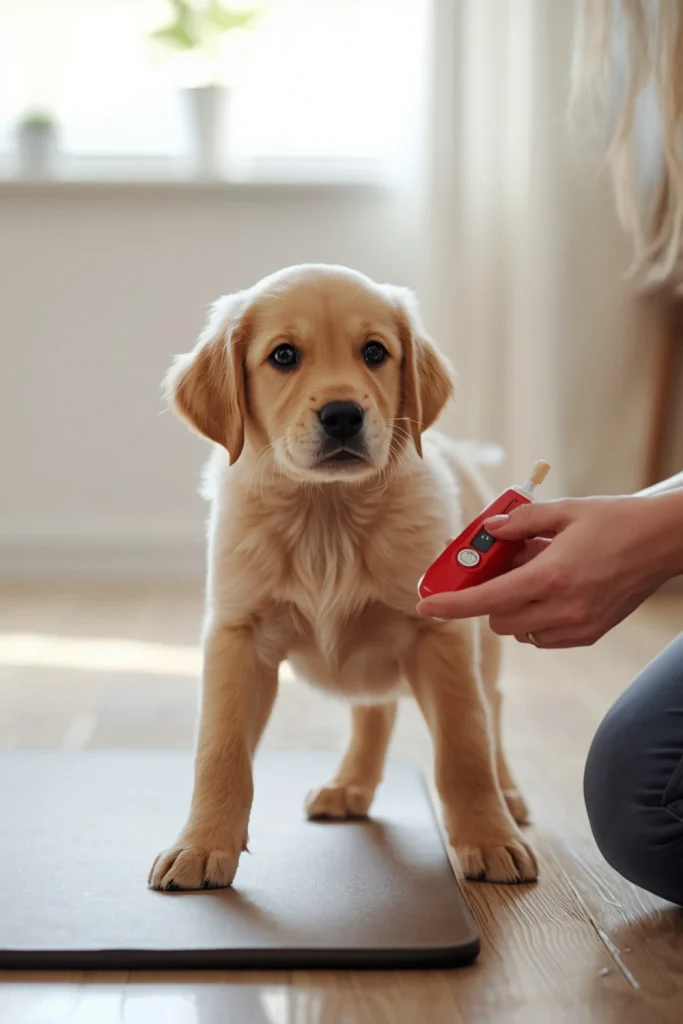
A paw target game encourages your puppy to investigate a specific object and gradually learn to touch it with a paw. Begin by placing a small, flat, nonslip mat on the floor. Allow your puppy to approach naturally. Click and reward the first signs of interest, such as looking at the mat or sniffing its surface. When your puppy becomes comfortable, wait for one paw to touch the mat before clicking. Do not pull your puppy onto the target or physically position their paw. The aim is to reward voluntary exploration and let the puppy learn at their own pace.
As your puppy gains confidence, reward more deliberate paw placements and gradually move the mat to different locations. Keep the surface stable and avoid raised or slippery objects that could cause a fall. The game introduces body awareness and encourages your puppy to interact with a target. It can eventually support other skills, such as approaching a designated area or becoming more comfortable around grooming equipment. If your puppy seems unsure, return to rewarding simple investigation. A few easy successes are more useful than making the task difficult before your puppy is ready.
8. Wait for the Treat Game
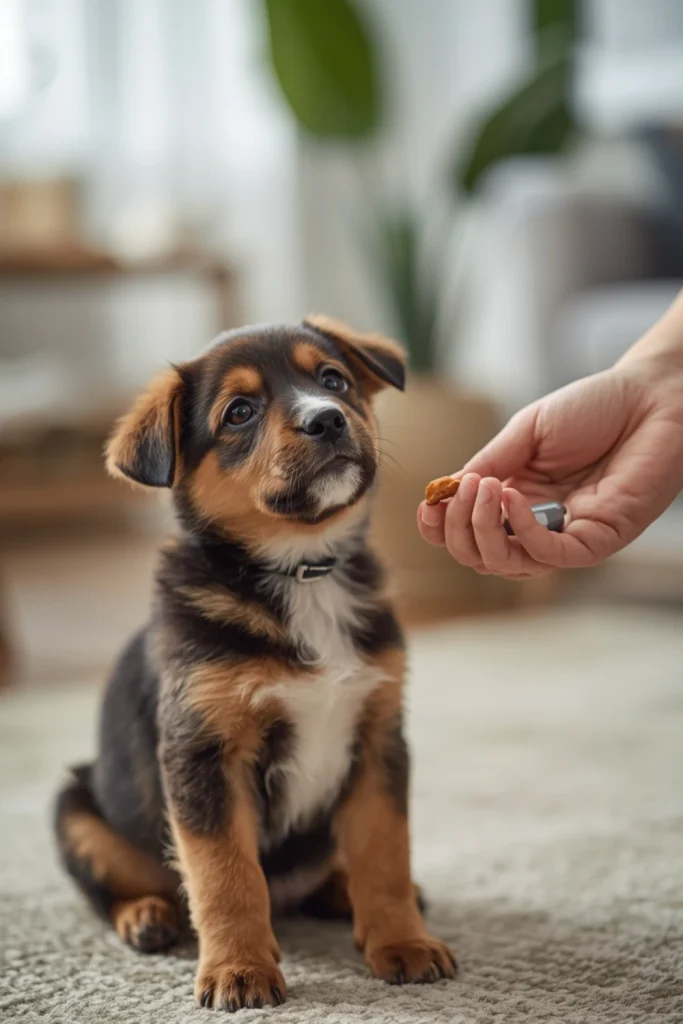
The wait game introduces your puppy to brief moments of patience around food and other exciting rewards. Begin with your puppy standing or sitting comfortably. Hold a tiny treat inside your closed hand and allow your puppy to investigate. Avoid clicking for biting or scratching at your fingers. Instead, watch for a brief pause or a moment when your puppy moves their nose away. Click and open your hand to give the treat. At first, even one second of calm behavior is enough. Keep the exercise easy so your puppy does not become frustrated.
As your puppy begins to understand, gradually extend the pause by a second or two. You can later practise with a food bowl placed on the floor, rewarding a brief wait before releasing your puppy with a clear cue. Do not make a hungry or excited puppy wait for too long. If your puppy starts jumping, barking, or grabbing at your hand, shorten the pause and reward sooner. The goal is to teach that calm behavior can make good things happen. Regular practice can support impulse control and help your puppy develop more polite habits during everyday routines.
9. Step Onto the Mat Game
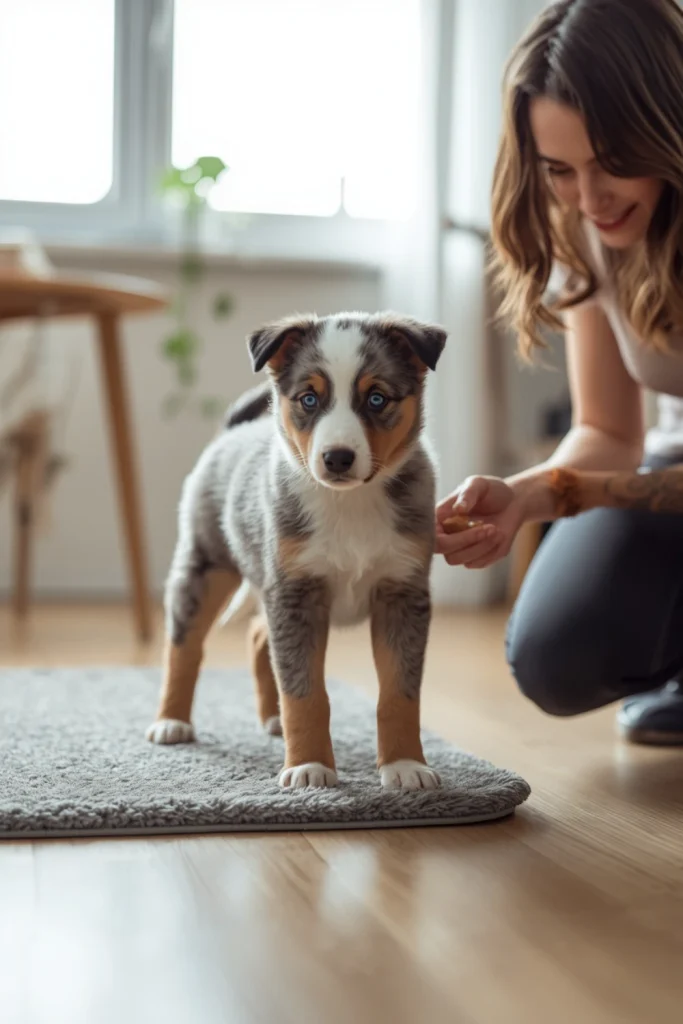
Teaching your puppy to step onto a mat can help introduce a useful resting-place behavior. Begin by placing a small, comfortable mat on the floor in a quiet room. Let your puppy approach it voluntarily. Click and reward a small step toward the mat, then gradually reward sniffing it or placing one paw on its surface. As your puppy becomes more comfortable, wait for two paws and eventually all four paws to be on the mat before clicking. Allow your puppy to step off between repetitions so they do not feel trapped or forced to remain in one place.
When your puppy steps onto the mat reliably, begin rewarding a brief moment of standing or sitting there calmly. Increase the duration gradually, using small increments rather than expecting your puppy to stay for several minutes. You can eventually introduce a cue such as “mat” or “place.” Practise first in a quiet environment before using the skill when visitors arrive or during other mildly distracting situations. The mat should remain a positive place where your puppy feels comfortable. Continue to provide exercise, toilet breaks, play, and rest rather than using the mat to restrict normal puppy needs.
10. Confidence and Exploration Game
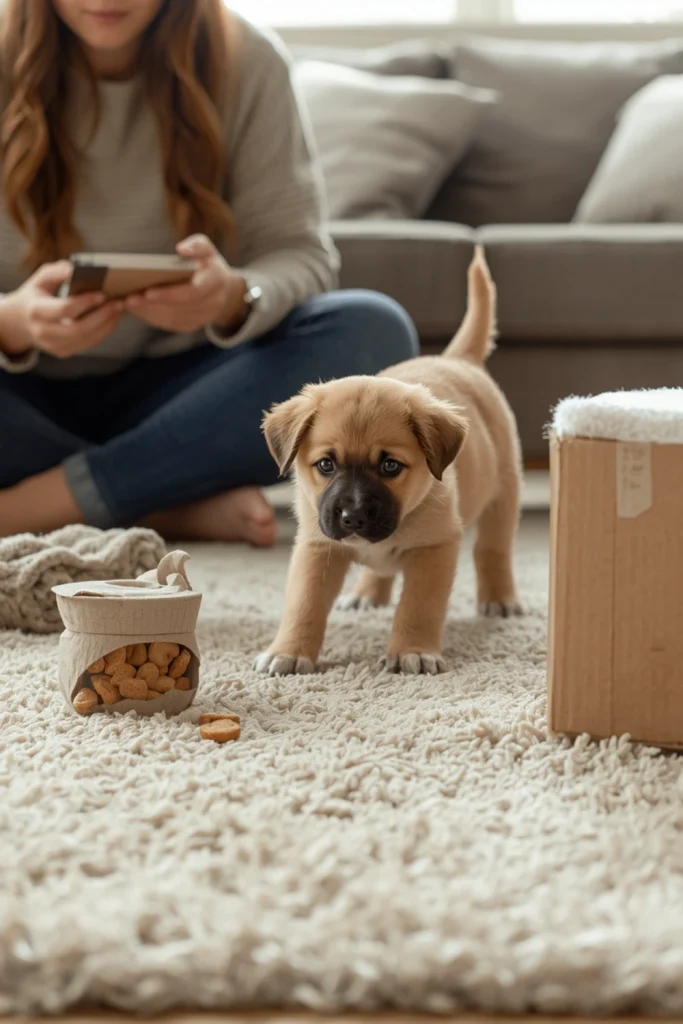
Confidence-building games help young puppies learn about safe objects, textures, and everyday surroundings. Begin by placing a few familiar, puppy-safe objects on the floor, such as a folded towel, a sturdy cardboard box without staples, or a stable plastic container. Let your puppy approach and investigate each object voluntarily. Click and reward calm curiosity, such as sniffing an object or taking a step toward it. Avoid loud noises, unstable surfaces, or anything likely to startle your puppy. The goal is to make exploration enjoyable rather than testing how much uncertainty the puppy can tolerate.
As your puppy becomes comfortable, introduce one small change at a time. You might move a familiar object to another room or offer a new safe texture to investigate. Reward voluntary approaches and allow your puppy to move away whenever they wish. If your puppy freezes, hides, tucks their tail, or repeatedly backs away, increase the distance and make the activity easier. Never force a worried puppy to approach something frightening. Gentle, positive experiences can help puppies develop confidence and learn that they can explore new things while receiving support from a trusted person.
Conclusion
Clicker training offers an enjoyable way to teach young puppies useful skills while building trust and confidence. From name recognition and hand targeting to recall, waiting, and exploration, these ten games provide a strong foundation for positive everyday training. By rewarding small successes and making each activity suitable for your puppy’s abilities, you can turn learning into a fun part of your daily routine.
The most effective Clicker Training Games for your puppy are the ones that remain safe, positive, and rewarding. Use clear timing, suitable treats, short sessions, and patience. Every puppy learns at a different pace, so celebrate gradual progress instead of expecting immediate perfection. With consistent practice and a gentle approach, you can help your puppy develop good habits and build a stronger lifelong bond with you.